
Economy
President Erdoğan vows strong economy, no losses for public in fund probe

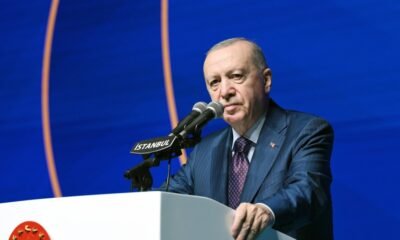
President Recep Tayyip Erdoğan said Tuesday that Türkiye’s economy will remain on a strong footing and citizens will be protected from losses in the ongoing fund investigation, as the government established a fully authorized board to oversee the liquidation process and pledged to pursue anyone responsible for wrongdoing.
Speaking at a meeting of the ruling Justice and Development Party (AK Party), Erdoğan said the government had finalized the steps it plans to take and drawn up a road map following discussions at Monday’s Cabinet meeting and a broader meeting Tuesday.
“We have established a fully authorized board chaired by our vice president to coordinate the process concerning the funds slated for liquidation,” Erdoğan said, adding that he had also instructed the State Supervisory Council to take part in the process.
“We will bring this process to a swift conclusion,” he said.
Erdoğan said he believed Türkiye would emerge from the process having addressed the problems exposed by the investigation, with its economy strengthened and capital markets placed on a healthier footing.
He sought to reassure the public that authorities were closely monitoring developments, saying the issue had been on the government’s agenda from the outset and that all relevant institutions were taking necessary measures.
The remarks come amid a widening investigation into transactions in Türkiye’s capital markets. The Capital Markets Board (SPK) earlier ordered investment funds managed by seven portfolio management companies to be closed to trading and decided to liquidate some of the funds as part of measures aimed at protecting investors.
Authorities have also stepped up judicial action. Five suspects were arrested Tuesday as part of investigations into capital market transactions, while prosecutors continue examining suspected offenses including fraud, money laundering and violations of capital markets legislation.
Fatma Betül Sayan Kaya, a former minister and AK Party deputy chair, announced late Saturday in a social media post that she has requested to be relieved of all her duties within the party, citing “various claims” concerning her. Her resignation came amid speculation over alleged links to the fund withdrawals investigation, which emerged earlier this month.
Erdoğan, who a day earlier stressed that the problems were confined to a limited segment of the fund market and did not pose a broader risk to Türkiye’s financial system, reiterated that the government would not tolerate wrongdoing involving public or state assets.
He said the AK Party remained committed to the principles and objectives on which it was founded 25 years ago and would part ways with those who engaged in wrongdoing or put personal interests ahead of those principles.
“We do not act in politics for ourselves or for personal gain, but for the peace, prosperity and successful future of 86 million people,” Erdoğan said.
Erdoğan added that the party would not treat unfairly anyone who had contributed to the movement but drew a clear line over misconduct involving public assets.
“We have no place for anyone who misappropriates state or public assets,” he said.
Erdoğan had said Monday that anyone found to have engaged in market-distorting activities through investment funds would be held accountable before the law, while emphasizing that Türkiye’s capital markets remained resilient and fundamentally sound.
Meanwhile, Nationalist Movement Party (MHP) Chair Devlet Bahçeli also voiced support for the government’s handling of the fund investigation, saying the priority should be to safeguard financial market stability while ensuring that those involved in market-distorting activities are held accountable under the law. Bahçeli said measures were being taken to protect investors, particularly small investors, and prevent broader repercussions for the financial system.
“Our economy is secure, our institutions are doing their jobs and there is no cause for concern,” he said, adding that the MHP backed the measures announced by President Erdoğan and the government.

China’s efforts to offset losses in the United States are intensifying competitive pressure on Turkish exporters, as many of the alternative markets targeted by Chinese companies are also important destinations for Türkiye’s shipments, a report said Tuesday.
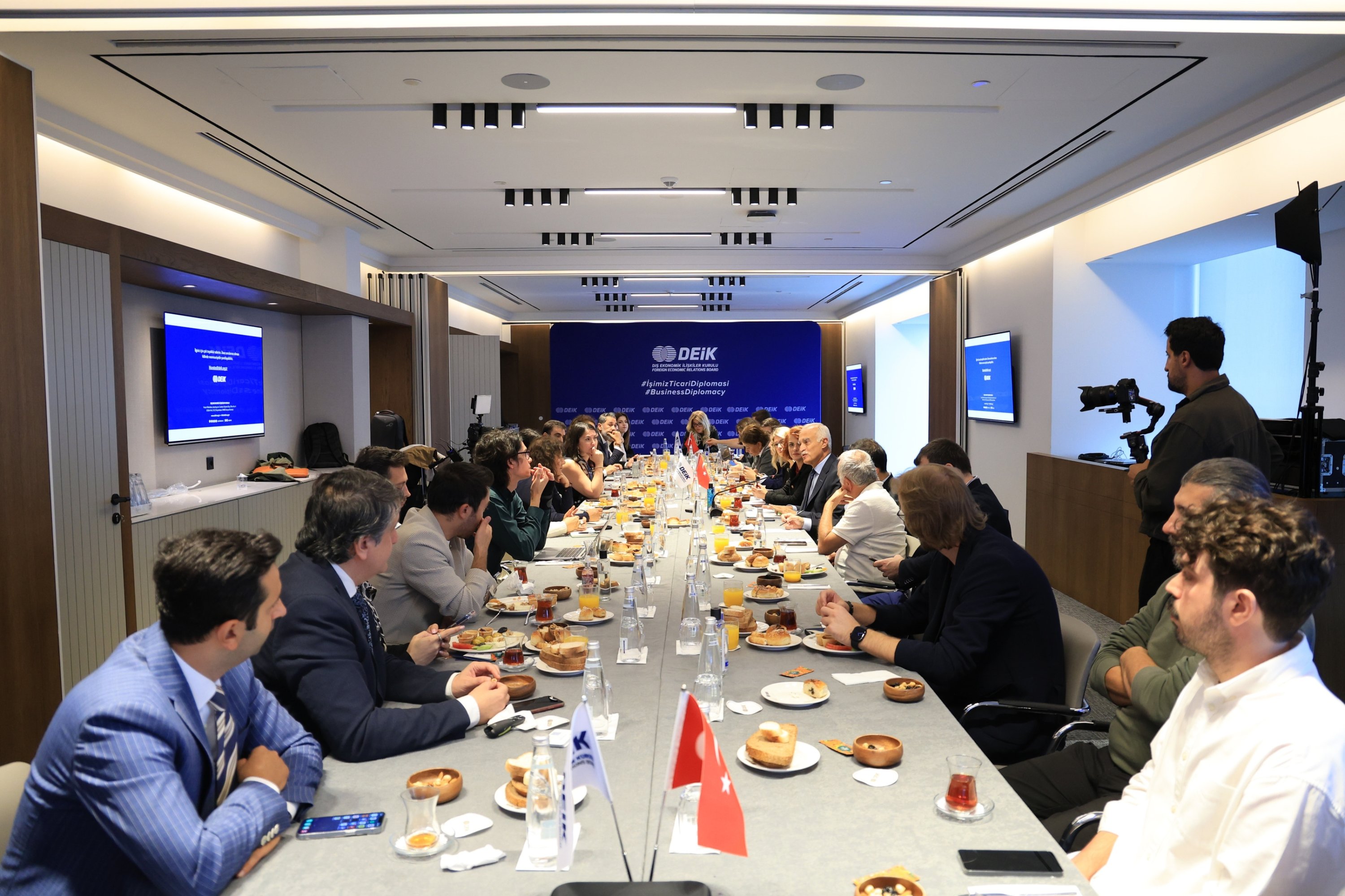
The report by the Foreign Economic Relations Board of Türkiye (DEIK) examines changes in China’s trade following additional U.S. tariffs introduced in 2025 and their potential implications for Türkiye.
China’s share of total exports accounted for by shipments to the United States fell to 11.14% in 2025 from 14.68% in 2024, according to the report. As its position in the U.S. market weakened, China accelerated efforts to diversify its export destinations.
China’s exports to Africa rose 25.9% in 2024-2025, while exports to the Middle East increased 9.7% and shipments to the European Union rose 8.63%. Nigeria, the United Arab Emirates (UAE) and Germany emerged as particularly important markets.
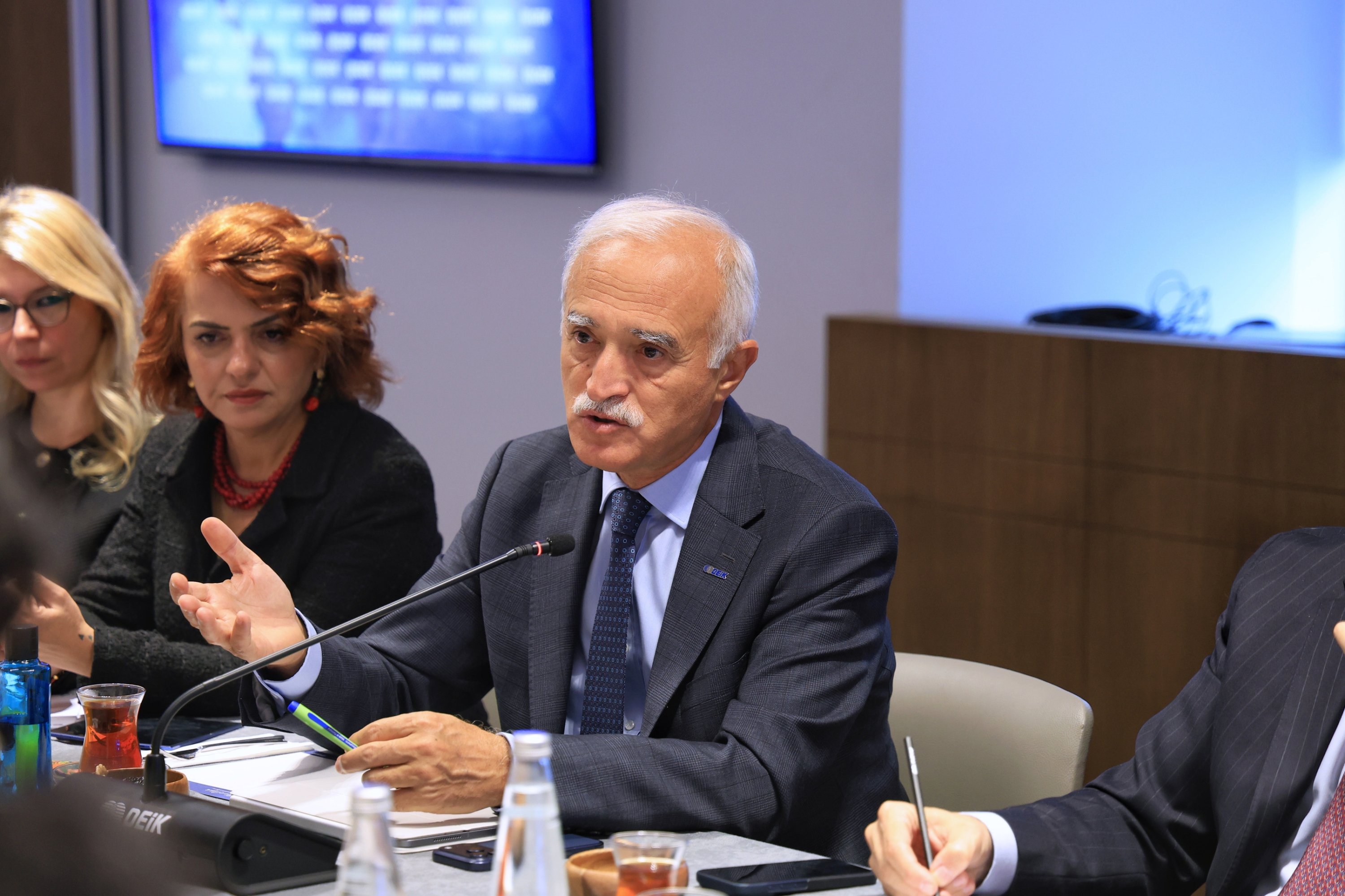
DEIK Chair Nail Olpak said the shift showed protectionist trade policies were affecting global trade routes beyond the bilateral relationship between the world’s two biggest economies.
“When access to one market becomes more difficult, global trade does not disappear; it finds new routes, new countries and new partners,” he told a meeting with press members in Istanbul. “The issue is therefore not only a tariff dispute between the U.S. and China, but the reshaping of global trade routes.”
China’s new markets overlap with Türkiye’s
The slowdown in the U.S. is prompting China to establish new trade channels across a much broader geographic area, including the Association of Southeast Asian Nations (ASEAN), Africa, the Middle East and Europe.
This is particularly important for Türkiye because many of the markets China is targeting are also important destinations for Turkish companies, Olpak said.
“Africa, the Middle East and Europe, where China is moving more strongly to offset its losses in the U.S. market, are also regions where the Turkish business community has traditionally been strong or aims to expand further,” he said.
“For this reason, we must closely monitor the geographic diversification of China’s exports.”
He said Türkiye’s manufacturing capacity, geographic position, logistics advantages, integration with Europe and business relationships across different regions could provide opportunities as global trade is reorganized.
“However, I do not think this should be read simply as ‘China is coming and competition is increasing,'” Olpak said. “What matters is turning these advantages into trade and investment through the right strategy.”
China’s exports to Germany, Türkiye’s largest export market, increased 10.55% between 2024 and 2025. The report said available data did not yet indicate that China’s growing presence in Germany represented a direct and significant threat to Türkiye.
Africa, Middle East face closer competition
The report identified Africa and the Middle East as regions requiring closer monitoring by Turkish exporters.
In Egypt, China’s exports reached $19.97 billion in 2025, compared with Türkiye’s nearly $4.1 billion, indicating a widening competitive gap in China’s favor, according to the report.
Olpak said Türkiye’s position in Africa should not be viewed solely through the lens of price competition, pointing to the country’s trade, contracting, investment, logistics and industrial ties across the continent.
“Alongside price competition, we will increasingly see competition based on trust,” he said. “Türkiye’s ability to establish long-term relationships and act as a reliable partner can become an important competitive advantage, particularly in Africa and the Middle East.”
UAE competition intensifies in tech, industrial goods
The United Arab Emirates is another market highlighted by the report. China’s exports to the UAE increased from $43.81 billion in 2021 to $72.90 billion in 2025, while Türkiye’s exports to the Gulf country stood at $9.28 billion last year.
China’s strength in electrical equipment and machinery could increase competitive pressure on Turkish companies in the UAE market, according to the report.
Olpak said Turkish companies would need to focus more heavily on value-added production.
“We need to talk not only about how much we export to a country, but also which products we export, at what technology level and with what added value,” he said. “Türkiye’s response in increasingly competitive markets should be greater value-added, stronger brands, technology, innovation and lasting partnerships.”
‘Trust competition’ creates opportunities for Türkiye
Olpak said the trade conflict between the U.S. and China was also reshaping global supply chains, potentially creating opportunities for Türkiye to strengthen its position as a production and investment hub.
“The world is no longer asking only, ‘Where can I produce more cheaply?’ Questions such as ‘Where can I produce more safely, how can I reach my market faster, how can I diversify my supply chain and with which partner can I establish a long-term and predictable relationship?’ have become just as important as cost,” he noted.
Olpak described this shift as an emerging “competition for trust” alongside competition over price and technology.
“Türkiye has significant potential precisely at this point,” he said, citing the country’s proximity to Europe, industrial infrastructure, skilled workforce, logistics capabilities and economic ties with different regions.
He said the transformation in U.S.-China trade should therefore be assessed not only in terms of potential competitive pressure in Türkiye’s export markets, but also in terms of new investment and production opportunities for the country.
Chinese authorities introduced new measures on Tuesday to help boost the economy and its laggard property sector as pressures build up in anticipation of hitting the year-end economic growth goal.
The measures, some of the bigger moves made this year by Chinese officials, include encouraging targeted bank lending and new subsidies for homebuyers’ mortgage interest payments.
China’s central bank, the People’s Bank of China (PBOC), said it will be lowering the interest rate for its “pledged supplementary lending” facility, or PSL, by a quarter of a percentage point, bringing the one-year rate down to 1.5%.
PSL is low-cost financing that China’s central bank provides to its major state policy banks to support state and public projects.
The central bank said that by cutting the rates, it hopes to better incentivize banks and better “serve national strategies.”
The central bank will also increase the quota of relending for technological innovation by 200 billion yuan (about $30 billion) to a total of 1.4 trillion yuan.
Separately, China’s Ministry of Finance announced new mortgage interest subsidies for homebuyers. From October, eligible first-time homebuyers can receive subsidies equal to an annualized rate of 1 percentage point on the mortgage principal, for a period of up to five years.
To qualify for the subsidies, the purchased property should measure up to 120 square meters (1,292 square feet) in floor area, and its price should be up to 1.5 million yuan.
Tuesday’s measures represent “a targeted approach with lower funding costs to support selected sectors through policy banks and the real estate sector,” said Gary Ng, a senior economist for Asia-Pacific at French bank Natixis.
For the property sector, they aim “to support housing demand in lower-tier cities, which are still facing severe headwinds,” Ng added.
Chinese leaders are targeting a 4.5%-5% growth rate for its economy for the whole of 2026, slower than last year’s 5% growth.
In the April-June quarter, China reported its economy slowed to a 4.3% expansion, marking the weakest growth pace in more than three years.
The country’s property sector has been under years-long pressure following a liquidity crunch in its real estate industry that came after Chinese officials cracked down on excessive borrowing, with overall home prices falling roughly 20% or more compared to 2021.
Tuesday’s measures are likely meant to help China meet the minimum annual growth target, Ng said.
The announcements also came after China’s State Council on Monday discussed strengthening and improving the effectiveness of macro policies in response to challenges in the economy.
The Spanish government introduced several urgent measures on Tuesday, including a potential ban on evictions until 2030 and the automatic renewal of tenant contracts, a minister said, following days of massive housing protests.
Unaffordable housing has been a running sore for years in Spain, but the outcry over last Wednesday’s eviction of 87-year-old Madrid pensioner Maricarmen Abascal sparked national uproar.
Demonstrators have set up around 100 tents in Madrid’s emblematic Puerta del Sol square since Saturday night, while tens of thousands of people have protested across the country.
The Socialist-led government raced to finalize a deal with far-left coalition partners Sumar at a key Cabinet meeting on Tuesday.
But the measures hang in the balance, as the coalition lacks a majority in a heavily fragmented parliament, which must pass them.
Health Minister Monica Garcia listed on social media a series of measures, including the eviction ban and the automatic contract renewals, saying what had been achieved was “unimaginable a month ago.”
Garcia also mentioned the regulation of short-term rentals and a “ban on the purchase of housing by vulture funds,” without providing further details.
“Thank you to the mobilizations and the camps. Without you, this would not have been possible,” said the Sumar minister.
Justice Minister Felix Bolanos wrote on X: “Today is a great day for tenants and small homeowners. And a bad one for speculators.”
Socialist Housing Minister Isabel Rodriguez was due to offer a press conference with details on the measures agreed on by the Cabinet.
‘Structural changes’ needed
The camping protesters in central Madrid had warned their movement would continue if the government failed to meet their demands.
Guillermo Mendez, who had traveled hundreds of kilometers from the northern region of Asturias to join the camp, said only “structural changes will change things.”
“It has to be something on a national scale, general strikes, protests,” the 40-year-old tourist guide said.
Abascal, who was evicted on a stretcher from her Madrid home of 70 years, has become a symbol of popular anger at runaway housing prices and a lack of tenant protections.
A deal was announced on Monday for her to return after negotiations with the real estate firm that owned her apartment, which the Madrid Tenants’ Union said hiked her monthly rent by 275% to 2,650 euros ($3,000).
Mendez said it was “great” that Abascal’s case had been resolved, but added: “It’s a plaster on a huge wound that the economy and society of this country are suffering.”
Turkish and African competition authorities came together in Istanbul for the “Türkiye-Africa Competition Authorities Istanbul Meeting” to discuss opportunities, policies and potential to enhance cooperation between their respective organizations.
The inaugural meeting was hosted by the Turkish Competition Authority (RK) on Sept. 29-30 in Istanbul, with the participation of the presidents and senior representatives of the competition authorities of African countries and international and regional institutions working in the area of competition law and policy in the African region.
The meeting kicked off on Tuesday in the presidency’s Dolmabahçe working office and was addressed by Turkish Competition Authority President Birol Küle and his African counterparts.
The initiative was launched in line with the recent efforts of the RK to share knowledge and experience, in particular with Balkan competition authorities and the competition authorities of the Organization of Turkic States (OTS), “as well as with other competition authorities in our geographical region,” the RK said.
The platform organization also aligns with the multidimensional partnership that has recently developed between Türkiye and Africa, as well as the increasing strategic importance of both parties in the global economy, according to the RK.
“In line with the multidimensional partnership that has recently developed between Türkiye and Africa, as well as the increasing strategic importance of both parties in the global economy, to strengthen the contribution of competition policies to economic growth, investments, consumer welfare and sustainable development, activities have been initiated to enhance cooperation between our authority and African competition authorities,” the RK said in a press statement.
It also said that the long-term institutional cooperation planned to be strengthened between the RK and the competition authorities across the African continent aims to “serve for promoting competition culture in our region, developing institutional capacities and consequently supporting open, fair and competitive markets.”
Strengthening competition culture
In his opening remarks, the head of the Turkish Competition Authority highlighted the belief that cooperation among the institutions would “contribute to strengthening competitive conditions and competition culture both in our countries and throughout our region.”
“Promoting the enforcement of competition law also enhances the growth prospects of developing countries,” Küle said.
He also pointed out that the rapid pace of technological development and digitalization makes regional and international cooperation indispensable.
Küle also underscored the importance of international cooperation and laws, as he mentioned a belief and conviction “that competition law can accomplish certain ‘miracles.'”
“I emphasize the word ‘international’ because one thing is now clear: alongside the constitutions of individual countries, we are also intertwined with structures that shape and organize our economies through the international regimes and practices that guide them,” he said.
Senior representatives of the African Union Economic Development, Tourism, Trade, Industry, Minerals (ETTIM), the Common Market for Eastern and Southern Africa (COMESA) Competition and Consumer Commission (CCCC), the East African Community Competition Authority (EACCA) and the Economic Community of West African States (ECOWAS), which are regional, international institutions working in the area of competition law and policy in the African continent attended the gathering.
The meeting was also attended by the presidents and senior representatives of the competition authorities of Algeria, Angola, Botswana, Cabo Verde, the Democratic Republic of the Congo (DRC), Egypt, Eswatini, Gambia, the Ivory Coast, Kenya, Libya, Madagascar, Malawi, Mauritius, Morocco, Mozambique, Namibia, Nigeria, the Republic of South Africa, Seychelles, Tanzania, Tunisia, Zambia and Zimbabwe.
All delegations participating in the meeting expressed their appreciation to the Turkish Competition Authority, emphasizing the contribution that the meeting will make to the development of competition culture in the African continent.
They described the event as “important and timely,” contributing to building “bridges” for dialogue and collaboration between the competition regulators of Türkiye and Africa.
The meeting was organized in cooperation with the Turkish Cooperation and Coordination Agency (TIKA).
Following the meeting, the president of the Turkish Competition Authority read out the joint declaration, which agreed to areas such as periodically sharing experience and information on the legislation and practices of countries in the area of competition policy, carrying out joint projects, organizing meetings and events, and conducting capacity-building activities among competition authorities.
Russian authorities have taken control of the assets of German wholesale and food retailer giant Metro in the country and put them under temporary administration, according to a decree published Monday, marking the latest in a series of business takeovers linked to countries that back Ukraine.
The decree, signed by President Vladimir Putin, announced that the Russian operations of Metro Cash and Carry had been put under the “temporary management” of a company called UK Torg RUS.
This comes after Moscow earlier this month seized the businesses and assets of Swiss food giant Nestle, as well as French retailer Auchan and the former Leroy Merlin DIY chain.
In its latest yearly report, the company said its sales in Russia amounted to 2.6 billion euros ($2.9 billion) in the 2024/2025 financial year.
The cash and cash equivalents of Metro’s Russian group companies amounted to 152 million euros ($172 million) as of June 30, the company said in its latest quarterly report.
Most Western companies quickly sold their Russian operations and holdings after the Kremlin ordered troops into Ukraine, or at least isolated them, as sanctions have made trading in most goods difficult.
Others remained, citing concerns for their employees or citizens’ well-being, but often sharply scaling back their operations.
Russia has since made it difficult for firms to leave, requiring presidential authorization for deals or seizing the assets outright.
Türkiye’s capital market is resilient and its foundations are strong, President Recep Tayyip Erdoğan said Monday as he reiterated that the recent issue in the market is restricted to a segment of the market and vowed necessary legal action.
“The problem in question has taken place in a limited part of the fund market. There is no risk that has spread to our financial system,” Erdoğan said.
“The Turkish capital markets is resilient and has strong foundations. It has more than enough capacity to overcome this challenge with ease,” he said in live remarks after the Cabinet meeting in Ankara.
“When the peace of our people is at stake, and when the economic security, prosperity, and development of our 86 million citizens are at stake, we will not show even the slightest hesitation in taking action,” he added.
He also went on to say that authorities “are proceeding with the utmost caution,” given the nature of capital markets, and added that work concerning the liquidation process of the funds that have been closed “is being carried out meticulously.”
The president said the government was working to ensure that all necessary steps were being taken, adding that work was underway to implement measures to prevent such a problem from happening again.
“Türkiye has an economic size approaching $2 trillion today. Türkiye’s financial system is strong,” Erdoğan also said.
Legal proceedings against those involved in market-distorting transactions in the fund market are continuing, Treasury and Finance Minister Mehmet Şimşek said earlier on Monday, adding that liquidity measures needed to support financial stability would be maintained.
Authorities moved in quickly earlier this month to ensure market stability and launched investigations into suspected share-price manipulation in a number of thinly traded stocks that triggered heavy losses and redemption pressures at investment funds.
Meanwhile, Erdoğan also said he would meet his economic team and representatives from the relevant institutions on Tuesday to discuss the matter, adding that the government would not allow people’s rights to be violated.


-
 Politics2 days ago
Mecca defense pact brings military chiefs together in Saudi Arabia
-
 Politics2 days ago
Türkiye pursues dialogue, diplomacy at UN General Assembly
-
 Economy2 days ago
Türkiye bolsters ‘agro diplomacy’ to minimize impact of geopolitical risks
-
 Economy2 days ago
US, China agree to AI dialogue, tariff cuts on $30B in goods
-
 Politics2 days ago
Turkish officials hit back at Israeli minister over remarks on Erdoğan
-
 Politics2 days ago
Türkiye, Pakistan, Saudi military chiefs meet in Riyadh
-
 Politics2 days ago
Erdoğan highlights Mecca pact as Ankara takes initiatives for peace
-
 Economy2 days ago
Europe turns to tax breaks, subsidies to tackle record-high fuel prices