
Economy
Şimşek tells investors Türkiye has avoided systemic risk in fund turmoil

Treasury and Finance Minister Mehmet Şimşek said Thursday authorities had moved quickly to contain problems in the investment fund market and prevent them from developing into a systemic crisis, adding that further regulatory measures would be needed.
Speaking online at an S&P Global conference, Şimşek said authorities had “quarantined” troubled portfolio management companies and related funds and had begun the liquidation and resolution process.
The problem in the fund market has been prevented from turning into a systemic crisis, he said, according to a Turkish transcript of his remarks reported by Anadolu Agency (AA). But he noted additional regulations would be needed.
The fund turmoil erupted earlier this month after suspected price manipulation in a number of thinly traded stocks triggered heavy losses and redemption pressures at investment funds.
Almost half a million investors hold stakes in more than 100 Turkish investment funds with combined assets of $20 billion that authorities ordered to be liquidated this month.
Şimşek said the aim was to stop contagion from spreading to the rest of the system, stressing that authorities “have largely succeeded.”
He acknowledged what he said was a “limited” impact, but said “we are not talking about a systemic problem. We will continue to deepen capital markets.”
Türkiye on Tuesday established a fund coordination council chaired by the vice president to oversee the rapid liquidation of the funds. The State Supervisory Council (DDK) has also been tasked with examining the crisis.
The coordination board is due to meet Friday.
Earlier Thursday, Şimşek said authorities were taking steps to ensure investors in troubled funds receive payments as quickly as possible.
The remarks came after the Capital Markets Board (SPK) said it would begin making interim payments to investors in the funds that were ordered to shut down.
Investors in asset managers Tera Portföy, Pusula Portföy, Atlas Portföy and Hedef Portföy will receive their full net investment amount if it is below TL 1 million ($20,404). Investors whose net investment amount is TL 1 million or above will receive TL 1 million as an interim payment.
The procedure will start with money market funds, the SPK said.
In a separate statement, the SPK said the Savings Deposit Insurance Fund (TMSF) opened up “voluntary refund accounts” for those who want to voluntarily return “excessive gains” made as a result of fund sales carried out before liquidation of the funds.
Under Turkish legislation, financial manipulation offenses can be pardoned, or sentences can be reduced if a person “shows remorse” by paying to the Treasury twice the amount of the benefit they obtained.
Speaking separately on Thursday, President Recep Tayyip Erdoğan said developments in the fund market would not pose a threat to the economy.
“We are successfully overcoming the problem that emerged in a certain part of the fund market,” Erdoğan said. “Within the framework of capital market rules, we are resolving this matter quickly, with fairness and justice in mind and without allowing anyone’s rights to be taken away.”
He said authorities would not allow the issue to become a threat to Türkiye’s economic security or social stability.
Authorities are investigating the asset managers for alleged stock manipulation and have arrested 61 people, including top financial executives, as of Thursday.

Türkiye’s Oruç Reis seismic research vessel will begin exploration for hydrocarbon resources in offshore fields in Pakistan, Energy and Natural Resources Minister Alparslan Bayraktar said Friday, adding that drilling was expected to start in 2027.
Last year, Türkiye state oil company Turkish Petroleum Corporation (TPAO) signed hydrocarbon exploration and production agreements with Pakistani companies including Mari Energies, Fatima, OGDCL, PPL, Prime and GHDL for three offshore and two onshore fields in Pakistan.
Bayraktar, who attended a ceremony to welcome the Oruç Reis at Karachi Port alongside Pakistani Foreign Minister Ishaq Dar and Petroleum Minister Ali Pervaiz Malik, said on the social media platform X that the vessel would carry out two- and three-dimensional seismic survey operations in the Indus and Makran basins to “uncover the potential there.”
The vessel will spend about two months collecting data across 670 square kilometers (about 259 square miles), Bayraktar said.
“Based on the data we collect, we aim to begin drilling activity next year in the identified areas,” he noted.
‘Turning point’ in energy cooperation
The step marks a “strong turning point” in energy cooperation between the two countries, Bayraktar said, noting that it comes at a time of turbulence in global oil and gas markets.
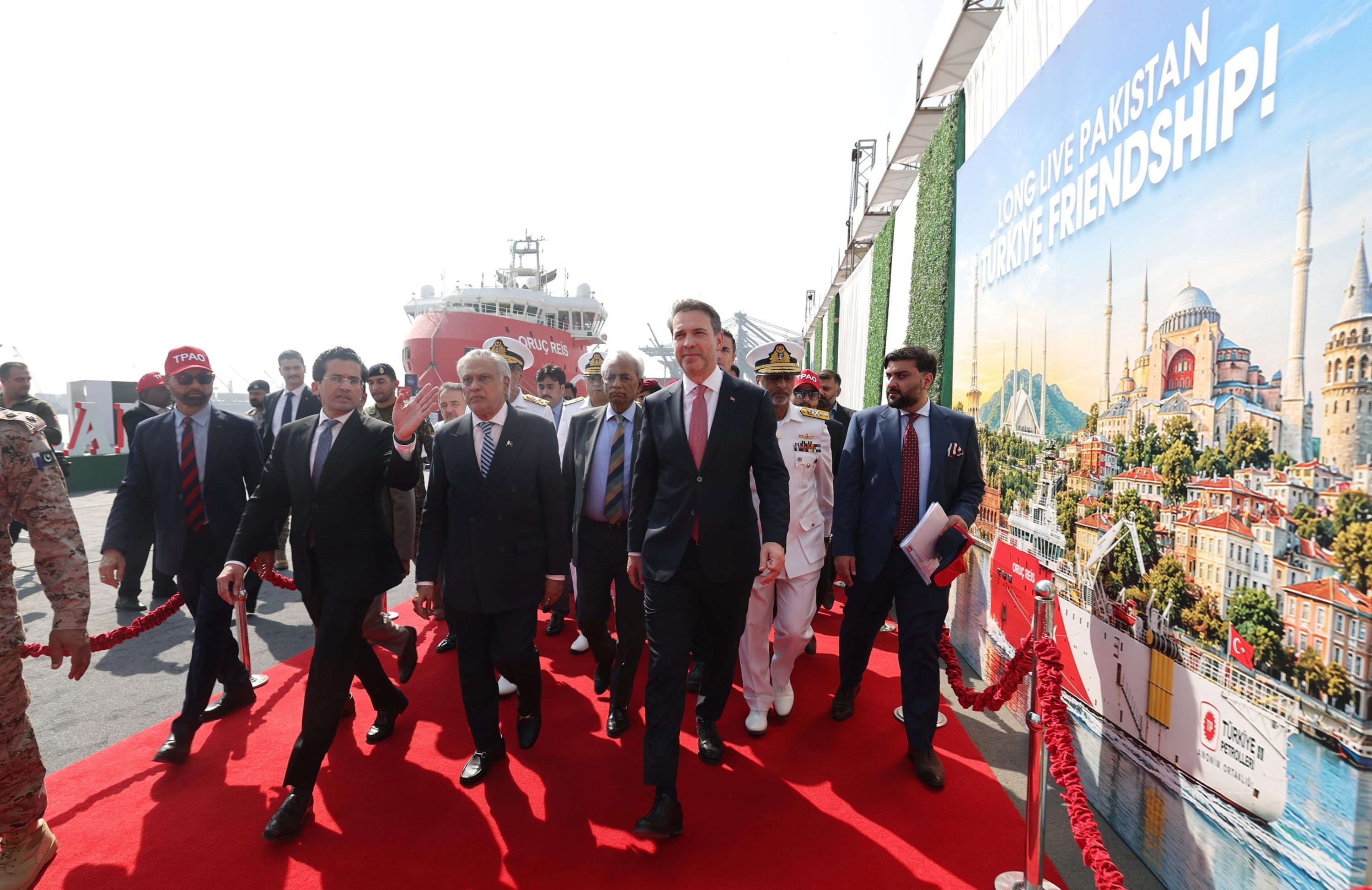
“We are two nations with a history built on shared values and deep brotherhood,” he stressed. He said the partnership is not just on paper. Licensing has been completed for five blocks, three offshore and two onshore, and field activity has begun, he said.
Last month, Bayraktar said the planned operations off Pakistan had been delayed by about six months due to the war in Iran.
Bayraktar said the world’s oil and gas markets are going through one of the biggest shocks in their history, which makes such cooperation more strategic. He said Türkiye wants to repeat its exploration and production success at home in Pakistan.
He recalled that in 2020, in the middle of the COVID-19 pandemic, Türkiye used the same vessels to discover the largest natural gas reserve in the Black Sea. He said it was also the largest offshore gas discovery in the world that year.
Those fields now produce about 10 million cubic meters of gas a day and meet the needs of about 4 million households, he said. Output is to reach about 40 million cubic meters a day by 2028, supplying 16 million households.
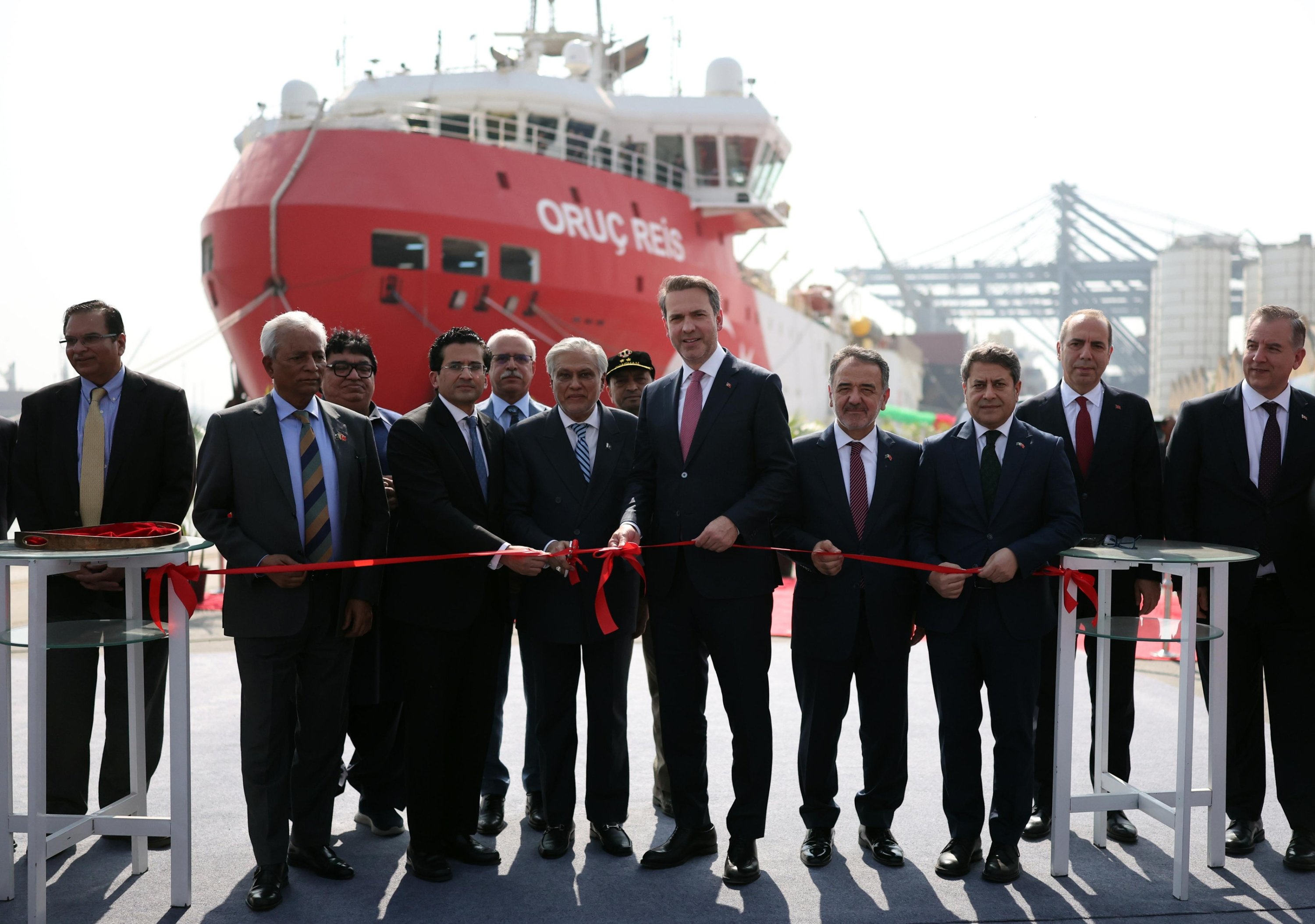
“We are putting the experience and engineering capability we gained in these activities at the service of our Pakistani brothers,” he said.
Mining agreements
The Energy and Natural Resources Ministry, meanwhile, also said two joint venture agreements were signed between MTAIC and Pakistani mining companies.
MTAIC is a venture of two Turkish state mining bodies, the General Directorate of Mineral Research and Exploration, known as MTA, and Eti Maden. Its Pakistani partners are Mari Energies Minerals and the Pakistan Mineral Development Corporation.
Under the agreements, MTAIC will start exploration at three sites in Pakistan: two for copper and gold and one for antimony.
MTA, MTAIC and the Geological Survey of Pakistan also signed a three-way memorandum of understanding to increase technical knowledge sharing in geology and mineral exploration and to develop joint projects.
Long overlooked by its NATO allies, Türkiye’s defense industry has now found its place at the military alliance’s top table, propelled by an ambitious, top-down government strategy.
Turkish arms manufacturers saw their turnover increase 15-fold between 2002 and 2023, specialist defense website TurDef says, while exports rose from around $800 million in 2010 to $7.1 billion in 2024.
“Ten years ago, when we spoke about the Turkish defense industry, people would laugh. Not anymore,” says TurDef founder Özgür Ekşi.
“Türkiye designs, develops and produces a large part of its own defense equipment,” says retired French brigadier general Patrice Moyeuvre, head of defense and security at Advantis consultancy.
“Its efforts have paid off and this can be seen, in particular in its export success,” he told Agence France-Presse (AFP).
For much of the past two decades, Ankara has expressed frustration over its Western allies’ failure to provide adequate defense systems against missile threats despite Türkiye being a NATO member.
Years of investment have helped it evolve from a country heavily reliant on foreign defense systems to one where domestically developed platforms meet almost all of its needs.
The transformation since the early 2000s has driven the development of a broad range of homegrown air, land and naval platforms, reducing foreign dependency from around 80% to below 20% today.
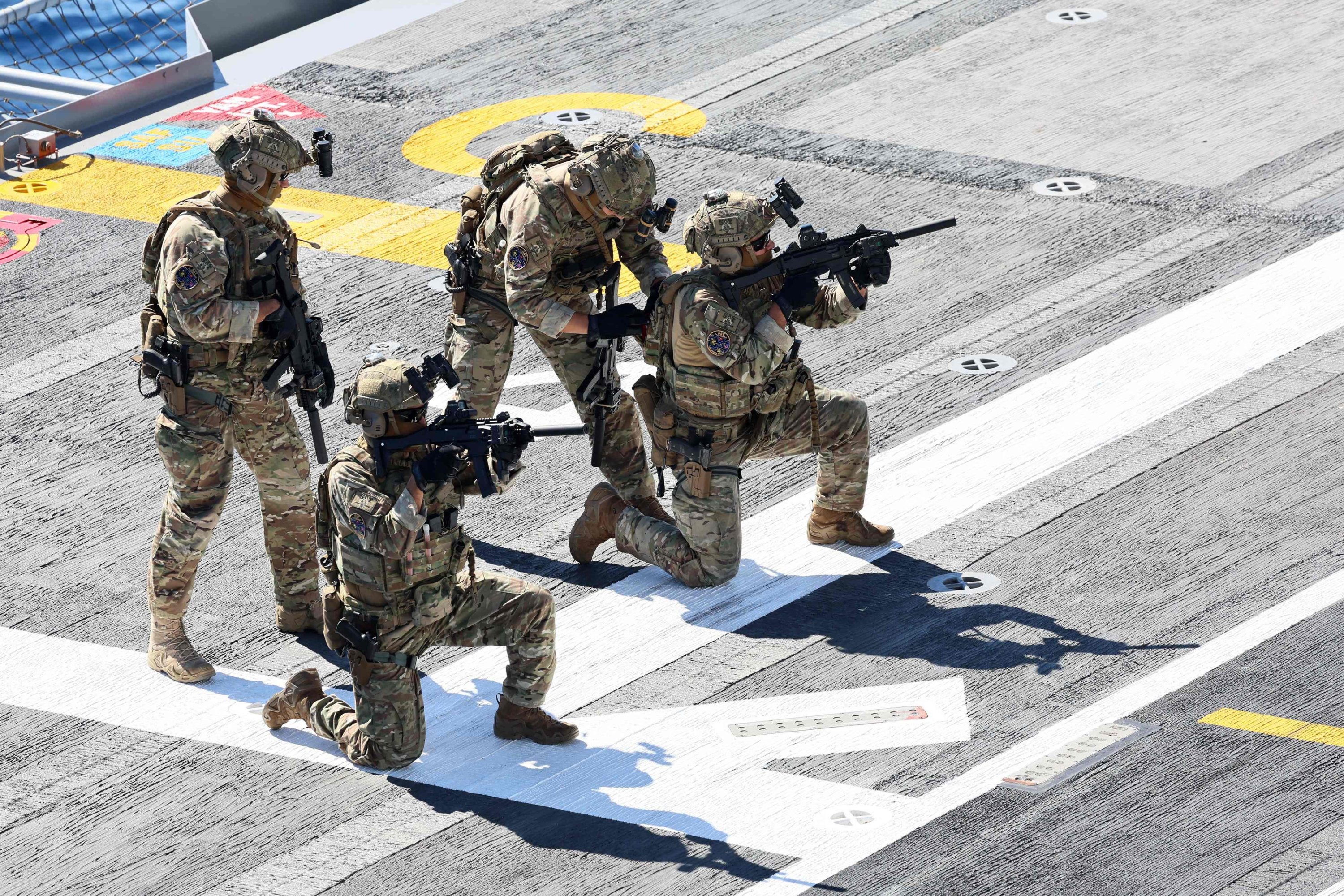
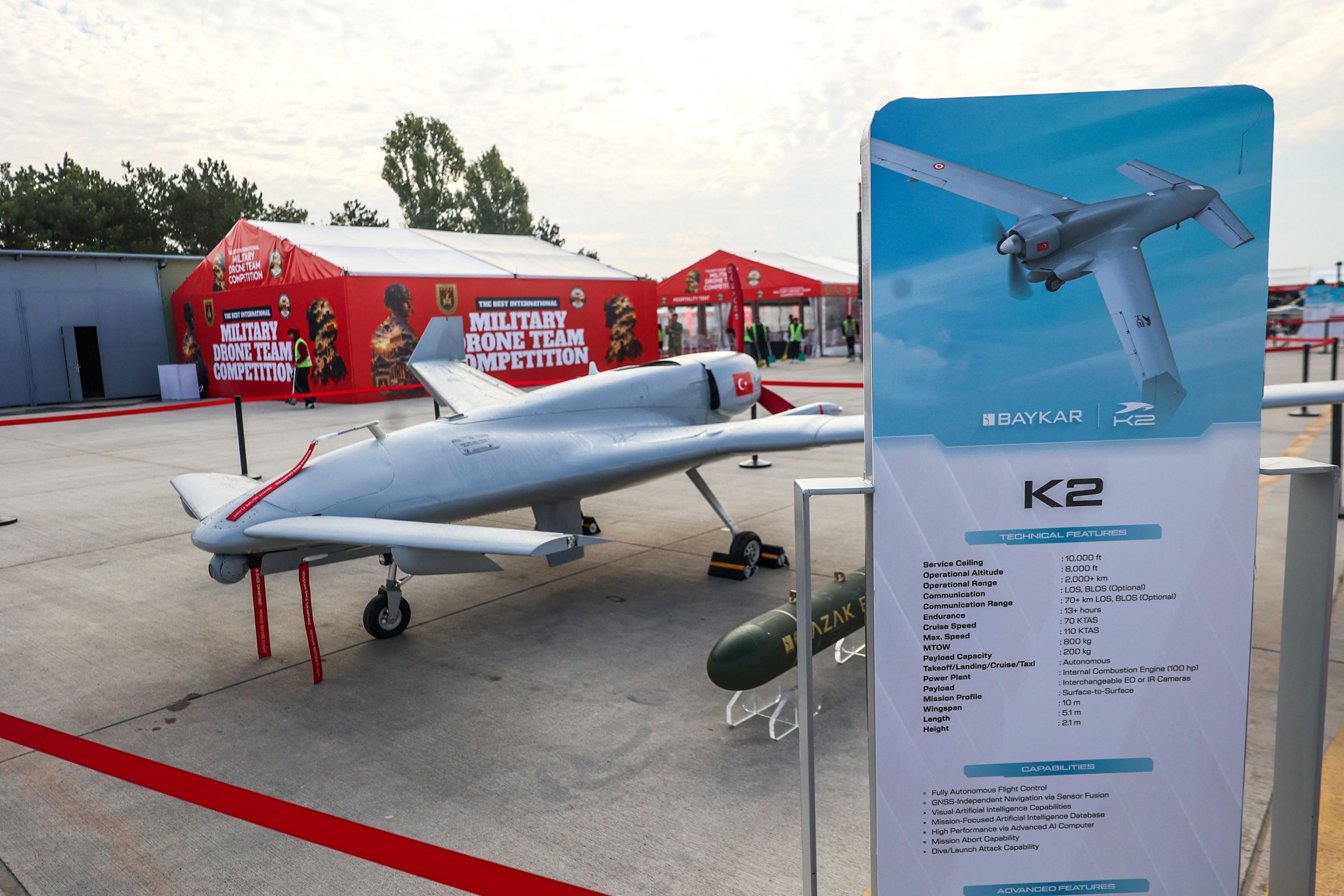
Türkiye has established firms that have gone on to become giants: drone powerhouse Baykar, defense electronics giant Aselsan; defense software and systems expert Havelsan; aerospace manufacturer TAI; missile and rocket manufacturer Roketsan and others.
‘Versatility’
In 2004, Ankara stopped buying off-the-shelf systems from abroad and brought weapons development in-house, placing the entire sector under its Presidency of Defense Industries (SSB) that reports directly to the president.
“Given Türkiye’s geostrategic location … the imperative for a coherent and forward-looking national strategy is clear,” says Uğur Tarçın, a professor at Istanbul’s Marmara University.
Over the past decade, Ankara has “exported 230 different types of defense products to 185 countries” – an achievement which “reflects both the versatility and competitiveness” of its capabilities, he said.
Drones produced by Baykar and TAI are now ubiquitous across modern-day battlefields.
“We’ve made huge leaps in terms of in-house developed products,” said a Turkish industrialist who agreed to speak on condition of anonymity.
“We needed to develop different mechanisms for the war against PKK, in particular in surveillance,” he said, referring to the terrorist group.
“We could not get help from abroad and could not get it from fighter jets. So, we started to develop drones.”
‘Now supplier of choice’
For the past three years, Türkiye has seen orders pouring in, becoming the world’s 11th largest arms exporter, says Tarçın.
“Particularly notable has been its investment in and testing of advanced systems, including surface-to-air and air-to-surface missiles, drones, and the command networks that enable them to operate,” analyst Tom Barton with London-based intelligence firm Janes told AFP.
“Türkiye is now seen as a supplier of choice, competing with European and U.S. companies, especially for Middle Eastern and Asian customers.”
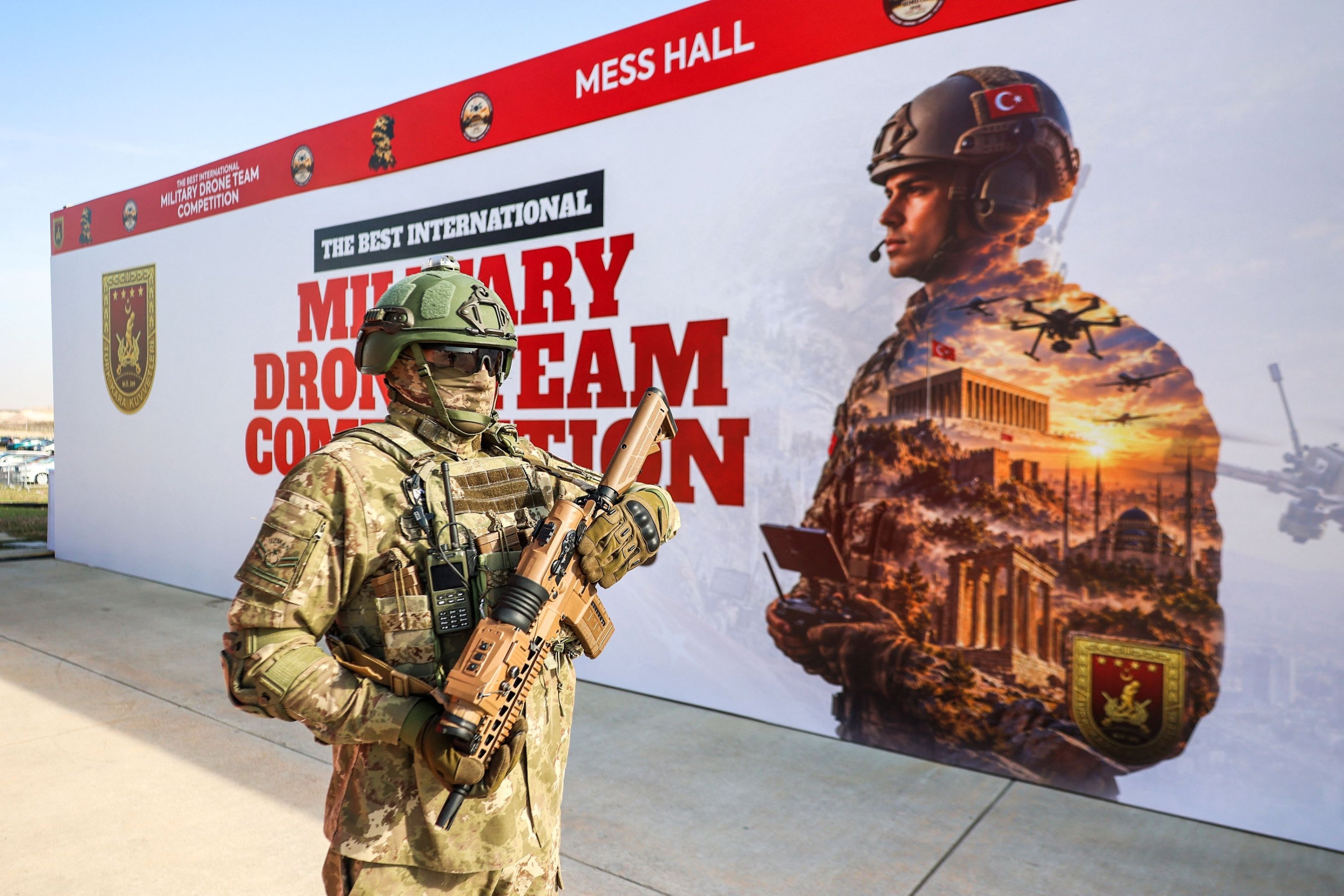
Aselsan just marked its 51st birthday by destroying a swarm of drones with its new high-power electromagnetic Ejderha system – “the world’s first system to successfully neutralize 51 drones with a single push of a button, without firing a missile or using any ammunition,” its CEO Ahmet Akyol said.
Türkiye’s new position is reflected in its hosting of a NATO summit this past July, and of NATO Edge this week, focusing on the alliance’s critical technology and digital weaponry.
For President Recep Tayyip Erdoğan, Türkiye’s independence is the cornerstone of his foreign policy, whether speaking with Washington, Kyiv, Moscow or Tehran.
Consumer confidence in Türkiye rebounded in November, rising 2.4% from the previous month as household expectations improved, official data showed Friday.
The consumer confidence index increased to 86.8 from 84.8 in October, according to figures released by the Turkish Statistical Institute (TurkStat).
The recovery followed a 7.7% decline in October to the lowest level in nine months.
The index also exceeded the 85.0 recorded in November 2025.
Households’ expectations for their financial situation over the next 12 months improved, with the corresponding sub-index rising 3.4% month-on-month.
The sub-index measuring expectations for the general economic situation over the same period increased 2.9%.
Meanwhile, assessments of households’ current financial situation edged up 0.04% from October.
Expectations for spending on durable goods over the next 12 months also improved, with the relevant indicator rising 2.5%.
The consumer confidence index is calculated through a monthly survey conducted jointly by TurkStat and the Central Bank of the Republic of Türkiye (CBRT).
The index measures consumers’ assessments of current economic conditions and their expectations for the near future.
It ranges from zero to 200, with readings below 100 indicating a pessimistic outlook.
Schengen diplomatic missions in Türkiye have established a dedicated working group to address persistent bottlenecks related to visa procedures for Turkish citizens, as Ankara called on the European Union to review the current practices, reports said Thursday.
The working group was formed following a meeting of the Local Schengen Cooperation (LSC) group in Ankara on Wednesday, public broadcaster TRT Haber and private outlet NTV said.
The meeting was attended by Turkish Foreign Ministry officials, representatives of Schengen countries, the EU Delegation to Türkiye and European Commission officials, the reports said.
The meeting, which regularly reviews Schengen visa procedures and related data, was held for the first time with the participation of both Turkish Foreign Ministry and European Commission representatives.
For years, Türkiye has criticized the EU’s visa system over appointment shortages, lengthy processing times and extensive documentation requirements.
During Wednesday’s talks, the Turkish delegation pointed to the high level of integration between Türkiye and the EU across multiple sectors and pressed for practical fixes, the reports said.
Its demands included making visa appointments more accessible, shortening application processing times, reducing the number of required documents and facilitating applications by travelers who have previously received Schengen visas.
Ankara also called for wider implementation of the EU’s visa cascade system, which allows eligible applicants to obtain multiple-entry visas with progressively longer validity periods.
Turkish truck drivers, trade access
Türkiye stressed the need to ensure uninterrupted access to the Schengen area for Turkish truck drivers to prevent disruptions to trade with the EU. It also called for solutions to restrictions on the length of their stays in the bloc.
Foreign Ministry officials said difficulties in securing appointments had contributed to the emergence of fraudulent consultancy firms offering to arrange visa applications and appointments, according to the reports.
They said joint operations had been conducted against such networks in cooperation with the justice, trade and interior ministries, with judicial proceedings initiated against numerous individuals.
The Turkish side also reported a significant decline over the past two years in visa difficulties faced by students admitted to universities in EU countries.
Officials said the Foreign Ministry had received only a limited number of individual complaints on the issue in 2026, adding that contacts with relevant authorities were continuing to resolve the remaining cases.
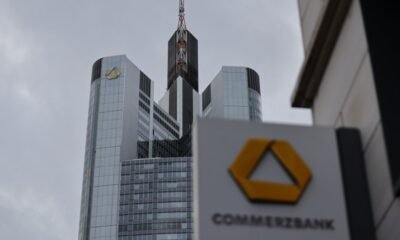
The German government has reached an agreement with Italy’s UniCredit on its planned takeover of Commerzbank, Finance Minister Lars Klingbeil announced Thursday, formally dropping its long-running opposition to the deal.
“The government now supports the swift continuation of proceedings and an orderly handover of control,” Klingbeil said.
The agreement removes a key hurdle for the takeover of Germany’s second-largest private bank.
UniCredit has pursued Commerzbank, valued at 41 billion euros ($45 billion), for two years in a bid to seal one of Europe’s most significant cross-border banking tie-ups.
Commerzbank and the German government initially resisted, but with UniCredit having built up a stake approaching 50%, their focus has now shifted to getting the best possible terms.
UniCredit has now obtained approval for its takeover plans from key authorities, including the European Commission, the U.S. Federal Reserve, and the European Central Bank’s banking supervisor.
Klingbeil said UniCredit had committed to measures addressing the government’s core concerns. This meant Commerzbank would remain a listed public limited company based in Frankfurt, expand its business with small and medium-sized companies, maintain an adequate capital base and take key decisions in Germany.
He further said UniCredit had made clear commitments on the bank’s presence in Germany and on the rights of Commerzbank staff. He said these were a good foundation for sustainable growth at Commerzbank.
However, he did not specifically address a pledge to avoid redundancies at Commerzbank, with employee representatives fearing thousands of job losses.
In July, Berlin had described UniCredit’s approach as “hostile” and rejected it as unacceptable.
What does agreement include?
UniCredit CEO Andrea Orcel said he welcomed Klingbeil’s support for his strategy for Commerzbank and for a swift process.
“Both create clarity and give the next phase new momentum – to the benefit of customers and employees of Commerzbank,” Orcel said.
Orcel wants to forge a European banking giant and sees potential for billions in savings from a merger. Commerzbank is expected to be merged with UniCredit’s Munich-based subsidiary HypoVereinsbank (HVB), through which the Italian bank has been operating in Germany for years.
The agreement also covers the transition on the Commerzbank supervisory board – an issue that had caused disagreement between UniCredit and Berlin.
Klingbeil said UniCredit would propose two independent members “who know both the German market and Commerzbank very well.” To date, the German government has two representatives on the supervisory board.
Orcel wants to request an extraordinary shareholders’ meeting in the first quarter of 2027 after taking control of Commerzbank. All 10 shareholder representatives are to be newly elected. Then the current board under Commerzbank chief executive Bettina Orlopp could be replaced.
Afterward, Orcel wants to implement his strategy, which includes cutting around 7,000 jobs and shrinking Commerzbank’s international network.
In a letter to Klingbeil, Orcel wrote that the commitments would lay the groundwork for the sale of the state’s stake in Commerzbank. The government holds just over 13%, after bailing out the DAX-listed group during the financial crisis.
UniCredit would “support” a government decision to sell its stake in Commerzbank, Orcel noted.
In his letter, the manager lists eight commitments.
After a merger with HVB, Frankfurt should become the headquarters, while maintaining “a significant presence” in Munich. Commerzbank and HVB should both be adequately represented on UniCredit’s board of directors.
The letter also commits to Commerzbank’s business with small and medium-sized companies and its international activities. Orcel had previously criticized Commerzbank’s international network as oversized.
UniCredit also pledges investments in Frankfurt, such as creating a competence and innovation center in Germany.
Berlin sees Orcel’s letter as an indication of a friendly takeover. The letter states that existing rules to protect Commerzbank employees should be taken into account. However, it does not guarantee that there will be no operational redundancies at Commerzbank, which has around 40,000 staff.
Klingbeil had insisted on several conditions after a meeting with Orcel in September. The Finance Ministry now considers these to be met.
The European Commission confirmed on Thursday that it was targeted by a cyberattack through the use of AI tools, although it said that it was difficult to judge the scale of the incident given that an inquiry was underway.
“I can confirm that the Commission has recently taken necessary steps in response to a detected cybercampaign,” European Commission spokesperson Thomas Regnier said at a press briefing.
“As a protective and preventive measure, we temporarily took down several applications and most of them have since been restored,” he added. “The investigation is still ongoing. We are taking any necessary steps, based on the findings as they come.”
“This was an AI-generated cybercampaign,” said Regnier.
The incident was detected on Oct. 22, and there was no evidence of any data breach affecting Commission staff as a whole, Regnier said.
He declined to say who the Commission thought was behind the attack, and said he was not aware of any ransom demand following the incident.
The attack on the Commission is the latest high-profile cyberattack, after hacks knocked out commercial refrigerators and freezers in hundreds of French supermarkets in October, ships bound for the United States in August, U.S. water treatment plants in July and the Los Angeles transit system in March.
Separately, an hours-long nationwide ground stop in the United States and outages to banking and Microsoft applications were blamed by tech experts on attempts to rapidly patch newly identified software vulnerabilities.
Politico reported earlier on Thursday that the Commission was targeted by a cyberattack which might have compromised large amounts of personal data, with several systems, including HR systems for payslips and time management and a system for medical reimbursements, taken offline during the 10-day disruption.
The Commission convened its highest-level internal crisis management body for an urgent meeting about the cyber incidents, and tech commissioner Henna Virkkunen briefed other commissioners on Wednesday, according to Politico.


-
 Politics2 days ago
Turkish VP to meet Uzbek leaders during 2-day visit to Tashkent
-
 Politics1 day ago
Türkiye’s Parliament to set rules for terror-free commission
-
 Economy2 days ago
Most investors in troubled funds received interim payments: Erdoğan
-
 Politics1 day ago
Türkiye uncovers FETÖ aid network, traces $531,000 in crypto transfers
-
 Politics3 days ago
Türkiye entering historic new era led by youth, Erdoğan says
-
 Economy3 days ago
Iraq resumes oil pumping for export purposes via pipeline to Türkiye
-
 Economy16 hours ago
Germany, UniCredit reach agreement on Commerzbank takeover
-

 Economy2 days ago
All eyes on Anthropic’s market debut in key test for AI boom