
Politics
Türkiye showcases mine warfare skills at int’l exercise

The Nusret-2026 Invitation Exercise, hosted by Türkiye and involving naval and air assets from the Turkish Armed Forces (TSK) and the Turkish Coast Guard Command, is underway in the Gulf of Izmir in western Türkiye and off Karadeniz Ereğli in the north, with observers from various countries taking part.
Distinguished visitors day activities were held off the Foça district of Izmir as part of the exercise, conducted by the Mine Fleet Command under the Turkish Naval Forces Command.
Turkish Naval Forces Commander Adm. Ercüment Tatlıoğlu and Syrian Naval Forces Commander Brig. Gen. Mohammed al-Saud were welcomed aboard the TCG Salihreis, the exercise’s flagship.
Under one exercise scenario performed on Tuesday, the patrol ship TCG Karabiga deployed a Malaman bottom mine. The mine was detected by the minehunter TCG Anamur using a remotely operated underwater vehicle and subsequently neutralized by mine warfare divers aboard the TCG Amasra.
In addition to naval assets, mine countermeasures operations in very shallow waters were conducted at Ilıksu Beach in northern Türkiye’s Zonguldak with the participation of 59 personnel from Türkiye, the U.S., Belgium, the Netherlands, Kuwait, Romania and Oman.
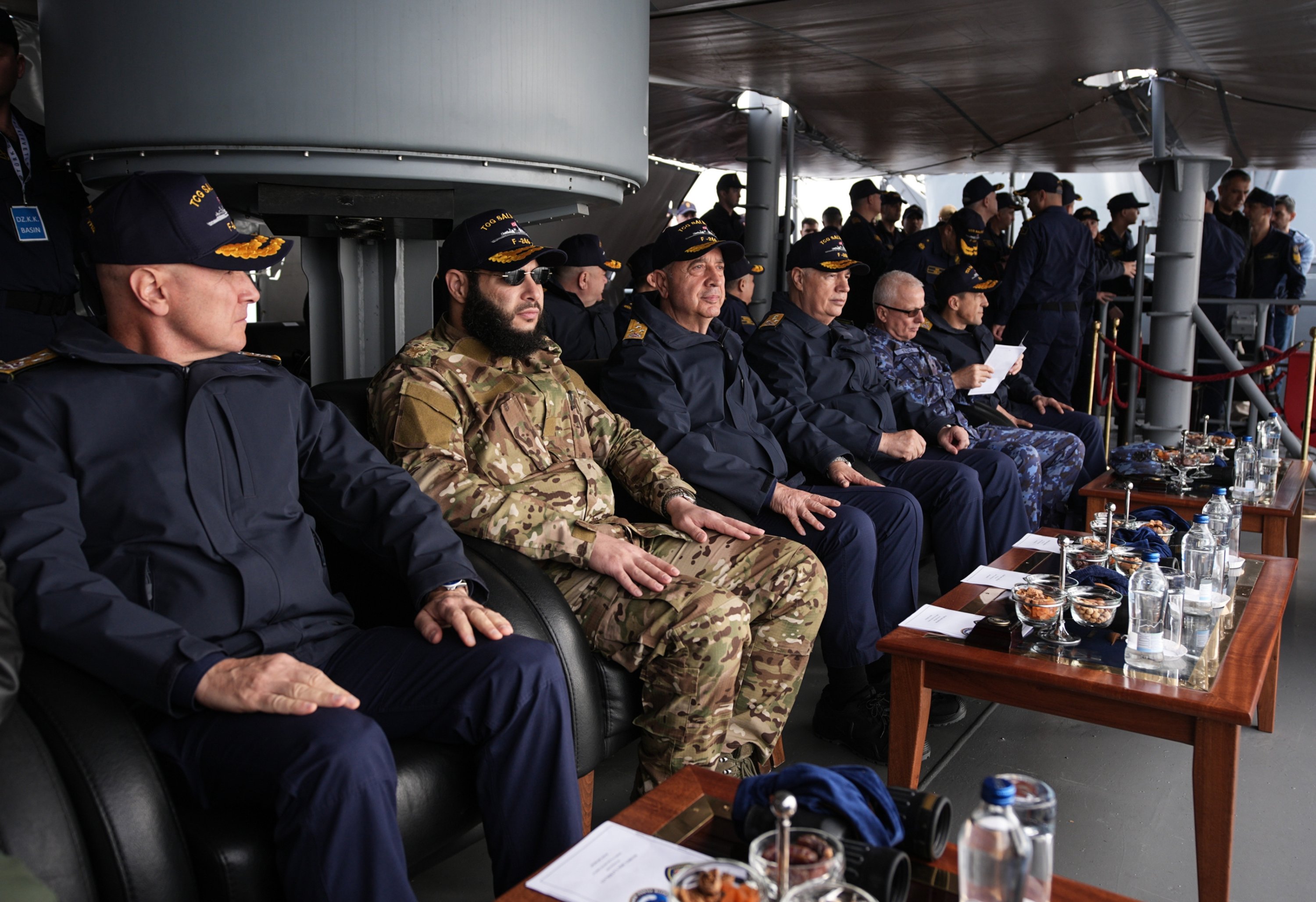
As part of the Tactical Claw operation, a mine that had become detached from its mooring and was drifting uncontrollably on the sea surface was neutralized by Underwater Defense (SAS) commandos deployed to the area by helicopter. The Malaman bottom mine used in the exercise can distinguish between friendly and hostile assets using intelligent algorithms. It can also classify the type of target vessel and detonate at the most critical point. Featuring a specialized outer coating that allows it to blend into rocky and sandy seabeds, as well as a low radar and sonar signature that makes it difficult to detect, the mine can neutralize targets through underwater pressure waves and shock effects generated by its high-explosive warhead, manufactured by state-run defense company Machinery and Chemical Industry Inc. (MKE).
Malaman operates as a smart bottom mine and can be deployed from surface vessels, submarines, aircraft and unmanned platforms.
The exercise also involved four minehunters, one command-and-control ship, one frigate, one landing ship, one corvette, one patrol ship, two helicopters, one underwater defense team, one team operating lightweight autonomous underwater vehicles and one unmanned aerial vehicle from the Naval Forces Command. The Air Force Command contributed two F-16 fighter jets, while the Coast Guard Command deployed three coast guard boats.
The exercise included one minehunter each from Germany, Italy, Spain, Greece and Türkiye, all participating in NATO’s Standing NATO Mine Countermeasures Group 2.
Assets from the Black Sea Mine Countermeasures Task Group also took part, including one command-and-control ship and one minehunter from Bulgaria, one minesweeper from Romania and one minehunter from Türkiye. The exercise also brought together 89 foreign participants, 32 observers and 46 explosive ordnance reconnaissance and disposal personnel from the United States, Belgium, the Netherlands, Kuwait, Romania, Oman, Albania, Azerbaijan, Bahrain, Bangladesh, Bulgaria, Morocco, France, Iraq, Cameroon, South Korea, Malaysia, Singapore, Ukraine and Jordan. The exercise will conclude on Oct. 16.
Speaking to journalists on the sidelines of the exercise, Adm. Tatlıoğlu said the Turkish Navy is among the world’s most experienced naval forces in mine warfare. He said the Nusret minelayer, after which the exercise was named, changed the course of history in 1915 by laying 26 mines in the Çanakkale Strait during World War I. Tatlıoğlu said the Nusret minelayer’s success demonstrated that mines can serve as a significant force multiplier capable of producing strategic results when deployed with proper planning, timing and determination. Although technology and operational methods have changed, mine warfare continues to play a crucial role in naval operations, Tatlıoğlu said, adding that the Turkish Navy aims to combine the Nusret minelayer’s historic legacy with modern technology to prepare for future threats.
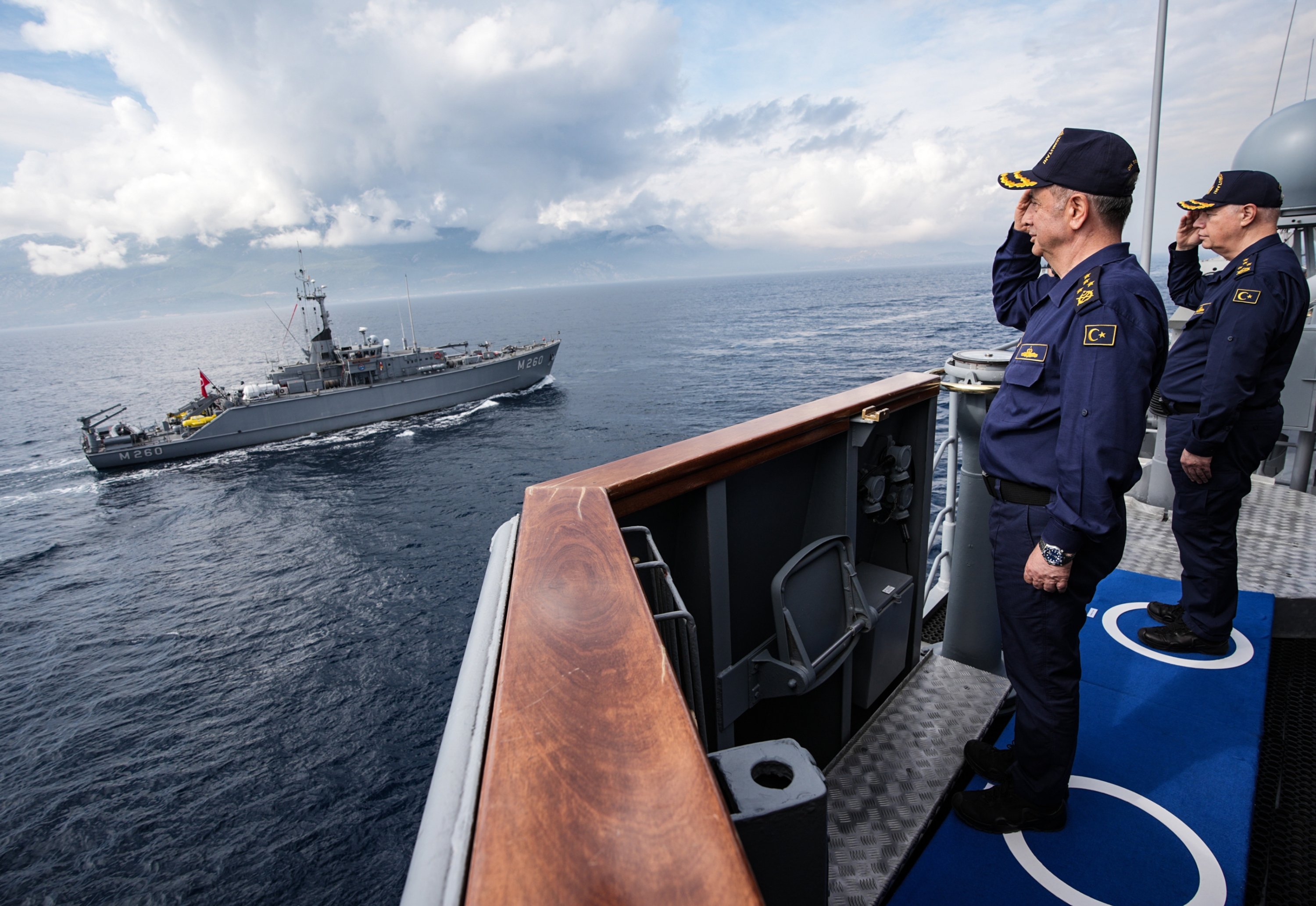
Tatlıoğlu said the exercise aims to improve the planning, execution and evaluation capabilities of participating units and commands in mine warfare, while also enhancing cooperation and interoperability between the Turkish Navy and friendly and allied naval forces.
Emphasizing the Turkish Navy’s experience in mine warfare, he said: “The Turkish Navy is one of the most experienced naval forces in the world in mine warfare. As you know, hundreds of mines were laid in the Black Sea due to the Russia-Ukraine war. We detect and neutralize mines that drift toward our shores from those laid in the Black Sea. At the same time, we detect and neutralize kamikaze unmanned marine vehicles, unmanned surface vehicles and all explosives that have gone out of control in the Black Sea. We do the same with unmanned aerial vehicles that lose control and fall into the sea, just as we do with mines that drift toward our shores. The Turkish navy is among the world’s best and most experienced naval forces in mine warfare.”
Tatlıoğlu said the seas are vital routes for global trade and energy transportation. He warned that mine threats emerging at strategic chokepoints such as the Strait of Hormuz and the Bab el-Mandeb Strait could disrupt maritime traffic, energy supplies and trade flows, adversely affecting global economic stability.
Unmanned marine vehicles, autonomous underwater vehicles and remotely operated systems offer significant opportunities to mitigate these risks, Tatlıoğlu said. He added that supporting the next-generation minehunter concept with unmanned systems is important for reducing personnel exposure in hazardous areas and carrying out missions more safely and effectively.
Tatlıoğlu said future mine warfare would be shaped by an integrated operational approach in which manned platforms and unmanned systems complement one another, while advanced sensors and data are used effectively.
He emphasized that the Turkish navy has strong capabilities in both operating and manufacturing unmanned systems.
Developments in Türkiye and around the world highlight the importance of maintaining a technologically advanced, powerful and effective naval force, Tatlıoğlu said. He added that the Turkish navy continues to develop its capabilities to protect Türkiye’s maritime rights and interests, contribute to the security of maritime transportation and fulfill its national and international missions.

Members of the Turkish minority in Greece’s Western Thrace region have raised concerns over the continued closure of minority schools, warning that the measures threaten children’s right to education in their native language and the preservation of their cultural identity.
Eight Turkish minority primary schools have had their operations suspended for the 2026-2027 academic year, including five in Rhodope, two in Xanthi and one in Evros, according to Mustafa Trampa, chair of the Western Thrace Turkish Minority Advisory Board and elected mufti of Xanthi (Iskeçe).
Speaking to Anadolu Agency (AA), Trampa said the suspensions, officially described as temporary, effectively amounted to permanent closures, undermining the minority community’s educational and cultural rights.
He argued that minority education enjoys a special legal status under the Treaty of Lausanne, bilateral agreements and international law, which should protect schools from closure solely because of declining enrollment.
“If we want to preserve our Turkish language, we must also preserve our schools,” Trampa said, emphasizing the role of bilingual education in maintaining the community’s identity, traditions and religious heritage.
Trampa criticized Greece’s policy of suspending schools with low enrollment, pointing to Türkiye’s efforts to maintain Greek minority schools in Istanbul and Gökçeada despite similarly limited student numbers.
He urged Athens to adopt a comparable approach, arguing that preserving minority schools would also safeguard the region’s cultural diversity.
The closures have also placed additional burdens on families, forcing young children to travel to neighboring villages for education, often under difficult winter conditions, Trampa said.
He warned that losing a school could weaken village life by removing an institution central to the community’s cultural and educational activities.
Ozan Ahmetoğlu, chair of the Xanthi Minority Secondary and High School Board, echoed those concerns, criticizing Greek authorities for applying nationwide minimum-enrollment rules to minority schools without accounting for their distinct legal status.
Ahmetoğlu said the number of Turkish minority primary schools had declined significantly in recent years, raising fears about the long-term survival of bilingual education in Western Thrace.
He called on Greece’s Education Ministry to engage directly with minority representatives and school administrators to develop mutually acceptable solutions.
According to Ahmetoğlu, repeated requests over the past three decades to improve educational standards in minority schools have gone unanswered, contributing to growing frustration among parents and community leaders.
He said the lack of consultation had fueled concerns that the gradual closure of minority schools could ultimately undermine the community’s educational institutions.
Minority representatives insist that their demands extend beyond keeping school buildings open, emphasizing the importance of ensuring children can receive quality education in both Turkish and Greek.
“This is an acquired right, and we want to exercise it,” Ahmetoğlu underlined.
He stressed that minority families want their children to develop strong proficiency in Greek while retaining their native language and cultural heritage.
Ahmetoğlu described minority schools as institutions essential to preserving cultural continuity, identity and belonging, urging Greek authorities to recognize their importance.
Both representatives called for renewed dialogue with Athens and greater respect for the minority education framework established under international agreements.
Justice Minister Akın Gürlek announced on Wednesday the capture of 33 out of 35 suspects for whom detention warrants were issued as a result of operations conducted across four separate investigations centered in Izmir, Eskişehir and Ağrı against the Gülenist Terror Group (FETÖ) and Daesh.
In a statement made on his social media account, Gürlek stated that they will not tolerate any financial network, organizational activity or restructuring attempt of FETÖ. FETÖ has been on the decline after its attempt to seize power through military infiltrators on July 15, 2016, spectacularly failed. Yet, multiple operations conducted since then indicated that the group tapped into commerce and a secret scheme of donations to regain its former power.
“Today, as a result of joint efforts conducted by our police and gendarmerie organizations under the coordination of our Chief Public Prosecutor’s Offices in Izmir, Eskişehir and Ağrı, four separate operations were carried out targeting the FETÖ and Daesh terrorist groups. As part of the operations, 33 out of a total of 35 wanted suspects were detained. One suspect is at large,” Gürlek said.
“In the investigations, significant findings were reached regarding FETÖ’s financial connections extending abroad, money transfers carried out through companies, and its current structure.”
Conveying that in the Eskişehir-centered investigation, money transfers were determined to have been made through a U.S.-based company affiliated with FETÖ in exchange for food products sent from Türkiye, Gürlek said: “It was evaluated that the transfers in question could be used in financing the restructuring of FETÖ. In the operation carried out against 10 suspects, nine suspects were caught and detained. Efforts to capture one suspect are ongoing.”
Gürlek said two suspects were captured in an Izmir-based investigation, and the suspects were identified through their ties with now-defunct lender Bank Asya, once secretly operated by FETÖ, and through their use of Bylock, an encrypted messaging app exclusively used and developed by the members of the terrorist group.
Stating that in the other Izmir-centered investigation, operations were carried out in four provinces targeting 21 suspects evaluated to be active within FETÖ’s current structure, Gürlek reported that all of the suspects were caught and detained.
Former Istanbul Mayor Ekrem Imamoğlu, who is standing trial on organized crime and corruption-related charges, began presenting his first defense Wednesday, focusing on current political developments rather than the allegations against him.
Imamoğlu, who remains in pretrial detention and is identified by prosecutors as the alleged leader of a criminal organization, addressed the court on the 34th day of the trial’s second hearing.
During the initial session, Imamoğlu discussed political developments but did not directly address the specific allegations outlined in the indictment.
The proceedings follow a tense exchange between Imamoğlu and the presiding judge during a July 8 hearing, when the defendant objected to restrictions on the time allocated for his defense.
The judge told Imamoğlu that he could either present his defense or exercise his right to remain silent.
“I am not exercising my right to remain silent,” Imamoğlu responded, before insisting that the court could not determine what he would say.
During the confrontation, Imamoğlu also declared that he would put those responsible for preparing the indictment on trial.
Prosecutors subsequently opened a separate investigation into Imamoğlu on suspicion of threatening a public official, citing his remarks directed at the judicial proceedings.
The latest hearing marks the beginning of Imamoğlu’s substantive defense phase in the high-profile trial, although he had yet to respond to the charges during Wednesday’s opening session.
The indictment identifies Imamoğlu as the alleged “leader of a criminal organization” and accuses him of offenses including forming an organization to commit crimes, bribery, money laundering, fraud against public institutions, unlawfully recording and obtaining personal data, concealing evidence, obstructing communications, damaging public property, publicly disseminating misleading information, extortion, bid-rigging, deliberate environmental pollution and violations of tax, forestry and mining laws.
Prosecutors are seeking a prison sentence of between 828 years, two months and 2,352 years for the ex-mayor over 142 alleged acts.
New Party (YP) Chair Özgür Özel and several party lawmakers attended the proceedings, alongside Imamoğlu’s wife and parents.
Iraqi Kurdistan Regional Government (KRG) President Nechirvan Barzani said President Recep Tayyip Erdoğan deserves the Nobel Peace Prize for his efforts to resolve Türkiye’s longstanding “Kurdish issue,” expressing support for Ankara’s ongoing “Terror-free Türkiye” initiative to disarm the terrorist group PKK. The PKK claims to fight for a so-called Kurdish cause in Türkiye.
Speaking at a forum, Barzani said he initially had doubts about the seriousness of the initiative but became convinced of Ankara’s commitment following a meeting with Erdoğan.
“Whoever resolves the Kurdish issue in Türkiye deserves the Nobel Prize, and President Erdoğan is at the forefront of that,” Barzani said.
He acknowledged criticism over the pace of the initiative but stressed that resolving longstanding issues would require time and sustained political commitment.
“The Terror-free Türkiye initiative is a serious process, but there may be complaints that it is moving slowly. I think that is natural. It cannot be resolved overnight,” Barzani said.
He added that while progress might not be as rapid as expected, the initiative was moving in the right direction.
Barzani reiterated the KRG’s support for the process, saying the regional administration was prepared to contribute to its success.
“The process benefits everyone, both us and Türkiye,” he said, arguing that a successful outcome would strengthen Türkiye’s regional standing.
Progress in Syria
Turning to developments in neighboring Syria, Barzani expressed optimism about President Ahmed al-Sharaa’s approach toward the Kurdish population, saying he believed the Syrian leader was committed to addressing longstanding grievances.
Barzani said he had not encountered anti-Kurdish attitudes during his meeting with al-Sharaa in Damascus and noted progress in efforts to integrate Kurdish forces into Syria’s security institutions.
He also highlighted steps toward expanding Kurdish-language education, describing them as significant developments following decades of restrictions under the former Assad regime.
The Syrian administration and the YPG terror group reached a new agreement Jan. 29 that provided for a cease-fire and the group’s gradual integration into state institutions.
In late August, the U.S.-backed YPG terrorist group announced that its so-called autonomous administration and all its military and civilian structures have been dissolved.
Approximately 13,000 people have joined the Syrian army, while another 17,000 have entered security institutions, although he did not specify the timeframe for those figures, according to Barzani.
He recalled that Kurds in Syria previously faced difficulties obtaining citizenship documents and said recent measures represented meaningful progress.
Barzani also described symbolic gestures during his visit to Damascus, including a Kurdish-language welcome at the airport, the display of Iraqi and KRG flags, and menus prepared in Kurdish.
He said these gestures reinforced his impression that al-Sharaa wanted to improve relations with Kurdish communities.
However, Barzani cautioned that Syria faces substantial challenges in rebuilding after years of conflict, citing widespread damage to infrastructure, social institutions and urban areas.
Reconstruction and political stabilization would require considerable time, he added.
President Recep Tayyip Erdoğan held a phone call with Saudi Crown Prince Mohammed bin Salman to discuss recent regional developments and attacks targeting Saudi Arabia, Türkiye’s presidency said Tuesday.
During the conversation, Erdoğan strongly condemned the Houthi attacks on Saudi territory and expressed his condolences over the loss of life.
Erdoğan reaffirmed Türkiye’s solidarity with Saudi Arabia, stressing that Ankara would continue to stand by Riyadh amid ongoing regional tensions.
The Turkish president also expressed confidence that Saudi Arabia would overcome the challenges posed by the attacks.
The two leaders discussed the latest developments in the region, according to the statement, which did not provide further details about the attacks or potential casualties.
Foreign Minister Hakan Fidan held a phone call with his Iranian counterpart Abbas Araghchi on Tuesday to discuss the latest regional developments and diplomatic efforts to resolve ongoing conflicts, Turkish Foreign Ministry sources said.
The talks come as Ankara continues its diplomatic push to ease tensions in the Middle East, particularly amid efforts to end the prolonged conflict involving Iran and the United States.
Türkiye has been actively engaged in regional mediation efforts, maintaining contacts with Washington and Tehran to prevent further escalation and facilitate negotiations.
Fidan recently said diplomatic efforts were continuing despite the lack of a breakthrough in negotiations between the U.S. and Iran, including discussions over Tehran’s conditions for reopening the Strait of Hormuz.
Iran confirmed last week that it had received a U.S. response to its latest proposal to end the conflict, although officials did not disclose its contents. Mediators have continued efforts to bridge differences between the two sides and secure an agreement.


-
 Politics3 days ago
Troubled funds, terror-free Türkiye on the agenda as the Cabinet meets
-

 Economy3 days ago
AI ‘slow-moving tsunami’ but holds global growth, IMF chief says
-
 Economy2 days ago
Business world wants fresh momentum in Türkiye-EU engagement
-

 Sports2 days ago
Fenerbahçe hope to turn Champions League tables against Aston Villa
-

 Economy2 days ago
IMF cuts Türkiye’s growth forecast to 2.7% in 2026, sees rebound
-
 Politics2 days ago
18 held in Türkiye over DHKP-C terror firebombings, shootings
-
 Economy3 days ago
Türkiye says in talks with Saudi Arabia, Jordan, Syria on mega power link
-
 Politics2 days ago
Ukraine looks to President Erdoğan for Putin talks