
Economy
Ultra-rich produce more carbon pollution than nearly half of humanity

The world’s richest 0.1%, comprising around 8 million people, produce more carbon pollution than nearly half of humanity, or 3.5 billion poorest people combined, a new analysis shared by Oxfam on Tuesday revealed.
The report found that a person in the richest 0.1% contributed nearly 400 times more to today’s extreme heat waves than someone in the poorest 50% of the global population, while the richest 0.1% collectively produce more than three times as much carbon pollution as the entire population of sub-Saharan Africa, or 1.3 billion people.
The report also found that the world’s richest 1% have been responsible for 20% of global warming since 1990, with per capita emissions 100 times higher than those of the poorest half of humanity.
Published ahead of the U.N. climate summit (COP31) in Türkiye, the report exposes how the world’s super-rich are driving climate breakdown through their outsized emissions.
It estimated that a single year of emissions from the richest 1% could cause 1.9 million excess heat-related deaths, with 78% of these deaths projected to occur in low- and lower-middle-income countries, which account for just 8% of global emissions.
The report further projected that emissions from the richest 1% would cause nearly $53 trillion in economic damage by 2050.
The report also highlighted private aviation as a stark example of carbon inequality, finding that private jets collectively emit more carbon pollution in two seconds than a person in the poorest half of the global population produces in a year.
“While the super-rich are responsible for a disproportionate share of carbon pollution, it is ordinary people who bear the brunt of the resulting floods, fires and famine,” the report noted.
The report also warned that climate change could displace up to 1 billion people, around 10% of the global population, by 2050, with most expected to be in the Global South.
“The climate crisis is often described as a shared human challenge. It is not. Those who have done the least to cause it are losing their homes, their harvests and, increasingly, their lives. Meanwhile, the super-rich can buy their way out of danger,” said Oxfam International Executive Director Amitabh Behar.
Behar noted that the super-rich also actively profit from the consequences of their pollution.
“This is not a tragedy of shared fate; it is a crime of extreme inequality,” Behar added.
The report also cautioned that climate disasters are increasingly being used to advance policies that deepen inequality, including privatization, land grabs, deregulation and tax breaks for the super-rich.
“The ultra-rich are setting the planet on fire and then charging the rest of us for the extinguishers,” Behar said, adding: “They profit from the pollution. They profit from the disaster. And they profit again from the clean-up.”
Oxfam called on governments attending COP31 to make wealthy polluters pay through higher taxes, significantly increase public climate finance for the Global South and triple adaptation funding by 2035.
It also urged governments to reduce inequality through climate-resilient public infrastructure and services, and curb corporate profiteering from climate disasters.

The global rise in petrol and diesel prices triggered by the supply disruptions resulting from the U.S. war on Iran has cost consumers an additional $468 billion, according to a study published Monday.
U.S. consumers bore the largest share of the bill at $160 billion, said Finland-based nonprofit group Centre for Research on Energy and Clean Air (CREA), which supports efforts to move off fossil fuels.
The U.S. thus accounted for roughly one-third of the worldwide increase in costs stemming from the energy shock due to the virtual shutdown and blockade of the Strait of Hormuz.
The figures cover the period since U.S. and Israeli attacks on Iran began in late February, when the conflict sent global fuel prices higher and increased costs for consumers.
China was the second-most affected country, with an additional $54 billion in costs, followed by Canada at $17 billion, the CREA study showed.
Americans pay nearly 8 times global average
Americans have paid an average of $471 more for higher fuel prices since the war started on Feb. 28, the study said. That amount is nearly eight times the global average, estimated at $60.
U.S. consumers are paying more due to reliance on less efficient private vehicles, longer-distance travel and a relatively slow transition to electric vehicles, CREA said. The impact has also varied significantly by vehicle type. A typical U.S. driver of a petrol-powered car has spent an estimated $440 more on fuel since March, while the increase in charging costs for electric vehicle owners was just $17.
The administration of U.S. President Donald Trump says higher fuel prices are a small cost for consumers to pay to stop Iran from getting nuclear weapons and that oil and fuel prices will fall when the war ends. The war has lasted longer than the administration predicted.
To calculate the costs, the study compared fuel prices in January and February to what they were during the rest of the year.
Consumers in Canada, Australia, New Zealand and Belgium have also paid a lot more, according to the study, which looked at fuel prices and consumption in 169 countries from the beginning of March to mid-October.
Canada recorded the second-highest per capita increase, at $422, followed by Australia, at $386.
The findings highlighted how lower fuel consumption can limit exposure to oil price shocks. However, electric vehicle adoption in the U.S. has recently lost ground: EVs accounted for 7.3% of new car sales in the first eight months of 2026, down 3 percentage points from the same period a year earlier.
The comparable shares were 57% in China, 32% in the European Union and 98% in Norway, according to the analysis.
Countries that have reduced fuel consumption since 2023 have been able to limit the financial impact of higher prices.
Lower consumption helped China save an estimated $10.8 billion and Germany $3.7 billion, while savings in the United States reached $5.7 billion, CREA said.
South Korea’s economy expanded at more than triple the expected pace in the third quarter, fueled by strong semiconductor demand, central bank data showed Tuesday.
The country’s gross domestic product (GDP) grew 1.0% in the July-September period compared to the previous three months, according to preliminary figures from the Bank of Korea (BOK).
The figure exceeded the central bank’s forecast of 0.3% growth made in August.
Growth was supported by a 2.3% rise in exports, “led by semiconductors, machinery and electrical equipment,” the BOK said.
Investment in facilities also jumped 4.1%, driven mainly by machinery used in semiconductor manufacturing.
From a year earlier, the country’s economy expanded 3.4%, slightly below the 3.7% recorded in the previous quarter.
The country’s real gross domestic income (GDI), a measure of purchasing power, surged 18.8% year-over-year, its fastest increase in nearly 49 years, helped by rising semiconductor prices.
South Korea’s economy recorded its fastest growth in over five years in the January-March period, expanding 1.7% from the previous three months owing to soaring semiconductor demand.
The semiconductor boom has also propelled the country’s current account surplus to record levels.
The country recorded a $116.6 billion current account surplus in the second quarter, surpassing the combined surpluses of manufacturing powerhouses Germany and Japan for the first time since comparable records began in 1996.
The International Monetary Fund (IMF) forecasts South Korea’s annual current account surplus will reach $421.9 billion this year, the second-largest among 190 economies after China.
Semiconductor exports surged 218.7% year-over-year to $148 billion in the third quarter, according to government data.
The unemployment rate in Türkiye edged up 0.5 percentage points to 8.4% in September, official data showed on Tuesday.
The number of unemployed persons aged 15 years old and over increased by 198,000 to 2.96 million in September compared to the previous month, the data from the Turkish Statistical Institute (TurkStat) showed.
The rate was estimated 6.9% for men and 11.3% for women, TurkStat said.
The number of persons in the labor force was 35.4 million, the institute said, up 149,000 month-over-month. Labor force participation rate was 52.7%, increasing by 0.1 percentage point.
The youth unemployment rate in the 15-24 age group rose 1.6 percentage points on monthly basis to 14.8% in the month.
This rate was estimated 10.4% for men and 23.3% for women.
The world will add less clean energy capacity in 2026 for the first time in five years due to inadequate transmission networks and trade barriers, the chief of the International Renewable Energy Agency (IRENA) said Tuesday.
Growth in solar and wind capacity has been accelerating every year since 2021, when the coronavirus pandemic disrupted global supply chains.
Clean power installations, including hydropower, surged a record 692 gigawatts, or 15.5%, to 5,149 GW in 2025 – representing half the world’s power capacity.
Governments have pledged to boost clean energy use to ensure reliable power supply and cut costs, particularly after the US-Israeli war with Iran choked energy supplies and inflated prices. But IRENA Director-General Francesco La Camera noted that there has been a slowdown in renewables deployment in China due to curtailment – or rejection of clean power when a grid hits its limits.
“The main cause of a lack of new record in additions this year is the mismatch between generation capacity and the capacity to distribute and transmit electricity,” he told Reuters on the sidelines of the Singapore International Energy Week conference.
China, the world’s biggest renewable energy producer, turned away enough clean energy to power Mexico for a year in the first half of 2026, while networks in nations such as Australia and Japan also failed to keep pace with a surging renewables buildout.
“The amount of the (capacity) increase in the other parts of the world this year, I don’t think it will offset the slowing down in China,” La Camera said. He declined to provide a numerical forecast for expected growth in clean energy additions this year.
Renewable energy additions are crucial to reducing global emissions, and the United Nations said in a report last week that “urgent and stringent” emission cuts were required to slow global warming.
The Turkish market regulator announced late Monday that it has temporarily halted capital market activities of two portfolio management companies as part of liquidation measures amid the ongoing funds probe that has embroiled Turkish stocks.
The Capital Markets Board (SPK) said in a written statement on its website that it has decided to temporarily suspend the capital markets activities of Tera Portföy and Pusula Portföy and appoint banks to carry out the liquidation of funds established by the companies.
The board said it decided to stop market activities of the mentioned portfolio management companies – including investment funds, real estate investment funds and venture capital investment funds established by them that have been closed to transactions – but are not yet under liquidation as part of the liquidation process.
Authorities announced a series of measures since the middle of September to shore up market stability after some investment funds defaulted on redemption requests, triggering a sharp selloff in Türkiye’s benchmark stock index.
They announced the liquidation of 131 funds managed by seven companies, including Tera and Pusula. The liquidation process has been split into ordinary and extraordinary procedures.
The SPK said on Monday it mandated private lender Işbank to oversee the liquidation of the funds established by Tera Portföy and state-run Ziraat Bank to oversee the liquidation of those established by Pusula Portföy.
Earlier during the day, the regulator also said it raised the amount of financial assets required for people who ask to be treated as professional clients to TL 50 million (around $1 million) from earlier TL 10 million.
Construction site work has begun on a new airport in the Black Sea province of Trabzon, which will be Türkiye’s third built on the sea, Transport and Infrastructure Minister Abdulkadir Uraloğlu said Monday.
The work has started on setting up the construction site for the infrastructure, and the project will require 100 million tons of fill dumped into the Black Sea, Uraloğlu said.
The existing airport’s single 2,640-meter runway and its facilities are inadequate for growing passenger and cargo traffic, the minister said.
“We will give Trabzon a new, higher-capacity, modern airport that meets international standards,” Uraloğlu said.
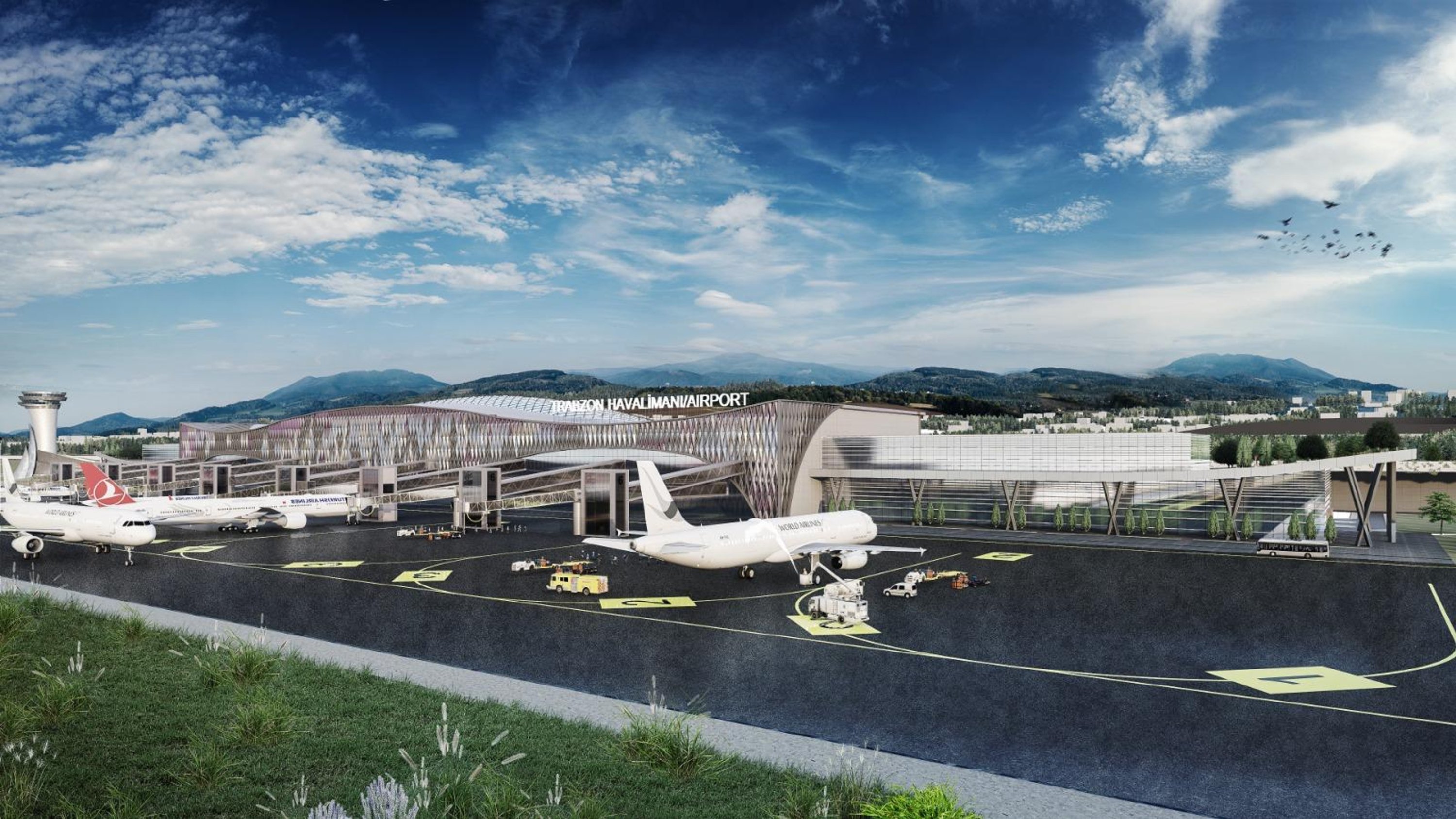
As part of the project, a 6,000-meter protective breakwater is planned to shield the fill area from the sea.
The airport will feature a 3,000-meter runway, 45 meters wide, with a parallel taxiway of the same length and width.
An apron 1,370 meters long and 155 meters wide, and a security apron 400 meters long and 120 meters wide are also part of the project.
According to Uraloğlu, the airport will have a 110,000-square-meter terminal building with capacity for 10 million passengers a year. The existing airport handles more than 3 million passengers a year.

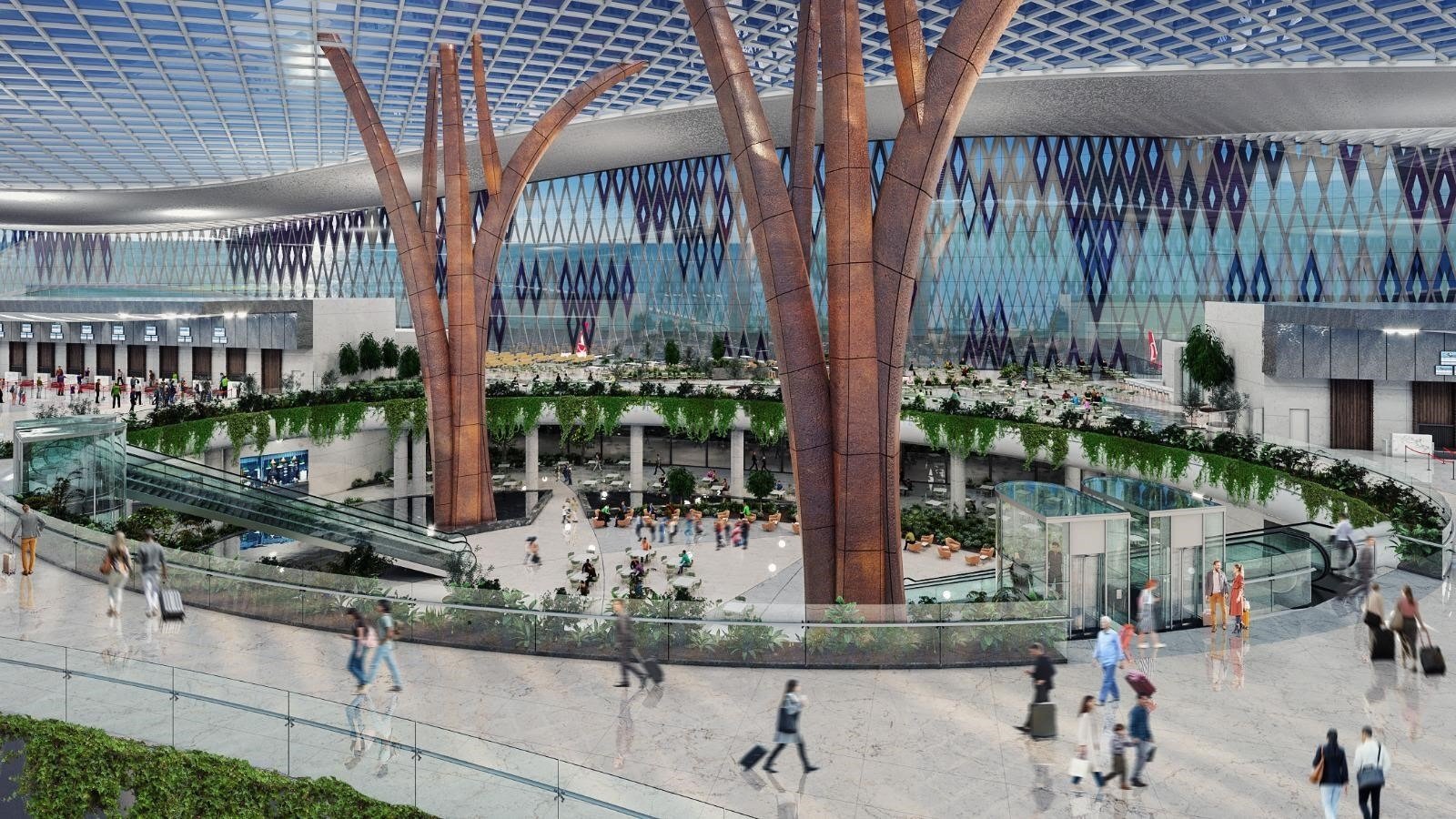
It will also include a technical block of 65,000 square meters, an air traffic control tower and support buildings.
Trabzon, a city of nearly a million people, is known for its green valleys, steep hills and a Byzantine-era monastery.
The local economy runs on agriculture and tourism. The city has become one of the hotspots for foreign tourists in recent years, particularly for those from the Gulf countries.


-
 Politics3 days ago
Türkiye rules out fight against Houthis under Saudi defense pact: Güler
-
 Economy2 days ago
Earnings reports, Fed decision to dominate busy week for markets
-
 Politics1 day ago
France reportedly mulls postponing Med grid after Türkiye-Libya deal
-

 Politics1 day ago
Turkish opposition parties’ cash row grows
-
 Politics22 hours ago
Yemen hails strong ties with Türkiye, its role in region
-

 Economy1 day ago
Ready for French test?: 5 questions for European Central Bank
-

 Sports3 days ago
Madrid’s Mourinho rejects Barcelona comparisons ahead of Clasico
-
 Politics1 day ago
Turkish Parliament set to debate Mecca deal bill