
Economy
Ready for French test?: 5 questions for European Central Bank

The European Central Bank (ECB) meets on Thursday against a backdrop of upheaval in France and an Iran war that is keeping energy prices above $100, meaning inflation risks remain elevated.
“How do you set rates against that backdrop? It’s incredibly difficult,” David Coombs, head of multiasset investments at Rathbones Asset Management, said.
Here’s a look at five key questions for markets ahead of the October meeting.
What will ECB do?
Leave its key interest rate unchanged at 2.5%.
A pause is widely anticipated after the ECB raised rates in June and September to counter rising inflation, as the Iran war pushed up energy prices.
Economists polled by Reuters expect a quarter-point rate hike in December.
“I don’t think they’ve become materially less worried about inflation here,” MUFG senior economist Henry Cook said.
What will ECB say about rate outlook?
It’s likely to stick with a data-dependent approach.
Caught between high inflation, at 3.8% in September, and concerns that rising government bond yields could hurt growth, policymakers have recently argued for what ECB President Christine Lagarde called a “measured response.”
“There will be a definite flag to the tightening in financial conditions and how it should slow growth and hence curb inflationary pressures,” said Barclays’ head of euro rates strategy Rohan Khanna.
“But also, plenty of uncertainty around the conflict and the outlook for energy prices.”
How worried is ECB about energy-driven inflation rise?
Comments from officials such as ECB chief economist Philip Lane suggest the ECB is not overly worried, for now, about high energy costs leading to other prices and wages rising.
A muted increase in core inflation, which excludes food and fuel prices, to 2.5% last month from 2.4%, suggests that high energy costs have yet to generate the sort of second-round impacts that could set off a hard-to-break inflation spiral.
Still, with oil up 90% this year and headline inflation above its 2% target, the ECB will likely stress vigilance.
Eurozone consumers nudged up their inflation expectations for the next 12 months in September, a survey on Friday showed.
“If the war in Iran escalates, or if we see further pressure on energy prices, the risk is still more rate hikes in 2027,” said Bas van Geffen, senior macro strategist at Rabobank, adding he did not have any penciled in for next year.
Markets price in at least two hikes by mid-2027.
What about French bond sell-off?
Well, the ECB is watching.
French 10-year borrowing costs just hit 24-year highs above 5% and a weakened government is grappling with violent protests that could undermine efforts to improve fragile finances.
Also, the premium investors demand to hold 10-year French bonds over safer Germany is at 167 bps, up from 92 bps when the ECB met last month.
But don’t expect the ECB to act soon with measures such as the Transmission Protection Instrument that allows it to buy bonds from any member state experiencing an “unwarranted, disorderly” tightening of its financing conditions.
France should solve its own debt problems through fiscal consolidation, says Lagarde.
The ECB could hold back on rate hikes if it thinks a crisis in France could hurt economic growth materially, Berenberg chief economist Holger Schmieding said.
“If there are serious contagion effects from a hypothetical French crisis to other countries where the fiscal policy is much more sustainable, the ECB would probably use its TPI to shield these other countries, not France,” he said.
Who will replace Lagarde?
The ECB chief, who could be appointed as the next World Economic Forum (WEF) chair as early as November, will likely be pressed on succession.
The former central bank governors of the Netherlands and Spain, Klaas Knot and Pablo Hernandez de Cos, are seen as frontrunners.
Lagarde’s exit would open a second vacancy on the ECB’s six-member Executive Board after Isabel Schnabel’s recent resignation. Chief economist Lane will step down in May.
Lagarde’s term is scheduled to end next October. Leaving early allows time for a new ECB chief to be picked before France’s spring presidential election. A snap Spanish election could also impact the politics around ECB succession, analysts said.

Türkiye will unveil its “National Energy 2040” vision at a launch in Istanbul next week, Energy and Natural Resources Minister Alparslan Bayraktar said Monday.
The plan envisions about $100 billion of investment in electricity transmission and distribution networks, Bayraktar told an event in Ankara.
“We are entering a new era in which the use of electricity will increase in every area of our economy, from industry to transportation, from buildings to agriculture,” he said. Bayraktar noted that the work on the new energy architecture was nearing completion.
The world faces the largest energy crisis of modern times, said the minister, stressing that supplying energy without interruption, reliably and at an affordable cost is a matter of security as well as economy.
He said Türkiye has brought its own oil and natural gas into the economy, expanded renewable capacity, is adding nuclear energy to the system and is using energy more efficiently.
Grids at center
Bayraktar said energy independence cannot be achieved only by owning resources or boosting generation capacity.
“We also need to use the energy we produce at the right time, in the right place and in the most efficient way,” he said. That requires a strong electricity infrastructure, smart grids, technology and skilled people, he said, and full independence means transforming the whole system, from generation to transmission, distribution and consumption.
He said electric vehicles, electrified production, artificial intelligence applications and the growth of data centers will raise electricity demand and change its nature. He said energy transition cannot be judged by power plant investments alone.
Transmission and distribution networks, storage, digital technologies and system management must be developed together, he said, and the National Energy 2040 plan, to be unveiled next Thursday, foresees about $100 billion of investment in transmission and distribution.
New industrial zones, growing cities, electric vehicles, rooftop solar systems and the digital economy will create new needs that adding lines and transformers cannot meet, Bayraktar said.
Grids must be able to monitor conditions in real time, forecast demand accurately, respond faster to faults and use existing capacity more efficiently, he said. “The new era in electricity distribution will be one of not only stronger grids but also smarter, more flexible and more resilient ones,” he said.
Domestic software, cybersecurity
Bayraktar said developing domestic software and spreading it across the sector is an important part of the transition.
He said research and development budgets the Energy Market Regulatory Authority (EPDK), Türkiye’s electricity and natural gas regulator, provides to distribution companies contribute greatly to developing local solutions.
Under the 2040 plan, he said, the government wants to see domestic software widely used across distribution infrastructure and protected against cyberattacks.
Global electrification pledge
Bayraktar said Türkiye sees this year’s United Nations climate summit COP31 as an opportunity to turn climate goals into concrete investments, projects and international cooperation.
He said one of the main initiatives Türkiye will lead there is the Global Electrification Pledge, which aims to raise electricity’s share of global final energy consumption to 35% by 2035.
Strengthening electricity grids will be one of Türkiye’s main energy agenda items at the summit, he said. Türkiye aims to deepen international cooperation on modernizing and digitizing distribution networks, integrating renewable energy and financing grid investment.
Bayraktar said its distribution companies have begun operating abroad, and Türkiye wants to make their experience and technology more visible internationally.
Leaders of a bloc of Turkic-speaking countries are due to gather in Türkiye this week, with cooperation on agriculture, space, trade and transportation expected to be high on the agenda.
The Organization of Turkic States (OTS) summit will be hosted by President Recep Tayyip Erdoğan on Friday in Ankara, which has been named the Turkic World’s Tourism Capital for 2026.
The gathering follows the NATO leaders’ summit held in the capital in July.
OTS leaders are expected to review the current state of cooperation and future prospects, as well as regional and international developments of shared interest, Anadolu Agency (AA) reported.
They will assess progress in the organization’s priority areas: political cooperation, trade and investment, transportation and connectivity, energy, digital transformation, cultural and humanitarian cooperation and institutional development.
The organization has set a long-term plan called Turkic World 2040 Vision, and the summit is expected to stress concrete steps toward it.
Türkiye will take over the group’s rotating chairmanship from Azerbaijan. Leaders are expected to adopt the Ankara Declaration along with decisions and documents meant to deepen cooperation and strengthen the organization’s institutions.
Turkish business groups are expected to hold events on the sidelines, with the Middle Corridor, border crossings, customs procedures and logistics costs set to feature in the talks. Turkmenistan’s president, Serdar Berdimuhamedov, is scheduled to meet Turkish business representatives on Oct. 30.
Transport, digital economy, agriculture, space
The Middle Corridor, a trade route linking Asia and Europe through Central Asia and the South Caucasus, offers important opportunities for the economic integration of the Turkic world, the report said.
The Baku-Tbilisi-Kars railway is among the major transportation projects between Türkiye and Azerbaijan.
A digital economy partnership agreement among members aims to remove barriers to e-commerce, digital services and cross-border data-based activity. Türkiye ratified it in June, becoming the third country to complete domestic approval after Azerbaijan and Uzbekistan.
Members are also working on a Turkic States Digital Agriculture Data Platform for data exchange and smart farming solutions. At the 77th International Astronautical Congress in Antalya, members recently signed a framework agreement continuing a joint CubeSat project coordinated by the organization.
Trade
Türkiye has been a net exporter to the organization’s members in recent years. Shipments to the four full members, Azerbaijan, Kazakhstan, Kyrgyzstan and Uzbekistan, have grown from $6.2 billion in 2021 to $9.6 billion last year. Imports in the same period rose from $4.2 billion to $7.3 billion
Total trade last year came to nearly $17 billion. Kazakhstan was Türkiye’s top export market at $3.2 billion, followed by Azerbaijan at $3 billion, Uzbekistan at $2.1 billion and Kyrgyzstan at $1.3 billion.
In the first eight months of this year, Türkiye exported $6.1 billion worth of goods and imported $5.4 billion, bringing trade to nearly $11.5 billion. Kazakhstan led again at $2 billion, followed by Azerbaijan at $1.9 billion, Uzbekistan at $1.3 billion and Kyrgyzstan at $832.8 million.
Turkmenistan, Hungary and the Turkish Republic of Northern Cyprus (TRNC) hold observer status in the organization. The Economic Cooperation Organization is an observer organization.
Brazil’s economy has beaten expectations in recent years, but mounting debt and entrenched structural problems could complicate leftist President Luiz Inacio Lula da Silva’s fourth term, which begins in January.
Here are the five main economic challenges he faces:
Soaring debt
Brazil’s public debt has surged more than 10 percentage points during Lula’s current term to over 82% of gross domestic product (GDP), driving up borrowing costs.
The root cause is years of rising mandatory spending, leaving under 8% of the federal budget adjustable.
Lula has sent mixed fiscal signals, at times dismissing debt worries as “nonsense,” while arguing strong economic growth would fix the problem.
His team has pledged to keep the government’s current budget rules, which cap spending growth and set primary balance targets – revenues minus expenditures, excluding interest payments on public debt – and hinted at tightening them.
Hitting those targets will be harder given Lula’s promise to raise the minimum wage faster than inflation, which also lifts pension costs, after already raising welfare benefits and promising new spending.
High interest rates, sticky inflation
Even with interest rates at 13.75%, Brazil’s annual inflation of 4.6% remains above the central bank’s tolerance range of 1.5% to 4.5%.
The central bank delivered its fifth straight rate cut last month on growing signs of an economic slowdown, but markets expect inflation to remain above the official 3% target until as late as 2029.
Lula’s platform promises lower interest rates through fiscal discipline that spares social programs, but most economists say rates will only fall faster if Brazil cuts spending, and it’s unclear how he will square the two.
Debt-laden households, businesses
A record nearly 84 million Brazilians and 9.3 million businesses are behind on debt payments, according to credit bureau Serasa, as high interest rates bite.
That has fueled public dissatisfaction despite strong indicators such as record-low unemployment and wage growth outpacing inflation.
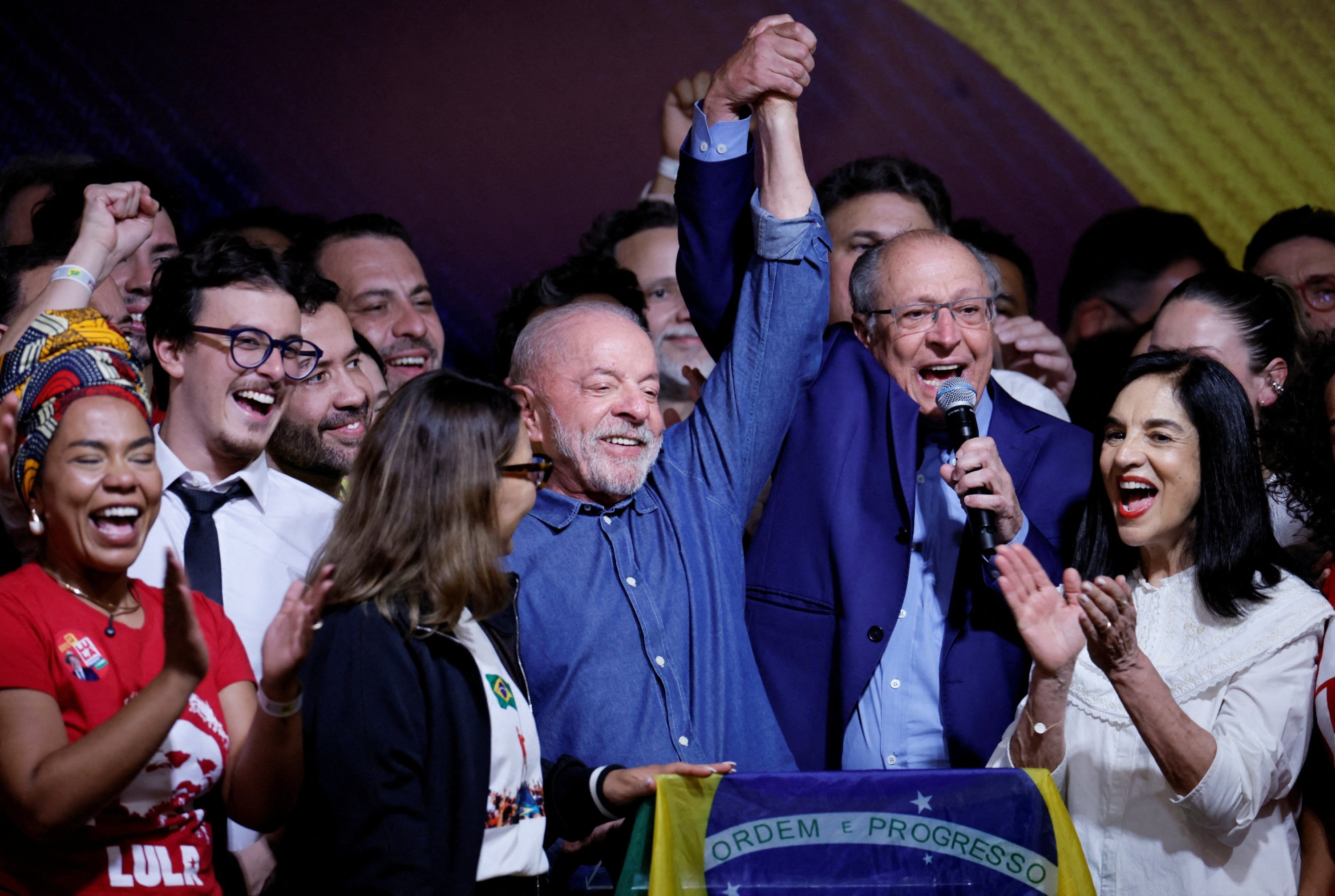
Lula plans a new round of debt relief, this time through discounted purchases of distressed household loans from banks, plus tax debt forgiveness for some small-business owners. Analysts say such measures offer only temporary relief.
The government has also discussed with the central bank ways to rein in heavy use of easy but expensive credit, such as credit cards and unsecured consumer loans, though it has not detailed any proposals.
Scarce political capital for reforms
Lula will likely struggle to push his economic agenda through Congress after voters elected the most conservative legislature since Brazil’s return to democracy in the 1980s.
Although he defeated right-wing Senator Flavio Bolsonaro in Sunday’s runoff, Bolsonaro’s Liberal Party and its allies are set to control both chambers.
Lula’s aides have signaled he will keep pushing to curtail tax breaks, but lawmakers have repeatedly resisted measures that raise the effective tax burden.
During his current term, Lula has struggled to name nominees and win Senate approval for them at key institutions, including the Supreme Court, central bank, securities regulator and antitrust watchdog, and that is likely to be even more difficult ahead with the rightward shift of Congress.
Tax reform uncertainties
Lula won congressional approval in 2023 for a sweeping overhaul of Brazil’s consumption taxes, and a new value-added tax is set to take effect in January.
With under three months to go, the government has still not disclosed the effective rate, which independent analysts estimate will be around 28%.
Fearing a backlash during the campaign, the administration has also held off on sending Congress a bill to regulate a new tax on products considered harmful to health or the environment, such as cigarettes and alcohol.
That delay could push back revenue from the tax and has fueled criticism of the government’s handling of tax policy.
A key interest rate policy decision in the U.S., along an update on inflation and its impact on consumer confidence and economic growth data will fill a busy calendar this week as more large companies are also due to report their quarterly earnings.
They all arrive just weeks before the Nov. 3 midterm elections that will determine the future makeup of Congress as the U.S. economy grapples with constantly shifting global trade conflicts and a global oil shortage brought on by the U.S. war with Iran.
Inflation is stubbornly high, consumers are losing confidence and the resilient jobs market is showing more signs of stress.
Here’s a look at some of the key reports coming in the week ahead.
Americans are losing confidence in the economy as rising prices for everything from gas to groceries guts budgets. The latest consumer confidence survey from business group The Conference Board on Tuesday is expected to show that consumer confidence kept shrinking in October.
The last report showed that confidence plunged in September to the lowest level in more than a decade. The October report is expected to show confidence kept weakening. Consumer confidence is down sharply from two years ago, according to the survey.
In that time, the U.S. has waged a wide-ranging trade war with much of the world, including its neighbors and closest trading partners.
The uncertainty around the sudden shifts in tariffs left businesses and consumers wary about planning ahead over worries about higher costs.
Meanwhile, the U.S. war with Iran that started in early 2026 slashed global oil supplies and added more fuel to rising prices.
The Federal Reserve (Fed) will close out a two-day meeting on Wednesday and is expected to hold its benchmark interest rate steady following a hike at its September meeting.
The central bank has been signaling that it is still worried about inflation and that it may have to continue raising rates to help tame rising costs. Wall Street still expects that one more rate hike is coming at the Fed’s meeting in December.
Higher interest rates make borrowing more costly, which in turn can slow economic growth and cool stubbornly hot inflation. The Fed has to balance taming inflation with supporting the jobs market. Higher interest rates and slower economic growth could dampen rising inflation, but they could also hurt job growth at a time when the somewhat resilient employment market is showing signs of stress.
The U.S. Department of Commerce on Thursday will release its initial report on economic growth during the third quarter and economists expect a sluggish result. Economists are forecasting that gross domestic product (GDP), which is the nation’s output of goods and services, rose 1.7% from July through September. It’s the first of three reports for third-quarter GDP and can be revised higher or lower.
The forecast for the initial assessment marks an easing from 2.2% growth during the second quarter.
GDP growth has been slowing since the first quarter under pressure from higher oil prices fueling already stubbornly high inflation.
Yet, growth has been bolstered by a strong stock market and businesses investing in artificial intelligence technology. Households, though, have been struggling with higher costs on everything from gas to groceries eating up more of their budgets at the same time that average wages for workers stagnate.
The latest inflation update is expected to show that prices on everything from gasoline to clothing and groceries marched higher at a faster rate in September. The U.S. will release the personal consumption expenditures report (PCE) on Thursday and economists expect that inflation jumped at a 3.7% rate, up from a 3.4% rate in August.
The PCE is the preferred measure of inflation used by the Fed, which wants to bring inflation down to its target rate of 2%. Several other measures of inflation have also moved stubbornly above a 3%.
Inflation has been rising at an even sharper rate since the U.S. war with Iran started in February, essentially shutting down the vital Strait of Hormuz and stifling the global oil supply.
That has prompted a surge in gasoline prices that have been a direct hit to household budgets. Higher diesel fuel costs raised the cost of shipping and warehousing goods, which businesses typically pass along to consumers.
The latest updates on retail sales show that household spending remains strong, on the surface. Much of that spending, though, is the result of paying higher costs , especially for gasoline.
Investors have another busy week of earnings ahead, with reports from big names that could provide more insight on plans for AI spending and how inflation is influencing profits.
The most closely-watched reports this week are likely to be the big technology or technology-related companies that have seen their stock values surge as they heavily invest in artificial-intelligence technology with hopes for a big benefit.
Google’s parent company, Alphabet, reports its results on Wednesday, with Intel and Amazon reporting their latest results on Thursday.
Analysts expect all three companies to report profit gains as Wall Street tries to determine whether their big AI investments will translate into future growth and whether their outsized stock values are justified.
A wide range of other companies will report results this week, shedding more light on inflation’s impact across industries. Shipping company UPS and beverage giant Coca-Cola report results on Tuesday. Starbucks reports its results on Thursday, while oil giants ExxonMobil and Chevron report their results on Friday.
Togg, Türkiye’s domestically developed electric vehicle brand, unveiled on Friday a new special edition of its T10F electric fastback, featuring amber-inspired design details and seven exterior color options.
The T10F 4More Kehribar edition takes its name from kehribar, the Turkish word for amber, a natural resin that fossilizes over millions of years. The series draws on amber’s warm tones and changing reflections to highlight the car’s sporty design, the company said.
The seven exterior colors are Ayder, Seyhan, Urla, Kula, Oltu, Gemlik and Mardin, names associated with locations across Türkiye. The colors are designed to create different visual effects depending on the lighting and viewing angle.
Amber-colored accents appear on several exterior elements, including the wheels, front grille, logo, side mirrors and window surrounds. Inside, seats made with Artisyn fabric, embossed patterns and specially designed decorative surfaces carry the color and material theme into the cabin.
The new edition joins Togg’s special-series lineup following the Obsidian edition, which drew inspiration from the deep black tones of obsidian, a naturally occurring volcanic glass.
The 4More goes for a high-performance, dual-motor, all-wheel-drive (AWD) product line for the carmaker’s models.
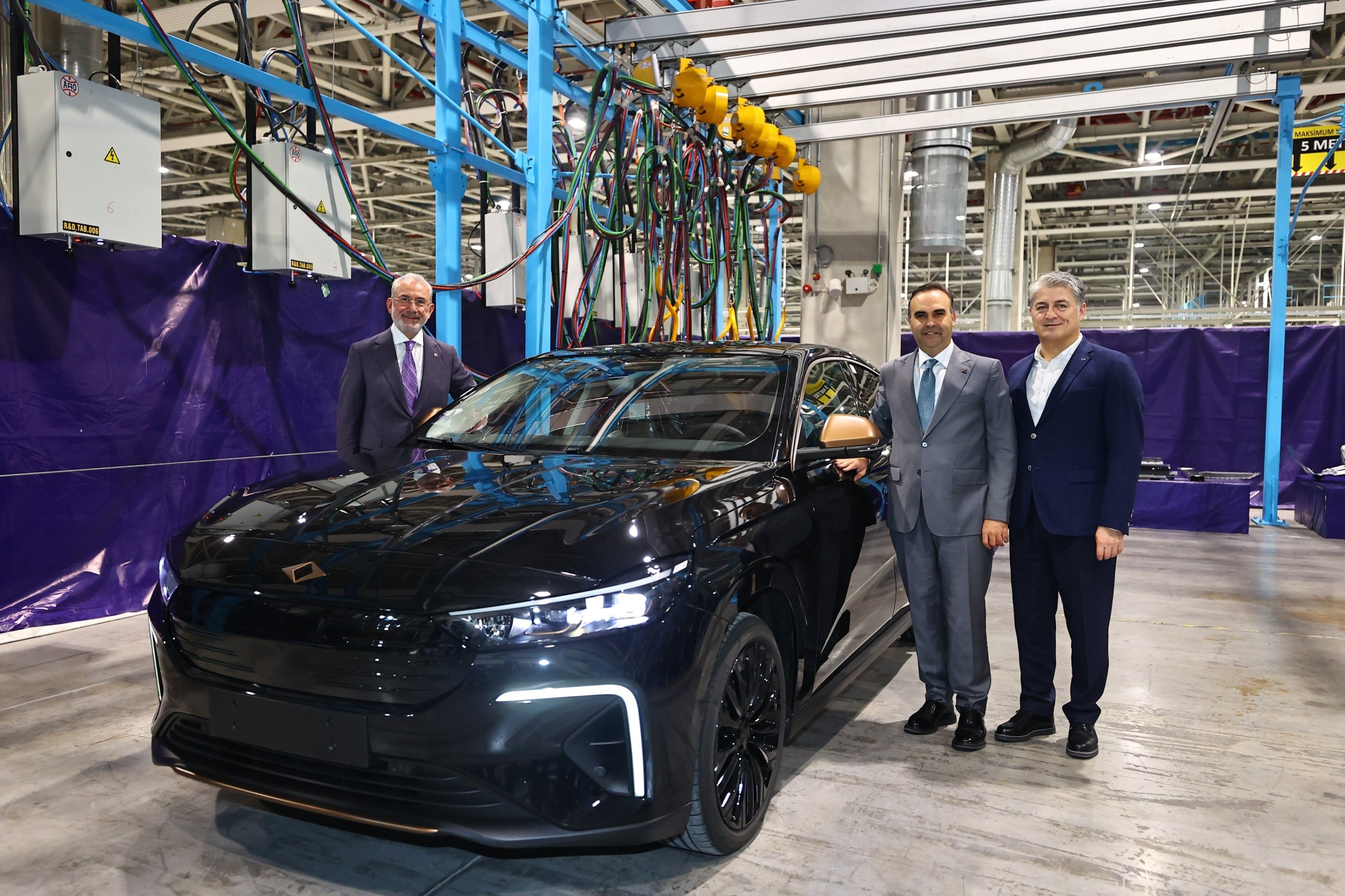
Industry and Technology Minister Mehmet Fatih Kacır on Friday visited Togg’s campus in the northwestern Bursa province to review work on the new model and the T6X, a low-cost B-SUV scheduled to go on sale in 2027.
In a post on the Turkish social media platform NSosyal, Kacır described Togg’s facility as the country’s most digitally advanced automotive production plant, with an average of one industrial robot for every 10 employees.
He also said the plant had a production rate of 375 vehicles per day, highlighting the company’s manufacturing capacity as it continues to develop its model lineup.
Togg was founded eight years ago after President Recep Tayyip Erdoğan called for the production of a fully locally funded passenger car.
The company is currently manufacturing the T10X SUV and the T10F fastback, launched last year.
Togg sold 39,020 vehicles domestically last year, and its sales in the first nine months of this year rose over 60% year-over-year to 37,426 units, data from the Automotive Distributors and Mobility Association (ODMD) shows.
U.S. President Donald Trump is expected to lift 50% tariffs on select Canadian agricultural and forestry products in a move intended to bolster Republican Sen. Susan Collins’ reelection bid in Maine ahead of November’s midterm elections, The Wall Street Journal reported Friday.
Citing people familiar with the planned action, the report said the tariff changes could be announced as early as Friday, although the scope and timing remain subject to change.
The potential move comes after Collins, a moderate Republican facing a competitive reelection race, sought relief from tariffs that have affected Maine industries and consumers. Maine has extensive economic ties with Canada, making cross-border trade a significant issue in the state’s Senate contest.
Collins’ Democratic challenger, Troy Jackson, has made Trump’s trade policies toward Canada a central theme of his campaign. The two candidates are neck-and-neck in polls ahead of Election Day.
A White House official cautioned against treating preliminary reports as confirmation of an impending policy change. “Any tariff announcements would come directly from the administration and any preliminary reporting is speculation,” the official said, according to the Journal.
Canada imposed retaliatory tariffs on the U.S. after Trump’s announcement last month, following the breakdown of trade talks between Washington and Ottawa.


-
 Economy3 days ago
Canada eyes Türkiye’s defense agency as model for domestic arms sector
-
 Politics2 days ago
Türkiye rules out fight against Houthis under Saudi defense pact: Güler
-

 Sports3 days ago
Turkish clubs enjoy encouraging European week with 2 wins, 2 draws
-
 Economy1 day ago
Earnings reports, Fed decision to dominate busy week for markets
-

 Sports3 days ago
Barcelona aim 9-point cushion as Madrid look to spoil Clasico party
-
 Economy3 days ago
Canada’s AtkinsRealis contender to build Türkiye nuclear plant: Carney
-

 Economy3 days ago
Türkiye’s Togg unveils amber-themed special edition of its fastback
-
 Politics3 days ago
Türkiye convenes 8 nations for first-ever R4+E3 meeting in Istanbul