
Politics
Turkish main opposition plays democracy with one-man race

The New Party (YP), which has recently been rocked by bribery allegations and resignations, will hold its first ordinary convention on Saturday. Chairperson Özgür Özel and his team are preparing to amend the party bylaws they themselves drafted ahead of the party’s first convention, seeking to hold the elections for the party assembly and the High Disciplinary Board through a closed-list system rather than an open-list one.
The party chairpersonship election will be held on the first day of the convention. Özel, who has been accused of receiving bribes from former Uşak Mayor Özkan Yalım, former Antalya Mayor Muhittin Böcek and Erzincan lawmaker Mustafa Sarıgül to approve their candidacy while he was the chair of the opposition Republican People’s Party (CHP) until May, will run as the sole candidate.
Approximately 1,200 delegates are expected to cast their votes in the elections. Elections for the party assembly and the disciplinary board will take place on the second day of the convention in the capital Ankara. Although the party bylaws stipulate an open-list system, preparations are reportedly underway to hold the elections using a closed-list system. Under the bylaws, the party can switch to a closed-list system if at least one-tenth of the total number of convention members submit a written proposal.
Under the closed-list system, delegates either accept or reject the entire list of candidates drawn up by the party chair. Under the open-list system, however, candidates acting independently of or in opposition to the party chair can also secure seats on the party assembly if they receive enough votes.
Özel is reportedly seeking a closed-list election both to prevent changes to his proposed list and to ensure the results are finalized more quickly. Of the 150-member party assembly, 77 seats will be allocated to the parliamentary group.
Moves to introduce a closed-list system in the elections have also stirred political speculation within the party. Since YP was established, Özel and his team have reportedly secured full control over the party, while the Ekrem Imamoğlu faction, aligned with the former Istanbul mayor who is now jailed pending trial on corruption charges, has been pushed into the background. Imamoğlu was announced as a future presidential candidate of the CHP by Özel after he was arrested in March 2025 and sided with Özel after he split from the CHP, though he still remains in the party. Imamoğlu has long been a powerful figure within CHP and worked with Özel against then chair Kemal Kılıçdaroğlu in the 2023 intraparty vote in CHP. Against this backdrop, it is alleged that the closed-list system may have been preferred out of concern that the İmamoğlu camp could otherwise break Özel’s proposed party assembly list.
Attention will also focus on whether key party figures such as Burhanettin Bulut, Turan Taşkın Özer, Veli Ağbaba and Özgür Karabat, whose names have been mentioned in corruption and bribery allegations in the corruption case involving Imamoğlu and Aziz İhsan Aktaş, a businessman who confessed to bribing his way into multiple municipalities run by CHP, will secure seats on the new party assembly.
Burhanettin Bulut and Özgür Karabat were accused of receiving bribes in the Aziz İhsan Aktaş indictment. The indictment alleged that Bulut received $1 million in bribes, while Karabat received TL 5 million. Turan Taşkın Özer, who is close to Imamoğlu, is also among the suspects in the corruption case involving Istanbul municipality staff and businesspeople. Ağbaba, meanwhile, faces numerous allegations, including soliciting bribes from party members in exchange for mayoral candidacies, establishing a delegate-vote trading network, arranging tailor-made public tenders in several provinces and facilitating appointments through favoritism.

The 2026 edition of Blue Whale, one of the biggest exercises involving submarines in the Mediterranean, had its media and distinguished observers’ day on Friday in southwestern Türkiye. The invitation-only military drill hosts more than 4,500 personnel from 12 countries and involves eight submarines, 11 warships, five helicopters and an assortment of aerial and underwater military vehicles, including drones. The exercise also stands out with the participation of Türkiye’s neighbor, Greece, which is represented by one warship. The two countries contest maritime borders in the Aegean Sea and are often at odds over rights in the Eastern Mediterranean, where Türkiye calls for recognition of the Turkish Cypriot side in divided Cyprus and Greece only recognizes the Greek Cypriot side.
The exercise, which began on Nov. 9, will conclude on Nov. 20. On Friday, Turkish Naval Forces Command hosted a briefing aboard the TCG Salihreis frigate for journalists and observers at the Aksaz naval base on the coast of Marmaris.
Rear Adm. Ahmet Işçi, commander of the submarine fleet based in Gölcük in northwestern Türkiye, briefed journalists and observers on the exercise’s purpose and stages.
Işçi said the exercise aims not only to enhance the Turkish naval forces’ operational capabilities but also to strengthen cooperation and interoperability among friendly and allied countries.
“Our submarine fleet has become one of the key elements of our navy’s deterrent power,” he said, noting that the Turkish Submarine Fleet ranks among NATO’s leading fleets with 13 active submarines.
He said the main objective of the biannual international exercise is to improve knowledge, skills and readiness in anti-submarine warfare, adding that it also seeks to enhance joint operational capabilities in an environment that reflects real operational conditions.
Işçi said eight submarines, 11 warships, five helicopters, three maritime patrol aircraft, two unmanned aerial vehicles (UAVs) and one unmanned underwater vehicle would take part in the exercise under the Naval Forces Command. Three vessels from the Coast Guard Command will also participate.
Along with one Greek warship, two Spanish warships are participating as part of NATO’s Standing Maritime Group 2 (SNMG2), while a U.S. Navy warship is joining them independently.
A maritime patrol aircraft from the Pakistan Navy and 13 foreign observers from seven countries are also attending.
Cooperation activities will be conducted during the exercise under the scenarios of “Submarine and Underwater Attack Operations” and “Submarine and Maritime Air Operations,” Işçi said.
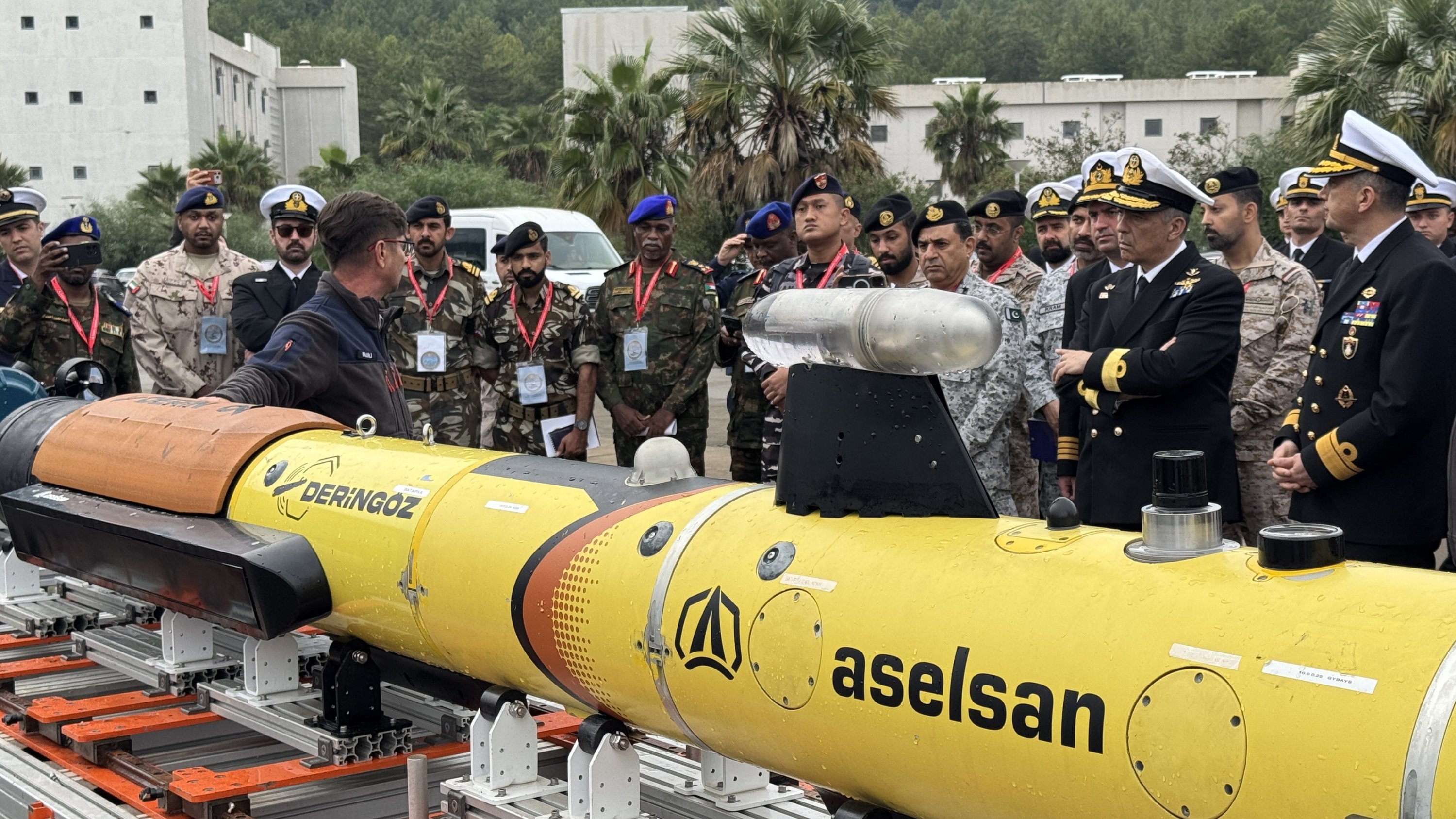
The exercise was also an occasion for the promotion of locally made vehicles in the service of the Turkish navy, including “Deringöz” and “Kılıç” by the top defense firm ASELSAN. Deringöz is an autonomous underwater vehicle used for reconnaissance and surveillance, with an operating depth of 600 meters (1,968.5 feet) and an operating time of up to 24 hours with an expandable battery. Kılıç is a kamikaze autonomous underwater vehicle designed to detect, track and neutralize maritime targets such as subsea and surface platforms.
The COP31 summit naturally concentrated on climate change, its impact, and how to tackle it, but the event in the southern Turkish province of Antalya was also at the heart of a busy diplomatic schedule for President Recep Tayyip Erdoğan.
Erdoğan held one-on-one talks with leaders from across the globe, touching upon a wide array of issues and showcasing Türkiye’s diplomatic skills to maintain ties with countries in every continent. His first meeting was with outgoing U.N. Secretary-General Antonio Guterres on Nov. 10. During the meeting, Erdoğan said that Türkiye was continuing its efforts, together with regional countries, to de-escalate rising tensions over the conflict between Iran and the United States and ensure that problems were resolved through dialogue and diplomacy. Noting that Türkiye was also working to end the Russia-Ukraine war, Erdoğan said they were ready to support a new dialogue process. The latest developments in Gaza, Cyprus and Libya were also discussed during the meeting.
Following his meeting with Guterres, Erdoğan met with Brazilian President Luiz Inacio Lula da Silva. It was Lula da Silva’s first official face-to-face meeting with an international leader since his reelection last month. During the meeting, which addressed Türkiye-Brazil relations as well as regional and global developments, Erdoğan said Türkiye aimed to build on Brazil’s progress in climate negotiations during its COP30 presidency.
Türkiye-Ethiopia relations and regional issues were discussed during Erdoğan’s meeting with Ethiopian Prime Minister Abiy Ahmed. Erdoğan said the two countries would continue taking steps to advance cooperation in various fields, particularly trade and investment, adding that Türkiye would maintain its support for peace and stability in Ethiopia’s region. Erdoğan also congratulated the Ethiopian prime minister on Ethiopia’s selection to host COP32.
Bilateral relations and regional issues were discussed during Erdoğan’s meeting with Bangladeshi Prime Minister Tarique Rahman. Erdoğan said it would be beneficial for Türkiye and Bangladesh to continue taking steps to expand cooperation in various fields, particularly trade and the defense industry. Erdoğan said Türkiye would continue its efforts to keep the humanitarian situation in Cox’s Bazar, where Rohingya refugees took shelter, on the international community’s agenda.
Erdoğan also received Saudi Energy Minister Prince Abdulaziz bin Salman Al Saud. Following the meeting, Energy and Natural Resources Minister Alparslan Bayraktar and his Saudi counterpart signed a Memorandum of Understanding on Cooperation in Electricity Projects between the two countries in the presence of Erdoğan.
During his meeting with Gurbanguly Berdimuhamedov, Turkmenistan’s National Leader and Chairman of the People’s Council, Erdoğan stressed the need to intensify cooperation between the two countries in energy, trade, the defense industry and investment. Erdoğan said the Organization of Turkic States (OTS) was growing stronger and that the Ankara Summit held last month had once again demonstrated the organization’s increasingly recognized strategic importance. He also expressed hope that Turkmenistan would join the organization’s family council as a member.
On Nov. 11, the first day of the COP31 Leaders’ Summit, Erdoğan received Australian Prime Minister Anthony Albanese at the Antalya EXPO site. During the meeting, which addressed Türkiye-Australia relations as well as regional and global issues, Erdoğan said the potential for bilateral trade between Türkiye and Australia was greater than its current level, stressing the importance of exploring cooperation opportunities in various fields.
Erdoğan also received the Presidency of Bosnia-Herzegovina Chairperson Denis Becirovic and Presidency Council member Zeljko Komsic. He stressed that Türkiye attached importance to its friendship with all three constituent peoples of Bosnia-Herzegovina and would continue to support the country’s territorial integrity, sovereignty and constitutional order.
During his meeting with Armenian Prime Minister Nikol Pashinyan, Erdoğan said the normalization process between Türkiye and Armenia was continuing through constructive steps, with several symbolic but important measures already taken. Erdoğan said Türkiye was closely monitoring and supporting the peace process between Armenia and Azerbaijan.
Erdoğan also received Chinese Vice President Han Zheng. The meeting addressed Türkiye-China relations as well as regional and global issues. During the meeting, Erdoğan stressed the importance of accelerating cooperation between Türkiye and China, saying the two countries could develop ties in various fields, particularly investment, energy, trade and tourism, and that they were determined to take the necessary steps to achieve this. Erdoğan said the Middle Corridor could be aligned with China’s Belt and Road Initiative, adding that, when considered alongside the Development Road Project, the resulting potential for cooperation presented a significant opportunity for the countries involved.
US-Iran war
On Nov. 12, the second and final day of the COP31 Leaders’ Summit, Erdoğan first met with Iranian President Masoud Pezeshkian. The two leaders discussed Türkiye-Iran relations as well as regional and global issues.
Expressing his hope that the conflict between Iran and the U.S. would end as soon as possible and that lasting peace would be established, Erdoğan said the ground for reconciliation needed to be strengthened and diplomacy given a chance to usher in a period of stability. Erdoğan stressed the importance of establishing a negotiating table without further delay.
Erdoğan also met with Democratic Republic of the Congo (DRC) President Felix Antoine Tshisekedi. Türkiye-DRC relations and regional issues were discussed during the meeting.
Erdoğan said the partnership between Türkiye and the DRC was expanding in all fields, adding that the two countries would continue taking steps in various areas, particularly trade, transportation and the defense industry. Emphasizing that Türkiye supported the DRC’s territorial integrity, Erdoğan said he hoped lasting stability would be established in the country.
During his meeting with Sudan’s Sovereignty Council Chairperson Abdel Fattah al-Burhan, Erdoğan said the two countries would continue their efforts to strengthen bilateral relations. He stressed the importance of further steps to expand cooperation in various fields, particularly the defense industry, investment and agriculture. The Turkish president said Türkiye’s support for Sudan’s unity, territorial integrity and independence remained unchanged. He added that Ankara was closely monitoring developments on the ground and supported the proposed “Sudan Peace Initiative.”
During his meeting with Libyan Prime Minister Abdul Hamid Dbeibah, Erdoğan discussed bilateral relations and regional issues. He said Türkiye and Libya would continue taking steps to expand cooperation and deepen ties in various fields, particularly energy. He stressed that no initiative that was not embraced by the Libyan people could gain traction on the ground.
During his meeting with Georgian President Mikheil Kavelashvili, Erdoğan said it was important to make the most effective use of Türkiye-Georgia-Azerbaijan cooperation mechanisms.
Noting that Georgia was one of Türkiye’s important trading partners, Erdoğan said efforts were underway to achieve bilateral trade volume targets. He added that the two countries were working to strengthen relations in various fields, particularly energy, transportation and the defense industry.
During his meeting with Pakistani Prime Minister Shehbaz Sharif, Erdoğan said the two countries would continue taking steps to significantly advance Türkiye-Pakistan relations. He added that efforts would continue to accelerate initiatives aimed at expanding cooperation in various fields, particularly transportation and the defense industry.
Emphasizing that the Mecca Defense Alliance had further strengthened solidarity between Türkiye and Pakistan, Erdoğan said the two countries would continue contributing to efforts to end the conflict in Iran. He also said Türkiye was ready to do everything possible through peaceful means to help address the challenges facing Pakistan in its region.
During his meeting with Somali President Hassan Sheikh Mohamud, Erdoğan stressed that Türkiye and Somalia were determined to expand cooperation in various fields, with defense and energy among their priorities, and would continue taking steps to give fresh momentum to bilateral relations. Erdoğan said Somalia’s peace and stability were of great importance to Türkiye, adding that Ankara hoped the national dialogue process would succeed, national unity would be established and social peace would be achieved.
During Erdoğan’s meeting with Congolese President Denis Sassou Nguesso, Türkiye-Congo relations and regional issues were discussed.
Erdoğan said Türkiye and the Republic of the Congo had made good progress in cooperation, particularly in trade and investment, adding that the two countries were working to take steps to unlock their full potential and would continue efforts to strengthen bilateral ties.
Terror-free region
Türkiye-Iraq relations and regional issues were discussed during Erdoğan’s meeting with Iraqi President Nizar Amedi. Noting that progress had been made on the Development Road Project, which will strengthen Iraq’s connectivity with the rest of the world, Erdoğan said the project would create an entirely new route for East-West trade. He added that the two countries would continue taking steps to strengthen cooperation in various fields, particularly energy.
Erdoğan said he expected Iraq to maintain and increase its support for the goal of a “terror-free region,” stressing that achieving this objective would benefit both countries.
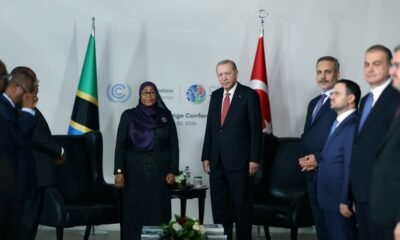
During his meeting with Tanzanian President Samia Suluhu Hassan, Erdoğan said bilateral trade between Türkiye and Tanzania had increased as a result of steps taken by the two countries. He added that they would continue working to expand cooperation in various fields based on a win-win approach.
“What happened to us?” This was reportedly what a crying Mustafa Sarıgül told a suspect released in connection with a corruption probe involving his family. The lawmaker, who was recently expelled from the main opposition New Party (YP), has more legal troubles in the offing as his son Ömer Sarıgül is reportedly set to testify against him. Authorities also detained 15 more suspects on Friday in connection with the probe.
The Sarıgül family and their associates are accused of laundering money linked to criminal activities, but the veteran politician currently enjoys immunity due to his status as a lawmaker. Prosecutors in Istanbul launched the investigation recently after two German citizens alerted police, claiming Sarıgül defrauded them after pledging joint investments. Mustafa Sarıgül himself is a suspect in the case, which involved his sons Ömer and Emir as well as businesspeople who did business with them, but a separate probe is expected for him as prosecutors in Istanbul referred his case to Ankara counterparts, citing jurisdiction.
Media outlets reported on Friday that Ömer Sarıgül will follow in the footsteps of his older brother Emir and invoke a remorse law which grants lenient sentencing and sometimes a full but conditional release for suspects collaborating with authorities. Younger Sarıgül, who was arrested on Oct. 19, is expected to make an additional statement to prosecutors within a few days. Emir Sarıgül was ordered not to leave his residence after he was released under judicial control in light of his confessions implicating his father. Parts of Emir Sarıgül’s statements published by the media outlets last week exposed alleged bribery by the politician to the chair of YP, while both men were members and chairs of the opposition Republican People’s Party (CHP), in order to secure a candidacy for a parliamentary seat. A bodyguard of Mustafa Sarıgül has also testified in the case against Sarıgül, claiming he groomed him for sex and that a video leaked online showing him having intercourse with Sarıgül was genuine and that Sarıgül paid to obtain a report to claim the video was fake.
Müge Bayır, a suspect who was released with judicial control after collaborating with authorities in the probe, said in an additional statement to investigators that Mustafa Sarıgül telephoned him after her release. “He repeatedly called me and my sister. I did not return calls at first but had to answer them as I was afraid of what he might do to me,” Bayır said in her second statement, according to media reports on Friday. Bayır said they spoke briefly and Sarıgül was crying during the call, telling her, “Why did this happen? What happened to us?” She claimed Sarıgül then sent her cash through middlemen, though she did not specify whether it was hush money.
An Istanbul court adjourned the trial of the city’s former mayor, Ekrem Imamoğlu, to Jan. 4, instructing the case to be referred to prosecutors for preparation of their closing arguments in the case where Imamoğlu faces thousands of years in prison on charges of corruption.
At a hearing which continued into the early hours of Friday, the court ruled for the release of eight defendants in the case, including businesspeople, a lawyer for Imamoğlu and director and staff of the municipality’s subsidiaries.
Imamoğlu is accused by prosecutors of running a criminal organization thriving on bribes and tender rigging. The mayor, who was arrested in March 2025, denies the charges and claims the trial, which is underway in the Silivri courthouse-prison complex where he is also in custody, is politically motivated. He has been in custody along with 46 other defendants in the sprawling corruption case. A total of 436 defendants are being tried, and most of them were released with judiciary control in earlier hearings.
The indictment identifies Imamoğlu as the alleged “leader of a criminal organization” and accuses him of offenses including forming an organization to commit crimes, bribery, money laundering, fraud against public institutions, unlawfully recording and obtaining personal data, concealing evidence, obstructing communications, damaging public property, publicly disseminating misleading information, extortion, bid-rigging, deliberate environmental pollution and violations of tax, forestry and mining laws.
Prosecutors are seeking a prison sentence of between 828 years, two months and 2,352 years for the ex-mayor over 142 alleged acts.
A panel organized by the Foundation for Political, Economic and Social Research (SETA) at the COP31 climate summit in Antalya examined how climate change is reshaping global security, questioning whose interests are protected when environmental threats become a security priority.
The panel, titled “Whose Climate Security? Order, Nature, People and Publics,” brought together academics and policy experts to examine the climate crisis through the perspectives of international order, ecological protection and public opinion.
Held in the COP31 Blue Zone, the discussion explored the consequences of the United States’ withdrawal from international climate frameworks, the need to place nature at the center of security policies and growing awareness of climate risks in Türkiye.
Moderated by Prof. Murat Yeşiltaş, director of SETA’s Foreign Policy Research Department, the panel featured associate professors Ceren Uysal Oğuz, Senem Atvur and Başar Baysal. The speakers questioned whose security takes priority when climate change is treated as a security issue and whether existing approaches adequately protect vulnerable communities and ecosystems.
U.S. withdrawal effects
Opening the discussion, Oğuz examined the implications of the United States’ withdrawal from the Paris Agreement and the U.N. Framework Convention on Climate Change (UNFCCC), which is scheduled to take effect in February 2027.
She recalled that a presidential memorandum issued in January 2026 initiated the U.S. withdrawal from 66 international organizations and agreements, including the UNFCCC and the Intergovernmental Panel on Climate Change (IPCC).
Oğuz said the decisions had created gaps in scientific assessments, climate financing and cooperation on energy and technology. The United States had previously contributed more than 20% of the UNFCCC budget, but that funding was no longer being provided, she said.
China, meanwhile, had increased its share of the new budget to 20%, highlighting a potential shift in the distribution of influence within international climate institutions.
Oğuz identified the European Union’s regulatory influence, China’s dominance in clean energy supply chains and the growing role of middle powers such as Türkiye, Brazil and Mexico as important factors in addressing the resulting gaps.
She argued that coalitions of countries willing to advance climate action could help sustain international cooperation, stressing that such partnerships would complement rather than replace the existing multilateral climate framework.
Ecological security
Atvur challenged conventional approaches to climate security, arguing that nature is frequently treated either as an economic resource to be exploited or as a threat to human survival rather than something deserving protection in its own right.
She presented ecological security as an alternative, describing the planet as a single living system in which humans are part of nature rather than separate from it.
Atvur said the consequences of climate change fall disproportionately on communities in the Global South, future generations and nonhuman species, making the crisis fundamentally an issue of justice as well as environmental protection.
She cited Bolivia, Ecuador, New Zealand and Spain as examples of countries that have introduced legal arrangements recognizing rights or legal personhood for elements of nature.
Atvur called for binding international rules and stronger legal protections for future generations and other species, arguing that nature itself should become a central reference point in security policies.
Survey finds 96% of Turks consider climate change a major problem
Baysal presented findings from a recently published study examining public perceptions of climate security in Türkiye, highlighting widespread concern about the effects of global warming.
According to the research, 96% of the Turkish public considers climate change a major problem, while only 1.2% identify as climate skeptics. The survey also found that 43% of respondents believed they had personally suffered harm from a climate-related event.
Baysal said 65% of respondents viewed climate change as a security issue, with water security emerging as one of their primary concerns.
The research also examined political attitudes toward the crisis. Of 20 lawmakers interviewed, 19 considered climate change both an important problem and a national security concern.
Baysal said the findings indicated considerable public and political support for addressing climate change through what he described as “just securitization,” an approach that recognizes environmental threats without overlooking the needs and rights of those most exposed to them.
Militarizing climate security
During the question-and-answer session, panelists considered whether climate change could trigger major conflicts in the future and examined the risks of framing environmental challenges primarily through military and state security.
They acknowledged that linking climate change to conflict could help draw attention to the urgency of the crisis. However, they warned that an approach centered on military responses and national security could deepen existing problems rather than address their underlying causes.
The speakers emphasized that climate change should be understood primarily as a threat multiplier rather than a direct cause of conflict, as environmental pressures can intensify existing political, economic and social tensions.
They argued that climate justice must remain central to climate security discussions, particularly by ensuring that vulnerable communities have a voice in decisions affecting their livelihoods and future.
The panel was organized under SETA’s Climate Change and Environment Program. Yeşiltaş said the program had published numerous policy analyses on climate change over the past year and would continue examining its implications for Turkish politics and regional security.
President Recep Tayyip Erdoğan met with his Bolivian counterpart, Rodrigo Paz Pereira, in Istanbul on Saturday as Türkiye and Bolivia explored opportunities to strengthen bilateral relations, expand trade and attract investment.
Erdoğan welcomed Paz Pereira with an official ceremony at the Presidential Dolmabahçe Office, where the two leaders introduced their respective delegations before holding a private meeting followed by broader talks involving both sides’ officials.
The discussions were closed to the press. Türkiye was represented by National Defense Minister Yaşar Güler, Presidential Communications Director Burhanettin Duran and Presidency of Defense Industries President Haluk Görgün, highlighting the importance of defense and industrial cooperation in the bilateral agenda.
The meeting marked a major diplomatic engagement during Paz Pereira’s multi-day official visit to Türkiye, which included participation in the U.N. Climate Change Conference (COP31) in Antalya, business meetings and visits to major Turkish defense companies.
The Bolivian leader’s visit also featured engagements in Ankara focused on trade and investment, as well as tours of Turkish Aerospace Industries (TUSAŞ) and defense company ASELSAN.
He also held meetings with other international leaders attending COP31, including Finnish President Alexander Stubb and Brazilian President Luiz Inacio Lula da Silva.
The Istanbul meeting with Erdoğan coincided with broader efforts to establish stronger political and commercial ties between the two countries.
Trade and investment opportunities
Expanding economic cooperation is a central priority for both governments, with particular interest in increasing bilateral trade, attracting investment and diversifying commercial partnerships.
Trade between Türkiye and Bolivia reached approximately $820 million in 2025, with both sides seeking to raise the figure above $1 billion and broaden the range of goods and services exchanged.
Key areas of potential cooperation include energy, mining, infrastructure, agriculture, agricultural technology, tourism, manufacturing and defense industries.
Bolivia’s substantial reserves of lithium and other mineral resources offer opportunities for Turkish companies seeking to expand their presence in the country’s mining and energy sectors.
Ankara, meanwhile, could offer expertise in industrial development, infrastructure and technology, alongside access to wider international markets.
Paz Pereira has identified Türkiye as a potential strategic partner for Bolivia, particularly in expanding commercial connections with Europe and Asia.
The two countries are also seeking to create stronger conditions for private-sector investment and business partnerships.
The Bolivian delegation’s visits to Turkish defense companies further highlighted interest in developing cooperation in military technology, modernization and possible procurement.
The participation of Güler and Görgün in the Erdoğan-Paz meeting reflected the prominence of defense-related issues in the countries’ engagement.
Bolivia seeks broader international partnerships
Paz Pereira’s visit comes as his government seeks to attract foreign investment, stabilize the economy and diversify Bolivia’s international partnerships.
He became Bolivia’s president on Nov. 8, 2025, following an election victory that ended nearly two decades of political dominance by the left-wing Movement for Socialism (MAS).
The son of former President Jaime Paz Zamora, Paz has promoted an economic agenda centered on private-sector investment, institutional reform and what he describes as “capitalism for all.”
His administration has emphasized the need to strengthen investor confidence, improve the legal framework governing investment and reform legislation covering mining and hydrocarbons.
Closer engagement with Türkiye could support those objectives by providing access to new sources of investment, industrial expertise and international markets.
Climate cooperation adds another dimension
Climate and sustainable development also featured in Bolivia’s broader engagement during COP31, which Türkiye is hosting in Antalya from Nov. 9 to 20.
Paz Pereira has used the international gathering to promote Bolivia’s forests, freshwater resources and biodiversity as potential foundations for sustainable economic development and investment.
His government has also expressed interest in green financing and international technical partnerships, including mechanisms that could generate revenue through the conservation of standing forests.
During the Antalya segment of his visit, Bolivia announced an initial green financing package with Germany’s development bank KfW, reflecting its efforts to secure international support for environmentally sustainable development.


-

 Sports3 days ago
Güler’s Messi-like stunner grabs spotlight in Türkiye’s loss to Belgium
-
 Economy3 days ago
Türkiye posts $2.72B current account surplus as deficit narrows
-

 Economy3 days ago
Microsoft struggles to restore services as outage hits users worldwide
-
 Politics3 days ago
Erdoğan meets African, Iraqi leaders at COP31 in Antalya
-

 Economy3 days ago
AI industry left to weigh what comes next without Nvidia’s Huang
-
 Politics3 days ago
Türkiye hits back at Israel after Tel Aviv reacts to ecocide remarks
-

 Sports2 days ago
Pochettino takes charge of Man Utd in major coaching shake-up
-
 Economy2 days ago
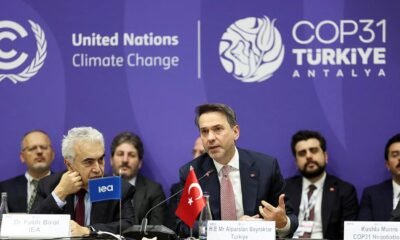
Türkiye says calls to abandon fossil fuels must be backed by financing