
Politics
Over 1,000 FETÖ-linked social media accounts blocked in Türkiye

Türkiye has blocked access to 1,072 social media accounts allegedly linked to the Gülenist Terror Group (FETÖ) over the past three months as part of efforts to combat online disinformation, Presidential Communications Director Burhanettin Duran announced Wednesday.
In a statement, Duran said the accounts were identified during operations coordinated by the Directorate of Communications in cooperation with the Ankara Chief Public Prosecutor’s Office.
The accounts were found to have engaged in disinformation activities aimed at misleading the public and undermining social trust, according to Duran.
“Access to 1,072 FETÖ-linked social media accounts identified as engaging in disinformation activities aimed at misleading the public and undermining social trust has been blocked,” he said.
Duran added that investigations had also been launched into the individuals operating the accounts.
He said the measures taken over the past three months demonstrated Türkiye’s determination to counter attempts by terrorist groups to exploit digital platforms for propaganda, manipulation and psychological operations.
“No organization seeking to turn the digital sphere into a platform for disinformation and exploitation will be tolerated,” Duran noted.
He emphasized that Turkish authorities would continue working in coordination with relevant institutions and within the framework of the law to counter activities threatening national security and public order.
Duran also reaffirmed the government’s commitment to protecting public access to accurate information and combating online disinformation.

Parliament Speaker Numan Kurtulmuş said the parliamentary Monitoring Commission to be established as part of the “terror-free Türkiye” process will determine its working procedures and principles at its first meeting.
Speaking about the planned commission on Thursday, Kurtulmuş said the initiative enjoyed broad public support and had been pursued as a state project from the outset.
“This is neither an issue to be seen as a political risk nor one to be viewed as a source of political gain,” Kurtulmuş said, describing the process as a nationally driven initiative shaped by public consensus and state policy.
He said the initiative was distinct from other conflict-resolution models around the world, adding that it had been developed as a uniquely national project.
Kurtulmuş said one of the process’s defining features was the absence of an external observer or mediator, stressing that no foreign state or international organization would oversee it.
“The entire matter belongs to the nation, and both the first and third eyes are the nation itself – the Turkish Grand National Assembly,” he said.
The commission, comprising representatives of political parties in Parliament, will monitor the executive branch’s efforts on behalf of the public, ensure coordination between the legislative and executive branches and follow developments throughout the process.
It will also seek to maintain and strengthen public support through transparency and regular updates, he said.
Kurtulmuş said the commission would begin work as soon as possible, adding that its first meeting would determine its decision-making procedures and priority areas.
Asked about the commission’s membership, Kurtulmuş said the law did not specify the number of members but that there was broad agreement that it should not be excessively large.
He said the previous parliamentary commission had started with 50 members, but a similarly large body would not be necessary this time.
Kurtulmuş added that he had consulted the leaders of all political parties but had not received any formal responses on participation. Once the membership quota is determined, Parliament will officially notify each party of the number of representatives it can appoint.
Asked about opposition New Party (YP) leader Özgür Özel’s statement that his party would not appoint members, Kurtulmuş urged all political groups to participate.
He said the process reflected the will of nearly the entire Parliament and that the legislation establishing its framework had been passed with 467 votes.
“The more political parties take part in this process, the greater the democratic maturity will be,” he said, warning that no one should undermine an initiative that had already made significant progress.
Kurtulmuş also said the Law on Strengthening National Solidarity and Social Integration had been prepared with great care and included three safeguards.
The first requires state security institutions to verify that the PKK terrorist organization has laid down its arms in its entirety and dissolved itself.
The second is a supervisory board chaired by the vice president, which will examine the process as a whole.
The third safeguard is the parliamentary Monitoring Commission, he said.
Kurtulmuş said these measures provided strong guarantees for the process, adding that the focus should now shift to how the legislation would be implemented.
He also called on political actors to abandon divisive rhetoric and outdated political approaches, saying the next phase would require a more constructive public discourse.
An Ankara court on Wednesday sentenced former Istanbul Mayor Ekrem Imamoğlu and eight other defendants to two years and one month in prison over voting irregularities at the main opposition Republican People’s Party’s (CHP) 2023 leadership congress, while also ordering restrictions on their political rights.
The Ankara 26th Criminal Court of First Instance delivered its verdict at the 10th hearing of the case concerning alleged manipulation of the party’s 38th Ordinary Congress, where Özgür Özel defeated former CHP leader Kemal Kılıçdaroğlu.
The court convicted Imamoğlu, former Beşiktaş Mayor Rıza Akpolat, CHP Istanbul Provincial Chair Özgür Çelik, Nihat Yeşiltaş, Baki Aydöner, Erkan Aydın, Mehmet Kılınçarslan, Metin Güzelkaya and Serhat Can Eş of interfering with the voting process.
Three other defendants, Cemil Tugay, Hüseyin Yaşar and Özgen Nama, were acquitted.
The court also ordered the application of Article 53 of the Turkish Penal Code, which provides for restrictions on certain civil and political rights, including electoral rights, subject to applicable legal conditions.
According to the prosecution, several defendants acted together to secure Özel’s victory by offering financial benefits and employment opportunities to delegates and their relatives.
The investigation stemmed from the legal complaints of CHP delegates who told investigators that they were offered bribes ranging from cash and houses to prominent jobs in municipalities the party runs. Kılıçdaroğlu, who has insisted since then that he had been “backstabbed,” maintains his open-ended claims that the said election had been “shady.”
Some delegates who voted in the CHP intraparty election on Nov. 4-6, 2023, were paid sums ranging from $5,000 to $30,000, Erhan Çakır, a former CHP member, told the media back then. It was the CHP’s Istanbul mayor, Imamoğlu, who paid them to force at least 150 delegates to switch sides against Kılıçdaroğlu, Çakır alleged.
Prosecutors alleged that relatives of 24 delegates were hired by municipalities across seven districts and that shopping cards worth TL 1.5 million (approximately $30,000) were distributed to influence voting.
The prosecution argued that these benefits undermined delegates’ independent decision-making and compromised the integrity of the leadership election.
Turkish authorities arrested two suspects in the northwestern province of Yalova as part of an investigation into an alleged financial support network linked to the Gülenist Terror Group (FETÖ), uncovering cryptocurrency transfers totaling $531,000 and seizing gold, cash and digital materials, prosecutors said Thursday.
The investigation, led by the Yalova Chief Public Prosecutor’s Office, focused on an alleged network providing financial and material assistance to imprisoned FETÖ members, their families and individuals dismissed from public service over suspected ties to the group.
The suspects, identified as Hakan Kukul and Halil Kuşçu, were former teachers dismissed from their positions over links to FETÖ. Investigators identified them as suspected coordinators of the group’s so-called “muavenet,” or mutual assistance, network.
According to investigators, the network sought to maintain organizational loyalty, provide financial support to imprisoned members and their relatives, and sustain the group’s activities through cash payments, material assistance and cryptocurrency transactions.
Financial intelligence reports from Türkiye’s Financial Crimes Investigation Board (MASAK), telecommunications records, surveillance operations and witness statements were examined as part of the investigation.
Cryptocurrency transfers
Investigators found that Kuşçu transferred approximately $531,000 from his Binance account to an unidentified cryptocurrency wallet through eight separate transactions in 2022.
Prosecutors also included WhatsApp messages sent by Kuşçu to a witness, in the investigation file, the Sabah newspaper reported.
In one message, Kuşçu declared his continued allegiance to FETÖ and expressed willingness to serve a prison sentence if necessary.
Following the collection of evidence, security forces conducted simultaneous raids on three addresses and two vehicles linked to the suspects.
Officers seized seven mobile phones, five SIM cards, three laptops, a USB drive, a tablet, five CDs, a security camera recording device and documents allegedly related to the group’s financial assistance activities.
Authorities also confiscated 450 grams of gold and TL 17,500 (nearly $345) in cash.
During the investigation, Kuşçu reportedly cooperated with authorities and identified 18 individuals allegedly connected to the network.
Investigators found that 10 of those individuals had no previous record of judicial proceedings.
Kuşçu also directed investigators to three residences allegedly used in the group’s financial assistance operations, providing additional information about the suspected network.
Following police questioning, Kukul and Kuşçu were referred to a criminal judgeship of peace, which ordered their detention pending trial on charges of membership in an armed terrorist organization and financing terrorism.
The Yalova Chief Public Prosecutor’s Office said investigations into the group’s alleged financial resources, assistance network and current organizational structure remain ongoing.
Türkiye and Bangladesh have maintained strong relations for decades despite the geographical distance between them. However, in recent years, their bilateral ties have begun to take on a new dimension.
Shama Obaed Islam, Bangladesh’s state minister for foreign affairs, said that relations have improved further since the government took office in February. Highlighting Türkiye’s positive role in strengthening bilateral relations, Islam thanked President Recep Tayyip Erdoğan and the Justice and Development Party (AK Party) government.
“We appreciate Türkiye’s offer to cooperate with us in knowledge-sharing, technology transfer and energy production,” Islam told Daily Sabah in an exclusive interview during the COP31 climate summit last week.
Stressing that Bangladesh aims to expand cooperation with Türkiye in the field of renewable energy, Islam said the country has embarked on an energy transition nationwide through solar panels and rooftop solar systems.
“We feel that we can benefit from Türkiye’s experience,” Islam said, noting that Prime Minister Tarique Rahman aims to leave a clean country for future generations in Bangladesh.
According to the Turkish Foreign Ministry, Türkiye and Bangladesh had agreed to step up cooperation in renewable energy during bilateral talks in October 2025. Türkiye’s expertise in green technologies and Bangladesh’s growing demand for diversified and sustainable energy solutions were emphasized.
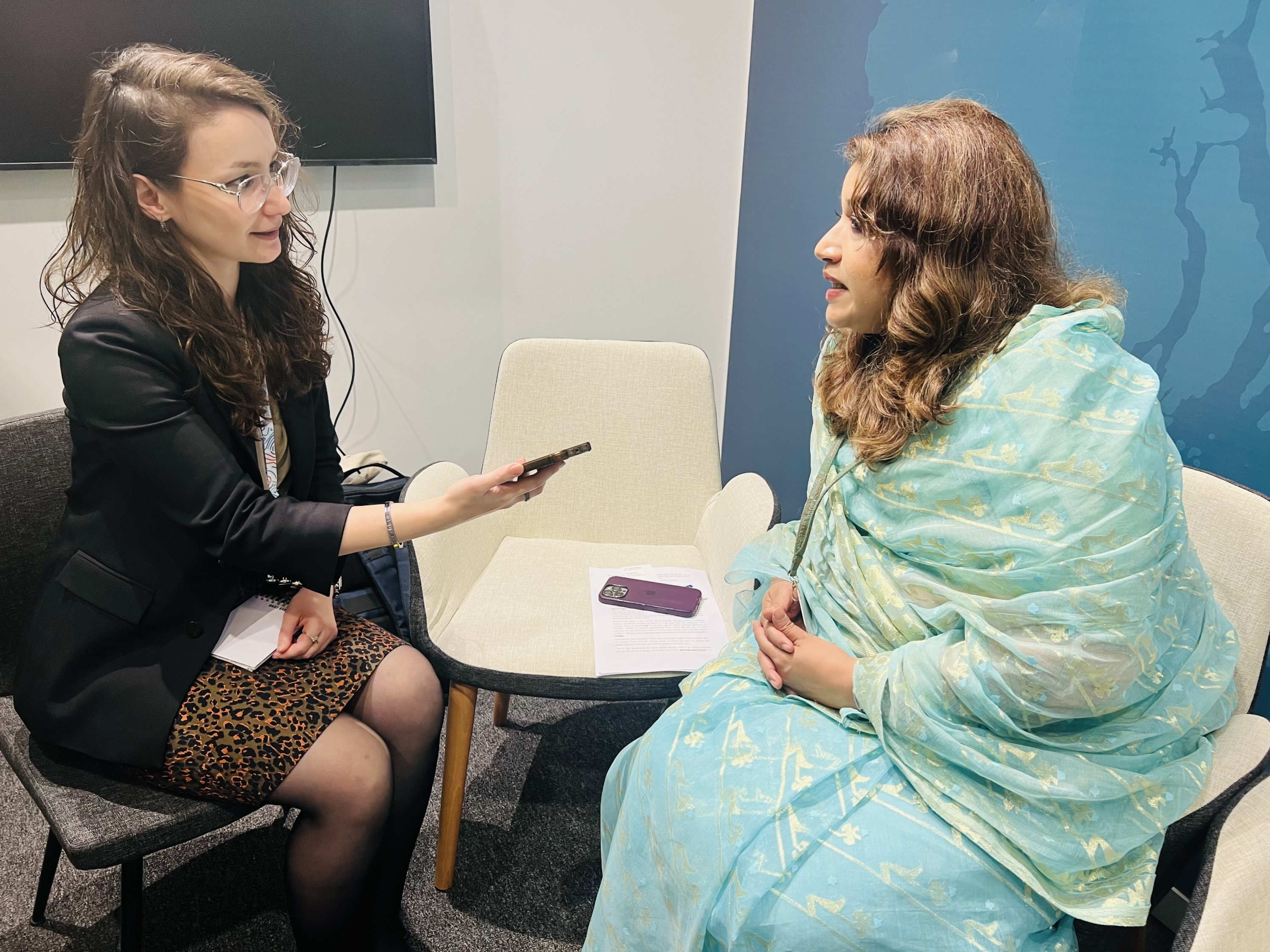
After the new government was established in Bangladesh, a series of bilateral meetings took place in recent months. The two countries reiterated their interest in exploring potential cooperation not only in renewable energy but also in nuclear energy and onshore and offshore hydrocarbon exploration, under a win-win approach. Türkiye is also considering providing technical expertise, investment and renewable energy technologies to support Bangladesh’s efforts to diversify its energy sources.
Islam said Bangladesh’s government was also keen to explore new initiatives and was closely following the Zero Waste Initiative spearheaded by Türkiye’s first lady, Emine Erdoğan.
Referring to meetings on the Zero Waste Initiative, Islam said, “The prime minister’s wife, Zubaida Rahman, had a meeting with Mrs. Erdoğan, where we discussed how we could generate energy from waste.”
Drawing attention to the impact of the climate crisis, particularly on vulnerable communities, Islam said women and children were among the groups most severely affected by climate-related disasters.
“So whenever there are disasters caused by climate change, women and children are the most vulnerable groups,” she said.
Islam emphasized the importance of bringing women into education and professional life to promote women’s empowerment. Türkiye and Bangladesh could grow together by sharing their knowledge and experiences in these areas, she noted.
Islam also identified the refugee crisis as another key humanitarian concern shared by Türkiye and Bangladesh, emphasizing Dhaka’s sensitivity to the issue.
“We have more than 1.3 million Rohingya who have been in Bangladesh for the past 10 years,” Islam said, adding, “We want the Rohingya community to return to their homeland with dignity.”
Islam stressed that Bangladesh needed international support to resolve the Rohingya crisis.
As of November 2026, Bangladesh remains among the world’s largest host countries for refugees. According to a 2026 United Nations report, women and children make up more than half of the Rohingya refugee population. Meanwhile, UNICEF reported that approximately 34% of Rohingya children between ages 5 and 18 lacked access to learning opportunities supported by the education sector.
Türkiye, on the other hand, has been hosting Syrian refugees since April 2011 under a temporary protection framework. According to Turkish ministry reports, the Syrian refugee population peaked at more than 3 million in 2022. UNHCR reported that around 755,000 Syrians had returned since December 2024, as of September 2026.
Noting that Bangladesh and Türkiye were not the only countries facing such challenges, Islam pointed out that humanitarian and refugee crises, conflicts and wars were unfolding in different parts of the world.
“So, globally, whether it is Gaza, Ukraine, the Gulf or our Rohingya refugee crisis, the world needs to unite to stop wars,” she said, calling for greater international cooperation to bring conflicts to an end.
As human rights advocates in Türkiye and around the world continue to speak out against Israel’s ongoing attacks on Gaza, the Humanitarian Relief Foundation (IHH) has announced plans to organize simultaneous marches across all 81 provinces of Türkiye on Nov. 20, World Children’s Day, to highlight the deaths of nearly 22,000 children in the Palestinian enclave.
The marches, to be held under the slogan “Don’t Stay Silent! Children Are Dying!” will bring together children and mothers.
Speaking ahead of the demonstrations, IHH Secretary-General Ahmet Göksun said the foundation had delivered more than 67 million hot meals to Gaza.
The humanitarian crisis in Gaza has devastated the enclave’s civilian population, with children among those bearing the heaviest burden of the conflict. Thousands of children have been killed or injured, while widespread destruction of homes and essential infrastructure has severely disrupted access to food, clean water, health care and education.
IHH President Bülent Yıldırım said Israel continued its attacks despite the cease-fire, warning that international silence would have devastating consequences.
“Silence is a harbinger of extinction. Those who do not raise their voices for Gaza have no future,” he said.
Calling on the international community to take action, Yıldırım said the number of Palestinian children killed in Gaza must not rise further.
“Twenty-two thousand children must not become 23,000. If that happens from today onward, everyone will be held accountable,” he said.
Yıldırım also announced plans to organize a new “Freedom Flotilla” in April and May, with ships expected to join from different countries around the world.
Urging people to support humanitarian relief efforts, he said the foundation was able to deliver additional assistance to Gaza.
“Whatever amount of aid we receive now, we can get it into Gaza. Do not hesitate to provide assistance. We can reach Gaza,” he said.
Israeli media outlets have highlighted Türkiye’s expanding diplomatic and military influence across the Middle East, pointing to Ankara’s deepening strategic partnership with Qatar and growing naval cooperation with Egypt as developments that could reshape regional security dynamics.
Israeli newspaper Haaretz examined Türkiye’s strengthening ties with Gulf countries following agreements signed between Ankara and Doha at Istanbul’s Dolmabahçe Palace, perceiving the partnership to be part of Türkiye’s broader efforts to expand its regional role.
Türkiye and Qatar last week signed five agreements covering defense, trade, education and diplomacy during the 12th meeting of the Türkiye-Qatar Supreme Strategic Committee in Istanbul, including a mutual defense pact aimed at strengthening joint security cooperation against external threats.
President Recep Tayyip Erdoğan and Qatari Emir Sheikh Tamim bin Hamad Al Thani held one-on-one and delegation-level talks at the Presidential Dolmabahçe Office before overseeing the signing ceremony.
The analysis suggested that uncertainty surrounding the future of U.S. security commitments in the Middle East has encouraged regional countries to diversify their defense partnerships, creating new opportunities for Türkiye.
According to the report, Gulf countries are increasingly seeking partnerships that extend beyond conventional arms purchases to include deterrence, maritime security and greater influence over regional developments.
Haaretz argued that Türkiye could offer a combination of military capabilities, defense-industrial cooperation and diplomatic engagement that differs from what Israel can provide.
“Türkiye-Qatar relations should be viewed as a strategic partnership extending far beyond conventional bilateral diplomatic ties,” Muhammed Mazhar Şahin, a faculty member at the Faculty of Education and Arts at Lusail University in Qatar, told Daily Sabah.
The two countries share similar perspectives on regional issues spanning Gaza, Syria, Libya, Sudan, Somalia and Yemen, Şahin emphasized.
Noting Türkiye’s existing military presence in Qatar, which includes air, land and naval elements, the expert remarked that defense cooperation between Ankara and Doha extends beyond formal agreements and represents an operational strategic partnership.
The mutual defense agreement aims to reinforce collective defense capabilities and promote regional security and stability through closer military coordination between Ankara and Doha.
According to a joint statement issued by the Turkish Foreign Ministry following the meeting, the agreement reflects both countries’ commitment to protecting their sovereignty and territorial integrity.
The two sides agreed to expand cooperation through joint military exercises, defense industry partnerships and military personnel training exchanges.
The statement also highlighted the Badr Memorandum of Understanding, signed by Türkiye, Qatar, Pakistan and Indonesia, as a framework for advancing joint defense production, technology development and strengthening supply chains.
Şahin further underlined that Türkiye’s growing defense industry capabilities have made it an increasingly important strategic partner for Gulf countries, particularly in areas ranging from unmanned aerial vehicles and air defense systems to military training, intelligence sharing and security cooperation.
Highlighting three key dimensions of Türkiye’s engagement with the Gulf, the expert identified security diplomacy, economic integration and cultural diplomacy as the main drivers of the expanding partnerships.
On security diplomacy, he said Türkiye has demonstrated its ability to understand Gulf countries’ security needs and offer practical solutions to address them.
Regarding economic integration, the expert pointed to significant opportunities for complementary cooperation in trade, investment, energy, transportation and technology.
Şahin also stressed the importance of cultural diplomacy, noting that Türkiye’s relations with Gulf countries extend beyond government-level engagement to include stronger ties between their societies through Turkish language education, university partnerships, cultural exchanges and shared historical connections.
Türkiye-Egypt ties draw attention
Separately, Israeli news website Mako, affiliated with Channel 12, examined growing military cooperation between Türkiye and Egypt, particularly the prospect of jointly producing warships and expanding naval coordination in the Eastern Mediterranean.
The report raised concerns about the potential strategic implications for Israel as Ankara and Cairo strengthen their defense ties.
Turkish Naval Forces Commander Adm. Ercüment Tatlıoğlu said during the Friendship Sea-2026 naval exercise in Alexandria that the two countries were considering joint shipbuilding projects, noting Türkiye aimed to expand maritime defense cooperation with Egypt through a model similar to its MILGEM warship program with Pakistan.
The proposed cooperation could involve joint production, training, operational planning and closer coordination between the two navies.
The Friendship Sea-2026 exercise, held Nov. 4-9 off Alexandria, marked another step in the restoration of military cooperation between Türkiye and Egypt following a 13-year suspension of joint naval drills.
Türkiye deployed its largest warship, TCG Anadolu, alongside other naval platforms and unmanned systems, including the Bayraktar TB3 unmanned aerial vehicle.
The exercise included air defense, anti-submarine warfare, maritime security operations and specialized naval training.
The growing cooperation reflects a broader rapprochement between Ankara and Cairo, which have sought to strengthen diplomatic and military relations after years of tensions.
For Israel, the developments have prompted renewed scrutiny of Türkiye’s expanding defense partnerships and their potential implications for the Eastern Mediterranean.
Şahin, moreover, criticized Israel’s policies in recent years, describing them as “expansionist and aggressive” and arguing that they threaten not only Palestine but also the security of the wider Middle East, particularly in Syria and Lebanon.
He argued that Israel’s pursuit of military superiority, violations of neighboring countries’ sovereignty and actions that fuel recurring security crises would not bring lasting stability to the region.
In contrast, he said Türkiye, under President Recep Tayyip Erdoğan’s leadership, has pursued a multidimensional regional policy combining diplomacy, defense capabilities, economic partnerships and cultural ties.
Pointing to Türkiye’s strategic partnership with Qatar, growing security cooperation with Saudi Arabia and Pakistan, initiatives within the Organization of Turkic States and expanding diplomatic presence in Africa, the expert said Ankara’s regional influence continues to grow.
“Türkiye’s rise is not driven by ambitions to occupy other countries, expand its territory or establish dominance over regional states. Rather, it stems from its emergence as a strong regional actor capable of protecting the sovereignty, security and political independence of countries in the region,” he underlined.


-
 Economy2 days ago
JPMorgan sees upside in Türkiye, UAE stocks, turns cautious on Greece
-
 Politics2 days ago
Türkiye urges nations to honor climate commitments at COP31
-
 Politics1 day ago
Turkish VP to meet Uzbek leaders during 2-day visit to Tashkent
-
 Politics2 days ago
Türkiye’s New Party tones down newness in first convention
-
 Economy3 days ago
Russia’s richest woman, Wildberries’ CEO added to EU’s sanctions list
-
 Sports2 days ago
Türkiye relegated to Nations League B after Greece defeat Serbia
-
 Politics3 days ago
Lawmakers gather for COP31 diplomacy, to discuss legislative path
-
 Politics3 days ago
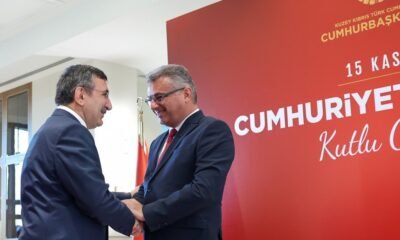
Türkiye stands with TRNC as island state marks anniversary