
Politics
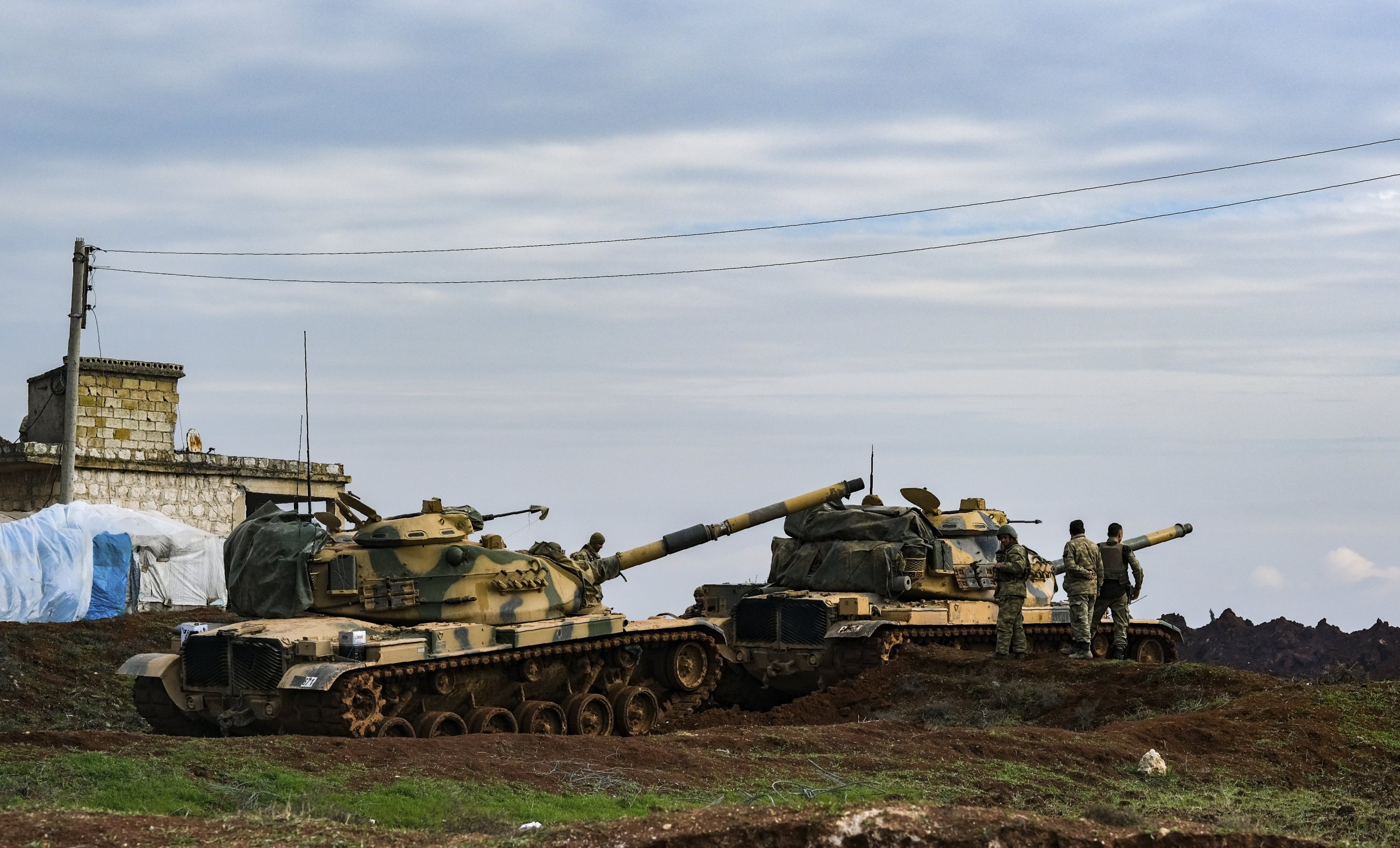
Türkiye begins military training, support for Syrian army

Türkiye has begun training and providing consultancy and technical support for Syria’s army under a defense cooperation agreement signed last month, a Turkish Defense Ministry source said Thursday.
Under the military cooperation accord signed between the two countries’ defence ministries in August, Türkiye has said it will provide Syria’s armed forces with military training, weapons and logistical tools.
Ministry sources stated that the Syrian government continues its diligent efforts to restructure and establish stability and security in the country with all its institutions and units.
In this context, the sources stated that the Syrian government has taken into consideration requests to clear the region of terrorism, particularly Daesh, in a way that will directly contribute to the peace and prosperity of the people.
The new Syrian government, established after the ouster of former regime leader Bashar Assad on Dec. 8, 2024, has been working to restore order nationwide.
Ankara, which has developed cordial ties with the new leadership, has repeatedly offered operational and military assistance to Damascus to combat Daesh and other terrorist threats.
Daesh seized large swathes of Syrian and Iraqi territory in the early years of the civil war, declaring a cross-border “caliphate” in 2014 before being territorially defeated in 2019. The terrorist group has since shifted to “studied attacks on strategic targets” in Syria and maintains sleeper cells across northeastern regions.
Türkiye, Syria, Jordan and Iraq have activated the Counter-Daesh Coordination Cell, as announced by Foreign Minister Hakan Fidan in July. The joint mechanism aims to eliminate remaining Daesh threats, making it unnecessary for the West to rely on YPG militants in the fight against terrorism.
Ankara considers the YPG as an extension of the PKK terrorist group, which recently announced its dissolution and began a disarmament process that will end 40 years of bloodshed in Türkiye. With support from the U.S. under the guise of fighting Daesh, the terrorist group occupied oil-rich northeastern regions of Syria during the civil war. Under a March deal with the new Syrian government, it’s expected to integrate into the new Syrian national army and hand over occupied territory.
With security and counterterrorism at the forefront, Ankara views its cooperation with Damascus as central to ensuring a stable, sovereign and territorially unified Syria.
“Following the signing of the memorandum, efforts to restructure the Syrian Armed Forces have accelerated,” the sources said. “Training, visits, consultancy and technical support activities are being carried out in a coordinated and planned manner with the Syrian Ministry of Defense. Türkiye is determined to support the principle of ‘One State, One Army.’”
The ministry sources also said that reports of Israel carrying out attacks against Turkish equipment stationed in Syria were false and that there were no changes to Türkiye’s personnel or equipment in northern Syria.
The officials warned that social media disinformation campaigns were fueling false narratives and urged the public to rely only on official statements.
Israeli attack in Qatar
Separately, ministry spokesman Zeki Aktürk urged the international community to act against Israel, warning that unless Israel is stopped, reckless attacks, like in Qatar, will drag the region into disaster.
Israel’s attack in Qatar proves that Tel Aviv has made terrorism a state policy, feeds on conflict, and opposes peace, Aktürk stated.
Türkiye stands “fully with Qatar against this attack, which is a blatant violation of its sovereignty,” he added.
On Tuesday, Israel’s military said it conducted a “precise strike targeting the senior leadership” of the Palestinian group Hamas in the Qatari capital Doha.
The strike has drawn a wave of condemnations, calling the attack a blatant violation of Qatar’s sovereignty and international law.
The Turkish Foreign Ministry also strongly criticized the strike, saying it showed Israel was deliberately undermining cease-fire talks. “The targeting of the Hamas negotiating team while talks continue proves Israel’s aim is not peace but war,” the ministry said in a statement Tuesday.
Türkiye has consistently voiced solidarity with Palestine and Qatar, underscoring that Israel’s aggression represents state terrorism and expansionism, and calling for urgent international action to halt Tel Aviv’s violations of international law.
Ankara and Doha enjoy strong relations, particularly since the 2017 blockade of the Gulf country by Saudi Arabia and others. The two countries have strengthened military and economic ties in recent years.
Türkiye is a prominent supporter of the Palestinian cause and hosted several Hamas members in the past, including late leader Ismail Haniyeh, who was killed by an Israeli attack in Iran in August 2024.
Qatar has been the main host for negotiations between Hamas and Israel since the new round of conflict began between the Palestinian resistance movement and Israel in 2023. Negotiations, however, yielded little result while Israel’s genocidal attacks claimed more than 64,000 lives in Gaza, mostly women and children.

Syria on Friday marked two years since opposition forces launched the military offensive that ultimately toppled Bashar Assad’s regime, ending decades of Baath Party rule and ushering in a new political era marked by diplomatic breakthroughs, reconstruction efforts and persistent security challenges.
The offensive, launched from northwestern Idlib province on Nov. 27, 2024, culminated in the fall of Damascus on Dec. 8, bringing an end to the Assad family’s decadeslong grip on power and fundamentally reshaping the regional political landscape.
Syria’s conflict began in 2011 when peaceful demonstrations inspired by the Arab Spring were violently suppressed by Assad’s government, triggering a 13-year civil war that killed hundreds of thousands of people, displaced millions and destabilized the wider region.
Opposition forces made rapid territorial gains across northern and central Syria during the offensive, capturing major cities and weakening the regime’s military presence.
Advancing from areas cleared of terrorist groups during Türkiye’s Operations Euphrates Shield and Olive Branch, the Syrian National Army launched its “Dawn of Freedom” operation, initially cutting off the Aleppo-Raqqa highway, a key supply route for the PKK/YPG terrorist group.
The SNA subsequently liberated Tal Rifaat and Manbij, ending the terrorist group’s occupation of the districts that had lasted since 2016.
The Assad regime and Russia launched intensive airstrikes across several regions, particularly Aleppo and Idlib, in an effort to halt the opposition’s advance.
At least 81 civilians were killed and 300 others wounded in airstrikes carried out by Assad regime forces and Russia between Nov. 27 and Dec. 2, 2024.
Despite the airstrikes, opposition forces continued their advance, entering the city of Hama on Dec. 5. After taking control of Hama, the opposition groups pushed toward the strategic province of Homs, a key gateway to the capital, Damascus.
The offensive culminated in the collapse of the regime on Dec. 8, 2024, as opposition forces took control of Damascus and Assad fled to Russia.
The release of prisoners from the notorious Sednaya prison, which had become a symbol of the regime’s systematic torture and repression, was among the defining moments of Assad’s downfall.
The collapse of the government ended 61 years of Baath Party rule, prompting widespread celebrations across Syria and among Syrian communities abroad.
During his time in power, Assad’s forces were widely documented as responsible for hundreds of chemical weapons attacks. Independent investigations and U.N.-linked inquiries estimate over 300 confirmed attacks, primarily involving chlorine and other banned agents, with the vast majority attributed to government forces between 2012 and 2019.
Diplomatic breakthroughs
Following Assad’s overthrow, Syria’s new administration embarked on efforts to restore territorial integrity, rebuild state institutions and reestablish the country’s international standing.
With diplomatic support from regional countries, particularly Türkiye, Damascus has sought to overcome years of international isolation and create conditions for economic recovery.
One of the most significant developments was the U.S. Congress’ decision to permanently repeal sanctions imposed under the Caesar Syria Civilian Protection Act. The measure was incorporated into the U.S. defense authorization legislation for the 2026 fiscal year.
Washington also removed Syria from its list of state sponsors of terrorism on Aug. 24, 2026, marking another milestone in the country’s efforts to reintegrate into the international community and attract foreign investment.
Syrian President Ahmad al-Sharaa described the decision as a “historic moment” and a “new beginning,” thanking U.S. President Donald Trump and Congress while acknowledging the diplomatic support of Türkiye, Saudi Arabia and Qatar.
Syria’s diplomatic rehabilitation has also been reflected in the reopening of foreign diplomatic missions in Damascus and the adoption of the country’s new three-star flag at Syrian embassies around the world.
Efforts to restore unity
Restoring centralized authority across Syrian territory has remained a key priority for the post-Assad administration.
The process entered a new phase in January 2026 as the Syrian government intensified efforts to bring areas controlled by the YPG under state authority.
Damascus subsequently regained control of Raqqa and Deir el-Zour provinces, while a ceasefire and gradual integration agreement was reached with the YPG.
Following the deal, the group announced its dissolution and accepted integration into Syrian state institutions following significant territorial losses.
The developments marked an important step toward restoring Syria’s territorial integrity, although consolidating state authority and ensuring long-term stability remain major challenges.
Two years after the offensive that brought down Assad’s regime, Syria continues to pursue political stability, economic recovery and international reintegration, while unresolved security challenges threaten its efforts to establish lasting peace and territorial unity.
Türkiye, on the other hand, has taken a leading role in supporting post-Assad Syria across multiple fronts. Ankara has expanded security cooperation, including training and equipping Syrian forces, while providing energy support, supplying natural gas and electricity to help restore critical infrastructure.
The Mediterranean risks becoming a new theater in the Russia-Ukraine war after Kyiv struck Russian vessels off Libya, raising questions over foreign involvement and prompting Türkiye to reaffirm its commitment to protecting regional maritime security.
The attacks off the eastern Libyan port of Benghazi have heightened concerns that a conflict largely confined to Eastern Europe and the Black Sea could increasingly threaten international shipping routes and critical infrastructure across the Mediterranean.
Ukrainian President Volodymyr Zelenskyy confirmed that Kyiv was behind the attacks on two Russian vessels involving unmanned surface vessels (USVs).
Libya referred the matter to the U.N. General Assembly and Security Council, citing international law prohibiting hostile activities by warring parties in the territorial waters of neutral countries.
For Türkiye, which has maintained diplomatic channels with both Moscow and Kyiv, the expansion of hostilities represents a growing challenge to regional stability and efforts to secure lasting peace.
The issue featured prominently at Thursday’s National Security Council (MGK) meeting chaired by President Recep Tayyip Erdoğan.
Questions over foreign involvement
The attacks have brought renewed attention to the intelligence and logistical capabilities behind Ukraine’s expanding maritime operations.
With one of the targeted vessels identified as a civilian commercial ship, questions have emerged over whether Kyiv received intelligence from external actors operating in the Mediterranean.
Among the possibilities is the European Union’s Operation Irini, launched in March 2020 to enforce the U.N. arms embargo on Libya using naval, aerial and satellite assets.
Speculation that intelligence collected through the mission may have been shared with Kyiv has renewed scrutiny of the operation, which has previously faced criticism over its implementation.
No evidence directly linking the EU mission to the attacks has been made public.
Greece’s balancing act
Greece’s growing defense cooperation with Ukraine has also come under the spotlight.
Athens and Kyiv have reached an agreement on the joint production of unmanned surface vessels at Greek shipyards, while Greek shipowners have been among the major suppliers of tankers subsequently incorporated into Russia’s so-called shadow fleet.
The latter has drawn criticism within the EU over concerns that such transactions have helped Moscow circumvent Western sanctions.
Against this backdrop, questions have emerged over whether Athens could be seeking to offset criticism of its previous commercial links with Russia through closer military cooperation with Ukraine, potentially at the expense of regional stability.
Concerns over Ukrainian maritime drone activity in Greek waters had already surfaced on May 7, when fishermen discovered an armed Ukrainian unmanned surface vessel in a coastal cave on the Ionian island of Lefkada.
The discovery prompted criticism in Greek media over security shortcomings and possible coordination failures between Athens and Kyiv.
British military presence draws attention
Britain’s military footprint in the Eastern Mediterranean has also figured in discussions surrounding the attacks.
One of Ukraine’s strongest military backers, Britain maintains two strategically located sovereign military bases in Cyprus, Akrotiri and Dhekelia.
The possibility that these facilities provided support for Ukrainian maritime operations has been raised, although British involvement remains unsubstantiated.
Questions also remain over how the Ukrainian maritime drones reached the region, with the possible involvement of a commercial vessel among the scenarios being considered.
Ankara prioritizes regional stability
Türkiye has warned against allowing the conflict to spread beyond its existing geographical boundaries, emphasizing the need to protect civilian shipping and uphold international law.
The Defense Ministry said Thursday that the Turkish Armed Forces would continue taking necessary measures to safeguard maritime security, navigational safety, Türkiye’s maritime jurisdiction areas and critical infrastructure in the Mediterranean.
Ankara reiterated its commitment to preventing further escalation and securing lasting peace.
The MGK also expressed concern over the war spreading from the Black Sea to the Mediterranean, stressing that Türkiye would maintain contacts with all relevant parties to restore peace and safeguard global security and stability.
Unlike countries that have largely aligned themselves with one side of the conflict, Türkiye continues to pursue diplomatic engagement with both Moscow and Kyiv, seeking to prevent further regional destabilization.
Türkiye summoned Georgia’s ambassador to Ankara on Friday over the use of disproportionate force against Turkish citizens during Beşiktaş’s UEFA Europa League match against an Israeli team in Batumi, demanding a comprehensive investigation and legal action against those responsible.
Diplomatic sources said Ankara conveyed its strong objections over the serious incidents and presented evidence to the Georgian envoy, Archil Kalandia.
The ministry demanded that Georgian authorities investigate all aspects of the incidents and initiate the necessary legal proceedings against those responsible for the excessive use of force and intervention targeting Turkish citizens.
The diplomatic move underscored Ankara’s concern over the treatment of its citizens in Georgia and its demand for accountability following Thursday’s match.
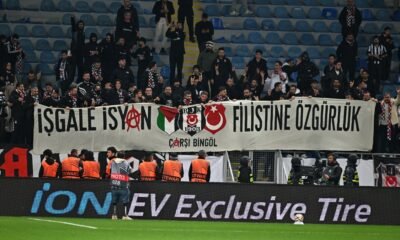
Turkish officials have condemned Georgian police over the disproportionate use of force against Beşiktaş supporters for displaying solidarity with Palestine during a UEFA Europa League match in Batumi.
Images from the stadium showed fans waving Palestinian flags and chanting anti-Israel slogans before Georgian police intervened with excessive force.
Officers used pepper spray and surrounded a supporter who had unfurled a Palestinian flag, according to reports from the stadium.
The confrontation escalated into clashes between supporters and police, forcing Danish referee Morten Krogh to suspend the match in the 26th minute. Players and officials from both teams returned to the dressing rooms as disturbances continued in the stands.
The Turkish Air Force will take over NATO’s enhanced air policing mission in Romania on Dec. 1, deploying five F-16 fighter jets and 111 personnel to the Feteşti Air Base for a four-month rotation.
Personnel from the 151st Fighter Squadron, known as the Tunç Squadron, under the 5th Main Jet Base Command in Merzifon, Amasya, have arrived at the Romanian base as part of NATO’s 73rd enhanced air policing rotation.
The Turkish contingent will take over the mission from the Spanish Air Force and remain deployed until April 1, 2027, helping protect NATO airspace.
Brig. Gen. Alper Gezeravcı, commander of the 5th Main Jet Base Command in Merzifon, told reporters that the Turkish Armed Forces continued to serve as a key guarantor of peace, stability and collective defense at the regional and global levels.
He described the mission as an important demonstration of allied solidarity and interoperability within NATO’s collective security framework.
Gezeravcı said Türkiye’s commitment to protecting its airspace and allied territory was once again being demonstrated through the joint mission. He also highlighted the Turkish Air Force’s modern capabilities, deterrence capacity and operational readiness.
He added that the squadron’s personnel would represent Türkiye and its armed forces in Romania with the highest standards of discipline and professionalism, prioritizing safety and working in close coordination with allied forces.
President Recep Tayyip Erdoğan will meet Greek President Konstantinos Tasoulas in Istanbul on Saturday for high-level talks between the two neighboring countries, Türkiye’s Communications Directorate announced Friday.
Communications Director Burhanettin Duran confirmed the Nov. 28 meeting in a statement, without providing further details on the agenda.
Türkiye and Greece are at odds over several issues, including competing claims to jurisdiction in the Eastern Mediterranean, overlapping claims over their continental shelves, maritime boundaries, airspace, energy, the ethnically divided island of Cyprus, and the status of the islands in the Aegean Sea.
Months ago, Türkiye announced work on a draft bill on the country’s maritime rights nicknamed the Blue Homeland law. The bill, which aims to cover all legal aspects of what Türkiye calls the “Blue Homeland,” or maritime areas where the country has sovereignty, will cement and clarify the rights across Black Sea, the Aegean Sea, the Mediterranean, as well as the Marmara Sea. Safeguarding Blue Homeland rights is essential for Ankara, especially at a time of growing international cooperation, particularly with Israel, for Greece and the Greek Cypriot administration, whose maritime claims contradict those of Türkiye and other countries.
Türkiye’s expanding diplomatic, military and economic engagement across a vast geography stretching from the Horn of Africa to the Caucasus and the Arabian Sea reflects Ankara’s growing strategic influence, according to an analysis published by the Israeli newspaper Maariv.
Retired Israeli Lt. Col. Amit Yagur identified six key areas where Türkiye has strengthened its regional presence through defense partnerships, maritime infrastructure, energy investments and transportation projects.
Describing Ankara’s expanding reach as a “Turkish claw” stretching from the Arabian Sea through the Bab el-Mandeb Strait to the Levant and Libyan coasts, Yagur argued that these developments should be viewed as interconnected elements of a broader strategic vision.
The analysis highlighted Türkiye’s growing presence in the Horn of Africa, particularly the construction of a joint Turkish-Somali naval base near strategically important maritime routes.
The facility, part of the Barbarossa complex, is expected to serve as the Somali navy’s main headquarters and a coordination center for maritime operations.
In Syria, the analysis highlighted growing Turkish-Qatari cooperation in reconstruction, transportation, trade and energy, as well as Ankara’s expanding defense partnership with Damascus.
Maariv also pointed to the delivery of Turkish-made armored vehicles to the Syrian military as evidence of deepening bilateral military cooperation.
Mediterranean to Arabian Sea
The analysis identified Libya’s parliamentary approval of the 2019 maritime delimitation agreement with Türkiye as another significant development for Ankara’s strategic position in the Eastern Mediterranean.
Yagur also highlighted eastern Libyan military commander Khalifa Haftar’s recent visit to Ankara and Erdoğan’s expected visit to Libya on Dec. 8-9, pointing to Türkiye’s growing engagement with different Libyan political actors.
In the South Caucasus, Maariv examined a planned transportation corridor connecting Azerbaijan to Türkiye through southern Armenia, highlighting its potential to strengthen trade and connectivity with Central Asia.
The sixth area identified was Pakistan, where the Turkish Petroleum Corporation (TPAO) is expanding cooperation with Pakistani state-owned energy companies on offshore oil and natural gas exploration in the Arabian Sea.
Yagur linked the partnership to the expanding geographical scope of Türkiye’s “Blue Homeland” maritime doctrine.
The analysis concluded that Ankara’s simultaneous diplomatic, military and economic initiatives across these regions form part of a broader strategic picture, with maritime routes, strategic chokepoints and regional connectivity increasingly central to Türkiye’s growing influence.


-
 Economy3 days ago
CBRT pauses 1-week repo auctions, raises lira reserve remuneration
-
 Economy2 days ago
Türkiye, Russia extend gas supply contract, sign LNG supply deal
-
 Sports3 days ago
Turkish clubs unite behind Beşiktaş after Georgian police violence
-
 Politics2 days ago
Türkiye elections due in 2028, could be held 1-2 months early: VP
-

 Economy2 days ago
US reportedly pushed Venezuela, Iraq to consider leaving OPEC
-
 Economy2 days ago
Türkiye’s energy ambitions expand with new Africa, Libya partnerships
-
 Economy2 days ago
Türkiye, Russia reaffirm target to achieve $100B bilateral trade
-
 Lifestyle3 days ago
Ancient wonders, folk legends await in central Türkiye’s Kırşehir