
Lifestyle
Samarkand: Crown of Central Asia’s civilization

“Samarkand is the world’s most beautiful face toward the sun” – Amin Maalouf.
For centuries, this city, a crossroads of civilizations, captivates visitors with its magnificent architecture, sky-high turquoise domes and the legacy of the Timurid Empire. As a center of science, art and astronomy, Samarkand has influenced the course of Islamic civilization.
Rome of East: Marakanda
Samarkand has been known by various names throughout history. Mentioned as “Marakanda” in ancient sources, the city gained particular importance during Alexander the Great’s conquests. Legend has it that Alexander was so impressed by the city’s magnificent structures and strategic location that he called it the “Rome of the East.”
This analogy demonstrates the central role of Samarkand as a city in the eyes of the world. With its military power, key role on trade routes and cultural richness, Samarkand served as a bridge connecting East and West for centuries.
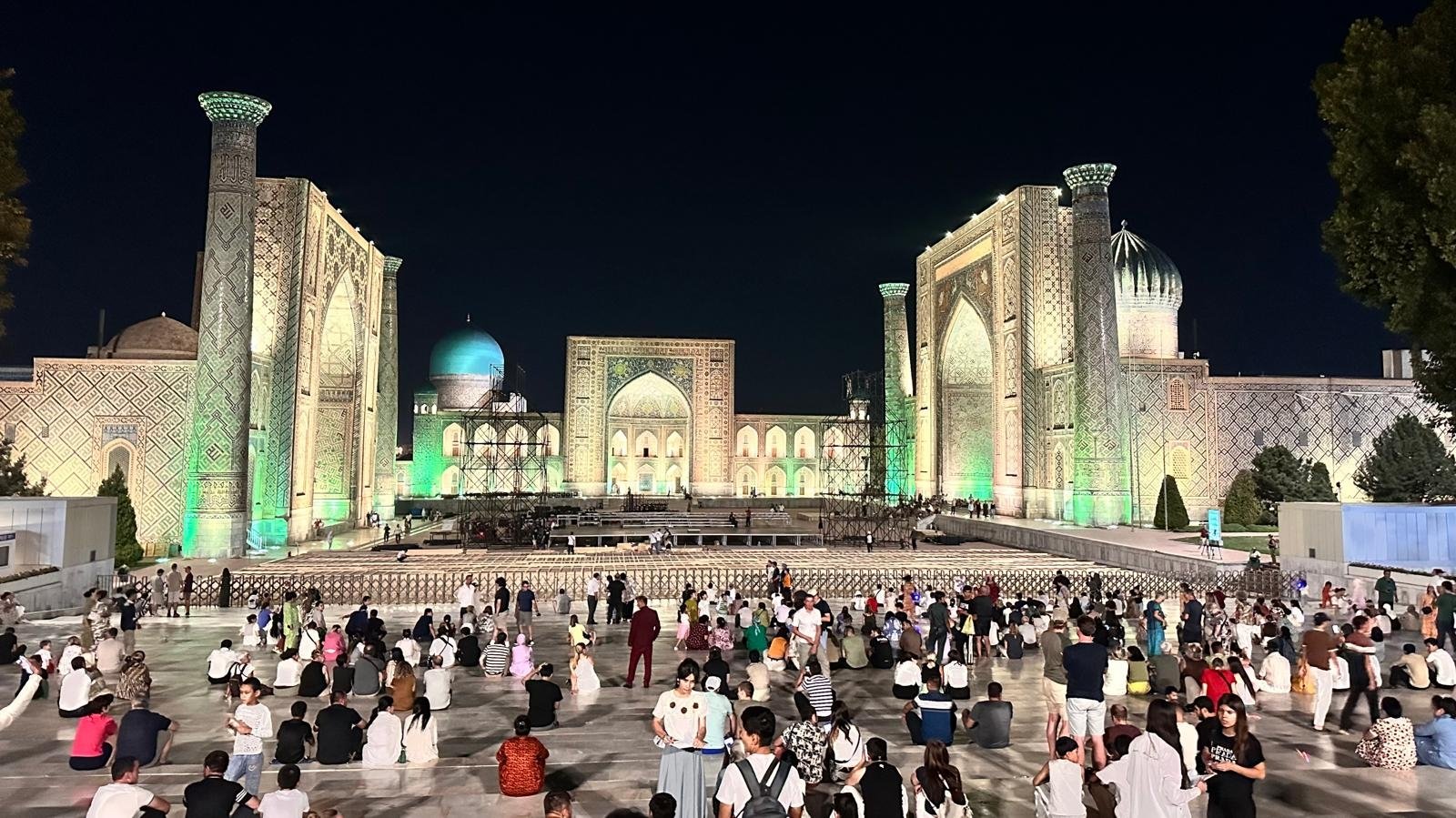
Samarkand’s history was marked by a notable architectural principle: buildings were constructed at a height that would not obscure the sky or obstruct the flight of birds. This approach, in addition to the city’s aesthetic appeal, also reflected a lifestyle in harmony with nature.
Traces of justice also existed in social life. For example, a diplomat, a servant and even a cat were considered equal. When a wealthy person built a magnificent house for themselves in the city, they had to consider not only their own comfort but also their surroundings; it would be their responsibility to renovate the neighborhood’s sidewalks. This understanding left a legacy of common good and justice, not only in the stones of Samarkand but also in its social fabric.
Elementary school children were taught nature lessons. Nature was considered “mother nature” and was treated with respect. This reverence for trees, water and earth permeated the life philosophy of the people of Samarkand. Protecting nature, passing it on to future generations, and not harming it were integral parts of the social order.
One of the city’s must-see spots is the traditional paper workshops. Here, the production process has remained virtually unchanged for centuries. The fibers extracted from mulberry branches are first boiled in cauldrons and then pounded with mallets powered by a watermill. The pulp, filtered through fine sieves, is pressed under heavy stones, then polished and turned into paper.
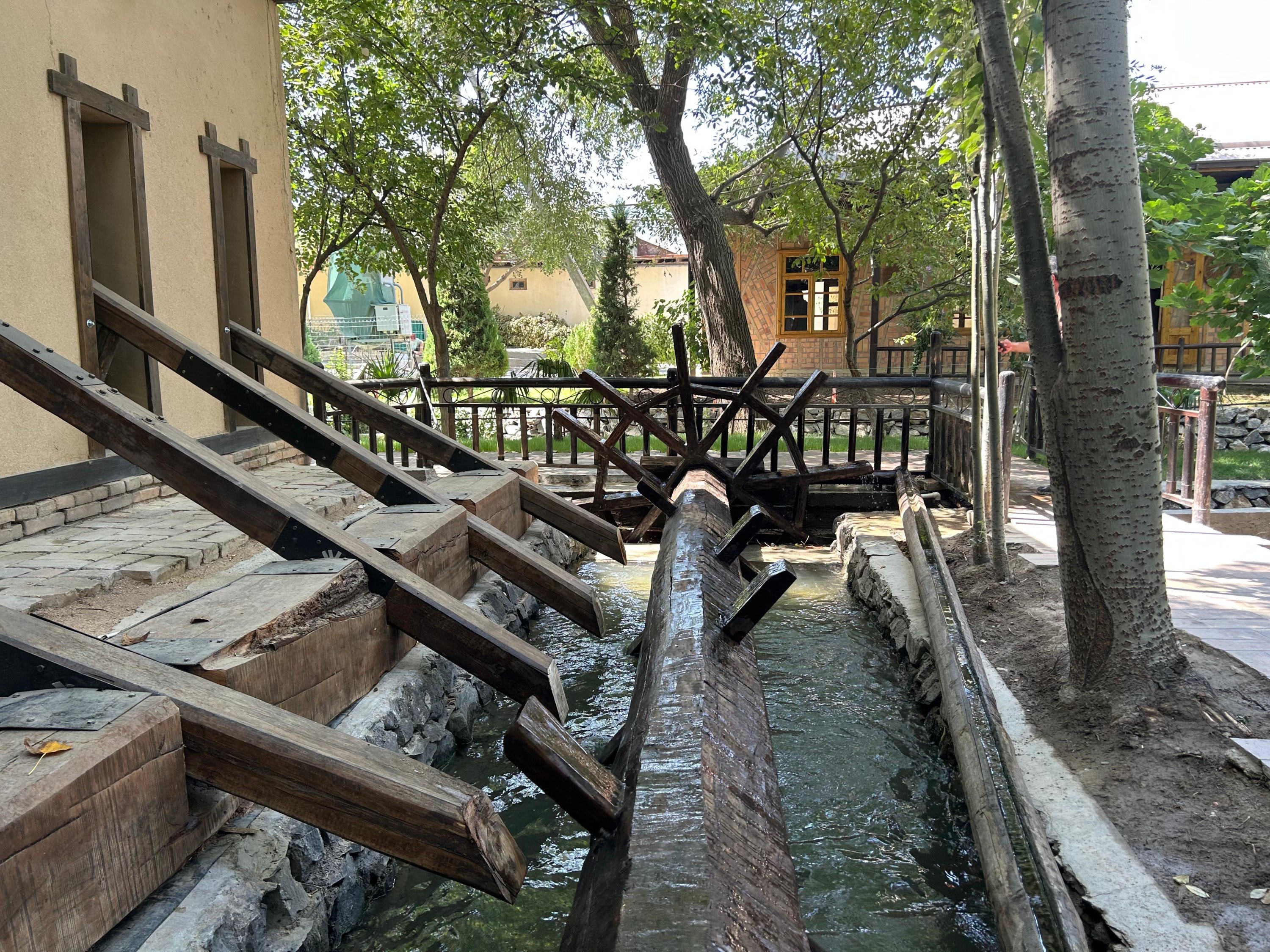
The origins of this technique date back to the eighth-century Battle of Talas. Legend has it that papermaking was brought to Central Asia by Chinese prisoners captured after the war. Samarkand’s paper gained fame for its eye-pleasing texture and durable resistance to decay. For centuries, works of science and literature were written on this paper.
Ulugh Beg shines with knowledge.
The heart of Samarkand is undoubtedly Registan Square. Surrounded by three magnificent madrasahs, this square served as the center of knowledge and art for centuries in the Islamic world. The blue tiles inlaid on the domes, rising to the heavens, recall the horizon-gazing gazes of scholars of the past. Ulugh Beg, Timur’s grandson, commissioned the construction of three madrasahs in the Registan while still in his 20s. This was a center of learning known as the “Oxford” of its time. In response to the politically shaped legacy of his grandfather, Timur, Ulugh Beg turned to the heavens; he discovered numerous stars with the naked eye, and Western astronomers compared their work to his observations for centuries.
These madrassas, which provided educational services for six centuries, were converted into bazaars in 1924, but were restored during the Soviet era for their touristic value. Today, the structure, dazzling with its golden ornamentation in the mosque section, also houses the tomb of Ja’far al-Siddiq. Registan Square, with its splendor, remains a symbol of Samarkand and a powerful symbol of the continuity of knowledge.
Timur’s city
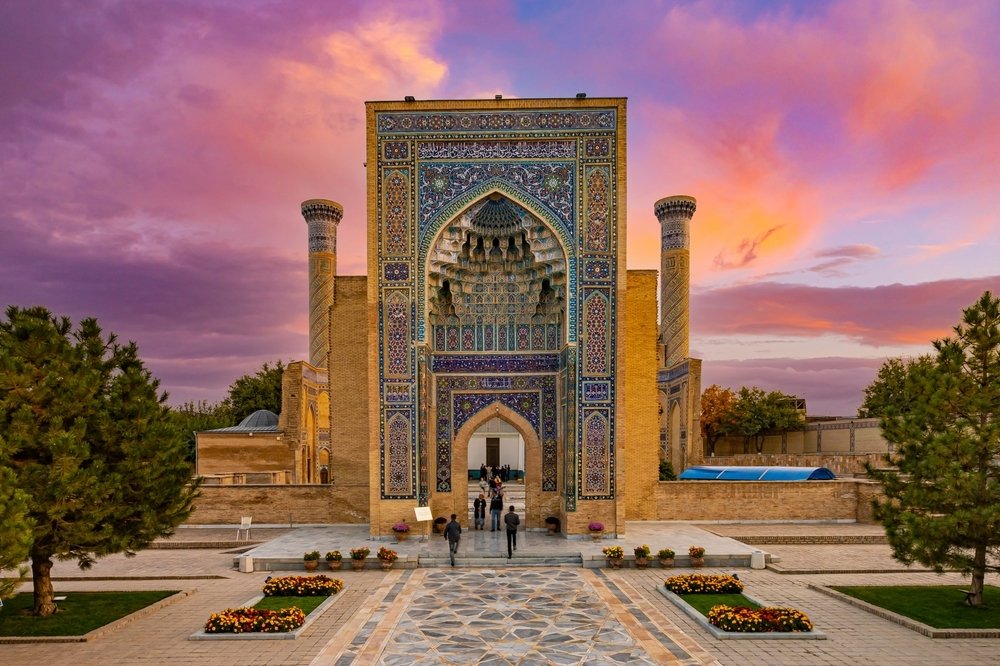
Samarkand was the capital of the great ruler Timur and his legacy is still felt in every corner of the city today. The Gur-i Emir Mausoleum is the final resting place of Timur and his family. The turquoise tiles of its dome and the exquisite decorations of its interior reflect the grandeur of a dynasty, while the silence of the mausoleum reminds us that time bows to no power.
One of the structures that reflects Timur’s magnificence is the Bibi Khanum Mosque. Legend has it that Timur commissioned this magnificent temple for his wife Bibi Khanum upon his return from his India campaign. Considered one of the largest mosques of the period with its massive size and tile decorations, the structure is a monument that embodies Timur’s might in architectural terms.
Another important structure is the Shah-i Zinde complex. Meaning “Living King,” this complex is one of the most impressive mausoleum complexes in Central Asia. Legend has it that Qusam ibn Abbas, the uncle of the Prophet Muhammad, is buried here. Over the centuries, rulers, scholars, and statesmen have added tombs here, transforming the complex into a spiritual center. Today, as one walks through its narrow streets, one finds oneself in a prayer corridor.
Ulugh Beg’s sky
Unlike his grandfather, Timur’s grandson, Ulugh Beg, was remembered more for his knowledge than his sword. Ascending the throne at a young age, Ulugh Beg transformed Samarkand into a center of science beyond conquest. The Ulugh Beg Observatory, which he commissioned, became not only the most advanced in Central Asia in the 15th century but also a pioneering observatory worldwide.
Observing the sky with the naked eye, Ulugh Beg recorded hundreds of stars. The catalog he compiled, “Zic-i Ulugh Beg,” served as a reference source for Western scientists for centuries. Numerous astronomers, from Copernicus to Kepler, compared his calculations with his observations.
Today, the ruins of the observatory can still be seen in Samarkand. Every stone bears the mark of a ruler dedicated to unraveling the secrets of the heavens.
The city’s food is as bold as its architecture. One must-try for visitors is the local manti soup. A meat filling wrapped in thinly rolled dough and cooked in hot soup broth, it’s both filling and traditional. For those with a sweet tooth, Uzbek baklava stands out with its layered dough and honey- and hazelnut-flavored filling. And the shashlik (shish kebab), a staple of Central Asian cuisine, is found at every turn on the city’s streets, featuring meat cooked over embers. The aroma of steaming shashlik stalls draws visitors in.
The city’s bazaars offer a vibrant array of dried nuts and tea stalls, complete with whole dried strawberries, macadamia nuts, dried fruit-flavored green teas, and fragrant black grapes.
Spirit of Samarkand
After the authentic silence of Khiva and the spiritual depth of Bukhara, Samarkand greets us with a captivating magnificence. This city is like a “dome of civilization,” where science and art, spirituality and power, meet.
Uzbekistan’s geography has fostered the development of the Turkic language, culture and folklore for centuries. Home to Turkestan’s most established centers of education, these lands, with their cities stretching from Samarkand to Bukhara, are central not only to Turkic culture but also to Islamic civilization and the shared history of Central Asia. Uzbeks have profoundly contributed to Turkic culture by producing thousands of works to this day.
Uzbekistan, which has been under Russian and Soviet influence for many years in its modern history, faced policies aimed at transforming its identity. However, the people preserved the essence of Turkic culture. After the collapse of the Soviet Union, Uzbeks turned to their roots, seeking not to reclaim what they had lost, but to rekindle their inner identity. Despite economic hardship, they are repairing their historic madrasas, mausoleums and mosques, building new ones and reviving the religious life that had been suppressed for so many years.
After independence, significant momentum was gained in the fields of culture and education. Cooperation with Türkiye is one of the most significant indicators of this. After gaining sovereignty, Uzbekistan sent approximately 2,000 students to Türkiye, establishing a strong bridge in education.
Today, with a population exceeding 34 million and cities such as Tashkent, Samarkand, Bukhara, Ferghana and Andijan, Uzbekistan continues to be the heart of Central Asia, not only with its rich energy resources and strategic geographical location, but also with its historical and cultural depth. This country, which advances toward the future while preserving the legacy of the past, is at the center of both the Turkic world and regional geopolitics.
Samarkand is no longer just a memory of the Silk Road; it is a living page of history in the heart of Central Asia, still alive with knowledge, beauty and spirit. And finally, it reminds us: Here, history is not past, but present.
Standing on the ferry as it waits to dock on the Greek island of Ithaca, Giorgia Ongarato is only too keen to talk about the “Odyssey” – the epic poem that inspired Christopher Nolan’s blockbuster film.
The Italian lawyer said it was her dream to come to Ithaca, widely believed to be the same island as the home of Odysseus in the poem.
Dressed in a T-shirt emblazoned with the word “Odyssey” in ancient Greek alongside a line from the poem, she enthused: “I studied Greek when I was a child, and I studied the Odyssey.”
While she stressed that the film was not her entry point into the tale of the hero battling his way back home from the Trojan war, the 50-year-old said she was also a fan of the film, describing it as “wonderful”.
The island’s businesses and officials now expect the film to inspire many more to follow in her footsteps.
Ithaca, in the Ionian Sea off the west coast of mainland Greece is far from the country’s tourist hubs, and despite limpid waters and spectacular bays, it has never been a regular stop for travelers.
Its interior is rugged, carpeted with olive and cypress trees, and strikingly calm even at the height of the tourist season.
Although the movie has undoubtedly piqued the interest of many, it has also been slightly controversial in Greece. Although some Greek locations were used, not a single scene in the blockbuster was actually shot on Ithaca.
Homeric monuments abound
That decision has left some crestfallen on the island of roughly 3,000 inhabitants – where the film has been shown twice in open-air screenings since its July 16 worldwide release.
Xhimi Xoxha, who runs a restaurant in Ithaca’s capital of Vathi, said he was content that the movie was already “generating publicity for the island”. He predicted the positive effects would continue.
While Ithaca mayor Dionysis Stanitsas agreed that the publicity was “tremendous,” he could not hide his disappointment that the island itself did not feature.
“We had reached out to the production team and asked that some scenes be filmed here on the island,” he said. “Unfortunately, that wasn’t feasible.”
He is, however, counting on rising demand next year, and the island was already fully booked for this season by the time the film came out.
“As more people see it, they will begin planning trips to visit the island,” he said.
Visitors will not find a palace of Odysseus or any spectacular archaeological site likely to confirm the existence of the Homeric hero.
But village squares and the town hall are dotted with statues of Odysseus and Homer.
And there are other pointers to the island’s rich literary heritage.
In the small sun-drenched port, boats bob in the green water bearing names like “Telemachus” (the son of Odysseus) and “Calypso” (a goddess and nymph who imprisoned him).
Trinket shops offer busts of Homer and Penelope, Odysseus’s wife.
T-shirts can be found amid the jumble featuring the Cyclops Polyphemus – one of the many monsters vanquished by Odysseus.
And the truly devoted can splash out for a wall plate decorated with a Trojan Horse.
Archaeologist Spyros Couvaras is among those expecting a dramatic upsurge in visitors, saying it was clear that visitors wanted more than just sand and sea – they wanted the history and the mythology.
None of those are in short supply here.
A short distance from the shops and restaurants of the port, holidaymakers stretch out on deck chairs under parasols at Dexia beach, enveloped by the sound of cicadas.
According to legend, this is where Odysseus landed after years of voyaging.
Couvaras said the “driving force” of the renewed interest was undoubtedly the movie.
“But behind Nolan’s film stands Homer,” he said.

Traveling with babies and toddlers can be daunting for parents. Questions about air travel, what to pack and safety are often top of mind, especially on long-distance flights and international trips.
“Traveling with kids is a whole new world,” said Shannon Thompson, a pediatrician at Cleveland Clinic Children’s, adding that it’s important to “enjoy your kiddo on your trip” as much as you can.
Here are some tips and tricks for parents to travel safely with young children – and have fun with them, too.
Before you decide where to stay, consider your options for baby-proofing.
Check whether items like portable playpens, cribs and high chairs are offered to guests. If you are staying somewhere with stairs, a balcony or a pool, inquire about baby gates; if they are not provided, see if they are available for rent nearby or consider bringing travel-friendly foldable mesh gates. Pack electrical outlet covers and wipes to clean any dirty surfaces your kiddo might touch.
For babies, safe sleeping is still essential on vacation. Children younger than 1 should sleep on their back on a flat, firm surface such as a mattress in a bassinet, crib or playpen with nothing more than a fitted sheet, according to the American Academy of Pediatrics. The organization also recommends babies sleep in the parents’ room – but not in the parents’ bed – for at least the first six months.
You should also consider how you will get to your lodging: Will you fly in and rent a car or take a taxi, or take public transit from the airport? Will you mostly be driving or walking? For parents, these factors can determine whether you want to bring a stroller and a car seat, both of which you can gate check for free when you fly, or rely on using a sling or baby carrier.
“Flying with kids is one of those big, intimidating things,” said Thompson, the pediatrician. “I think the biggest thing to think about is always safety and then of course their comfort.”
While children under two can fly in their parents’ lap, the Federal Aviation Administration recommends securing them in their own safety seat, such as a car seat certified for use on planes. This requires buying a seat for your child.
For long-haul or international flights, ask the airline if they have bassinets available.
Food and drink for babies and toddlers, including breast milk, formula and puree pouches, are considered medically necessary liquids by the Transportation Security Administration. That means they are not subject to the standard 3.4-ounce (100-milliliter) limit for carry-on liquids. The same goes for ice packs used to keep such liquids cool. Let the TSA officer know if you have these in your carry-on when you go through security screening.
In addition to snacks, don’t forget to carry on diapers, wipes, a portable changing pad and sealable plastic bags for disposal. Bring extra clothes to layer or change in case of accidents or messy spills.
Swallowing and chewing can help with ear pressure, so nursing little ones or giving them a bottle or pacifier can ease discomfort during take-off and landing.
Speak with your pediatrician beforehand if your kiddo is prone to ear infections, and before traveling abroad, ask them what vaccines may be recommended.
For flights with young kids, Christy Slavik, owner of the travel agency Mom Approved Travel, recommends “having little surprises that you can distract them with,” such as sticky mats for travel-sized Play-Doh, suction cup toys and other games that are small and light to pack.
If sightseeing once at your destination, think about ways to make activities more fun and interactive. For art museums, bring notebooks that kids can draw in, or ask them what types of animals they can find in the paintings, Slavik said.
“Kids need a mission. They need games,” she said. “You have to get creative sometimes when you’re traveling.”
Exposing children to other cultures, foods and languages can also be fun. Some may enjoy picking out snacks at markets, for example, or learning foreign words for their favorite dishes and activities.
There are options for places to stay that are family-friendly, with amenities such as pools or games. For those traveling abroad on a budget, many hostels offer private rooms for families so they don’t have to share a dorm-style room with bunk beds. Hotels and hostels provide the opportunity to meet other travelers, including fellow children who can become playmates.
Helping moms actually enjoy their vacation – and relax amid the stress that can come with planning and traveling – is a core goal of Slavik’s travel agency.
One way parents can get a break is by planning trips with grandparents or other family members. This helps with babysitting duties, while also allowing loved ones to have special bonding time with kiddos. Just make sure they also have their own downtime and aren’t wearing themselves out, Slavik said.
“When you bring grandparents to a vacation, you’re giving them the opportunity to experience those moments together,” she said.
Çakıl Island (Pebble Island), located in the Erciş district of Van province, eastern Türkiye, welcomes visitors during the summer months with its cool turquoise waters, a beach covered in white pebbles and natural beauty.
Set along the lake’s northern edge, the island offers an alternative for those looking to cool off in its clear, soda-rich waters. Its shoreline, surrounded by white pebbles and untouched natural scenery, creates views reminiscent of tropical islands.
The beach has become a popular destination, especially on hot summer days, for visitors seeking to spend time surrounded by nature.
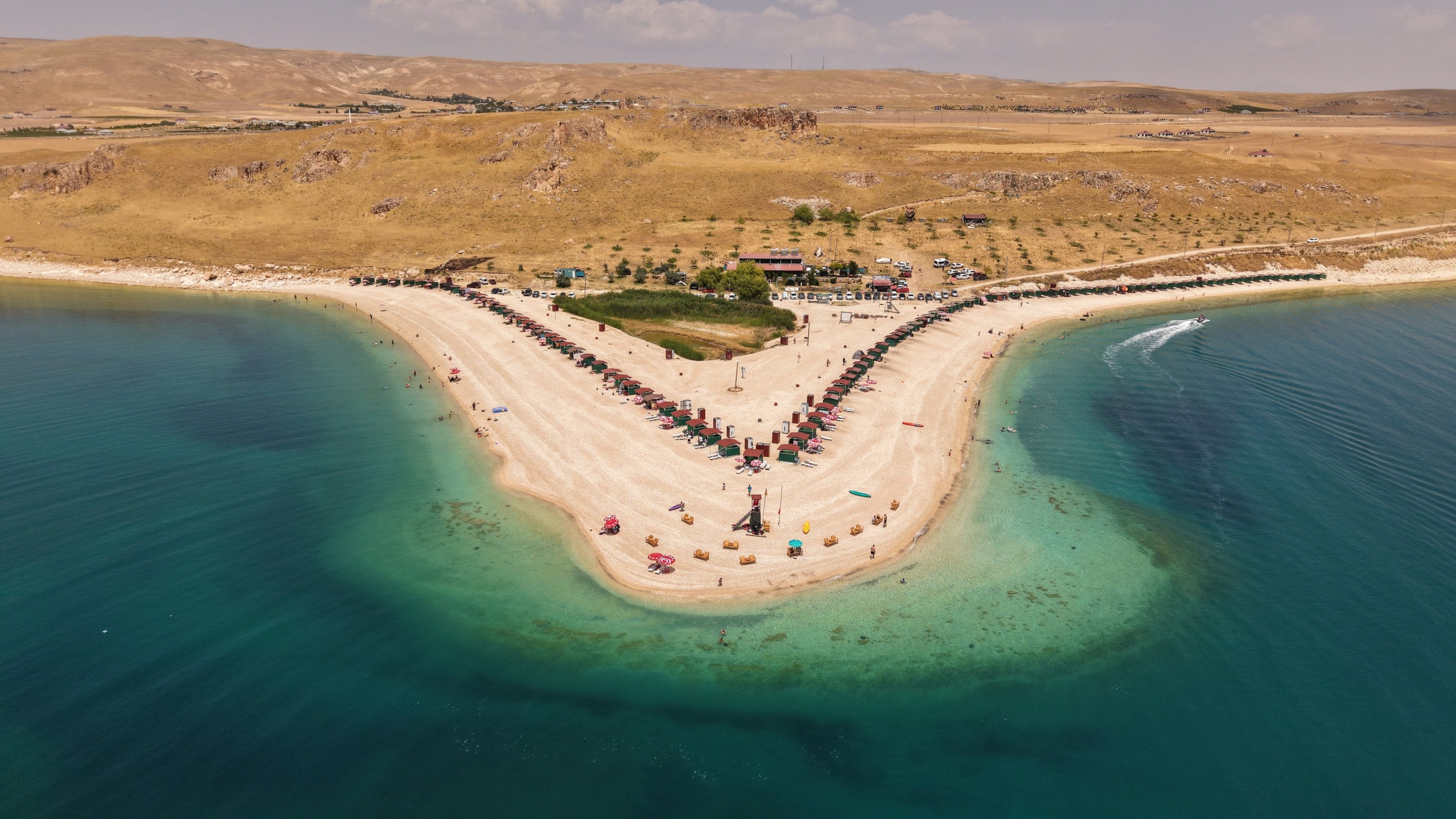
Visitors enjoy the unique scenery created by Lake Van’s turquoise waters and the white pebbles, relaxing in the natural surroundings until sunset.
Deniz Özçelik, who traveled to Van from Izmir with her family for a holiday, said she was impressed by Çakıl Island, which she visited for the first time.
Saying they would like to return to the region whenever they have the opportunity, Özçelik said: “I had heard a lot about the beauty of Lake Van before. After coming here, I had the chance to see it firsthand. The lake’s saline, alkaline waters is good for the skin. The natural surroundings are truly beautiful. I thought the beach being covered with white pebbles was created later, but I learned that it is completely natural. Çakıl Island is a place worth seeing. If you are in the area, you should definitely stop by. Our country has many beautiful natural wonders waiting to be discovered, not only in the west but also in the east.”
Yusuf Göktü Koç, who visited the region from Ankara with his family, also said he was impressed by Çakıl Island.
“This place is truly beautiful. The view of Lake Van is breathtaking. I really enjoyed Erciş. The shoreline of Çakıl Island is crystal clear. Its turquoise color is reminiscent of the Maldives. I recommend that everyone come and see it,” Koç said.
The historic Kadıkalesi site in the Aegean district of Kuşadası in western Türkiye has been added to UNESCO’s Tentative World Heritage List as part of a multinational heritage nomination.
According to a statement from the Aydın Provincial Directorate of Culture and Tourism, Kadıkalesi was added to UNESCO’s Tentative World Heritage List as part of the serial nomination “Trading Posts and Fortifications on Genoese Trade Routes from the Mediterranean to the Black Sea.”
The addition recognizes the site’s archaeological significance, strategic location and rich cultural heritage, strengthening its status as one of Türkiye’s key candidates for future inscription on UNESCO’s World Heritage List.
Kadıkalesi, also known by its historical name Anaia, served as an important settlement along medieval trade routes connecting the Mediterranean and the Black Sea.
Archaeological excavations at the site are continuing under the direction of Suna Çağaptay of the Department of Art History at Muğla Sıtkı Koçman University’s Faculty of Letters.
Sometimes the most memorable journeys are not defined by the reason that brings you there, but by the places you discover along the way.
One of the first impressions visitors have of Kosovo begins at Pristina International Airport. Operated by the Turkish company Limak, the airport stands as a visible example of the long-standing economic ties between Türkiye and Kosovo. Arriving in a new country and being welcomed by the name of a Turkish company was an unexpected reminder of how infrastructure can quietly strengthen connections between nations. It was a small but meaningful moment that immediately made me feel connected to the destination.
Stepping into Pristina, I was welcomed by a city full of youthful energy. Its cafes were buzzing with students, public squares were alive with conversation, and every street reflected a generation eager to shape the future. Rather than trying to imitate Europe’s larger capitals, Pristina embraces its own identity with confidence. Modern architecture, independent cafes, creative spaces and a growing cultural scene reveal a capital that is evolving while remaining authentic.
During my visit, the city welcomed thousands of international visitors, bringing an extraordinary atmosphere to the streets. Despite the heavy traffic and crowded avenues, there was a sense of excitement everywhere. Restaurants, cafes and public spaces were filled with people from across Europe, transforming Pristina into a lively meeting point where different cultures naturally came together.
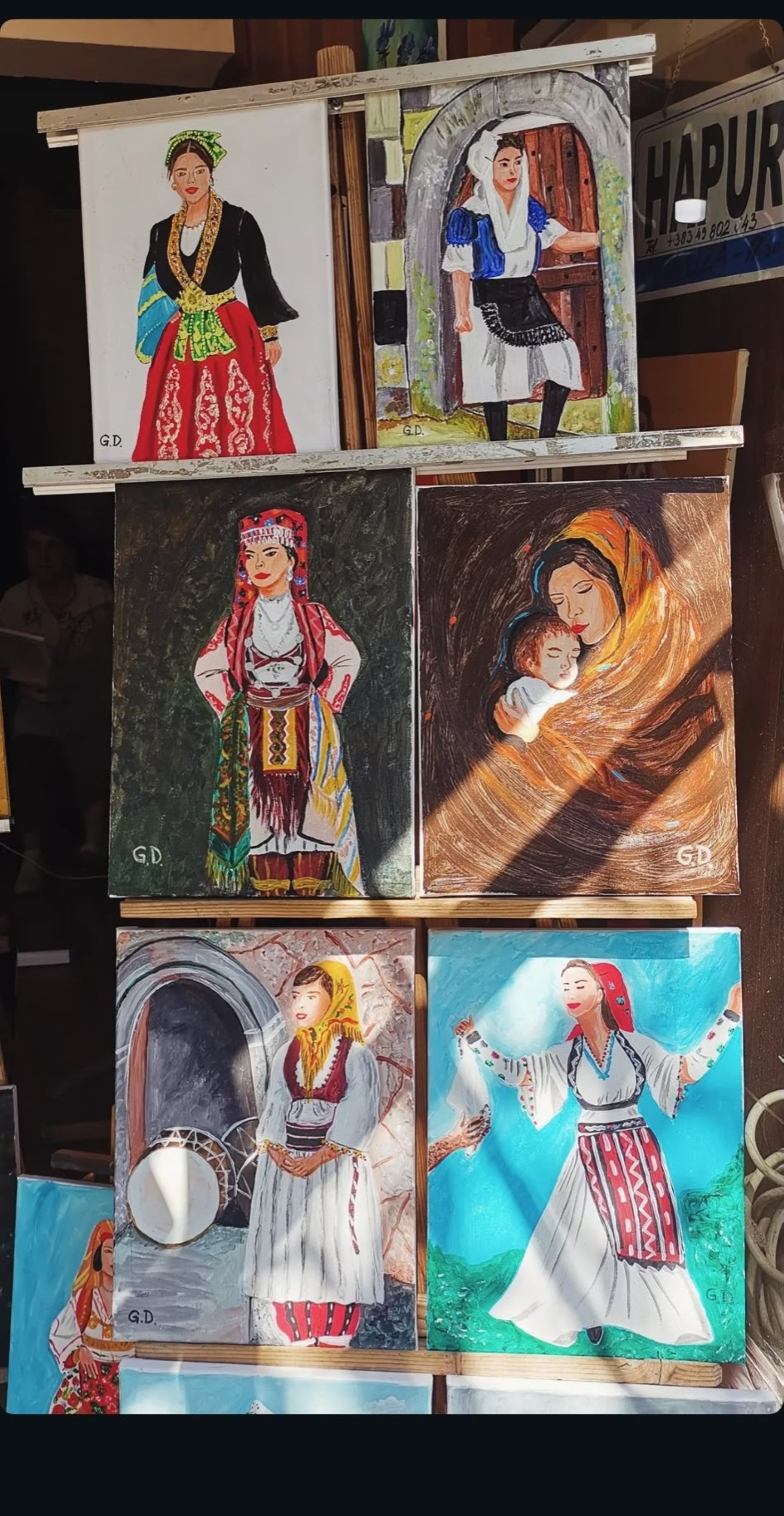
As a fashion designer, I found myself paying just as much attention to the people as to the city itself. Walking through Pristina felt like exploring an open-air fashion exhibition. Festival-inspired fashion blended effortlessly with everyday street style. Cowboy boots, crochet dresses, oversized denim jackets, metallic fabrics, sheer layers, lace details and colorful scarves reflected a generation that dresses with confidence rather than conformity.
What impressed me most was that fashion here was not driven by luxury labels but by individuality. Young people mixed vintage finds with contemporary pieces, creating looks that felt authentic rather than curated. In today’s digital world, where every street corner can become the backdrop for a photograph, personal style has become an extension of identity. Pristina captured that spirit beautifully.
After experiencing the vibrant rhythm of the capital, I traveled to Prizren, a city that immediately offers a completely different atmosphere.
Often described as Kosovo’s cultural heart, Prizren is where history quietly accompanies everyday life. Ottoman bridges, elegant mosques, churches, traditional stone houses and cafes lining the Bistrica River create an environment that encourages visitors to slow down and appreciate the details. Every narrow cobbled street reveals another layer of the city’s multicultural past.
One of the highlights of my visit was climbing to Prizren Fortress, where the panoramic view stretches across terracotta rooftops framed by the surrounding mountains. As the evening light settles over the city, Prizren reveals a timeless beauty that perfectly explains why it is considered one of the Balkans’ most charming destinations.
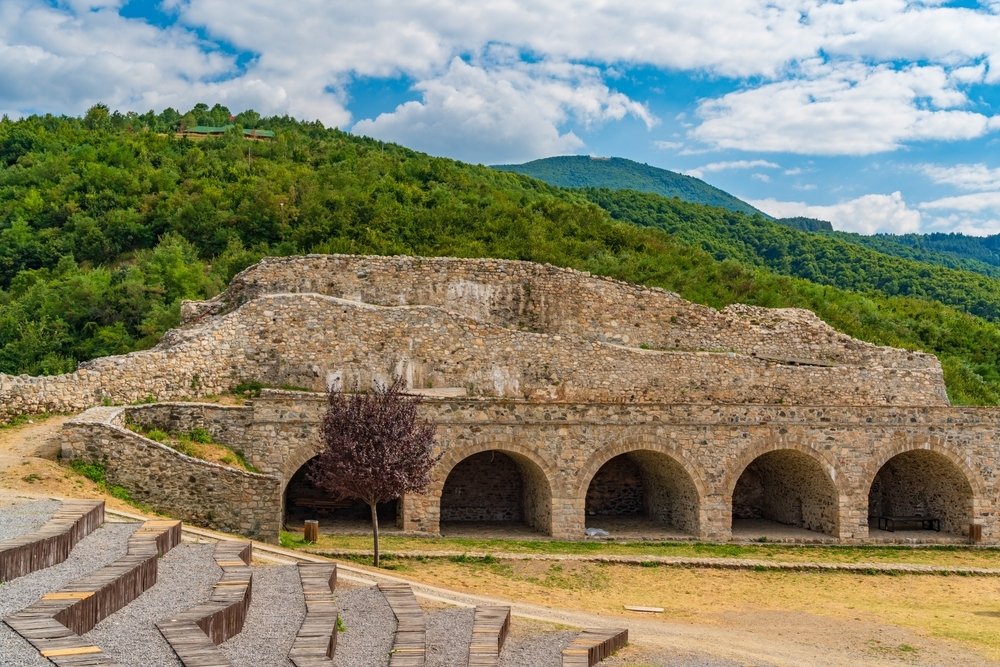
The city’s rich culinary scene adds another dimension to the experience. Traditional Balkan flavors sit comfortably alongside Ottoman influences, while local cafes invite visitors to spend hours simply watching life unfold beside the river. It is a place where history is not preserved behind museum walls but continues to exist naturally within everyday life.
Leaving Kosovo, I realized that what stayed with me most was not a single destination but the balance between its two most distinctive cities. Pristina represents confidence, creativity and youthful ambition. Prizren offers history, culture and quiet elegance. Together, they present a country that is steadily building its future while honoring its past.
Sometimes the most memorable journeys are not about the event that brings you somewhere – they are about the people you meet, the streets you walk and the stories a place leaves behind. Kosovo did exactly that, leaving me with a deeper appreciation for a destination that deserves to be explored far beyond the headlines.
The widely anticipated transfer of Egyptian football star Mohamed Salah to Türkiye’s Trabzonspor is drawing attention not only to the Süper Lig club but also to the city itself – a green, picturesque gem on the northeastern edge of Black Sea coast.
While rumors were indicating that Salah, a Liverpool icon, could sign for Beşiktaş, one of three Istanbul giants, Trabzonspor confirmed late Tuesday in a public statement it had opened negotiations to bring the veteran scorer to Türkiye.
Salah then flew to Istanbul, where on Wednesday morning he was welcomed by numerous fans while social media was still abuzz about the transfer.
“Trabzon, are you ready? I can hear you. See you very soon,” Salah said in a video message posted on the club’s official X channel.
Renowned for its historical and natural richness, Trabzon has over recent years turned into a hot spot, particularly for Arab travelers, offering a harmonious blend of lush green landscapes and mesmerizing azure waters.
It has seen strong inflows of tourists, including those arriving from Gulf countries and the Arab world, and many speculators see a growing interest in the city amid Salah’s transfer.
Salah was a free agent after leaving Liverpool at the end of last season. There was speculation the 34-year-old Egypt international would end his career in Saudi Arabia, but it emerged this week that Trabzonspor was leading the race to sign him.
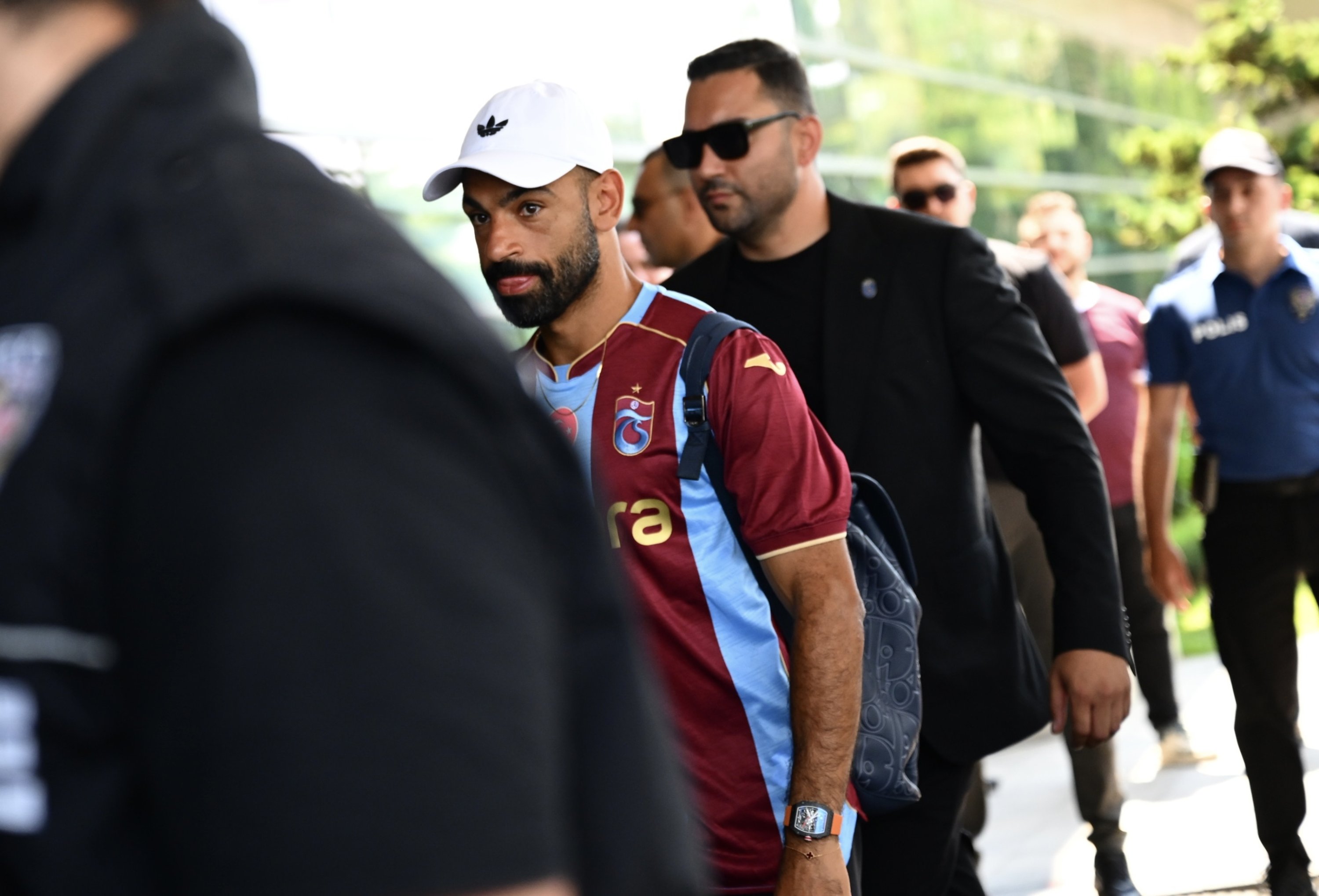
He established himself as a Premier League great with Liverpool, where he won two league titles and the Champions League among eight major honors.
Trabzonspor, often regarded as the fourth-top team in Turkish Süper Lig, last clinched the title in the 2021-22 season, securing their first league championship in 38 years.
Its hometown, Trabzon, is renowned for historical sites such as Sümela Monastery and Trabzon Hagia Sophia, as well as famous meatballs named after one of its districts – Akçabaat köftesi.
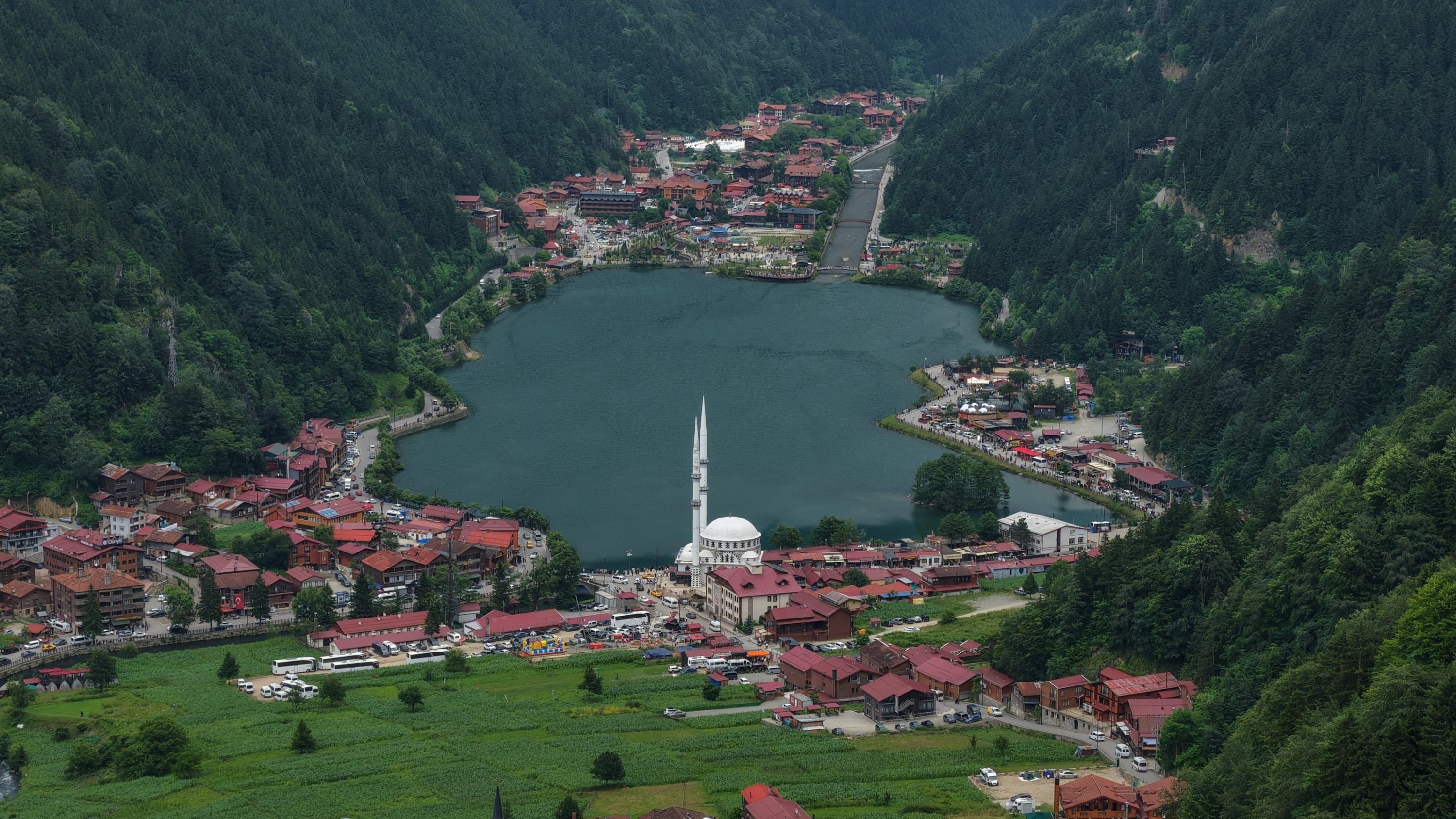
The natural lake Uzungöl and its surroundings are also one of the primary attractions for travelers seeking greenery and peace, far from urban rush.
Meanwhile, the photos shared in Turkish media and on social media already indicate enthusiasm among locals to welcome its new football star to the city.
Some commentators went further and said that Salah’s transfer is also a “great advert” for Türkiye-Egypt relations.


-

 Sports3 days ago
Ferran Torres joins PSG from Barcelona on contract through 2031
-
 Economy2 days ago
Europe’s heat waves empty cafes, expose insurance gaps
-

 Sports2 days ago
Every Ballon d’Or winner: Football holy grail from 1956-present
-

 Sports1 day ago
Makhachev defends UFC title with record 17th-straight win
-

 Sports2 days ago
Lukaku trains with Fenerbahçe for 1st time ahead of Süper Lig debut
-
 Politics2 days ago
Turkish officials highlight Erdoğan’s leadership as AK Party turns 25
-
 Politics17 hours ago
Alihan Kuriş remanded in custody as Türkiye delves into his criminal gang
-

 Economy2 days ago
German companies’ investment in US falls to 3-year low in H1