Connect with us

Lifestyle

Unveiling Piran: A hidden Adriatic paradise waiting to be explored

Published

on


As summer approaches and its golden light begins to touch the horizon, I find myself drawn to write about a coastal destination – one that may offer an ideal escape for anyone still undecided about their summer getaway.

In this piece, I’ll take you to a lesser-known town along the Adriatic coast – one that many have never even heard of.

When you think of the Adriatic Sea, what comes to mind first? Dubrovnik, Budva, Kotor or Split, perhaps? Maybe Pula or Trieste?

These famous cities often steal the spotlight. But today, let me introduce you to a place you might not find easily on a map – a place that captivates those who do: Piran.
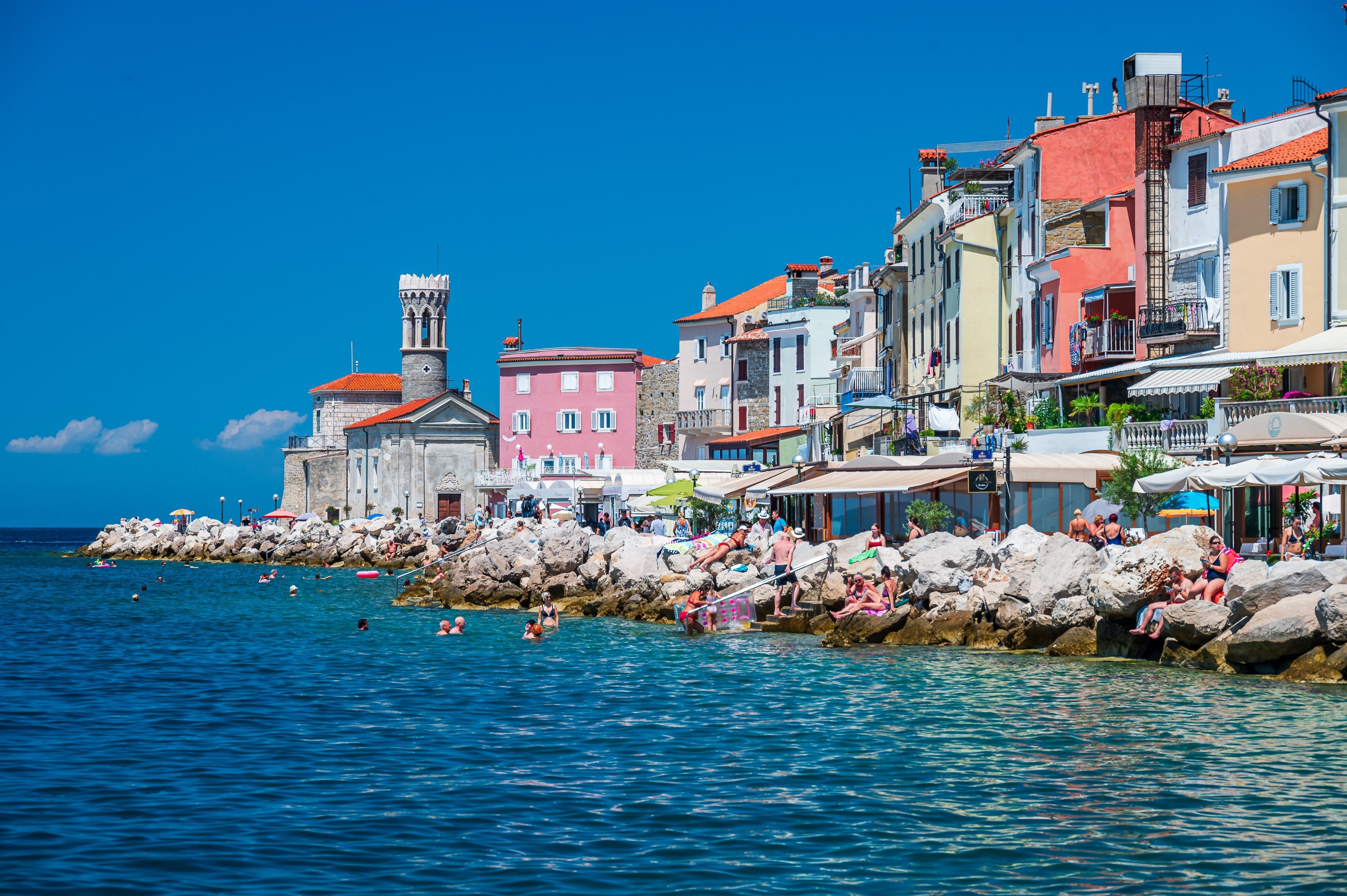
Cityscape of the old town of Piran, an ancient coastal village in Slovenia, showcasing its historic architecture and Mediterranean charm. (Shutterstock Photo)

Cityscape of the old town of Piran, an ancient coastal village in Slovenia, showcasing its historic architecture and Mediterranean charm. (Shutterstock Photo)

Piran, located on Slovenia’s narrow strip of Adriatic coastline known as the Slovenian Riviera, isn’t as popular as its neighbors. But if you’re the kind of traveler who enjoys discovering hidden gems, this town is perfect for you.

Though Slovenia has only about 47 kilometers (29.21 miles) of coastline, seaside towns like Piran embody the country’s limited but striking coastal charm – and slowly but surely, they’re making their way onto the radar of curious travelers.

Set on the Istrian Peninsula, Piran once belonged to the Republic of Venice, a past that still echoes through its streets, squares and architecture. The influence is unmistakable – you’ll feel like you’ve stepped into a quaint Italian town. Italian is still spoken here, and many streets and public squares are named after notable Italian figures.

Let’s take a walk through Piran and discover its timeless beauty.

Tartini Square (Tartinijev Trg)

Stepping into Tartini Square, the heart of Piran, you may feel transported straight into Italy. It resembles the elegant piazzas of Venice – bustling, historical and full of character.
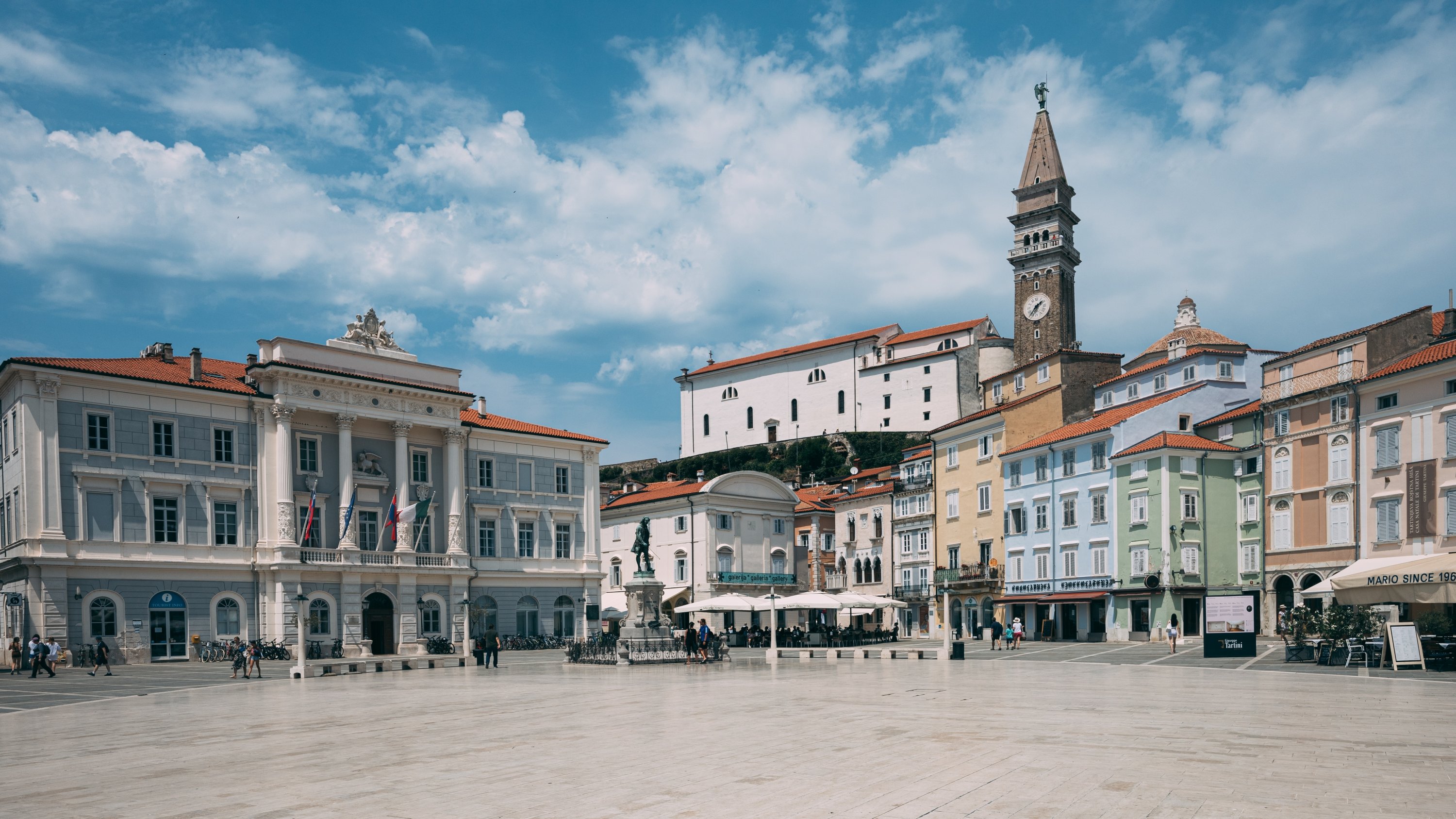
View of Tartini Square from the heart of Piran’s Old Town, Slovenia, June 27, 2023. (Shutterstock Photo)

View of Tartini Square from the heart of Piran’s Old Town, Slovenia, June 27, 2023. (Shutterstock Photo)

Named after Giuseppe Tartini, a celebrated composer and violinist born in Piran, the square was inaugurated in 1896. Today, a statue of Tartini holding his violin stands at its center. Around the square, you’ll find the town hall, charming cafes, shops, churches and hotels. Part of the square opens toward the harbor, offering glimpses of the sea.

For a full appreciation of its oval shape and setting, be sure to view the square from above.

Tartini’s House

Adjacent to the square is Tartini’s House, the birthplace and former home of Giuseppe Tartini. From its windows and terrace, you can look out over the square while listening to recordings of the composer’s music. The small museum inside displays his personal belongings, books, and of course, his cherished violin. It’s a space where the spirit of music lingers in the air.

Piran Old Town

Wandering through Piran’s Old Town, with its narrow alleyways and pastel-colored buildings, you’ll feel like you’ve stepped back in time. The streets are perfect for leisurely strolls, with art galleries tucked into quiet corners and beautiful photo opportunities around every turn.

Look out for shops selling products made with salt harvested from the nearby salt pans – everything from chocolate to soap and solid shampoos.

St. George’s Church

Perched on a hilltop overlooking the town, St. George’s Church offers one of the best views in Piran. From here, you can see the Gulf of Trieste to one side and Tartini Square to the other. If you’re lucky enough to find it open (churches in Piran are often closed when there are no services), step inside to admire its serene interior.
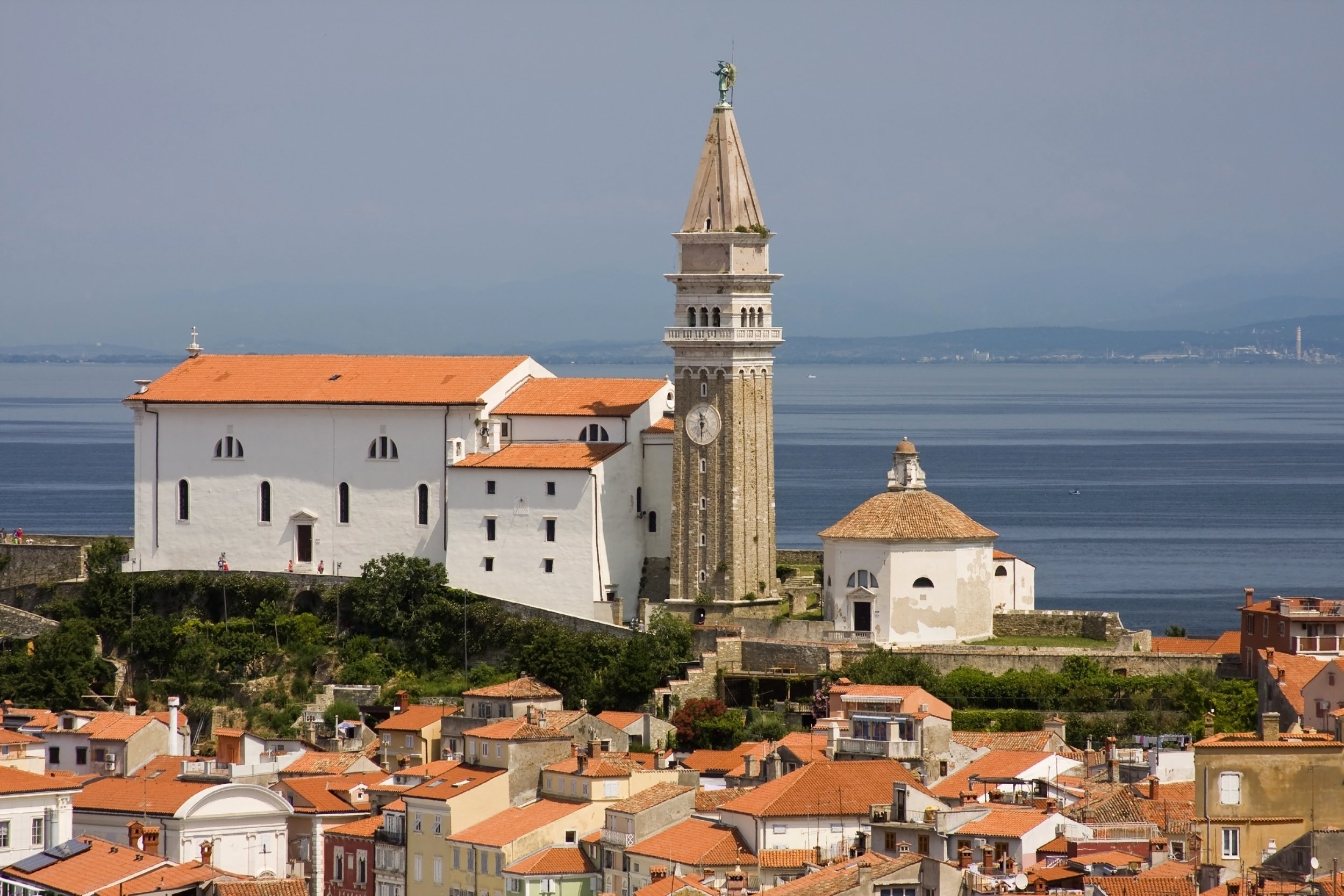
Perched on a hilltop overlooking the town, St. George’s Church offers one of the best views in Piran, Slovenia. (Shutterstock Photo)

Perched on a hilltop overlooking the town, St. George’s Church offers one of the best views in Piran, Slovenia. (Shutterstock Photo)

Next to the church is a bell tower – climb to the top for an even more stunning panorama. The climb is steep, but the reward is worth every step.

Walls of Piran

Built to protect the town from maritime threats – especially during the Ottoman era – the town walls are an important part of Piran’s history. As the town expanded, new sections were added. From the top, you’ll enjoy yet another unforgettable view of the red-roofed town and the sparkling Adriatic Sea.

Piran’s seaside promenade

No visit to Piran in summer is complete without spending time along the coastline. A short walk from Tartini Square takes you to a small harbor, and continuing toward the tip of the peninsula brings you to the rocky seafront. Here, people sunbathe on towels and dive into the crystal-clear waters of the Adriatic.

Even if you don’t swim, take a moment to walk the promenade, breathe in the salty air and soak up the sun.

Before you leave Piran

Explore the charming, narrow streets of the Old Town Capture postcard-worthy photos at every turn Swim or sunbathe by the sea in the city center Savor fresh seafood at local restaurants Venture to nearby towns like Izola, Koper, and Portorož Take a detour to Ljubljana, Lake Bled, or Lake Bohinj Hop over to Croatia or Italy if time allows

Piran is a place that whispers stories through its streets, a place where the sea breeze carries hints of history and art. It may be small, but it leaves a lasting impression on the soul. And one day, as the scent of the sea fills the air, it just might call you back.

The Daily Sabah Newsletter

Keep up to date with what’s happening in Turkey,
it’s region and the world.

SIGN ME UP

You can unsubscribe at any time. By signing up you are agreeing to our Terms of Use and Privacy Policy.
This site is protected by reCAPTCHA and the Google Privacy Policy and Terms of Service apply.


Source link

Continue Reading
Click to comment

Leave a Reply

Your email address will not be published. Required fields are marked *

Lifestyle

Venice of the Alps: A fairy-tale travel route in Annecy

Published

on


When we flew to the elegant and diplomatic Swiss city of Geneva, we already had at least a small idea of what was waiting for us. Even though it was just a stopover for us, we still felt we couldn’t leave without seeing it properly.

From everything we had read and heard, Geneva is a city that masterfully blends history, nature and luxury in every single street. But even so, no matter how organized and aesthetically pleasing a big city is, it always carries a kind of invisible intensity – a constant pace that quietly pushes you to keep moving.

Right at the moment we wanted to step away from that rhythm, slow down a little and let our minds and bodies rest, we shifted our route from Geneva toward a completely different world just 45 minutes away: the fairy-tale town of Annecy, France.

As a family, we’ve always preferred discovering small towns with hidden character – places that feel lived in, where you can sense stories in the streets, rather than huge, crowded, cosmopolitan cities. Big cities wake up your mind, but small towns genuinely calm your heart.

After Geneva’s busy, polished streets, stepping into Annecy felt like finding an oasis. It was as if we had arrived somewhere that quietly recharged us, where time slows down and where you’re reminded once again of the pure calm of traveling itself.

Now, with the peaceful fairy tale of Annecy behind us and the majestic heart of the Alps waiting ahead in Chamonix, France, how about we explore Annecy step by step, corner by corner? Here is the travel guide I prepared for you, one that will surely enchant anyone who loves small towns.

Even though Annecy is small and easily explored on foot, it is rich enough in history and beauty that you can spend days discovering every corner. Each street holds historical details and visual moments worth pausing for. To truly feel the soul of the town, I strongly recommend slowing down and wandering without rushing from place to place.

A general view of the Old Town of Annecy, France. (Getty Images Photo)

A general view of the Old Town of Annecy, France. (Getty Images Photo)

Vieille Ville, Old Town

The moment you step into Annecy, it immediately becomes clear why it is called the “Venice of the Alps.” The Thiou Canal, which originates from the lake, flows right through the heart of the town, wrapping it like a gentle embrace.

The Old Town area, Vieille Ville, is completely closed to motor vehicles, making it a true paradise for walking.

Along the canal, you’ll see 16th- and 17th-century pastel-colored houses, with geraniums spilling from windows, all reflected beautifully on the water’s surface, creating a stunning scene.

The best thing to do here is without a doubt to forget the map and simply get lost in the streets. Narrow passages, cobblestone roads, tiny handmade souvenir shops and the smell of freshly baked croissants drifting from bakeries will accompany you as you wander.

Sit at one of the small canal-side tables in Annecy, watch the water flow and enjoy the feeling of simply being there without rushing. After big cities, this silence and aesthetic calm does something truly good for both your mind and heart.

The castle on an island (Palais de l'Isle) and Thiou river, Annecy, France. (Shutterstock Photo)

The castle on an island (Palais de l’Isle) and Thiou river, Annecy, France. (Shutterstock Photo)

Island Palace

While walking through the Old Town, you will eventually come across an iconic structure standing right in the middle of the Thiou Canal, like a ship splitting the water in two. This is the Palais de l’Ile – the Island Palace.

This stone building, which dates back to the 12th century, is one of the rare architectural landmarks in the world with such a unique setting.

Over the centuries, it has served many different purposes: It was once the administrative center of the Counts of Geneva, later a courthouse, a mint and for the longest time, even a prison.

One of the classic Annecy experiences is to admire it from the bridges surrounding it, and of course, to take photos with the palace framed behind you.

A scenic view of the medieval Chateau d'Annecy rising above the rooftops of the old town, Annecy, France. (Shutterstock Photo)

A scenic view of the medieval Chateau d’Annecy rising above the rooftops of the old town, Annecy, France. (Shutterstock Photo)

Annecy Castle

Following the slightly inclined, charming stone streets that rise from the Old Town, you will eventually reach the impressive Chateau d’Annecy (Annecy Castle).

Built between the 13th and 16th centuries, this castle once served as the official residence of the Counts of Geneva. Over time, it was affected by fires and wars, but through restoration, it has survived to the present day.

Today, the castle hosts temporary art exhibitions. But beyond that, the most breathtaking part of visiting it is the view itself.

From the courtyard, you can look out over the deep blue, crystal-clear Lake Annecy, along with the surrounding Alpine mountains stretching across the horizon.

Lovers’ Bridge

Annecy is not only peaceful, but it also has a deeply romantic side. One of the best examples of this is the Pont des Amours (Lovers’ Bridge).

This bridge connects the two largest green areas of the city: Jardins de l’Europe and Le Paquier.

On one side, a tree-lined canal flows gently toward the lake. On the other, you’re greeted by an endless view of crystal-clear water and snow-covered peaks stretching into the distance.

Standing here, feeling the Alpine breeze and watching the swans glide across the water, you really feel the meaning of peace.

The sign of the bridge of lovers with locks, Annecy, France, Aug. 1, 2024. (Shutterstock Photo)

The sign of the bridge of lovers with locks, Annecy, France, Aug. 1, 2024. (Shutterstock Photo)

Boat tours

One of the main reasons Annecy feels so special is its lake, which is often described as one of the cleanest in Europe. Even from the shore, you can clearly see the stones beneath the water and fish swimming through it.

There are several ways to enjoy it, depending on your style:

Comfortable guided large cruise boats

Large sightseeing boats depart from the main piers, offering relaxed 1 to 1.5-hour tours. From the open deck, you can enjoy the wind while listening to commentary about the region’s history. The boat passes fairy-tale-like medieval castles along the shore and small luxury Alpine villages at the foot of the mountains. If you want to make it even more special, some cruises offer lunch or dinner on board. Watching the sunset over the lake while dining is an unforgettable experience.

Electric and motor boats

For those who love independence like us, one of the most fun options is renting small electric or motor boats from stands along the lake.

Some of these boats are guided and can take up to 10 people. We joined a guided speedboat tour for 10 people. During the ride, we slowed down at times to enjoy the Alpine views, feeling the wind and the refreshing waters of Annecy in a truly memorable experience.

Nostalgic and fun, pedal boats

If you want something more active, you can rent one of the colorful pedal boats lined up near the shores, especially around Pont des Amours. Some even come with slides. You can glide across the water slowly and even swim directly in Annecy’s incredibly clean lake.

Tourists walk on the boulevard in the harbor of Annecy, France, May 21, 2025. (Shutterstock Photo)

Tourists walk on the boulevard in the harbor of Annecy, France, May 21, 2025. (Shutterstock Photo)

Gastronomic pause

One of the best things about small towns is how food discovery feels just as personal and warm as walking through the streets.

Annecy is a wonderful place where refined French cuisine blends with the local flavors of the Alps.

In the local restaurants set beneath stone buildings along the canal, you will often smell traditional Savoie dishes like fondue and raclette. Being so close to Switzerland, cheese fondue is especially common here. It’s definitely something you should try.

But if you prefer something lighter, small crepe shops hidden in the streets offer fresh fruit or chocolate-filled French crepes, which are perfect for a relaxed break.

For a quick sweet stop, you should also visit the famous historic ice cream shop Glacier Perriere. You might find a long line outside, but their handmade, natural-flavored ice creams are absolutely worth the wait.

A general view of Chamonix with Mont Blanc in the background, Chamonix, France. (Shutterstock Photo)

A general view of Chamonix with Mont Blanc in the background, Chamonix, France. (Shutterstock Photo)

Next stop: Chamonix

Annecy became an incredible stop that reignited our love for small towns and, after Geneva’s intense city atmosphere, truly soothed our souls. Thanks to its slow-paced lifestyle that naturally strips away stress, we absolutely fell in love with it. The sense of calm we tend to lose in the rush of big cities was something we regained completely in this little “Venice of the Alps.”

After Annecy, we turned our route toward somewhere far more dramatic and adventurous. The famous mountain town of Chamonix, France – set at the foot of Mont Blanc, Europe’s highest peak – was waiting for us with its cable cars and glaciers.

See you next time, when I’ll share what we discovered in Chamonix after the calm of Annecy.


Source link

Continue Reading

Lifestyle

Roman baths in central Türkiye see surge in tourist interest

Published

on


The Sarıkaya Roman Baths, known in antiquity as Basilica Therma and locally as “Kral Kızı” (“King’s Daughter”), have reopened to visitors with the arrival of warmer weather, drawing growing tourist interest.

Listed on the UNESCO World Heritage Tentative List, the ancient bathing complex in Sarıkaya dates back to the Roman Empire and is believed in local tradition to have healed the daughter of a king from Kayseri suffering from a serious illness. Because of this legend, the site is widely referred to as “Kral Kızı,” or “King’s Daughter.”

The historic structure continues to stand out for both its architecture and its thermal waters, which have flowed at about 50 degrees Celsius (122 degrees Fahrenheit) for roughly 2,000 years. The baths remain a point of interest for both domestic and international tourists.

Following landscaping and environmental improvements carried out under the supervision of the Yozgat Museum Directorate beginning in 2022 and completed in August 2024, the site was reopened with improved visitor access and comfort. Officials say the upgrades have made the area more welcoming and easier to explore.

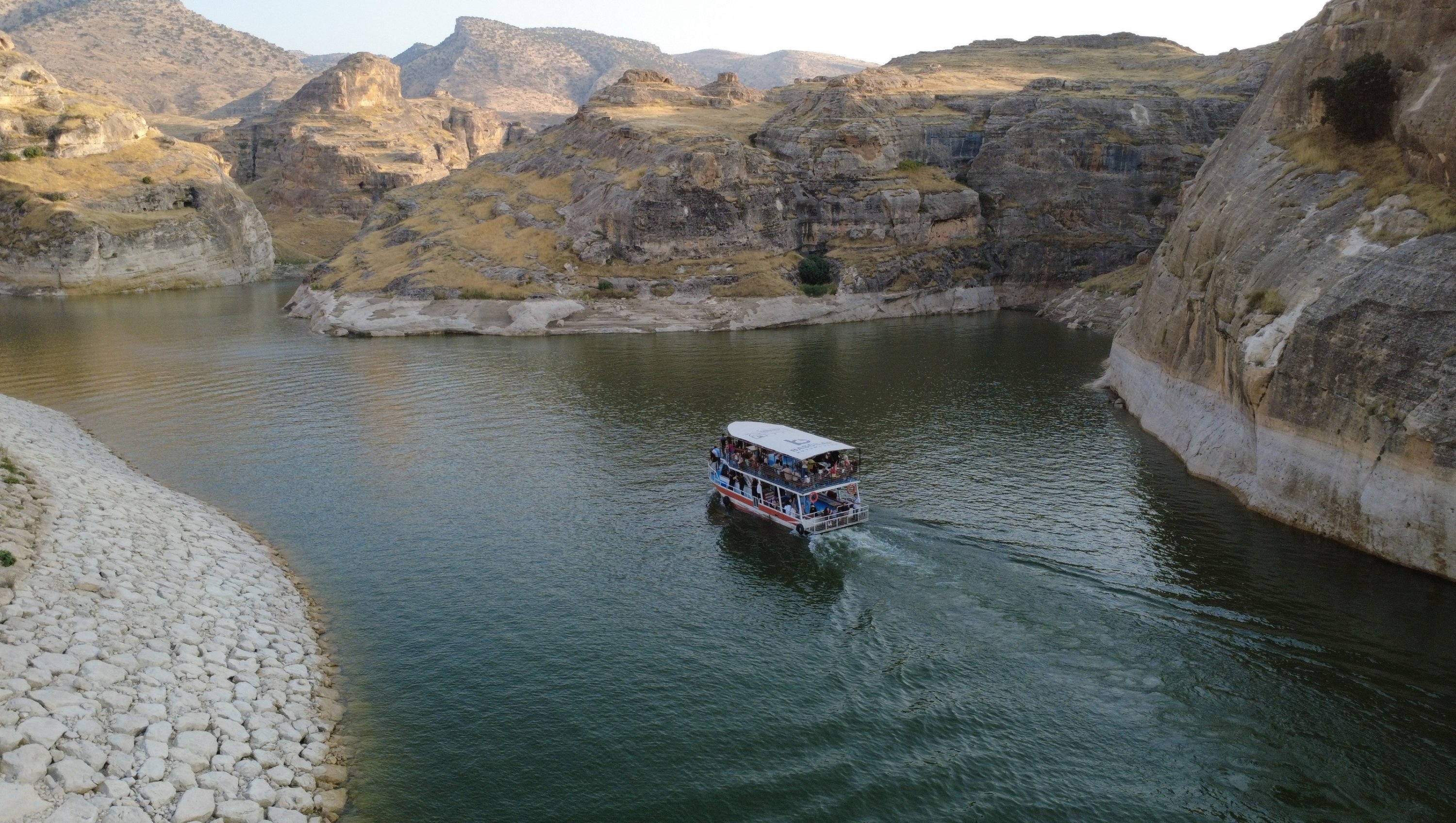
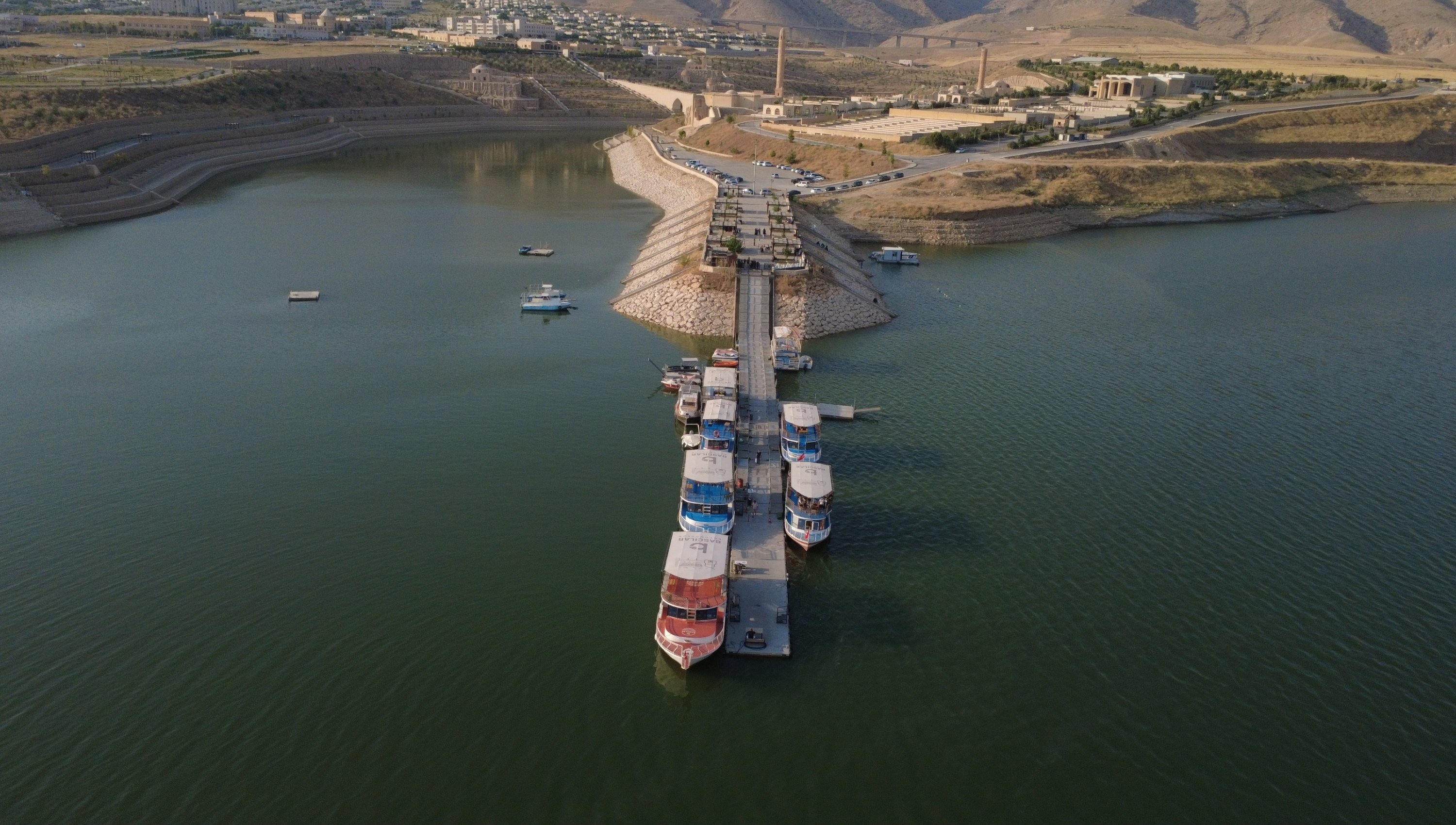
An aerial view of the Sarıkaya Roman Baths, known in antiquity as Basilica Therma, Yozgat, central Türkiye, June 6, 2026. (AA Photo)

An aerial view of the Sarıkaya Roman Baths, known in antiquity as Basilica Therma, Yozgat, central Türkiye, June 6, 2026. (AA Photo)

Visitor numbers have increased with the seasonal rise in temperatures. Last year, approximately 50,000 tourists visited the site, which was also recently filmed using an FPV drone, highlighting its scale and preserved Roman-era structure.

Visitors describe the site as both visually striking and culturally significant.

Celal Diril, who visited the baths with his family from Istanbul, said the site is a must-see destination. “The Roman baths are a place everyone should visit,” he said. “The water is healing, there’s no need to explain it.”

Diril also noted the atmosphere of the area, recalling previous visits in his childhood. “The atmosphere is really beautiful. When I came here as a child, this area wasn’t developed like this. Now it is much better,” he said. “I also visited Nemrut Mountain two days ago, and I feel a similar breathtaking atmosphere here.”

Cemil Diril said he visited the site to see the historic structure and benefit from the thermal waters.

Hamza Çelik, who spent the weekend visiting with his family, praised the site’s cultural value. “It’s a very beautiful place. I hope everyone comes to see it. The more we visit, the more we understand how valuable and beautiful our land is,” he said.

Local resident Aytekin Yücer emphasized that recent landscaping work has made the site more visible and attractive to tourists. He noted that visitor numbers have increased since the improvements.

“Because I was born here, I come regularly,” Yücer said. “Tourists come, visit and explore. It’s a very beautiful place and an important asset for Sarıkaya. We drink tea and relax here in a setting surrounded by history.”

The Daily Sabah Newsletter

Keep up to date with what’s happening in Turkey,
it’s region and the world.

SIGN ME UP

You can unsubscribe at any time. By signing up you are agreeing to our Terms of Use and Privacy Policy.
This site is protected by reCAPTCHA and the Google Privacy Policy and Terms of Service apply.


Source link

Continue Reading

Lifestyle

Walking through history on Mediterranean coast: Side

Published

on


There are many beautiful coastal destinations along the Mediterranean, but few offer the unique experience of Side. Here, history is not confined to museums or archaeological sites separated from everyday life. Instead, it becomes part of the journey itself. Every street, every corner and every sea view is accompanied by reminders of the civilizations that once flourished here.

Located in the district of Manavgat on Türkiye’s southern coast, Side was one of the most important ports of ancient Pamphylia. Over the centuries, it was shaped by Hellenistic, Roman and Byzantine influences, leaving behind a remarkable collection of monuments that continue to define the town today.

What immediately strikes visitors is how seamlessly ancient history blends with modern life. Restaurants, boutiques and cafes stand alongside Roman walls and centuries-old ruins. Rather than feeling like a city built around an archaeological site, Side feels like an archaeological site that continues to live and breathe.

A view of the Temple of Apollo ruins in the ancient city of Side, Antalya, southern Türkiye, June 9, 2026. (Photo by Neslişah Yılmaz Hidayetoğlu)

A view of the Temple of Apollo ruins in the ancient city of Side, Antalya, southern Türkiye, June 9, 2026. (Photo by Neslişah Yılmaz Hidayetoğlu)

Glass walkways, ancient streets

One of the most fascinating features of the town is its glass walkway system. As you stroll through the center, transparent glass panels allow visitors to look directly beneath their feet and see the excavated ruins below. Walking across these platforms creates a unique connection with the past, offering a rare opportunity to observe ancient structures while continuing your journey through the town. It is a thoughtful way of preserving history while allowing modern life to coexist with it.

The ancient theater remains one of Side’s most impressive landmarks. Built during the Roman period, it once hosted thousands of spectators and still stands as a testament to the engineering achievements of the era. Nearby, visitors can explore the ancient agora, city gates, baths and monumental streets that reveal the sophistication of this once-thriving port city.

A view of the ruins at the ancient city of Side, Antalya, southern Türkiye, June 9, 2026. (Photo by Neslişah Yılmaz Hidayetoğlu)

A view of the ruins at the ancient city of Side, Antalya, southern Türkiye, June 9, 2026. (Photo by Neslişah Yılmaz Hidayetoğlu)

Sunset at the Temple of Apollo

No visit to Side would be complete without experiencing the Temple of Apollo. Situated dramatically at the edge of the sea, the temple has become one of Türkiye’s most photographed historical sites. Arriving near sunset is particularly magical. As the Mediterranean sun dips toward the horizon, the white marble columns are bathed in golden light, creating a scene that feels almost cinematic.

Beyond its historical significance, Side offers a relaxed Mediterranean atmosphere. Palm-lined promenades, turquoise waters and charming streets invite visitors to slow down and enjoy the surroundings. Whether exploring ancient ruins, dining by the harbor or simply watching the waves from the waterfront, there is a sense of tranquility that defines the destination.

As a fashion designer, I often draw inspiration from the places I visit. Side reminds me that heritage and contemporary life do not need to exist separately. They can coexist beautifully, just as ancient stones and modern architecture do here. I have always believed that we are all voluntary ambassadors for our country, and through my collections I strive to share the stories, culture and beauty of Türkiye with international audiences.

Ancient statues at the ancient city of Side, Antalya, southern Türkiye, June 9, 2026. (Photo by Neslişah Yılmaz Hidayetoğlu)

Ancient statues at the ancient city of Side, Antalya, southern Türkiye, June 9, 2026. (Photo by Neslişah Yılmaz Hidayetoğlu)

Side is more than an archaeological treasure; it is a living reminder of Türkiye’s extraordinary ability to preserve its past while embracing the present. Walking across a glass pathway and looking down at ruins beneath your feet, you are reminded that history is not something distant here – it is quite literally part of the path you follow.

For travellers seeking both cultural discovery and Mediterranean charm, Side offers one of the most memorable experiences on Türkiye’s coastline. It is a destination where every step tells a story, and where the past remains wonderfully present.

The Daily Sabah Newsletter

Keep up to date with what’s happening in Turkey,
it’s region and the world.

SIGN ME UP

You can unsubscribe at any time. By signing up you are agreeing to our Terms of Use and Privacy Policy.
This site is protected by reCAPTCHA and the Google Privacy Policy and Terms of Service apply.


Source link

Continue Reading

Lifestyle

From Anatolia to Bosnia: 6 centuries of Blagaj Tekke tradition

Published

on


The Blagaj Tekke, near Mostar in Bosnia-Herzegovina, stands at the base of steep cliffs rising as high as 200 meters (655 feet), forming one of the most recognizable cultural and spiritual landmarks in the Balkans.

Situated about 15 kilometers (9 miles) from Mostar in the village of Blagaj, the historic Dervish lodge overlooks the source of the Buna River, where turquoise waters emerge dramatically from a karst spring beneath towering rock formations. Visitors often describe the setting as exceptionally peaceful, shaped by the sound of rushing water and the surrounding natural landscape.

Also known as the “Alperenler Tekke,” the site is regarded as both a historic monument and an important symbol of Sufi tradition that spread from Anatolia into the Balkans during the Ottoman period.

Historians believe the lodge was established about 600 years ago by dervishes who arrived from Anatolia. Its location at the river’s source and beneath the cliffs has long contributed to its reputation as a place of reflection and retreat.

Legacy of Sarı Saltuk

Inside the complex is a tomb associated with Sarı Saltuk, one of the most mysterious figures in Balkan folklore. The tomb is marked with a green turban, a traditional symbol used in the region to honor revered religious figures.

Sarı Saltuk is believed to have been a disciple of Haji Bektash Veli and one of the early dervishes sent from Anatolia to the Balkans in the 13th century. According to legend, he requested that multiple coffins be buried in different locations to conceal his true resting place. As a result, several sites across the Balkans are associated with him, with Blagaj considered one of the most significant.

A general view of the Blagaj Tekke near Mostar, Bosnia-Herzegovina, May 15, 2026. (AA Photo)

A general view of the Blagaj Tekke near Mostar, Bosnia-Herzegovina, May 15, 2026. (AA Photo)

Ottoman-era spiritual center

Historical records show that tekkes played a key role in the spread of Islam in the Balkans during the Ottoman period, often serving as rest stops for travelers as well as religious centers. Scholars also note that dervishes were present in the region before the expansion of Ottoman administrative and military structures.

The Blagaj Tekke, built around six centuries ago as a two-story structure, reflects classical Ottoman architecture with whitewashed walls, wooden details and wide eaves. Its prayer hall is noted for its distinctive Turkish Baroque-style elements, considered one of the most unique examples of its kind in Bosnia-Herzegovina.

The complex also includes a historic bathhouse featuring an underfloor heating system and star-shaped openings in its dome that allow natural light into the interior.

UNESCO recognition

The earliest known written reference to the tekke appears in the travel writings of Ottoman explorer Evliya Çelebi, who described it as an important center of learning and spiritual life in the Ottoman world.

The surrounding area of Blagaj has preserved much of its medieval and Ottoman-era heritage, making it one of the region’s most historically layered settlements.

In 2007, the cultural landscape of Blagaj and its surroundings was added to the tentative list of UNESCO World Heritage Sites.

Nearby stands a historic mosque built during the reign of Suleiman the Magnificent, considered one of the oldest domed structures in the region.

Today, the Blagaj Tekke remains one of Bosnia-Herzegovina’s most visited destinations, attracting hundreds of thousands of visitors each year with its combination of spiritual heritage, Ottoman architecture and the dramatic natural setting of the Buna River spring.

The Daily Sabah Newsletter

Keep up to date with what’s happening in Turkey,
it’s region and the world.

SIGN ME UP

You can unsubscribe at any time. By signing up you are agreeing to our Terms of Use and Privacy Policy.
This site is protected by reCAPTCHA and the Google Privacy Policy and Terms of Service apply.


Source link

Continue Reading

Lifestyle

Geneva travel guide: Top things to do, see, explore

Published

on


On this trip to one of the most beautiful destinations to visit in spring, we found ourselves immersed in nature while also witnessing the history of a city of global importance.

Geneva, located on the shores of Lake Geneva under the shadow of the Alps and the Jura Mountains, had long been on our travel list. As with every trip to Switzerland, our excitement began months in advance. The fact that this journey also extended from Switzerland into France doubled our anticipation.

From Geneva – right on the French border – you can easily visit Mont Blanc, the highest peak in Europe and even cross into Italy in a very short time. I will share more details about that in a future article. Another essential stop, just 45 minutes from Geneva, is Annecy, which is absolutely worth visiting.

Geneva is not only blessed with stunning natural scenery like many Swiss cities, but it is also one of Europe’s most prestigious cities due to hosting some of the world’s most important international institutions. Located on the shores of Lake Geneva (Lac Leman), the city is home to the European headquarters of the United Nations, the World Health Organization (WHO), the UN High Commissioner for Human Rights, the International Labour Organization (ILO), the Red Cross, and CERN, the European Organization for Nuclear Research. Geneva is also known as a global center for the production of some of the world’s most prestigious watch brands.

Jet d’Eau

One of Geneva’s most iconic landmarks is the Jet d’Eau, located on Lake Geneva – one of the largest lakes in Central Europe, shared by Switzerland and France.

Tourists at the famous Jet d'Eau on the lake Geneva (lac Léman), in Geneva, Switzerland, Aug. 11, 2023. (Shutterstock Photo)

Tourists at the famous Jet d’Eau on the lake Geneva (lac Léman), in Geneva, Switzerland, Aug. 11, 2023. (Shutterstock Photo)

The fountain shoots 500 liters of water per second at a speed of 200 kph, reaching a height of 140 meters. On sunny days, it creates a beautiful artificial rainbow.

The mist rising from the water can make you feel as if you are walking through a fairytale. Watching this while feeling the cool spray on your face and seeing the snowy peaks of Mont Blanc in the background is an unforgettable experience.

English Garden, Flower Clock

Located along the lake, the English Garden (Jardin Anglais) is a perfect place to enjoy nature. Opened in 1862, it features walking paths, the Fontaine des Quatre-Saisons (a bronze fountain) and sculptures by Swiss artists.

One of its most notable features is that the trees and plants are maintained without any chemical pesticides. Inside the park, you can see a Ginkgo tree planted in 1863 and a Copper Beech planted in 1895.

The Flower Clock (L’Horloge Fleurie), a symbol of Geneva’s watchmaking heritage, is located in the Jardin Anglais park, Geneva, Switzerland. (Shutterstock Photo)

The Flower Clock (L’Horloge Fleurie), a symbol of Geneva’s watchmaking heritage, is located in the Jardin Anglais park, Geneva, Switzerland. (Shutterstock Photo)

The most famous attraction here is the Flower Clock (L’Horloge Fleurie), a symbol of Geneva’s watchmaking heritage. Created in 1955 and powered by solar energy, it is redesigned each season with different flowers.

For those looking for a photo spot, it is located at the corner where the road to Mont Blanc Bridge meets Quai du Général-Guisan.

Mont Blanc Bridge

The Mont Blanc Bridge, also known as Pont du Mont-Blanc, is 250 meters long and open to both pedestrians and vehicles. While it has no particular historical significance, it is a great photo spot thanks to the flags on both sides.

Pont du Mont-Blanc bridge with Swiss flags in windy autumn, Geneva, Switzerland, Oct. 30, 2017. (Shutterstock Photo)

Pont du Mont-Blanc bridge with Swiss flags in windy autumn, Geneva, Switzerland, Oct. 30, 2017. (Shutterstock Photo)

On a clear day, you can even see Mont Blanc from here. One end of the bridge leads to the luxurious Paquis district, where you can admire beautiful architecture.

Les Grottes

Les Grottes is one of Geneva’s most interesting neighborhoods, known for its narrow streets and Parisian-style cafés.

What stands out most here is its unique architecture. The colorful, curved buildings known as “Schtroumpfs” resemble the works of Gaudí in Barcelona and the Hundertwasser Houses in Vienna.

Built between 1982 and 1984 by Berthoud, Frei and Hunziker, these buildings are also locally known as the “Smurfs’ houses.”

Quai du Mont Blanc

This lakeside promenade, lined with cafes and restaurants, stretches toward Bains des Pâquis. It offers stunning views of Lake Geneva and the Alps.

The area is also home to luxury hotels and Michelin-starred restaurants, making it one of the most elegant walking routes in the city.

Rousseau Island

Located on the Rhone River just west of Mont Blanc Bridge, this small island can be reached on foot via Bergues Bridge.

The Rhone River flows past Rousseau Island, Geneva, Switzerland, Sept. 18, 2025. (Shutterstock Photo)

The Rhone River flows past Rousseau Island, Geneva, Switzerland, Sept. 18, 2025. (Shutterstock Photo)

Brunswick Monument

While walking along Quai du Mont Blanc, you will encounter the Brunswick Monument, a mausoleum dedicated to the Duke of Brunswick.

The Brunswick Monument, a mausoleum built in 1879 in the Jardin des Alpes, commemorates Charles II, Duke of Brunswick, Geneva, Switzerland, March 25, 2022. (Shutterstock Photo)

The Brunswick Monument, a mausoleum built in 1879 in the Jardin des Alpes, commemorates Charles II, Duke of Brunswick, Geneva, Switzerland, March 25, 2022. (Shutterstock Photo)

The Duke donated his entire fortune to Geneva in exchange for a grand tomb overlooking the Alps. Today, it remains one of the city’s most visited landmarks.

Rue du Rhone

This is Geneva’s main luxury shopping street, connecting the Old Town to Lake Geneva. Here you will find world-famous brands and exceptional chocolate shops.

It is also one of the best places to enjoy Swiss chocolate and luxury shopping. At sunset, dining here with a view of the lake – perhaps with a traditional cheese fondue – is a memorable experience.

United Nations Office

Located inside Ariana Park, the Palais des Nations (United Nations Palace) is considered the heart of global diplomacy.

The office of the United Nations, Geneva, Switzerland, Oct. 13, 2025. (Shutterstock Photo)

The office of the United Nations, Geneva, Switzerland, Oct. 13, 2025. (Shutterstock Photo)

The park is also home to peacocks, which were allowed to roam freely as part of Geneva’s agreement when hosting the U.N.

International Museum of the Red Cross and Red Crescent

Located directly opposite the U.N. building, this museum opened in 1988. It showcases documents, posters and information about the humanitarian work of the Red Cross and Red Crescent.

St. Pierre Cathedral

One of Geneva’s most iconic landmarks, St. Pierre Cathedral is a blend of Romanesque, Gothic and Neoclassical architecture.

In this undated photo, Saint Pierre (St. Peter) Cathedral, the Reformed Protestant church of Geneva, is located in the center of Geneva, Switzerland. (Shutterstock Photo)

In this undated photo, Saint Pierre (St. Peter) Cathedral, the Reformed Protestant church of Geneva, is located in the center of Geneva, Switzerland. (Shutterstock Photo)

If you are willing to climb 157 steps, you will be rewarded with a stunning view from the north tower. The cathedral is also listed as part of the European Cultural Heritage.

Parc des Bastions

Covering approximately 65,000 square meters, Parc des Bastions is a great place to rest and relax.

The park often hosts music festivals and is popular for yoga and sports. It also includes playgrounds, botanical areas and public events.

At the entrance near Place de Neuve, you will find large outdoor chessboards, a common feature in many European city parks.

Reformation Wall

The Reformation Wall, also known as the Monument International de la Reformation and located inside Parc des Bastions, is a 100-meter-long monument built in 1909. It features statues of key figures of the Protestant Reformation, including John Calvin, William Farel, Theodore Beza and John Knox.

The International Monument to the Reformation, usually known as the Reformation Wall, was inaugurated in 1909, Geneva, Switzerland, March 24, 2022. (Shutterstock Photo)

The International Monument to the Reformation, usually known as the Reformation Wall, was inaugurated in 1909, Geneva, Switzerland, March 24, 2022. (Shutterstock Photo)

The motto “Post Tenebras Lux” (“Light After Darkness”) is engraved on the wall, symbolizing the philosophy of the movement.

Directly opposite the monument is the University of Geneva, founded by John Calvin and one of the oldest universities in the city.

Place de Neuve (New Square)

Place de Neuve is one of Geneva’s most important squares, often overlooked by tourists due to its busy traffic.

Place de Neuve is one of the main squares in the city of Geneva, Switzerland, March 25, 2022. (Shutterstock Photo)

Place de Neuve is one of the main squares in the city of Geneva, Switzerland, March 25, 2022. (Shutterstock Photo)

Surrounding the square are important cultural institutions such as the Geneva Conservatory of Music, Rath Museum, Grand Theatre and Victoria Hall.

At the center stands the equestrian statue of General Guillaume Henri Dufour, a key figure in Swiss history who was also the first general of the Swiss Confederation army and the creator of Switzerland’s first detailed topographic map.


Source link

Continue Reading

Lifestyle

Sapanca, Amasra, Safranbolu offer Eid escapes across Türkiye

Published

on


Sapanca, near major cities such as Ankara and Istanbul, along with Amasra and Safranbolu, will offer visitors a journey through nature and history during the Eid al-Adha holiday, drawing interest with their scenery, heritage sites and tourism facilities.

Located in the eastern Marmara region and the western Black Sea region, Sapanca reflects the climate characteristics of both areas and hosts a wide range of natural attractions. The district offers accommodation options including villas, bungalows, five-star hotels and boutique properties.

Clouds reflect over Sapanca Lake, Sakarya, Türkiye, May 16, 2026. (AA Photo)

With its lake, picnic areas, blue and green landscapes and recreational facilities, Sapanca remains a year-round destination for domestic and international tourists. Visitors can enjoy lakeside walking and cycling paths, as well as zipline activities, ATV tours and boat rides.

The district’s accommodation facilities are expected to reach 100% occupancy during the nine-day holiday period.

One of the top destinations

Sapanca Tourism Association Chair Berrin Yılmazer told Anadolu Agency (AA) that Sapanca is one of Türkiye’s most attractive tourism destinations.

She said the district stands out for its accommodations, activities, lake, greenery and cuisine, where blue and green meet.

“We are very lucky to be in such a beautiful destination,” Yılmazer said. “We want everyone to come and see it. They should taste our food and trout, see our entertainment and join our activities.”

A general view of Sapanca Lake, Sakarya, Türkiye, May 16, 2026. (AA Photo)

A general view of Sapanca Lake, Sakarya, Türkiye, May 16, 2026. (AA Photo)

She noted strong holiday booking demand, adding, “In previous holidays, summer vacations and midterm breaks, we have always reached 100% occupancy. We expect to reach it again this time.”

Strong demand for Amasra

In Amasra, which was added to the UNESCO World Heritage Tentative List in 2015 with Amasra Castle and is known for its historical sites and natural beauty, hotels and guesthouses are seeing heavy reservations ahead of the holiday.

The district contains remains from the Hellenistic, Archaic, Classical, Roman, Byzantine, Genoese, Seljuk and Ottoman periods and is preparing to host visitors.

With most of its 3,000-bed accommodation capacity already largely full, Amasra – whose permanent population is about 6,000 – is expected to welcome roughly 500,000 day-trippers and overnight tourists during the holiday.

A general view of Amasra, Bartın, northern Türkiye, May 16, 2026. (AA Photo)

Amasra Culture and Tourism Association Vice Chair Mete Ayyıldız told that the district is one of the Black Sea’s “paradise” destinations thanks to its 3,000-year history and natural and cultural heritage.

“We have strong demand in our district. Hotel occupancy has reached around 90%,” he said. “We will host our guests in the best possible way. It will be a pleasure to welcome them in the capital of fish and salad.”

He added that longer holiday periods benefit local tourism by spreading visitor traffic across several days, allowing businesses to provide better service.

Tourist numbers in Amasra continue to rise, with the district’s daily population reaching about 50,000. During the nine-day holiday, total visitors are expected to reach 450,000 to 500,000.

He also warned of heavy traffic congestion of 3-4 kilometers near the town center during peak hours, advising visitors to plan trips for quieter morning or midday hours.

Safranbolu to host history seekers

Known as one of the “best-preserved top 20 cities in the world,” Safranbolu will welcome visitors during the holiday with its Ottoman-era inns, baths, mosques, fountains, bridges and historic mansions.

A general view of the traditional houses of Safranbolu, Karabük, northern Türkiye, May 19, 2026. (AA Photo)

A general view of the traditional houses of Safranbolu, Karabük, northern Türkiye, May 19, 2026. (AA Photo)

Safranbolu Tourism Operators Association Chair Şebnem Urgancıoğlu told that reservations are rising across historic mansions, guesthouses and hotels.

Occupancy is currently at 75%-80%, and she expects it to reach full capacity during the Eid al-Adha holiday.

She noted that Safranbolu is especially beautiful in spring and autumn, adding that visitors can walk through the historic bazaar and Bağlar district.

An aerial view of the traditional houses of Safranbolu, Karabük, northern Türkiye, May 19, 2026. (AA Photo)

An aerial view of the traditional houses of Safranbolu, Karabük, northern Türkiye, May 19, 2026. (AA Photo)

She also recommended visiting local attractions such as caves, the Crystal Glass Terrace, the Incekaya Aqueduct and nearby Yazıköy and Yörük villages. For those with more time, she suggested the natural areas in Yenice and the canyons in Pınarbaşı, as well as the newly opened Kalealtı Education and City History Museum.

The Daily Sabah Newsletter

Keep up to date with what’s happening in Turkey,
it’s region and the world.

SIGN ME UP

You can unsubscribe at any time. By signing up you are agreeing to our Terms of Use and Privacy Policy.
This site is protected by reCAPTCHA and the Google Privacy Policy and Terms of Service apply.


Source link

Continue Reading

Trending