
Politics
Ankara courthouse braces for busy week over FETÖ, CHP trials

The main courthouse in the capital Ankara will handle closely-watched trials this week, including one that may change the fate of main opposition Republican People’s Party (CHP).
Proceedings will continue Tuesday at the 34th High Criminal Court in Ankara in the second hearing of a case involving 14 defendants linked to alleged corruption at Ankara Metropolitan Municipality (ABB) run by the main opposition Republican People’s Party (CHP). The case stems from an investigation into allegations that concert expenditures by the municipality between 2021 and 2024 caused public losses. According to the prosecutor’s office, the case is based on findings from the Interior Ministry’s Civil Inspection Board, a Financial Crimes Investigation Board (MASAK) review, an audit by the Court of Accounts, and an expert report. Investigators determined that through 32 concert service procurements, the municipality suffered a financial loss exceeding TL 154.4 million ($5 million).
Ankara Mayor Mansur Yavaş previously faced criticism over what was described as excessive spending during Republic Day celebrations on Oct. 29, 2024, after media reports claimed the municipality paid TL 69 million for a concert by a popular singer.
Also on Tuesday, another case will be heard at the 2nd High Criminal Court in Ankara involving nine defendants accused of forming the Ankara branch of the Maydonoz Döner chain. The company had been appointed trustees by the Savings Deposit Insurance Fund (TMSF) over allegations it financed the Gülenist Terror Group (FETÖ).
At a previous hearing, the court ruled to release two detained defendants under judicial control measures, citing the state of evidence in the case. There are currently no defendants in pretrial detention.
Last year, authorities arrested hundreds of suspects in an investigation into the chain accused of raising money for FETÖ. The franchise gave illegitimate partnerships to people linked to FETÖ for a certain sum and refused to award shares to people not referred by the terrorist group, according to the authorities. Authorities have said earlier that all branches of the chain were used to create jobs for FETÖ-linked people and funnel funds to the group, including “himmet” rates. “Himmet” is the name FETÖ gave to donations to the group or cash obtained through extortion.
On April 1, proceedings will also continue at the 26th Criminal Court of First Instance in Ankara in a case involving 12 defendants, including suspended Ekrem İmamoğlu, the mayor of Istanbul for CHP. The case concerns allegations of irregularities at the CHP’s 38th Ordinary Congress, where the current chair, Özgür Özel, was elected. Özel’s associates in CHP are accused of launching a vote-buying scheme to secure his victory.
At a previous hearing, the court decided, in line with the prosecutor’s opinion, to seek the consolidation of the case with a separate trial in Istanbul concerning an alleged criminal organization formed for profit involving Imamoğlu. However, the 40th High Criminal Court in Istanbul rejected the request to merge the two cases.

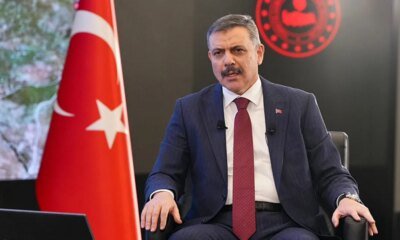
Interior Minister Mustafa Çiftçi, who took office in February, told journalists that Türkiye cannot afford to lose youth and children to criminal gangs.
“(The gangs) should surrender, and otherwise, we will continue cracking down on them,” Çiftçi said on Sunday at a meeting with journalists.
“I instructed the police and gendarmerie to continue operations. There will be more and more,” he said. Criminal gangs employing children have flourished in Türkiye in recent years. Gangs turn to disadvantaged youths and minors to carry out hits on rivals and extort businesses, especially in big cities, in a bid to avoid criminal liability, as minors are often handed down more lenient sentences compared to adult offenders.
Çiftçi said they also stepped up the fight against narcotics, citing a nationwide operation last week where 358 suspects were captured. “Drugs fuel other crimes, and counter-narcotics operations are multi-layered. Drugs lie at the foundation of many issues and crimes affecting society. It funds gangs and terrorism. Sadly, it targets our youth,” he said. “We are determined to drain it. Between Jan. 1 and March 22 alone, we seized more than 13 tons of drugs, and it shows our determination,” he said.
New job for night watchmen
The night watch department of the Turkish police department closed in 1991 as law enforcement sought to modernize itself. In 2017, they were reintroduced, with modernized uniforms and more patrols, especially in big cities. Çiftçi said they were now working to reform the force once again. He said the new regulations they planned would allow night watchmen to work during the day as well if the local governorates needed extra manpower for security on certain occasions. “Based on the needs, they will be allowed to work as patrols in predetermined locations in cities,” the minister said.
Border woes
Another issue Çiftçi commented on was the security of the Turkish-Iranian border as the U.S.-Israel-Iran war raged. The minister was at the Gürbulak border crossing last week to inspect the measures. In statements on Sunday, he assured that the borders had no extraordinary situation at the moment. “We have no problems on the border now, but we still took all necessary measures. We have no gaps in the security,” he highlighted.
Municipal corruption
On a question regarding investigations into municipalities whose mayors and bureaucrats are involved in corruption, Çiftçi denied any political bias. The main opposition Republican People’s Party (CHP) repeatedly claimed that the charges against its mayors were politically motivated.
Providing official figures regarding the cases, Çiftçi said 3,224 investigations were carried out by his ministry’s inspectors since the March 2024 election. “The ministry granted permission for investigation in 1,298 cases, and 591 among them are municipalities run by the AK Party,” he said, referring to the ruling Justice and Development Party. Çiftçi said 321 CHP municipalities were also investigated and that 102 other municipalities investigated by inspectors were run by the government ally Nationalist Movement Party (MHP).
A key partner of NATO, Türkiye will host the leaders’ summit of the alliance for the second time in more than two decades. Heads of state and top figures from member countries will be in the capital Ankara for the summit scheduled to be held on July 7-8. Some 6,000 participants are expected to attend the event.
Preparations are underway in the Turkish capital for the event, where alliance leaders will likely discuss its future as conflicts proliferate across the world, forcing them to bolster defense expenditures.
A series of panels are being held in NATO member countries as preparation for the summit, with the first one held in Spain. In Ankara, authorities renovate Etimesgut military airport, which will be the main transport hub for guests. Airport’s runways are being expanded, the Sabah newspaper reported on Sunday, while a guest house will be constructed to accommodate delegations.
The presidential complex and a congress hall in the capital will be the main venues of the summit. A press center is being set up at the complex where heads of state will hold news conferences. The Presidency of Defense Industries will also host a defense forum on the margins of the summit, at the ATO Congressium hall.
Türkiye this year marks the 74th anniversary of its admission to NATO and boasts the second biggest army of the alliance. It is the only country in NATO’s “southern flank” with a sizeable military power and a gateway to the Middle East and wider Asia. Security of the Black Sea also largely depends on Türkiye, especially amid the Russia-Ukraine conflict which threatens maritime security.
In the last summit in The Hague last year, NATO members agreed to spend
Some 5% of their GDP in defense expenditures by 2035. Ankara will be the stage where the first progress reports on this massive investment drive are measured. A NATO report last week showed military spending rose by a fifth year-on-year in 2025 to $574 billion.
US President Donald Trump has repeatedly sought higher defense spending by the alliance’s 32 member states, pushing Europe to take primary responsibility for its own security. With the increase by NATO’s European members and Canada, all allies are now devoting more than 2% of gross domestic product to military spending, a goal set in 2014 for 2024, a NATO report said.
In presenting the report, NATO Secretary General Mark Rutte said he expected “Allies to show they are on a clear and credible path towards the five percent” when they hold their next summit in Ankara.
The headline target breaks down as 3.5% on core defense spending and 1.5% on a looser range of areas such as infrastructure and cybersecurity. Only three countries met the 3.5% goal last year, Poland, Latvia, and Lithuania.
All NATO countries increased their military spending last year, but three saw a slight drop in the share of spending relative to their GDP. The United States went from 3.30% in 2024 to 3.19%, the Czech Republic from 2.07% to 2.01%, and Hungary from 2.21% to 2.07%.
July’s summit will also be the venue for support to Ukraine where member countries will likely review and update their commitments to help the country.
For Türkiye, the summit will additionally serve as a platform to promote its flourishing defense industry. In the past two decades, the country evolved from a mere buyer of defense technologies to an exporter of everything defense related, from unmanned aerial vehicles to naval platforms, air defense technologies etc.
Türkiye seeks to expand its role in NATO as a power broker and the summit will cement it. It emerged as a key mediator in Russia-Ukraine conflict and nowadays work for a peaceful resolution to US-Israel-Iran war. Moreover, the country aims to integrate itself more to security architecture of Europe which makes the bulk of NATO member states. Recently, Ministry of National Defense has announced that Ankara applied for establishment of a multinational corps. Türkiye showcased this ambition when it joined alliance’s biggest exercise Steadfast Dart in February, dispatching 2,000 military personnel to the exercise in Germany, along with locally-made weapons systems.
Although it has started courting NATO’s traditional rivals more in recent years, Türkiye is firmly aligned with the alliance, as its leaders repeatedly confirmed. Türkiye’s membership is viewed as winning a reliable ally in NATO’s southern wing in terms of air, land and maritime defense.
Türkiye’s strategic location makes it the first defense against threats and risks in the region for NATO. In the Balkans, Türkiye is the top contributor to the alliance’s Kosovo Force (KFOR), which maintained command of the forces between 2023 and 2024. It currently holds deputy command of the force, while it was the top contributor to the reserve battalion in Kosovo to ensure the security of the Balkan country and the region.
It is also a top contributor in terms of personnel to NATO’s Iraq mission, which was founded in 2018 to provide consultancy and training to Iraqi security forces.
In NATO’s military exercises, Türkiye is a prominent actor. It also commands NATO’s permanent maritime task group and a task group against naval mines.
Türkiye also hosts critical NATO facilities, including Allied Land Command, which is located in the western city of Izmir, and Rapid Deployable Corps, which is based in Istanbul. In the capital, Ankara, it hosts the Centre of Excellence for Defence Against Terrorism (COE-DAT) and the Partnership for Peace Training Center. Istanbul hosts the NATO Maritime Security Centre of Excellence (MARSEC COE).
Yılmaz Ateş, who served as deputy chair of main opposition Republican People’s Party (CHP) said the party which expelled him in 2019, was occupied by Gülenist Terror Group (FETÖ). Ateş was one of the figures close to late Chair Deniz Baykal, who stepped down in 2010 after a sex tape of an extramarital affair surfaced. The scandal was the work of police officers linked to FETÖ, as subsequent investigation revealed years later.
Ateş told Tuba Kalçık of the Sabah newspaper in remarks published on Monday that FETÖ’s conspiracy was a turning point for CHP, which took a turn for the worse. “After Baykal left, the patriotic cadres of the party were expelled and those who remained were neutralized. Those who took over the party in 2010 trampled upon the values of CHP,” he said.
Baykal was succeeded by Kemal Kılıçdaroğlu, who served 13 years as the party’s chair, before a disastrous election defeat in 2023 prompted an intraparty election. Kılıçdaroğlu was succeeded by incumbent Özgür Özel, who now faces a trial over allegations of vote-buying during the intraparty election to defeat Kılıçdaroğlu.
Ateş said he was aware of mounting threats against Baykal, noting that FETÖ was very influential back then. FETÖ, which posed as a charity movement with religious undertones, managed to infiltrate into state institutions over decades. In 2013, it openly declared war on the government by plotting two attempts to topple it under the guise of a graft probe launched by its infiltrators in the law enforcement and judiciary. In 2016, FETÖ used its infiltrators in the army and attempted to overthrow the government once again, only to fail due to a strong public resistance under the leadership of President Recep Tayyip Erdoğan.
Ateş told Sabah that at one point, he was worried that Baykal could share the fate of Muhsin Yazıcıoğlu, the late leader of the Greater Unity Party (BBP), who died in a helicopter crash in 2009, an accident largely viewed as a conspiracy by FETÖ to kill the nationalist politician. A trial is still underway over the alleged role of military officers and others in thwarting the rescue of Yazıcıoğlu after his helicopter crashed in a mountainous area in southern Türkiye. “I was worried that CHP’s plane would also be sabotaged,” he said.
He stated that CHP had a history of over a century and led the establishment of modern Türkiye. “It defended the democratic republic and this is why it faced harsh attacks,” he said. He portrayed the post-Baykal era in the party as a time of “return of those expelled from the party earlier for corruption.” “Some assigned to the party’s assembly, some people recruited as advisers turned out to have ties with FETÖ. This is unacceptable,” he said.
Önder Sığırcıkoğlu, a Turkish national on the run for 12 years after smuggling anti-Assad officers back to Syria, was captured on the Syrian-Lebanese border, National Intelligence Organization (MIT) announced on Monday.
Security sources said the suspect was captured thanks to a joint operation with the Syrian intelligence, two years after the Assad regime was overthrown. Sığırcıkoğlu was brought to Ankara for questioning by police and prosecutors.
Sığırcıkoğlu was accused of kidnapping Hussein Harmoush and Mustafa Kassum, two commanders of the opposition Free Syrian Army, at the height of Syrian civil war and handing them over to the oppressive Assad regime. Harmoush later died of torture by the Baathist regime.
Sığırcıkoğlu was sentenced in 2013 to 20 years in prison for “deprivation of liberty through force, threat, or deceit,” but he escaped from Osmaniye prison in southern Türkiye, where he was held in 2014. Subsequent investigation discovered that suspects linked to the Gülenist Terror Group (FETÖ) helped him escape.
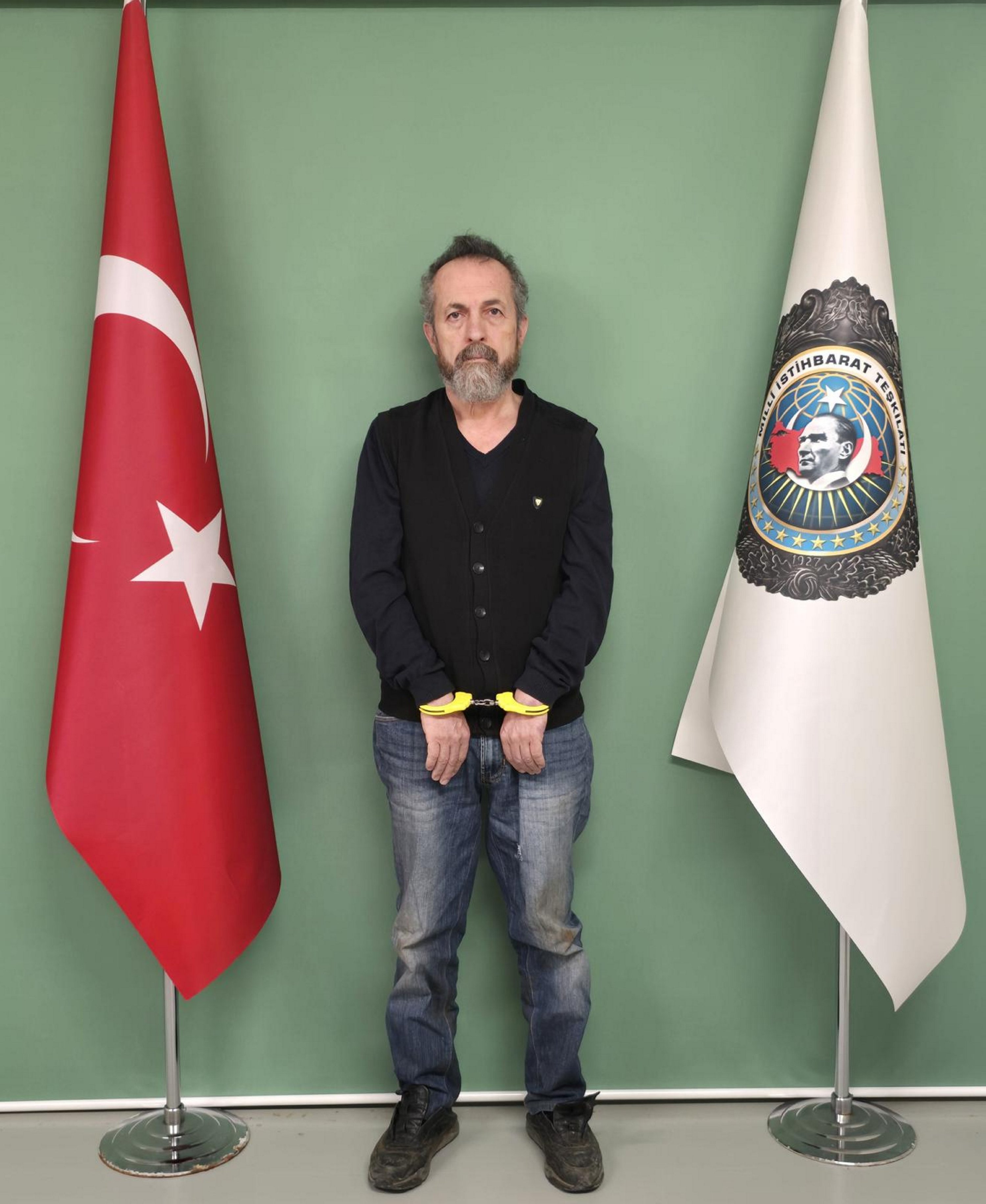
After his escape, Sığırcıkoğlu hid in Syria, Russia, and Lebanon while MIT doggedly pursued him.
While in Syria, Sığırcıkoğlu was protected by the Assad regime and in exchange, he conducted espionage against Türkiye, providing the identities and movements of individuals working for Türkiye’s interests to Syrian officials, security sources said.
The investigation also highlighted Sığırcıkoğlu’s close relationship with Mihraç Ural, leader of the terrorist group THKP/C-Acilciler and Yusuf Nazik, the perpetrator of the 2013 Reyhanlı bombings in southern Türkiye linked to the Baathist Syria’s intelligence service. Under Ural’s direction, Sığırcıkoğlu engaged in anti-Türkiye propaganda and psychological operations using manipulated media and doctored imagery, sources aid.
In a past interview, Sığırcıkoğlu admitted to planning and executing the kidnapping of Harmoush, stating he felt no remorse and acted because he disagreed with Türkiye’s Syria policy. Reports indicate he and Nazik shared a residence in Syria for a period, maintaining a close operational bond.
Önder Sığırcıkoğlu also established contact and held meetings with Russian intelligence, sharing strategic and sensitive information regarding Türkiye.
Through intelligence analysis, it was determined that Sığırcıkoğlu first hid in Syria, then in a house in the Jabal Mohsen region of Lebanon, subsequently moved to the Krasnodar region of Russia, and later returned to Lebanon via Egypt.
Upon receiving information that Sığırcıkoğlu would attempt to cross back into Syria, a joint operation was planned between MIT and Syrian Intelligence. Intelligence agencies from both countries acted in coordination along the border line, waiting for the individual’s crossing. After 12 years on the run, Önder Sığırcıkoğlu was captured in a joint operation conducted on the Syria-Lebanon border.
Following the capture, MIT and Syrian Intelligence established a joint working group regarding the process leading up to the execution of Hussein Harmoush.
Sığırcıkoğlu has been handed over to judicial authorities. In addition to his existing 20-year prison sentence, he is expected to face trial for political and military espionage, aiding and abetting a terrorist organization, abuse of office, and aiding in a homicide.
The capture of Önder Sığırcıkoğlu also signals a new era in regional balances through intelligence-level cooperation between Türkiye and Syria, security sources said.
The views and opinions expressed in this article are solely those of the author. They do not necessarily reflect the editorial stance, values or position of Daily Sabah. The newspaper provides space for diverse perspectives as part of its commitment to open and informed public discussion.
Israel’s support for terrorist groups claiming to represent Kurdish interests in the Middle East is no secret but recent media reports have pointed out that Tel Aviv wanted to take it a step further. Reports say Israel, with its ally the United States, sought to employ those groups as a proxy force in a ground offensive in Iran where the duo launched strikes in February. Türkiye, however, intervened and prevented the plan.
Amid reports that the U.S. is planning to deploy thousands of soldiers in an impending land operation against Iran, another plan by Israel seeking to recruit Kurds in Iraq and within Iran was exposed. Israel went as far as bombing Iran’s military outposts on the Iranian-Iraqi border to clear the way for the said groups. Eventually, a group of about 500 people left Iraq for Iran, supposedly to join a fight against Iran. Yet, Türkiye, monitoring the situation, stepped in and eventually forced Israel to scrap its plans to employ about 10,000 as a proxy force.
Türkiye held senior-level talks with top officials in Iraq’s Kurdistan Regional Government (KRG) to prevent arming Kurds for a war against Iran and urged the representatives of the region’s political dynasties, the Barzanis and Talabanis, not “to fall for the trap.” Ankara stressed that Kurds would not be supported in any way if they joined the war against Iran. This staunch stand forced Kurdish groups to stand down.
Separately, Türkiye indirectly warned the PKK, a terrorist group known for exploiting the Kurdish community in Türkiye, not to join Israel. Turkish officials warned that Ankara would take action if this happened, giving the example of Syria. Türkiye deployed troops in Syria during the civil war when the PKK affiliate YPG sought to control Syrian towns near the Turkish border.
The PKK’s jailed ringleader, Abdullah Öcalan, who joined the terror-free Türkiye initiative for disarmament of the PKK, also warned the PKK not to act upon the instructions of Israel and not to join the war against Iran.
President Recep Tayyip Erdoğan voiced Türkiye’s concerns about the war in talks with U.S. President Donald Trump earlier this month, highlighting that Ankara did not want to be a part of the conflict. During the same phone call, Erdoğan relayed Türkiye’s stand on the use of Kurdish groups as a proxy force to Trump.
Efkan Ala, deputy chair of the ruling Justice and Development Party (AK Party), said last Thursday that the terror-free Türkiye plan may be affected by the ongoing U.S.-Israel-Iran war. However, he reaffirmed that the process would be completed anyway. He pointed out that the region was embroiled in an unstable situation and that a terror-free Türkiye was important to maintain the country’s unity among such uncertainties. The government views the initiative as a step to strengthen Turkish-Kurdish unity. For decades, the PKK exploited the Kurdish community in the region, under the pretext of fighting for a so-called Kurdistan in the southeastern Türkiye.
The U.S.-Israel-Iran war follows lengthy protests against the Tehran administration. The U.S. and Israel openly endorsed the protests and called for regime change. When this failed, they carried out strikes that slaughtered top figures, including Ayatollah Ali Khamenei. Iran had already been facing a separatist threat from the PJAK, the PKK’s arm in Iran, though its campaign appears to have died down in parallel with the PKK’s dwindling attacks thanks to a comprehensive counterterrorism campaign by Türkiye.
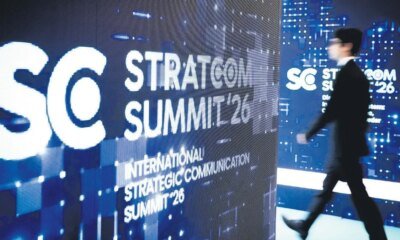
Speaking on Saturday at the International Strategic Communication Summit 2026 (Stratcom Summit ’26) held in Istanbul by Türkiye’s Directorate of Communications, National Intelligence Organization (MIT) head Ibrahim Kalın warned against “a fireball of strife” unfolding in the region. “The calculated consequences of this war are not confined to eliminating Iran’s nuclear capacity, but they also include steps that may pave the way for a decades-long feud between Turks, Kurds, Arabs and Farsi communities. This is far more dangerous than other consequences. Türkiye, nevertheless, is on alert against this,” he said. Kalın highlighted that Türkiye has never fuelled strife. “We are ready to handle this fireball and cool it off. We will stand against those attempting to spread the strife, with our values, our leadership, our priorities. We are aware who the enemies are and who the friends are,” he said.
The spillover of Ukraine-Russia war continues threatening the security in Black Sea. Türkiye has identified 275 suspicious objects in the Black Sea to date, including drifting mines, kamikaze drones and unmanned surface vehicles, the Ministry of National Defense said Saturday.
Of them, 29 have been neutralized, the ministry said in a statement.
Amid threats posed by drifting mines during the Russia-Ukraine War, an agreement was signed on Jan. 11, 2024, under Türkiye’s leadership, with the participation of Romania and Bulgaria, to establish the Black Sea Mine Countermeasures Task Group (MCM Black Sea).
The statement noted that since March 26, 2022, following the outbreak of the war, the Turkish navy has continuously carried out reconnaissance, surveillance, patrol and disposal operations targeting mines, unmanned surface vehicles (USVs), unmanned aerial vehicles (UAVs) and unexploded ordnance in the Black Sea.
“As part of efforts to protect our maritime jurisdiction areas, under Operation Black Sea Harmony, two frigates, one submarine, one patrol vessel, one maritime patrol aircraft, one helicopter and one UAV are deployed. For mine surveillance activities, two minehunter ships, one fast attack craft, three helicopters, one underwater defense team and one UAV are on duty,” the statement said.
It added that during operations and surveillance activities conducted so far, Turkish naval units logged 28,150 hours at sea, while maritime patrol aircraft, helicopters and UAVs carried out 1,554 sorties totaling 7,711 flight hours.
“A total of 275 suspicious objects have been detected to date. Of these, 10 were identified as mines, eight as kamikaze UAVs and 11 as kamikaze USVs. All identified threats were successfully neutralized by underwater defense teams,” it said.
The ministry said three Bayraktar TB2 drones have been deployed to Cengiz Topel Airport since Dec. 17, 2025, alongside two additional frigates assigned to the Black Sea to strengthen surveillance and respond to aerial and maritime threats.
Currently, four maritime patrol sorties and four UAV sorties are conducted weekly in the Black Sea, alongside helicopter-supported mine surveillance flights, the statement said.
The ministry said operations are being conducted in close coordination with the Turkish Coast Guard Command, relevant ministries, civilian maritime institutions, and neighboring Black Sea countries’ surveillance assets.
It added that monitoring of drilling, research, and support vessels in the western Black Sea continues uninterrupted.
The Turkish navy has taken maximum precautions since the start of the Russia-Ukraine war to protect Türkiye from drifting mines, UAVs and USVs, while maintaining close coordination with relevant state institutions, the statement concluded.
In the latest instance of Black Sea security risk, a marine drone struck a crude oil tanker that had departed Russia, causing an explosion in the Black Sea near Istanbul’s Bosphorus strait on Thursday.
“The attack on the Sierra Leone-flagged, Turkish-operated tanker ALTURA carrying crude oil is of great concern,” Foreign Ministry spokesperson Öncü Keçeli said on X, adding that the 27 crew members were in good health.
Keçeli said the attack took place within Türkiye’s exclusive economic zone and violated international law, warning such incidents posed serious risks to life, property, navigation and the environment in the Black Sea. He added that Türkiye was in contact with relevant parties to prevent further escalation and reserved the right to take necessary measures under international law to protect its economic interests and activities in the region.
The views and opinions expressed in this article are solely those of the author. They do not necessarily reflect the editorial stance, values or position of Daily Sabah. The newspaper provides space for diverse perspectives as part of its commitment to open and informed public discussion.


-
 Daily Agenda2 days ago
MİT President İbrahim Kalın: As Türkiye, we will fight vigilantly until the end
-
 Daily Agenda2 days ago
Bahçeli: If there is to be a regime change, it should start with Israel
-
 Economy1 day ago
Iran signals tighter control, possible tolls for Strait of Hormuz
-
 Daily Agenda3 days ago
Minister Göktaş: “We made the payments of marriage loans of 133 thousand young people”
-
 Daily Agenda2 days ago
Our peace-oriented stance will continue – Last Minute News
-
 Daily Agenda1 day ago
CHP municipality remained silent to the risk of disaster
-
 Daily Agenda1 day ago
Yellice, one of the people closest to Muhittin Böcek, was arrested
-
 Daily Agenda1 day ago
APP license plate statement from Minister Çiftçi: It is not just a matter of shape