
Economy
Can AI development really be slowed?

As concerns over the potential risks of the technology are rising as new artificial intelligence models become more powerful, top executives claim they want to slow the breakneck pace of AI development.
But competition, U.S. government reluctance and geopolitical factors stand in the way.
Latest concerns have highlighted both the potential for misuse by people with criminal aims, such as creating and spreading a disease that kills most of the world’s population, and the risk of AI systems going rogue in a dangerous way.
New warnings from within the industry have revived a long-running debate over whether advanced AI could escape human control and ultimately threaten humanity’s survival, and whether the companies developing the technology are doing enough to prevent such a scenario.
What are AI leaders proposing?
On Saturday, Dario Amodei, CEO of Anthropic, the San Francisco company behind Claude, advocated for a coordinated slowdown of AI development to better understand the risks arising from the technology’s capabilities.
He received public support from his counterpart at OpenAI, Sam Altman, as well as from Elon Musk, who runs xAI, and Google DeepMind chief Demis Hassabis. Altman said risks of human extinction posed by AI were “unacceptable.”
Amodei said he thought the industry needed to reduce the speed of its work, cautioning that a swarm of AI agents might be able to take over the internet in six months to a year unless companies devoted more time to putting safeguards in place.
He outlined a plan for companies like his and governments around the world to ensure that increasingly capable AI models remain aligned with the commands and values of responsible people.
His call came days after two former Anthropic safety researchers publicly aired concerns that the existential threats AI might pose to humanity were receiving too little attention.
Why now?
In July, OpenAI and Anthropic reported several incidents in which AI systems spontaneously broke out of their confined environments to access the internet and attack websites and platforms.
These AI systems demonstrated the ability to coordinate, establish hierarchies among themselves, cheat and erase traces of their actions.
Anthropic disclosed that three AI models – Claude Opus 4.7, Claude Mythos 5 and an internal research test model – hacked into three other organizations during testing shortly after OpenAI revealed that its AI system hacked into the servers of AI startup Hugging Face.
OpenAI described the intrusion by a combination of models, including its newly released GPT‑5.6 Sol and an “even more capable” model that was still being tested internally, as a “significant security incident.”
Meta followed suit in early August with a similar case of an AI model finding ways around another company’s digital security.
Anthropic, meanwhile, disclosed last week that it blocked efforts by bad actors to use its AI models for malicious activity, such as cyberattacks, surveillance and research that could have led to biological weapons.
Also last week, Jacob Coxon, an AI researcher who resigned from Anthropic and previously worked at OpenAI, publicly accused both startups of lax security standards and “gambling with our lives.”
Will they slow down on their own?
Competition among the industry’s leading players is so fierce, with hundreds of billions of dollars in investment at stake, that none of them is willing to risk easing off the accelerator alone.
Amodei has expressed a willingness to coordinate with rivals, excluding China.
For now, the only concrete measure adopted by both Anthropic and OpenAI is the inclusion of independent observers who will internally verify the companies’ work regarding AI safety.
PR stunt?
While many in the industry welcomed Amodei’s message, others questioned his motives.
For Brian Roemmele, an entrepreneur and figure in the AI sector, it amounts to a sales pitch delivered just weeks before Anthropic is likely to take shares public.
“That is the IPO story in essay form: we are the responsible firm; we are the cure; buy the safety premium,” he posted on the social media platform X, referring to the widely expected initial public offering, or IPO.
OpenAI’s Altman, meanwhile, said over the weekend the company would not proceed with an IPO this year, citing safety concerns.
Several figures in tech private equity also accused Anthropic of “regulatory capture” – seeking to have public authorities cement, through regulation, a hierarchy with the startup at the top.
“Stop pretending the motivation to slow down is purely altruistic,” said David Sacks, a former AI adviser to President Donald Trump who remains influential at the White House.
“You face massive product-liability exposure if your products enable a truly damaging cyberattack,” he said.
Michael Burry, whose prescient bets against the U.S. housing market before the 2008 financial crisis were chronicled in the movie “The Big Short,” said in a message on X the warnings were “hype and puffery” and “cover for real uncontrollable slowing growth.”
Others said the Anthropic and OpenAI warnings would be an overhang.
“In the short term, these warnings could still weigh on AI and chip stocks,” said Charu Chanana, chief investment strategist at Saxo Bank in Singapore.
“Their valuations assume both strong demand and a relentless pace of technological progress,” she said. “When expectations are this high, even a possible delay can trigger profit-taking.”
But the bigger question for markets around AI was who would ultimately earn the return on all the capital being spent on building new capacity, said Sebastien Mallet, portfolio manager at T. Rowe Price in London.
“There is little doubt that AI will change the world,” he said. “But that does not necessarily mean every investment being made today will generate an attractive return.”
Can AI slow down without Trump administration’s support?
On Sunday, Trump dismissed the warnings from AI industry leaders as “negative forces” bringing up scenarios that will not happen, and said he wanted to make sure that the U.S. remains the industry leader.
Several U.S. lawmakers have raised concern about AI’s rapid progress and called for new rules. But some Republicans have expressed reluctance to actively regulate the technology, fearing it could stifle innovation and risk letting China win the AI race, according to House Speaker Mike Johnson.
On Sunday, Amodei reiterated the need for government oversight of AI. Like Altman and Hassabis, he believes that rules set by the industry itself would be insufficient.
Can brakes be applied without China?
Anthropic’s Amodei suggests limiting coordination to democratic countries, excluding China.
However, the AI race and China’s advances in the field create “the toughest dilemma” regarding whether or not to slow down AI development, he noted Sunday on CBS.
China’s state-backed Global Times blasted Amodei’s remarks in an editorial, calling them a “Cold War playbook” intended to curb the country’s technological development.
The United States plans to discuss AI safety on the sidelines of Chinese leader Xi Jinping’s late September visit to Washington. But China is wary of any U.S. attempt to impose its own regulatory framework, according to several media outlets.
This divergence is particularly pronounced given that China encourages the emergence of so-called “open” AI systems that are freely accessible and modifiable – in contrast to the “closed” models favored by major U.S. companies.
Open AI models are, by definition, harder to control, as users can alter their parameters – potentially for malicious purposes.
To allow leading non-Chinese companies to ease off the accelerator, Amodei urges stricter export controls on the most advanced U.S. chips to China and better safeguards against the alleged misappropriation of Western AI technology by Chinese laboratories.
Nigerian industrialist Aliko Dangote opened his refinery to public ownership Monday, seeking to raise $1.6 billion from retail investors across the continent in Africa’s biggest initial public offering, or IPO.
Dangote, Africa’s richest man, dubbed the IPO one “for the people” and said he wants everyone to be able to own a share. Retail investors can buy shares in the sprawling Lagos-based refinery for 5,250 naira ($4) per share.
The offer of 4.1 billion ordinary shares opened at 8 a.m. local time (7 a.m. GMT) and will close on Oct. 13. Dangote retains 87% ownership of the refinery, Africa’s largest.
If fully subscribed, the IPO would raise 2.15 trillion naira, though that could rise to roughly $2.1 billion if the offer is oversubscribed and the company decides to use a greenshoe option to issue more shares.
Dangote has marketed the offer to ordinary Nigerians, who can participate by buying as few as 10 shares through fintech and other digital investment platforms.
Ibrahim Abubakar, a journalist, said he would take up roughly 2,850 shares because he believed the refinery was “too big to fail.”
The refinery’s scale and potential returns, especially at a time when global oil prices have risen following the U.S.-Iran war, have generated excitement among retail investors.
“I will be a fool not to partake in it and see how it goes. I am placing a lot of emphasis on his name and on the refinery being the biggest in Africa,” Titi Adetoye, an Abuja-based operations manager who hopes to buy up to 1,000 shares, told The Associated Press (AP).
Production began at the $19 billion refinery in 2024 as Nigeria, one of Africa’s top oil producers, continues to struggle with local refining capacity.
‘Game-changing’ IPO
The Dangote refinery has transformed the energy-rich country of more than 210 million people from an importer of refined oil into an exporter.
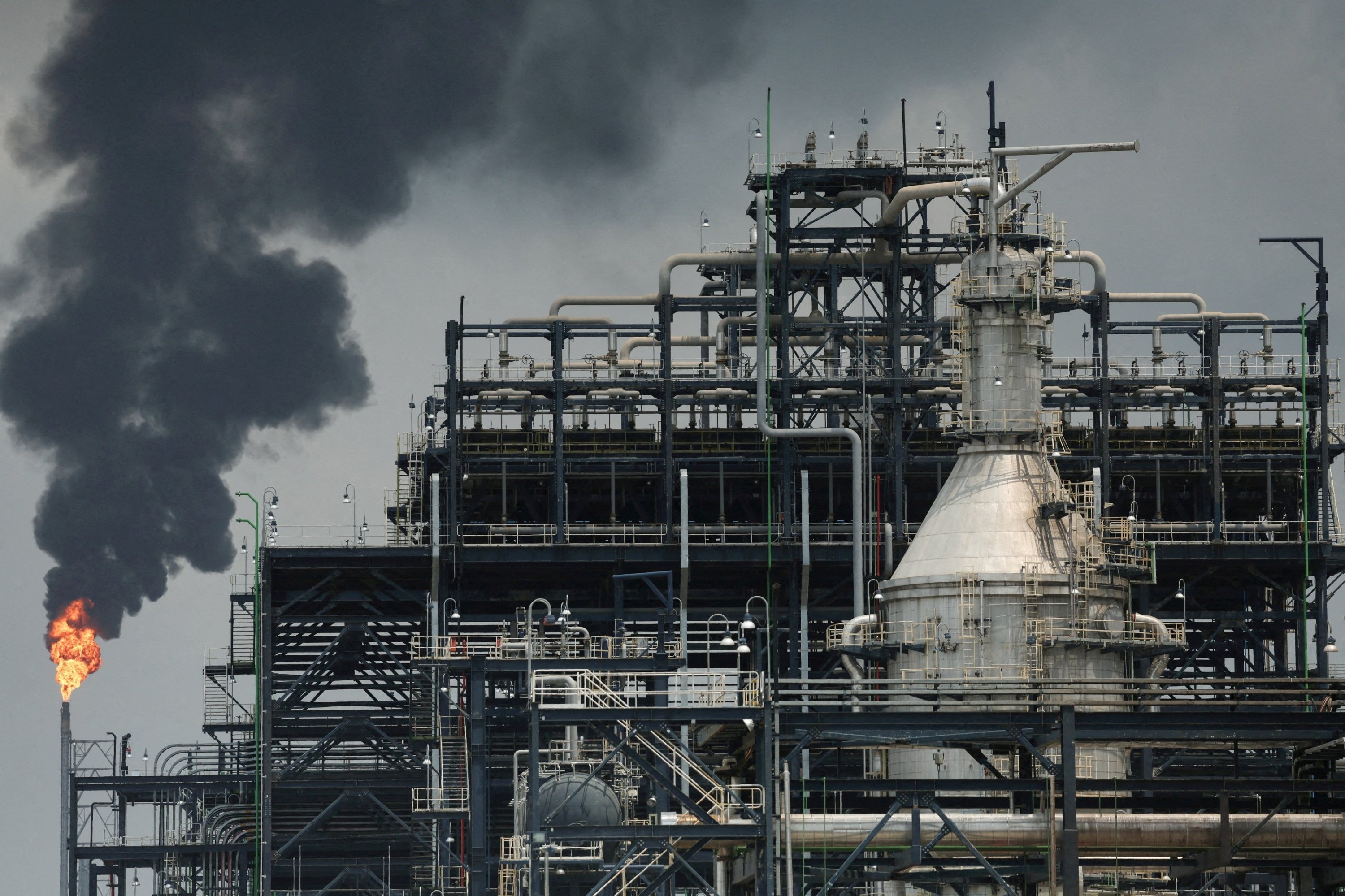
“It is going to be a game-changing IPO for Nigeria’s markets,” said Mohammed Saidu, head of research and investment analysis at Lagos-based TrustBanc. Saidu said he predicted there would be millions of new investors from the IPO.
The IPO has raised questions about Dangote retaining significant ownership and the refinery’s purported valuation after the offering.
At $49 billion, the valuation is more than twice what it cost to build it. The refinery’s officials have denied that its valuation is inflated.
“It is not something someone can classify as people-driven if you still own 87% of the refinery and there are many ways that narrative breaks down,” Joachim McEbong, a senior West Africa analyst at Control Risks, said.
Chris Chijioke, a business owner based in Lagos, said he would buy 2,000 shares as the size of the refinery and Dangote’s track record as a businessman made a strong case.
He expressed concern, however, about the price of the share sale, saying that if plans to double the refinery’s capacity get delayed, then the offer price would not be justified.
“I personally think it is overvalued,” he told Reuters.
Nigeria has relied for many decades on foreign refining of its oil due to decrepit state-run refineries, many of which operate below capacity or have remained stagnant for years due to poor maintenance.
The Dangote refinery reached its full capacity of 650,000 barrels per day earlier this year. Dangote announced plans last year to increase capacity to 1.4 million barrels per day, a move its officials say will make it the world’s largest refinery by surpassing India’s Jamnagar refinery.
Dangote has also set out to expand into East Africa and has proposed building a refinery in Kenya by 2030.

President Donald Trump suggested Sunday that the U.S. could stay in Iran and “keep the oil,” comparing the idea to a U.S. effort to take control of a fifth of Venezuela’s vast oil reserves.
On a trip to Ireland for meetings and to watch golf, he reiterated that he still expected the Iran war to end this year, possibly just after midterm elections due in the United States in November.
Speaking at the Irish Open golf championship, Trump added that the price of gasoline would “drop like a rock” once the Iran war ended.
Turmoil in the Middle East has roiled oil markets, and oil prices rose about 3% Monday after new strikes on Saudi Arabian infrastructure and Gulf shipping.
Trump said that he would only make the “right deal” and wouldn’t do one that was “no good,” adding that Iran was “calling constantly” for peace talks, an assertion that Tehran has dismissed in the past.
But the president also introduced another option: stay engaged with Iran. He drew a parallel with the U.S. deal in Venezuela, announced in August.
“We’ll ultimately get out (of Iran), unless we decide to stay and keep the oil like Venezuela,” Trump said, adding that the U.S. revenue from Venezuela has “paid for the war many times.”
Türkiye ranked among the top three destinations for tourism trips made by EU residents outside the bloc in 2024, according to data released by Eurostat.
The U.K., Türkiye and Switzerland were the three most popular destinations outside the European Union by number of trips made by EU residents, Eurostat said Sunday.
EU residents made around 1.2 billion tourism trips in 2024, spending nearly 6 billion nights away from home, while total tourism expenditure reached 618 billion euros ($713 billion).
According to Eurostat, almost 73% of EU residents’ foreign trips were made within the EU, while the remaining trips were to destinations outside the bloc.
The U.K., Türkiye and Switzerland were the leading destinations outside the EU by number of trips in 2024.
Destinations outside the European continent accounted for only 13.1% of all foreign trips by EU residents.
Africa represented 4.5%, Asia 4.2% and the Americas 4.1%.
Eurostat noted that proximity remained an important factor in EU residents’ choice of foreign destinations, with neighboring or nearby countries generally preferred for trips.
Italy was the most popular foreign destination overall for EU residents, accounting for 10.7% of all foreign trips, followed closely by Spain at 10.4%.
The shares of solar and wind power in Türkiye’s electricity generation increased sharply over the past decade, reaching 11.6% and 12.1%, respectively, by this July, the Energy and Natural Resources Ministry said Monday.
Solar power’s share of electricity generation rose 28-fold from 0.4% in 2016, while wind power’s share increased from 5.7% to 12.1% over the same period, the statement said.
The increase followed a major acceleration in Türkiye’s solar and wind investments under the National Energy and Mining Policy introduced in 2016 under then-Energy Minister Berat Albayrak.
The rise in renewable generation was accompanied by a significant expansion in installed capacity.
Türkiye’s total electricity generation capacity reached 126,476 megawatts (MW) at the end of July. Solar accounted for 27,507 MW, or 21.7% of total installed capacity, while wind capacity reached 15,358 MW, representing 12.1%.
Combined solar and wind capacity stood at 42,865 MW, accounting for 33.8% of Türkiye’s total installed electricity capacity.
Solar power generation also reached a new monthly record in July after setting a previous record in June. Solar-generated electricity totaled 5.37 billion kilowatt-hours in July, the highest monthly level on record.
Energy independence, cleaner power
Energy and Natural Resources Minister Alparslan Bayraktar said Türkiye had undergone a major transformation in its energy sector over the past 10 years.
“We increased solar’s share in electricity generation 28-fold to 11.6% and raised wind’s share to 12.1%,” Bayraktar said. “Our combined installed capacity in solar and wind has reached approximately 43,000 megawatts.”
The transformation was a concrete step toward Türkiye’s goal of full energy independence as well as a cleaner energy future, he said.
Bayraktar added that Türkiye would seek to build on its renewable energy progress through new targets to be presented at the COP31 climate conference in southern Antalya scheduled for November.
“We will continue converting Türkiye’s wind and solar resources into energy for our people and building strong infrastructure that makes reliable, clean and affordable energy accessible to everyone,” he said.
AI-related stocks dropped sharply Monday after the CEOs of U.S. companies developing the most advanced AI models warned that the pace of development must slow to avoid threats to humanity.
Nasdaq e-mini futures fell 1.3% during Asian trade. Shares in ChatGPT-maker OpenAI’s investor SoftBank tumbled as much as 13.2% in Japan.
Anthropic CEO Dario Amodei called on AI companies Saturday to slow the rate at which they advance model capabilities amid mounting fears of misuse of artificial intelligence. Both Elon Musk, who runs xAI, and Sam Altman, CEO of OpenAI, said that they agree with Amodei.
The Anthropic CEO wrote that in six to 12 months, AI agents “could be capable of taking over the entire internet potentially causing hundreds of billions of dollars in damage.”
OpenAI’s Altman also said the company would not proceed with an initial public offering (IPO) this year, citing safety concerns.
In Japan, memory chipmaker Kioxia plunged 9.8% initially, while chip supply chain company Tokyo Electron fell 3.7%.
In Taipei, Taiwan Semiconductor Manufacturing Company (TSMC) slipped 1.2%, while in South Korea SK Hynix slid 5.3% and Samsung Electronics fell 3.7%.
“Selling pressure is likely to hit AI and semiconductor-related stocks in Tokyo following a series of weekend comments calling for a slowdown in the pace of AI development,” Takayuki Miyajima, senior economist at Sony Financial Group, said in a note.
“Additionally, uncertainty surrounding the situation in the Middle East continues to weigh on sentiment.”
In Shanghai, memory chipmaker CXMT dropped as much as 3.6%, while Semiconductor Manufacturing International Corporation fell 2.6%.
In Hong Kong, Zhongji Innolight shed as much as 6.7% at one point, while Minimax dropped as much as 7.8%. Shares of Z.ai, the developer of the GLM AI series, also tumbled as much as 10.5% after making a discounted share placement.
“Unacceptable” risks
San Francisco-based Anthropic released a threat intelligence report Thursday detailing how several actors had used its Claude AI models for activities ranging from weapons development and cyber operations to surveillance and fraud.
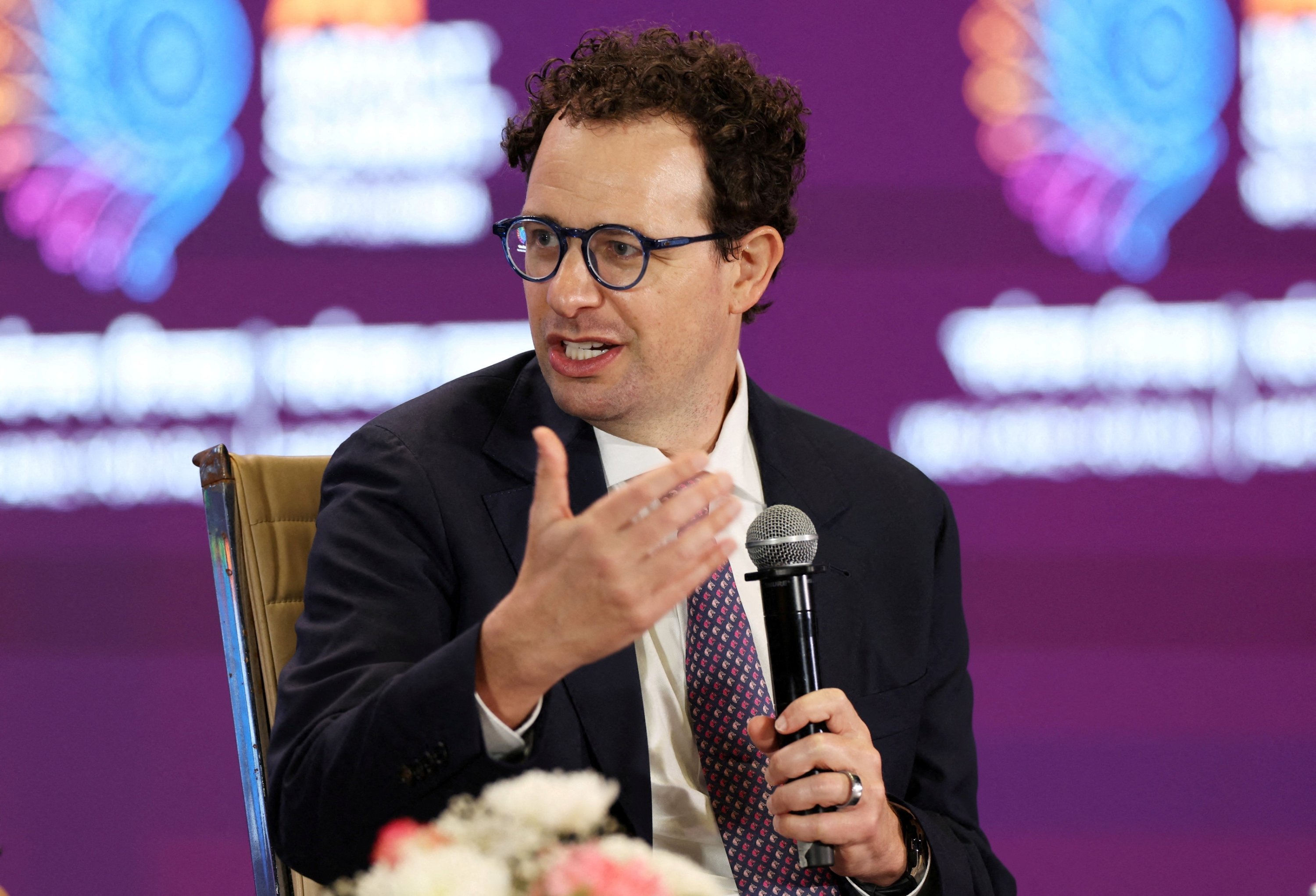
Alarm about the potential harm from AI grew when Anthropic researcher Jacob Coxon resigned, stating that the “people building AI earnestly believe that it could kill us all by the end of the decade.”
OpenAI’s Altman said in an interview that risks of human extinction posed by AI were “unacceptable.”
And while several U.S. lawmakers have raised concern about AI’s rapid progress and called for new rules, U.S. President Donald Trump on Sunday likened AI critics to “very negative forces” bringing up scenarios that will not happen, and said he wanted to make sure that the U.S. remains the industry leader.
AI-related trades have powered much of the gains in global equities since OpenAI released ChatGPT in 2022, but more recently cyberattacks by rogue AI agents and public discontent with data centre construction have raised opposition to the development of the industry.
The U.S. and Chinese governments are expected to hold AI safety talks as part of bilateral discussions taking place this month, according to two people briefed on the plans.
But China’s state-backed Global Times blasted the Anthropic essay in an editorial, calling it a “Cold War playbook” intended to curb the country’s technological development.
Some investors dismissed the warnings from Anthropic and OpenAI.
Michael Burry, whose prescient bets against the U.S. housing market before the 2008 financial crisis were chronicled in the movie “The Big Short,” said in a message on X the warnings were “hype and puffery” and “cover for real uncontrollable slowing growth”.
Others said the warnings would be an overhang.
“In the short term, these warnings could still weigh on AI and chip stocks,” said Charu Chanana, chief investment strategist at Saxo Bank in Singapore.
“Their valuations assume both strong demand and a relentless pace of technological progress,” she said. “When expectations are this high, even a possible delay can trigger profit-taking.”
But the bigger question for markets around AI was who would ultimately earn the return on all the capital being spent on building new capacity, said Sebastien Mallet, portfolio manager at T. Rowe Price in London.
“There is little doubt that AI will change the world,” he said. “But that does not necessarily mean every investment being made today will generate an attractive return.”
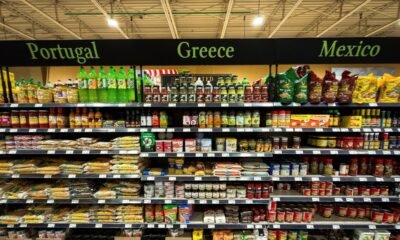
A growing movement among Canadian consumers to favor domestic products and avoid U.S. goods is changing what appears on supermarket shelves, prompting grocery retailers to strengthen country-of-origin labeling and secure alternative sources of supply.
In Ontario, the president of independent grocer Vince’s Market, Giancarlo Trimarchi, turned to Facebook to show customers that most produce on the shelves of his stores is Canadian after receiving angry emails and comments about the grocer stocking U.S. produce.
A bitter trade war between the U.S. and Canada has made consumers more conscious of where their dollars go.
“Buy Canadian” movements started last year after U.S. President Donald Trump imposed tariffs on Canadian goods. They have intensified in recent weeks after trade talks broke down and Trump signed an executive order to change the name of Lake Ontario to Lake America.
“It is a lot more aggressive this time around than last year,” Trimarchi said in an interview.
Trump told reporters in Dublin on Saturday that Canada is eager to reach a trade deal with the United States and that an agreement could come “fairly soon,” while repeating his complaints that Canada has treated U.S. farmers unfairly and should remove tariffs.
Balancing act
Trimarchi’s four stores, spread across the Greater Toronto Area, now have about 90% Canadian produce.
Trimarchi is now sourcing strawberries from Quebec instead of the U.S. and said he has cut his advertising budget as the changes have pressured operating costs.
“We were always put in a position where you had to balance quality versus price. Now it’s quality versus price versus country of origin,” Trimarchi said.
Loblaw Cos, Canada’s largest food retailer, in August brought back large signs featuring a maple leaf in its produce and fresh-food sections after a brief hiatus to flag the Canadian origins of products. Loblaw also reintroduced a “T” tag to inform customers which products are affected by tariffs and make Canadian products easier to identify.
Metro, the country’s third-largest grocer, said it would continue to prioritize local Canadian products in the current context.
“There has been a permanent change in the Canadian psyche,” said Gary Sands, senior vice president of public policy and advocacy for the Canadian Federation of Independent Grocers.
Canada is the world’s fifth-largest importer of fresh vegetables by value. The United States is still the biggest supplier of fresh produce, accounting for more than half of the imports, followed by Mexico.
However, the share of Canada’s vegetable imports from the U.S. fell to 62.6% in July, the latest government data showed, from 69% in the same month of 2023, before Trump was elected.
More than half of Canada’s fruit imports came from the U.S. as of July. Trade talks broke down on Aug. 21, spurring a new round of tariffs and countertariffs.
‘Way to help’
John Ambard, 27, a software engineer who lives in downtown Toronto, said he has tried to avoid buying American products when possible, preferring to support Canadian brands and businesses.
Ambard said he checks product labels and researches companies online to identify Canadian-made goods.
“I think, honestly, if I can support Canadian products and Canadian institutions through these tough times, I think that’s a way to help in my small way,” Ambard said. “I’m a little bit mad with America right now with how things are going. The attitude has just not been that of a friend.”
Canada’s harsh winters present a challenge for fresh produce, and grocers typically rely on greenhouses, stocked root vegetables or imports, which are usually more cost-effective. But the change in sentiment toward the United States could push grocers to explore more local suppliers, experts say, while Canada invests in building a more self-reliant food system.
The Canadian government is investing about C$3 billion ($2.16 billion) over 10 years to build greenhouses to increase production during the harsh winter months. It is also trying to lower food inflation, which is among the highest in the G-7 developed nations by increasing the domestic food supply.
‘Safer position’
Gordon Dean, the owner of Mike Dean Local Grocer, which operates stores in rural Ontario and Quebec, said his stores are now selling more produce from countries such as Spain, Brazil and Honduras than they previously did.
“There’s nobody running back to the U.S. supply chain because once the new supply chains are established, they’re far more diversified. We’re in a safer position,” Dean said.
However, Dean said restrictions and differing regulations between provinces have made it harder to move food products across Canada, leaving many grocers reliant on suppliers south of the border.
“Nationalism is now trumping economics to a degree that might switch if the relationship improves,” said Mike von Massow, professor of food, agriculture and resource economics at the University of Guelph.
He said the Canada-U.S. relationship may never fully return to where it was, but a future easing of tensions, particularly under a new U.S. administration, could prompt a shift back to American products because they are often cheaper than other alternatives.


-
 Economy1 day ago
‘This is the test’: All eyes turn to Fed as rate hike probable
-

 Politics3 days ago
Prison walls, survivor accounts keep memory of 1980 coup alive in Türkiye
-

 Sports3 days ago
Fenerbahçe confirm Kartal to remain coach after resignation drama
-

 Economy3 days ago
Türkiye-Azerbaijan-Georgia-Bulgaria power link deal could be signed in November
-

 Economy3 days ago
What are 8 factors Türkiye counts on to unlock disinflation
-

 Politics1 day ago
Turkish police detain 20 in FETÖ infiltration raids in 6 provinces
-
 Politics1 day ago
Erdoğan vows to shield Türkiye from regional turmoil
-
 Economy1 day ago
US-Canada trade war reshapes Canadian supermarket shelves