
Politics
Ceuta crisis reflects Türkiye’s indiscriminate humanitarian approach

The unprecedented surge of migrants from Morocco to the Spanish territory of Ceuta last week prompted Europe to consider suspending the Schengen Agreement with Spain. The issue, which some suspect involved Israeli influence, has been viewed by Europe as a test of border security and territorial control rather than a humanitarian tragedy. Europe’s approach stands in sharp contrast to Türkiye’s response to humanitarian crises, both in its own region and around the world.
Türkiye acts under the principle that “A fairer world is possible,” articulated by President Recep Tayyip Erdoğan, and reaches out to disadvantaged communities in need around the world without discrimination. Whether in Syria, Palestine, among the Rohingya Muslims, or in Somalia, Türkiye’s aid destinations have varied, but its commitment to humanitarian assistance has remained constant. Unlike many European countries, Türkiye has not turned away those seeking refuge at its borders and has also responded to humanitarian crises in distant regions.
For instance, since the beginning of the Syrian civil war, Türkiye has hosted more than 2 million Syrian refugees fleeing atrocities committed by the now-defunct Assad regime. At the same time, it called for a fair sharing of responsibility and burden as Syrian migrants reached European borders in pursuit of a better life. Even as Europe was slow to help Türkiye address the needs of refugees, Türkiye continued to welcome them and still provides refuge to Syrian nationals, two years after the Baathist regime collapsed in its southern neighbor.
Elsewhere, Türkiye has hosted Palestinians injured in Israeli attacks in the Gaza Strip, providing them with medical treatment.
Supporting a lasting and just peace to end the Russia-Ukraine war, Türkiye has assumed the role of mediator and facilitator while also taking in hundreds of Ukrainian children who lost their families in the war under the “Childhood Without War Project,” supported by first lady Emine Erdoğan.

Senior Turkish political figures criticized the opposition New Party (YP) after its lawmakers walked out of Parliament as President Recep Tayyip Erdoğan prepared to address lawmakers at the opening of the new legislative year.
New Party leader Özgür Özel and lawmakers from his party left the General Assembly shortly before Erdoğan began his address Thursday, in what the party described as a protest against the president.
Nationalist Movement Party (MHP) leader Devlet Bahçeli criticized the move, saying it was politically inappropriate for the lawmakers to leave while Erdoğan was in the chamber.
“It was not politically right for New Party (YP) to leave while our president was in the hall,” Bahçeli told reporters at a reception marking the opening of the new legislative year.
Bahçeli, whose MHP is allied with Erdoğan’s ruling Justice and Development Party (AK Party), said a recently established political party should seek to bring new approaches to politics.
Parliament Speaker Numan Kurtulmuş also criticized the walkout, saying political differences and protests were legitimate parts of democratic politics but arguing that lawmakers should observe political courtesy during the annual opening ceremony.
“We would have preferred New Party lawmakers to listen to the president’s speech and not resort to such a course of action,” Kurtulmuş told reporters.
He said lawmakers had extensive opportunities to criticize the president and the executive once regular parliamentary proceedings resumed but described the opening of Parliament as an occasion for political parties to gather under the same roof despite their differences.
The walkout came during the special session opening the fifth legislative year of Parliament’s 28th term. Erdoğan delivered his annual address after Parliament Speaker Kurtulmuş opened the session.
The incident prompted criticism from senior members of the AK Party and officials in the presidential administration.
AK Party spokesperson Ömer Çelik described the decision to leave the chamber before Erdoğan’s speech as disrespectful to Parliament and the presidency.
Çelik noted the president’s address at the beginning of a legislative year was an established part of Türkiye’s parliamentary tradition and accused the YP of contradicting its calls for a stronger Parliament by leaving the chamber.
Presidential Communications Director Burhanettin Duran also criticized the walkout, saying Parliament was a forum where differing political views should be expressed and debated.
Duran described YP lawmakers’ decision to leave the chamber as “a serious act of disrespect,” saying it went beyond a political stance against the presidency and showed disregard for the national will, state traditions and parliamentary conventions.
He said the move was inappropriate for Parliament and argued that democratic politics required not only expressing one’s own views but also tolerating opposing opinions and listening to the elected president in Parliament.
“Putting political disagreements ahead of long-established state traditions and the common rules of Parliament is incompatible with democratic representation.”
AK Party Deputy Chair Hüseyin Yayman also condemned the protest, accusing YP lawmakers of using the parliamentary session for political theater. He said lawmakers had the right to criticize or oppose Erdoğan but should do so through parliamentary debate.
The dispute underscored tensions between Erdoğan’s governing alliance and the YP, which was established in July under Özel’s leadership after he and 90 other lawmakers resigned from the Republican People’s Party (CHP).
The YP has since formed a parliamentary group, with Özel serving as its chair.
Kurtulmuş, responding to questions about opposition criticism more broadly, rejected claims that opposition voices were being prevented from speaking in Parliament.
He said seven parliamentary groups would participate when regular proceedings resume, five of them representing opposition parties.
The Parliament speaker also called on opposition parties to put forward proposals in the debate over a new constitution, saying disagreements over Türkiye’s presidential system and the president’s political party affiliation could be addressed as part of that process.
Despite the walkout, other opposition politicians remained in the chamber during the opening session. Erdoğan later greeted lawmakers from several parties following his address.
Parliament is scheduled to resume its regular legislative work on Oct. 6.
President Recep Tayyip Erdoğan has vowed that anyone found responsible for a deadly mine collapse in the western province of Manisa will be held accountable, as an investigation continues following the deaths of five miners.
Speaking Saturday at Teknofest Southeast in Şanlıurfa, Erdoğan said authorities were pursuing both administrative and criminal investigations into Thursday’s collapse in the Soma district, where five miners were killed and two others were rescued with injuries.
The Energy and Natural Resources Ministry has launched an administrative investigation, while the Soma Chief Public Prosecutor’s Office has opened a judicial inquiry. Nine people, including officials from the company operating the mine, have been taken into custody.
“The investigation is continuing in multiple directions. Anyone found to have been negligent or guilty will certainly be held accountable. We will also follow the process closely,” Erdoğan said.
He offered condolences to the families and colleagues of the five miners who lost their lives and wished a speedy recovery to the two injured workers, who remain under medical treatment.
Erdoğan made the remarks during the opening of Teknofest Southeast at Şanlıurfa GAP Airport, where thousands of visitors gathered to attend the country’s flagship aviation, aerospace and technology festival.
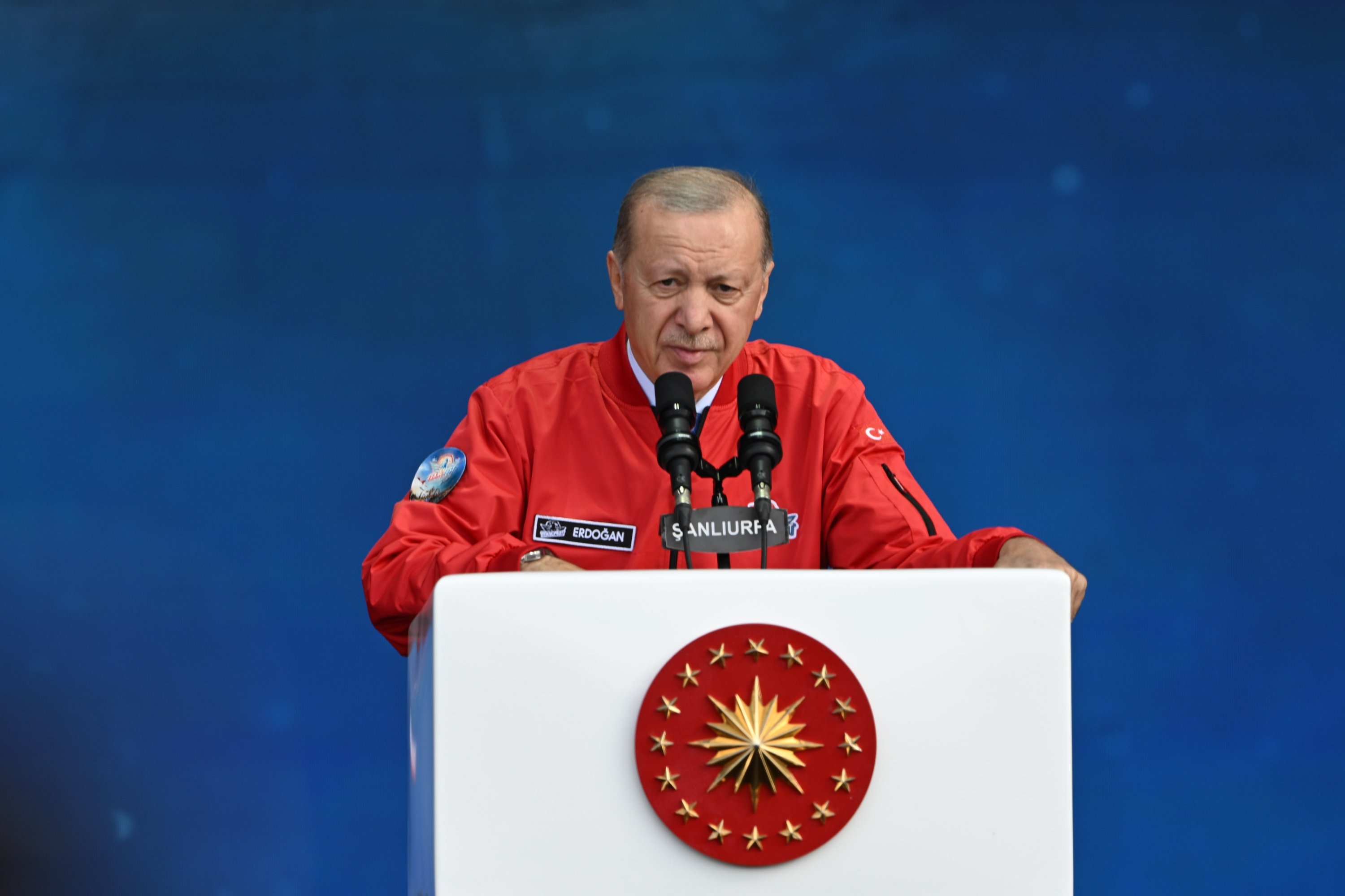
The president praised young participants for their technological achievements, saying their projects demonstrated the progress Türkiye has made in science and innovation.
“Once again, we are proudly witnessing the level Türkiye has reached in technology and the high-quality projects produced by the Teknofest generation,” he said, congratulating young people who displayed their inventions and turned their ideas into reality at the festival.
The atmosphere at the airport, along with the determination, enthusiasm and ambition of the participants, showed that Türkiye’s future was in capable hands, Erdoğan said.
He added that the country’s long-term development vision, known as the “Century of Türkiye,” would carry the imprint of a generation increasingly involved in technological innovation.
“These young people are a source of pride for our nation and among the country’s most valuable assets,” he said, praising their knowledge, confidence and ambition.
Erdoğan also thanked the Industry and Technology Ministry, the Turkish Technology Team Foundation and other organizations involved in organizing the festival, describing Teknofest as the world’s largest aviation, aerospace and technology event.
He said he had personally recommended Şanlıurfa as the host city, arguing that its historical and cultural heritage made it an appropriate setting for an event bringing together technological innovation and young talent.
“Once again, we are experiencing the excitement of Teknofest, an event shaped from beginning to end by young people, and this time we are doing so in Şanlıurfa,” he said.
Erdoğan highlighted the city’s ancient history, describing it as a center of religious heritage, science and civilization. Şanlıurfa is home to Göbeklitepe, an archaeological site widely recognized for its significance in understanding early human history.
He also recalled the contributions of scholars associated with the region, including Al-Battani, Sinan ibn Thabit, Ibn Wasif of Harran and Yunus al-Harrani, who made contributions to fields including mathematics, astronomy, medicine and philosophy.
The president said hosting Teknofest in Şanlıurfa was intended to connect the country’s historical legacy with the ambitions of its younger generation and the technologies of the future.
He added that organizers wanted young Turks to draw inspiration from their cultural roots while introducing international participants to the country’s history and heritage.
Teknofest began in 2018 with applications from 4,333 teams, Erdoğan said, noting that participation had increased significantly over the years.
This year’s Southeast edition attracted more than 730,000 teams and over 1.6 million competitors from all 81 Turkish provinces and 97 countries, according to the president.
Visitor numbers had also approached 1 million, he added, highlighting the growing public interest in the festival.
Türkiye’s Underwater Defense Command (SAS) is training its personnel to respond to threats ranging from drifting sea mines and unexploded ordnance to improvised explosive devices and unmanned maritime systems, as the naval unit maintains operations aimed at securing the country’s waters.
The unit, part of the Turkish Naval Forces Command, carries out explosive ordnance disposal, underwater operations and other specialized missions at sea and on land. Its personnel have also taken part in counterterrorism operations when assigned, according to SAS commander Navy Capt. Dr. D. Ilhan Sayıcı.
“These missions require many years of training and experience,” Sayıcı said. “Procedures must be followed completely during a mission because there is no margin for error. For us, the first mistake is the last.”
Established in 1964, the command has participated in operations ranging from the 1974 Cyprus Peace Operation to more recent counterterrorism missions, Sayıcı noted.
One of its main areas of expertise is neutralizing explosive threats, including naval mines, unexploded ordnance, improvised explosive devices and suspicious underwater objects.
SAS teams have also been tasked with responding to drifting mines and other potential threats in the Black Sea, where mines have posed risks to maritime traffic.
He said the unit’s objective is to protect maritime transportation, respond rapidly to potential threats and safeguard Türkiye’s maritime interests.
Becoming a SAS commando requires about a year of intensive training, with officers and noncommissioned officers joining on a voluntary basis.
Candidates are evaluated not only on physical fitness but also on psychological resilience, technical knowledge, leadership and their ability to make decisions under intense pressure, Sayıcı said.
The unit regularly conducts shooting, diving, demolition, helicopter and field exercises to maintain operational readiness.
A SAS officer identified as Lt. B. described one of the unit’s procedures, known as the Tactical Claw Operation, which is designed to neutralize drifting naval mines and unmanned aerial or maritime vehicles.
Under the procedure, SAS personnel are transported to the area by helicopter before entering the water and placing explosives on the target. They then withdraw to a safe area by boat or helicopter before remotely detonating the device, the officer said.
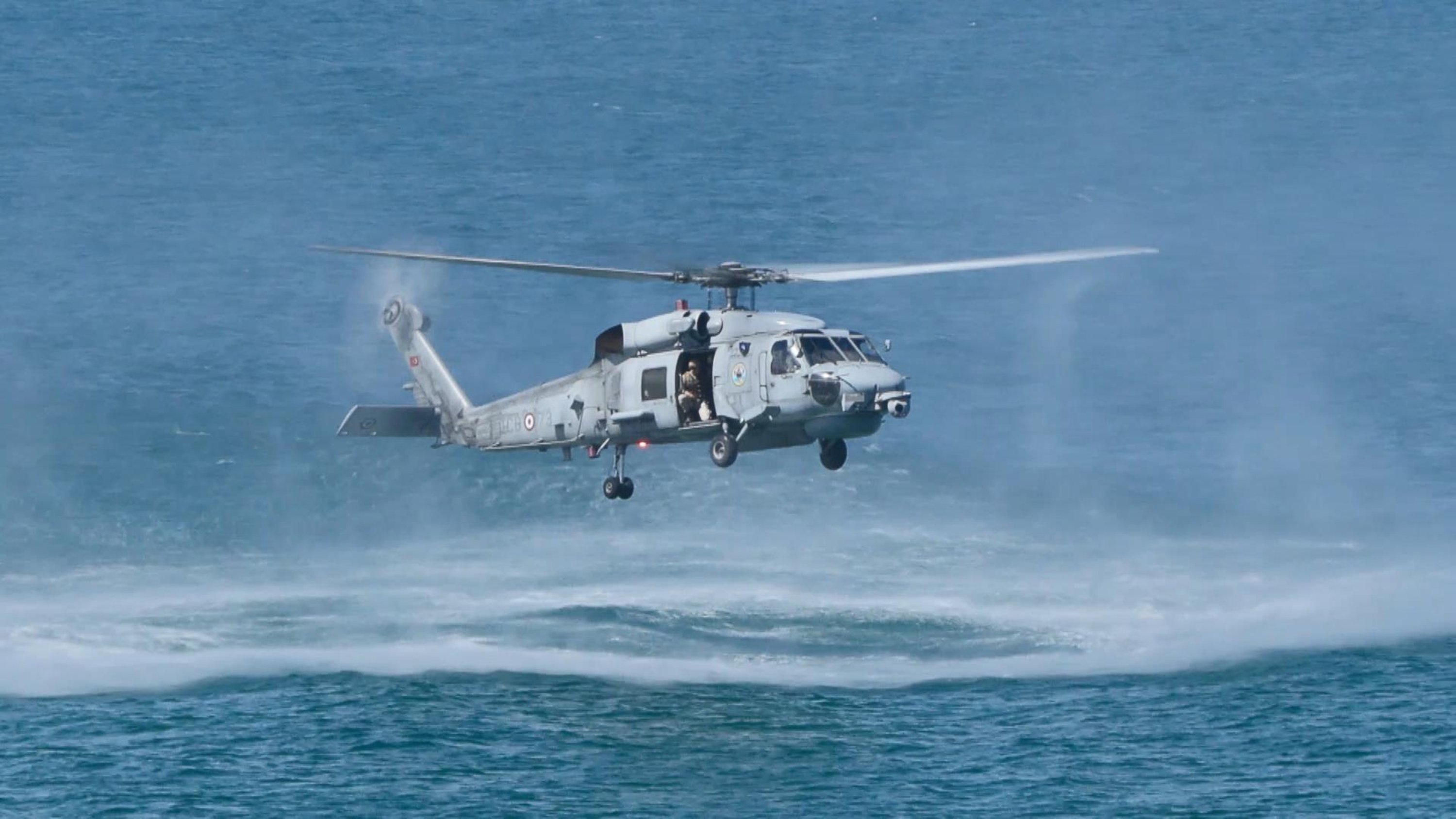
SAS teams have intervened against more than 300 suspicious objects, including mines and unmanned aerial and maritime vehicles, according to the unit.
Its personnel have also served in counterterrorism operations inside Türkiye and across the border, including operations Euphrates Shield, Olive Branch, Peace Spring and the Claw series, Lt. B. said.
The unit has also carried out missions in Libya, Afghanistan, Azerbaijan, Bosnia-Herzegovina and Albania.
During a recent training exercise, SAS commandos practiced clearing a booby-trapped building, rescuing a hostage and neutralizing an improvised explosive device. Another explosive device detected in the field was targeted using sniper and rocket fire.
Another SAS officer, identified as Lt. S., said fewer than 30% of candidates have completed the approximately yearlong training course in previous years.
The officer said personnel undergo regular physical conditioning on land and at sea alongside specialized operational training.
“The physical and mental endurance required by our work can only be developed through continuous and disciplined training,” he emphasized, adding that exercises also focus on patience, composure, attention and decision-making.
Lt. B. said teamwork remains central to the unit’s approach, particularly during missions involving explosives.
“There is no room for fear, hesitation or mistakes in our understanding of duty,” he said. “We remind ourselves that we do not have the luxury of making a mistake.”
U.S. President Donald Trump voiced strong support for Türkiye and President Recep Tayyip Erdoğan on Friday when asked about delays in lifting CAATSA sanctions that led to Ankara’s removal from the F-35 fighter jet program.
Noting that he loves Türkiye, Trump said he talks to President Erdoğan all the time.
“He is a friend of mine, as you know. And I’ll always make him happy,” Trump told reporters as he left the White House for Alabama, where he was due to attend a Republican Party campaign event.
Trump had announced during the NATO leaders’ summit in Ankara in July that sanctions on Türkiye would be lifted, saying Washington did not want to impose sanctions on its friends.
The U.S. imposed sanctions under the Countering America’s Adversaries Through Sanctions Act (CAATSA) in 2020 after Türkiye purchased the Russian-made S-400 air defense system.
Ankara turned to the S-400 after its efforts to purchase the U.S.-made Patriot air defense system failed to produce a deal. Türkiye was subsequently removed from the F-35 fighter jet program.
Türkiye will open a Turkish school with capacity for about 1,000 students in the Syrian capital Damascus on Oct. 4 as Ankara and Damascus expand cooperation, the Turkish Education Ministry said.
The Damascus International Recep Tayyip Erdoğan Turkish School, named after Türkiye’s president, will open in the Artuz area of the Syrian capital and will begin providing education during the 2026-2027 academic year.
The school will operate under Türkiye’s Education Ministry and include kindergarten, primary, middle and high school levels, the ministry said in a statement on Friday.
The ministry said the school was established as part of growing education cooperation and coordination between Türkiye and Syria, including efforts aimed at expanding access to education for Syrian children and young people.
The facility has 36 classrooms and will accommodate about 1,000 students.
A delegation from the Turkish Education Ministry is expected to attend the opening ceremony and the school’s first class.
Ankara said the project was also intended to support children from families returning to Syria and help them adapt to education following their return.
The ministry described the school as part of broader efforts to strengthen educational links between the two countries, which share longstanding historical, cultural and social ties.
Türkiye has expanded its education-related activities in Syria as Ankara and Damascus have sought closer cooperation in several areas.
Turkish education officials have held a series of meetings and visits in Syria in recent months. Türkiye’s education office in Damascus said officials inspected the new school’s campus in September ahead of its planned opening.
The Education Ministry said it expects the school to provide students in Syria with access to Türkiye’s educational system while contributing to closer ties between the two countries.
The opening comes as Türkiye and Syria increase coordination on education following years of conflict that severely disrupted Syria’s education system and displaced millions of people.
Turkish officials have said supporting education and facilitating the adaptation of returning families are among the objectives of Ankara’s cooperation with Syrian authorities.
On Aug. 6, officials from Türkiye’s Council of Higher Education (YÖK) and Syria’s Ministry of Higher Education and Scientific Research also signed a memorandum of understanding to advance educational cooperation between the two countries.
Under the memorandum, the two parties will continue work on the legal framework, governance structure, academic organization, student admission procedures, quality assurance mechanisms and administrative regulations for the planned Syria-Türkiye University in Damascus.
Damaged vessels from the Global Sumud Flotilla are being repaired in Türkiye’s Antalya after an Israeli attack in international waters, with volunteers working to prepare the ships for another voyage toward Gaza.
Some of the vessels were left with damaged engines, broken masts and torn sails after the attack. They were later brought to Antalya, where local and international volunteers are carrying out repairs at a shipyard.
Two vessels have already been repaired and sent to Italy as part of preparations for another Gaza-bound mission, said Sümeyra Akdeniz Ordu, a board member of the Global Sumud Flotilla.
“We are trying to recover the ships drifting at sea one by one. We are carrying out a rescue mission,” Ordu told Anadolu Agency (AA). “We are repairing these ships so they can sail to Gaza again.”
Fourteen flotilla vessels are currently in Antalya, Ordu said, adding that volunteers from different countries were helping coordinate and repair the ships.
She said each vessel had a special significance for the activists and that they were treating the ships “like their own children” as they worked to restore them.
The damage was extensive, Ordu said, describing broken masts, damaged engines and cut hoses. She also said the sails had been torn with knives.
“The mast was broken, surface cleaner and coffee had been poured into the engines, and the hoses on each ship had been cut one by one,” she said. “They caused this damage by ramming them with larger ships.”
The repairs have been difficult because of the extent of the damage, but volunteers have continued working, Ordu said.
Türkiye has provided a safe port for the repair effort, she added.
Ordu said the activists remained determined to continue their efforts despite the damage to the vessels.
“If the enemy does not give up, we cannot give up,” she said. “We are trying to be a voice here for our Palestinian friends.”
She said the damage to the vessels showed what she described as the violence and hostility directed at the flotilla.
“We, too, insist on continuing every form of resistance,” Ordu said.


-
 Economy3 days ago
Türkiye moves to finalize capital markets law changes after fund turmoil
-
 Politics3 days ago
Erdoğan calls for ‘grand consensus’ amid terror-free Türkiye success
-
 Politics3 days ago
Türkiye, Azerbaijan, Georgia defense chiefs discuss Caucasus security
-

 Economy20 hours ago
Revolut: $115 billion fintech taking on Europe’s biggest banks
-
 Politics3 days ago
8 may vie for top seat at Türkiye’s dwindling CHP
-

 Economy3 days ago
OpenAI fires 3 employees following AI security revelations
-
 Politics3 days ago
Türkiye vows continued co-op with Iraq after troop withdrawal
-
 Politics2 days ago
Turkish officials urge end to attacks after Medina power station hit