
Economy
Fed delivers second quarter-point rate cut of 2025

The U.S. Federal Reserve on Wednesday made a second consecutive quarter-point rate cut to shield the economy from labor market pressures, underscoring widening rifts among its members.
Policymakers voted 10-2 in favor of lowering the bank’s key lending rate to between 3.75% and 4.00%, the Fed said in a statement.
Opposed to the action were Fed governor Stephen Miran, who backed a bigger half-point cut, and Kansas City Fed president Jeff Schmid, who “preferred no change to the target range for the federal funds rate at this meeting,” the Fed said.
The decision to cut rates boosts the U.S. economy as businesses digest the effects of President Donald Trump’s sweeping tariffs, and buys policymakers some more time as they wait for the end of a government shutdown.
Republicans and Democrats remain politically gridlocked almost a month after the start of the shutdown, which has resulted in a suspension of publication of almost all official economic data.
The Fed also announced Wednesday that it would end its policy of shrinking the size of its balance sheet on Dec. 1.
The Fed’s balance sheet ballooned in the early days of the COVID-19 pandemic and has been gradually reduced in recent years.

The founder of China’s troubled Evergrande Group, the world’s most indebted property developer, pleaded guilty to several charges, including misuse of funds, fundraising fraud and illegally taking public deposits, a court in China’s southern city of Shenzhen said.
The company has defaulted since 2021 on most of its $300 billion in liabilities – a sign of troubles emblematic of China’s property sector woes that have long dragged on economic growth.
Founder Hui Ka Yan “pleaded guilty and expressed remorse” in trial proceedings on Monday and Tuesday against him and Evergrande, the court said in a posting on its official WeChat account.
The liquidators of Evergrande declined to comment on the case.
Reuters was unable to seek comment from Hui, 67, who has not been seen in public since Chinese authorities detained him in 2023, following the default of Evergrande.
Verdicts to be issued later
Hui and the company also face charges of illegally extending loans, fraudulently issuing securities and bribery by units, the Shenzhen Municipal Intermediate People’s Court added, with verdicts to be handed down later, though it did not set a date.
The company’s failure to repay billions of dollars of wealth management products unleashed frustration among the lower and middle classes, many of whom had investments wiped out, provoking protests and threatening social stability.
Jail for life and confiscation of property are the maximum penalties for illegal fundraising, while bribery can also bring life terms.
In 2024, China’s securities regulator fined Hui, formerly one of China’s richest men, $6.6 million and barred him from the securities market for life, after finding Evergrande’s flagship unit had inflated earnings and committed securities fraud.
A former steel technician, Hui, raised by his grandmother in a rural village in central Henan province, built his fortune on the back of low-priced homes.
After founding Evergrande in 1996, he turned it into China’s biggest property developer by contracted sales, aggressively taking on debt.
New ventures
He also did not shy away from new ventures, dabbling in electric cars and soccer, both a passion of Chinese President Xi Jinping.
In 2017, Hui was Asia’s richest man with a net worth of $45.3 billion, according to Forbes. By 2023, his net worth was estimated at $3 billion.
In 2024, Evergrande received a liquidation order from a Hong Kong court and was kicked off the Hong Kong stock exchange last year, bringing an end to a tumultuous boom-and-bust saga.
Outside mainland China, Evergrande’s liquidators have battled in court to freeze offshore assets of the founder and his ex-spouse in a struggle to claw back $6 billion in dividends and remuneration paid to Hui and other former executives.
Bank of Japan Governor (BOJ) Kazuo Ueda said on Monday that uncertainty over the conflict in the Middle East was leaving markets unstable, warning that it could also hurt factory output, thus signalling the bank’s escalating alarm over the economic hit from the protracted war.
Ueda also stressed the need for vigilance against fallout from the Iran war in explaining the outlook for monetary policy, rather than sticking to the BOJ’s script pledging to keep raising interest rates.
“Global financial markets are unstable, and crude oil prices are rising sharply due to Middle East tensions. We must be vigilant to future developments,” Ueda was quoted as saying in a speech read by his deputy, Ryozo Himino.
“Given lingering uncertainty over the Middle East situation, we will scrutinize how future developments affect the economy, prices and financial conditions, as well as risks and likelihood of our baseline projections materializing.”
Markets watched his speech closely for hints on whether the BOJ would raise interest rates this month, chances of which have receded as fading hopes for an end to the Iran war keep markets volatile and muddy the economic outlook, sources told Reuters.
Shift from March guidance
The reference to the uncertainty is a shift from March’s guidance, when the BOJ said only that it would keep raising rates in line with improvements in the economy and prices.
In his speech, Ueda said a gradual economic recovery was keeping underlying inflation on track to hit the BOJ’s target of 2%, with companies offering solid pay increases in this year’s wage talks.
But he warned that rising crude oil prices would hurt Japan’s economy, as a protracted Middle East war could weigh on factory output amid supply chain disruptions.
Ueda’s focus on downside economic risks suggests the BOJ is becoming less convinced that its growth and price projections will materialize, said Mari Iwashita, executive rates strategist at Nomura Securities.
Delaying rate hikes
Delaying rate hikes is not without cost, as that could cause unwelcome yen falls, push up import costs and broader inflation, analysts say.
Japan’s benchmark bond yield jumped to a 29-year high on Monday, fuelled partly by investors’ concern that surging oil costs would add to mounting inflationary pressures.
While higher oil costs would push up energy prices in the short-term, they could exert both upward and downward pressures on underlying inflation, Ueda said.
“If the output gap worsens, that could weigh on underlying inflation,” he added.
“On the other hand, if rising crude oil prices heighten the public’s medium- and long-term inflation expectations, that could push up underlying inflation.”
The Middle East war will dominate global finance officials’ talks this week in Washington, but World Bank President Ajay Banga is sounding the alarm about a bigger, looming crisis: a huge gap in jobs for the 1.2 billion people who will reach working age in developing countries in the next 10 to 15 years.
At current trajectories, those economies will generate only about 400 million jobs, leaving a deficit of 800 million jobs, Banga told Reuters.
The former Mastercard CEO admits that focusing people on the long-term is daunting, given a series of short-term shocks that have buffeted the global economy since the COVID-19 pandemic, the most recent being the war in the Middle East.
He says he’s determined to ensure that finance officials stay focused on those longer-term challenges like creating jobs, connecting people to the electricity grid and ensuring access to clean water.
“We have to walk and chew gum at the same time. Short-velocity cycle is what we’re going through. Longer velocity is this jobs circumstance or water,” Banga said in an interview taped on Friday.
War overshadows other concerns
Thousands of finance officials from around the globe will gather in Washington this week for the spring meetings of the World Bank and the International Monetary Fund under the shadow of the U.S.-Israel war with Iran that threatens to slow global growth and jack up inflation.
The extent of the hit to the economy will depend on the durability of a two-week cease-fire announced by President Donald Trump last week, just hours before promised strikes that Trump said would destroy Iran’s civilization.
The cease-fire has halted most attacks. But it has not ended Iran’s effective blockade of the Strait of Hormuz, which has caused the biggest-ever disruption to global energy supplies.
Weekend talks between the U.S. and Iran brokered by Pakistan failed to reach a deal to end the war. Starting on Monday, the U.S. military said it would begin a blockade of ships leaving Iran’s ports, and Tehran threatened to retaliate against ports of its Gulf neighbors.
Improving job creation
The World Bank’s governing body, the Development Committee, outlined plans to work with developing countries to streamline policy and regulatory conditions that have hampered investment and job creation for years.
Discussions will touch on transparency around permits, anti-corruption, labor law, land law, impediments to opening a business, logistics, better trade systems, and non-price barriers in trade, Banga said.
He is upbeat that solutions can be found to help find employment – and dignity – for young people and create opportunities for private companies catering to their needs. “I don’t know that you can ever get to a situation of utopia and everybody is taken care of in the coming 15 years. I would doubt that’s going to happen, but if you don’t do it, the implications are quite severe in terms of illegal migration and instability,” Banga said. United Nations data showed more than 117 million people were displaced worldwide as of 2025.
Banga said companies in developing countries themselves were starting to expand globally, including India’s Reliance Industries and the Mahindra Group, and Dangote in Nigeria.
Banga said his discussions with officials in developing countries showed their interest in creating more – and better jobs – for the next generation.
In addition to jobs, water will be a big focus. The World Bank, in conjunction with other development banks, is set to announce a push to ensure that one billion more people have secure access to clean water, adding to existing initiatives to connect 300 million households in Africa with electricity, and to improve health care.
Pulling in private sector
The World Bank focused on human and physical infrastructure required for the jobs creation push during last fall’s meetings of the IMF and World Bank, and will continue the cycle with an emphasis on attracting private sector investment during this fall’s meetings in Bangkok, Banga said.
The bank identified five sectors that would benefit from investment and are not reliant on global trade or outsourcing from developed countries: infrastructure, agriculture for small farmers, primary health care, tourism and value-added manufacturing. Those sectors are less likely to be immediately affected by advancements in artificial intelligence, he said.
“The problem is, we can’t do this alone. We’ve got to get this snowball to roll downhill, gathering a lot of snow as it goes along, to reach that amazing number of 800 million,” he said.
Treasury and Finance Minister Mehmet Şimşek will hold a series of high-level meetings in the U.S. this week, engaging with global investors and financial institutions on the sidelines of the IMF-World Bank spring meetings.
Şimşek will join top finance officials from around the world will convene under the shadow of the war in the Middle East, which has delivered a third major shock to the global economy after the COVID pandemic and Russia’s full-scale invasion of Ukraine in 2022.
Weekend talks between the U.S. and Iran brokered by Pakistan failed to reach a deal to end the war that has effectively shut the Strait of Hormuz, sending energy prices soaring and causing the worst ever disruption in supplies.
Starting on Monday, the U.S. military said it would begin a blockade of ships leaving Iran’s ports on Monday, and Tehran threatened to retaliate against ports of its Gulf neighbors.
Şimşek began his trip in New York City and was scheduled to attend a roundtable jointly organized by Citigroup and the Turkish-American Business Council. He was also said to hold a bilateral meeting with Citigroup CEO Jane Fraser.
In addition, Şimşek is expected to meet real sector representatives at an event organized by JPMorgan Chase and the top Turkish business association, MÜSIAD, as well as representatives of international credit rating agencies and leading global investors.
Global focus shifts to Washington
Following his New York program, Şimşek will travel to Washington for the International Monetary Fund-World Bank meetings, which kicked off on Monday and will last through Saturday.
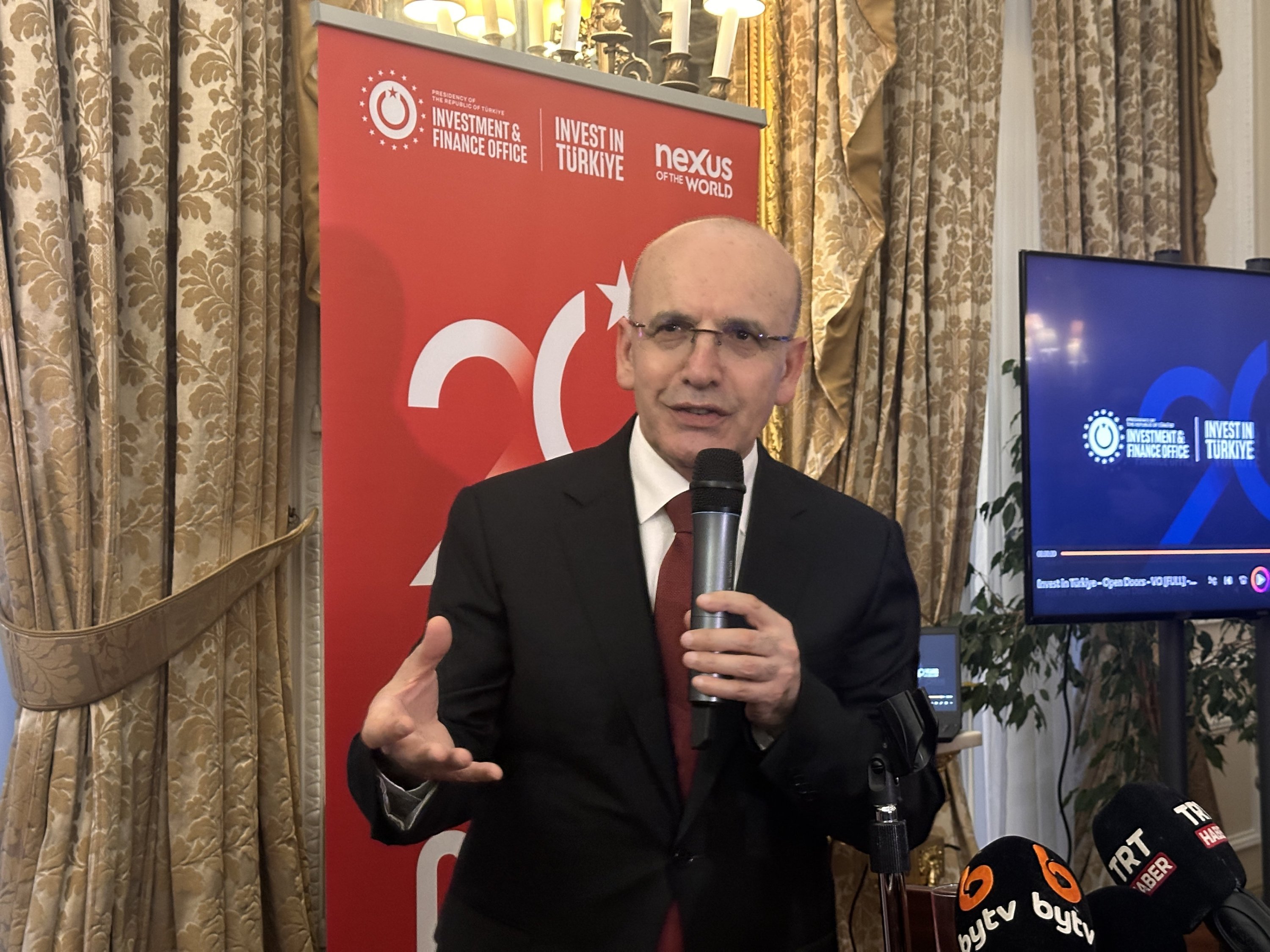
The gatherings bring together finance ministers, central bank governors, private sector leaders and academics.
Top IMF and World Bank officials last week said they would downgrade their forecasts for global growth and raise their inflation predictions as a result of the Iran war, warning that emerging markets and developing countries will be hit hardest by higher energy prices and supply disruptions due to the effective closure of the Strait of Hormuz.
The U.S. military said it would begin a blockade of all maritime traffic entering and exiting Iranian ports and coastal areas starting at 10 a.m. ET (1400 GMT) on Monday. Washington has sought help to reopen the strait from allies, who have not expressed interest.
Before the Iran war broke out on Feb. 28, both institutions had expected to lift their growth forecasts given the resilience of the global economy – even in the wake of major tariffs imposed by U.S. President Donald Trump beginning last year. But the war has delivered a series of shocks that will slow progress on recovering growth and beating back inflation.
The World Bank’s baseline estimate now projects growth in emerging markets and developing economies of 3.65% in 2026, down from 4% in October, but sees that number dropping as low as 2.6% if the war lasts longer. Inflation in those countries was now forecast to hit 4.9% in 2026, up from the previous estimate of 3%, and could spike as high as 6.7% in the worst case.
The IMF warned last week that about 45 million additional people could also face acute food insecurity if the war persists and continues to disrupt fertilizer shipments needed now.
The IMF and World Bank are racing to respond to the latest crisis and support vulnerable countries at a time when public debt levels have reached record levels and budgets are tight.
The IMF said it expects demand for $20 billion to $50 billion in near-term emergency support to low-income and energy-importing countries. The World Bank has said it could mobilize some $25 billion through crisis response instruments in the near-term, and up to $70 billion in six months, as needed.
‘Shock to system’
But economists are urging governments to use only targeted and temporary steps to ease the pain of higher prices for their citizens, since broader measures could fuel inflation.
“Leadership matters, and we’ve come through crises in the past,” World Bank President Ajay Banga told Reuters, lauding work on fiscal and monetary controls that had helped economies weather previous storms. “But this is a shock to the system.”
Countries now face a tough balancing act managing inflation while keeping an eye on growth and the longer-term challenge of creating enough jobs for the 1.2 billion people who will reach working age in developing countries by 2035.
IMF and World Bank also face a far different global landscape with tensions running high between the U.S. and China, the world’s largest economies, and the Group of 20 (G-20) major economies hobbled in its ability to coordinate a response.
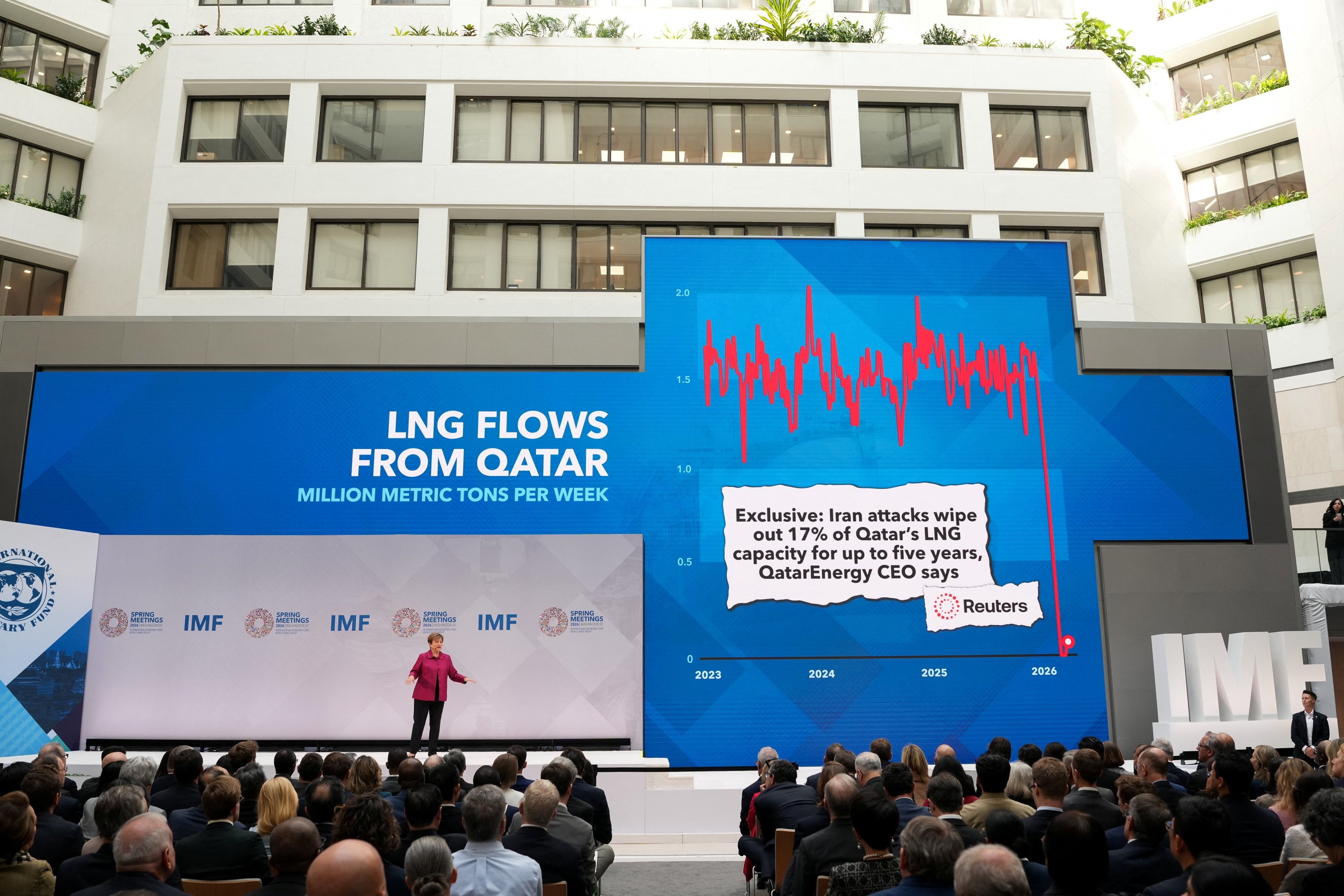
The U.S. currently holds the rotating presidency of the G-20, which also includes Russia and China, but it has excluded another member – South Africa – from participation, complicating the group’s ability to coordinate on this crisis.
“You’re trying to operate on consensus when there’s no consensus in the world right now on anything,” said Josh Lipsky, chair of international economics at the Atlantic Council.
Lipsky said statements by the IMF, World Bank and other multilateral lenders about their readiness to support countries hit hard by the war were clearly aimed at reassuring markets.
“It’s a signal to private creditors. This is not a time to flee countries that are in problematic waters. They will have support from the multilateral development banks and the international financial institutions. This is not going to be COVID. This is something that we can handle.”
Tougher conditions for many
Mary Svenstrup, a former senior U.S. Treasury official now with the Center for Global Development, said many emerging market and developing economies entered the crisis worse off than just a few years ago, with lower buffers, higher debt vulnerabilities and lower reserves.
“We need to have this crisis be a catalyst for IMF stakeholders to really rethink how the Fund supports vulnerable countries with the recognition that we’re going to be seeing more global shocks,” she said. “We can’t ask them to sacrifice growth and development for the sake of rebuilding buffers.”
Svenstrup said countries should pursue more ambitious reforms if they received fresh funds. “There probably does need to be more financial support from the (international financial institutions) but it needs to be affordable, and it needs to be in the context of reform programs and potentially broader debt relief,” she said.
Martin Muehleisen, a former IMF strategy chief who is now with the Atlantic Council, agreed, saying the IMF should work with donor countries to accelerate debt restructuring for borrowers and “get them off the debt cycle.” New lending should be tied to a credible debt-reduction road map, he said.
Eric Pelofsky, vice president at the Rockefeller Foundation, said low-income and lower middle-income countries paid twice the amount to service their debts in 2025 than before COVID, limiting funds for education, health care and other critical social programs. Half were now in or near debt distress, up from a quarter, just a few years ago.
“This new conflict threatens any recovery that occurred since the pandemic or the Ukraine war, and it takes countries that have basically been treading water, trying to stay away from default, and keeps them in a long term debt-growth-investment trap,” he said.
Türkiye’s current account balance registered a deficit of $7.5 billion in February, in line with market expectations, official data showed on Monday.
That figure, the highest since April 2025, lifted the January-February deficit to $14.54 billion, according to the Central Bank of the Republic of Türkiye (CBRT).
Excluding gold and energy, the balance posted a deficit of $1.46 billion in February, while goods recorded a gap of $7.5 billion.
Services item posted a surplus of $2 billion. Net revenues from travel amounted to $1.84 billion.
The data showed net outflows from direct investments were $138 million in February. Portfolio investments recorded a net inflow of $780 million.
Official reserves decreased by $10.63 billion, the CBRT said.
According to annualized data, current account deficit stood at $35.4 billion in February, while the goods shortfall totaled $73.2 billion.
In the same period, services recorded a net surplus of $62.6 billion, while the primary and secondary income realized a net deficit of $24 billion and $900 million, respectively.
The current account deficit was mainly financed through direct investment with a net inflow of $2.6 billion, portfolio investment with a net inflow $2.4 billion, loans with a net inflow of $38 billion and trade credits with a net inflow of $1.3 billion, the bank added.
Volume of retail trade in Türkiye surged by 15.6% on an annual basis in February, official data showed on Monday, slowing slightly from the January level but maintaining a positive momentum.
In the same month, total trade sales volume increased by 4.0% compared to the last year, the data from the Turkish Statistical Institute (TurkStat) showed.
In January, the retail sales volume index increased by 18.8% on an annual basis, while trade sales volume surged 7.6%, respectively.
Among other subindices in February, the wholesale and retail trade and repair of motor vehicles and motorcycles volume decreased by 1.5%, and the volume of wholesale trade sales edged down by 0.1%, the data showed. Thus, retail sales were the major contributor to the overall increase in trade sales in the month.
Trade and retail sales serve as a significant indicator of consumer behavior and spending tendency, contributing to an economy’s output.
On a monthly basis, however, both trade and retail sales witnessed marginal slowdowns.
Trade sales volume decreased by 0.6%, and retail sales volume index decreased by 0.2% month-over-month.
Separate data from TurkStat showed on Monday that the total turnover index of the Turkish economy, including industry, construction, trade, and services sectors increased by 34.2% on an annual basis in February.


-

 Politics3 days ago
Turkish FM, EU’s Kallas discuss US-Iran cease-fire in phone call
-
 Economy3 days ago
Libya signs 1st unified state budget in 13 years
-
 Daily Agenda3 days ago
Syrians under temporary protection decreased
-

 Politics3 days ago
Türkiye completes indictment over Israeli raid on Gaza-bound aid flotilla
-
 Daily Agenda2 days ago
Türkiye solves the water crisis – Last Minute News
-

 Sports2 days ago
Arsenal suffer title dream blow while Liverpool boost UCL push
-

 Daily Agenda3 days ago
Vice President Cevdet Yılmaz: All of Türkiye will win when terrorism is off the agenda
-

 Daily Agenda1 day ago
One heart against the genocide network