
Sports
Fenerbahçe finally land N’Golo Kante after dramatic transfer saga

Fenerbahçe completed one of the most dramatic signings in recent Turkish football history early Wednesday by officially securing French midfielder N’Golo Kante, finalizing a deal that unraveled, collapsed and was ultimately revived in the final days of the January 2026 transfer window.
The Istanbul club confirmed the signing on Wednesday, announcing that the 34-year-old World Cup winner had joined on a 2.5-year contract running through June 30, 2028.
Kante arrives from Saudi Pro League side Al-Ittihad following a transfer process shaped as much by administrative missteps and regulatory intervention as by player resolve.
What began as a straightforward high-level swap soon evolved into a test of patience, leverage and institutional credibility.
Early in January, Fenerbahçe, under sporting director Devin Özek, reached an agreement with Al-Ittihad centered on a player-plus-cash deal.
Youssef En-Nesyri was set to head to Saudi Arabia, while Kante would reinforce Fenerbahçe’s midfield, with sources indicating a 4 million euros ($4.7 million) payment balancing the transaction.
FIFA and documents’ saga
All sporting elements fell into place.
Both players agreed personal terms, medical checks were completed, and documentation was prepared ahead of the deadline.
But on the final day of the transfer window, the deal stalled, not over valuation or consent, but over execution.
Al-Ittihad’s incorrect data entries into FIFA’s Transfer Matching System (TMS) prevented the transfer from being validated before the window closed.
With the system locked, the deal collapsed publicly.
Fenerbahçe moved quickly to protect its position, issuing a detailed statement asserting full compliance with regulations and placing responsibility squarely on the Saudi club’s administrative failures.
Behind the scenes, the matter escalated from a bilateral dispute into a regulatory one.
Fenerbahçe opened talks with FIFA, seeking either an exception or an alternative legal route to complete the transfer.
The club’s stance was clear: sporting agreements had been honored, and the failure was procedural, not contractual.
As legal channels were explored, the player himself became a decisive factor.
Kante, whose move to Saudi Arabia in 2023 was financially lucrative but professionally transitional, had grown increasingly determined to return to Europe ahead of the 2026 World Cup.
When the transfer stalled, he refused to train with Al-Ittihad, signaling unmistakably that his future lay elsewhere. The decision, while risky, shifted the balance of power.
Faced with a player unwilling to continue and a deal already complicated by procedural error, Al-Ittihad relented.
The club agreed to mutually terminate Kante’s remaining contract, originally set to expire in the summer of 2026, allowing FIFA to authorize the move outside the collapsed TMS framework.
The resolution also freed En-Nesyri’s transfer to proceed independently.
By early February, the impasse had been cleared.
Fenerbahçe finalized Kante’s registration, completed Turkish Football Federation (TFF) paperwork and unveiled the signing with a measured but symbolic announcement: “Welcome to our Fenerbahçe, N’Golo Kante.” Internally, the message was more pointed, persistence, the club stressed, had prevailed.
Financially, the deal reflected compromise on all sides.
While Kante earned up to 20 million euros annually in Saudi Arabia, Turkish media reported he accepted a salary closer to 8 million euros per season.
Transfer sources maintain that Fenerbahçe still compensated Al-Ittihad in the 3-4 million-euro range, despite early speculation the termination would allow a free transfer.
Transformative move
Kante’s career credentials remain among the strongest of his generation: the engine of Leicester City’s improbable 2015-16 Premier League title, a Champions League winner and domestic champion with Chelsea, and a World Cup cornerstone for France in 2018.
His reputation, built on relentless ball recovery, positional intelligence and tactical discipline, has endured well into his thirties.
At Al-Ittihad, Kante made 79 appearances and scored eight goals across competitions, maintaining elite physical output while contributing to domestic success alongside stars such as Karim Benzema and Fabinho.
Fenerbahçe officials believe that experience, rather than diminishing his value, sharpens it.
Under coach Domenico Tedesco, Kante is expected to anchor midfield alongside Matteo Guendouzi, forming a French partnership designed to control tempo, protect defensive transitions and stabilize high-pressure matches.
His presence allows attacking players greater freedom and offers tactical flexibility in both domestic and European competitions.
Equally significant is the off-field impact. Kante is viewed as a cultural stabilizer, an understated leader whose professionalism sets standards in training and match preparation.
Club sources expect him to play a mentoring role for younger players while helping Fenerbahçe navigate decisive phases of the season.
International ambition also factors heavily into the move.
Kante has recently re-entered France’s national team rotation and views consistent European competition as essential ahead of the 2026 World Cup in the United States, Canada and Mexico.

Real Madrid have reached an agreement with Türkiye midfielder Arda Güler on a contract extension that will keep him at the Spanish giants until 2031, local media reported Monday.
The 21-year-old, whose current contract runs until 2029, has agreed to a two-year extension until 2031, according to Madrid-based sports daily AS; it will be his first contract renewal since joining Real Madrid.
The extension would keep Güler at Real Madrid for at least another five years.
The new agreement also includes a salary increase reflecting Güler’s growing importance in the team, the report said.
Following the reports, German football database website Transfermarkt updated Güler’s current market value to €100 million ($112 million) from €90 million ($100.8 million).
Güler has started five matches so far this season under Jose Mourinho.
The Türkiye international also played an important role last season, making 40 starts and finishing the campaign with six goals and a team-high 14 assists.
Güler joined Real Madrid from Turkish club Fenerbahce in 2023 and is now in his fourth season with the Spanish side.
AS said Real Madrid view Güler as an important player for both the present and future, with coaches who have worked with him during his time at the club highlighting his quality and potential for further development.
Mourinho also praised the Turkish international’s influence on the team.
“For me, his playing quality is incredible: the vision, the decision-making, the organization of play, the stability he gives the team, the creation,” he said.
“He is a player with fantastic potential who already has very interesting numbers, and they are not only assists and goals. They come from a deeper analysis. He’s a young man who has a great influence.”
Türkiye suffered their fourth consecutive UEFA Nations League defeat Monday as Italy claimed a 3-1 victory in Bologna, leaving the Crescent-Stars rooted to the bottom of Group 1 without a point.
Goals from Gianluca Scamacca, Riccardo Calafiori and Pio Esposito secured the victory for Italy at the Renato Dall’Ara Stadium, while Aral Şimşir scored Türkiye’s lone goal.
Italy started brightly, with Scamacca firing narrowly wide in the 11th minute, but Türkiye soon began creating chances of their own.
Irfan Can Kahveci threatened after breaking onto a through ball before losing control, while Gianluigi Donnarumma was called into action to deny Ozan Kabak and Salih Özcan.
Italy broke the deadlock in the 26th minute when Antonio Vergara’s deflected cross fell to Scamacca, who fired in off the underside of the crossbar.
Türkiye continued to push and were rewarded in the 61st minute. A deflection off Eren Elmalı sent the ball into the path of Şimşir, who converted from close range to level the score.
The hosts responded almost immediately.
Nicolo Barella’s free kick found Calafiori, whose header beat Uğurcan Çakır in the 65th minute to restore Italy’s advantage.
Türkiye came close to another equalizer in the 77th minute when Yunus Akgün picked out Özcan, but Donnarumma produced a strong save to preserve Italy’s lead.
Esposito then put the result beyond doubt late on, converting from inside the penalty area to make it 3-1.
The victory continued Italy’s improved run under returning coach Roberto Mancini and strengthened their bid for a Nations League quarterfinal place.
Türkiye, meanwhile, remain without a point after four matches and sit bottom of the group following their fourth straight defeat.
Italy moved to seven points in second place after recording their second victory in three matches.
Türkiye will host Belgium on Nov. 12, while Italy welcome France on the same day.
Lionel Messi will play his final match for Argentina Tuesday in a farewell friendly against Benin, marking the end of his international career for the South American champions.
After more than two decades of service to his country, the 39-year-old superstar will hand over the captain’s armband for good as he makes his final appearance in the Albiceleste jersey at the Estadio Monumental in Buenos Aires.
Messi will be joined for his international swansong by 85,000 spectators and several of the teammates with whom he reached the pinnacle of football at the 2022 World Cup in Qatar, alongside members of Argentina’s emerging generation.
The friendly marks a symbolic passing of the torch for a player whose international legacy includes a World Cup title, two Copa America crowns and the Finalissima.
Messi also bows out as Argentina’s record appearance-maker and leading scorer, with 125 goals in 207 games, as well as a record 68 assists.
His farewell comes two and a half months after Argentina’s ill-tempered World Cup final defeat to Spain in New Jersey, where Messi exited in tears after making little impression.
“I gave it my all; I have nothing left to give, and besides, there are great young players coming up who deserve their chance,” Messi wrote when announcing his international retirement in August.
Messi remains under contract with Inter Miami until 2028, although following the death of his father, Jorge, two months ago, he revealed he may hang up his boots for good sooner than anticipated.
Friends reunited
Members of Argentina’s 2022 World Cup-winning squad – the players who delivered the country’s third star – and their families will join Messi for Tuesday’s farewell against Benin, ranked 93rd in the world.
Veterans of that Doha triumph such as Angel Di Maria, who retired from international football in 2024, will be there to witness the passing of the torch to a new generation charged with extending the Albiceleste’s golden era.
Several of the newcomers, including Franco Mastantuono and Leonel Flores, were not even born when “La Pulga” (“The Flea”) made his Argentina debut in 2005 for a team whose history had for so long been dominated by Diego Maradona.
“It’s going to be an unforgettable day for everyone. Everyone wants to be at this match, and now it’s just about enjoying it,” Argentina coach Lionel Scaloni said.
Argentina’s new generation has already shown what it can do without its captain, although nobody is pretending replacing a man regarded by many as the greatest footballer in history will be straightforward.
“Collectively, we will try to fill the void left by Leo,” said Scaloni, who is negotiating a contract extension after leaving his future unresolved following the World Cup defeat in July.
Scaloni, who mastered the art of building the right supporting cast around Messi, will also say goodbye on Tuesday to 38-year-old vice-captain Nicolas Otamendi.
Like Messi and Otamendi, midfielders Rodrigo De Paul and Giovani Lo Celso were called up solely for the Benin game, raising the possibility that neither will represent Argentina again.
New generation
Those certain to be involved, at least from the bench, include other veterans of the 2022 World Cup who will be the standard-bearers for Argentina after Messi: defender Cristian Romero, midfielders Alexis Mac Allister and Enzo Fernandez, and forwards Julian Alvarez and Lautaro Martinez.
Tenacious center-back Romero is set to inherit the captain’s armband, first worn by Messi at the 2010 World Cup in South Africa.
Goalkeeper Emiliano Martinez and Lautaro Martinez are next in the captaincy hierarchy.
They have already begun to rally around Messi’s heirs, who showed their appetite for success in Argentina’s first game since the World Cup final, against Bolivia in Cordoba Wednesday.
Argentina swept the Bolivians aside 4-0, with young talents Nico Paz and Jose Manuel Lopez among the scorers.
They followed that victory with a 7-0 rout of Burkina Faso at the Monumental on Saturday, with Mastantuono and Gianluca Prestianni scoring their first international goals.
While Argentina’s future is beginning to take shape, one small but symbolically significant question remains: who inherits Messi’s No. 10 shirt?
“We won’t give the No. 10 to anyone until Leo’s match takes place,” Scaloni said. “After that, we’ll see.”
Carlos Alcaraz overcame serving struggles to defeat fellow Spaniard Jaume Munar 5-7, 6-3, 6-1 Monday, reaching the Japan Open final as he seeks his first singles title since returning from a wrist injury.
He will face Czech Jiri Lehecka in Tuesday’s final.
Defending champion Alcaraz completed the career Grand Slam by capturing the Australian Open title in February but suffered the injury two months later and only came back at the U.S. Open, where a quarterfinal run hinted at a swift return to form.
The 23-year-old, who moved through the gears during Team Europe’s triumphant Laver Cup campaign last month, looked comfortable against qualifier Munar in Tokyo at 5-4 before gifting him the opening set with two shaky service games.
“I don’t know what happened in the first set,” said top seed Alcaraz, who dropped 16 consecutive points at the end of it.
“I started the match well, got a break and was serving for the set, but I don’t know what happened. It seems like I’m struggling every first set.
“But the way that I come back every time, I think I’m just really happy about it. Jaume’s a pretty tough player and these conditions suit him pretty well. I just tried to stay there as much as I could.
“I made a couple of breaks that helped a lot to get a bit of confidence, then I started to play more aggressively.”
After a sluggish start to the second set, Alcaraz raised his level to force a decider and the seven-times major champion wore world number 49 Munar down with stunning shot-making to book a title clash with Lehecka Tuesday.
Lehecka beat eighth seed Valentin Vacherot 6-4 6-2 to make the final and stay on course for his first trophy of the season.
Portugal became the first team to reach the Nations League quarterfinals with a 2-1 win over Norway Sunday, while Jürgen Klopp’s Germany was held to a draw by Greece.
The Portuguese showed they did not need Cristiano Ronaldo, who walked out of the camp Wednesday when coach Jorge Jesus relegated him to the bench.
Goncalo Ramos secured victory in the 86th minute after Joao Cancelo’s powerful finish had leveled Kristoffer Ajer’s stunning opener from outside the penalty area for World Cup quarterfinalists Norway.
After the game, Jesus said he was prepared to allow 41-year-old Ronaldo to return to the national team – but that it would have to be the player’s decision.
“If he wants to, he’ll return to the national team … we can talk before the next call-up, but Cris is the one who’s going to decide,” Jesus told reporters.
Klopp’s Germany failed to break down a resolute Greek side in a goalless stalemate in Thessaloniki.
Germany had the ball in the net through Eintracht Frankfurt forward Jonathan Burkardt in the first half but his effort was disallowed.
Klopp’s record as new German boss now reads: lost one, won one, drawn one.
The Netherlands beat Serbia 2-1 thanks to Joshua Zirkzee’s winner to move top of their Nations League group.
The Manchester United forward was a second-half substitute in Eindhoven and applied the decisive touch with a tap-in from Tijjani Reijnders’ cross.
The match also marked Virgil van Dijk’s 100th international appearance.
New Netherlands coach Xavi is unbeaten after four games, with two wins and two draws.
Israel’s players wore black armbands in their 1-1 draw against Ireland to commemorate Oct. 7, after Irish players had worn them in the previous match in Hungary to protest the genocidal war on Gaza.
The simple black armbands worn by the Israelis were inscribed with the numbers “7.10” to mark the date of the attack.
Just as in last week’s first match which Ireland won 3-0, the Irish players again bowed their heads during the Israeli anthem and the teams refused to shake hands before the match in the small Serbian town of Backa Topola.
The Football Association of Ireland (FAI) had refused to host Israel on Irish soil for security reasons, following boycott calls.
On Sunday, Troy Parrott put Ireland ahead from the penalty spot after 39 minutes after Dor Peretz fouled Jimmy Dunne.
But Peretz stabbed in an equalizer two minutes after half time, sending in from close range after a shot deflected off Ireland defender Liam Scales and into his path.
The result complicates Ireland’s qualification task as they now lie third in Group 3 of League B behind Austria and Kosovo. Israel are bottom with two points.
Wales lost again, as Rasmus Hojlund slotted in a 75th minute penalty to earn Denmark a 1-0 win in Cardiff.
Welsh goalkeeper Danny Ward had kept the Danes at bay with a string of saves but he conceded the penalty when he fouled Denmark midfielder Gustav Isaksen.
Whether navigating turbulent ocean currents or analyzing the intricacies of global power grids, Turkish engineer and open-water swimmer Nazife İdil Özkol relies on a unified philosophy: read the data accurately, adapt to changing conditions and persevere.
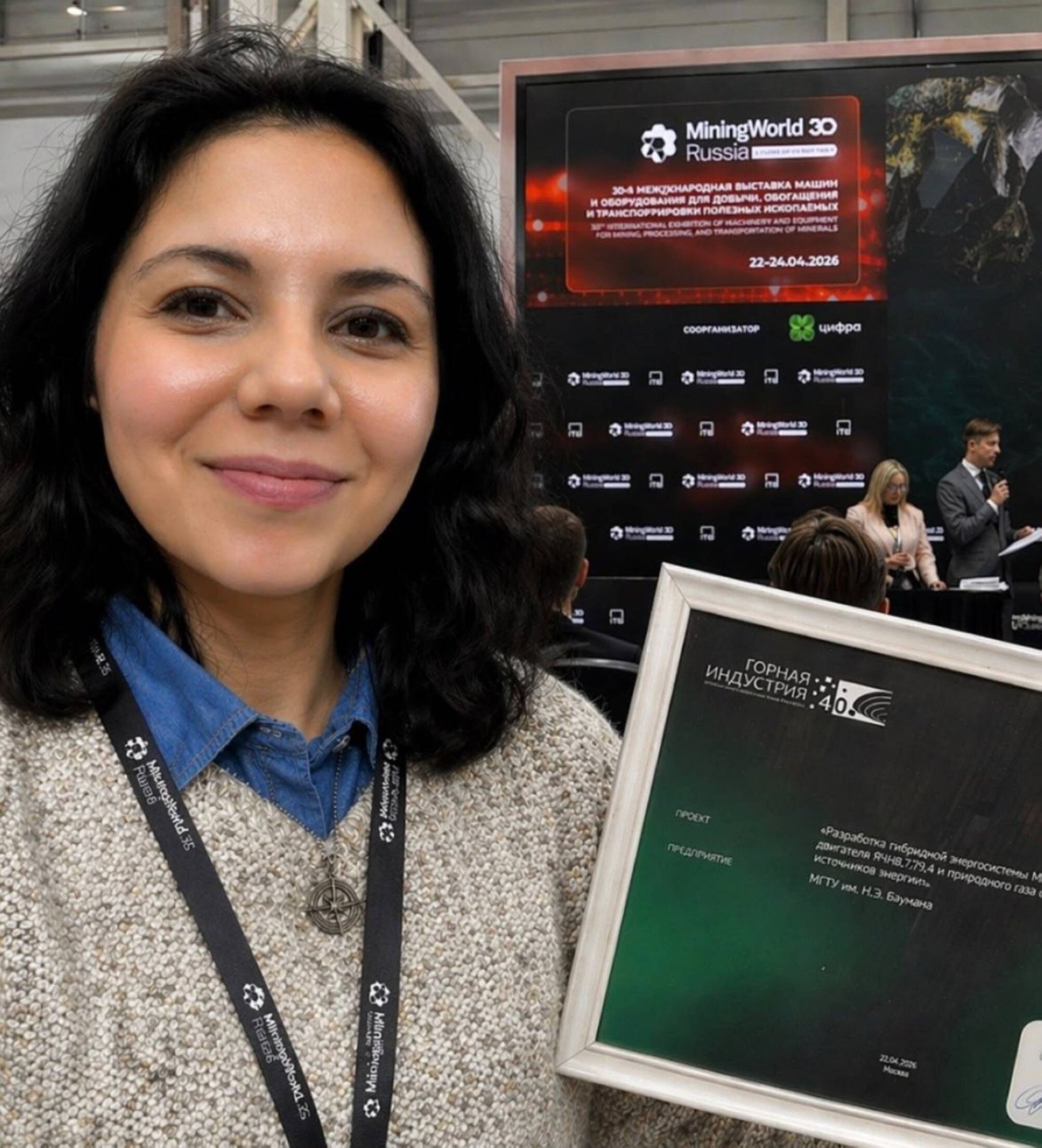
Özkol’s dual career path recently gained international recognition when she received the “Future Leader” award at the Talented Woman in Modern Industry 2026 awards in Russia.
Her athletic pursuits matched her professional achievements as she earned a third-place podium finish at the X-Waters open-water swimming race in Moscow.
Educated in electrical engineering and energy at Technical University of Sofia and Bauman Moscow State Technical University, Özkol focuses on the intersection of energy economics, artificial intelligence and infrastructure.
“Engineering taught me how to think and sports taught me how to apply that thinking under uncertainty and pressure,” Özkol said.
“Engineering taught me how to build a system, and sports taught me how to adapt when the system doesn’t work as expected,” she added.
Özkol’s journey in athletics began in her youth after a diagnosis of Attention Deficit Hyperactivity Disorder (ADHD) prompted her to channel her energy into structured discipline.
Moving from modern pentathlon and biathlon into open-water swimming, she competed in major domestic events, including the Iznik and Bosporus races.
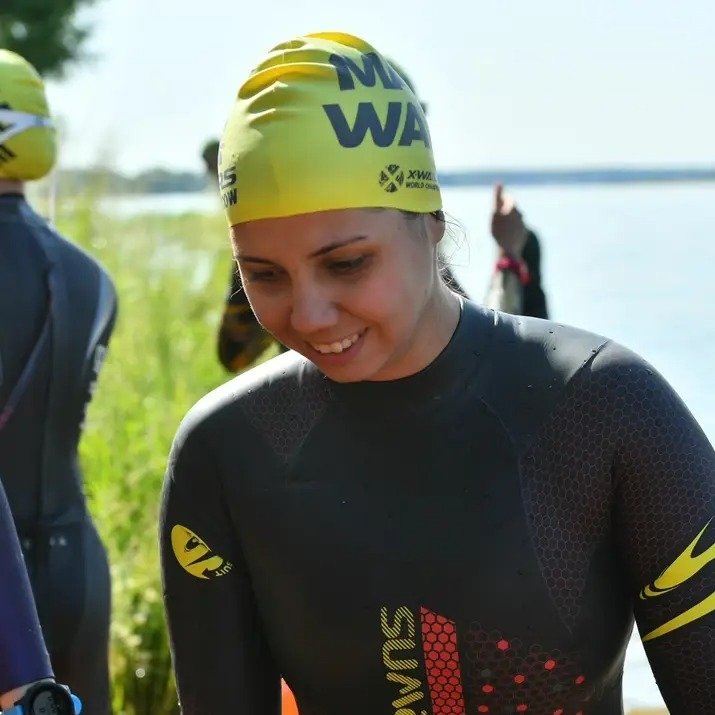
“In the pool, everything is controlled,” Özkol said. “In open water, waves, currents, temperature, and wind change. You continuously read the environment and re-evaluate your direction and pace.”
That analytical approach proved decisive during the X-Waters competition in Moscow, where Özkol represented Türkiye among competitors from around 12 countries in what organizers dubbed a world championship event.
“When I finished the race, I didn’t even know I had finished third,” Özkol said. “Long-distance racing is primarily a mental battle. Reaching the podium in an international event as a Turkish female athlete was a source of great pride.”
Beyond athletics, Özkol’s professional research concentrates on industrial energy efficiency and the dual nature of emerging digital infrastructure.
She noted that while artificial intelligence offers optimization and grid management solutions, its operation generates substantial energy demand.
Looking ahead, Özkol anticipates a fundamental shift in global energy dynamics over the next two decades toward real-time data analysis, smart grids and demand-side management.
“The question of the future will not be ‘How much energy do we produce?’ but ‘How smartly can we manage the energy we produce and consume?'” Özkol said.
Özkol also emphasized the necessity of systemic equity for women across science, technology, engineering and sports, arguing that institutional backing must precede athletic or professional milestones.
“Support for women should not be given after success, but right at the beginning,” she said.
“Training, financial support, sponsorship and visibility are not favors; they are conditions for equality. The presence of women in science, engineering and sports is not an ‘inspirational story,’ but a matter of rights,” said Özkol.


-

 Economy2 days ago
Revolut: $115 billion fintech taking on Europe’s biggest banks
-

 Economy2 days ago
Global M&A deal rush slowed down in Q3 as borrowing costs bite
-
 Economy3 days ago
Egypt’s Sisi calls for peaceful solutions to Africa’s conflicts
-

 Economy18 hours ago
Türkiye’s inflation drops below 30% for 1st time in nearly 5 years
-

 Economy14 hours ago
Türkiye’s Halkbank after secondary offering amid strong interest: CEO
-
 Economy1 day ago
ACE BPSC 2026 summit to be held this week in Istanbul
-
 Politics1 day ago
Erdoğan vows action over Soma mine collapse at Teknofest
-

 Sports2 days ago
Marked by teen stars, marred by mishaps: 2026 Asian Games end