
Politics
Hunt for FETÖ members lingers in Türkiye on anniversary of coup bid

The Gülenist Terror Group (FETÖ) first emerged as a serious national security threat 12 years ago, when it tried to topple the government. Today, the group lost its far-reaching clout, but operations reveal it still has members in hiding within the country.
The Interior Ministry announced on Wednesday that 160 suspects were captured in the past two weeks in operations against FETÖ in 39 provinces, and 90 among them were remanded in custody.
Interior Minister Ali Yerlikaya announced in a social media post on Wednesday that counterterrorism, organized crime and intelligence units of the police launched operations against FETÖ in provinces including Ankara, Istanbul and Izmir. Among targeted suspects were those communicating over Bylock or payphones, those infiltrated into the Foreign Ministry, an “education network” of the group, and infiltrators in the military. Bylock is an encrypted messaging app developed and exclusively used by FETÖ members who also prefer public payphones to communicate with each other to avoid surveillance.
1st coup bid
FETÖ, founded by now-deceased Fetullah Gülen, made its first move to overthrow the government on Dec. 17, 2013, through its infiltrators in law enforcement and the judiciary. Prior to the attempt, authorities became aware of a conspiracy by the group in February 2012, when prosecutors linked to the group sought to interrogate and arrest incumbent Foreign Minister Hakan Fidan, then a top figure at the National Intelligence Organization (MIT). When then-Prime Minister Recep Tayyip Erdoğan started to weed out FETÖ infiltrators in state institutions, FETÖ threatened Erdoğan and other government officials with several legal cases built on fabricated evidence. Erdoğan defied the blackmail attempts.
On Dec. 17, 2013, prosecutors linked to FETÖ in Istanbul launched a “graft probe” based on false allegations and fabricated evidence. They ordered the detention of more than 80 people, including the director of a state lender, the sons of ministers and several other figures close to the government. The government condemned the operation and sacked police chiefs and prosecutors involved in the probe. It was the first time that the government announced “a parallel state structure,” an “illegal organization,” as being behind a conspiracy against the government, in the wake of the probe. FETÖ, however, tried its hand at overthrowing the government again on Dec. 25, 2013, as Muammer Akkaş, a FETÖ-linked prosecutor, ordered detentions of 30 suspects. This time, law enforcement did not follow the orders. Akkaş, however, leaked the details of the operations to the media while FETÖ-operated social media accounts started releasing investigation files online that included doctored images and audio recordings regarding the so-called suspects. Members of the group also spread false claims that Erdoğan had fled abroad.
Following what authorities described as a judicial coup attempt by FETÖ against Türkiye’s elected government, the state intensified its efforts against the group. Prosecutors linked to FETÖ were dismissed from their posts, but they managed to flee the country. Among them were key names, including Akkaş, Zekeriya Öz, Celal Kara and Mehmet Yüzgeç.
New, far-reaching operations targeting FETÖ members in the law enforcement began July 22, 2014, resulting in the detention of numerous police chiefs and officers.
Following the investigation, then-Istanbul Chief Public Prosecutor Irfan Fidan prepared a 621-page indictment related to the Dec. 17 case and submitted it to the Istanbul 14th High Criminal Court.
As in many FETÖ indictments, the lead suspect was FETÖ leader Gülen. Former police chiefs Yakub Saygılı, Nazmi Ardıç, Hamza Tosun and Yasin Topçu were charged with founding or leading an armed terrorist group, attempting to overthrow the Turkish government or prevent it from carrying out its duties, and unlawfully recording personal data and violating privacy. Prosecutors also sought prison sentences for 62 other police officers on charges including membership in an armed terrorist group and attempting to overthrow the government.
The indictment stated that FETÖ had formed a structure within the judiciary and police operating outside the legal chain of command. It said members acted on instructions from Gülen to infiltrate state institutions and used public resources and unlawful methods to eliminate perceived rivals and institutions standing in the way of their objectives.
The trial of 67 defendants, including Gülen and former police chiefs, began on Dec. 12, 2016, and concluded on March 18, 2019.
The court sentenced Yakub Saygılı, Kazım Aksoy, Yasin Topçu, Nazmi Ardıç and 11 others to aggravated life imprisonment for attempting to overthrow the Turkish government. Several defendants were also handed down prison sentences for violating the confidentiality of communications and private life. The court acquitted 24 defendants of all charges and convicted others of FETÖ membership. Cases involving Gülen and several fugitive defendants were separated.
FETÖ thrived thanks to its widespread infiltration into key public institutions for decades. The terrorist group’s members managed to disguise themselves through secretive communication methods and by conspiring against those who detected their infiltration, through blackmail, sham trials organized by prosecutors linked to the group and other methods. Once he believed he had a sizable number of military infiltrators, the group’s leader, Fetullah Gülen, ordered them to stage another coup attempt on July 15, 2016. The coup attempt, this time carried out by military infiltrators of the group, spectacularly failed due to an unprecedented public resistance. Gülen died in 2024 before his expected extradition from the U.S., where he lived for years. In the aftermath of the coup attempt, Türkiye expanded its crackdown on the group.

Turkish security forces detained 52 irregular migrants in separate operations across four provinces, while four suspected migrant smugglers were arrested, authorities said Monday.
Security forces detained 10 foreign nationals in the northwestern province of Edirne after determining they had entered Türkiye through illegal routes. Another seven irregular migrants were detained in neighboring Kırklareli.
The migrants were transferred to provincial migration authorities and a repatriation center following processing.
In the western province of Izmir, gendarmerie teams stopped a minibus near the Karaburun toll booths on the Çeşme highway on Oct. 1 as part of an operation targeting migrant smuggling.
Authorities found 16 irregular migrants inside the vehicle, including one Nigerian, three Chadian, 10 Ethiopian and two Sudanese nationals.
The minibus driver, identified by the initials B.Y., was detained on suspicion of organizing the journey and was later arrested by a court. The migrants were transferred to migration authorities.
Türkiye, a key transit route for migrants seeking to reach Europe, has stepped up border controls and security operations in recent years as part of its efforts to combat irregular migration and migrant smuggling.
Separately, security forces detained 19 Afghan irregular migrants during a joint coast guard and gendarmerie operation in Demre, in the southern province of Antalya, on Oct. 2.
One suspected Turkish smuggler was detained on land, while two others allegedly linked to the operation were caught aboard a sailboat at sea. All three were later arrested and sent to prison.
Authorities seized the sailboat used in the alleged smuggling operation.
Investigators identified four additional suspects believed to have been involved in the smuggling network, and efforts to apprehend them are continuing, authorities said.
Türkiye has intensified nationwide operations in recent years amid rising regional migration pressures.
New investigations have revealed deep-seated corruption in district municipalities run by the opposition Republican People’s Party (CHP), which has seen dozens of its mayors jailed in a widespread probe into bribery and tender-rigging over the past two years.
Reports by the Sabah newspaper indicate that a deputy mayor asked a businessman to place a bribe into a vase full of flowers and deliver it to his wife in Mersin’s Mezitli district. In another case, it was discovered that some staff at Istanbul’s Ataşehir Municipality asked for high-value gift cards for shopping at luxury department stores.
In a corruption operation targeting municipalities in Mersin, the bribery network and methods allegedly used at Mezitli Municipality have been exposed. The district’s mayor, Ahmet Serkan Tuncer, was among dozens detained earlier this week in an anti-corruption operation, along with Mersin Mayor Vahap Seçer.
According to the Sabah report, Mezitli’s Deputy Mayor Atilla Küsbeci was meeting with landowners on behalf of Mayor Tuncer. During these meetings, zoning densities were increased and changes were made in favor of those who paid the requested bribes.
The money was allegedly shared among Ahmet Serkan Tuncer, Atilla Küsbeci, CHP Mersin Deputy Provincial Chair Kubilay Özsoy, Serkan Şahin and Hacı Şahin. The case file states that Kubilay Özsoy obtained TL 28 million (around $570,000) in illicit gains through these transactions, converted the bribes into gold and foreign currency and introduced them into the financial system, and purchased land in the name of his father. It also states that Ahmet Serkan Tuncer purchased a home at a residential complex with the money.
It was determined that Atilla Küsbeci and his wife, Merve Küsbeci, who works in the municipality’s zoning department, turned a blind eye to the construction of noncompliant sections at two luxury hotels in the city and failed to act on complaints concerning these violations.
The testimony of Serkan Canıtezer, a representative of Kayalife construction company, shed light on the alleged bribery method. Canıtezer said Mayor Tuncer and Deputy Mayor Atilla Küsbeci demanded a TL 5 million bribe for zoning and construction permit procedures.
“Atilla Küsbeci asked me to put it in a vase together with flowers and leave it at the zoning department where his wife, Merve Küsbeci, worked. However, I refused. I obtained the construction permit, but they demanded two separate renovation projects for the construction in order to receive the bribe. The head of the building inspection department, whom Atilla Küsbeci sent to my construction site, told me that a third renovation project would be required and said, ‘You know the reason. There is nothing I can do; the order comes from higher up,'” he testified.
“I also reported the situation to CIMER (the Presidential Communications Center, a hotline for complaints from the general public). On Aug. 19, 2026, I went to the Anti-Smuggling and Organized Crime Department of the police with TL 100,000 and had the serial numbers recorded. I then informed them that I was ready to hand over the money,” Canıtezer said.
A search of the home of Ali Özbaran, owner of Özbaran Enerji, who was detained in the operation in Mezitli on charges of “rigging a tender,” “bribery” and “qualified fraud,” uncovered 257,000 euros, $25,000, 64,000 pounds, 4 kilograms (8.82 pounds) of gold bars, 116 Republic gold coins, eight half gold coins, five quarter gold coins and 2 grams (0.07055 ounces) of gold, as well as an unlicensed handgun and tender documents.
Meanwhile, the investigation into Ataşehir Municipality by the Istanbul Anadolu Chief Public Prosecutor’s Office was expanded based on examinations of digital materials belonging to suspects arrested on April 20, 2026, statements obtained from suspects under the effective repentance provisions, testimony from witnesses questioned following complaints filed through CIMER and statements by suspects who allegedly paid bribes.
The examination found that some municipal employees had used high-value gift cards from luxury department stores and received money in foreign currencies in exchange for bribes.
The investigation also found, based on examinations of digital materials, that financial benefits were provided to company owners involved in zoning and occupancy permit procedures at Ataşehir Municipality by allegedly having them purchase purportedly “garbage containers.”
Based on the evidence obtained, simultaneous searches, seizures and detention procedures were carried out this week. A total of 13 suspects, including Ataşehir Deputy Mayor Murat Güneş, were apprehended and detained as part of the operation. Numerous digital materials were seized during searches of the suspects’ addresses.
The Chief Public Prosecutor’s Office said in a statement that investigations aimed at combating crimes against the reliability and functioning of public administration would continue meticulously and with determination.
Abdullah Öcalan, the jailed ringleader of the PKK terrorist group, may meet journalists and civil society representatives, a lawmaker who has repeatedly met him in recent months told the media over the weekend.
In statements quoted by the Turkish media on Sunday, Peoples’ Equality and Democracy Party (DEM Party) lawmaker Pervin Buldan noted that they may see “a concrete development in October” in terms of visitors for Öcalan, who is jailed in a high-security island prison in the Marmara Sea. She was responding to a question about whether Öcalan would be allowed visitors other than his next of kin, lawyers and DEM Party lawmakers, from a party closely associated with the PKK.
The move is part of the terror-free Türkiye initiative launched by government ally Nationalist Movement Party (MHP) leader Devlet Bahçeli in 2024. The initiative sought the dissolution of the PKK after decades of violence across Türkiye and has succeeded to an extent after Öcalan agreed to Bahçeli’s proposal to order the PKK to lay down its arms. The PKK announced its dissolution in 2025, and the process is currently being monitored by Turkish authorities. In return, Türkiye introduced a law in August that offers deferral of sentencing and prosecution for PKK members not involved in acts of violence.
Since Bahçeli’s historic call two years ago, Öcalan has frequently received DEM Party lawmakers who have served as messengers for him, conveying his messages to the PKK and the Turkish public. Öcalan, who was sentenced to life imprisonment after his capture in Kenya in 1999, however, still serves his prison term in strictly isolated conditions with a few fellow inmates. Recently, Bahçeli announced that a new addendum to the prison facility may be built on the island to help Öcalan fulfill his task as an intermediary. Bahçeli has also suggested a formal “coordinator role” for Öcalan. This was also mentioned by Buldan in her interview, and she said that Öcalan would be a “coordinator” both in the disarmament of the PKK and in the “political and democratic building process.”
“For this reason, it is essential that he should be provided with free working and communication conditions and allowed to receive visitors from different segments of society,” Buldan stated.
For decades, the PKK remained the main security threat to Türkiye, and its violent campaign is blamed for the deaths of thousands of people and immense economic losses, especially in southeastern Türkiye. Apart from small nationalist parties, almost all political parties openly supported the initiative, something rare in polarized Turkish politics.
Speaking at the inauguration of the new legislative year at the Turkish Parliament last Thursday, President Recep Tayyip Erdoğan hailed a law passed by Parliament on terror-free Türkiye.
“Consensus on a terror-free Türkiye has upset the country’s foes. (Terror-free Türkiye) is already having a deterrent effect on Türkiye’s foes and is empowering the country,” Erdoğan said.
The president also urged other political parties to strengthen the “homefront” amid regional tensions and reach a “grand Türkiye consensus.”
Senior Turkish political figures criticized the opposition New Party (YP) after its lawmakers walked out of Parliament as President Recep Tayyip Erdoğan prepared to address lawmakers at the opening of the new legislative year.
New Party leader Özgür Özel and lawmakers from his party left the General Assembly shortly before Erdoğan began his address Thursday, in what the party described as a protest against the president.
Nationalist Movement Party (MHP) leader Devlet Bahçeli criticized the move, saying it was politically inappropriate for the lawmakers to leave while Erdoğan was in the chamber.
“It was not politically right for New Party (YP) to leave while our president was in the hall,” Bahçeli told reporters at a reception marking the opening of the new legislative year.
Bahçeli, whose MHP is allied with Erdoğan’s ruling Justice and Development Party (AK Party), said a recently established political party should seek to bring new approaches to politics.
Parliament Speaker Numan Kurtulmuş also criticized the walkout, saying political differences and protests were legitimate parts of democratic politics but arguing that lawmakers should observe political courtesy during the annual opening ceremony.
“We would have preferred New Party lawmakers to listen to the president’s speech and not resort to such a course of action,” Kurtulmuş told reporters.
He said lawmakers had extensive opportunities to criticize the president and the executive once regular parliamentary proceedings resumed but described the opening of Parliament as an occasion for political parties to gather under the same roof despite their differences.
The walkout came during the special session opening the fifth legislative year of Parliament’s 28th term. Erdoğan delivered his annual address after Parliament Speaker Kurtulmuş opened the session.
The incident prompted criticism from senior members of the AK Party and officials in the presidential administration.
AK Party spokesperson Ömer Çelik described the decision to leave the chamber before Erdoğan’s speech as disrespectful to Parliament and the presidency.
Çelik noted the president’s address at the beginning of a legislative year was an established part of Türkiye’s parliamentary tradition and accused the YP of contradicting its calls for a stronger Parliament by leaving the chamber.
Presidential Communications Director Burhanettin Duran also criticized the walkout, saying Parliament was a forum where differing political views should be expressed and debated.
Duran described YP lawmakers’ decision to leave the chamber as “a serious act of disrespect,” saying it went beyond a political stance against the presidency and showed disregard for the national will, state traditions and parliamentary conventions.
He said the move was inappropriate for Parliament and argued that democratic politics required not only expressing one’s own views but also tolerating opposing opinions and listening to the elected president in Parliament.
“Putting political disagreements ahead of long-established state traditions and the common rules of Parliament is incompatible with democratic representation.”
AK Party Deputy Chair Hüseyin Yayman also condemned the protest, accusing YP lawmakers of using the parliamentary session for political theater. He said lawmakers had the right to criticize or oppose Erdoğan but should do so through parliamentary debate.
The dispute underscored tensions between Erdoğan’s governing alliance and the YP, which was established in July under Özel’s leadership after he and 90 other lawmakers resigned from the Republican People’s Party (CHP).
The YP has since formed a parliamentary group, with Özel serving as its chair.
Kurtulmuş, responding to questions about opposition criticism more broadly, rejected claims that opposition voices were being prevented from speaking in Parliament.
He said seven parliamentary groups would participate when regular proceedings resume, five of them representing opposition parties.
The Parliament speaker also called on opposition parties to put forward proposals in the debate over a new constitution, saying disagreements over Türkiye’s presidential system and the president’s political party affiliation could be addressed as part of that process.
Despite the walkout, other opposition politicians remained in the chamber during the opening session. Erdoğan later greeted lawmakers from several parties following his address.
Parliament is scheduled to resume its regular legislative work on Oct. 6.
President Recep Tayyip Erdoğan has vowed that anyone found responsible for a deadly mine collapse in the western province of Manisa will be held accountable, as an investigation continues following the deaths of five miners.
Speaking Saturday at Teknofest Southeast in Şanlıurfa, Erdoğan said authorities were pursuing both administrative and criminal investigations into Thursday’s collapse in the Soma district, where five miners were killed and two others were rescued with injuries.
The Energy and Natural Resources Ministry has launched an administrative investigation, while the Soma Chief Public Prosecutor’s Office has opened a judicial inquiry. Nine people, including officials from the company operating the mine, have been taken into custody.
“The investigation is continuing in multiple directions. Anyone found to have been negligent or guilty will certainly be held accountable. We will also follow the process closely,” Erdoğan said.
He offered condolences to the families and colleagues of the five miners who lost their lives and wished a speedy recovery to the two injured workers, who remain under medical treatment.
Erdoğan made the remarks during the opening of Teknofest Southeast at Şanlıurfa GAP Airport, where thousands of visitors gathered to attend the country’s flagship aviation, aerospace and technology festival.
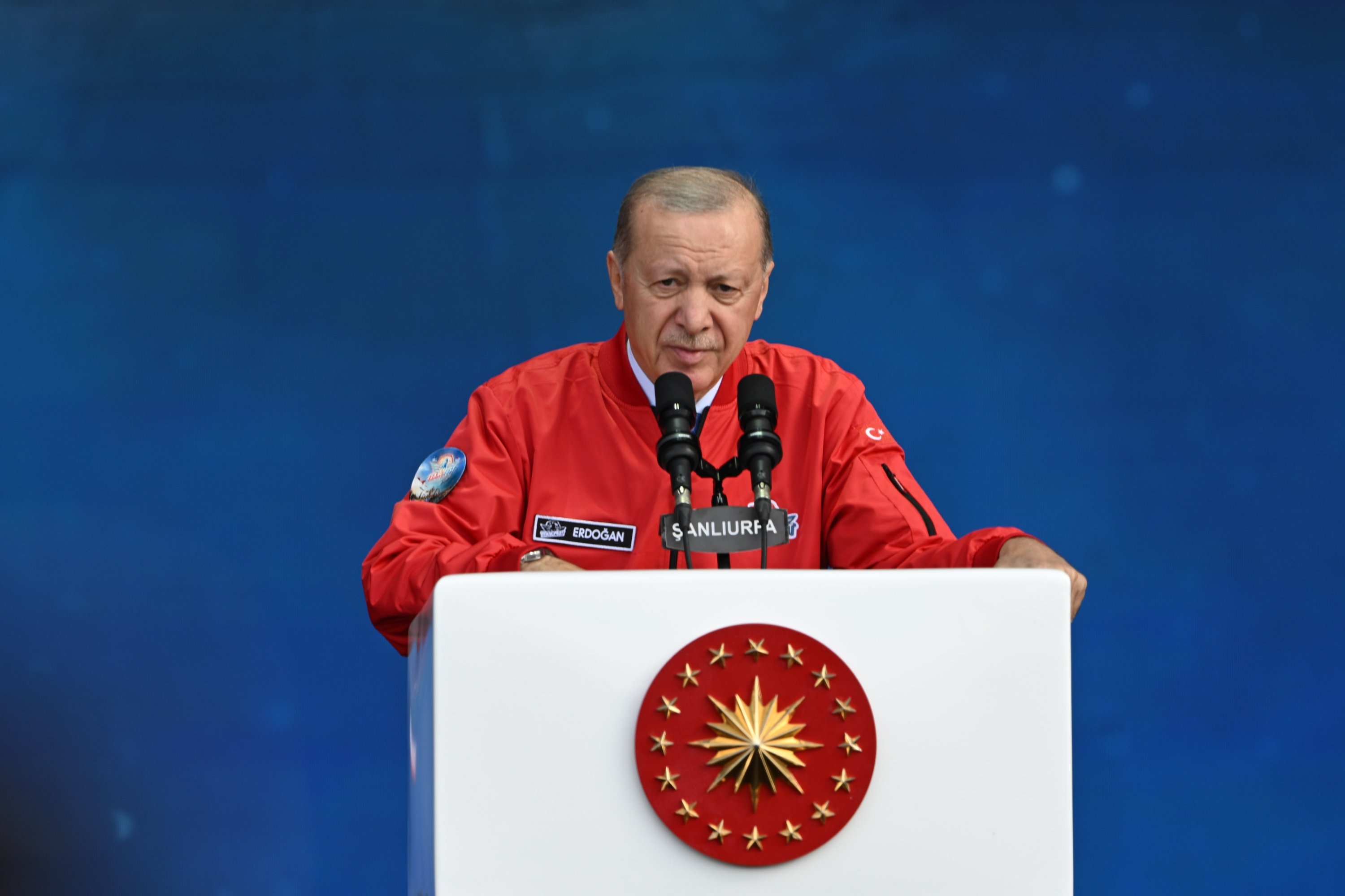
The president praised young participants for their technological achievements, saying their projects demonstrated the progress Türkiye has made in science and innovation.
“Once again, we are proudly witnessing the level Türkiye has reached in technology and the high-quality projects produced by the Teknofest generation,” he said, congratulating young people who displayed their inventions and turned their ideas into reality at the festival.
The atmosphere at the airport, along with the determination, enthusiasm and ambition of the participants, showed that Türkiye’s future was in capable hands, Erdoğan said.
He added that the country’s long-term development vision, known as the “Century of Türkiye,” would carry the imprint of a generation increasingly involved in technological innovation.
“These young people are a source of pride for our nation and among the country’s most valuable assets,” he said, praising their knowledge, confidence and ambition.
Erdoğan also thanked the Industry and Technology Ministry, the Turkish Technology Team Foundation and other organizations involved in organizing the festival, describing Teknofest as the world’s largest aviation, aerospace and technology event.
He said he had personally recommended Şanlıurfa as the host city, arguing that its historical and cultural heritage made it an appropriate setting for an event bringing together technological innovation and young talent.
“Once again, we are experiencing the excitement of Teknofest, an event shaped from beginning to end by young people, and this time we are doing so in Şanlıurfa,” he said.
Erdoğan highlighted the city’s ancient history, describing it as a center of religious heritage, science and civilization. Şanlıurfa is home to Göbeklitepe, an archaeological site widely recognized for its significance in understanding early human history.
He also recalled the contributions of scholars associated with the region, including Al-Battani, Sinan ibn Thabit, Ibn Wasif of Harran and Yunus al-Harrani, who made contributions to fields including mathematics, astronomy, medicine and philosophy.
The president said hosting Teknofest in Şanlıurfa was intended to connect the country’s historical legacy with the ambitions of its younger generation and the technologies of the future.
He added that organizers wanted young Turks to draw inspiration from their cultural roots while introducing international participants to the country’s history and heritage.
Teknofest began in 2018 with applications from 4,333 teams, Erdoğan said, noting that participation had increased significantly over the years.
This year’s Southeast edition attracted more than 730,000 teams and over 1.6 million competitors from all 81 Turkish provinces and 97 countries, according to the president.
Visitor numbers had also approached 1 million, he added, highlighting the growing public interest in the festival.
Türkiye’s Underwater Defense Command (SAS) is training its personnel to respond to threats ranging from drifting sea mines and unexploded ordnance to improvised explosive devices and unmanned maritime systems, as the naval unit maintains operations aimed at securing the country’s waters.
The unit, part of the Turkish Naval Forces Command, carries out explosive ordnance disposal, underwater operations and other specialized missions at sea and on land. Its personnel have also taken part in counterterrorism operations when assigned, according to SAS commander Navy Capt. Dr. D. Ilhan Sayıcı.
“These missions require many years of training and experience,” Sayıcı said. “Procedures must be followed completely during a mission because there is no margin for error. For us, the first mistake is the last.”
Established in 1964, the command has participated in operations ranging from the 1974 Cyprus Peace Operation to more recent counterterrorism missions, Sayıcı noted.
One of its main areas of expertise is neutralizing explosive threats, including naval mines, unexploded ordnance, improvised explosive devices and suspicious underwater objects.
SAS teams have also been tasked with responding to drifting mines and other potential threats in the Black Sea, where mines have posed risks to maritime traffic.
He said the unit’s objective is to protect maritime transportation, respond rapidly to potential threats and safeguard Türkiye’s maritime interests.
Becoming a SAS commando requires about a year of intensive training, with officers and noncommissioned officers joining on a voluntary basis.
Candidates are evaluated not only on physical fitness but also on psychological resilience, technical knowledge, leadership and their ability to make decisions under intense pressure, Sayıcı said.
The unit regularly conducts shooting, diving, demolition, helicopter and field exercises to maintain operational readiness.
A SAS officer identified as Lt. B. described one of the unit’s procedures, known as the Tactical Claw Operation, which is designed to neutralize drifting naval mines and unmanned aerial or maritime vehicles.
Under the procedure, SAS personnel are transported to the area by helicopter before entering the water and placing explosives on the target. They then withdraw to a safe area by boat or helicopter before remotely detonating the device, the officer said.
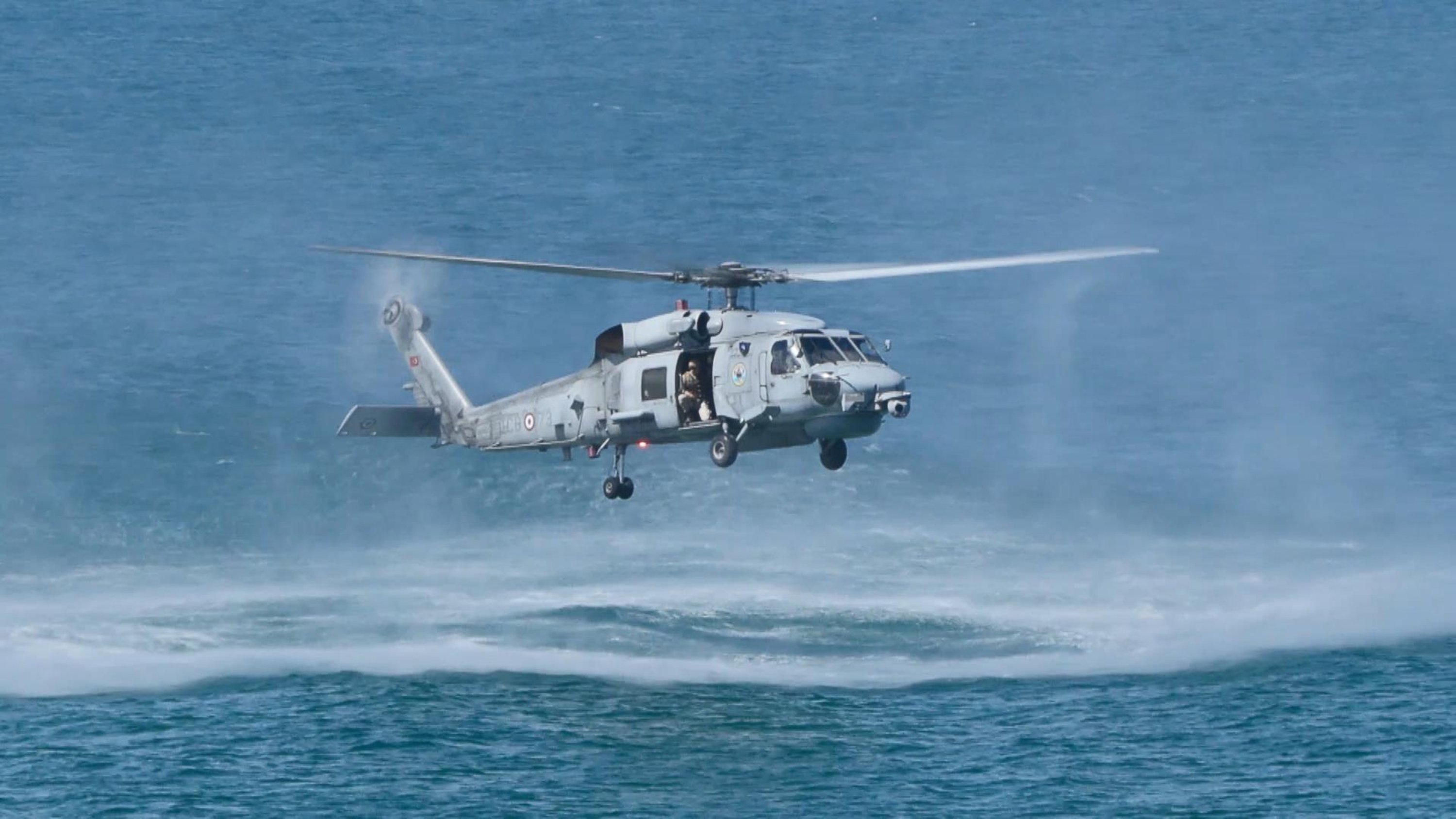
SAS teams have intervened against more than 300 suspicious objects, including mines and unmanned aerial and maritime vehicles, according to the unit.
Its personnel have also served in counterterrorism operations inside Türkiye and across the border, including operations Euphrates Shield, Olive Branch, Peace Spring and the Claw series, Lt. B. said.
The unit has also carried out missions in Libya, Afghanistan, Azerbaijan, Bosnia-Herzegovina and Albania.
During a recent training exercise, SAS commandos practiced clearing a booby-trapped building, rescuing a hostage and neutralizing an improvised explosive device. Another explosive device detected in the field was targeted using sniper and rocket fire.
Another SAS officer, identified as Lt. S., said fewer than 30% of candidates have completed the approximately yearlong training course in previous years.
The officer said personnel undergo regular physical conditioning on land and at sea alongside specialized operational training.
“The physical and mental endurance required by our work can only be developed through continuous and disciplined training,” he emphasized, adding that exercises also focus on patience, composure, attention and decision-making.
Lt. B. said teamwork remains central to the unit’s approach, particularly during missions involving explosives.
“There is no room for fear, hesitation or mistakes in our understanding of duty,” he said. “We remind ourselves that we do not have the luxury of making a mistake.”


-
 Economy3 days ago
Türkiye moves to finalize capital markets law changes after fund turmoil
-
 Politics3 days ago
Erdoğan calls for ‘grand consensus’ amid terror-free Türkiye success
-

 Economy1 day ago
Revolut: $115 billion fintech taking on Europe’s biggest banks
-
 Politics3 days ago
Türkiye vows continued co-op with Iraq after troop withdrawal
-
 Politics3 days ago
Turkish officials urge end to attacks after Medina power station hit
-

 Sports3 days ago
City challenge financial breaches ruling with comprehensive appeal
-
 Economy3 days ago
Teknofest Southeast combines technology, local culture in Şanlıurfa
-
 Sports3 days ago
Protesters throw tennis balls, urge Ireland to boycott Israel match