
Economy
IFC provides $510M financing package to Türkiye’s Şişecam

The International Finance Corporation (IFC), a member of the World Bank Group, said on Tuesday it provided a financing package to Türkiye glass and chemicals producer Şişecam, worth 435 million euros (around $510 million), to support its innovation and sustainability goals.
“The investment will help Şişecam upgrade production facilities, refinance existing debt used to finance the new float and solar glass plant in Tarsus and strengthen working capital,” the institution said in a press release.
Explaining that a key focus of the financing is the growth of flat and solar glass manufacturing in Tarsus and Mersin, which includes innovative solar glass that utilizes a unique raw-material mix to enhance efficiency in solar energy applications, the IFC said that the initiative “contributes to the growth of renewable energy solutions and meets increased demand for solar glass, while also increasing the energy efficiency of existing plant operations.”
The investment is also aimed at strengthening environmental, social and governance performance, it added.
“In line with our sustainable growth vision, we continue to support our investments with a strong and well-balanced financing structure. In the upcoming period, while maintaining our focus on financial discipline, we are entering a phase in which we are beginning to see the results of the actions we have taken to spread the investment-related debt over the most favorable maturities,” said Can Yücel, Şişecam’s CEO.
“This agreement with IFC is not only a sign of the confidence that international financial institutions place in Şişecam, but also an important component of our strategy to strengthen our financial structure. We will continue to move forward in line with our long-term value creation goals by sustainably supporting our investments in Türkiye.”
“This landmark financing package reflects over half a century of IFC’s partnership with Şişecam, supporting expansion, job creation and innovation in the global glass and chemicals industries,” said Ashruf Megahed, IFC Regional Industry Head for Manufacturing, Agribusiness, and Services in the Middle East and Central Asia.
The 435 million euro financing package was arranged by IFC, with participation by a consortium of leading international banks, including Industrial and Commercial Bank of China, Emirates NBD Bank, BNP Paribas, HSBC, Bank of Bahrain and Kuwait, ILX and Standard Chartered, the IFC said.
“In addition to the financing package, and to support Şişecam’s continued financial resilience, IFC also acted as anchor investor in Sisecam UK PlC’s new seven-year, $500 million Eurobond issuance,” it added.
Şişecam was founded by lender Iş Bank in 1935 to contribute to the industrial development of the young Republic of Türkiye. Over the decades, it has grown from a local initiative into a global player in glass and chemicals. As the only global company operating in all core areas of glass production, Şişecam ranks among the top five producers in its sector.

The International Monetary Fund (IMF) said Friday that Türkiye’s efforts to curb inflation are yielding results, while economic growth continues at a stable pace under the current policy framework.
The IMF Executive Board completed the 2025 Article IV consultation with Türkiye, it said in a statement.
“Since the 2024 Article IV, Türkiye’s disinflation program has shown successes,” said the fund. “Inflation fell from 49.4% (y/y) in September 2024 to 30.9% in December 2025 on the back of strong fiscal consolidation, prudent income policies, and a tight monetary policy stance.”
It noted that following a temporary deceleration in mid-2024, GDP growth has remained strong, with a forecast at 4.1% in 2025. “Turkish Lira demand has strengthened, bolstering international reserves, and the current account deficit remains adequately financed,” it added.
Tight monetary policy expected
“Tight monetary policy, moderate wage growth, and broadly neutral fiscal policy are expected to support gradual disinflation,” it said, emphasizing that the current policy mix continues to balance disinflation with steady growth.
The statement said end-2026 inflation is expected at 23%, as domestic demand remains strong, and boosted by further policy rate cuts and rising confidence, growth is expected at 4.2% for 2026.
It also noted that the current account deficit would “remain adequately financed, while depositor confidence and strong gold prices would allow reserves to stay at around 80 percent of the IMF’s adequacy metric.”
While growth should remain solid and inflation will fall, the IMF said the approach bears risks and costs, noting that external risks remain elevated due to persistent global trade uncertainty and regional conflicts.
“The materialization of an adverse shock, like an increase of energy prices or a negative weather event, could further extend the period of still-high inflation. Moreover, the gradual approach to disinflation has weighed on the financial sector and slowed productivity growth,” the statement said.
Call for ambitious structural reforms
The statement included the executive board’s assessment, praising authorities for significant achievements under the disinflation program, which reduced macroeconomic imbalances, strengthened confidence and preserved strong growth.
Inflation remains well above the target and the economy is highly vulnerable to shocks, the IMF said, underscoring the need for a tighter macroeconomic policy mix and ambitious structural reforms to entrench disinflation, strengthen external buffers and support inclusive medium-term growth.
Authorities were commended for strong fiscal efforts last year, with the IMF urging continued fiscal tightening to reinforce disinflation.
“Directors emphasized the role of measures to broaden the tax base and improve compliance, together with further efforts to streamline expenditures through phasing out energy subsidies,” the statement said.
Directors also called for carefully sequenced and well communicated measures “to minimize second-round inflationary impacts while mitigating the impact on vulnerable households.”
“As fiscal space expands, additional resources could be redirected to social priorities. Directors also supported full alignment of wage policies with inflation targets, as well as stronger oversight of PPPs and SOEs,” the IMF said.
Financial sector remains robust
Directors stressed that the financial sector “remains robust,” supported by the authorities’ swift and effective response to market stress.
They generally urged tighter monetary policy to secure durable disinflation, while emphasizing the need for policy rate decisions should remain data-dependent and mindful of macro-financial effects.
“To bolster policy credibility and strengthen transmission, Directors emphasized the importance of a simplified monetary policy framework firmly centered on the policy rate, with enhanced central bank independence and communication,” the statement noted.
Directors also stressed that continued vigilance is warranted, particularly for still high FX liquidity risks, and supported ongoing efforts to strengthen the supervisory and resolution frameworks along with enhanced oversight, including of crypto assets.
The statement underlined that the directors urged structural reforms to foster productivity, resilience and medium-term growth, with top priorities including “improvements in labor, education, and governance and legal frameworks, support for SMEs, and raising the share of renewables in the energy mix.”
Economic indicators
According to IMF projections, Türkiye’s economy is expected to grow 4.1% in 2027 and 4% annually between 2028 and 2031.
The unemployment rate is forecast at 8.3% in 2026, 8.7% in 2027, and 9.1% during 2028-2031.
Inflation is projected to fall to 19% next year and then ease to 15% through 2031. The current account deficit is expected to equal 1.4% of GDP in 2026-2028 and 1.5% in 2029-2031.
Türkiye is seeking to meet high global expectations as it prepares to host COP31, with Environment, Urbanization and Climate Change Minister Murat Kurum saying Ankara is determined to steer this year’s U.N. climate summit toward concrete, results-driven outcomes through dialogue, consensus and coordinated international action.
Speaking at a press conference in Istanbul alongside Simon Stiell, the executive secretary of U.N. Climate Change, Kurum, who is set to chair COP31, described Türkiye as the “natural center” of the global fight against climate change. Andre Correa do Lago, president of COP30, also attended the briefing.
Fully known as the 2026 United Nations Climate Change Conference, or Conference of the Parties to the United Nations Framework Convention on Climate Change (UNFCCC), the event is set to take place from Nov. 9 to Nov. 20 in Türkiye’s coastal city of Antalya.
Türkiye, in partnership with Australia, secured a bid to host the summit at the last climate talks in Brazil’s Belem.
As a first-time host and current president of the event, Türkiye will also organize a two-day World Leaders’ Summit. It will also be responsible for preparing official communications for the COP31 conference, overseeing operational and logistical arrangements, and appointing the U.N. High-Level Climate Champion, among other duties.
Australia, on the other hand, is assigned to “leading the negotiations agenda.” Moreover, building on the efforts of the COP30 Brazilian Presidency, Türkiye and Australia will work together, and with Pacific island countries, to strengthen and elevate the action agenda.
Speaking on Thursday, Kurum said they aim to carry out the COP31 process with a results-oriented approach. “We truly want COP31 to be successful,” he stressed.
He started his speech by noting that COP meetings “are very critical and valuable,” as “we are experiencing the devastating effects of the climate crisis more severely by each passing day.”
High expectations
“As Türkiye and Australia, we will work as one body with an understanding based on consultation and cooperation. We are all aware that the world’s expectations from COP31 are high,” he said.
“Our responsibility is to read these expectations correctly, to build trust among the parties and to produce results.”
“There is something we always say. We do not see COP31 merely as a conference, and no one should see it that way,” he maintained.
According to Kurum, Türkiye’s approach to COP31 is “clear.”
“We will not be a single voice but will engage in dialogue, we will act not with division but with consensus, and we will prefer action, not stagnation, in order to achieve results,” he said.
Emphasizing the understanding of responsibility that draws from the common memory of civilizations and reminds humanity of its ancient relationship with nature, the minister said they are approaching the talks with the idea and understanding that “they would hear, make heard and encourage everyone’s voice.”
Moreover, he described that climate change is no longer just an environmental crisis but instead “an existential issue,” which he said is affecting every aspect of human life, from trade and transportation to industry, food, energy and education.
At the same time, he suggested they would “respect countries’ development priorities,” while also pointing to the issue of financing, which is “of great importance in terms of advancing implementation.”
“Again, our local governments, our private sector, financial institutions and non-governmental organizations must continue to be the main actors of this process,” he further said.
Similarly, he underscored the significance of the Zero Waste Movement carried out under the auspices of first lady Emine Erdoğan. The initiative “has shown the entire world that climate action does not have to remain at the level of rhetoric, but can be carried into a results-oriented transformation framework,” according to Kurum.
Rebuilding trust in multilateralism
Emphasizing that as the COP31 presidency, they are determined to rebuild trust in multilateralism with “a strong vision focused on producing results,” the minister also drew attention to the nature and standing “with humanity.”
“At a time when climate change is sweeping across the entire world, Türkiye stands with humanity,” he proclaimed.
“The world is our common home, and we have nowhere else to go, no other home, no other shelter. With this awareness, we say that Türkiye is the natural center of the struggle to be waged against the global climate crisis,” he said.
Also expressing that Türkiye will be “a bridge” bringing together the north and the south, the east and the west, developed economies and developing societies, Kurum went on to say that “Türkiye is a country that has assumed the leadership of global climate justice, has proven and earned this claim by standing on the right side of humanity at all critical moments in history.”
“The future will take shape here, in Anatolia. A road map for a livable future for all humanity will be presented from here,” he added.
“We cannot stop, because those beautiful people on the Pacific islands that face the risk of being submerged are waiting for us.”
Climate action, investment
Stiell, for his part, said that one thing “is clear,” as he suggested that COP31 in Antalya will take place in extraordinary times, the times he described as “a new world disorder.”
“This is a period of instability and insecurity. Of strong arms and trade wars. The very concept of international cooperation is under attack. These challenges are real and serious,” he said.
“But climate action can deliver stability in an unstable world.”
“In the face of the current chaos, we can, and must, drive forward a new era of international climate cooperation,” he urged, referring to previous action and decisions and suggesting that “nations can deliver change on a major scale when they stand together.”
Stiell, in particular, addressed the investments in renewable energy. He cited that in the decade since the Paris Agreement, “clean energy investment is up tenfold.”
He said that in 2025, despite all the economic uncertainty and political headwinds, the global transition kept surging forward as the clean energy investment “kept growing strongly, and was more than double that of fossil fuels.”
“Renewables overtook coal as the world’s top electricity source,” he added.
“This is an era to speed up and scale up,” he also said.
“Climate action is indisputably in every nation’s self-interest.”
Türkiye’s current account balance registered a deficit of $7.25 billion (TL 317.11 billion) in December, lifting the annual gap to $25.2 billion, mainly driven by a foreign trade gap, official data showed on Friday.
Vice President Cevdet Yılmaz and Treasury and Finance Minister Mehmet Şimşek said the balance still maintained sustainable levels despite challenging global conditions.
The shortfall was more than double the deficit in 2024 and up from a gap of $4 billion in November, according to the Central Bank of the Republic of Türkiye (CBRT).
The deficit in December marked the highest level in eight months. Surveys had estimated a gap of around $5.2 billion in December and about $24 billion in 2025 as a whole.
Yılmaz said the 2025 shortfall was consistent with the government’s Medium-Term Program (MTP) forecasts.
“Our macrofinancial stability continues to strengthen with the current account deficit remaining at sustainable levels, the decreasing country risk premium, and the increasing sovereign credit rating outlook,” he wrote on the social media platform X.
The goods deficit, which constitutes a major part of the current account balance, amounted to $69.7 billion last year, while services recorded a net surplus of $63.5 billion.
The primary and secondary income realized a net deficit of $18.5 billion and $528 million, respectively, the CBRT data showed.
On a monthly basis, the balance excluding gold and energy registered a deficit of $691 million in December.
The foreign trade posted a deficit of $7.44 billion, while services saw a surplus of $2.65 billion, with net travel income at $2.53 billion under this item.
Net outflows from direct investment amounted to $465 million, while portfolio investments posted a net inflow of $73 million. Official reserves decreased by $4.13 billion.
For the end of 2025, the government had revised down its current account deficit-to-GDP ratio expectation to 1.4%.
Şimşek said the annual deficit was expected to have amounted to 1.6% of gross domestic product in 2025. The gap had reached 5% of GDP in mid-2023, before declining to 0.8% in 2024.
Excluding gold, the balance posted an average deficit of 3% of GDP in the 2003-2023 period, Şimşek said X. He recalled a surplus of 0.2% in 2024 and said a limited deficit of around 0.3% was projected for 2025.
For 2026, Şimşek said the moderate course of energy prices, an improving outlook among main trading partners, and a supportive euro/dollar parity are expected to contribute positively to current account targets.
“We continue to implement structural steps that will make our gains in the current account balance permanent,” he said.
Yılmaz said the current account deficit is expected to maintain its “moderate” course throughout 2026 and “will continue to support the disinflation process, which we are reinforcing through structural reforms.”
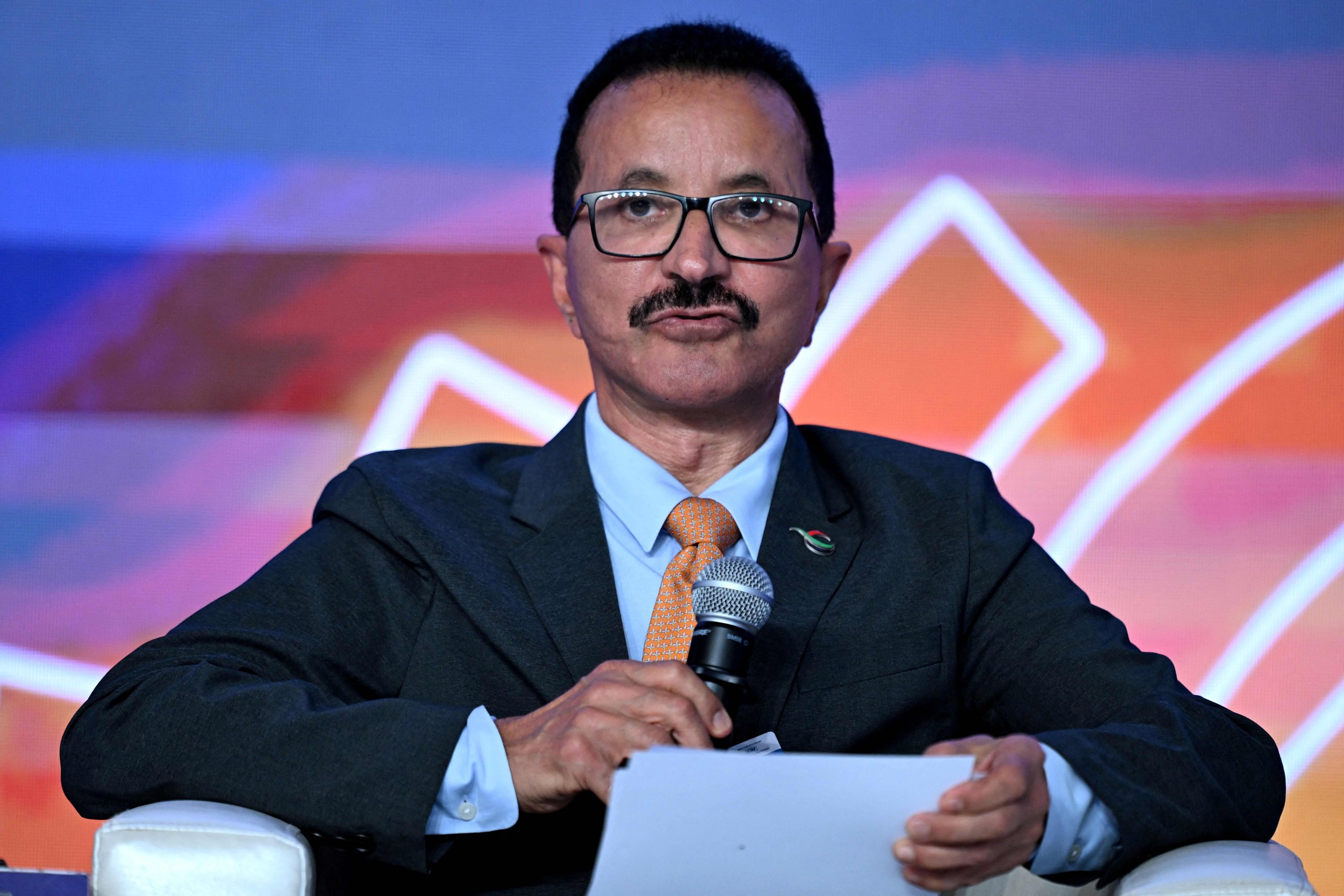
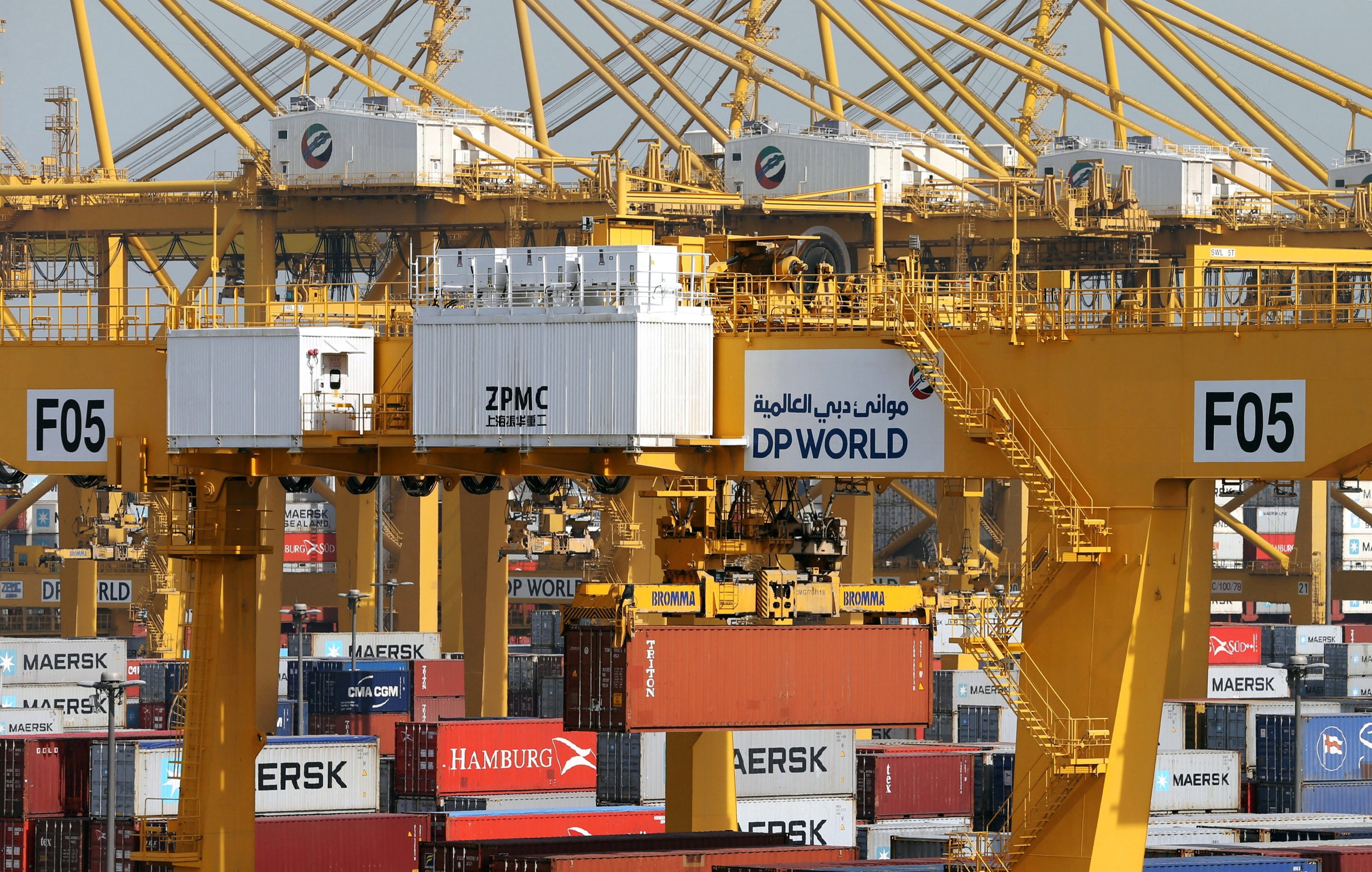
One of the world’s largest logistics companies, DP World, announced on Friday a new chairperson, replacing the outgoing head following mounting pressure over his alleged ties to Jeffrey Epstein.
The announcement by the government’s Dubai Media Office did not specifically name Sultan Ahmed bin Sulayem. However, it said that Essa Kazim was named DP World’s chairperson and Yuvraj Narayan was named group CEO.
Those were positions held by bin Sulayem, one of the Middle East’s most prominent business figures. He’s among the highest-profile executives to face scrutiny and be removed from senior roles following the recent release of the Epstein files.
DP World has long been a pillar of the economy of the Middle Eastern city. It’s a logistics giant that runs the Jebel Ali port in Dubai and operates terminals in other ports around the world.
The announcement comes a day after financial groups in Canada and the United Kingdom said they’ve paused future ventures with DP World after newly released emails showed a yearslong friendship between bin Sulayem and Epstein.
The emails – some referencing sexual massages and escorts – surfaced in the cache of Epstein-related documents recently released by the U.S. Department of Justice.
Epstein killed himself in jail in 2019 after he was charged with sex trafficking. The emails do not appear to implicate bin Sulayem in Epstein’s alleged crimes. DP World did not respond to request for comment.
Bin Sulayem previously had a larger role as chair of the Dubai World conglomerate, which at the time included the property developer Nakheel. That company was behind the creation of human-made islands in the shape of palm trees and a map of the world that helped cement Dubai’s status as an up-and-coming global city.
The state-run WAM news agency also reported that Dubai’s ruler, Sheikh Mohammed bin Rashid Al Maktoum, named a new head of the city-state’s Ports Customs and Free Zone Corporation. That also was a position held by bin Sulayem.
The topics in the emails between Epstein and bin Sulayem range widely, including President Donald Trump, sex and theology.
In one email from 2013, Epstein wrote to bin Sulayem that “you are one of my most trusted friends in very sense of the word, you have never let me down.”
In response, bin Sulayem said, “Thank you my friend I am off the sample a fresh 100% female Russian at my yacht.”
That same year, bin Sulayem sent Epstein an email showing a menu for a massage business which included sexual offerings. Two years later, bin Sulayem texted Epstein a link to a porn site, and, in 2017, Epstein sent bin Sulayem a link to an escort website.
Epstein e-mailed with bin Sulayem about Steve Bannon, the Trump acolyte, in 2018, saying “you will like him.” In another exchange, bin Sulayem asked Epstein about an event where it appeared Trump would be in attendance.
Foreign direct investment (FDI) into Türkiye increased by 12.2% year-over-year in 2025 despite a relatively stagnant global investment climate, official data showed on Friday.
The FDI inflow reached $13.1 billion (TL 572.99 billion) last year, according to data released by the Central Bank of the Republic of Türkiye (CBRT), bucking the broader trend seen in many developing economies.
Among the top sources of FDI into Türkiye in 2025, the Netherlands ranked first with $2.86 billion, followed by Luxembourg with $1.16 billion and Kazakhstan with nearly $1.14 billion.
Other major investors included Germany, the United States, France, the United Arab Emirates (UAE), Switzerland, the United Kingdom and Ireland.
On a sectoral basis, the data pointed to a concentration of investment in production, trade and technology-oriented activities.
Wholesale and retail trade attracted the largest share of last year’s FDI, driven mainly by investments in e-commerce platforms. The sector accounted for 32% of total inflows, or $3.05 billion.
Manufacturing followed closely with a 31% share, totaling just over $3 billion, while the information and communications sector ranked third with a 14% share, or $1.31 billion.
According to the U.N. Trade and Development (UNCTAD) Global Investment Trends Monitor, global FDI flows showed only a cautious recovery in 2025. While inflows to developed economies and financial centers increased, investment into developing countries declined by about 2%.
Against this backdrop, Türkiye stood out with double-digit growth, outperforming global peers.
Türkiye’s performance is attributed to reforms aimed at improving the investment climate, including the launch of projects under the HIT-30 program, updates to the incentive system, the implementation of climate legislation and steps to advance digitalization.
Ahmet Burak Dağlıoğlu, head of the Investment and Finance Office of the Presidency of Türkiye, said Türkiye’s performance reflected its structural advantages and reform agenda at a time when global investment decisions remained cautious.
“Investments by global technology brands and funding directed to technology startups stood out in 2025. Investments in manufacturing and logistics also strengthened Türkiye’s position in global supply chains,” Dağlıoğlu said in a statement.
He added that Türkiye’s production capacity, skilled workforce and strategic location continue to enhance its appeal as “a global connectivity hub” for international investors.
Türkiye and the Turkish Republic of Northern Cyprus (TRNC) will continue to advance cooperation and finalize a new economic agreement by the end of March, Vice President Cevdet Yılmaz said on Thursday.
Yılmaz’s remarks came after meeting TRNC Prime Minister Ünal Üstel in Ankara. The vice president described the talks as productive and said work is underway on a new economic and financial cooperation framework.
“Our aim is clear. We want to carry the TRNC toward a more prosperous and stronger future,” Yılmaz said.
He stressed that ties between Türkiye and the TRNC are “not ordinary relations between two countries,” adding that Türkiye, as a guarantor state, “will continue to stand by the TRNC.”
Yılmaz said the current cooperation protocol has been implemented effectively and that both sides aim to complete negotiations on a new agreement by late March.
The Mediterranean island of Cyprus was divided in 1974 after a Greek Cypriot coup aimed at Greece’s annexation. This led to Türkiye’s military intervention as a guarantor power to protect Turkish Cypriots from persecution and violence.
The TRNC was founded in 1983. The country is fully recognized only by Türkiye, which does not recognize the Greek Cypriot administration in the south.
The island has seen an on-and-off peace process in recent years, including a failed 2017 initiative in Crans-Montana, Switzerland, under the auspices of the guarantor countries.
The Greek Cypriot administration joined the European Union in 2004, the same year that the Greek side rejected a United Nations plan to resolve the dispute in a referendum.
The Turkish side strictly adheres to a two-state solution based on sovereign equality. The Greek Cypriots are seeking a federal solution.
Yılmaz said any solution must be based on “the realities of the island,” including “two states and two peoples” and sovereign equality.
“Türkiye and the TRNC will continue on their path in a spirit of cooperation,” he said. “No matter what traps are set in our region, the realities of the region will render them ineffective.”
Speaking after the meeting, the TRNC’s Üstel also addressed recent regional developments, referring to a defense protocol signed between Greece, Israel and the Greek Cypriot administration.
Üstel said the three had entered what he described as an arms race following the signing of the defense agreement and accused them of showcasing new defense acquisitions in the media.
He said the Turkish Cypriots are “not alone,” stressing that Türkiye stands by the TRNC as its motherland.
“Whatever they do, we have no doubt that when the time comes, we will respond in the same manner and with the same determination,” Üstel said.
Üstel also reiterated that there are two peoples and two states on the island and said any solution must reflect this reality.


-
 Daily Agenda3 days ago
First post from Minister Gürlek’s X account! “We will resolutely pursue a transparent, accountable and trustworthy understanding of justice.”
-
 Daily Agenda3 days ago
President Erdoğan received the DEM Party delegation! Agenda Terror-free Türkiye process
-
 Sports2 days ago
ICE to anchor security core for 2026 World Cup: Director Lyons
-
 Politics2 days ago
Erdoğan terms terror-free Türkiye a success as key report awaited
-
 Economy2 days ago
Argentina pushes for labor reform despite protests
-

 Daily Agenda2 days ago
Here is the behind the scenes of the operation against TL: Berat Albayrak’s counter moves ruined their game! What happened during that period?
-
 Politics2 days ago
Mitsotakis gets warm welcome as Ankara sees brighter side in ties
-

 Politics2 days ago
3 migrants killed after boat sinks off western Türkiye