
Economy
Investors optimistic about Latin America after US move on Maduro

U.S. President Donald Trump’s actions in Venezuela and Argentina are adding to a broader embrace of rightward policies throughout Latin America. This shift, coming during an important election year for many countries in the region, is expected to encourage foreign investment, as investors expect more business-friendly reforms to be implemented.
The U.S. removal of President Nicolas Maduro over the weekend sent Venezuela’s defaulted debt soaring, while Trump’s gamble last year to bolster Argentina’s Javier Milei – an ideological ally – with a financial backstop of up to $40 billion paid off when Milei’s party did well in crucial midterm elections.
In a different era, Trump’s interventions may have sparked more of a backlash against brazen foreign meddling. And while not everyone in Latin America has welcomed his moves, the reaction has been relatively muted at a time of a broader rightward political shift that investors say will boost the region’s financial assets as they anticipate market-friendly changes.
“What we’ve found historically in Latin America is that things tend to go in waves and trends together,” said Robert Koenigsberger, chief investment officer and managing partner at Gramercy. “It clearly seems that the current trend in Latin America is from left to right.”
That perception, he said, has made investors more comfortable adding exposure as they focus on expected fiscal consolidation and regulatory reforms across the region.
A regional shift
The willingness to add exposure reflects a view that Latin America has moved as a block in regional cycles, with political shifts often reinforcing one another rather than playing out country by country.
Recent election wins in Ecuador, Argentina and Chile have seen a shift towards right-wing parties, underpinning rallies in regional equities, currencies and bonds over the past year.
Markets have also been buoyed by a general trend toward orthodox monetary policies and fiscal discipline, even in those countries led by leftist leaders like Brazil and Mexico.
Brazil’s real and Mexico’s peso were among the best-performing emerging market currencies in 2025, while stocks in Colombia, Peru and Chile crowded the leaderboard for equity gains.
The ousting of Maduro was being taken positively by markets, said Graham Stock, an emerging markets strategist at RBC BlueBay.
“If anything, it reinforces our expectation that you’re going to see a shift to more market-friendly governments in Latin America,” he said.
Elections in view
After Latin America outperformed many emerging market peers last year, investors are watching a packed electoral calendar in 2026, which will include elections in Colombia, Peru and later in the year, Brazil.
Eileen Gavin, head of sovereign analysis at Verisk Maplecroft, said Colombia was particularly exposed to potential fallout from neighboring Venezuela as it heads to congressional elections in March and a presidential race in May.
Leftist Colombian President Gustavo Petro, who has clashed with Trump and was hit with U.S. sanctions back in October, cannot run for reelection.
“The pressure on the elections will be to tilt toward the right, and for bondholders, that’s a risk upside,” Gavin said, adding that Venezuela’s turmoil could also weigh on Peru, Panama and Cuba through changes to migration and trade.
Peru’s April 12 presidential election seems open, with at least 34 hopefuls registered to compete, and nearly half of voters without a preferred candidate, according to a poll late last year.
In Brazil, meanwhile, President Luiz Inacio Lula da Silva currently leads most polls as he seeks a fourth term in office in a vote set for October.
Whoever wins, they will need to deal with Trump, set to be in office until January 2029.
“The more the U.S. puts pressure on these countries, the more they’re likely to bend to American will, which, in the case of Latin America, means more pro-market policies,” said Marko Papic, chief strategist at BCA Research.
Investors at Citi noted that the negative response to Trump’s Venezuelan operation had been limited.
“In the short term, the action has not generated a rally around the ‘Latin American flag,’ with many voices welcoming the move,” Citi’s Donato Guarino said in a note, adding that the bank remained long on Venezuelan credit.
Resource extraction firms could benefit
Indeed, even some leftist presidents have sought to cut deals or appease Trump. Colombia’s government has emphasized in recent days that it would cooperate with Washington to fight drug trafficking.
“Leftist leaders are probably constantly looking over their shoulders,” said Brian Jacobsen, chief economic strategist at Annex Wealth Management.
As regional governments seek investment that fits U.S. strategic priorities, multinational companies involved in infrastructure development and resource extraction were likely to be among the main beneficiaries, Jacobsen said.
BCA’s Papic also predicted that natural resources-linked assets should outperform, as well as banks.
“The Latin American private sector has deleveraged, and there is potential for financial institutions to benefit as well,” he added.
Broadly constructive on Latin American assets, he warned that investor enthusiasm hinged on Washington avoiding an overly aggressive posture, however.
“It would be a mistake for the U.S. to rely purely on the heavy-handed approach,” he said, arguing that it could yet trigger a backlash rooted in sovereignty concerns. “Hopefully the (Trump) administration can find some middle ground.”
Türkiye’s inflation rate rose slightly on an annual basis to 31.5% in February, largely as expected, while the monthly figure cooled, official data showed on Tuesday.
The increase from nearly 30.7% in January marked the first uptick in the annual rate in months and tees up a tough rate decision for the central bank next week.
On a monthly basis, inflation cooled to 2.96%, compared to the higher-than-expected 4.84% increase in January, the Turkish Statistical Institute (TurkStat) said.
Beyond the price pressure, market turmoil due to war between the U.S. and Israel and neighboring Iran prompted emergency measures by the top institutions, including the central bank and the capital markets board.
These included some $8 billion in foreign exchange sales on Monday, resulting in a roughly 300 basis-point rise in the overnight rate to about 40%.
The renewed geopolitical risks, according to analysts, could prompt the Central Bank of the Republic of Türkiye (CBRT) to respond by officially halting an easing cycle that began in late 2024.
In January, the Monetary Policy Committee (MPC) trimmed the bank’s main policy interest repo rate by less-than-expected 100 basis points to 37%.
In February, monthly inflation was driven by housing and food costs, according to the TurkStat, marking the second month of pressure that has raised worries about a disinflation trend that began in 2024.
Food and drinks prices rose by 6.8% over the course of the month, and housing expenditure by 2.4%, the figures showed.
Geopolitical turmoil
Treasury and Finance Minister Mehmet Şimşek said he expected the recent high food price increases to be offset in the coming period, depending on weather conditions, while acknowledging the energy price rises triggered by the Iran conflict.
“We are working to limit the inflationary impact of rising oil prices due to geopolitical developments,” he wrote on the social media platform X, adding that all policy tools are being used in coordination to sustain the disinflation process.
Year-over-year, the price surges were particularly marked in education (55.7%), housing (42.3%) and food and non-alcoholic beverages (36.4%).
Şimşek said food prices rising significantly above their long-term averages caused a temporary spike in annual inflation.
“Core goods inflation receded to 16.6%. Meanwhile, service inflation, where rigidity is high, fell below 40%, the lowest level in the last 47 months. This outlook indicates that the downward trend in inflation continues,” the minister said.
The TurkStat data also showed the domestic producer price index rose 2.43% month-over-month in February for an annual increase of 27.56%.
The central bank has, in recent weeks, kept rate-cut expectations on track even as it has repeated it was ready to tighten policy if needed.
JPMorgan, which, like most analysts, had previously predicted another cut at the central bank’s March 12 policy meeting, said on Monday it now expects the bank to hold rates. It also revised its year-end inflation forecast to 25% from 24%.
Last month, the central bank nudged up its year end inflation forecast range by two percentage points to 15%-21% and maintained its interim 16% target.
But amid rising geopolitical tensions and higher oil prices, market participants have begun revising their year-end inflation forecasts upward, from levels around 22% a few months ago to 25% or higher.

For years, Dubai has been pitched with images of glittering skyscrapers, tax-free incomes, business-friendly policies and something far more intangible: the unspoken promise that whatever was happening elsewhere in the Middle East, this city was different. The conflicts that destabilized the region would somehow stop at Dubai’s borders.
Since Saturday, that all changed. Iran’s retaliatory strikes across the Gulf hit across Dubai’s key sectors, landing on airports, hotels and ports. They also hit the psychological foundations of a city that had spent four decades constructing that identity as one of the world’s most reliable places to do business in an unreliable neighborhood.
Authorities in the United Arab Emirates (UAE), a close U.S. ally, moved quickly to contain the damage to confidence as much as the physical fallout.
The UAE’s National Emergency, Crisis and Disasters Management Authority said the situation remained under control. For investors and residents watching their landmarks hit by missiles, as they stockpiled supplies, the reassurances were noted. Whether they were enough is another question.
“It’s hard to overstate the peril for Dubai’s economic model,” said Jim Krane, a fellow at Rice University’s Baker Institute.
“The physical damage may be slight, and most of the pain thus far is psychological. But Dubai’s status as a safe haven for expatriates and their businesses is in increasing doubt. The longer the war continues, the more intense the search will be for alternative locations. Dubai needs this war to wrap up now. International capital is highly mobile,” Krane noted.
In a sign of the ongoing strains, the UAE’s stock markets were closed on Monday and Tuesday, while tech outages following a hit to Amazon’s cloud computing facilities were affecting some banking operations, according to a person familiar with the situation.
Tens of thousands remained stranded in the UAE as airspaces remained largely closed, with the conflict also laying bare how heavily global air travel relies on a handful of hubs led by Dubai, the world’s busiest international airport.
Four decades after the Gulf’s trading capital set out to exploit its strategic location by setting up Emirates with two rented jets and two routes, Dubai stands at the center of a global network spanning 110 nations and 454,000 flights a year.
How Dubai built brand
Dubai’s transformation from a modest pearling and fishing port into a global financial center was a decadeslong project. The launch of Emirates airline in 1985, the opening of the Burj Al Arab in 1999 and laws in the early 2000s allowing foreigners to own property for the first time were the pillars of Brand Dubai.
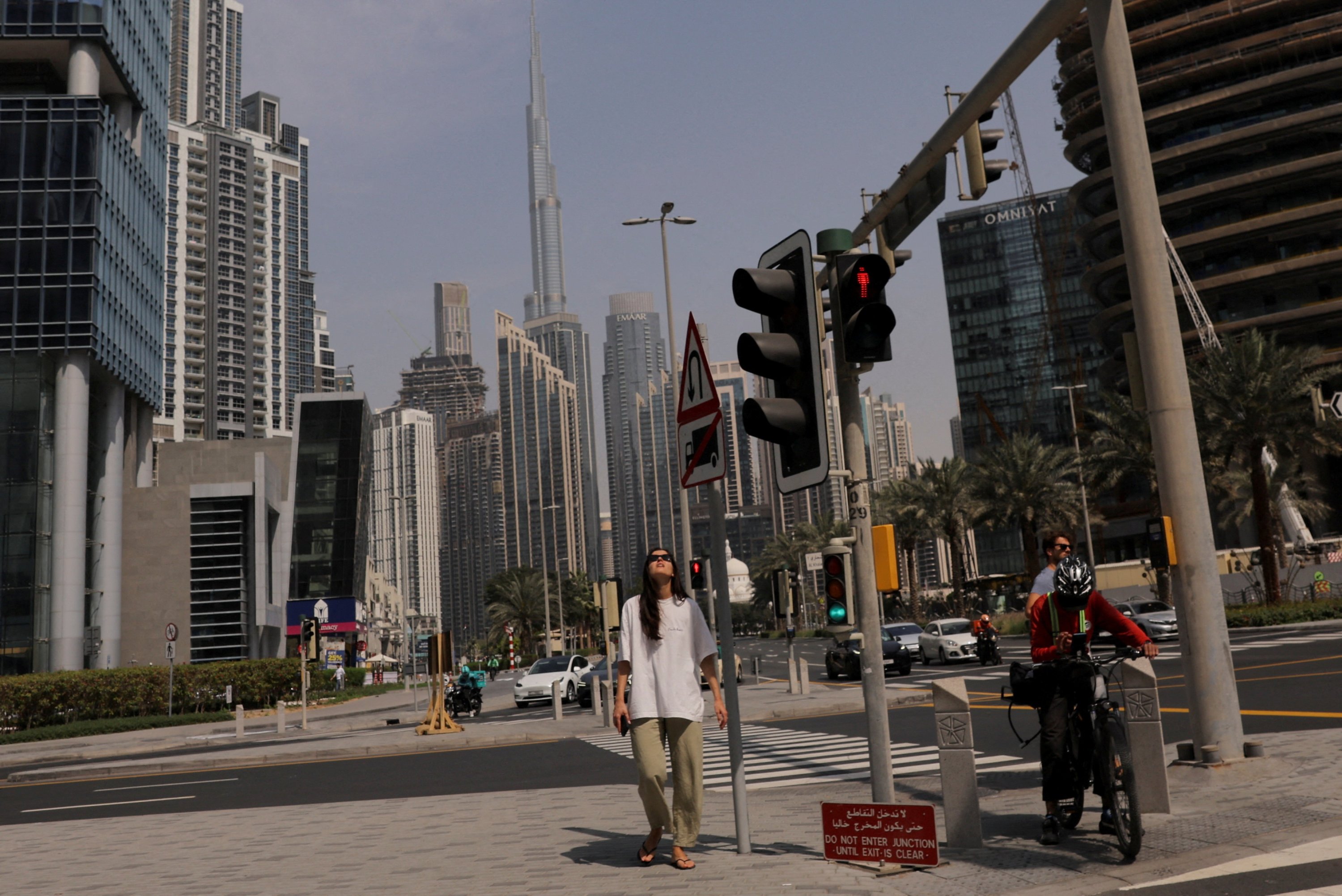
Dubai’s economy is almost fully powered by non-oil sectors, with oil now accounting for less than 2% of gross domestic product (GDP). A mix of trade, tourism, high-end real estate and financial services, built on a regulatory framework that mirrored London and New York, has replaced it.
Neighboring Abu Dhabi, which holds more than 90% of the UAE’s oil reserves, remains more reliant on oil revenue for growth.
Beirut had been the region’s international financial capital until its civil war in the 1970s shattered that image. Bahrain stepped into the vacuum until Dubai’s rise rendered it a more modest player. Each succession was built on the same promise: a stable, open alternative to wherever the region’s last crisis struck. Dubai executed that promise more completely than any of its predecessors.
Dubai’s rise was itself partly built on the instability of others. With Syrians displaced by civil conflict, wealthy families rattled by the Arab Spring, and more recently, Russians fleeing because of the Ukraine war, new residents all poured capital and talent into the emirate.
The population across the UAE ballooned, from about 1 million in 1980 to 11 million in 2024. Last year, the UAE was on track to attract a record 9,800 relocating millionaires, more than any other country on earth, according to Henley & Partners.
Money has poured into real estate, propelling Dubai’s developer Emaar Properties to a record high on Feb. 25, valuing the company at about 149 billion dirhams ($40.6 billion).
The creation of the Dubai International Financial Center (DIFC) in 2004 kickstarted a push to draw financial firms. By the end of 2025, DIFC hosted more than 290 banks, 102 hedge funds, 500 wealth management firms and 1,289 family-related entities.
What Saturday changed
But vulnerabilities have remained.
The Strait of Hormuz, through which roughly a fifth of the world’s seaborne crude oil passes, runs through Dubai’s backyard. Iran, a country with the capability to destabilize Gulf commerce, sits directly across the water.
The physical damage over the weekend was stark. Dubai International Airport was hit, a berth at Jebel Ali Port caught fire and the Burj Al Arab sustained damage from interceptor fragments. Three people were killed and 58 injured, according to the UAE Ministry of Defense.
“People are afraid of what’s happening. It’s the first time they have to hide in underground places. Dubai airport, one of the biggest in the world, has to shut down for a few days,” said Nabil Milali, multi-asset portfolio manager at Edmond de Rothschild Asset Management. He reduced the firm’s exposure to stocks globally last week to prepare for the possibility of an attack on Iran.
“There’s a 70% probability we will keep a geopolitical risk premia (on the region) for a long time.”
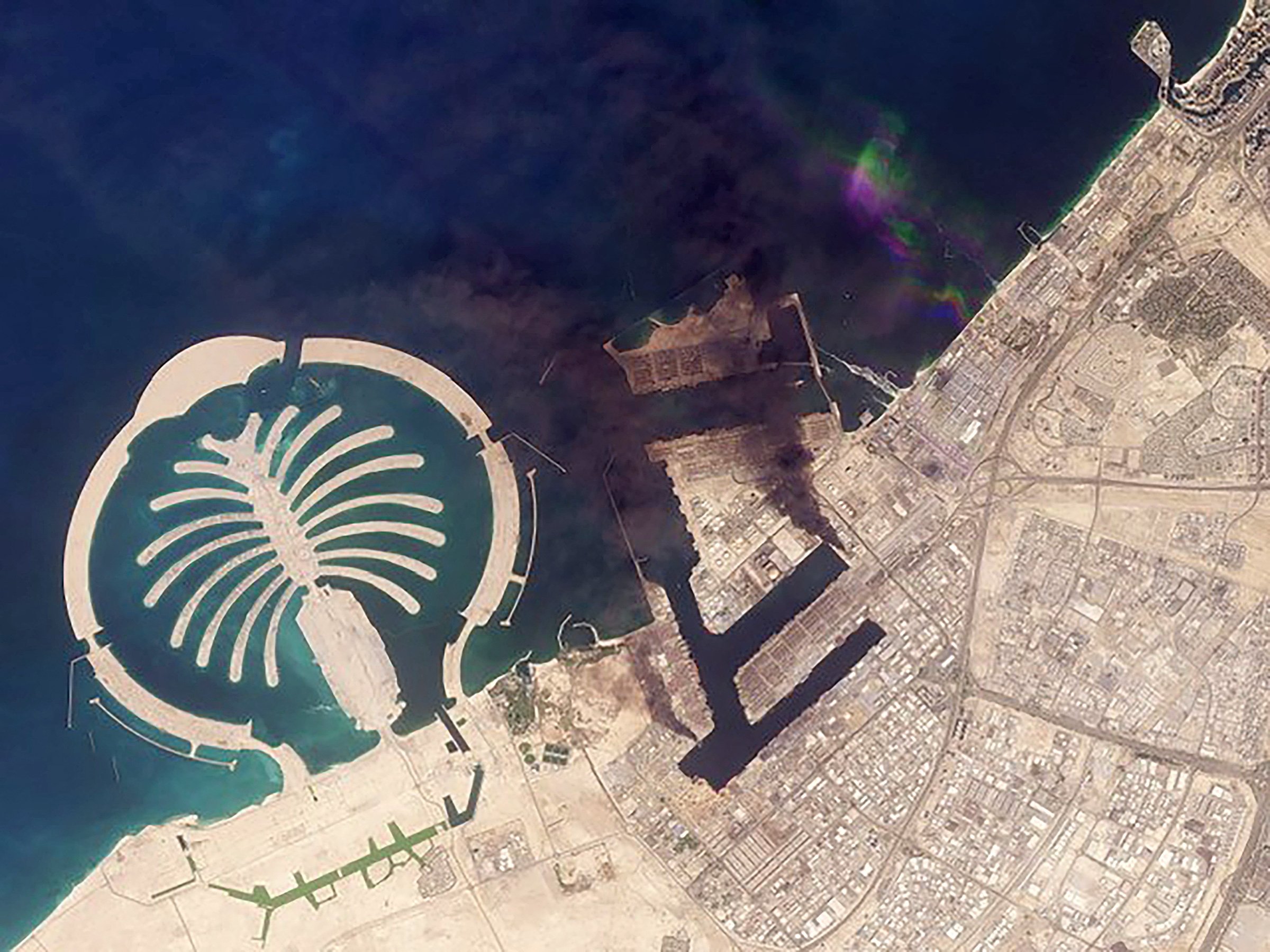
A source at a UAE-based mid-sized investment firm said their company had begun preemptively planning layoffs and halted fundraising. Demand for gold bars surged, a jewelry industry source said. International private banks, which had been expanding advisory operations in the emirate, may also reassess the scope of their presence, according to a private banker. Firms may begin to rethink serving clients locally versus from another location, the banker said.
“Historically, markets like the UAE have demonstrated resilience during crises, including COVID, supported by strong policy response and governance,” said Madhur Kakkar, founder and CEO of Elevate Financial Services.
“At this stage, a broad structural reallocation of institutional capital away from the UAE or the wider Gulf appears unlikely unless tensions escalate materially or persist for an extended period.”
There is no data yet on capital outflows. The suspension of trading on the Abu Dhabi and Dubai stock exchanges on March 2 and 3 marks an unprecedented step for UAE regulators.
“It’s really quite a big change in perceptions,” said William Jackson, chief emerging markets economist at Capital Economics. “The Gulf economies have generally been seen as safe from Iranian retaliation. I think (that) has really changed over the weekend.”
The impact will depend on how long the conflict continues, he said. “But I think this is quite a big challenge, particularly when we’re thinking about some of the diversification efforts that are underway in the region.”
Momentous task piecing network back together
Dubai now has the momentous task of handling tens of thousands of displaced passengers and piecing its network back together while trying to minimize damage to inbound flights that represent half its traffic.
Most analysts say that, barring a prolonged regional war, the Gulf hubs will recover by virtue of the momentum and the power of their networks. But the unprecedented shutdown of all three major hubs – Dubai, Abu Dhabi and Doha – coincides with growing competition from Türkiye, Saudi Arabia and India.
“That we’ve got such a well-spread geographic business model and are well spread between visitors and those in transit suggests it’s very robust and will continue to survive any geopolitical tension that exists, wherever it may be,” Dubai Airports CEO Paul Griffiths told Reuters in a recent interview.
The strikes by the U.S. and Israel and Iran’s retaliation brought such tensions to Dubai’s doorstep, including an attack on the airport itself.
“There’s no doubt at all this is temporary. They have seen major incidents before and recovered very quickly due to their importance as global hubs,” said U.K.-based travel consultant Paul Charles. “They will recover quickly, even if there is substantial uncertainty in the short term.”
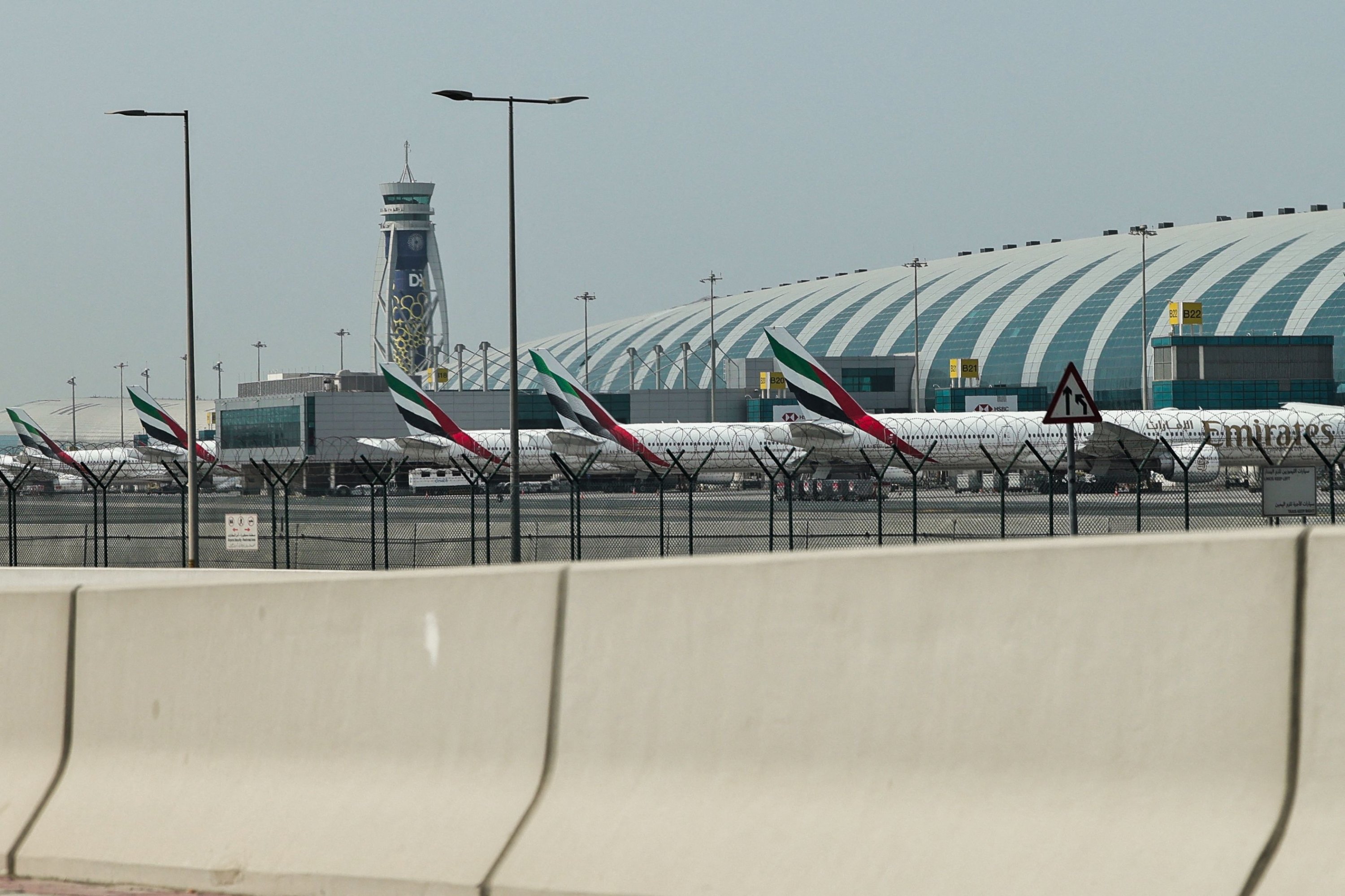
Others are less certain. The whole industry bounced back from the beating taken during the COVID-19 pandemic, thanks to demand outpacing supply. This time, however, it is demand that is at risk.
“Travelers are likely to consider more direct flights rather than stop over in Dubai or Doha. All this hub traffic is likely to take a hit,” said independent aviation adviser Bertrand Grabowski.
Favorable geography
Geography and economics remain strong allies, however.
“One third of the world’s population is within four hours’ flying time and two-thirds within eight hours,” said Dubai Airports’ Griffiths.
“We’ve seen the incredible aggregation power that a hub delivers.”
But threats to the Gulf trio are brewing. Turkish Airlines (THY) could be the biggest short-term winner through its own mega-hub outside the conflict zone, said independent aviation analyst John Strickland.
Saudi Arabia is also muscling in, followed by India, with Asian carriers picking up passengers.
Advances in aircraft design – once favorable to Gulf airlines – are also beginning to work against them. Airbus last week began assembling a second ultra-long-range A350 jet to support plans by Qantas to fly directly from Sydney to London.
Greatest uncertainty?
Emirates was founded at the height of the Iran-Iraq war in 1985. Its rapid growth led to the splintering of Gulf Air – carrier for Qatar, Bahrain, Abu Dhabi and Oman at that time – as, first, Qatar, then Abu Dhabi, set up their own airlines to form what remains a trio of Gulf hubs competing for passengers.
With Dubai’s orderly reputation shaken by Iranian attacks and anti-missile shrapnel, analysts say the greatest uncertainty of all hangs over the future of traffic to the city itself.
Questions have also been raised over the timing of the already delayed expansion of a giant new airport outside the city.
Dubai destination traffic “will doubtless recover, but there is likely to be some lasting damage,” Grabowski said.
For Emirates and sister airline flydubai, that may involve using their market power to get the system running again.
“People have short memories and they might be incentivised by some bargain deals to bring people back, but I don’t think that would need to be there for long,” said Eddy Pieniazek, head of advisory at aviation and leasing consultancy Ishka.
Türkiye’s exports rose 1.6% year-over-year in February to nearly $21.1 billion, marking the second-highest February figure on record, Trade Minister Ömer Bolat said on Tuesday.
Imports increased 6.1% to $30.3 billion, while the foreign trade deficit widened 18.1% to $9.2 billion, Bolat told a news conference to announce the preliminary trade data in Ankara.
The performance came despite global uncertainty and regional conflicts, he said.
Bolat recalled that the Turkish economy expanded 3.6% in 2025 and grew 3.4% in the final quarter, extending its uninterrupted growth streak to 22 consecutive quarters.
Türkiye’s gross domestic product (GDP) reached $1.6 trillion, while per capita income rose to $18,040, he said.
Bolat stated that exports of goods and services had reached approximately $400 billion, noting that the contribution of exports to the economy is at a critical level. “Our exports account for one-fourth of our national income; that is, 25%,” he noted.
In the first two months, exports totaled $41.4 billion, while imports rose 3.1% to $59 billion. The export-to-import coverage ratio stood at 70.2%.
The foreign trade deficit was recorded at $9.2 billion in February.
Gold, silver imports weigh on balance
Bolat noted that higher gold and silver imports played a significant role in the rise in overall imports.
In February, silver imports reached $1 billion due to the increase in price. “Silver imports, which did not exist last year, totaled $1.7 billion in the January-February period,” said the minister.
The data also showed unprocessed gold imports reached $2.2 billion. Energy imports decreased by 16.6%, falling to $5.1 billion, said Bolat.
“In the first two months, the increase seen in imports was driven by gold and silver,” he added.
The data also showed exports of processed gold jewelry and petroleum oils decreased by about $1 billion in February.
Services exports seen at record level
On the services side, Bolat said February exports were expected to come in at around $7 billion.
On a rolling annual basis, services exports are projected to have reached $123.2 billion, surpassing last year’s $122 billion and setting a new record.
Bolat also said the current account deficit-to-GDP ratio remained at 1.6%, describing it as a reasonable level below historical averages.
Türkiye pushes to be treated as ‘intra-EU’
Meanwhile, Türkiye is holding intensive talks with European Union officials to be recognized as an “intra-EU” country under a new industrial support framework being drafted by the European Commission, Bolat said.
The Commission is working on a draft “Industry Accelerator” law that would prioritize products manufactured within the European Union in public procurement tenders in certain strategic sectors. However, disagreements remain over which countries would qualify as “intra-EU” under the proposed rules.
Türkiye, which has been part of a customs union with the EU for nearly 30 years, is seeking inclusion in the intra-EU definition. Industries such as automotive, which have established supply chains centered on Türkiye, are also lobbying for both Türkiye and the United Kingdom to be covered by the designation.
Intensive contacts
Bolat said Ankara is continuing its efforts at both the European Commission and member state levels.
“We continue our work with EU officials and member states,” he said, stressing intensive contacts with Commission officials and ministers of member states to ensure Türkiye “is not left outside.”
Bolat added that compared with the initial draft, the current version under discussion contains changes in Türkiye’s favor, partly reflecting the country’s investment ties with Europe.
“There has been a positive change compared to the first draft prepared on this issue. However, no final decision has yet been taken. We will continue our intensive efforts with the EU,” he said.
Türkiye and Canada are entering a “new chapter” in bilateral relations, Energy and Natural Resources Minister Alparslan Bayraktar said on Tuesday, citing shifting geopolitical dynamics and the growing need for new partnerships.
“We are in a period when geopolitical developments around the world, particularly in North America and elsewhere, require more intensive cooperation and new alliances,” Bayraktar told an event in Toronto.
He said a major trade war is underway globally, making relations between Türkiye and Canada more meaningful. “That is why Türkiye-Canada relations now carry greater significance. Canada, too, must look to new partnerships,” he added.
Cooperation with Canada is important for Türkiye’s goal of achieving greater energy independence, Bayraktar said.
“We are striving to make Türkiye independent in energy. Cooperation with Canada is of importance. This is one of the countries that makes the most of its underground resources,” he said.
Focus on energy, mining, defense
As part of his contacts in Toronto, Bayraktar underlined Ankara’s desire to elevate ties with Canada, particularly in energy, mining and the defense industry.
“We attach utmost importance to Türkiye-Canada relations and want to take them to the next level. There are many areas where we can work together, especially in energy, mining and defense,” he said.
Bayraktar noted that nuclear energy is a key priority for Türkiye and one of the main agenda items of his visit.
“We want to include nuclear energy in our energy mix. Nuclear energy constitutes one of the core topics of this visit,” he said.
Highlighting Canada’s strength in mining, he added that several Canadian companies are currently investing in Türkiye and expressed hope for increased cooperation between Turkish and Canadian firms.
Regional uncertainties
Bayraktar also described Iran as an important neighbor and energy supplier for Türkiye, while noting uncertainty over regional developments.
The U.S. and Israeli air war against Iran has widened since Israel’s first attacks on Saturday, with Israel attacking Lebanon and Iran responding with strikes against energy infrastructure in Gulf countries and tankers in the Strait of Hormuz, through which a fifth of the world’s oil and liquefied natural gas typically passes.
“It is difficult to predict where the process will evolve. Our hope is that it will settle into a balance and stabilize in a short time,” Bayraktar said.
“We live in a world where nothing surprises us anymore. Therefore, Türkiye needs to be much stronger in every respect. We must be strong economically, in defense, militarily and politically.”
Asian stocks slumped on Tuesday and European stock markets also dived on opening, while energy prices spiked, as the U.S.-Israeli war on Iran and its retaliatory attacks drove volatility across global financial markets and roiled companies worldwide.
A selloff in stocks deepened and the dollar strengthened as the widening conflict in the Middle East fuelled concerns about energy prices and their impact on the global economy.
Shares in South Korea sank 7.2% as markets reopened after a holiday on Monday, to 5,791.91.
Japan’s benchmark Nikkei 225 sank 3.1% to finish at 56,279.05. Like other resource-poor countries in the region, Japan could be especially hit by the lack of access to the Strait of Hormuz, since much of its oil and natural gas is shipped through there.
In the rest of the region, Australia’s S&P/ASX 200 lost 1.3% to 9,077.30, while Hong Kong’s Hang Seng shed 1.2% to 25,737.86 and the Shanghai Composite index lost 1.4% to 4,122.68.
Stocks of airlines, including American Airlines, United and Delta, were some of Monday’s biggest losers on Wall Street. Higher oil prices threaten their already big fuel bills, while the fighting in the Middle East has also closed airports and left travelers stranded.
The losses cascaded in Asia, with ANA stock down 3.3%, while Japan Airlines fell 6.4%, Korean Air declined 10.3% and Qantas Airways lost 1.8%.
Europe’s benchmark STOXX 600 index also fell 2.7% in early trading on Tuesday – on track for its biggest daily decline since April – following a 1.7% drop on Monday.
Meanwhile, oil prices soared close to 5% and European natural gas prices rocketed for a second day running as the war disrupted Middle East exports.
U.S. S&P 500 e-mini futures were down 1.6%, suggesting the selloff may engulf Wall Street later following a volatile session on Monday that saw the S&P 500 rally from an early decline to close flat and the Nasdaq Composite climb 0.4%.
On Monday, U.S. President Donald Trump sought to justify a broad, open-ended war on Iran, saying the campaign was ahead of expectations. Front and center on traders’ minds is a dramatic surge in oil and natural gas.
Gas price concerns
“For Western Europe, the most notable development is another surge in natural gas prices… which is bringing back quite a lot of fears of potentially a repeat of what we saw in 2022, when Russia invaded Ukraine,” said George Moran, European macro strategist at RBC Capital Markets.
“It feels like the market is interpreting this as much more of an inflationary shock than a growth shock. Of course, it could still have a growth impact,” he said. In natural gas markets, benchmark European LNG prices leapt by 25%, having jumped 39% on Monday, while U.S. natural gas futures were up nearly 6%.
Qatar halted its production of liquefied natural gas (LNG) on Monday, prompting precautionary shutdowns of oil and gas facilities across the Middle East.
Qatari LNG production makes up about 20% of global supply. An official from Iran’s Revolutionary Guards said on Monday that the Strait of Hormuz was closed to marine traffic and the country would fire on any ship trying to pass.
Brent crude futures tacked on another 4.2% to $80.96 on Tuesday morning, up more than 11% on the week. A basket of European oil and gas stocks has risen 1.2% this week.
Risk scenarios
Investors are grappling with the uncertainty over how long the conflict might last, with no end to hostilities in sight.
The U.S. embassy in Riyadh was hit by two drones, resulting in a limited fire and some material damage, the kingdom’s defense ministry said in a post on X on Tuesday.
“Events like that are adding to fears about a more protracted conflict,” wrote Deutsche Bank research analysts in a morning note.
They added that there are signs investors are still pricing the conflict as temporary rather than protracted.
“In particular, it has mainly been the front end of energy curves that have seen sharp spikes, while longer-dated contracts have moved much less,” they wrote.
On Tuesday, Israel’s Prime Minister Benjamin Netanyahu said he expected the war against Iran was “not going to take years.”
The surge in energy prices complicates the Federal Reserve’s (Fed) efforts to keep inflation under control, with policymakers already showing signs of division around the impact of artificial intelligence on the U.S. economy. The U.S. will take action to mitigate rising energy prices due to the spike in the price of oil, Secretary of State Rubio said on Monday.
ISM manufacturing data released on Monday showed U.S. activity grew steadily in February, but a gauge of factory gate prices raced to a near 3-1/2-year high amid tariffs, highlighting upside pressure on inflation even before the attacks on Iran.
Fed funds futures are pricing an implied 95.4% probability that the U.S. central bank will hold rates at the end of its two-day meeting on March 18, according to the CME Group’s FedWatch tool.
The odds of a June hold, previously below 50%, edged up on Monday and are now slightly better than a coin toss.
The dollar index, which measures the performance of the U.S. currency against six others, held close to a six-week high at 99.07 as investors shunned those currencies they perceive to be most vulnerable to higher energy prices.
The yield on the U.S. 10-year Treasury note was up nearly 5 basis points at 4.1%.
With the dollar holding strong, gold was down 1.2% at $5,266 an ounce. Bitcoin fell 3.6% to $66,925.7
Türkiye’s annual inflation rate rose slightly in February to 31.5%, up from 30.7% in January after several consecutive months of falling, official figures showed on Tuesday.
Monthly, consumer prices advanced 2.96%, compared with 4.8% in January, driven by housing and food costs, the data from the Turkish Statistical Institute (TurkStat) revealed.
Food prices rose by 6.8% over the course of the month, and housing expenditure by 2.4%, the figures showed.
Year-over-year, the price surges were particularly marked in education (55.7%), housing (42.3%) and food and non-alcoholic beverages (36.4%).
Annual inflation rose above 75% in May 2024 before beginning to slow amid the tightening efforts of Turkish policymakers.
The central bank in January cut its one-week repo rate by less-than-expected 100 basis points to 37%.

‘Iran’ warning from Minister Fidan: War is spreading throughout the region

War alert in the Middle East! Concern about internal conflict in Iran

Minister Gürlek gave the good news: “We will bring lawyer responsibility in the land registry for transactions exceeding a certain amount.
‘Iran’ warning from Minister Fidan: War is spreading throughout the region
War alert in the Middle East! Concern about internal conflict in Iran
Minister Gürlek gave the good news: “We will bring lawyer responsibility in the land registry for transactions exceeding a certain amount.
-

 Politics2 days ago
Laws of terror-free Türkiye set to reintegrate PKK members
-

 Daily Agenda2 days ago
BREAKING NEWS: New development in the imaging of Incirlik base! ANKA News Editor-in-Chief Kenan Şener is in custody
-

 Politics2 days ago
Turkish FM holds talks with Iran’s Aragchi as war unfolds
-

 Politics2 days ago
Türkiye calls on US, Israel, Iran to cease attacks ‘immediately’
-

 Politics2 days ago
President Erdoğan discusses US-Iran war with Saudi crown prince
-

 Daily Agenda2 days ago
Minister of Internal Affairs Mustafa Çiftçi: “The rising threats in our region show us a truth once again”
-

 Daily Agenda2 days ago
Minister Göktaş: “A strong future is possible with young people who do not break away from their values”
-
 Daily Agenda3 days ago
Tanju Özcan is in custody: He demanded extortion under the guise of a scholarship