
Economy
Investors optimistic about Latin America after US move on Maduro

U.S. President Donald Trump’s actions in Venezuela and Argentina are adding to a broader embrace of rightward policies throughout Latin America. This shift, coming during an important election year for many countries in the region, is expected to encourage foreign investment, as investors expect more business-friendly reforms to be implemented.
The U.S. removal of President Nicolas Maduro over the weekend sent Venezuela’s defaulted debt soaring, while Trump’s gamble last year to bolster Argentina’s Javier Milei – an ideological ally – with a financial backstop of up to $40 billion paid off when Milei’s party did well in crucial midterm elections.
In a different era, Trump’s interventions may have sparked more of a backlash against brazen foreign meddling. And while not everyone in Latin America has welcomed his moves, the reaction has been relatively muted at a time of a broader rightward political shift that investors say will boost the region’s financial assets as they anticipate market-friendly changes.
“What we’ve found historically in Latin America is that things tend to go in waves and trends together,” said Robert Koenigsberger, chief investment officer and managing partner at Gramercy. “It clearly seems that the current trend in Latin America is from left to right.”
That perception, he said, has made investors more comfortable adding exposure as they focus on expected fiscal consolidation and regulatory reforms across the region.
A regional shift
The willingness to add exposure reflects a view that Latin America has moved as a block in regional cycles, with political shifts often reinforcing one another rather than playing out country by country.
Recent election wins in Ecuador, Argentina and Chile have seen a shift towards right-wing parties, underpinning rallies in regional equities, currencies and bonds over the past year.
Markets have also been buoyed by a general trend toward orthodox monetary policies and fiscal discipline, even in those countries led by leftist leaders like Brazil and Mexico.
Brazil’s real and Mexico’s peso were among the best-performing emerging market currencies in 2025, while stocks in Colombia, Peru and Chile crowded the leaderboard for equity gains.
The ousting of Maduro was being taken positively by markets, said Graham Stock, an emerging markets strategist at RBC BlueBay.
“If anything, it reinforces our expectation that you’re going to see a shift to more market-friendly governments in Latin America,” he said.
Elections in view
After Latin America outperformed many emerging market peers last year, investors are watching a packed electoral calendar in 2026, which will include elections in Colombia, Peru and later in the year, Brazil.
Eileen Gavin, head of sovereign analysis at Verisk Maplecroft, said Colombia was particularly exposed to potential fallout from neighboring Venezuela as it heads to congressional elections in March and a presidential race in May.
Leftist Colombian President Gustavo Petro, who has clashed with Trump and was hit with U.S. sanctions back in October, cannot run for reelection.
“The pressure on the elections will be to tilt toward the right, and for bondholders, that’s a risk upside,” Gavin said, adding that Venezuela’s turmoil could also weigh on Peru, Panama and Cuba through changes to migration and trade.
Peru’s April 12 presidential election seems open, with at least 34 hopefuls registered to compete, and nearly half of voters without a preferred candidate, according to a poll late last year.
In Brazil, meanwhile, President Luiz Inacio Lula da Silva currently leads most polls as he seeks a fourth term in office in a vote set for October.
Whoever wins, they will need to deal with Trump, set to be in office until January 2029.
“The more the U.S. puts pressure on these countries, the more they’re likely to bend to American will, which, in the case of Latin America, means more pro-market policies,” said Marko Papic, chief strategist at BCA Research.
Investors at Citi noted that the negative response to Trump’s Venezuelan operation had been limited.
“In the short term, the action has not generated a rally around the ‘Latin American flag,’ with many voices welcoming the move,” Citi’s Donato Guarino said in a note, adding that the bank remained long on Venezuelan credit.
Resource extraction firms could benefit
Indeed, even some leftist presidents have sought to cut deals or appease Trump. Colombia’s government has emphasized in recent days that it would cooperate with Washington to fight drug trafficking.
“Leftist leaders are probably constantly looking over their shoulders,” said Brian Jacobsen, chief economic strategist at Annex Wealth Management.
As regional governments seek investment that fits U.S. strategic priorities, multinational companies involved in infrastructure development and resource extraction were likely to be among the main beneficiaries, Jacobsen said.
BCA’s Papic also predicted that natural resources-linked assets should outperform, as well as banks.
“The Latin American private sector has deleveraged, and there is potential for financial institutions to benefit as well,” he added.
Broadly constructive on Latin American assets, he warned that investor enthusiasm hinged on Washington avoiding an overly aggressive posture, however.
“It would be a mistake for the U.S. to rely purely on the heavy-handed approach,” he said, arguing that it could yet trigger a backlash rooted in sovereignty concerns. “Hopefully the (Trump) administration can find some middle ground.”
Turkish contractors have undertaken 12,900 projects worth $570 billion across 139 countries, Trade Minister Ömer Bolat said Friday, inviting European companies to expand their partnerships with Turkish firms.
Speaking at the European International Contractors (EIC) General Assembly in Istanbul, Bolat said the portfolio included completed and ongoing projects, with $520 billion of the total achieved over the past 23 years.
The sector began its overseas operations in Libya in 1972. Bolat said the Turkish companies have since completed more than 3,100 international technical consultancy projects worth $3.5 billion.
Forty-nine Turkish companies featured in Engineering News-Record’s 2025 ranking of the world’s top 250 international contractors, placing Türkiye second behind China, which had 71 firms.
Europe accounted for 40% of overseas contracts secured by Turkish contractors in 2025, Bolat said, citing projects in Spain, Portugal, the Netherlands, Poland and Romania.
He said the growing need to renew social housing, infrastructure, transport networks and buildings across Europe offered significant opportunities for cooperation.
“As Turkish contracting companies, we are ready to work with you and enter into partnerships,” Bolat said.
He also invited European businesses to invest in Türkiye, saying the country hosted 89,000 foreign-invested companies, 63% of them European.
“If you are not in Türkiye, you are not too late. We invite you to Türkiye,” he said.
Bolat said Türkiye has invested more than $300 billion in infrastructure over the past 23 years, expanding its ports, airports, roads, railways and logistics networks.
Amid regional wars, protectionism and supply chain disruptions, resilience has become as important as efficiency, he said.
Türkiye aims to become a center for production, trade, logistics, investment and connectivity, Bolat added.

Turkish prosecutors have identified 214 individuals and companies they say made a combined TL 187.65 billion ($3.8 billion) from three of the investment funds at the center of the country’s fund turmoil, according to a report Friday.
Authorities are now seeking to recover what they describe as unjust gains and return money to affected investors, the Sabah newspaper said.
Justice Minister Akın Gürlek told Sabah that the Istanbul Chief Public Prosecutor’s Office had passed the names to the Savings Deposit Insurance Fund (TMSF).
The TMSF has started notifying those on the list formally that the money must be returned. The recovered funds will be collected in accounts set up for investors who suffered losses.
Who made gains
According to the investigation file, the list includes 141 individuals and 73 companies. The individuals are reported to have each made more than TL 100 million, for a total of about 100.68 billion. The companies made almost TL 86.98 billion in total.
The gains came from funds managed by Tera, Pusula and Hedef Portföy, three of the seven management companies whose funds are being liquidated.
Tera funds generated approximately TL 28 billion in gains for 102 individuals and TL 62.1 billion for 38 companies, the report said.
Pusula funds yielded around TL 69.7 billion for 19 individuals and approximately TL 10 billion for 20 companies. Hedef Portföy funds generated nearly TL 3 billion for 20 individuals and TL 14.9 billion for 15 companies.
Focus on mid-September withdrawals
Authorities launched a sweeping investigation and market intervention last month after suspected price manipulation in a number of thinly traded stocks triggered heavy losses and redemption pressures at investment funds.
The Capital Markets Board (SPK) halted trading in more than 130 funds on Sept. 17. Nearly half a million investors have been affected.
Gürlek said investigators were looking especially closely at people who sold fund holdings and withdrew their money on Sept. 13, 14, 15 and 16.
Prosecutors’ examination found that these people withdrew in advance, acting on information given to them. Gürlek said the investigation was being widened in light of these findings.
Payments underway
Separately, Treasury and Finance Minister Mehmet Şimşek said on Thursday that 17 funds open to trading on the TEFAS electronic fund platform had been liquidated and that the money owed to about 43,000 fund investors had been deposited in the relevant banks.
Şimşek said comprehensive regulations were being introduced to prevent a repeat, and that further measures would be taken beyond the existing rules.
Meanwhile, the ruling Justice and Development Party (AK Party) was due Friday to submit draft legislation governing the liquidation of the funds.
The proposed temporary law aims to establish a legal framework for the liquidations, prioritize the protection of small investors and set rules for payments.
Under the proposal, authorities would adjust amounts invested in and withdrawn from the funds for inflation, with interim payments of up to TL 1 million per investor targeted for October.
The bill would also include provisions for recovering losses from those held responsible and establish a legal basis for extraordinary liquidation proceedings.
Real estate is among the assets that could be sold to raise funds for investor payments, with the legislation setting out how such assets would be liquidated and the proceeds distributed.
Türkiye and the European Space Agency (ESA) are reportedly holding talks to renew cooperation and develop joint orbital programs, an expert said Friday.
Gülin Dede, partnerships director at the nonprofit Space Renaissance International (SRI), said she had heard that discussions were underway and expressed optimism that they would lead to positive results and revive previous cooperation agreements between Ankara and the agency.
Dede, Türkiye’s first female analog astronaut who previously worked at ESA’s technology development center in the Netherlands, said European space officials were showing growing interest in expanding cooperation with Türkiye.
She also welcomed Türkiye’s signing of the Artemis Accords, an international framework for cooperation in civil space exploration.
Dede was speaking on the sidelines of the International Astronautical Congress (IAC) in the southern Antalya province, which she said helped raise Türkiye’s profile within the global space community.
“That this event is being held in Türkiye sends a wonderful message to the global space community and ecosystem, evident from the academic contribution of the delegates and their satisfaction with the expo, the evaluation of Turkish firms’ exhibits and presentations from other countries,” she said.
“I’m here myself as a committee member, and our work is progressing successfully,” she added.
Dede said ESA had “always sought cooperation with Türkiye” and stressed the importance of maintaining the momentum generated by the congress through sustained investment in the country’s space capabilities.
She also said greater participation by Turkish astronauts in international missions and activities could help strengthen Türkiye’s position as a partner in future space projects.
Dede urged Ankara to take a more active role in the European Organization for the Exploitation of Meteorological Satellites (EUMETSAT) and deepen its engagement with the U.N. Committee on the Peaceful Uses of Outer Space (COPUOS).
Türkiye opened the Çerkezköy-Kapıkule section of its Halkalı-Kapıkule railway on Friday, extending the national high-speed network to the Bulgarian border.
The new section is 153 kilometres (95.07 miles) long. It starts at Çerkezköy, a town in Tekirdağ province in southeastern Thrace, west of Istanbul inside Europe. It ends at Kapıkule, Türkiye’s main rail and road border crossing with Bulgaria, near the city of Edirne in the country’s far northwest.
“With the launch of our project, a new era will begin, and we will see its effects across a wide range of areas,” President Recep Tayyip Erdoğan told the opening ceremony in Kırklareli province in northeastern Thrace. EU Enlargement Commissioner Marta Kos was also present.
Erdoğan said it would eventually serve as a boost to production, exports, employment, trade and tourism. “Our project will make a significant contribution to the Turkish economy,” he noted.
The new section is the longest part of the 229-kilometer Halkalı-Kapıkule project, which begins at Halkalı on Istanbul’s western edge. With the opening, Tekirdağ, Kırklareli and Edirne join the high-speed network.
Tekirdağ lies on the Sea of Marmara coast, Kırklareli in the northeast of Thrace along the Bulgarian border, and Edirne in the northwest corner where Türkiye meets both Bulgaria and Greece.
The line will connect not only continents but also Türkiye and the European Union, Transport and Infrastructure Minister Abdulkadir Uraloğlu said.
“We will continue to work together to further advance our cooperation with the European Union on this project,” Uraloğlu added.
Greater capacity, faster journeys
The new line raises the number of Turkish provinces reached by high-speed rail to 14.
Erdoğan said the line will cut travel times sharply.
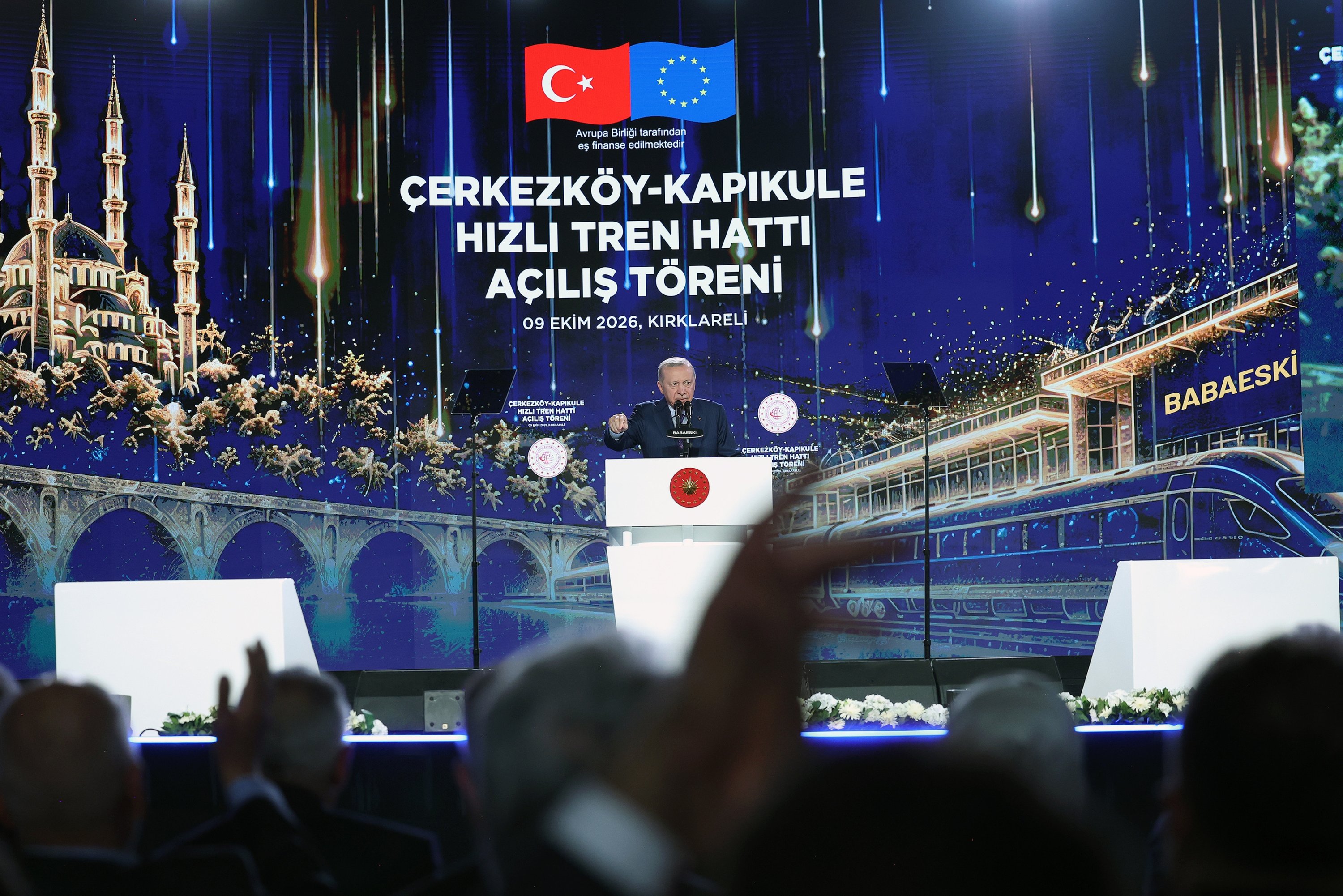
Passenger journeys between Halkalı and Kapıkule will fall from four hours to 1.5 hours, while freight transit will drop from 8.5 hours to 3.5.
Annual passenger capacity is expected to rise from 600,000 to about 3 million, and annual freight capacity from 1.5 million to 9.5 million tons, according to officials.
“This means that transportation will become faster, logistics will improve, and travel times will be reduced,” said Erdoğan.
The project also covers new station buildings at Babaeski, Lüleburgaz and Büyükkarıştıran, and the reconstruction of the Kapıkule and Edirne stations. Babaeski and Lüleburgaz are towns in Kırklareli province, and Büyükkarıştıran is a settlement in Lüleburgaz district, also in Kırklareli.
European link
Transport and Infrastructure Minister Abdulkadir Uraloğlu described the line as one of the most critical structures linking the Middle Corridor to Europe.
The Middle Corridor is the trade route connecting Asia and Europe through Central Asia, the Caucasus and Türkiye. Kapıkule, on the Bulgarian frontier, is where this line meets the European rail network. The project is designed for 200 kph passenger services and is part of the Trans-European Transport Networks.
The EU contributed to the financing. The 153-kilometer section was co-financed by the EU and Türkiye, while the remaining 76 kilometers of the Halkalı-Kapıkule route was built by the Transport and Infrastructure Ministry.
Uraloğlu acknowledged the EU’s role, saying the project was partly financed with EU pre-accession (IPA) funds.
Uraloğlu also placed the project within Türkiye’s wider rail expansion, saying the country has grown its rail network from 10,948 to 14,272 kilometers and built 2,604 kilometers of high-speed track from scratch.
Erdoğan said transportation investments have been at the top of the list of areas where he says they have propelled Türkiye forward over the past 24 years.
“During our time in office, the present-day value of our transportation investments has risen to $354 billion. Railways account for $80 billion of this total,” he noted.
Ukraine struck and partly disabled a data center operated by Russian technology company Yandex on Friday, a day after it hit a similar but more significant facility, widening the scope of its attacks against Russia after Moscow targeted data hubs inside Ukraine.
Yandex, which is heavily involved in Russia’s AI development and is sometimes called “Russia’s Google,” said its data center in the Kaluga region southwest of Moscow had been struck by Ukrainian drones and partly put out of action.
A day earlier, a Ukrainian attack shut down Yandex’s major data hub in Sasovo in the Ryazan region, where two of the three supercomputers used to develop the company’s AI model are housed. Yandex has said it is assessing the damage from that strike and cannot confirm whether the equipment can be restored.
Locked in an escalating and deadly war of attrition after more than four years of fighting, both Russia and Ukraine have expanded drone attacks this year on infrastructure targets, from energy facilities and refineries to ports and vessels carrying oil and grain, e-commerce warehouses and, most recently, data centers.
Yandex, whose apps have become an indispensable part of many Russians’ lives, said the attacks had struck at the core of its operations and that it was trying to keep its services going.
“Data centers are the iron heart of Yandex. Their operation is critical for services that have become part of people’s everyday lives. Millions of users check traffic and plan routes, listen to music, watch movies, order groceries and get answers to their questions,” it said in a statement.
“Our technology helps hundreds of thousands of companies run their businesses. They use it to take orders, serve customers and work with partners,” it said.
Yandex shares were the biggest faller on the Moscow exchange, down 3.75%.
“The risks involve not only the potential temporary unavailability of Yandex services and lost revenue in specific segments but also the company’s extensive base of B2B clients,” said Maryana Lazaricheva, head of equity research at T-Investments.
She said the company could redistribute some of the load to its other data centers. “However, if the chain of attacks continues, this possibility vanishes, which could lead to even more severe consequences.”
The full scale of the disruption caused by the attacks was not immediately clear, although messages appeared on at least one Yandex app warning of potential problems in its operation.
Yandex said it was working around the clock to try to restore services that had been disrupted.
“Right now this is our most important task, but unfortunately it is not an easy one,” it said in the same statement.
Tit-for-tat strikes
Russia has struck Ukrainian data centers and telecommunications infrastructure over the past month, including targets in central Kyiv.
“We always respond in mirror-like fashion,” Ukrainian President Volodymyr Zelenskyy said on Thursday. “You all know, they have been hitting and continue to hit our data centers. We are responding. I can’t share all the details.”
Ukraine has previously targeted the warehouses of specific companies inside Russia which it deems central to Russia’s economy, including e-commerce giants Wildberries and Ozon, which then prompted Russia to strike their Ukrainian equivalents.
Yandex operates five data centers, two of which have already been hit. Two of the other three are in the Moscow region, and another is in the Vladimir region, according to publicly available information.
Yandex said in 2021 that the Sasovo data hub, which was struck on Thursday, hosted two of its three supercomputers built around Nvidia A100 chips, which it uses to train its YandexGPT large AI model. Yandex has declined to say whether the supercomputers were affected by the attack.
Multiple online services in Russia reported technical issues on Thursday, including real estate aggregator Cian, a book portal called Litmarket, and the websites of Russian Railways and professional football club Spartak Moscow.
Previous Ukrainian attacks on Russia have led to fuel shortages and queues at petrol stations, losses for tens of thousands of small businesses involved in e-commerce, and higher inflation as rising fuel costs feed through to consumer prices.
Russian attacks on Ukrainian data centers have forced some of them to suspend operations after sustaining damage, while 100,000 households suffered temporary internet outages after one attack.
Ukraine’s digital minister told Reuters last month that the country was moving digital infrastructure underground in response to Russian attacks.
Turkish solar technology manufacturer Kalyon PV said Thursday it plans to establish a new production facility in the United States as part of its global expansion strategy, targeting direct sales to the U.S. market and seeking to benefit from incentives supporting domestic manufacturing.
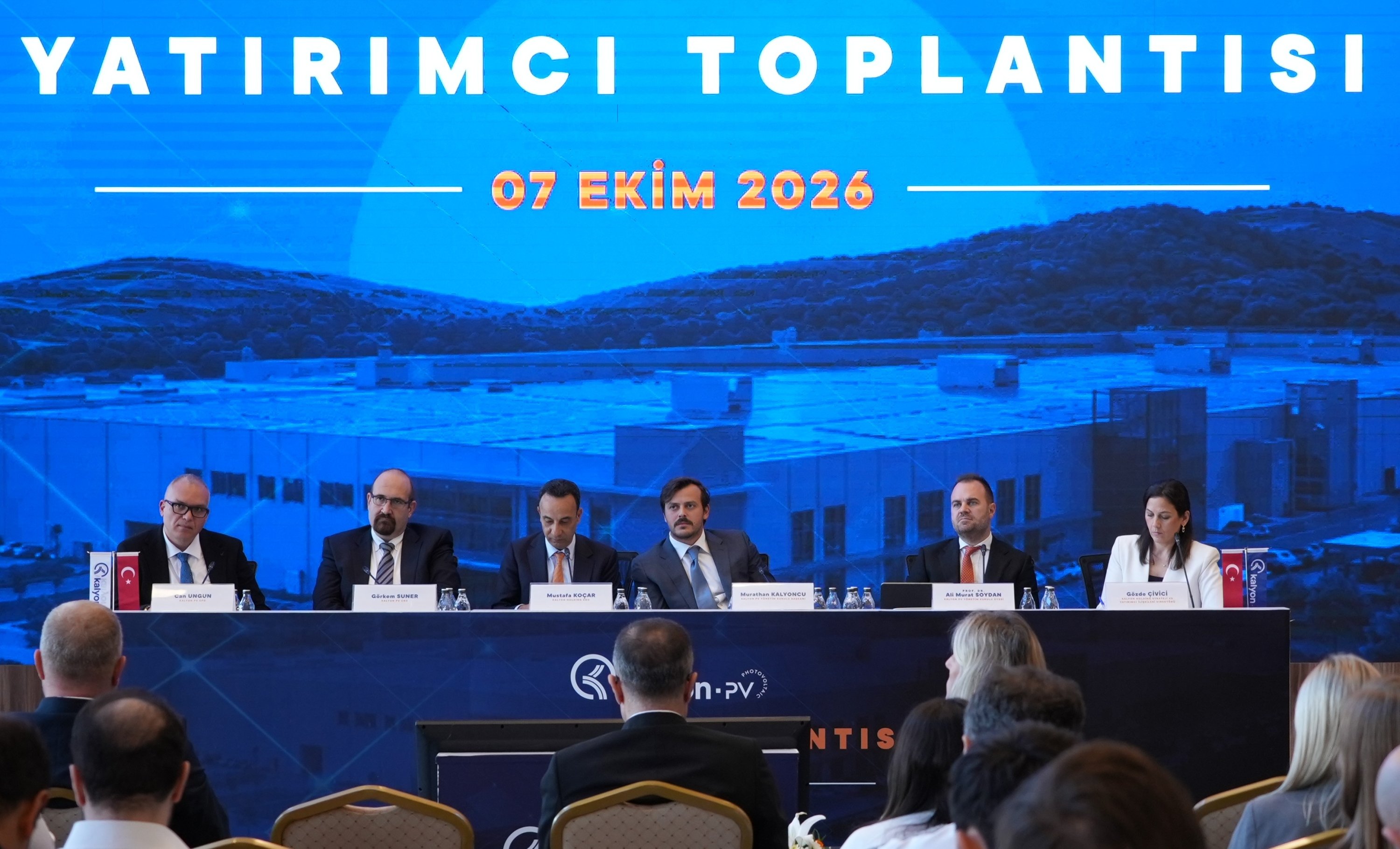
The company announced the investment at an investor meeting held Wednesday at its integrated manufacturing complex in Ankara, where it outlined its domestic and international growth strategy, production and technological capabilities, financial outlook and future targets.
The meeting was hosted by Kalyon PV Chair Murathan Kalyoncu and attended by investors and analysts, who also toured the factory to observe the production process, from ingots and wafers to solar cells and panels.
Under the planned investment, Kalyon PV intends to establish a new manufacturing facility through a U.S.-based partnership in which it holds a majority stake. The company has completed the establishment of the U.S. entity, according to its statement.
The facility is expected to manufacture solar panels and other products for the solar energy industry in compliance with relevant U.S. regulations and domestic-content requirements. The company also plans to establish a sales and marketing operation in the country to serve the market directly.
U.S. incentives
The United States has become a key market in Kalyon PV’s international growth strategy amid accelerating solar energy investment, rising demand and incentive mechanisms designed to support domestic production.
U.S. targets to substantially expand installed solar capacity by 2035, alongside advantages offered to local manufacturers, provide the strategic basis for the investment, the company said.
Kalyon PV is working with a U.S.-based consultancy on tax, legal and investment matters. It expects to pursue federal tax incentives as well as economic development incentives offered at state and local levels.
‘New era’
Kalyoncu said the company aimed to take the manufacturing experience and capabilities it had developed in Türkiye into international markets.
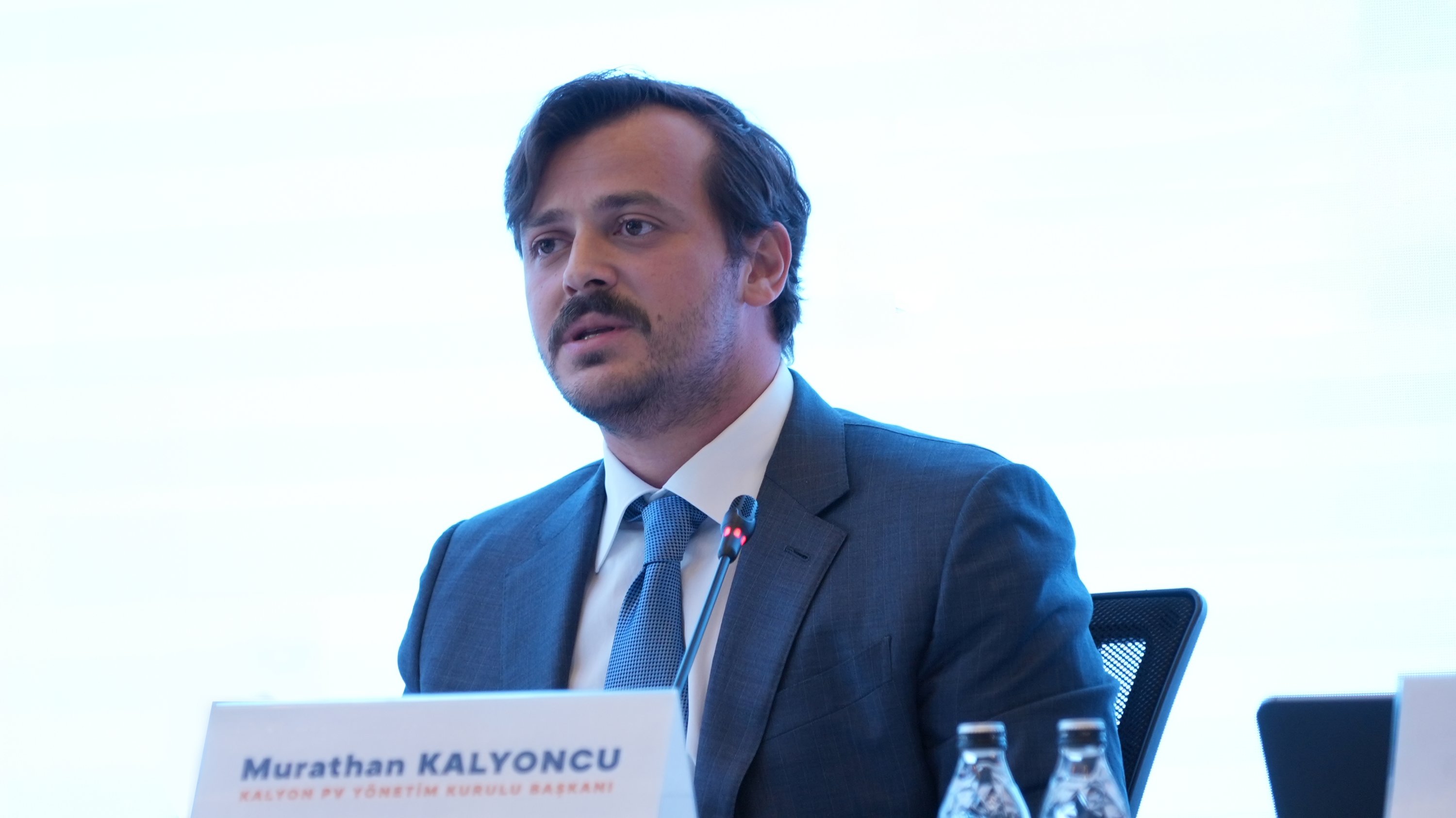
“Since our establishment, we have manufactured panels to meet the needs of our industry, particularly for the Kalyon Karapınar Solar Power Plant, one of Europe’s largest and among the world’s leading solar power plants,” he said.
Kalyon PV had continuously invested in research and development, technology and human resources, Kalyoncu said, adding that these efforts had helped the company achieve a series of milestones.
“Today, we are entering a new era in which we will take the experience and manufacturing strength we have built in Türkiye to global markets,” he said. “The company we have established in the United States is an important step in our international growth strategy.”
Each new investment strengthens the company’s production capabilities, while each new market supports its global expansion strategy, Kalyoncu said.


-
 Economy1 day ago
Trump says anyone who doesn’t call AI ‘super intelligence’ is ‘enemy’
-
 Economy2 days ago
Inside Türkiye’s plan to repay investors caught up in fund turmoil
-
 Economy2 days ago
CBRT chief vows cautious stance to preserve disinflation gains
-
 Politics3 days ago
Türkiye, Hungary launch new mechanism to deepen strategic ties
-
 Economy2 days ago
Most Fed officials see another rate hike by year-end: Minutes
-
 Politics2 days ago
AK Party scores win as Turkish opposition stronghold’s mayor joins
-
 Politics2 days ago
Turkish justice minister cites evidence of FETÖ link in Yazıcıoğlu death
-

 Politics2 days ago
Istanbul brings over 70 countries together for global justice summit