
Politics
Iran denies shooting missile at Türkiye, cites strong relations

Iran’s deputy foreign minister on Thursday denied that Tehran had targeted Türkiye with a missile and said Iran has no reason to attack its neighbor, stressing that relations between the two countries remain strong.
Kazem Gharibabadi made the remarks in an interview with Turkish broadcaster A Haber, responding to questions about reports of a ballistic munition launched from Iran that was intercepted before entering Turkish airspace by NATO defense elements.
“Our relations with Türkiye are very good, and we have never had any intention of targeting neighboring countries in the region,” Gharibabadi said.
“There is no reason for us to target Türkiye. We are in contact with Turkish officials and the foreign minister on this issue.”
He also pointed to cooperation between Tehran and Ankara in counterterrorism efforts, saying both countries face similar security challenges in the region.
Gharibabadi warned about the activities of armed groups in northern Iraq, saying Iran had already alerted Iraqi authorities about the movement of militant groups near its borders. He said Tehran expects the Iraqi central government to prevent militants from crossing the border and destabilizing the region.
“If these threats continue, we will not hesitate to use military force,” he said, adding that Iran understands that Türkiye also suffers from terrorism and that the two countries share common concerns regarding regional security.
Separately on Thursday, Iran’s armed forces also rejected claims that a missile had been launched toward Türkiye. In a statement, they said Iran respects Türkiye’s sovereignty and had not fired any missile at Turkish territory.
U.S. and Israel’s betrayal
Gharibabadi also criticized the U.S. and Israel, accusing Washington of betraying diplomatic efforts during nuclear negotiations in Geneva.
“The United States betrayed diplomacy for the second time,” he said. “While nuclear issues were being discussed in negotiations, the war was launched in the background.”
He reiterated that Iran is not pursuing nuclear weapons, saying the country’s leadership has banned the production and use of nuclear bombs and that reports by the International Atomic Energy Agency demonstrate Iran’s transparency.
At the end of the interview, Gharibabadi called for unity across the Muslim world, saying tensions in the region require solidarity among Muslim nations.
“The Islamic world is under pressure,” he said. “The Iranian people and all Muslims must stand united against aggression. Our unity is our greatest strength.”

Turkish Cypriot leader Tufan Erhürman said Tuesday that he wants any renewed negotiations over the divided island to be geared toward reaching a settlement, as he prepares for talks with senior U.N. officials in New York.
Erhürman is due to travel to New York on Wednesday for separate meetings with U.N. Secretary-General Antonio Guterres and his Personal Envoy for Cyprus, María Ángela Holguín. The meetings are expected to focus on the next steps in efforts to revive negotiations over the long-running Cyprus dispute.
“We do not believe in holding a 5+1 meeting simply for the sake of holding one, nor negotiations simply for the sake of negotiations,” Erhürman noted.
“We want a 5+1 whose prospects of producing results have been secured in advance through meetings in Nicosia, and negotiations that, in line with our people’s will for a settlement, will lead us to a solution this time.”
The 5+1 format brings together the Greek Cypriot and Turkish Cypriot sides, guarantor countries Türkiye, Greece and Britain, and the United Nations.
Erhürman said meaningful progress would first be needed in three areas identified by Guterres; confidence-building measures, the methodology for negotiations and substantive issues.
Proposals under discussion include opening new crossing points between the two sides, demining, cooperation on disaster response and irregular migration, and establishing joint mechanisms involving sports and civil society.
The president noted the sides should make progress on such issues in Nicosia (Lefkoşa) before convening another expanded meeting, arguing that previous rounds of negotiations had failed to produce a settlement.
Guterres has also said more work is needed before another expanded meeting can be held and has cautioned against repeating mistakes made in previous efforts. Erhürman said the Turkish Cypriot side shares the U.N. chief’s emphasis on ensuring that any renewed process is structured differently.
No trilateral meeting involving Erhürman, Greek Cypriot leader Nikos Christodoulides and Guterres, or a new 5+1 meeting, is currently scheduled during the U.N. General Assembly period.
Greek Solution party leader Kyriakos Velopoulos used provocative language targeting Turks as he criticized Prime Minister Kyriakos Mitsotakis’ policy of easing tensions with Türkiye, according to a statement published by his party.
Velopoulos criticized the “calm waters” policy pursued by Athens and Ankara in recent years and accused Türkiye of making threats against Greece.
He used a derogatory Greek expression about Turks before pointing out that the action should be taken against them, “like Mongols did,” referring to Mongol invasion of present-day Türkiye. He then cited a statement he attributed to Napoleon Bonaparte, saying: “The Turks can be exterminated, but not conquered.”
The Greek Solution leader then presented the remark after saying there was “one solution” regarding Turks.
Velopoulos also attacked Mitsotakis’ approach toward Ankara, arguing that efforts to reduce tensions had failed to alter Türkiye’s policies. He described Turkish statements as “empty threats” and “chauvinism.”
His comments come amid renewed exchanges between political figures in Türkiye and Greece over longstanding disputes between the NATO allies.
Velopoulos has repeatedly criticized Mitsotakis over relations with Türkiye. In a separate statement on Sept. 18, he called on the Greek government to declare an exclusive economic zone with the Greek Cypriot administration and extend Greece’s territorial waters to 12 nautical miles.
Türkiye’s Foreign Ministry, meanwhile, responded on Sept. 14 to separate remarks from Greece, calling on Greek officials to act with “seriousness and common sense.”
Velopoulos’ latest remarks targeting Turks were not based solely on media reports. The comments appeared directly in a press statement published on the Greek Solution party’s official website on Sept. 21.
Moreover, the party leader has previously called for a wall to be built along the Türkiye-Greece border, saying: “We must plug the hole. A 6-meter wall should be built and a minefield laid along Turkish-Greek border to prevent infiltration.”
Velopoulos has also continued his racist rhetoric, having previously been recorded as saying: “I want a Christian Europe without Muslims.”
President Recep Tayyip Erdoğan reiterated his call for reforms at the United Nations as he arrived in New York to attend the 81st General Assembly of the international body. In an article for Bloomberg titled “The Quest for Global Justice in a Changing World,” Erdoğan urged comprehensive reform of the U.N. Security Council, including the removal of the veto power held by its permanent members, arguing that the international system must better reflect today’s global realities.
The president said recent crises, including pandemics, energy shocks, supply chain disruptions and regional conflicts, had demonstrated the limits of leaving solutions to global challenges to the decisions of a handful of capitals. Stressing that global decision-making mechanisms must now adapt to today’s conditions, he said the UN Security Council continues to reflect the structure established after World War II.
Erdoğan said “a more effective, fair and accountable” system of representation was necessary and called for broader participation in global decision-making.
The Turkish leader has long pushed for reforms to the U.N., often using the slogan: “The world is bigger than five,” which refers to the Security Council’s unrepresentative membership. He said that the slogan should be understood as an appeal for a broader distribution of responsibility in the international system.
For years, the Council has faced claims that its five veto-wielding members, the U.S., the U.K., France, Russia and China, command disproportionate influence. “It is essential to turn the need for reform into a concrete roadmap,” Erdoğan said. “At the center of this roadmap should be the abolition of the veto privilege.”
He argued that simply adding new permanent members to the Security Council would not resolve the concentration of decision-making power in the hands of a small number of countries. According to Erdoğan, reform should instead be based on the principle that no country should have the permanent ability to block the will of the majority of the international community.
The president also called for a new balance between the U.N. Security Council and General Assembly. He proposed strengthening the powers of the General Assembly and creating a Security Council without permanent memberships, with council members elected by the General Assembly for fixed terms.
Under the approach outlined by Erdoğan, countries seeking another term would have to regain the confidence of a majority of General Assembly members through elections. “Representation and accountability of the Security Council before the General Assembly should be enhanced,” he said, arguing that the international order of the future could not be built by preserving the hierarchies of the past. “Developments over the last quarter century, which is a relatively short period in human history, have shown that no balance of power and no international order is permanent,” he said.
Erdoğan said new centers of power had emerged in areas ranging from the economy and security to technology and diplomacy, while international institutions had failed to adapt to these changes at the same pace. Wars, the climate crisis, irregular migration and economic vulnerabilities have underscored the importance of strong institutions, resilient economies and effective defense capabilities, he added.
The president pointed to the growing importance of secure and sustainable trade, logistics, transportation and energy corridors.
Erdoğan said Asia’s economic weight was increasing, while African countries were seeking stronger representation consistent with the continent’s potential.
He also said developing countries were increasingly voicing their own priorities and argued that regional problems could not always be resolved through methods determined from outside. “Approaches based on the will of the countries concerned, local conditions and common interests will produce more lasting and stable results,” Erdoğan said. He called for countries with the diplomatic capacity, economic resources and ability to communicate with different sides to assume “more active roles” in promoting peace and stability.
Erdoğan also addressed economic inequalities, saying expectations that globalization would broadly distribute prosperity had not been fully realized. He said income disparities had deepened, while technological and economic dependencies had become new areas of competition. “For global justice to be achieved under these changing circumstances, responsibilities must be shared fairly,” Erdoğan said, adding that developing countries’ right to development and access to the financing they need should be secured. He also argued that the international system must better account for changing economic and political realities across different regions.
The president said Türkiye would continue using its extensive international relations and experience in multilateral diplomacy to support efforts to reform the international system. “We support efforts to abolish the veto privilege, give elected members greater weight in decision-making processes and strengthen the role of the General Assembly,” he said. He said cooperation among countries from different regions around common principles would strengthen the legitimacy and representative capacity of the international system. “Permanent peace in today’s world cannot be achieved by multiplying blocs that are disconnected from one another and do not communicate with one another,” Erdoğan said. “For a more just world, we must bring together the experience, capacity and will of different regions on common ground.”
Erdoğan said Türkiye would continue to assume its responsibility in efforts to reform the international system, citing the country’s state tradition, diplomatic capacity and relations with different regions.
Foreign Minister Hakan Fidan has a busy agenda on the margins of the 81st United Nations General Assembly, which is underway in New York. Fidan, who accompanied President Recep Tayyip Erdoğan on his visit, attended several multilateral talks in the city and explained Türkiye’s approach to a series of issues, from Israeli attacks in Gaza to U.S.-Türkiye relations.
On Tuesday, Fidan attended the sixth Türkiye-Egypt-Pakistan-Saudi Arabia foreign ministers’ meeting. He also joined a coordination meeting that brought together the foreign ministers of the United Arab Emirates, Indonesia, Qatar, Egypt, Pakistan, Saudi Arabia and Jordan.
He later met with his counterparts from Mexico, Indonesia, South Korea and Australia for the 30th MIKTA foreign ministers’ meeting, an informal grouping that Türkiye chaired in 2022.
Separately, Fidan addressed a panel entitled “Türkiye-U.S. Relations on the Eve of the Centennial,” organized by the Turkish Presidency’s Communications Directorate. Fidan said at the panel that Türkiye expects the United States to use its influence to urge Israel to end policies that undermine regional and global peace and stability.
He also stated that Türkiye and the U.S. share an interest in sovereign and stable states capable of providing security and welfare in the region, particularly Syria and Iraq.
Fidan also called for greater regional ownership of security, saying, “Local solutions have a better chance to live.”
“This is why we believe that countries of the region should take greater responsibility for the security and stability of their own geography. This is why we need to embrace and advance regional ownership,” he said, citing the Mecca alliance between Türkiye, Pakistan and Saudi Arabia as an example.
Fidan said three key challenges were the war with Iran, the risk of the Yemen conflict spreading to neighboring countries and Israel’s destabilizing policies across the region.
“These threats reinforce one another and obstruct diplomacy. Addressing them requires effective regional responsibility and close cooperation with the United States,” he said. “In particular, we expect the United States to further use its influence to urge Israel to end its policies that undermine both regional and global peace and stability,” he added.
Fidan said the Mecca alliance between Türkiye, Pakistan and Saudi Arabia “provides regional ownership and an institutional foundation, while strengthening cooperation and supporting regional peace and security.”
Fidan described Gaza as a central test of efforts to establish regional security and said a lasting resolution to the Palestinian issue remains essential.
“A lasting resolution of the Palestinian question remains essential for stability in the Middle East and beyond,” he said, adding that Türkiye supports U.S. President Donald Trump’s efforts to bring the Gaza crisis to an end.
“Commitments put forth through the peace plan must now be fully implemented,” he said.
Fidan said Türkiye also supports dialogue and diplomacy for achieving lasting peace in Ukraine and maintaining channels of communication with both Kyiv and Moscow.
Asked whether the Mecca defense alliance was primarily a deterrence mechanism or the beginning of a more institutionalized regional security architecture, Fidan said regional ownership aligns with the new approach the U.S. is adopting not only in the Middle East but also in Europe and the Asia-Pacific.
He said Türkiye’s regional vision rests on “no domination, no submission, but cooperation,” describing the defense arrangement as a starting point for building regional ownership.
Fidan said a long-standing lack of trust among regional countries has fueled counterterrorism campaigns, wars and the invitation of outside forces into regional conflicts.
“We come together around a defense club, not to deter somebody, but to make sure that we commit to each other’s security, territorial integrity and sovereignty,” he added.
“There are other countries that would like to be part of this regional platform, and our idea is, once we properly institutionalize our partnership, I think that the invitation will be open to other countries to join,” he added.
Asked whether the defense agreement had passed its first test following recent Houthi attacks on Saudi Arabia, Fidan pushed back on the comparison, noting that NATO’s Article 5 has been invoked only once in decades and arguing that it was unfair to judge a “newborn” defense alliance against a decade-old Yemen crisis when “we’ve just started.”
Türkiye-U.S. relations
Fidan said the bilateral relationship between Türkiye and the U.S. had “time-tested enduring value” and had evolved from ties between two geographically distant nations into a partnership and alliance with an impact beyond their borders.
He noted that Turkish President Recep Tayyip Erdoğan and U.S. President Donald Trump had a “central role” in the current momentum in bilateral ties, adding that the task was to translate it into concrete benefits and institutionalize cooperation.
“Our task is to turn this momentum into concrete benefits and institutionalize our cooperation not only for our countries but also for maintaining peace and stability in our region,” he said.
“As we enter our second century of diplomatic relations, we are determined to realize the full potential of our cooperation and resolve the issues holding it back,” he added.
Responding to questions from participants, Fidan said Türkiye maintains “great coordination” with U.S. mediators, including Steve Witkoff and Jared Kushner, on issues ranging from the Russia-Ukraine war to Gaza, Libya, the Horn of Africa and the South Caucasus, describing bilateral cooperation as at an “unprecedented level.”
On the CAATSA sanctions and the sale of F-35 fighter jets, Fidan said Erdoğan and Trump agreed during their White House meeting that the issue should be resolved “as soon as possible,” and that both sides have since been working to remove the obstacle, though it is “taking a little bit more time than we expected.”
Authorities detained nine suspects on Tuesday in operations against the Gülenist Terror Group (FETÖ) in eight provinces. The suspects are accused of being part of a network that arranged marriages between members of the group.
FETÖ, which carried out the 2016 coup attempt through its infiltrators in the army, is known for its “izdivaç” (marriage) schemes, in which members, especially those infiltrated into critical state institutions, were ordered to marry spouses selected by the group’s handlers. This way, FETÖ managed to keep its wrongdoings under wraps and prevent them from being leaked to authorities, as both spouses would be devotees of the group.
Istanbul Chief Prosecutor’s Office announced that an investigation was carried out in cooperation with police counterterrorism and intelligence units into FETÖ’s “izdivaç” network, which aimed to ensure loyalty to the group. The investigation found that the group ordered its members to marry people who met its self-styled criteria.
According to investigators, the group designated “izdivaç” handlers who compiled information about potential spouses and created databases for that purpose, matching prospective spouses strictly among FETÖ members. Along with traditional methods, the group used digital platforms to arrange marriages, and authorities identified 13 suspects involved in the scheme based on evidence seized from Merve Daştan, an “izdivaç” handler captured on May 5. Other suspects wanted by authorities remain at large.
Türkiye’s ruling Justice and Development Party (AK Party) was the most preferred party among respondents in three recent opinion polls, while the New Party (YP) ranked second, according to surveys released by GENAR, Areda Survey and BETIMAR.
GENAR’s September 2026 Türkiye Report put support for the AK Party at 36.1%, followed by the New Party (YP) at 21.6%, a gap of 14.5 percentage points.
The Peoples’ Equality and Democracy Party (DEM Party) received 9.4%, followed by the Nationalist Movement Party (MHP) at 8% and the Good Party (IP) at 7.7%. The Republican People’s Party (CHP) was measured at 6.6%.
Two polls conducted in August showed a broadly similar ordering for the top two parties, though their estimates varied.
Areda Survey’s poll, conducted among 2,400 respondents between Aug. 26 and Aug. 31, put the AK Party at 35% and the YP at 17%. The CHP followed at 11.1%, while the DEM Party and MHP received 9.8% and 8.9%, respectively. The survey was conducted using the CAWI online polling method.
BETIMAR’s survey, conducted among 2,000 respondents from Aug. 26 to Aug. 28, showed the AK Party at 35.4% after undecided voters were distributed. The Yeni Party received 20.1%, leaving a 15.3-point gap between the two.
IP followed with 9.3%, narrowly ahead of the DEM Party at 9.2%. The MHP received 7.7%, while the CHP was measured at 5.3%.
The three surveys provide snapshots of voter preferences rather than election forecasts, and differences in methodology, sampling and fieldwork dates can produce varying results.


-
 Politics2 days ago
Türkiye launches raids on Israel-linked international fraud network
-

 Economy1 day ago
AMD joins $1 trillion club as last chipmaker to cash in on AI rally
-
 Politics2 days ago
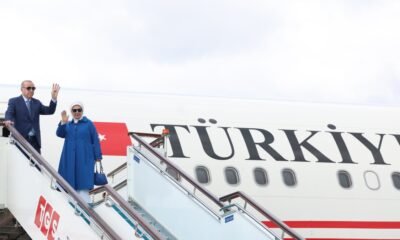
Erdoğan leaves for UN General Assembly with Gaza in mind
-
 Economy1 day ago
Türkiye extends funds liquidation process, freezes execs’ assets
-
 Economy2 days ago
Türkiye revokes license of Iranian Bank Mellat
-
 Politics3 days ago
Türkiye closely monitoring field as terror-free initiative advances
-
 Politics1 day ago
Sea Wolf maritime drill begins amid tensions between Greece, Türkiye
-

 Economy1 day ago
US says all Iranian airlines to be ‘shut down’ Wednesday