
Politics
‘Learn from the past’: Erdoğan warns Greece to stop arming islands

“I think they’d hear us from Greece if we shout from Kaş,” President Recep Tayyip Erdoğan told journalists when asked how Türkiye would respond to Greece’s arming of the Aegean islands.
Türkiye has recently declared an area between Kaş and Fethiye in the south, as well as several other areas in the Aegean Sea, as “marine parks” in a move that angered Greece, which has consistently contested Türkiye’s maritime borders.
Erdoğan answered questions while returning from Kyrgyzstan, where he attended a summit of the Shanghai Cooperation Organization (SCO) on Tuesday. In remarks published on Wednesday, he said Türkiye sought to advance relations with Greece on the basis of good neighborliness. “We have always been sincere and constructive, but this was not reciprocated most of the time,” Erdoğan said.
Türkiye opposes any Greek military deployment on the eastern Aegean islands, arguing that they should remain demilitarized under the 1923 Treaty of Lausanne and the 1947 Paris Peace Treaty. Greece, however, cites a “threat” from Türkiye and says it has the right under international law to defend its sovereignty. The two countries have recently been at odds over the declaration of marine parks to preserve marine biodiversity, with both accusing each other of attempting to violate their maritime borders.
Under Erdoğan’s leadership, Türkiye has pursued a rapprochement with Greece after decades of lukewarm diplomatic ties and nearly two decades after the two countries came close to an all-out war over their Aegean dispute. Erdoğan and Greek Prime Minister Kyriakos Mitsotakis have met several times over the past two years, but their warm meetings have done little to change the state of relations over the maritime dispute.
“Greece should know that Türkiye has no intention of grabbing the territory of any other country, but Türkiye also has no intention of allowing anyone to violate its rights. Ignoring international treaties will not benefit anyone. Anyone who interprets Türkiye’s level-headed approach based on common sense as weakness is making a grave mistake. Greece should reverse course and stop arming demilitarized islands. History is a good guide for those who can learn from the past,” Erdoğan said.
The Republic of Türkiye cemented its independence more than a century ago under the leadership of its founder, Mustafa Kemal Atatürk, after expelling invading Greek forces. “We will continue working for peace, security and stability,” Erdoğan added.
In a related development, Israel and Greece signed a 3 billion euros ($3.48 billion) defense deal on Monday under which Israel will build a “multilayered” defense system for Greece. A supplementary deal valued at 26 million euros will see Israel sell Greece Drone Dome systems to protect strategic sites against drones and reinforce existing defenses.
Both countries are at odds with Türkiye. Ankara has repeatedly warned against Israel’s expansionist goals across the region. President Recep Tayyip Erdoğan has previously warned that Türkiye may be the next target of Israel after the Netanyahu administration launched a genocidal campaign in Gaza.
SCO summit
Erdoğan also commented on Türkiye’s ambitions to advance relations with the SCO to a “higher level.” He said the summit he attended in Bishkek had been a concrete indicator of Türkiye’s will to diversify its economic, political and strategic options at the international level.
“We have bilateral trade and economic relations with SCO member states. In our relations with the Organization, significant progress has been made in recent years, reflecting our multidimensional foreign policy approach. Türkiye is a country capable of developing balanced relations with both the West and the East and deepening its ties with both sides accordingly. Türkiye’s approach also strengthens our aim of finding solutions to global challenges based on cooperation and effective multilateralism. From our perspective, it is possible to take our relations with the SCO to even higher levels in the period ahead,” he said.
Türkiye is a dialogue partner of the bloc, and Erdoğan said Türkiye’s perspective on membership in the SCO “does not in any way mean breaking away from one bloc or turning its back on the West. Our goal is to increase our own weight and influence with a 360-degree vision.”
Ties with Russia
The Turkish leader also had a rare meeting with Russian President Vladimir Putin on the sidelines of the SCO summit. He said their talks were very fruitful and that they had particularly discussed the conflict between Russia and Ukraine. He hailed significant cooperation with Russia in fields ranging from tourism to energy.
“Concluding the conflict through peace is also Mr. Putin’s expectation,” Erdoğan said. “This conflict has had bad consequences for our region and the world, and Mr. Putin is not pleased with this. I conveyed to Mr. Putin that we were ready to do anything for peace,” he said. Türkiye is among the few countries that have achieved some progress toward partial peace between the two countries.
Maritime security in the Black Sea amid the Russia-Ukraine conflict was also on Erdoğan’s agenda. Several Turkish commercial vessels have come under fire over the past two months while sailing through the Black Sea. Erdoğan said the conflict should not “come to a point where the security of civilians and trade security erode.” “We have to resolve this issue because the damage is growing. We need a mechanism for lasting security in maritime shipping in the Black Sea,” he said.
Mecca alliance
Erdoğan also commented on Türkiye’s joint defense agreement with Saudi Arabia and Pakistan. The agreement evolved into the Mecca Defense Alliance as ministers from the three countries came together in Istanbul on Monday to discuss its future. Erdoğan said the meeting was very important.
“In line with our approach of taking concrete steps as soon as possible, we have identified the issues that need to be addressed from a technical standpoint. Chief among these is the establishment of the secretariat and making it fully operational. Military and political issues need to be addressed here. The defense industry is an important area of cooperation. In terms of military operational cooperation, technical issues such as military training, military standardization, and the sharing of information on military threats, capabilities and capacities were also discussed. Decisions were made on when and how these initiatives will be implemented,” Erdoğan said.
“There are very few countries that have openly opposed this alliance, but there are also countries that have expressed opposition behind the scenes. In particular, the balance among Saudi Arabia, Pakistan and Türkiye makes it difficult for many actors to openly criticize the alliance. This alliance was established to promote stability and security in our region. We will continue on our path together with our brothers, growing stronger,” he said.
Terror-free Türkiye
Asked about the terror-free Türkiye initiative aimed at the dissolution of the terrorist group PKK, Erdoğan said that the timetable for the process was not clear. “You can’t set a schedule on such issues,” he said. “This is not about timing anyway; it is about reaching our goal. Certainly, we have a road map, and our institutions work in coordination,” he said.
Türkiye’s Parliament earlier this month passed a landmark 12-article law supporting the initiative, following months of political efforts led by Erdoğan and Nationalist Movement Party (MHP) Chairperson Devlet Bahçeli.
The legislation outlines legal procedures for members of the PKK terrorist group who lay down their arms and surrender to Turkish authorities as the organization moves toward dissolution and disarmament. It includes provisions allowing the deferral of prosecution or prison sentences in certain circumstances, while establishing different legal procedures depending on an individual’s position within the organization and involvement in criminal activity.
The law does not constitute a general amnesty and does not eliminate existing convictions, change the legal classification of crimes, or broadly remove criminal liability, according to the justification accompanying the legislation.
“The monitoring board established under the leadership of Vice President Cevdet Yılmaz has begun planning the steps to be taken within the framework of the duties defined by law. For the law to begin to be implemented, however, the PKK must actually lay down its arms and disband. It is clear how the necessary assessments and verification will be carried out in this regard. The process is moving forward step by step. It has not been confined to rigid parameters in every respect. There is also a degree of flexibility in this regard. We are approaching the issue with the seriousness of the state and taking our steps accordingly. Our nation has also demonstrated its support for a terror-free Türkiye. Processes that are open to such provocations should not be allowed to drag on for too long,” he said.
Türkiye also links the initiative to stability in the wider region. In this context, the dissolution of the YPG, the Syrian wing of the PKK, is viewed as crucial by Ankara. After two years, the YPG reached an agreement with the new administration in Damascus on its integration into the Syrian army. Erdoğan said Türkiye welcomed the news and was following the implementation of the integration agreement.
“We want more than anyone else for Syria to remain united. This is important for achieving sustainable development and building capacity in Syria. We have always stood by our Syrian brothers and sisters to this end, and we will continue to stand by them going forward. In this regard, President Ahmed al-Sharaa has successfully navigated and continues to navigate difficult challenges. We are hopeful about both the integration process and the gains the Syrian people have achieved in a short period of time. I believe this process will open the door to a new era not only for Türkiye and Syria, but for the entire region. The chapter of terrorism must now be closed; the era of weapons and violence must come to an end,” he said.
The integration was also welcomed by the United States, Türkiye’s NATO ally, which controversially supported the YPG in Syria during the Baathist era. Washington has also modified its policy toward Syria and embraced the unity approach of the al-Sharaa administration. “Obviously, the United States eventually grasped the reality in Syria,” Erdoğan said.
F-35 deal
Erdoğan also commented on Türkiye’s pursuit of a return to the F-35 fighter jet program with the United States. “The talks are underway to achieve this. We believe we will put all these issues behind us. While we pursue diplomatic efforts, we won’t abandon the development of our Kaan fighter jet. We are committed to developing our own aerial defense systems. As a matter of fact, we are diversifying the options we have. This is how Türkiye becomes stronger,” Erdoğan said.
Türkiye aims to make the current period a “Century of Justice” by accelerating judicial proceedings, improving access to justice and strengthening legal certainty, Justice Minister Akın Gürlek said Wednesday as the country marked the opening of the 2026-2027 judicial year.
Speaking at a ceremony organized by the Istanbul Chief Public Prosecutor’s Office, Gürlek noted Türkiye’s judicial reform agenda would go beyond legislative changes and focus on improving the speed and effectiveness of the justice system.
“In line with the goals of the Century of Türkiye, we want to make this period the ‘Century of Justice,’” Gürlek underlined.
He said the initiative was not merely a slogan but represented a vision in which citizens could obtain their rights more quickly, trials were concluded within reasonable periods and access to justice was made easier.
Gürlek also highlighted the “Alo Adalet 135” hotline, which was launched on Sept. 1 as a pilot program at courthouses in Ankara’s western district, Izmir and Kayseri.
The service allows citizens, particularly those involved in lengthy court cases and investigations, to submit their concerns directly to relevant judicial authorities. Gürlek said the hotline would be expanded to courthouses across Türkiye in October.
The government is also using Judicial Services Efficiency Offices to identify the causes of lengthy investigations and trials at an early stage, monitor target completion times and strengthen the administrative and technical capacity of the judiciary, he said.
Unsolved crimes, corruption
Gürlek reminded that authorities were also reviewing previously unsolved crimes using modern technology and forensic capabilities.
“Significant progress has been made in solving many previously unsolved cases,” he said, adding that the passage of time did not diminish the importance of establishing the truth.
The minister said authorities would continue efforts against drug trafficking, illegal betting, online gambling, organized crime, money laundering and digital offenses while ensuring investigations remained based on law and concrete evidence.
He also stressed that allegations of corruption involving public resources or authority should be thoroughly investigated regardless of where the evidence leads.
“We believe that every allegation of corruption that damages public conscience must be addressed within the law, meticulously and on the basis of concrete evidence,” Gürlek said.
He added that the state was not opposed to religious groups, national organizations or social initiatives serving the public interest, but would act against individuals or organizations that exploit social values, abuse public trust or use legal loopholes to obtain unlawful benefits.
The minister remarked that protecting innocent people was as fundamental to justice as punishing offenders and stressed that authorities must remain within the boundaries of the law even when combating the most serious crimes.
Referring to Türkiye’s “Terror-free Türkiye” initiative, Gürlek said the process was important for strengthening social peace and national unity, adding that the fundamental principles of the rule of law would not be compromised.

After declaring its dissolution, the terrorist group YPG, once militarily backed by the United States, has started handing over its heavy weapons to the Syrian army.
Syrian troops are receiving weapons in Hassakeh, once a stronghold of the YPG, following a key deal on the group’s integration with the Syrian army.
Among the weapons and equipment handed over to the Syrian army are armored vehicles, tanks, mortars and machine guns. Anadolu Agency (AA) reported on Thursday that the army also seized air defense systems that the YPG had looted from some military air bases following the fall of the Baathist regime in 2024.
Damascus and the YPG signed a memorandum on a cease-fire and the group’s gradual integration into the security forces on Jan. 29. Syrian forces recently entered Hassakeh, which had been under YPG control, and took over key institutions, including the governorate and courthouse. On Sept. 1, the Syrian Interior Ministry sent reinforcements to the city to help complete the takeover.
The new administration in Damascus has sought to restore central government control across the country after years of fragmentation during the civil war.
The dissolution of the YPG, the Syrian wing of the PKK, is crucial for Türkiye. Türkiye itself launched the “terror-free Türkiye” initiative aimed at the dissolution of the PKK. The PKK agreed and made a symbolic start to its disarmament process last year. In exchange, Türkiye offered leniency and deferred sentencing for PKK members not involved in acts of terrorism.
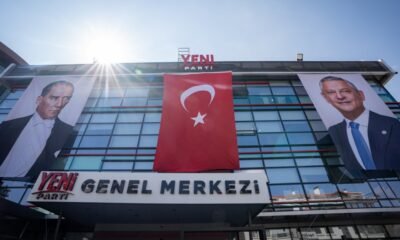
A power struggle is intensifying within the New Party (YP), with rival factions reportedly seeking to consolidate control over local party organizations ahead of a nationwide congress process.
The YP formally announced its congress schedule last month, setting the stage for district and provincial contests that are expected to determine the party’s organizational structure ahead of future elections.
In several provinces, mayors, provincial party chairs, lawmakers and figures aligned with former Istanbul Mayor Ekrem Imamoğlu are reportedly working separately to shape local organizations by backing their preferred candidates. The competition has raised concerns within the party that disputes over local leadership could deepen existing divisions before the organization has fully established itself across the country.
The latest example emerged in Biga, a district of Çanakkale province in western Türkiye.
Cemal Mantar, the founding chair of the YP’s Biga district organization, announced that he would not seek the position again just one month after helping establish the local branch.
Mantar stressed that he was not leaving the party or withdrawing from politics and rejected suggestions that his decision was the result of an internal crisis.
However, local party sources have alleged that Çanakkale Mayor Muharrem Erkek backed Barış Çetin as a candidate to replace Mantar, creating tensions within the district organization. According to the allegations, the dispute prompted Mantar to withdraw his candidacy despite having recently helped establish the party’s local organization.
The episode has fueled concerns that competition over local positions could become one of the first major tests of the YP’s internal cohesion.
The party has already faced a separate controversy in the southeastern city of Gaziantep.
Seydi Ahmet Keleş, a YP member in the province, allegedly attacked Gaziantep lawmaker Melih Meriç with a knife after Meriç declined to support his bid for the district chairmanship. The incident attracted widespread attention and became an early example of the tensions surrounding the party’s local organization.
Membership lists prepared for the congress process have also become a source of dispute. Some individuals reportedly claimed that they had completed the process of joining the party but later could not find their names on the official membership lists.
The allegations have raised concerns that disputes over membership could become intertwined with leadership contests, as the composition of party membership directly affects who is eligible to participate in local congresses and influence the selection of new leadership.
The competition appears to be particularly significant because the YP is still in the process of building its organizational network. Unlike an established political party with long-standing local structures, the new party is attempting to create provincial and district organizations while simultaneously defining its political identity and internal power balance.
The disputes are reportedly not limited to smaller districts. Competition over leadership positions in major cities has also become increasingly tense, according to reports, raising the possibility that some upcoming congresses could take place in a highly contentious atmosphere.
The developments come as the YP seeks to establish itself as a major force in Turkish opposition politics.
In late July, Özgür Özel launched the New Party after being ousted from the main opposition Republican People’s Party (CHP) following a court ruling that invalidated the party’s previous congress.
Özel had led the CHP to a historic victory in the 2024 local elections, winning control of several major municipalities, including Istanbul, Ankara and other major urban centers. After the split, he argued that the YP could build on that momentum and develop into a broader political movement.
“The New Party is the first party in Turkish political history to be founded as the main opposition,” Özel said shortly after its establishment. “It is not a splinter party formed by people leaving another party in search of something else. It is actually a party built around an understanding, and around resistance and struggle against the coup that was carried out.”
The launch followed months of turmoil within the CHP, where a leadership dispute between Özel and former party Chair Kemal Kılıçdaroğlu escalated following a court ruling that invalidated the previous party congress.
The ruling, widely described in Turkish political circles as the “absolute nullity” decision, paved the way for Kılıçdaroğlu to return to the party leadership and further intensified the confrontation between the two camps.
Özel’s supporters have accused Kılıçdaroğlu of attempting to undermine the CHP’s prospects of winning the next presidential election under Özel’s leadership, with some of his allies going as far as branding the former chairman a “traitor.”
Kılıçdaroğlu, meanwhile, has continued to challenge Özel and his supporters, deepening the political rupture that eventually contributed to the establishment of the YP.
Özel has sought to present the new party not simply as a breakaway organization but as a political movement capable of attracting voters and members beyond the CHP’s traditional base.
He has said the YP reached 600,000 members shortly after its establishment and predicted that membership would rise to 1 million in a short period.
The party’s ability to translate that rapid growth into a functioning nationwide organization, however, is now facing an early test as local factions compete for influence.
A municipal council member from Türkiye’s main opposition Republican People’s Party (CHP) was detained on Wednesday in the northwestern province of Edirne over allegations that he demanded 200,000 euros ($232,000) from a contractor in exchange for securing approval of a building permit.
Engin Yağcılar, a member of the Edirne Municipal Council and deputy chair of the CHP group in the council, was taken into custody as part of an investigation led by the Edirne Chief Public Prosecutor’s Office.
Authorities also searched Yağcılar’s home and law office and launched a separate investigation into suspected laundering of assets derived from crime.
The investigation began after a contractor, identified by the initials N.Ö., approached law enforcement authorities on Aug. 23, prosecutors said.
The contractor alleged that Yağcılar contacted him and said he could secure approval for a building permit in exchange for 200,000 euros.
Prosecutors subsequently obtained authorization to monitor Yağcılar’s communications and activities using technical surveillance.
Yağcılar and the contractor met at a mosque in Edirne on Sept. 1, after which authorities detained Yağcılar. Investigators recorded the meeting on video and audio, according to information from the investigation.
Authorities searching Yağcılar’s residence and law office seized four computers, two notebooks and five pages of documents.
Yağcılar invoked his right to remain silent while in police custody.
Prosecutors also opened a separate investigation under Article 282 of the Turkish Penal Code, which covers the laundering of assets derived from criminal activity.
Authorities are examining Yağcılar’s financial and asset transactions, while Türkiye’s Financial Crimes Investigation Board (MASAK) is expected to prepare a report as part of the investigation.
The latest investigation comes months after Edirne Municipality was implicated in a separate probe involving building permit procedures.
Thirteen suspects, including the municipality’s then-director of zoning and a municipal council member, were detained in February as part of that investigation.
Turkish prosecutors on Tuesday ordered the detention of 22 suspects as part of an investigation into alleged irregularities in vehicle rental tenders by the Bolu Municipality, authorities said.
The Bolu Chief Public Prosecutor’s Office said judicial proceedings were launched against 23 suspects, including suspended Bolu Mayor Tanju Özcan, over a municipal tender for the rental of driverless vehicles and construction machinery used in waste collection, transportation and general cleaning services.
Özcan, who is already jailed in connection with a separate case, was not included in the detention orders issued for the other 22 suspects.
Prosecutors said an expert report dated Aug. 25 identified alleged irregularities during the implementation of the contract. Investigators compared vehicle tracking data from Arvento Mobile Systems company with municipal landfill records and monthly work schedules.
The review found that some garbage collection vehicles were recorded as operating on days when they had not actually worked and that payments were made to the contractor based on those records, according to prosecutors.
The expert report estimated that the municipality made TL 34.29 million (about $700,000) in excess and improper payments, including price adjustments and value-added tax, to the MCY-Yeşilçam joint venture in 19 progress payments.
The investigation also covers municipal officials and employees involved in the tender, inspection, acceptance and payment processes, as well as executives of the contractor.
Police and gendarmerie launched simultaneous operations centered in Bolu across seven provinces. Gendarmerie teams also searched the Bolu Municipality building and examined tender documents, payment records and vehicle tracking data.
Prosecutors said the investigation remains underway.
One year to the next election and, amid growing public anger against Israel’s genocidal campaign in Gaza, the Mitsotakis government of Greece appears to be gambling away political fortunes with a major deal with Israel. The deal, signed on Monday, is one of the biggest for Israel and will reinforce Greece’s “Achilles Shield” aerial defense system. For Mitsotakis, however, it may be his Achilles’ heel in the 2027 election. A survey released by Pew Research Center in June shows that although the Greek public is still warm toward Israel, only 30% of the nation has a positive opinion of the country after the start of a new round of Palestine-Israel conflict in 2025.
Since 2025, Greece has been the scene of pro-Palestine demonstrations, denouncing genocide in Gaza. Earlier this month, a major protest was held in Piraeus as an Israeli cruise ship docked there. The protest has called on Greece to cease cooperation with Israel, but Athens responded with the 3 billion euros deal on Monday. “The security agreement signed today with Greece, one of the largest in the country’s history, is a direct continuation of the Eastern Mediterranean alliance we forged a decade ago with Greece and (southern) Cyprus. It serves as further proof of the tremendous capabilities of Israel’s defense and technological industries,” Prime Minister Benjamin Netanyahu said. “This move expresses Israel’s strength, the confidence in our defense exports, and the strengthening of regional alliances.”
“Deeply ashamed that, despite a sizeable majority of Greeks opposing the genocidal Apartheid state, we have allowed our ruling class to taint Greece through this despicable deal,” Greece’s former Finance Minister Yanis Varoufakis said in a social media post on Monday.
Varoufakis’ former party Syriza was also quick to denounce the government over the deal. Syriza said in a statement on Monday that the deal deepens Greece’s defense/military dependence on the “genocidal government of Israel,” “which violates international law.” Syriza said the government portrayed the deal as a triumph, but questions remained over how the country would remain independent in its air defense network. “Is our country really gaining greater strategic autonomy or is it integrating its defenses into the Israeli-American security system?” Syriza asked in its statement.
The Communist Party of Greece (KKE) termed the deal as a “dangerous decision” by the Mitsotakis government, “to accelerate war preparations and deepen the involvement of our country in imperialist wars and plans.”
“Strategic relations with the murderous state of Israel and joint war preparations add fuel to the imperialist plans in the region,” a statement by the party on Monday said.
For Israel, it is an alliance against “shared regional challenges,” as Israeli Defense Minister Israel Katz put it in a statement. Both countries are at odds with Greece’s neighbor Türkiye, and Katz, without naming Türkiye openly, said Israel and Greece would deepen their defense and strategic cooperation at a time “when actors with hegemonic ambitions are seeking to expand their influence.” Israel, which repeatedly carried out attacks in Syria since the fall of the Baathist regime in 2024 there, has recently bombed a military base under the pretext of preventing so-called Turkish plans to establish a foothold there.
Adonis Georgiadis, Greece’s health minister, was more blunt in defense of the deal’s target. Georgiadis, who was once denounced as anti-Semitic by Israeli circles, has been a champion of relations with Israel, defining the country as “a true miracle of humanity” in a social media post in May. In response to the opposition’s criticism, Georgiadis was quoted by the Greek media praising the deal. “It secures the freedom of Greece against a Turkish threat,” he was quoted.


-
 Economy3 days ago
US says world ‘cannot have China with $1.2 trillion trade surplus’
-
 Politics2 days ago
Civilians injured in PJAK terrorist attack in Iran
-
 Economy3 days ago
Türkiye’s trade with Organization of Turkic States members tops $10B
-

 Economy2 days ago
Bank of America vice president killed in Times Square stabbing
-
 Refugees2 days ago
Turkey’s Erdogan says Russia will help build more nuclear plants
-

 Economy3 days ago
Türkiye’s EV maker Togg closes in on launch of affordable T6X model
-
 Politics3 days ago
Izmir mayor faces pressure amid speculation over possible CHP return
-
 Politics2 days ago
Syrian, Turkish armies complete floating bridge over Euphrates