
Economy
Retail sales in Türkiye up 15.6% annually in February

Volume of retail trade in Türkiye surged by 15.6% on an annual basis in February, official data showed on Monday, slowing slightly from the January level but maintaining a positive momentum.
In the same month, total trade sales volume increased by 4.0% compared to the last year, the data from the Turkish Statistical Institute (TurkStat) showed.
In January, the retail sales volume index increased by 18.8% on an annual basis, while trade sales volume surged 7.6%, respectively.
Among other subindices in February, the wholesale and retail trade and repair of motor vehicles and motorcycles volume decreased by 1.5%, and the volume of wholesale trade sales edged down by 0.1%, the data showed. Thus, retail sales were the major contributor to the overall increase in trade sales in the month.
Trade and retail sales serve as a significant indicator of consumer behavior and spending tendency, contributing to an economy’s output.
On a monthly basis, however, both trade and retail sales witnessed marginal slowdowns.
Trade sales volume decreased by 0.6%, and retail sales volume index decreased by 0.2% month-over-month.
Separate data from TurkStat showed on Monday that the total turnover index of the Turkish economy, including industry, construction, trade, and services sectors increased by 34.2% on an annual basis in February.

Treasury and Finance Minister Mehmet Şimşek will hold a series of high-level meetings in the U.S. this week, engaging with global investors and financial institutions on the sidelines of the IMF-World Bank spring meetings.
Şimşek will join top finance officials from around the world will convene under the shadow of the war in the Middle East, which has delivered a third major shock to the global economy after the COVID pandemic and Russia’s full-scale invasion of Ukraine in 2022.
Weekend talks between the U.S. and Iran brokered by Pakistan failed to reach a deal to end the war that has effectively shut the Strait of Hormuz, sending energy prices soaring and causing the worst ever disruption in supplies.
Starting on Monday, the U.S. military said it would begin a blockade of ships leaving Iran’s ports on Monday, and Tehran threatened to retaliate against ports of its Gulf neighbors.
Şimşek began his trip in New York City and was scheduled to attend a roundtable jointly organized by Citigroup and the Turkish-American Business Council. He was also said to hold a bilateral meeting with Citigroup CEO Jane Fraser.
In addition, Şimşek is expected to meet real sector representatives at an event organized by JPMorgan Chase and the top Turkish business association, MÜSIAD, as well as representatives of international credit rating agencies and leading global investors.
Global focus shifts to Washington
Following his New York program, Şimşek will travel to Washington for the International Monetary Fund-World Bank meetings, which kicked off on Monday and will last through Saturday.
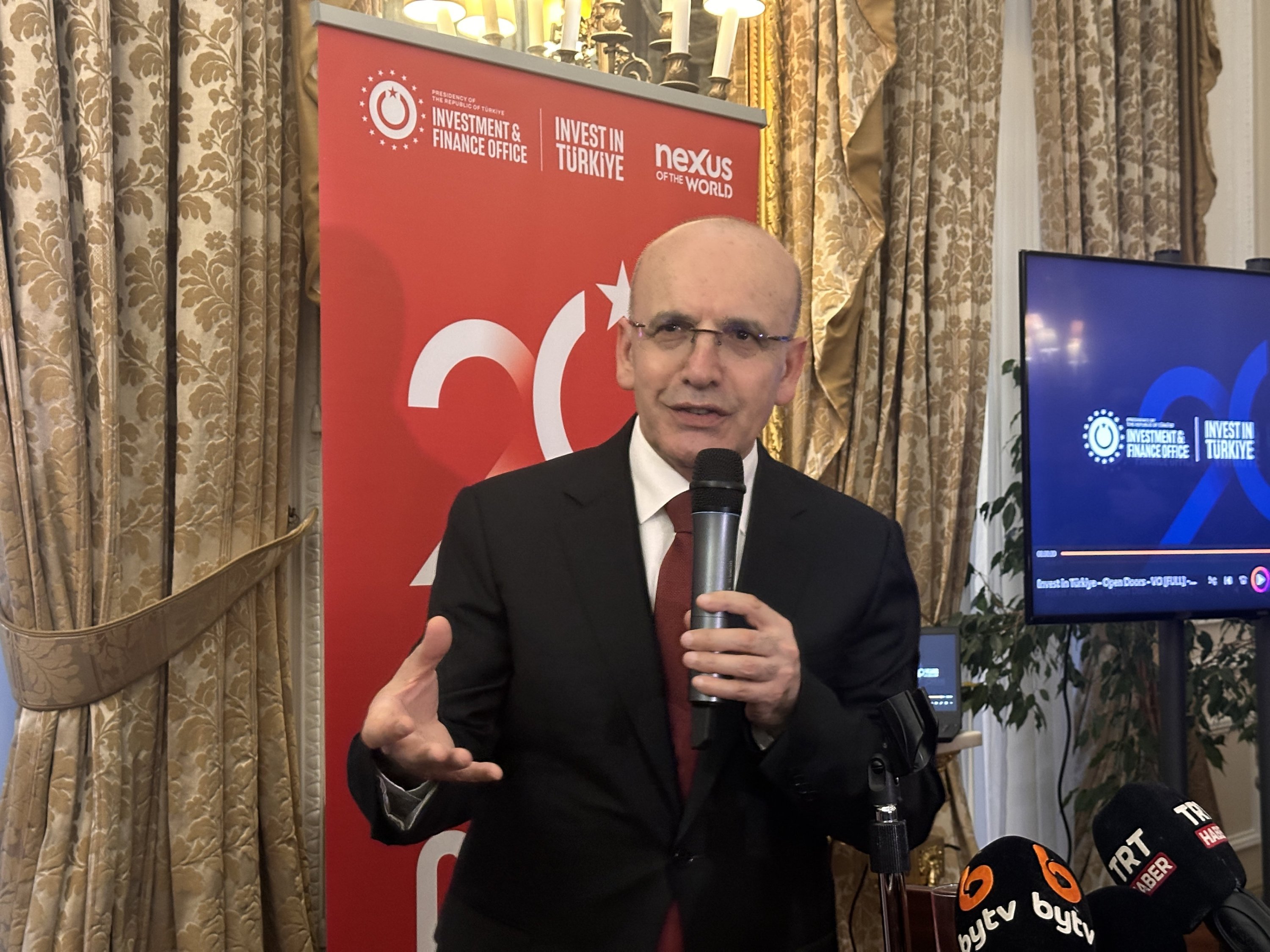
The gatherings bring together finance ministers, central bank governors, private sector leaders and academics.
Top IMF and World Bank officials last week said they would downgrade their forecasts for global growth and raise their inflation predictions as a result of the Iran war, warning that emerging markets and developing countries will be hit hardest by higher energy prices and supply disruptions due to the effective closure of the Strait of Hormuz.
The U.S. military said it would begin a blockade of all maritime traffic entering and exiting Iranian ports and coastal areas starting at 10 a.m. ET (1400 GMT) on Monday. Washington has sought help to reopen the strait from allies, who have not expressed interest.
Before the Iran war broke out on Feb. 28, both institutions had expected to lift their growth forecasts given the resilience of the global economy – even in the wake of major tariffs imposed by U.S. President Donald Trump beginning last year. But the war has delivered a series of shocks that will slow progress on recovering growth and beating back inflation.
The World Bank’s baseline estimate now projects growth in emerging markets and developing economies of 3.65% in 2026, down from 4% in October, but sees that number dropping as low as 2.6% if the war lasts longer. Inflation in those countries was now forecast to hit 4.9% in 2026, up from the previous estimate of 3%, and could spike as high as 6.7% in the worst case.
The IMF warned last week that about 45 million additional people could also face acute food insecurity if the war persists and continues to disrupt fertilizer shipments needed now.
The IMF and World Bank are racing to respond to the latest crisis and support vulnerable countries at a time when public debt levels have reached record levels and budgets are tight.
The IMF said it expects demand for $20 billion to $50 billion in near-term emergency support to low-income and energy-importing countries. The World Bank has said it could mobilize some $25 billion through crisis response instruments in the near-term, and up to $70 billion in six months, as needed.
‘Shock to system’
But economists are urging governments to use only targeted and temporary steps to ease the pain of higher prices for their citizens, since broader measures could fuel inflation.
“Leadership matters, and we’ve come through crises in the past,” World Bank President Ajay Banga told Reuters, lauding work on fiscal and monetary controls that had helped economies weather previous storms. “But this is a shock to the system.”
Countries now face a tough balancing act managing inflation while keeping an eye on growth and the longer-term challenge of creating enough jobs for the 1.2 billion people who will reach working age in developing countries by 2035.
IMF and World Bank also face a far different global landscape with tensions running high between the U.S. and China, the world’s largest economies, and the Group of 20 (G-20) major economies hobbled in its ability to coordinate a response.
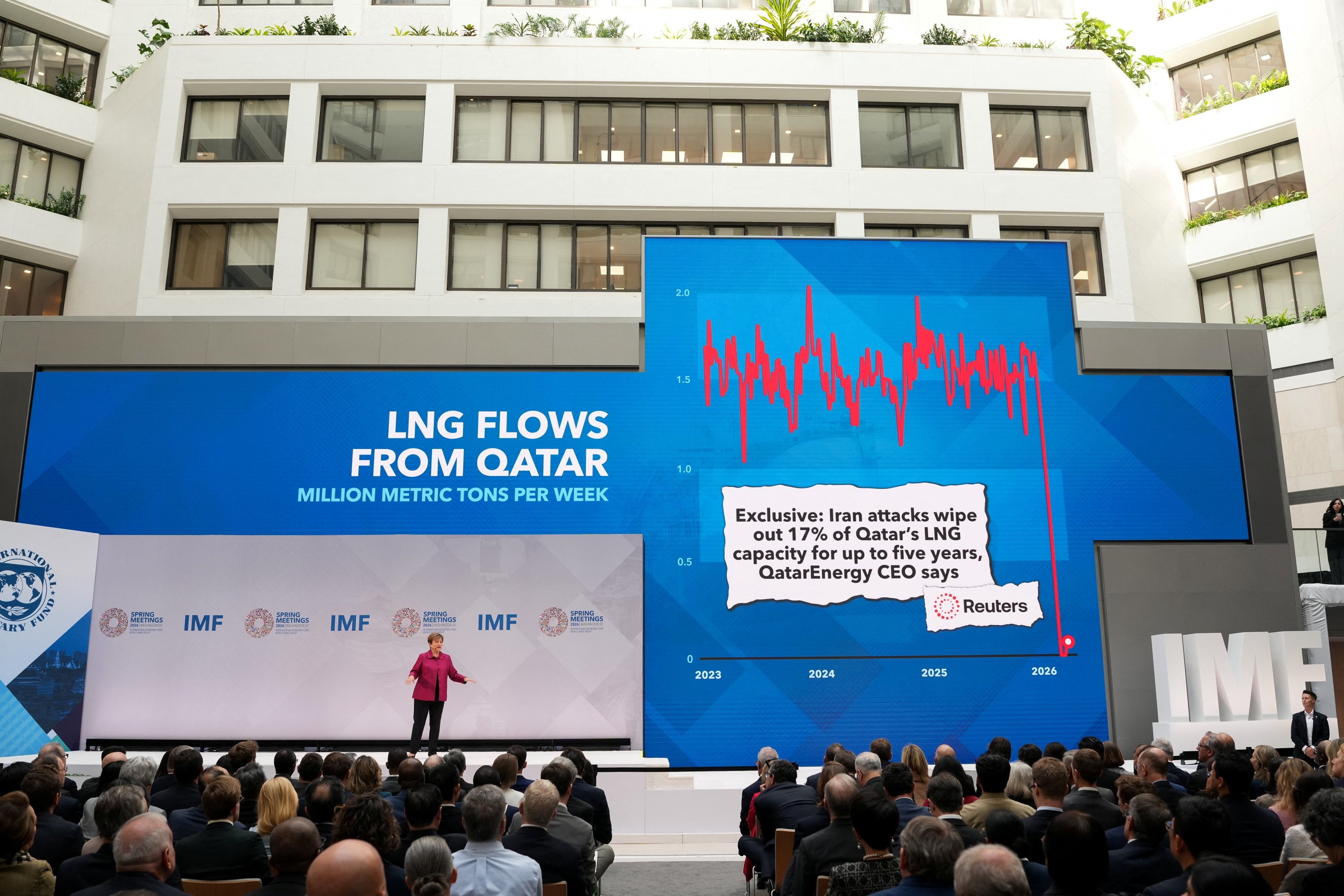
The U.S. currently holds the rotating presidency of the G-20, which also includes Russia and China, but it has excluded another member – South Africa – from participation, complicating the group’s ability to coordinate on this crisis.
“You’re trying to operate on consensus when there’s no consensus in the world right now on anything,” said Josh Lipsky, chair of international economics at the Atlantic Council.
Lipsky said statements by the IMF, World Bank and other multilateral lenders about their readiness to support countries hit hard by the war were clearly aimed at reassuring markets.
“It’s a signal to private creditors. This is not a time to flee countries that are in problematic waters. They will have support from the multilateral development banks and the international financial institutions. This is not going to be COVID. This is something that we can handle.”
Tougher conditions for many
Mary Svenstrup, a former senior U.S. Treasury official now with the Center for Global Development, said many emerging market and developing economies entered the crisis worse off than just a few years ago, with lower buffers, higher debt vulnerabilities and lower reserves.
“We need to have this crisis be a catalyst for IMF stakeholders to really rethink how the Fund supports vulnerable countries with the recognition that we’re going to be seeing more global shocks,” she said. “We can’t ask them to sacrifice growth and development for the sake of rebuilding buffers.”
Svenstrup said countries should pursue more ambitious reforms if they received fresh funds. “There probably does need to be more financial support from the (international financial institutions) but it needs to be affordable, and it needs to be in the context of reform programs and potentially broader debt relief,” she said.
Martin Muehleisen, a former IMF strategy chief who is now with the Atlantic Council, agreed, saying the IMF should work with donor countries to accelerate debt restructuring for borrowers and “get them off the debt cycle.” New lending should be tied to a credible debt-reduction road map, he said.
Eric Pelofsky, vice president at the Rockefeller Foundation, said low-income and lower middle-income countries paid twice the amount to service their debts in 2025 than before COVID, limiting funds for education, health care and other critical social programs. Half were now in or near debt distress, up from a quarter, just a few years ago.
“This new conflict threatens any recovery that occurred since the pandemic or the Ukraine war, and it takes countries that have basically been treading water, trying to stay away from default, and keeps them in a long term debt-growth-investment trap,” he said.
Türkiye’s current account balance registered a deficit of $7.5 billion in February, in line with market expectations, official data showed on Monday.
That figure, the highest since April 2025, lifted the January-February deficit to $14.54 billion, according to the Central Bank of the Republic of Türkiye (CBRT).
Excluding gold and energy, the balance posted a deficit of $1.46 billion in February, while goods recorded a gap of $7.5 billion.
Services item posted a surplus of $2 billion. Net revenues from travel amounted to $1.84 billion.
The data showed net outflows from direct investments were $138 million in February. Portfolio investments recorded a net inflow of $780 million.
Official reserves decreased by $10.63 billion, the CBRT said.
According to annualized data, current account deficit stood at $35.4 billion in February, while the goods shortfall totaled $73.2 billion.
In the same period, services recorded a net surplus of $62.6 billion, while the primary and secondary income realized a net deficit of $24 billion and $900 million, respectively.
The current account deficit was mainly financed through direct investment with a net inflow of $2.6 billion, portfolio investment with a net inflow $2.4 billion, loans with a net inflow of $38 billion and trade credits with a net inflow of $1.3 billion, the bank added.
German Chancellor Friedrich Merz announced on Monday that Berlin will cut fuel taxes as households struggle with the energy shock from the Middle East war, while also warning the conflict will have long-lasting consequences for Europe’s largest economy.
The announcement came after oil prices surged again following the collapse of U.S.-Iran peace talks and U.S. President Donald Trump’s decision to impose a blockade on the Strait of Hormuz.
Merz said the war “is the root cause of the problems we face in our own country,” and stressed Berlin was doing all it could to try to bring the conflict to an end.
Following talks between his CDU party and its coalition partners, Merz said his government had decided to cut the tax on petrol and diesel by around 17 euro cents ($0.19) for two months.
“This will very quickly improve the situation for drivers and businesses in the country, and above all for those who, mainly for professional reasons, spend a great deal of time on the road,” he told a news conference in Berlin.
Fuel prices in Germany, like elsewhere, have jumped sharply since the outbreak of the U.S.-Israeli war against Iran at the end of February.
Employers will also be able to pay their staff tax-free bonuses of up to 1,000 euros ($1,170) to mitigate the impacts of inflation, which has already started rising in Germany, the government announced.
Merz warned, however: “At the same time, we cannot offset every single outcome on the market with government funds… The state cannot absorb all uncertainties, not all risks, not all disruptions in global politics.”
The government plans to bring forward an increase in tobacco taxes to finance the reduction in fuel duties, Finance Minister Lars Klingbeil said.
Germany, Europe’s biggest economy, has been hard hit by the surge in energy costs at a time when many of its power-hungry manufacturers were already facing headwinds from U.S. tariffs and fierce Chinese competition.
Merz warned that the war’s effects were likely to be long-lasting. “The German economy will face a significant burden over an extended period,” he said.
Leading economic institutes this month slashed their growth forecast for Germany to just 0.6% for 2026, down from a prewar prediction of 1.3%.
In less than a decade, the global economy has faced at least three back-to-back major disruptions, excluding the sweeping tariffs imposed by U.S. President Donald Trump.
With the latest energy shock, originating from the conflict in the Middle East, the period of sustained pressure appears to be stretching on, reinforcing the view of fragility, particularly to supply chains.
The COVID-19 pandemic, Russia-Ukraine conflict, and now the crisis in the Middle East have left policymakers around the world on edge, even though they have largely begun to accept a new reality of trade and energy shocks, rising protectionism and geopolitical tensions.
However, recurring energy volatility and the fact that the world is still so much dependent on a single narrow waterway for around one-fifth of oil and natural gas supplies, brought to the surface many new questions, ranging from diversification of energy sources, expediting uptake of renewables and reinforcing the importance of cultivating regional rather than global ties.
In this sense, understanding the realities and delivering on a strategy in accordance with the new economic landscape becomes a crucial part for the countries to deliver on growth, curb volatility, and work on advancing technological transformation, which is increasingly becoming a central part of the emerging order.
The situation is, undoubtedly, very diverse when it comes to developed countries, emerging economies or those heavily reliant for energy imports to cover their needs.
The war between U.S., Israel and Iran, for example, has once again exposed the fragility of certain regions, such as Asia, but there are different stories and examples of how nations, such as China, have worked on diversification and stockpiling to boost their preparedness for events and crises such as this one.
Inflation pressures
Yet, the combined effect of trade fragmentation and energy instability has, at the same time, made inflation more difficult to contain.
Central banks, which spent much of the past years tightening monetary policy and then slowly and cautiously easing, now face a delicate balancing act: curbing price pressures without triggering a broader economic slowdown.
This week, the updated forecast by the International Monetary Fund (IMF) is likely to show global growth slowing down, with the scenario probably citing the impact of soaring oil and gas prices. Inflation forecasts are also expected to be increased, IMF chief Kristalina Georgieva told Reuters recently.
In January, the IMF had forecast global growth of 3.3% in 2026 and 3.2% in 2027.
This, at the time, was perceived as a sign that the global economy is managing to weather the effects of Trump’s tariffs better than anticipated.
“Technology investment, fiscal and monetary support, accommodative financial conditions, and private sector adaptability offset trade policy shifts,” the fund said at the time.
That “World Economic Outlook” update followed a yearlong period of swings in financial markets due to the quickly changing decisions of Trump on tariffs, trade deals and attempts to convince other nations and large multinationals to move their manufacturing to the U.S.
Since then, with fallout from the war in the Middle East, the concerns have not stayed limited to the fluctuations in stocks, but have gotten this broader sense of crisis unseen in decades if the conflict is to continue for longer.
Blockade of the Strait of Hormuz has triggered an oil and gas crisis that is “more serious than the ones in 1973, 1979 and 2022 together,” Fatih Birol, the head of the International Energy Agency (IEA), said in recent remarks.
It also prompted a rare release of emergency reserves in a coordinated effort, while governments kicked off different schemes, including fuel rationing, supporting customers and limiting the use of power to minimize the impact of the shortages in supplies.
This, as in any major global disruption, has led to relaxation in financial terms, with governments responding with a mix of fiscal support measures, including energy subsidies and targeted relief for households and businesses. However, such interventions come at a cost, adding to already elevated public debt levels and limiting room for future policy maneuver.
Uneven outlook
Moreover, considering the fragile cease-fire, currently in place, and the failed Islamabad talks, it remains to be seen how and if the U.S. administration and Iran sort out their disagreements and how markets move from here on.
With tariffs, it was clear that rates can be removed almost as fast as being imposed, the U.S. Supreme Court has also played a role in this, but energy disruptions come with more leverage and are, in fact, hurting production, factory activity, travel demand and consequently jobs and wages too.
In mid-March, the World Food Programme (WFP) warned that tens of millions more people could face acute hunger if the Iran war continues through to June, suggesting that countries in sub-Saharan Africa and Asia face the highest risk due to reliance on imports.
Similarly, although regressing since the announcement of the cease-fire, European gas prices have gone through the roof and the conflict once again exposed the risks the continent is facing as it moved to cut dependence on Russia.
Already grappling with the aftereffects of energy shock from 2022, Europe, in addition to much of Asia, is seen in need to refine its energy strategy.
Some analysts even point out that nuclear energy could revive following the recent developments in the Middle East, while expectations also revolve around new pipelines and energy corridors – that could potentially bypass the Hormuz Strait.
Following the COVID-19 pandemic, the U.S. economy gained its foothold faster than Europe, although inflation lingered for some time and has now again risen due to energy prices. With the downturn in the property sector and lower consumer demand, China is also facing structural challenges, while the competition between the duo in the domain of technology and artificial intelligence continues.
Many emerging markets also remain vulnerable to external shocks, including fluctuations in energy prices and shifts in global capital flows.
Looking ahead, trade fragmentation and energy-related disruptions are unlikely to fade quickly, economists argue. At best, recovery from the Middle East disruption, even with cessation of hostilities, would take months, if not longer.
For now, the global economy is holding up under pressure, or better said, it is getting accustomed to risks.
But whether this resilience can be sustained will depend largely on how effectively policymakers and businesses navigate an increasingly complex and divided global landscape.
Libya’s two rival legislative bodies have signed the divided country’s first unified state budget in more than a decade, the central bank said on Saturday.
The north African country has struggled to recover from the chaos that erupted following the 2011 Arab Spring uprising that toppled longtime ruler Muammar Gaddafi.
It remains divided between a U.N.-recognized government led by Prime Minister Abdulhamid Dbeibah based in Tripoli and an eastern administration in Benghazi backed by military leader Khalifa Haftar.
“This step reflects real progress toward unifying fiscal policy and strengthening the good management of public spending,” the central bank said of the new budget, calling the agreement “the first consensus on unified spending across Libya in over 13 years”.
The agreement was signed by Issa Al-Arebi, a representative of the Benghazi-based House of Representatives, and Abdul Jalil Al-Shawish, a representative of the High Council of State in Tripoli.
Despite generating $22 billion in oil revenues last year, up more than 15% compared to the year before, Libya faces a foreign currency deficit of $9 billion, according to the central bank.
Last January, the bank devalued the dinar by nearly 15% for the second time in less than a year, citing a host of issues including the lack of a unified state budget.
The central bank said the new agreement would bolster financial stability in the country, commending the “positive role of the United States in supporting mediation efforts” between the two sides.
Libya holds Africa’s largest oil reserves at around 48.4 billion barrels, and currently produces about 1.5 million barrels per day while seeking to increase output to two million.
Dbeibah also thanked Trump’s senior adviser on Arab and African affairs Massad Boulos for “supporting the mediation efforts that led to this agreement”.
“This is a step that carries promising signs, but the true test remains the serious commitment of all parties, so that it translates into tangible results for citizens in their daily lives,” Dbeibah wrote in a statement.
Treasury and Finance Minister Mehmet Şimşek said on Friday the economic impact of the Middle East conflict would be negative but manageable, stressing that Türkiye’s disinflation-focused program had already proven its resilience against external shocks.
Şimşek described the conflict as a “major shock” and warned that wars tend to have longer-lasting and deeper economic consequences than other types of crises.
He was speaking at the International Economy Summit in the Sapanca district of the northwestern Sakarya province.
“Wars create much more permanent and larger consequences than other shocks,” Şimşek said. “We believe Türkiye is resilient. We proved this last year, and we will prove it again this year.”
The U.S.-Israeli war on Iran, which started in late February before the sides agreed on a fragile two-week cease-fire this week, has damaged Gulf energy production, stranded tanker traffic and boosted oil prices by about 50% in the world’s worst energy shock.
That came as a major test for countries that import most of their energy needs, including Türkiye.
Şimşek said the conflict had a particularly strong impact on global energy markets because of the strategic importance of the Strait of Hormuz, a key route for oil, natural gas and fertilizer.
Opening the waterway at the southern tip of the Gulf to free hundreds of stranded tankers and other vessels was a condition of the cease-fire announced on Tuesday.
But the flow remains heavily restricted, keeping futures prices near $100 a barrel.
“We are aware of the magnitude of this shock,” Şimşek said, adding that even if the cease-fire holds, both the global economy and Türkiye will still suffer some degree of damage.
Turkish authorities have taken steps to cushion the fallout of the war on domestic markets. Şimşek on Thursday said they were prepared for more steps if the cease-fire does not hold.
The Turkish central bank has already halted its easing cycle at 37%, lifted its overnight rate by about 300 basis points to near 40%, and sold and swapped tens of billions of dollars in foreign exchange and gold reserves to support the Turkish lira.
Şimşek said the conflict caused some deterioration in the inflation outlook, which authorities had hoped would dip below 20% by year-end. Annual inflation eased to 30.9% in March.
Strong fiscal buffers
Şimşek on Friday said the government’s medium-term economic program introduced in mid-2023 had strengthened Türkiye’s macroeconomic foundations, increased resilience and enabled the country to better absorb external shocks.
“The program has proven itself,” he said. “Despite the trade wars, the ’12-Day War,’ drought and agricultural frost last year, we got through all of these shocks without major losses in the program,” he noted.
He said Türkiye was seen as one of the countries best positioned to withstand geopolitical shocks because of its relatively strong fiscal buffers, lower macroeconomic imbalances and limited direct energy dependence on the Gulf region.
According to Şimşek, Türkiye has almost no dependence on oil supplies that pass through the Strait of Hormuz, while natural gas imports from Iran continue to flow through pipelines and have not been disrupted.
“This is important because if the cease-fire does not hold and the war drags on, many countries could face energy supply security problems,” he said.
Şimşek said one of Türkiye’s strongest buffers was its fiscal position.
Despite the cost of the devastating 2023 earthquakes and other spending pressures, he said the budget deficit was reduced to below 3% of gross domestic product and that both public debt and the deficit remain low compared with other emerging markets.
He noted that average budget deficits in emerging economies stood at 6.3% of GDP last year, more than double Türkiye’s level.
Şimşek acknowledged that the current account deficit would worsen because of higher oil prices, weaker tourism revenues and trade disruptions.
“A current account deficit increase of around 1 percentage point is possible, while growth could slow by around half a percentage point,” he said. “All of these effects are manageable and will not derail the program.”
He also said Türkiye remained comfortable in terms of reserve adequacy despite some capital outflows during the early phase of the conflict.
“With the cease-fire, those flows are returning,” Şimşek said. “Demand for foreign currency from our citizens remained very limited thanks to confidence in the program. We are in a very comfortable position in terms of reserve adequacy.”
Şimşek reiterated that the government would continue prioritizing disinflation and said authorities would do whatever was necessary to maintain price stability and preserve macroeconomic discipline.


-
 Politics2 days ago
Turkish FM, EU’s Kallas discuss US-Iran cease-fire in phone call
-
 Economy2 days ago
Libya signs 1st unified state budget in 13 years
-
 Daily Agenda2 days ago
Syrians under temporary protection decreased
-
 Daily Agenda3 days ago
Minister Gürlek announced! Flash move from Türkiye for Sumud fleet
-

 Politics2 days ago
Türkiye completes indictment over Israeli raid on Gaza-bound aid flotilla
-
 Daily Agenda2 days ago
Budget lesson from Esenler to CHP municipalities
-
 Daily Agenda2 days ago
Vice President Cevdet Yılmaz: All of Türkiye will win when terrorism is off the agenda
-
 Daily Agenda1 day ago
Türkiye solves the water crisis – Last Minute News