
Sports
Sports-politics unholy alliance: Never-ending toxic relationship?

Sports and politics have never really been separate. Sport markets itself as fair play and unity, but politics is driven by power and interest.
When they face off, the results shape national identity, fuel protest, and sometimes steal the spotlight from competition itself.
From Cold War boycotts to Russia’s war in Ukraine and the Gaza conflict, the past decade has shown that this partnership can be as divisive as it is inevitable.
Sport vs. statecraft
The belief that sport should be apolitical has always been more ideal than reality.
FIFA President Gianni Infantino has forged an unlikely bromance with U.S. President Donald Trump. With the 2026 FIFA World Cup on the horizon, Infantino has become a frequent visitor to the Oval Office, a visible sign of the governing body’s close ties to the White House.
That relationship was on full display at the World Cup draw in Washington in December, when Trump was presented with FIFA’s inaugural Peace Prize. Standing beside him, Infantino praised the president’s leadership, saying the world wanted “hope” and “unity” and that Trump deserved the honor.
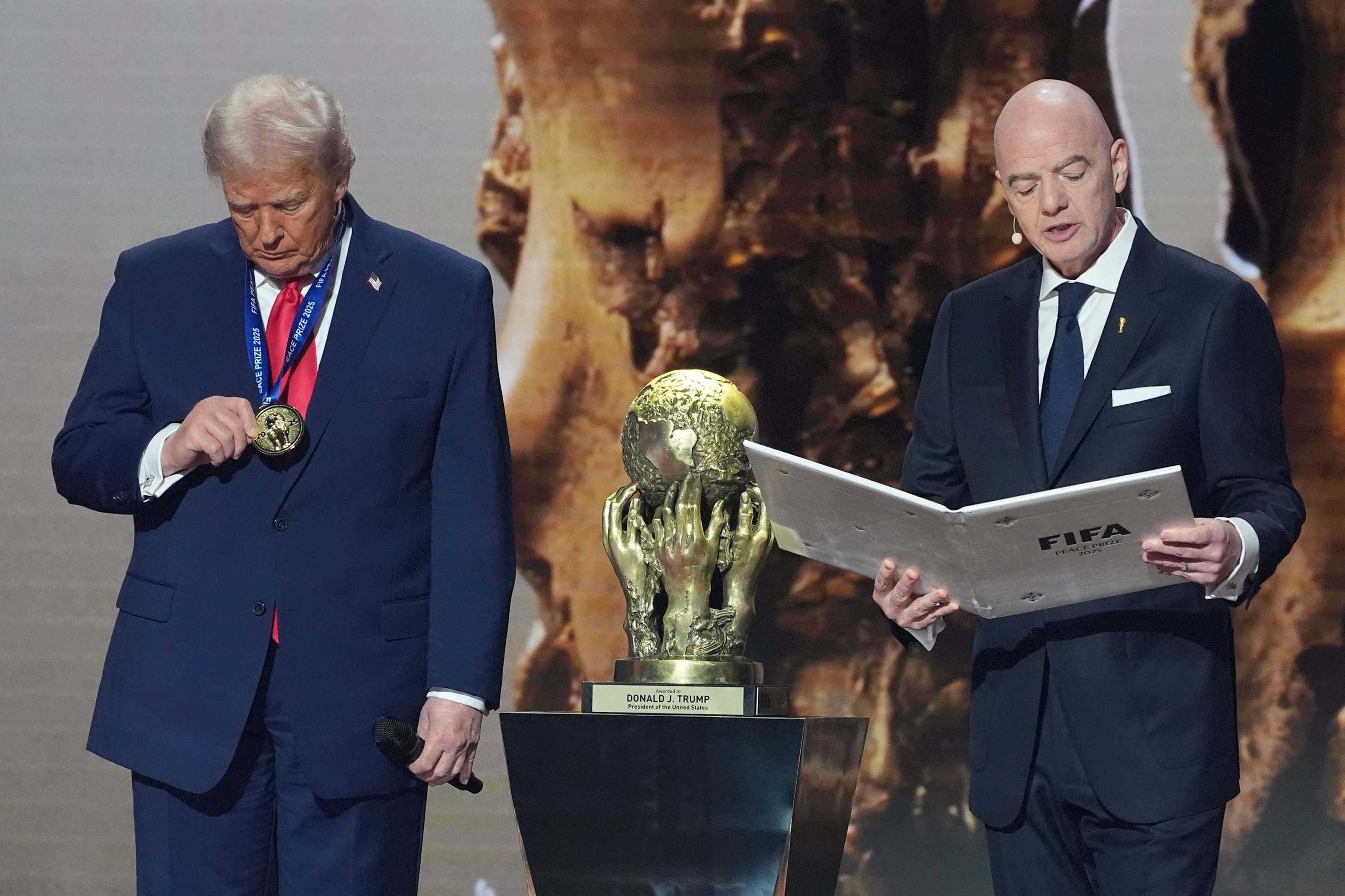
The decision sparked immediate controversy. Critics questioned the optics of awarding such a prize to a sitting political figure, especially in a deeply polarized climate. Despite the backlash, the award stands.
Behind the scenes, there is said to be growing unease within FIFA itself. Mid-level and senior officials have privately expressed embarrassment over the move, concerned that the gesture blurred the line between global sport and partisan politics at a moment when the organization is already under scrutiny.
Even the ancient Olympics reflected city-state rivalry and alliances. In 1936, Nazi Germany tried to turn the Berlin Games into a propaganda victory, only to be undermined by Jesse Owens’ performance on the track.
The Cold War turned Olympic arenas into ideological battlefields. The 1972 Munich Games were scarred by terror. The U.S. boycotted the 1980 Moscow Olympics over the Soviet invasion of Afghanistan, and the Soviets returned the gesture in 1984. Athletes lost career-defining moments because of state decisions.
Athlete protest has a long tradition. Tommie Smith and John Carlos were expelled in 1968 after raising black-gloved fists at the Mexico City Games. Muhammad Ali was stripped of his heavyweight title for refusing the Vietnam draft. These moments, once controversial, are now part of sporting lore.
Even club football has reflected political fault lines. Football Against the Enemy explored how football often mirrors wider political currents, revealing that when the sport matters to billions, it becomes inseparable from national narratives and conflict. Kuper travelled to 22 countries to show how football both reflects and shapes cultural identity and political tensions.
Protest, war and global pressure
The 2020 murder of George Floyd sparked a wave of athlete activism.
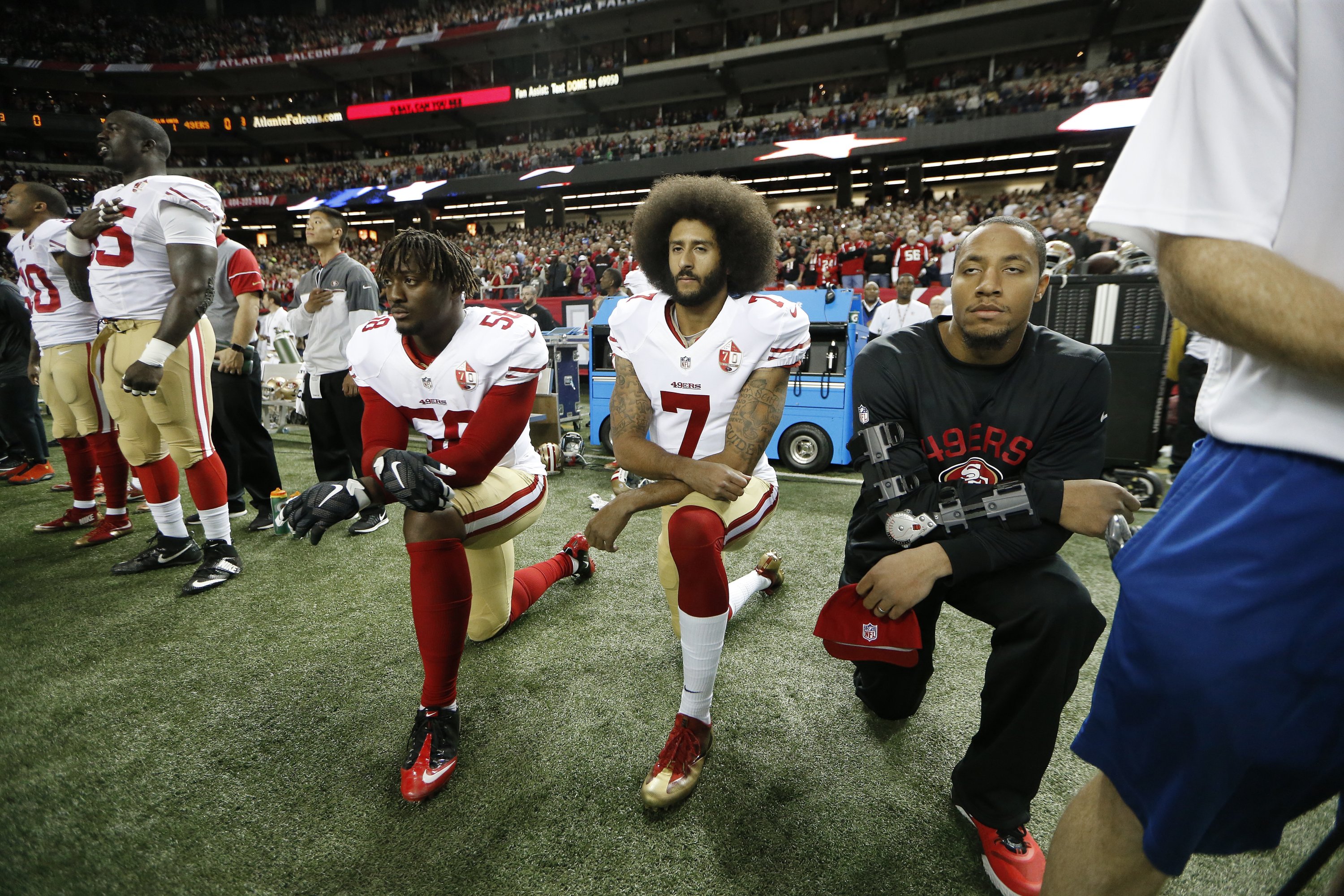
NBA players wore social justice messages. Premier League teams knelt before matches. The WNBA campaigned against a sitting U.S. senator who was a team owner. The NFL, after sidelining Colin Kaepernick for kneeling in 2016, later embraced anti-racism messaging in stadiums, a shift some saw as genuine and others as commercially driven.
International football brought its own controversies. The 2022 FIFA World Cup in Qatar drew intense scrutiny over workers’ rights, human rights concerns and allegations tied to the bidding process, with some players staging symbolic protests and FIFA trying to enforce a facade of neutrality.
Russia’s 2022 invasion of Ukraine forced global sport into political action. FIFA, UEFA and the International Olympic Committee (IOC) imposed bans or neutral status on Russian teams and athletes in many competitions, decisions that brought praise and criticism for inconsistency.
At the same time, the Gaza conflict sparked calls from some federations and public figures to exclude Israel from international competitions, highlighting how geopolitical disputes spill into sport and expose questions about fairness and sanctioning.
It’s deeper
Government interference has also blurred boundaries. FIFA suspended Zimbabwe in 2022 after state authorities dissolved its football association, a ban that sidelined national teams before being lifted in 2023. Early in 2026, Gabon briefly suspended its national team after humiliation at the Africa Cup of Nations, risking FIFA penalties before reversing course. In both cases, political decisions threatened athletes’ opportunities in global sport.
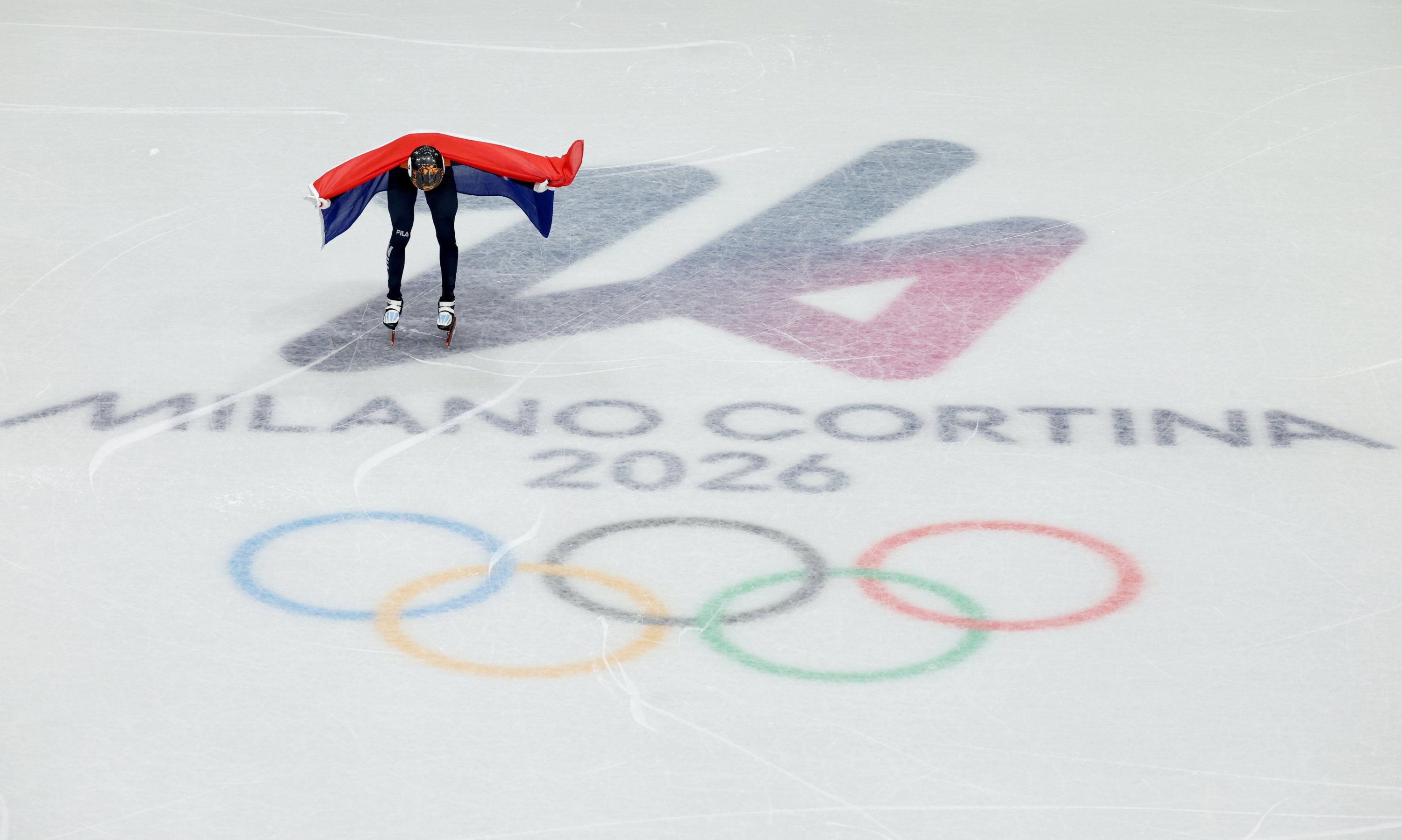
In the United States, the 2024 presidential cycle played out on sporting stages as well. High-profile athletes endorsed candidates. Political leaders appeared at games. By the run-up to the 2026 FIFA World Cup, diplomatic tensions around visas and policy disputes were influencing media narratives around teams and fans just as much as match preparation. Even the ongoing Milan-Cortina Winter Olympics are shadowed by broader social debates, from athlete eligibility to national policy clashes reverberating beyond the slopes.
Influence that changes society
Despite the tension, political engagement in sport can drive meaningful change.
Maya Moore retired from basketball to fight for criminal justice reform, helping secure a wrongful conviction reversal. Brittney Griner’s release from detention in Russia was supported by sustained advocacy from teammates, the WNBA and public pressure. Didier Drogba’s televised plea after Ivory Coast qualified for the 2006 World Cup helped encourage a cease-fire during civil war and later became a symbol of unity when the national team played in a former rebel-held city.
Sport has also brought athletes into governance. George Weah became president of Liberia after a celebrated football career. Imran Khan transitioned from cricket legend to prime minister of Pakistan. In these cases, sporting influence became political capital.
The costs of entanglement
Yet the dangers are clear. Mega events can be used to soften international criticism of host nations. Boycotts often punish athletes rather than policymakers. Governing bodies face accusations of selective enforcement. Fans who turn to sport for escape increasingly find themselves entangled in the world’s sharpest debates.
The war in Ukraine and the Gaza genocide have demonstrated how quickly global tournaments can become extensions of wider conflict, turning venues into stages where power, protest and politics play out against the backdrop of competition.
A reality to be managed
Sport cannot be divorced from society. Its global reach ensures politics will always follow. The challenge for organisations such as FIFA and the IOC is to act consistently, protect athletes’ rights and resist becoming instruments of political theatre.
The relationship between sport and politics may be uneasy, but it is not new and is unlikely to disappear. The test ahead is whether global sport can preserve its integrity while standing at the centre of the world’s most heated disputes.
After all, it is a toxic relationship built to endure. A stormy marriage that survives every crisis, bound together for better or worse, with no real prospect of separation.

Four-time world champion Max Verstappen criticized Formula One’s new-era machinery after the second day of preseason testing in Bahrain, branding the redesigned cars “anti-racing.”
The Dutch driver logged 136 laps for Red Bull on Wednesday and posted the second-fastest time of the day before handing over duties to new teammate Isack Hadjar on Thursday. Despite the mileage and early pace, Verstappen made clear he is far from impressed.
Speaking at his first news conference of the season, he questioned the direction of this year’s sweeping regulation changes, which have forced every team into a full rethink of chassis and power units with a stronger emphasis on energy management. For Verstappen, the shift risks dulling the wheel-to-wheel edge that defines Formula One.
“To drive, they are not a lot of fun, to be honest,” he said.
“I would say the right word is management. It’s not very Formula One-like. It feels a bit more like Formula E on steroids.
“But the rules are the same for everyone, so you have to deal with that.
“As a pure driver, I enjoy driving flat out and at the moment you cannot drive like that. There’s a lot going on.
“A lot of what you do as a driver, in terms of inputs, has a massive effect on the energy side of things. For me, that’s just not Formula One.
“Maybe it’s then better to drive Formula E, right? Because that’s all about energy, efficiency and management.”
Verstappen said he does like the look of the new cars.
“Honestly, the proportion of the car looks good, I think,” he said. “That’s not the problem. It’s just everything else that is a bit, for me, anti-racing.”
He tempered his criticism when it came to the engineers and designers working under the new regulations.
Red Bull have dispensed with the Honda engines of previous years and are competing this season for the first time with their own factory-built power units.
“On the other hand, I also know how much work has been going on in the background, also from the engine side, for the guys,” he said. “So it’s not always the nicest thing to say, but I also want to be realistic as a driver.”
On Wednesday, seven-time champion Lewis Hamilton also weighed in, calling on the FIA, the sport’s governing body, to resolve differing interpretations of the new regulations to ensure all teams start “on an equal playing field.”
On track Thursday, Charles Leclerc topped the timesheets for Ferrari with 128 laps.
World champion Lando Norris, who was quickest on Wednesday, was just behind after putting his McLaren through 139 laps, while George Russell was third-fastest for Mercedes.
U.S. Immigration and Customs Enforcement will serve as a key pillar of security for the 2026 FIFA World Cup, a role that places the agency at the heart of the largest tournament in the sport’s history and at the center of an ongoing political storm.
Acting ICE Director Todd Lyons told the House Committee on Homeland Security that Homeland Security Investigations, the agency’s investigative arm, will be fully integrated into World Cup operations.
“HSI is a key part of the overall security apparatus for the World Cup,” Lyons said, responding to Rep. Nellie Pou of New Jersey, whose district includes MetLife Stadium, the scheduled site of the final. He made clear the agency does not plan to pause enforcement actions around matches or FIFA events, adding that ICE is “dedicated to securing that operation” and to protecting “participants as well as visitors.”
The expanded 48 team tournament begins June 11 and runs through July 19 across 16 cities in the United States, Mexico and Canada. With 104 matches and millions of expected visitors, it will be the largest World Cup ever staged, requiring coordination across federal, state and international agencies under the Department of Homeland Security.
HSI typically handles counterterrorism intelligence, visa security, human trafficking investigations, financial crimes and cross border threats. At global sporting events, its focus includes intelligence sharing, fraud investigations, smuggling networks and potential risks to venues and teams. Deportations and detention operations fall under a separate ICE division.
( Celal Güneş – Anadolu Ajansı )
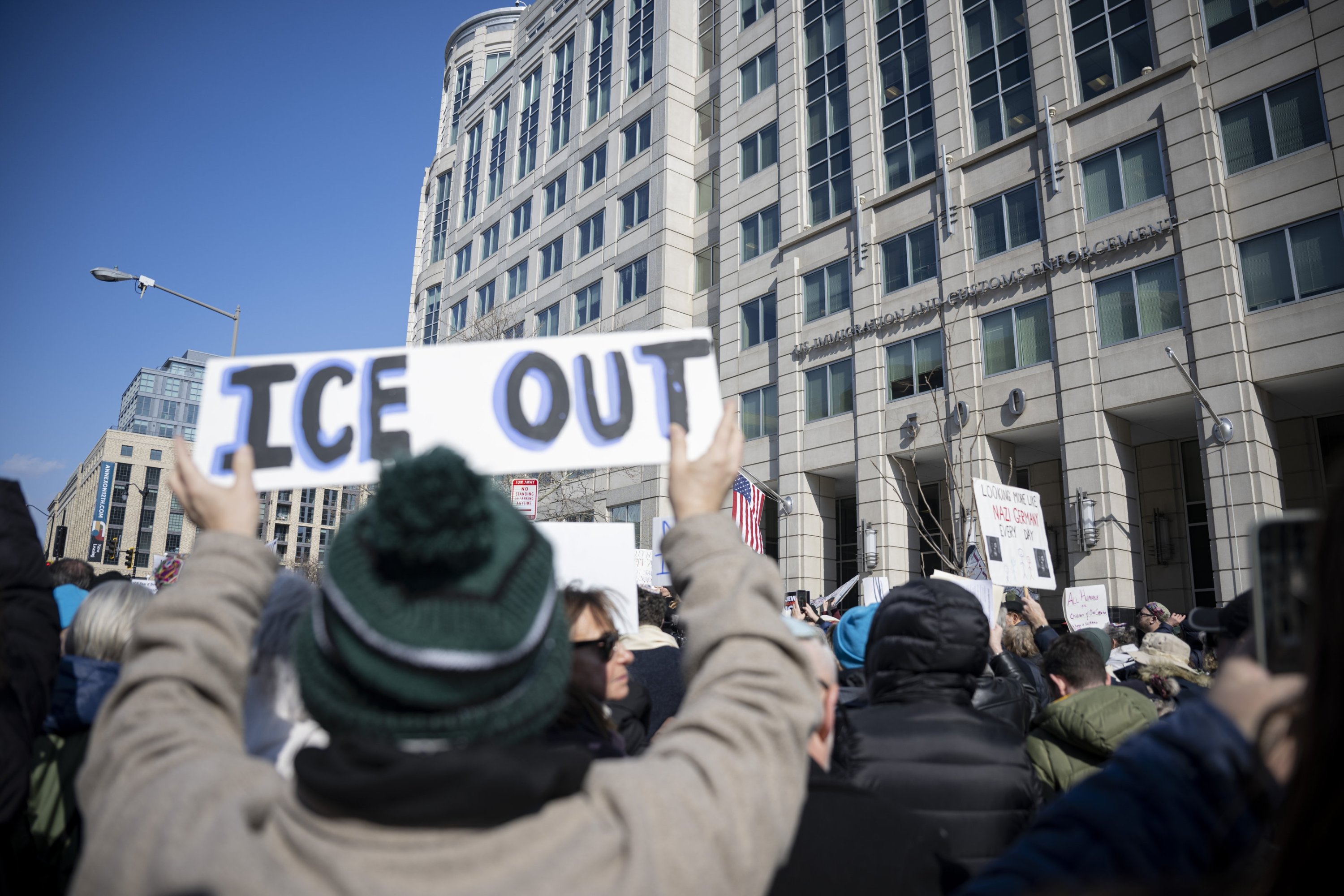
Still, the agency’s expanded visibility comes during a period of heightened criticism. ICE has drawn backlash over aggressive street level arrests and allegations of wrongful detentions. Recent incidents, including a fatal encounter involving federal agents in Minnesota, have intensified scrutiny, though administration officials have rejected claims of misconduct tied to broader policy.
Abroad, ICE’s presence at the Winter Olympics in Milan and Cortina d’Ampezzo has sparked protests. Demonstrations in Milan turned violent, leading to arrests, as activists objected to the deployment of ICE officers assigned to protect senior U.S. officials including Vice President JD Vance and Secretary of State Marco Rubio.
For the World Cup, federal officials frame ICE’s involvement as standard protocol for a major global event. Critics argue the agency’s reputation could shape how international fans view the United States as a host.
Rıza Kayaalp waited 610 days to step back onto the mat. When he did, he looked as if he had never left.
The three-time Olympic medalist and five-time world champion marked his return by winning gold at the Zagreb Open, allowing just one point across four bouts.
It was a statement performance from one of Türkiye’s most decorated athletes, a reminder that even a long absence could not dull his edge.
Kayaalp had qualified quota for the Paris 2024 Olympics but was unable to compete due to a medication issue linked to treatment for persistent tinnitus. His appeal to the Court of Arbitration for Sport was upheld, clearing the way for his return. He describes the period as the toughest of his career.
“For an athlete with so many titles, this was the worst thing that could happen,” he said. “Because of a simple issue, we faced a huge problem. But I always believed I would overcome it, return to my job and leave the sport on my own terms.”
The ordeal, he says, renewed his hunger.
“There was fatigue before. In this one and a half year period, my desire to work came back stronger. I was already motivated to be champion. Now it is even greater. I feel renewed.”
At 36, Kayaalp is targeting the Los Angeles 2028 Olympics. He insists medals for himself matter less than medals for his country. Still, one prize remains missing from his collection: Olympic gold.
He also has history in his sights. Kayaalp shares the record for most European titles with Russian great Aleksandr Karelin. A 13th crown at the 2026 European Championships in Tirana would give him the record outright.
“I was so close,” he said. “Fourteen finals, 12 European titles, one more for the record, and then something unwanted happens. But everything is resolved. To bring that record to my country would mean a lot.”
His return in Zagreb carried nerves. He felt them at the morning weigh in. He felt them before the first bout. But once his feet touched the mat, instinct took over.
“I missed it so much,” he said. “When you step on the mat, everything changes.”
Galatasaray host Eyüpspor on Friday in Week 22 of the Süper Lig, aiming to protect their lead at the top of the table.
Kickoff at Rams Park in Istanbul is set for 8:00 p.m. local time, and the stakes are clear.
Galatasaray enter the round with 52 points from 21 matches, built on 16 wins, four draws and only one defeat.
They have scored 50 goals and conceded 14, the best goal difference in the league at +36, reflecting a side that attacks with volume and defends with discipline.
Eyüpspor, meanwhile, sit 15th with 18 points. Their record of four wins, six draws and 11 losses keeps them above the relegation line but far from safety. With 17 goals scored and 30 conceded, they have struggled for consistency at both ends, particularly away from home, where defeats have mounted.
This will be the fourth Süper Lig meeting between the clubs.
Galatasaray have won two and drawn one of the previous three, scoring nine goals and conceding three.
In the reverse fixture earlier this season, they claimed a 2-0 win at the Atatürk Olympic Stadium, controlling possession and limiting Eyüpspor’s attacking space.
Form further tilts the balance. Since a 1-0 loss to Kocaelispor in Week 12, Galatasaray are unbeaten in nine league matches, collecting seven wins and two draws. Their most recent outing, a 3-0 away victory over Rizespor, showcased their depth, with goals coming from different areas of the pitch and the defense rarely stretched.
At Rams Park, they have turned dominance into routine. Galatasaray have not lost a league match at home since a 1-0 defeat to Fenerbahçe late in the 2023-24 season. Over the past 29 home league games, they have recorded 23 wins and six draws. The 4-0 win over Kayserispor in their last home appearance underlined how quickly they can overwhelm visiting sides.
Individually, the numbers are just as strong. Mauro Icardi leads the team with 10 league goals, while Victor Osimhen has nine and is enjoying his best run of the season.
The Nigeria striker has scored in five consecutive league matches, beginning with a brace against Samsunspor and continuing against Antalyaspor, Fatih Karagümrük, Kayserispor and Rizespor. His movement behind defenses and ability to finish early chances have added another layer to Galatasaray’s attack.
Support has come from across the squad. Leroy Sane and Barış Alper Yılmaz have six league goals each, Gabriel Sara has five, and Yunus Akgün, İlkay Gündoğan and Lucas Torreira have contributed from midfield. The spread of goals makes Galatasaray less dependent on a single source and harder to contain.
Defensively, they are second only to Göztepe in goals conceded, with 14 allowed in 21 matches. Center backs Davinson Sánchez and Abdülkerim Bardakcı have anchored a back line that rarely loses shape. Bardakcı, however, is one booking away from suspension and would miss next week’s trip to Konyaspor if cautioned.
Eyüpspor will likely approach the match cautiously, focusing on compact defending and counterattacks. For them, even a draw would represent a valuable result in the survival fight.
For Galatasaray, anything less than three points would feel like a missed opportunity in a title race that demands steady accumulation.
On a battered five-a-side field carved out of rubble and shattered buildings, Jabalia Youth faced Al-Sadaqa in the Gaza Strip’s first organized soccer tournament in more than two years.
The game finished in a draw, as did the following match between Beit Hanoun and Al-Shujaiya.
The scorelines mattered little. Fans pressed against the chain-link fence at Palestine Pitch in the devastated Tal al-Hawa district of Gaza City, cheering every touch and rattling the metal in rhythm.
Boys scrambled up a cracked concrete wall for a better view, while others peered through gaps in the ruins. A lone drumbeat echoed across the wreckage, carrying the sound of soccer back into a city that has missed it.
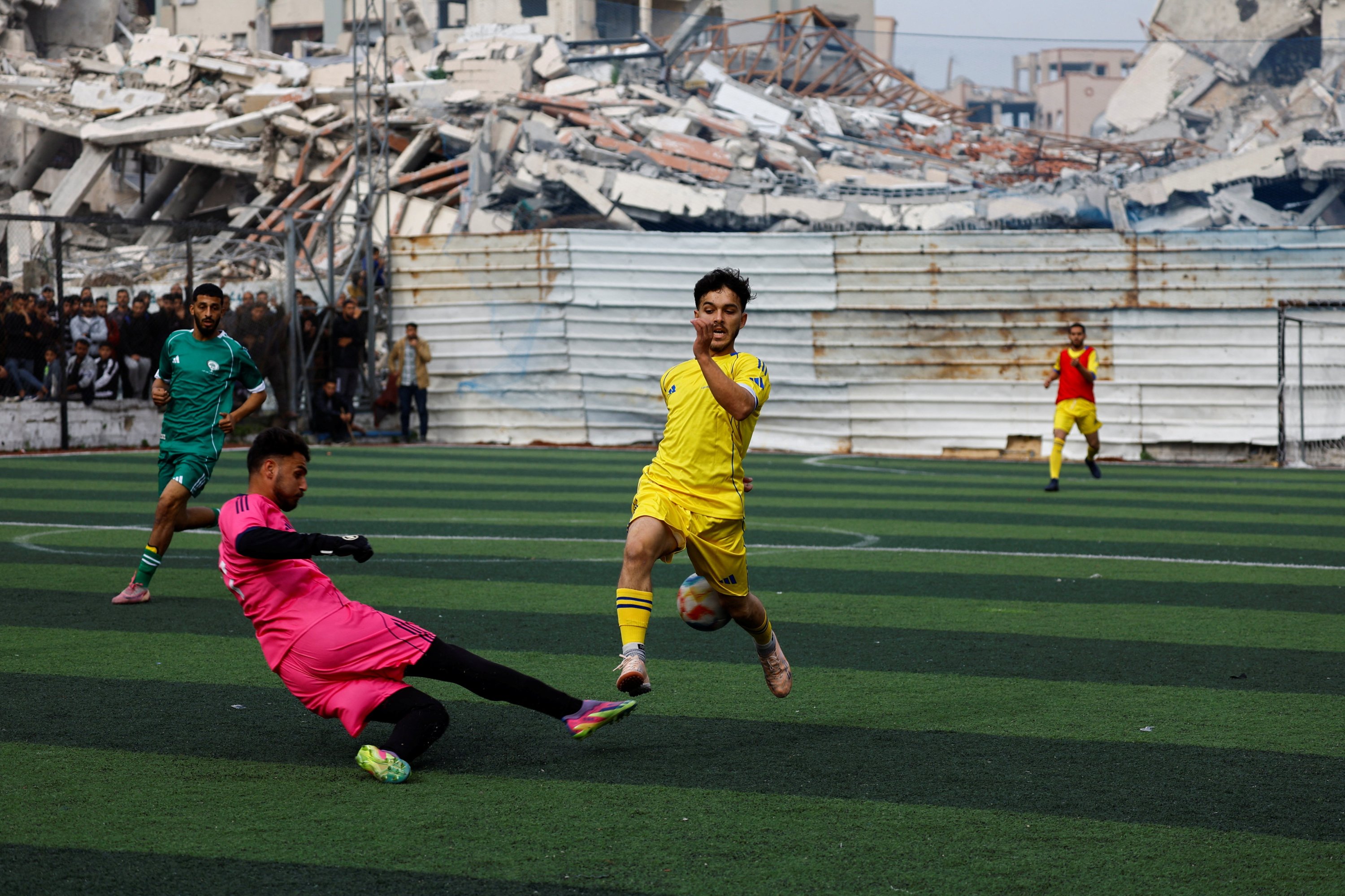
Youssef Jendiya, 21, a Jabalia Youth player from an area of Gaza largely depopulated and bulldozed by Israeli forces, described his feelings at being back on the pitch.
“Confused. Happy, sad, joyful, happy.”
“People search for water in the morning, food, bread. Life is a little difficult. But there is a little left of the day when you can come and play soccer and express some of the joy inside you,” he said.
“You come to the stadium missing many of your teammates, killed, injured or those who traveled for treatment. So the joy is incomplete.”
Four months after a cease-fire ended major fighting in Gaza, there has been almost no reconstruction.
Israeli forces have ordered residents out of nearly two-thirds of the strip, crowding more than 2 million people into a sliver along the coast, most in makeshift tents or damaged buildings.
The former site of Gaza City’s 9,000-seat Yarmouk Stadium, which Israeli forces leveled during the war and used as a detention center, now houses displaced families in white tents clustered on what was once the pitch.
For this week’s tournament, the Football Association cleared rubble from a collapsed wall along a half-sized field, installed a fence and swept debris off the old artificial turf.
By taking part, the teams were “delivering a message,” said Amjad Abu Awda, 31, a Beit Hanoun player.
“That no matter what happened in terms of destruction and war, we continue playing and living. Life must continue.”
Inter Miami’s bold bet on Lionel Messi keeps rewriting the balance sheet.
In December, the Argentine star powered the club to its first MLS Cup. Now, with the 2026 season less than two weeks away, he has lifted them to another milestone, this time off the pitch.
The Herons are Major League Soccer’s most valuable franchise.
Sportico reported Tuesday that Miami is valued at $1.45 billion, a 22% increase from last year and $50 million more than Los Angeles FC. It marks the first time in the five years of Sportico’s MLS valuations that LAFC have not ranked No. 1.
Though second, LAFC still posted a 9% year over year increase to $1.4 billion. The Black and Gold employ Son Heung-min, one of the league’s most popular international stars. Messi and Son are the two highest-paid players in MLS.
While that is good news for Miami and Los Angeles, the leaguewide economics may raise some concern. The bottom 12 teams in valuation saw their values rise by an average of just 2% from 2025. Three clubs, the San Jose Earthquakes, Vancouver Whitecaps and CF Montreal, declined in value, according to the report.
The Whitecaps reached the MLS Cup final last year behind German veteran Thomas Müller.
Sportico valued all clubs, including real estate and football-related businesses owned by club owners such as NWSL franchises, at a combined $23 billion.
San Diego FC, the league’s newest club entering its second season, is valued at $765 million, ranking 10th in MLS.
The MLS season kicks off Feb. 21, highlighted by Miami’s visit to LAFC. The match was moved to the Los Angeles Memorial Coliseum to accommodate increased demand.


-
 Lifestyle2 days ago
Madrassas, mosques shape Uzbekistan’s twin cultural cities
-
 Daily Agenda2 days ago
It was revealed in the Jeffrey Epstein files: They even celebrated the operation for TL! Here are those correspondences
-
 Economy2 days ago
Türkiye imports record 273.3 tons of silver in January amid global rush
-
 Daily Agenda1 day ago
President Erdoğan received the DEM Party delegation! Agenda Terror-free Türkiye process
-
 Politics3 days ago
Türkiye eyes strategic dialogue with Africa as key event opens
-

 Economy3 days ago
Valentine’s Day, Ramadan rush to boost e-commerce sales in Türkiye
-
 Politics2 days ago
Kyrgyz speaker highlights Turkic cooperation in Ankara meeting
-
 Daily Agenda3 days ago
BREAKING NEWS! Terror-free Türkiye message from the Speaker of the Turkish Grand National Assembly, Numan Kurtulmuş: The commission report will be presented to the Turkish Grand National Assembly