
Economy
Türkiye, Canada formally launch talks on free trade agreement

Türkiye and Canada have formally launched negotiations for a free trade agreement (FTA), Canadian Prime Minister Mark Carney’s office said Tuesday.
“The technical teams from both countries will undertake the necessary work to define the scope and ambition of the agreement and prepare for the first round of negotiations,” the office said in a statement.
The move follows an agreement last month by Canadian and Turkish trade ministers to begin exploratory discussions aimed at concluding a free trade deal.
The statement came shortly after President Recep Tayyip Erdoğan received Carney for talks ahead of the NATO summit in the capital, Ankara.
Erdoğan and Carney discussed bilateral ties as well as regional and global developments, the Directorate of Communications said in a statement.
During the meeting, Erdoğan said Türkiye and Canada should intensify efforts to strengthen cooperation in the new era ahead, particularly in trade, security, the defense industry and energy, adding that making use of cooperation potential would benefit both countries.
The president also reiterated Ankara’s support for strengthening NATO’s European pillar but stressed that such efforts should not replace the “trans-Atlantic bond.”
Erdoğan also said that non-EU allies should be included in the European Union’s defense initiatives, said the statement.
This is the first visit by a Canadian premier to Türkiye in 11 years.
At the summit, Carney is expected to further strengthen Canada’s contributions to the defense alliance, forge new partnerships and build shared security, including for Ukraine.

Türkiye stands ready to be one of the main forces behind the industrial transformation NATO needs, Haluk Görgün, head of the Presidency of Defense Industries (SSB), said Tuesday.
Görgün’s remarks came at the opening of the NATO Defense Industry Forum in Ankara ahead of a gathering of the alliance’s leaders in the Turkish capital.
The focus of the summit is a stronger Europe for a stronger NATO. The Trump administration has warned its allies that they must handle Europe’s security alone as the U.S. focuses on China and the Indo-Pacific region.
“The Turkish defense industry is ready to be one of the driving forces behind the industrial transformation that NATO requires,” Görgün said.
Serious upheavals, wars and security challenges across nearly every region of the world over the past three years have reshaped the global defense environment, he noted.
“What is certain is that we have very little time, that we must strengthen our industrial capacity, and that no single country can shoulder this burden alone,” Görgün added.
He said the forum was the “centerpiece” of this year’s summit, reflecting a growing understanding of the defense industry’s importance for the future of NATO allies.
He said NATO Secretary-General Mark Rutte’s decision to make defense industrial capacity a priority gave the forum special significance.
“Another factor that makes this forum truly unique is that it is being held in Türkiye,” he added, stressing the country’s unprecedented growth in the defense industry over recent years.
Görgün said Türkiye planned the forum in close cooperation with the NATO secretariat, adding that this year’s participant profile had reached “the highest level in terms of both content and quantity.”
Defense industry products
He also urged participants to view the capability demonstrations at the forum.
“I especially recommend that you do not miss the opportunity to get to know the Kızılelma up close,” referring to an unmanned combat fighter jet developed by Turkish defense firm Baykar.
Görgün told how NATO announced its Defense Production Action Plan at NATO’s 2023 Vilnius summit, agreed on the Industrial Capacity Expansion Pledge at the 2024 Washington summit and committed last year at The Hague to allocate 5% of its GDP to defense spending.
He said these steps showed the alliance’s growing consensus for industrial expansion.
“These goals will only become realistic if NATO members act in unison,” he said.
Görgün underlined that the Turkish defense industry offers highly mature solutions in key areas on NATO’s agenda, including armed unmanned aerial vehicles, deep strike, space technologies, air defense and countering drone threats.
“In fact, NATO forces are already successfully using our products in the field,” he said.
He pointed to Türkiye’s modern jet trainer Hürjet aircraft cooperation with Spain, electronic warfare and border security infrastructure partnership in Poland, and efforts to strengthen the land and naval inventories of Romania, Hungary and Estonia.
Görgün also cited work to enhance the trans-Atlantic resilience of the Bayraktar TB2 fleet deployed in Poland.
“The same UAVs gave Ukrainians psychological superiority on the battlefield” from the first days of the war in 2022, he said.
Türkiye has also provided continuous support through advanced air defense systems, munitions and armored vehicles, he added.
Görgün said Ankara wants to bring these capabilities to new initiatives under the NATO umbrella.
“We view such collaborations from a strategic perspective,” he said.
Türkiye on Tuesday dismissed as “disinformation” Israel’s claim that a U.S. sale of F-35 fighter jets and components to Ankara would disrupt the regional balance of power.
Ahead of a NATO summit in Türkiye, the Foreign Ministry slammed the claim made Monday by Israeli Prime Minister Benjamin Netanyahu.
“The baseless allegations recently circulated by Israeli officials in a coordinated manner and with calculated timing are part of a disinformation campaign,” the ministry said.
“Netanyahu and his partners in crime deliberately distort any criticism directed at them and seek to divert attention through a systematic propaganda effort.”
Netanyahu had on Monday urged the United States not to sell the jets to NATO ally Türkiye, claiming it would “upset the power balance” in the region.
President Recep Tayyip Erdoğan was due to receive his U.S. counterpart, Donald Trump, ahead of the summit starting Tuesday evening.
Earlier on Tuesday, reports said Trump is expected to endorse the potential sale of F-35 jets to Türkiye and tell Erdoğan he’s prepared to restore Ankara’s access to the multinational program building the warplane.
Last month, Trump promised to make Erdoğan “very happy” when asked about Türkiye looking to secure F110 jet engines and regain access to the F-35 program.
The move would be the biggest gesture yet from Trump to Erdoğan, whom he regularly praises and sees as a close ally. The two countries have enjoyed warmer ties since Trump returned to office last year.
Analysts say Türkiye wants to secure the new engines for use in its flagship Kaan stealth fighter project, as Ankara seeks to join the exclusive club of nations producing fifth-generation combat aircraft, which notably includes the United States, China and Russia.
In 2019, the U.S. removed Türkiye from the F-35 program, where Ankara was also a production partner, following its purchase of the Russian S-400 air defense system.
Washington claimed the system would endanger the jets and is incompatible with NATO systems, while Ankara repeatedly said there is no conflict between the two and proposed a commission to study the issue.
Türkiye also said it fulfilled its obligations on the F-35s and that its suspension broke the rules. Ankara maintains that the jets would strengthen not only Türkiye but also NATO.
The Turkish Foreign Ministry said Israel’s pushback could not “conceal the Netanyahu government’s genocide in Gaza, its policies of occupation and annexation, and its destabilizing actions in the region.”
The ministry added Türkiye wanted to see peace, stability and prosperity come to the whole region and that “with this understanding, we once again call on Israel to pursue a constructive and peaceful policy.”
U.S. President Donald Trump is expected to endorse the potential sale of F-35 fighter jets to Türkiye and tell President Recep Tayyip Erdoğan he’s prepared to restore Ankara’s access to the multinational program building the warplane, reports said Tuesday.
The move would be the biggest gesture yet from Trump – who is traveling to Ankara to attend a NATO summit – to Erdoğan, whom he regularly praises and sees as a close ally. The two countries have enjoyed warmer ties since Trump returned to office last year.
U.S. in 2020 imposed sanctions and removed Türkiye from the F-35 stealth fighter jet program, where Ankara was also a production partner, following its purchase of Russian S-400 air defense system.
Washington claimed the system would endanger the jets and is inoperable with NATO systems, while Ankara repeatedly said there is no conflict between the two and proposed a commission to study the issue. Türkiye also said it fulfilled its obligations on the F-35s and that its suspension broke the rules.
Ankara maintains that the jets would strengthen not only Türkiye, but also NATO.
The New York Times first reported the possible F-35 decision. Reuters also said Trump is expected to throw his support behind the potential sale, citing two sources familiar with the matter.
The NYT report, citing four senior administration officials, said the move would come weeks of behind-the-scenes efforts by national security officials to break the stalemate.
The officials said they expected Trump to at least signal his intention to move ahead with providing F-35s to Türkiye, though it remains unclear when that could happen, it said.
Details of how the administration would address congressional and legal restrictions remain unclear.
The newspaper noted that Trump’s plans could face opposition in Congress, which has previously restricted the sale of F-35s to Türkiye unless the administration determines that Ankara no longer possesses the S-400.
‘Make them very happy’
When Trump was asked late last month by reporters if he would have any “gifts” for Türkiye, he said: “I’m going to probably do something that will make them very happy.”
Speaking alongside Trump, Vice President JD Vance said a review was underway to see if Türkiye had complied with the U.S. laws so that it could receive the F-35 fighter jets.
“Pete and the entire team are reviewing this right now, because there are certain things that we have to certify have happened… in order to comply with American law,” he said, referring to Secretary of Defense Pete Hegseth.
Turkish Foreign Minister Hakan Fidan said last week that Erdoğan and Trump share a “strong political will” to remove U.S. sanctions imposed on Türkiye, though they declined to lay out a timetable.
In December, U.S. Ambassador to Türkiye Tom Barrack said the warm ties between the two leaders helped the sides hold “the most fruitful conversations we have had on this topic in nearly a decade.”
The news comes just a few weeks after the Trump administration formally notified Congress of its intention to sell dozens of jet engines worth more than $700 million for Türkiye’s first indigenous combat jet, called Kaan.
Some lawmakers from the U.S. Congress have raised objections, but the administration chose to go ahead with the sale anyway.
Microsoft announced Monday it is cutting about 4,800 jobs, or roughly 2% of its global workforce, as part of a cost-saving effort that will bring broad restructuring designed to “reset” its struggling Xbox gaming division.
The cuts include the deepest overhaul in Xbox’s history, with approximately 3,200 gaming jobs to be shed over the coming fiscal year, four game studios being spun off or sold, and a fifth entering a review process that could lead to closure, the company said.
The announcement is the latest in a string of mass layoffs by the technology giant as it spends massive amounts of money to stay in the artificial intelligence race, with companies investing tens of billions of dollars in AI-ready data centers and computing power.
“Our business is changing because the world around it is changing,” Amy Coleman, Microsoft’s executive vice president, wrote in a memo to all employees.
“Companies don’t get to choose whether their industry changes; they only get to choose whether they change with it.”
Coleman said the layoffs fell mostly within Microsoft’s commercial business and Xbox.
She said the eliminated roles were “not being replaced by AI,” but acknowledged that automation is reshaping how work is done across the company.
On the commercial side, she said the cuts would build on Microsoft’s $2.5 billion push, announced last week, to embed 6,000 engineers inside enterprise clients to accelerate AI adoption by often reluctant customers.
At Xbox, CEO Asha Sharma told employees in a separate memo that 1,600 positions were being cut immediately, with the rest to follow through fiscal year 2027.
Xbox has been through successive rounds of cuts since Microsoft’s $68.7 billion acquisition of Activision Blizzard closed in 2024 after a long review process by regulators over competition concerns.
Sharma described Xbox’s business as “not healthy,” with profit margins “3-10 times lower” than rivals.
She succeeded longtime Xbox chief Phil Spencer, who retired in February, and has pledged to return the division to growth by 2027.
“History is full of companies that mistake longevity for inevitability,” she wrote. “We will not be one of them.”
Four studios will leave Xbox as part of the restructuring.
Compulsion Games and Double Fine Productions will become independent, retaining their intellectual property and game catalogs.
Ninja Theory and Undead Labs have entered terms to join new owners with funding to continue their current projects.
In France, Arkane’s management is beginning a required consultation with its Works Council to review what Sharma called “potential strategic options” – a process that could result in further closures or a sale.
Türkiye’s foreign trade balance improved in the second quarter despite a sharp rise in energy costs, as resilient exports and weaker non-energy imports helped offset the impact of higher global fuel prices, the country’s central bank said on Monday.
In an analysis, the Central Bank of the Republic of Türkiye (CBRT) said the U.S.-Israeli war with Iran, which began in late February, had been expected to worsen the country’s external trade outlook through higher energy prices and disruptions to global supply chains.
“However, second quarter data painted a different picture. Despite a marked increase in energy imports, exports remained strong and the foreign trade balance improved,” CBRT analysts said.
The conflict’s most immediate impact was felt in energy markets, where second quarter average Brent crude prices rose 55.2% from a year earlier, while natural gas prices increased 28.2%.
As a result, Türkiye’s calendar-adjusted energy imports climbed 32.4% year-over-year, reflecting not only higher prices but also the structure of energy imports, supply contracts, spot purchases and delivery lags, the bank said.
Although the recent easing in global energy prices points to slower growth in energy imports, upside risks remain in the near term because changes in prices feed through to import costs with a delay, it added.
Exports offset higher energy bill
The analysis said energy prices alone do not determine the external balance, as the current account is also shaped by export performance, services revenues and domestic demand.
It noted that the current episode differed from 2022, when surging energy costs following Russia’s invasion of Ukraine placed much heavier pressure on Türkiye’s current account.
“This divergence was primarily driven by exports,” it noted.
Although exports to Middle Eastern countries dropped sharply in March after the outbreak of the conflict, they recovered during the second quarter.
The central bank said the disruption to shipping through the Strait of Hormuz and higher freight and insurance costs encouraged some buyers to shift orders toward Türkiye as global supply chains adjusted.
Interviews with firms indicated that stronger demand came mainly from Europe and was driven by precautionary purchasing, with companies initially viewing the increase as temporary.
The analysis said precautionary demand boosted exports of chemicals and base metals, while supplier diversification supported apparel and textile shipments.
It also highlighted the growing contribution of the defense industry, whose share of Türkiye’s total exports has increased by about 2.3 percentage points over the past four years to 4%.
Weak domestic demand curbed imports
The improvement in the trade balance was also supported by the composition of imports, the CBRT said.
While total imports increased in the second quarter due to higher energy purchases, imports excluding energy declined.
Imports of intermediate goods excluding gold and energy were broadly unchanged, while imports of investment and consumer goods fell amid weak domestic demand and improved export order expectations.
High-frequency indicators, including credit card spending, also pointed to softer consumer demand and lower imports of consumer goods, the bank said.
Purchasing Managers’ Index (PMI) data likewise showed manufacturing output weakening during the quarter even as export demand expectations improved.
“In sum, the adverse impact of rising energy prices on the foreign trade balance in the second quarter was largely offset by the robust course of exports,” the analysis said.
It added that subdued domestic demand, driven by tight monetary policy, had altered the composition of imports and further supported the improvement in the trade balance.
“Taken together with the recent normalization in energy prices, these developments suggest that the upside risks posed by the war to the current account deficit have diminished compared with a few months earlier,” analysts said.
France is willing to consider a possible sale of the Franco-Italian SAMP-T air-defense system to Türkiye following years of opposition, clearing the way for more substantive talks with Ankara, a report said on Monday.
The shift in position followed talks between French President Emmanuel Macron and Italian Prime Minister Giorgia Meloni during a summit on June 25 ahead of this week’s NATO summit in Türkiye, although negotiations remain at an early stage.
That’s according to a Reuters report that cited five sources familiar with the matter. “Before, there was a clear lack of openness, now there is openness,” said one source.
The French presidency said it did not confirm the information, pointing to “significant inaccuracies.” It did not say what the inaccuracies were and declined to explain them.
France’s Foreign Ministry declined to comment and referred to the French presidency, as did the Defense Ministry. Türkiye’s Foreign Ministry did not respond to requests for comment.
The report comes a week after Defense Minister Yaşar Güler said Türkiye was “evaluating all options” to boost its air defenses, including the potential purchase of Patriot systems from Washington or SAMP-T systems.
Güler said Ankara remained open to cooperation involving technology transfer and joint production. Technical and political talks with the relevant countries are taking place “from time to time,” he added.
Discussions between leaders
The sources said that Paris had set aside some political reservations that had previously blocked progress.
Türkiye, France and Italy launched cooperation on a possible long-range air-defense program in 2017 to 2018, including studies into codevelopment and coproduction.
However, the project stalled as ties between Ankara and Paris deteriorated over Syria, Libya and disputes in the Eastern Mediterranean involving Greece and Greek Cyprus.
The SAMP-T, also known as Mamba, is produced by the Franco-Italian Eurosam consortium, bringing together MBDA France, MBDA Italy and Thales.
The system can track dozens of targets simultaneously, intercept multiple threats at once and is the only European-made system that claims to be able to intercept ballistic missiles.
Often described as Europe’s closest counterpart to the U.S. Patriot system, it divides analysts on its efficiency, who point to its lack of combat use over the years.
Türkiye has NATO’s second-largest army and has for years been ramping up investments as it seeks to have its own fully fledged missile defenses. It is meanwhile producing components for its integrated, multilayered “Steel Dome” air defense system.
One source added that Meloni and Turkish President Recep Tayyip Erdoğan discussed the matter during a call on July 3.
Political will to advance
A Turkish official said the process had been unable to move forward since 2020 due to tensions in the Eastern Mediterranean and European Union sanctions.
“Now, it appears there is political will on all three sides (Türkiye, Italy, France) for this process to advance,” the official said.
Beyond Paris and Rome, the system has only been exported to Singapore, although it has been transferred to Ukraine in recent years and France deployed it to help the United Arab Emirates (UAE) defend itself against Iranian missile attacks this year.
Italy sent the system to Türkiye in mid-June as part of NATO defense planning.
Any deal would likely center around the new generation of the system, which is being rolled out to the French and Italian militaries.
Erdoğan and Macron will hold a meeting on the sidelines of the NATO summit to discuss bilateral issues, officials said.
While Italy has long been in favor of sharing the SAMP-T with Türkiye to deepen defense industry cooperation, Turkish officials have for years privately and publicly regarded France as the principal political obstacle to the program.
Momentum has returned over the past year as Ankara has intensified efforts to strengthen its missile defense capabilities amid regional instability and NATO allies have reassessed defense cooperation and capability needs.
The sources said that France’s new openness should not be interpreted as approval for a sale.
“This is just the beginning. It will be a long journey if France agrees to sell it,” said Murat Aslan, defense and security researcher at Türkiye’s Foundation for Political, Economic and Social Research (SETA).


-
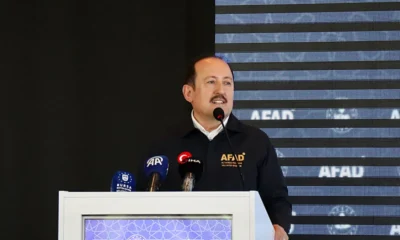
 Daily Agenda3 days ago
AFAD President met with search and rescue teams working in Venezuela: We stand by people who need support
-
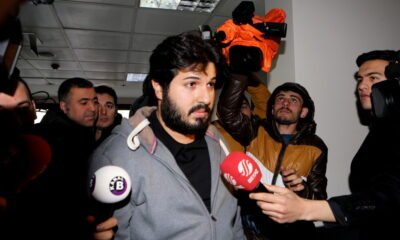
 Refugees16 hours ago
Prosecutors credit gold trader in Iran sanctions case with key help before sentencing
-
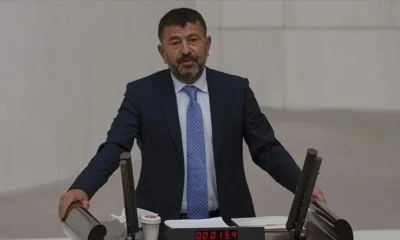
 Daily Agenda3 days ago
BREAKING NEWS… Arrest request for Veli Ağbaba’s nephew Ahmet Can Ağbaba and Sadık Can Köksal: They were referred to the court!
-
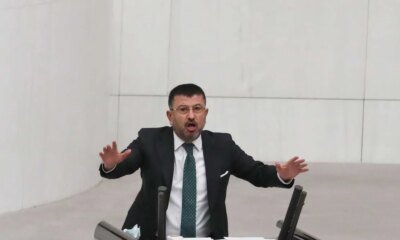
 Daily Agenda3 days ago
BREAKING NEWS… Veli Ağbaba’s nephew Ahmet Can Ağbaba and Sadık Can Köksal were arrested!
-
 Daily Agenda3 days ago
“Smoke-Free Campus” message from YÖK President Özvar: “Addictions are a serious threat to society”
-
 Daily Agenda3 days ago
President Erdoğan’s emphasis on peace: Israel should not be given an opportunity
-
 Daily Agenda3 days ago
Notable messages from the ambassadors of NATO countries before the Ankara Summit: We are grateful to Türkiye’s leadership!
-
 Daily Agenda3 days ago
Reaction from Ali Erbaş to Deniz Göktaş: A sign of rudeness