
Politics
Türkiye maps social risks for preemptive action

The Ministry of Family and Social Services has completed 11 social risk maps that will guide it for targeted improvement.
The maps visualize geographically the social risks citizens face based on data analysis. A digital monitoring system based on the maps will be initially introduced in the cities of Gaziantep, Manisa, Niğde, Van, Sinop, Edirne, Aksaray, Adana, Izmir, Afyonkarahisar and Trabzon. The ministry plans to complete 24 more maps in the near future.
The ministry said in a statement on Sunday that the project focused on “social risk points” for each household based on thoroughly analyzed social, economic and psycho-social indicators.
In addition to identifying the current situation, these points are intended to contribute to the early detection of social risks and the strengthening of preventative services. In line with the data obtained, a new implementation process will be launched under the “Family Guide” and “Children are Safe” digital tracking systems. These are integrated support mechanisms for high-risk households, which will be activated in coordination with various ministries and public institutions.
The ministry said that the social risk maps go beyond the traditional social assistance approach, forming the foundation of a data-driven, goal-oriented and preventative model. The aim is to empower families and protect children through efforts integrated with education, health, employment and local governments. As social risk points are applied in the field, the goal is to increase the capacity for early intervention, especially for vulnerable groups, and to ensure more effective use of public resources. Following the experience gained in specific provinces, the model will be gradually expanded across the country.
The social risk map is a system in which social risks that individuals and society may encounter are analyzed based on data and visualized at a geographical level. These maps allow for the holistic monitoring of various social phenomena, such as violence against women, child abuse, and the needs of persons with disabilities.
Risk analyses are conducted at the provincial, district, neighborhood and even household levels using 648 social indicators. Thanks to the data obtained, vulnerable groups are identified at an early stage, and protective/preventative social service policies are developed.
The views and opinions expressed in this article are solely those of the author. They do not necessarily reflect the editorial stance, values or position of Daily Sabah. The newspaper provides space for diverse perspectives as part of its commitment to open and informed public discussion.

Foreign Minister Hakan Fidan engaged in an intense phone diplomacy on Sunday for an end to the U.S.-Israel-Iran war. Foreign Ministry sources said he held talks with Iranian Foreign Minister Abbas Araghchi, Egyptian Foreign Minister Badr Abdelatty, EU foreign policy chief Kaja Kallas, Iraqi Foreign Minister Fuad Hussein and U.S. officials.
Fidan recently returned from a Gulf trip where he held talks with counterparts and attended a meeting in Riyadh over the Gulf countries’ response to the war, which quickly expanded into those countries.
“We see the confidence in Türkiye is rising (after the war began). We never adopted an ambivalent stance on the matter. Everyone is aware that we told each side what mistakes they made. We strongly and clearly voice our opinion about how it was wrong what was done to Iran and as well as to the Gulf countries,” he told journalists on Saturday.
Fidan also said that the Gulf countries said during a meeting in Saudi Arabia’s capital Riyadh that they may have to take action if the current situation persists, stressing the increased risk level.
Türkiye’s intelligence chief İbrahim Kalın met with members of Hamas’ political bureau in Istanbul to discuss Israel’s continued attacks on Palestinians and violations of Gaza cease-fire, security sources said Sunday.
The talks focused on Israel’s actions in Gaza and across the region, with participants emphasizing unity against what they described as occupation and destabilization policies. Officials stressed that no “fait accompli” would be accepted.
Discussions also addressed the second phase of the Gaza cease-fire agreement reached in October last year, highlighting the need to halt attacks and ensure the delivery of humanitarian aid. Concerns were raised over Israel’s failure to meet obligations under the first phase of the deal.
At least 677 Palestinians have been killed and 1,813 injured in Israeli attacks across the Gaza Strip since the cease-fire, according to the territory’s Health Ministry.
The cease-fire halted Israel’s two-year war that has killed more than 72,000 Palestinians and injured over 171,000 since October 2023, along with widespread destruction of about 90% of civilian infrastructure.
The meeting further reviewed rising settler violence in the West Bank and increasing pressure by Israeli forces on Palestinians, exploring possible responses.
Hamas representatives thanked President Recep Tayyip Erdoğan for Türkiye’s efforts to support peace in Gaza, while sources said Ankara would continue intensifying its diplomatic efforts to achieve a lasting cease-fire.
The mediation system introduced by the Justice Ministry in 2013 led to the resolution of more than 5.6 million cases, saving time by preventing court appearances.
The ministry said in a statement on Sunday that the system, “a great contribution to social peace,” has been a success so far.
Mediation, an alternative dispute resolution method that reduces courts’ caseload and speeds up judicial processes, enables parties to reach agreements more quickly and resolve disputes amicably.
Introduced into the Turkish legal system in 2012, mediation began to be applied on a voluntary basis after 2013. To date, a total of 9,273,260 cases have been submitted to the system. Of these, 5,630,707 were resolved through mutual agreement and amicable settlement, corresponding to an overall success rate of 62%.
Following the strong performance of voluntary mediation, which was launched in practice on Nov. 14, 2013, the Justice Ministry gradually expanded its scope. Mediation has since become an effective mechanism in disputes where it is a precondition to filing a lawsuit, including labor, commercial, consumer and rental disputes, as well as cases involving the dissolution of partnerships, condominium ownership, neighborhood law and agricultural contracts, allowing hundreds of thousands of cases to be resolved without going to court.
Observers say the steady expansion of mediation demonstrates the potential for a less adversarial and more communicative society, offering long-term benefits for both the legal system and social cohesion.
Mediator lawyer Fatma Bozkurt Saraç told Anadolu Agency (AA) that voluntary participation has played a major role in the system’s growth. Of the files concluded in 2025, about 920,000 stemmed from voluntary applications.
“In these cases, the parties themselves chose the mediator who would accompany them in resolving the dispute,” Saraç said. “At least 1.64 million parties resolved their disputes definitively and permanently in a short time, without waiting years for a hearing date, without litigation costs and without facing the risk of an unwanted judicial decision.”
She added that even when mediation does not end in an agreement, it enables parties to negotiate and communicate in a constructive manner. According to Saraç, the competence, impartiality and independence of mediators help ensure effective participation and encourage solutions that better meet the needs of both sides.
Mediation lawyer Semih Biten told AA that 2025 marked a turning point, showing that mediation in Türkiye has evolved into an established solution method rather than merely an alternative.
Nearly 2 million mediation applications were made last year, and the vast majority resulted in agreements, Biten said. “This picture reflects not only judicial statistics but also the mood of society,” he noted. “The culture of reconciliation in Türkiye has moved beyond the initial stage and is taking root. People increasingly understand the difference between being right and actually solving a problem.”
The ruling Justice and Development Party (AK Party) accelerated work for reforms in municipalities for accountability and transparency. The Local Administration Reform proposed by the party aims for a comprehensive overhaul of the administrations in 81 provinces and hundreds of districts run by elected officials.
The reforms were already being considered, but AK Party apparently seeks to speed up their implementation in light of corruption scandals in municipalities run by the main opposition Republican People’s Party (CHP). The municipalities and mayors have been under fire for excessive spending and seeking to dodge responsibility in their primary tasks.
Along with revenues from their subsidiaries, the municipalities benefit from the allocation of funds by the government. The Social Security Institution (SGK) also supports the municipalities on social security premiums for their staff, and for a while, postponed municipalities’ debts for social security. The issue was in the spotlight in recent years as the government revealed that the CHP-run municipalities had outstanding debts. The expenses for the municipal staff are required not to exceed 40% of the municipal budget, but in some municipalities, they already amount for 60%. Under the reforms, the municipalities exceeding 40% threshold will face sanctions while the SGK will stop payment of premiums. These steps are expected to prevent the municipalities from accumulating debts.
When reforms are implemented, mayors and directors of municipal subsidiaries will face strict inspections for their expenses. The municipalities will also be required to have online disclosure of their activities periodically, to allow citizens to check which investments they made and how their taxes were used.
Another section of the reforms will be zoning regulations. The regulations will be strictly monitored for preservation of cities and ending excessive rises in rents and house prices, as well as office sales in rezoned areas.
The municipal projects failing to pass tests that are set to be introduced will be exempt from funding by the government.
The municipalities’ debt management will be restructured and bound to strict criteria. They will also be required to prioritize projects for the public good. The reforms will also introduce tougher regulations on municipalities’ revenues to boost accountability.
Turkish President Recep Tayyip Erdoğan on Sunday expressed deep sorrow over a helicopter crash in Qatar that killed seven people, including one Turkish and four Qatari soldiers, as well as two technicians from the Turkish defense giant, Aselsan.
“I learned with great sorrow the news that our Turkish Armed Forces personnel, our ASELSAN staff and members of the Qatari Armed Forces were martyred in the helicopter crash that occurred in Qatar,” he said in a statement shared on social media.
The Turkish leader offered prayers and condolences for those who died in the tragic accident.
Erdoğan also expressed his sympathy to both nations, saying: “My condolences to our country, our nation and the people of Qatar.”
Earlier Sunday, Türkiye’s Defense Ministry confirmed that one Turkish Armed Forces member and two Aselsan technicians were among seven people killed in a helicopter crash in Qatar.
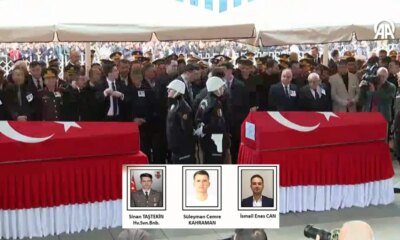
Qatar’s Defense Ministry later identified the Turkish victims as Maj. Sinan Taştekin from the Qatar-Türkiye Joint Forces, Süleyman Cemre Kahraman and İsmail Anas.
The Turkish ministry said that the Qatari Armed Forces helicopter was conducting training activities under the Qatar-Turkish Combined Joint Force Command on Friday evening when it crashed into the sea, due to a technical malfunction, according to initial findings.
It added that the exact cause of the crash will be determined following an investigation by Qatari authorities.
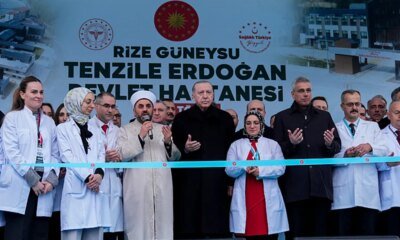
Recep Tayyip Erdoğan stood on familiar ground in Güneysu on Friday, opening the Tenzile Erdoğan State Hospital in a ceremony that blended personal tribute with a sweeping defense of Türkiye’s healthcare transformation and its role in shaping national resilience.
The facility, named after his late mother, carries emotional weight in a province where Erdoğan’s political identity was forged.
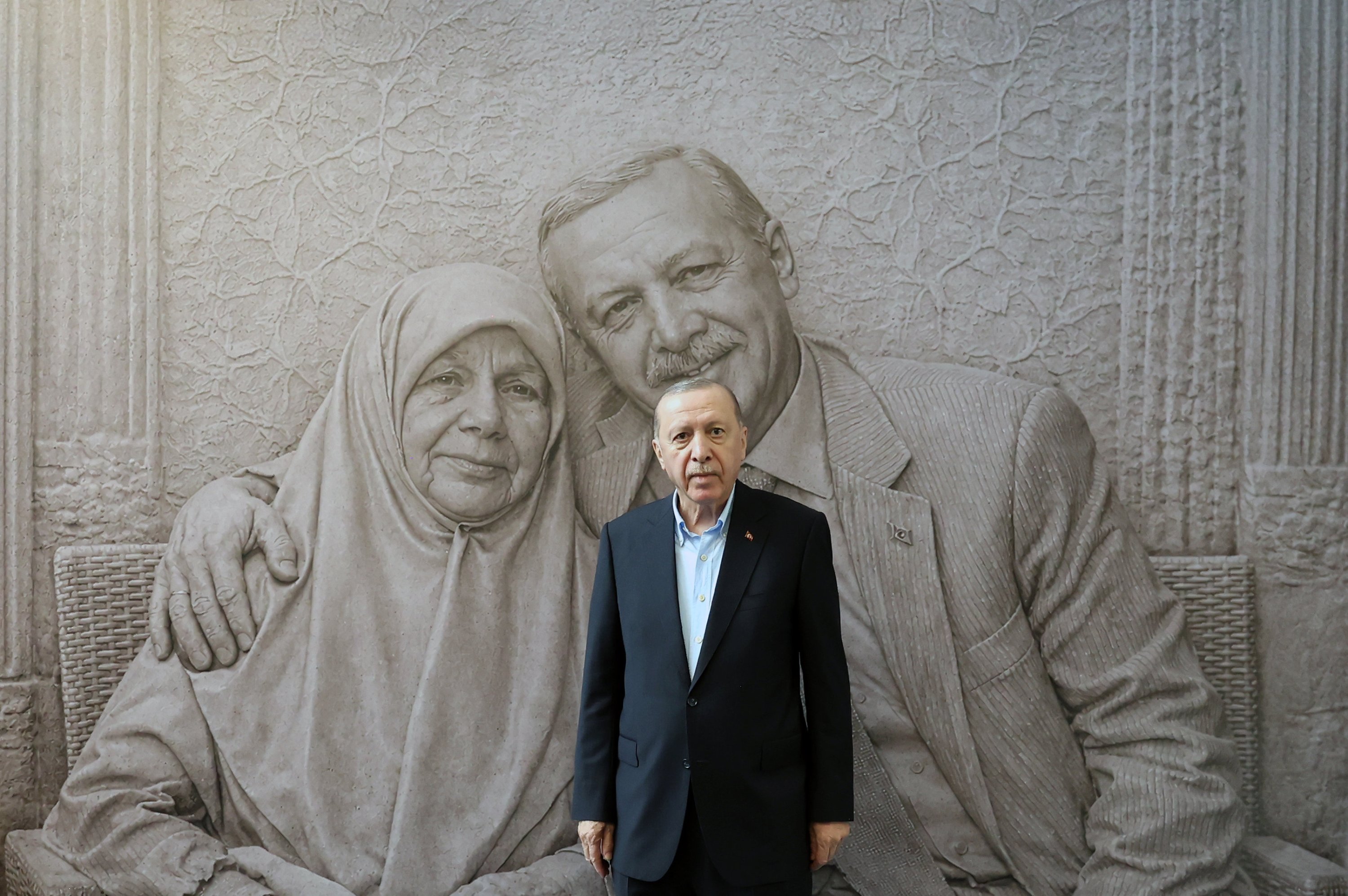
But beyond symbolism, the 100-bed hospital lands as a strategic addition to the eastern Black Sea’s medical network, aimed at closing regional gaps in access while easing pressure on larger, still-developing complexes such as the Rize City Hospital.
Set on a 36,000-square-meter site, the hospital is built for scale and speed.
Its infrastructure stretches across outpatient clinics, intensive care, dialysis units, maternity services and a sizable psychiatric wing, forming a two-block system that merges general and mental healthcare under one roof.
With modern operating capacity, palliative care and over 200 parking spaces, the design reflects a shift in Türkiye’s hospital model toward integrated, patient-centered complexes rather than fragmented facilities.
Health officials expect the hospital to serve not just Güneysu but a wider catchment area across Rize’s rugged terrain, where distance and topography have long slowed emergency response and specialist access.
The goal is simple but ambitious: bring high-level care closer to smaller communities while reducing reliance on urban centers.
Erdoğan used the opening to anchor a broader narrative, arguing that such projects are the product of two decades of structural reform.
Since 2002, he said, Türkiye has retooled its health system to match population growth and rising expectations, turning what was once seen as a weak link into a sector now cited internationally.
He pointed to crisis performance as proof.
During the COVID-19 pandemic, Türkiye maintained hospital capacity and universal access without the breakdowns seen elsewhere, while the aftermath of the Feb. 6 earthquakes tested the system’s ability to absorb mass casualties and sustain long-term care.
In both cases, Erdoğan framed outcomes as evidence of a system built for stress, not just routine demand.
The numbers in Rize echo that transformation.
Health infrastructure has expanded to 32 facilities, including hospitals and primary care centers, with total investment already reaching TL 11 billion ($249 million).
Once flagship projects are complete, that figure is expected to more than triple.
Patient visits have surged from 1.4 million annually in the early 2000s to roughly 5 million today, while ambulance fleets, diagnostic tools and medical staffing have all scaled sharply.
Behind those figures lies a broader shift in access. Specialist doctor numbers have tripled, dialysis capacity has expanded more than sevenfold and frontline healthcare staffing has risen dramatically, reshaping both availability and quality of care in a province once limited by geography.
Yet Erdoğan’s message extended beyond bricks and mortar.
He positioned healthcare as a pillar of national strength, linking it to economic growth, public confidence and crisis readiness.
In that framing, hospitals are not just service points but instruments of state capacity, capable of absorbing shocks and projecting stability.
That logic carried into his next announcement: the integration of Türkiye’s domestically produced T625 Gökbey helicopter into the national health system.
Three civil-certified units are set to join the air ambulance fleet this year, marking the first time a locally developed rotorcraft will serve in emergency medical operations.
The move reflects a dual objective.
Operationally, it promises faster response times across mountainous and remote areas.
Strategically, it reinforces Ankara’s push to localize critical technologies, reducing dependence on foreign systems while linking defense industry gains to civilian life.
Erdoğan framed it as part of a wider pattern, where advances in sectors such as defense, transportation and education intersect with healthcare to form what he calls a “Century of Türkiye.” In this vision, domestic production and public service expansion move in parallel, strengthening both sovereignty and everyday life.
He closed with a familiar geopolitical note.
With conflicts simmering across the Middle East and beyond, Erdoğan said Türkiye’s priority remains clear: avoid entanglement while pursuing diplomatic solutions.
The message, delivered against a backdrop of regional instability, underscores a balancing act between assertiveness and restraint.
For Rize, however, the impact is immediate. The Tenzile Erdoğan State Hospital is already operational, bringing expanded services to a region long defined by its terrain and distance from major urban centers.
Its opening marks both a personal milestone for the president and a tangible step in a broader effort to turn the Black Sea province into a fully equipped healthcare hub.


-

 Sports2 days ago
Hakimi rejects Morocco’s AFCON title, cites Senegal’s on-field win
-
 Daily Agenda2 days ago
A new citizen-focused security architecture is on the way
-
 Daily Agenda2 days ago
Nevruz message from President Erdoğan: It became a symbol of new beginnings
-
 Daily Agenda3 days ago
Panic in CHP: Özgür Özel sent 4 MPs to Böcek: Böcek’s post revealed the truth
-
 Daily Agenda2 days ago
Common message from politicians: May our unity last forever
-
 Daily Agenda3 days ago
President Recep Tayyip Erdoğan: We exist to serve the nation and our country
-
 Daily Agenda3 hours ago
A helicopter was destroyed in an accident in Qatar: Last farewell to heroic martyrs!
-
 Politics2 days ago
Erdoğan blasts Netanyahu, calls for peace amid Lebanon strikes