
Economy
US second-top destination for Turkish goods in January to August

The U.S. emerged as the second-top destination for Turkish exports in the first eight months of the year, with shipments surging close to 13% compared to the same period a year earlier, according to a report on Sunday.
Türkiye’s exports to the U.S. increased by 12.9% year-over-year in the January-August period, reaching approximately $9.64 billion (TL 470.11 billion), the report by Anadolu Agency (AA) indicated. The U.S. thus became the second-largest destination for Turkish exports.
The country’s total exports increased by 4% on a yearly basis in the January-August period, rising from $177.9 billion to $185 billion, according to data compiled from Türkiye Exporters Assembly (TIM).
During the same period, Germany ranked first among Türkiye’s top export destinations, with exports totaling $13.58 billion.
When looking at trade with the U.S., exports surged from some $8.54 billion during the same period last year to $9.64 billion this January-August, approaching the $10 billion mark.
In Türkiye’s exports to the United States during the first eight months of the year, the chemicals and chemical products and electrical and electronics sectors stood out, while exports by the steel sector in August increased by a staggering 404.6% versus the same month last year.
According to sectoral export data for the U.S., exports of chemicals and chemical products increased by 33.7% during the January-August period compared with the same period last year, climbing from $780.3 million to slightly over $1 billion.
Automotive exports reached $841.2 million
Exports from the electrical and electronics sector to the U.S. also increased by 41.8% during this period, rising from $702.8 million to $996.4 million.
Meanwhile, the automotive industry was also among the sectors that exported the most to the United States. Its exports increased by 3.5% during the first eight months of the year, reaching $841.2 million.
During the same period, exports of cereals, pulses, oilseeds and related products increased by 4.7% to $596.9 million, while exports of ready-to-wear clothing and apparel rose by 6.5% to $594.8 million.
Similarly, sales of machinery and equipment also posted a yearly increase of about 27.2% to $530.8 million, while carpet exports rose by 5.2% to $486.7 million.
Istanbul’s exports to U.S. up by 9.1%
Looking at exports by province, Istanbul recorded the highest level of exports to the United States during the January-August period, totaling $3.42 billion. Istanbul’s exports to the U.S. increased by 9.1% compared with the same period last year.
Istanbul was followed by the capital, Ankara, with $976.5 million, the western province of Izmir with $819.7 million, Gaziantep in the south with $816.4 million, and the northwestern province of Kocaeli with exports totalling some $700.3 million.
Ankara’s exports to the United States increased by 53.5%, Gaziantep’s by 16.8%, Kocaeli’s by 13.6% and Izmir’s by 11.3%, respectively.
Exports from Bursa also increased by 25.7% during the same period, reaching $566.8 million, while exports from Eskişehir rose by 25.5% to $436.4 million.

Türkiye has revoked the license of Bank Mellat, one of Iran’s largest private banks, according to the decision published in the country’s Official Gazette early on Saturday.
The move follows a decision by Türkiye’s banking regulator over the Tehran-based bank, which provides financial support to Iran’s government and is subject to U.S., EU and U.K. sanctions, according to OpenSanctions, an open-source database of information on sanctions-hit entities.
The Iranian government is also the largest shareholder of the bank, it said.
In revoking Bank Mellat’s license, the Turkish regulator cited article 71b of the banking law, which says the entity’s “continued operation poses a threat to the rights of depositors and participation fund holders and to the security and stability of the financial system.”
The move comes two weeks after Washington imposed sanctions on a smaller Türkiye-based bank over alleged ties to Iran’s Islamic Revolutionary Guard Corps (IRGC).
A recent data breach at Australian graphic design platform Canva has affected information linked to 424 organizations or institutions in Türkiye, according to the country’s data protection authority.
According to Canva’s notification, the breach occurred after unauthorized access to a third-party tool used by the company as a data controller.
The threat actor is believed to have extracted certain personal data through a connection with the data processor.
The number of individuals impacted by the breach in Türkiye has not yet been determined, the private broadcaster CNBC-e said, citing a notice from the Personal Data Protection Authority (KVKK).
The affected data included various details belonging to employees of Canva’s customers.
According to the KVKK notice, the exposed information included first and last names, work email addresses, workplace locations and business telephone numbers.
The breach was not limited to employees’ contact information, the authority said.
Customer order forms, contracts, invoices, data protection agreements and master service agreements shared with Canva were also among the affected data, to the extent that they had been provided to the platform.
Other routine business correspondence conducted by companies through Canva may also have been affected, according to the notice.
A security research company has managed to break into OpenAI’s internal systems using the latest software from Anthropic, the firm said Friday, exposing how quickly the technology can carry out sophisticated cyberattacks.
The researchers from security firm Hacktron said they found a security flaw in OpenAI’s public help forum, run by the Discourse platform, that allowed them to take control of the site.
“We immediately reported the initial vulnerability to OpenAI and Discourse and worked with them to coordinate the patch,” Hacktron said in a blog post.
“We appreciate their attention to detail and fast resolution of this issue,” the post added.
OpenAI confirmed the flaw was fixed within about 14 hours of being notified and paid the researchers a $6,500 reward.
“We thank the researchers for contacting us and sharing their findings. We narrowed the permissions on Community sign-in tokens and revoked affected tokens and sessions,” said Drew Pusateri, an OpenAI spokesperson.
The Hacktron researchers said they initially used Anthropic’s Claude Opus 4.8 to identify and exploit the software flaw, but struggled to make it work consistently.
After Anthropic released Claude Opus 5, the researchers said the newer model produced a working hack within about three hours.
The hackers did not use Claude Mythos, a more capable Anthropic model that is restricted to a small group of vetted cyber-defense organizations.
Anthropic has described Mythos as having the strongest cybersecurity capabilities of any model it has built.
Hacktron said the underlying software flaw is not unique to OpenAI and is used across many companies’ products, including those made by Slack and Meta.
The firm said it is continuing similar tests at other companies.
The case adds to growing concern among security experts that AI tools are making it faster and cheaper to carry out sophisticated cyberattacks that once required specialized teams and months of work.
Hostile actions by “unfriendly” countries have played a role in Russia’s decision to take control of the assets of Swiss food giant Nestle and French retailer Auchan, the Kremlin said Friday.
The move, announced in a decree by President Vladimir Putin, is the most significant action against Western firms since the seizure of the Russian assets of French dairy company Danone and Danish brewer Carlsberg in 2023.
“We are talking about European companies from unfriendly countries,” said Kremlin spokesperson Dmitry Peskov, adding that these states were “currently involved in the most active manner in military actions against our country.”
He did not name France or Switzerland. But Russia says Western countries that supply weapons to Ukraine, including France, are effectively parties to the conflict.
Switzerland does not provide arms to Ukraine but has angered Russia by imposing sanctions against it. The Swiss government expressed concern at Putin’s move and said it was supporting Nestle in efforts to have it reversed.
Nestle, maker of Nescafe coffee and KitKat chocolate bars, said it was assessing the situation.
“Nestle is committed to taking all necessary steps to protect its rights and ensure continuity of business operations in the interests of all stakeholders, particularly its employees,” the company said in a statement.
It declined to comment further on what action it was considering. Nestle shares were down 2.4% at 1340 GMT.
The move comes amid deep strains between Russia and Europe. Many European governments accuse Moscow of waging a campaign of sabotage across the continent, an allegation Russia denies.
Tighter control
Russia has steadily tightened its grip on foreign-owned assets since launching its invasion of Ukraine in 2022. A 2023 decree signed by Putin allows assets from countries Moscow deems “unfriendly” to be placed under temporary administration.
Moscow has also used the framework to raise funds through forced sales, exit taxes and discounts, while rewarding Kremlin-linked insiders.
According to a 2025 estimate by Moscow law firm NSP, the Russian state has seized more than $50 billion of private property, including assets belonging to foreign companies that exited Russia, since the start of the war.
The Russian assets of Nestle and Auchan were transferred to temporary control by L.E.V. Management, a little-known company with no public profile.
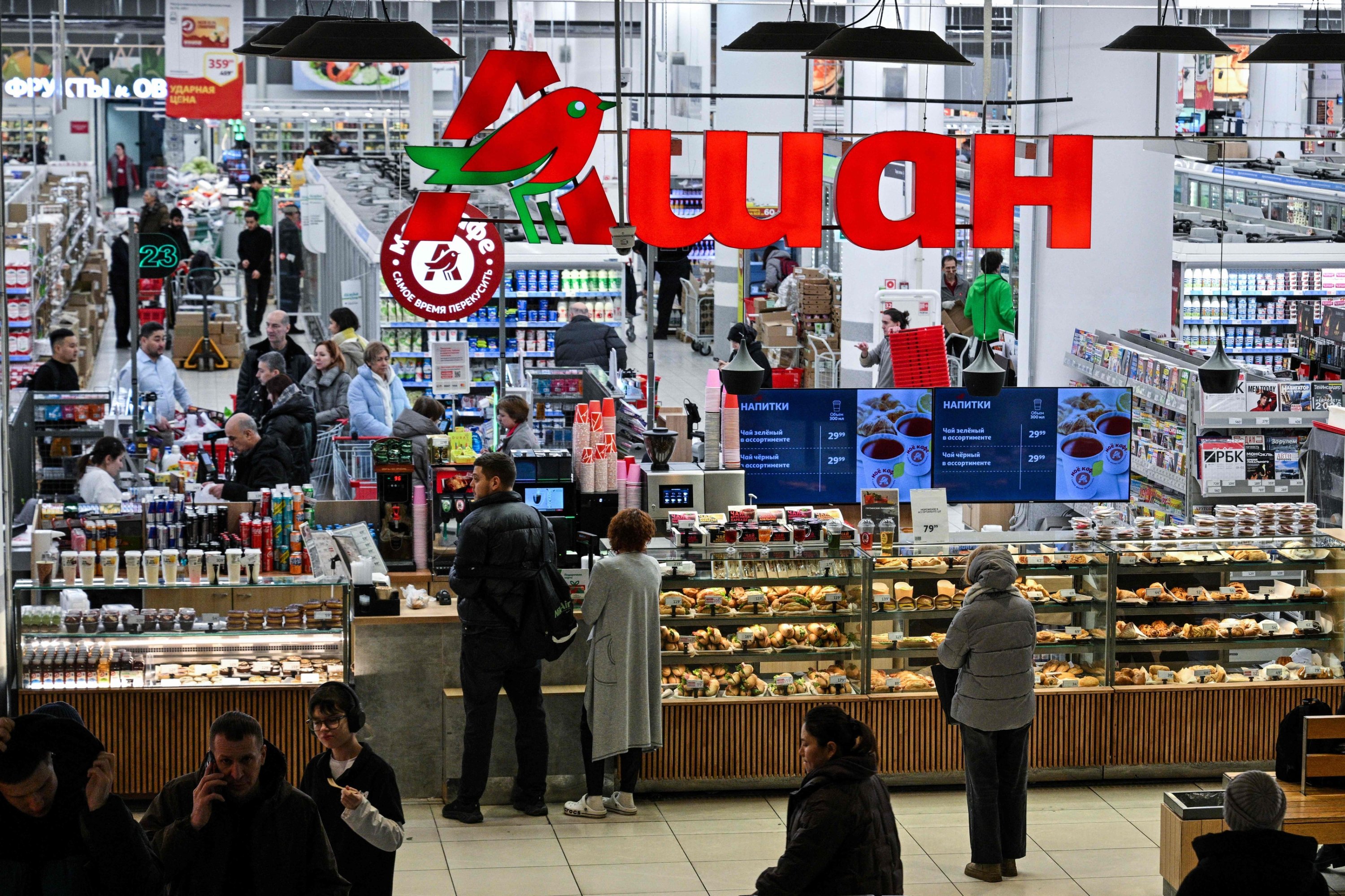
Auchan, which runs 230 stores and an online business in Russia, employing about 30,000 people, declined to comment.
Temporary administration
Nestle has six factories in Russia producing coffee, pet care and infant formula products. It generated sales of about 2 billion Swiss francs ($2.4 billion) in Russia in 2021, the last year it released figures, and has about 7,000 employees there.
That amounted to about 2% of group sales, although analysts estimate the contribution has declined since Nestle scaled back operations in Russia.
Nestle has suspended most sales, non-essential imports and exports, advertising and capital investment in Russia, said Bank Vontobel analyst Jean-Philippe Bertschy, who estimates the country now accounts for around 1% of group sales.
“While negative for sentiment and raising the prospect of an asset impairment or unfavorable disposal, we expect a marginal financial impact, given Russia’s limited contribution to group sales,” he said.
Russia’s Kommersant newspaper previously reported that a company called KS Logistika asked Putin to place Nestle’s assets under temporary administration, arguing that existing management was preventing expansion.
In previous cases, temporary administration has often been followed by state expropriation, with assets later transferred to Kremlin-linked individuals or companies. Peskov said only temporary administration was under consideration for now.
Other Western companies have sold Russian assets or handed them to local managers in response to sanctions or the threat of state intervention.
Nestle has defended its continued presence in Russia by arguing that it supplies essential food products.
Kepler Cheuvreux analyst Jon Cox said the development did not bode well for Nestle.
“Ultimately, Nestle may end up losing those assets – around 2% of its sales and cash tied up in Russia – for the foreseeable future and any compensation is unlikely to be an offset,” he said.
Germany’s far-right AfD leadership and Russian President Vladimir Putin’s top economic envoy have begun preparations to meet next year to discuss restarting gas supplies to Europe’s biggest economy, a report said Friday.
The discussions for a meeting as early as March underline the close relations between Moscow and the AfD, which, although blocked from power by a coalition of its rivals, is Germany’s most popular party with voters.
The meeting would be attended by Kirill Dmitriev, who is a close adviser to Putin and who heads Russia’s sovereign wealth fund, as well as AfD co-leaders Alice Weidel and Tino Chrupalla, Reuters reported, citing people familiar with the plan.
A spokesperson for the AfD and a representative for Dmitriev declined to comment.
Before the sanctions imposed over Moscow’s full-scale invasion of Ukraine in 2022, Russia supplied more than a third of Germany’s crude oil imports and more than half of its natural gas.
The meeting would only happen if a peace framework was agreed first between Russia and Ukraine, and the organizers hoped it would bring together the AfD, Russia and the United States, one of the people said. Possible locations for the summit included Israel, the United Arab Emirates (UAE) or India, they added.
Weidel advocated the end of a boycott of Russian oil and gas to bolster Germany’s flagging economy in an interview with Reuters in June.
Dmitriev was present at a meeting this month in Moscow with U.S. representatives Steve Witkoff and Jared Kushner.
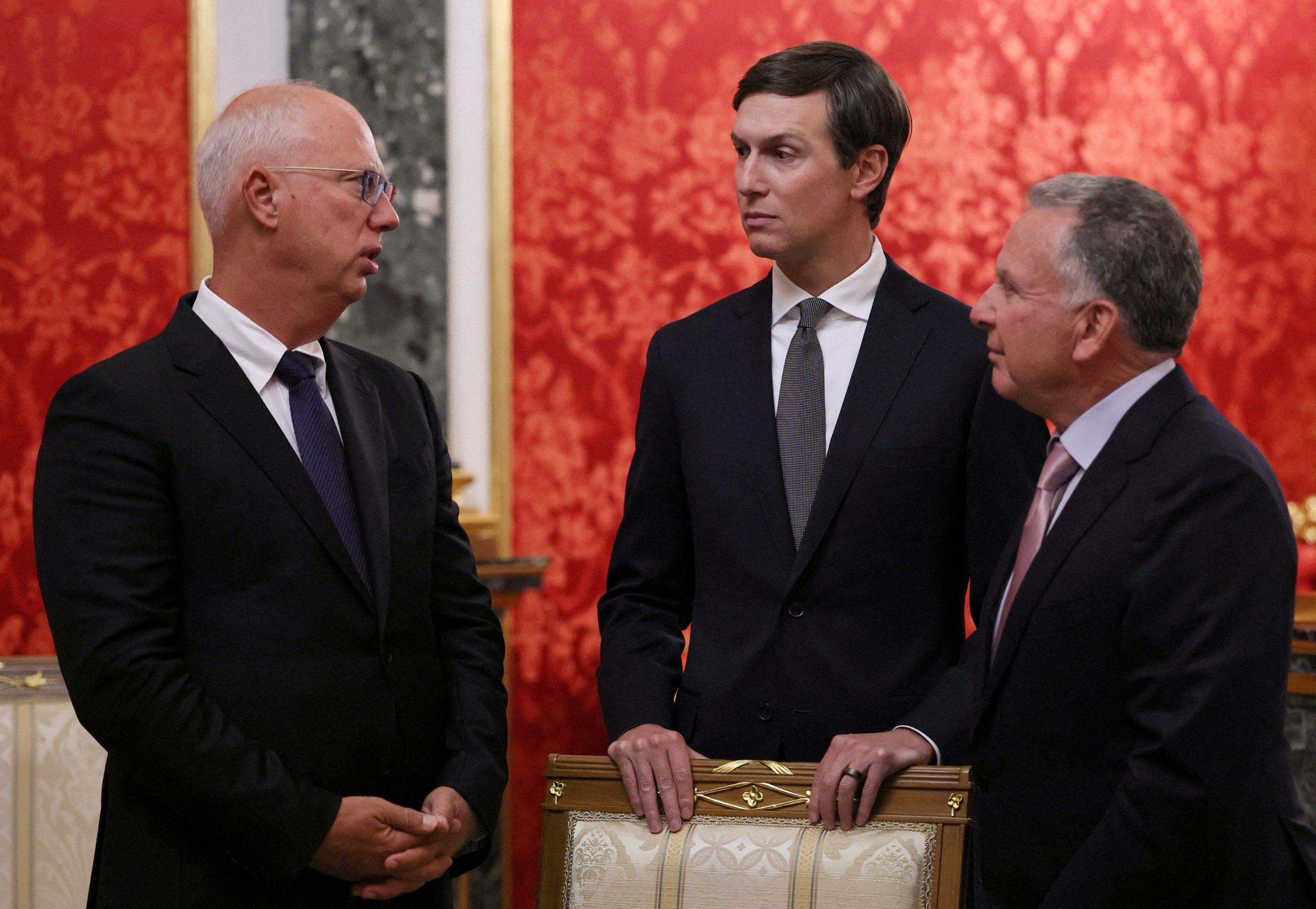
Organizers hoped Witkoff and Kushner would also attend the gas meeting, which would examine reopening the Russian Nord Stream gas pipelines, said the person.
A senior U.S. official told Reuters that Witkoff and Kushner have not been informed about or invited to the proposed summit.
AfD hopes to score with voters
Any gathering would be symbolic, since the AfD does not govern. But the preparations highlight the fragility of Germany’s political system, where the longstanding refusal of mainstream parties to work with the far-right is being tested by the AfD’s electoral success.
The AfD has just won a major victory to become the biggest party in a state election in Saxony-Anhalt, and faces another test of its popularity Sunday in an election in the state of Mecklenburg-Western Pomerania. The Russian Nord Stream gas pipelines enter Germany in this state.
The American Chamber of Commerce in Moscow welcomed the idea as “a positive and timely step.”
“Involving Germany as a key European economy can create a broader platform for discussing issues that are significant both for these countries and for the rest of the world,” said Robert Agee, President of AmCham Russia.
Germany has struggled to recover from the shock caused by the shutdown of the key undersea Nord Stream pipelines, some of which were crippled by explosions in September 2022.
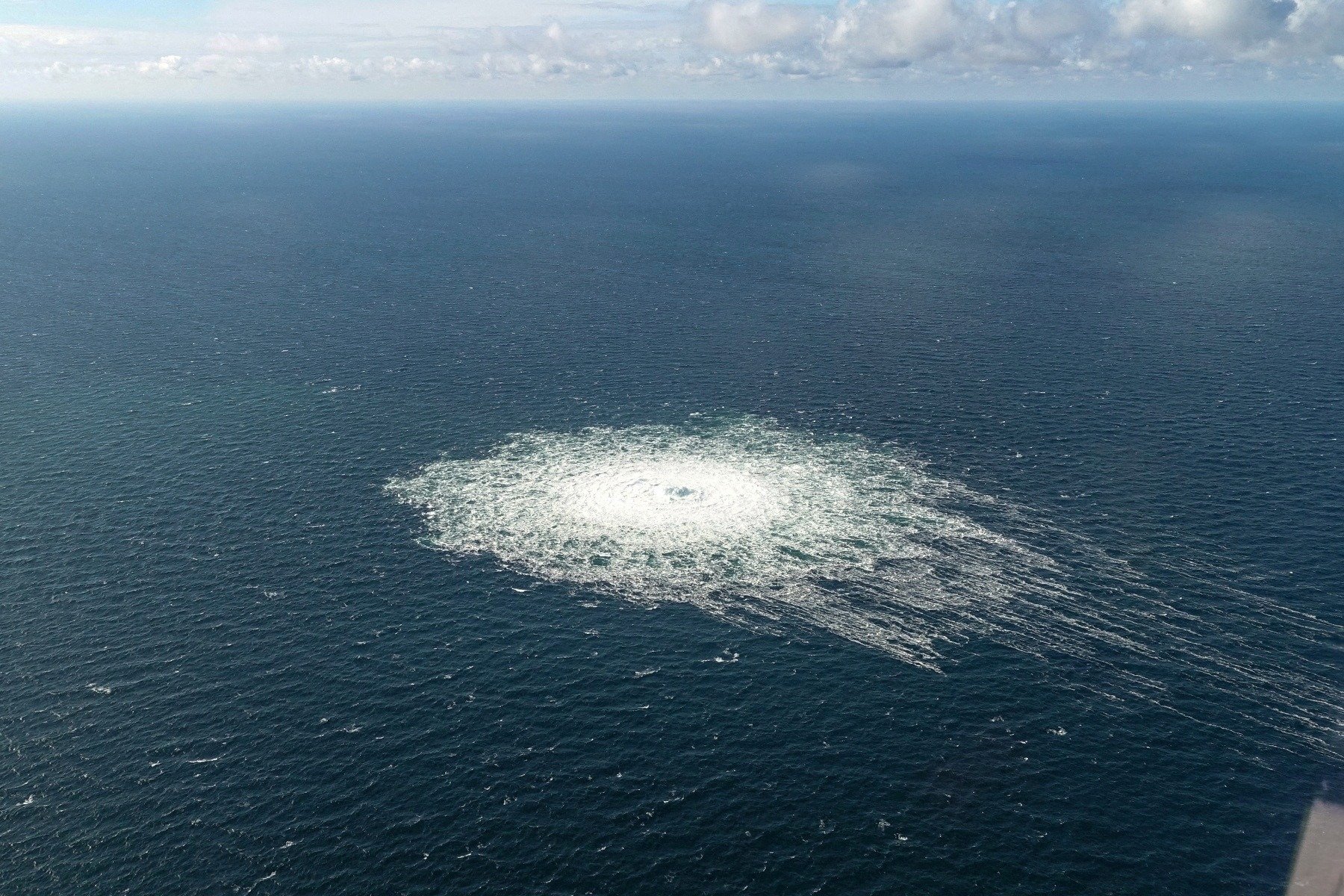
But any effort to restart Russian gas supplies or Nord Stream would stoke fierce resistance, both in Germany and among its allies, particularly in Eastern Europe.
“Germany cannot become dependent on Russia again,” said Michael Kellner, a Green lawmaker who was in charge of German energy policy in government during the crisis triggered by the cutoff of Russian gas following its invasion of Ukraine.
“We cannot repeat the mistakes of the energy crisis,” he said. “It cost us 50 billion euros. We cannot want to go back to that. It would be treason. Putin is using the AfD to his own ends.”
Roderich Kiesewetter, a member of parliament from Chancellor Friedrich Merz’s Christian Democrats, said the AfD meeting could embolden those in his party who also favored buying Russian gas.
“The AfD is on Russia’s side, willing to betray both Ukraine and Germany. Russia uses energy, especially Nord Stream, as a hybrid weapon for military purposes. Reopening Nord Stream would be a disaster for European security and isolate Germany.”
The AfD has framed its call for a resumption of Russian gas supplies as pragmatic, with Weidel describing “cheap energy from Russia” as “the secret of the success of ‘Made in Germany.'”
The AfD hopes the meeting can illustrate their competence in foreign policy and show up the government for inaction in tackling high energy prices, said one of the sources.
Germany’s support for Ukraine has become increasingly divisive.
The country’s relationship with Russia carries more weight in the east, which was under Soviet rule until the fall of the Berlin Wall more than 35 years ago. Many there take a sympathetic stance towards Russia and a critical view of Germany’s military protector, the United States.
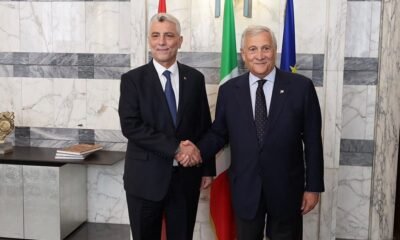
Trade Minister Ömer Bolat held talks with Italian Deputy Prime Minister Antonio Tajani and leading business representatives in Rome, focusing on expanding bilateral trade and deepening production ties between the two countries.
Bolat said on Turkish social media platform NSosyal on Friday that the round-table meeting focused on integrated supply chains across key sectors, including automotive, aerospace, defense, energy, logistics, manufacturing, textiles, and machinery.
He emphasized that Türkiye and Italy are not merely commercial partners but key components of a joint manufacturing ecosystem, particularly in the automotive industry.
Highlighting Türkiye’s role within the EU Customs Union, Bolat noted that preserving strong production networks is vital for the competitiveness of both Türkiye and Europe.
Participants explored opportunities for joint ventures in third countries and deeper cooperation in future-focused fields such as green energy, digitalization, space, advanced manufacturing, and healthcare.
Italian foreign direct investment in Türkiye has reached $4 billion across 1,645 companies, while Turkish investments in Italy surpassed $1 billion.
The minister added that under the leadership of President Recep Tayyip Erdoğan, the two historic strategic partners will continue to advance their complementary economic partnership.


-

 Sports3 days ago
Benfica down Milan, Sunderland back in Europa League with bang
-

 Economy2 days ago
Canva breach affects data linked to 424 organizations in Türkiye
-
 Politics3 days ago
Türkiye condemns Houthi drone attack targeting Mecca
-

 Economy2 days ago
Türkiye mandates largest public, private banks to liquidate $18.3B funds
-

 Economy2 days ago
Anthropic’s Claude used to breach OpenAI’s internal systems
-

 Sports3 days ago
Beşiktaş crush Marseille 4-1 to launch Europa League campaign
-

 Sports3 days ago
Mohamed Salah gets new German coach at Trabzonspor
-
 Economy2 days ago
Türkiye, Italy seek stronger trade, production ties in Rome talks