
Economy
US unveils plan for critical minerals alliance to counter China

U.S. Vice President JD Vance outlined a plan on Wednesday to marshal allies into a preferential trade bloc for critical minerals, proposing coordinated price floors as Washington intensifies efforts to loosen China’s dominance on materials crucial to advanced manufacturing.
China has wielded its chokehold on the processing of many minerals as geo-economic leverage, at times curbing exports, suppressing prices and undercutting other countries’ ability to diversify sources of the materials used to make semiconductors, electric vehicles and advanced weapons.
“We want to eliminate that problem of people flooding into our markets with cheap critical minerals to undercut our domestic manufacturers,” Vance told a gathering of visiting ministers in Washington without mentioning China.
“We will establish reference prices for critical minerals at each stage of production, … and for members of the preferential zone, these reference prices will operate as a floor maintained through adjustable tariffs to uphold pricing integrity,” Vance said.
India, Japan at meeting
U.S. President Donald Trump’s administration has stepped up efforts to secure American supplies of critical minerals after China rattled senior officials and global markets last year by withholding rare earths required by American automakers and other industrial manufacturers.
Trump on Monday launched a U.S. strategic stockpile of critical minerals, called Project Vault, backed by $10 billion in seed funding from the U.S. Export-Import Bank and $2 billion in private funding.
U.S. Secretary of State Marco Rubio said 55 countries attended the talks in Washington, among them South Korea, India, Thailand, Japan, Germany, Australia, and the Democratic Republic of Congo, all with varying refining or mining capabilities.
The minerals are “heavily concentrated in the hands of one country,” Rubio said, without referencing China, adding that the situation had become a “tool of leverage in geopolitics.”
At the meeting, U.S. Trade Representative Jamieson Greer announced a bilateral plan with Mexico and a trilateral agreement with the European Union and Japan to strengthen critical mineral supply chains and set the stage for a broader agreement with other allies.
The plans aim to explore specific measures such as price supports, market standards, subsidies, and guaranteed purchases to encourage production.
The U.S., EU, and Japan also said they would pursue other avenues, including discussions within the G-7 and the Minerals Security Partnership.
Argentina’s foreign ministry separately announced it had agreed on a framework agreement with the U.S. to strengthen and diversify supply chains as the South American nation looks to boost its copper and lithium exports.
Mineral companies’ shares drop
A multi-country effort to establish price floors of critical minerals is the Trump administration’s latest move to exert control over private business. The White House has taken stakes in several mineral companies as well as chipmaker Intel and has negotiated deals with drugmakers for lower prices.
Shares of mineral companies plunged on news of the trade bloc. MP Materials, Critical Metals, NioCorp Developments, and USA Rare Earth posted losses ranging from 6% to 14%.
By guaranteeing minimum prices through coordinated trade rules, Washington hopes to unlock private investment in mining and processing projects that have struggled to compete with cheaper Chinese supply.
Administration officials recently told the industry the U.S. is moving away from granting price floors to individual domestic projects as it seeks a global solution.
The approach could reshape global supply chains for materials essential to electric vehicles, semiconductors and defense systems, while raising costs for manufacturers in the short term and escalating trade tensions with Beijing.
“China has long played an important and constructive role in keeping the global industrial and supply chains of critical minerals safe and stable and is willing to continue to make active efforts in this regard,” China’s embassy in Washington told Reuters when asked about the meeting.
China’s expanded export controls on rare earths last year caused production delays and shutdowns for auto manufacturers in Europe and the U.S., and a China-generated glut of lithium has stalled plans to expand production in the U.S.
Such dependencies have unnerved Washington and its partners, which have struggled for years to implement policies to stand up durable domestic mining and processing alternatives for lithium, nickel, rare earths and other critical minerals.
Trump, who is expected to visit China in April, posted on Truth Social that he had an “excellent” call with Chinese President Xi Jinping on Wednesday morning to discuss a range of trade and security issues from soybeans to Iran, but he made no mention of minerals.
China’s leverage over critical minerals was on full display in October when Trump agreed to trim tariffs on Chinese goods in exchange for Beijing’s pledge to hold off on stricter restrictions on rare earths exports.
Wednesday’s gathering underscores a broader U.S. push to work with partners to counter China’s dominance in the sector by coordinating policy tools at a time when Trump has angered allies with his sweeping “America First” tariff policies.
“I think this is a recognition by the United States that it must act in concert with others to reduce its vulnerability in areas where China has supply dominance,” said Scott Kennedy, who leads the Chinese business and economics program at the Center for Strategic and International Studies in Washington.
Interior Secretary Doug Burgum said on Tuesday that 11 more countries would be named to a critical minerals trade club this week, joining the U.S., Australia, Japan, South Korea, Saudi Arabia and Thailand. He said 20 more countries showed “strong interest” in joining the coalition.

Russia will see revenue from its biggest single oil tax double to $9 billion in April due to the energy crisis triggered by U.S. and Israeli strikes on Iran, calculations showed Thursday.
The Reuters calculation provides some of the first concrete evidence of a windfall for Russia, the world’s second-largest oil exporter, from the war. Oil traders say the conflict has triggered the most serious energy crisis in recent history.
Iran effectively shut the Strait of Hormuz – a route for about a fifth of global oil and liquefied natural gas flows – after U.S. and Israeli airstrikes on Iran at the end of February, sending Brent futures shooting well past $100 per barrel.
Russia’s main revenue from its vast oil and gas industry is based on production. Export duty on crude oil was nullified at the start of 2024 as part of a wider “tax maneuver,” a yearslong reform of the industry.
According to Reuters calculations based on preliminary production data and oil prices, Russia’s mineral extraction tax on oil output will increase in April to around 700 billion rubles ($9 billion) from 327 billion rubles in March. The revenue is up by about 10% from April last year.
For the whole of 2026, Russia has budgeted for 7.9 trillion rubles from the mineral extraction tax.
Russian energy in demand
The average price of Russia’s Urals crude, used for taxation, jumped to $77 per barrel in March, its highest since October 2023, according to Economy Ministry data.
That was up 73% from February’s $44.59 per barrel and above the $59 level assumed in this year’s state budget. The Kremlin said Tuesday there were a huge number of requests for Russian energy from a range of places amid a grave global energy crisis that is shaking the foundations of the oil and gas markets.
Still, there are limits on the windfall, and economists inside Russia have repeatedly cautioned that 2026 could be a tough year.
Russia ran a budget deficit of 4.58 trillion rubles, or 1.9% of gross domestic product, in the first quarter of 2026, the Finance Ministry said Wednesday. Additionally, Ukrainian attacks on Russian energy infrastructure aimed at crippling Moscow’s finances have contributed to lower earnings and threaten oil production cuts.
The size of the windfall for Russia will ultimately depend on how long the Iran crisis lasts.
The International Monetary Fund expects near-term demand for its financial support to rise to between $20 billion and $50 billion as a result of spillovers from the war in the Middle East, its chief Kristalina Georgieva said on Thursday.
Georgieva said the now-paused war was testing the global economy, with a 13% cut in the daily flow of the world’s oil and a 20% cut in liquefied natural gas triggering a supply shock that had sent energy prices soaring, while disrupting supply chains.
Speaking at the IMF’s headquarters ahead of next week’s meetings of the IMF and World Bank, Georgieva said the war had prompted the Fund to cut its global growth forecast.
“Had it not been for this shock, we would have been upgrading global growth,” Georgieva said, citing momentum from strong investments in technology and supportive financial conditions. “But now, even in our most hopeful scenario, it involves a downgrade of growth.”
U.S. President Donald Trump on Tuesday announced a two-week cease-fire with Iran, but Israel’s continued bombardment of Lebanon threatens to derail talks to forge a permanent peace.
Georgieva said the war posed significant but differentiated risks to IMF members, with net oil importers – 80% of countries – affected by rising prices and supply shortages, even as major oil exporters and non-oil economies in the region had been disproportionately hit.
“Even in a best case, there will be no neat and clean return to the status quo ante,” Georgieva said. Qatar’s Ras Laffan complex, which produces 93% of the Gulf’s LNG, for instance, had been shut since March 2 and could take three to five years to return to full capacity.
“The fact is, we don’t truly know what the future holds for transits through the Strait of Hormuz, or for that matter, for the recovery of regional air traffic,” she added, flanked by graphics showing the dramatic plunge in air and ship traffic over the last six weeks. “What we do know is that growth will be slower – even if the new peace is durable.”
The conflict, which began on Feb. 28, would have ripple effects for some time, Georgieva said, including oil refinery shutdowns and refined product shortages that were disrupting transportation, tourism and trade.
Another 45 million people would face food insecurity, bringing the total number of people in hunger to over 360 million. Supply chain disruptions would also continue, given industrial dependencies on inputs such as sulphur, helium for chip-making and naphtha for plastics.
Growth forecast downgraded
The IMF will release a range of scenarios in its World Economic Outlook next week, going from a relatively swift normalization to a scenario that saw oil and gas prices remaining much higher for much longer, Georgieva said.
Even the most hopeful scenario, she said, involved a growth downgrade due to infrastructure damage, supply disruptions, losses of confidence and other scarring effects.
In January, the IMF had forecast global growth of 3.3% in 2026 and 3.2% in 2027. It was not immediately clear how much of a downgrade the IMF would announce next week.
Georgieva told Reuters on Monday that inflation forecasts would also be increased. Next week’s meetings, which will bring together thousands of finance officials from all over the world, will focus on how to weather the shock of the war and how the IMF can help countries in need, Georgieva said.
She said the IMF was well-resourced and could scale up balance of payments support through existing programs, and additional countries were expected to request aid. She did not identify any specific countries seeking help.
The expected surge in funding requests comes on top of $140 billion in active programs before the war, an IMF official said. Including credit outstanding and lending already in the pipeline, the IMF’s total commitments amount to $245 billion.
Between May 2024 and March 2025, the IMF approved over $36 billion in new lending, according to a study by Boston University.
Georgieva warned that the energy supply shock was already driving up short-run inflation expectations, although longer-run expectations had not budged.
Financial conditions had already tightened, but in an orderly manner, and some easing was now evident.
The broader impact would depend on whether the ceasefire held and resulted in a lasting peace, and how much damage the war left in its wake, Georgieva said.
Countries should not go it alone
Georgieva said a demand adjustment was unavoidable, but cautioned countries against adopting export controls, price controls and other measures that could further upset global conditions.
“I appeal to all countries to reject go-it-alone actions,” she said. “Don’t pour gasoline on the fire.” Georgieva said there was value in watching and waiting, but central banks should “step in firmly with rate hikes” if inflation expectations threatened to break anchor and trigger an inflationary spiral. But she warned against premature moves that could throw “cold water on growth.”
She noted that many countries were putting in place conservation measures, including putting limits on private vehicle use and promoting remote work. Most countries had avoided untargeted tax cuts or energy subsidies, and the IMF was working actively with countries to ensure any measures remained temporary.
Adding deficit-funded stimulus now would increase the burden on monetary policy and amplify the rise in benchmark yield curves, further driving up the cost of debt.
Public debt was generally much higher than 20 years ago, Georgieva said, urging countries to move decisively to rebuild their financial buffers after this shock, after years of failing to do so. Even before the war, global public debt was projected to rise to about 100% of gross domestic product by 2029, its highest level since 1948.
National flag carrier Turkish Airlines (THY) on Thursday announced a new chair of the board and a new chief executive.
Ahmet Olmuştur has been named the new CEO of the company, replacing Bilal Ekşi, the statement said.
Both Bolat and Ekşi are said to retire.
Şeker has been serving as the chief financial officer since 2016, while Olmuştur has been serving as the chief commercial officer of the carrier.
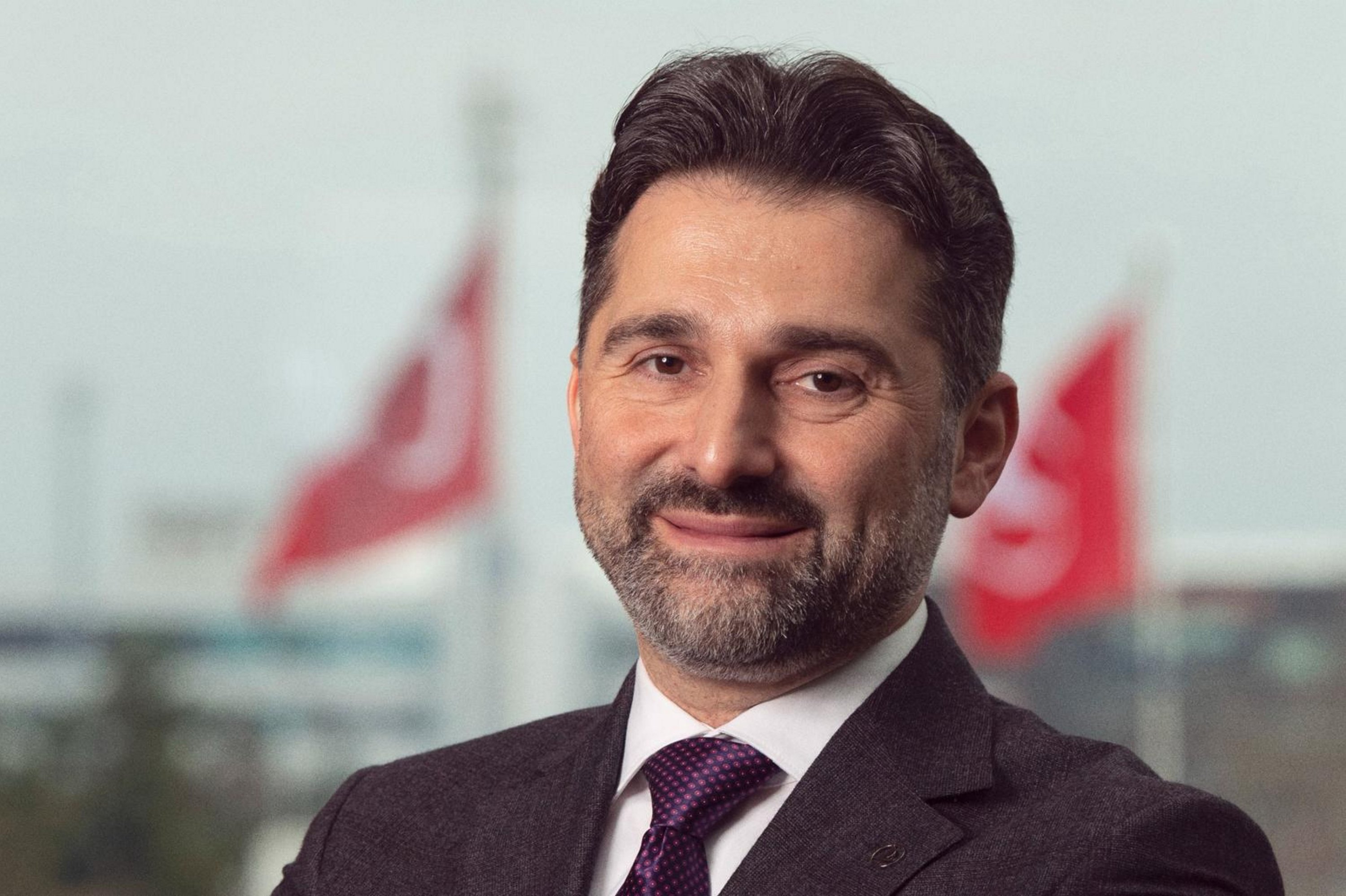

Turkish Airlines also said Metin Gülşen had been appointed as the chief financial officer and Harun Baştürk as chief commercial officer.
The announcement came after separate data on Thursday showed THY’s passenger count rose 16% year-over-year in March to 7.2 million.
The January-March figure jumped 12.7% from a year ago to 21.3 million.
Its occupancy rate rose by 6.1 points to 83.6%, while the first-quarter rate marked a 2.9-point increase to 83.5%.
The European Bank for Reconstruction and Development (EBRD) on Thursday unveiled 5 billion euros ($5.9 billion) to help shore up economies hit by the fallout of the Iran war.
In a statement, the EBRD said it will “deploy EUR5 billion in 2026 in economies impacted by Middle East conflict.”
The funds would be focused on Iraq, Jordan, Lebanon, the West Bank and Gaza “and affected neighboring economies,” including Egypt, Türkiye, Armenia and Azerbaijan, the bank said.
“The economic and social impact of the conflict is already being felt across many of the bank’s economies in the form of disrupted trade routes, energy and commodity shocks, weakened investor confidence and broader costs to the population,” it added.
Established in 1991 to help former Soviet bloc nations embrace free-market economies, the bank later extended its reach to the Middle East and Africa.
“In a time of rising uncertainty, we are stepping up where others may pull back,” said EBRD President Odile Renaud-Basso.
“We are here to support economies, clients and people in our countries of operation in tough times,” she added.
The bank said “the volume of conflict response investment will be demand driven due to the fast-changing nature of the situation.”
The funds will provide immediate relief “by supporting economic activity” and “fostering financial sector stabilization.”
EBRD will aim to strengthen energy security and aid state-owned enterprises to “ensure the uninterrupted provision of essential goods and services.”
On Thursday, it had approved “a project to support Lebanon’s retail chain,” it said, adding it also aimed to safeguard access to jobs, finance and essential services.
The impact of the conflict in the Middle East on the Turkish economy may be temporary and reversible if the recent cease-fire holds, and authorities are ready with a different set of tools if the shock persists, Treasury and Finance Minister Mehmet Şimşek said Thursday.
In a live interview, Şimşek said authorities are prepared with a new response beyond steps already taken if the newly agreed U.S.-Iran cease-fire does not hold. He also pointed to the importance of measures being taken, as he touted Ankara’s capacity to tackle shocks.
“We have a good capacity to manage shocks,” the minister told Bloomberg HT broadcaster, as he recalled trade wars, issues such as drought and frost and political events last year.
He did not detail the potential response but said authorities’ “main scenario” was for a month-long war, adding that a three-month conflict would be bad.
“The macroeconomic fundamentals of emerging economies are actually strong. We saw this in Türkiye as well. Risk pricing in Türkiye dropped dramatically yesterday,” he said, referring to the fall in risk premiums in response to the two-week cease-fire agreed upon.
“The likelihood of a turnaround in risk appetite is quite high,” he added.
This week’s cease-fire has mostly halted the more than five-week war that gripped the Middle East and sent energy prices soaring, although Israel bombed more targets in Lebanon on Thursday, potentially jeopardizing the deal.
Answering questions in the interview, Şimşek described the shocks from the war as the biggest since World War II, referring particularly to disruptions related to energy supplies.
“Reaching a cease-fire is welcome, but normalization will take months at best,” he suggested.
He also drew attention to the risk of global inflation, even stagflation and recession.
“There is a much bigger shock than those experienced in the 1970s. If high energy prices remain a concern, there is a risk of a global recession,” he noted.
He also highlighted that the continuation of the cease-fire and the reconstruction of supply chains are crucial.
“The oil shock – it reduces growth in many countries, there is a cost dimension. … There are negative effects on growth. It triggers fund outflows. If this shock continues, there is a high probability of inflation, growth … stagflation, and a risk of recession,” he explained.
Şimşek also said the central bank’s reserves had fallen by about $48.7 billion since the war began and that some $162 billion remained. He also conveyed the expectations for reserves to rebound.
“We are better off than in the past in terms of reserve adequacy, close to the IMF’s indicator. There is currently no problem with reserves; our reserves are strong. We are also in surplus in net reserves, excluding swaps,” he said.
Comparing Türkiye with other stock markets, including those far away from the region, Şimşek said that Turkish stock markets “have proven resilient” in the face of declines. “This means that Türkiye is performing better than other developing countries,” he suggested.
Disinflation priority
Among others, the minister emphasized that the government remains committed to its goal of disinflation and lowering prices, also conveying that they found certain assessments for inflation heading towards 30% as “exaggerated.”
“The core of our program is combating the high cost of living. The sliding scale adjustment system is one example of this,” he said, referring to a special system introduced to curb the impact of higher fuel prices on consumers.
He also dismissed the revision of the government’s targets, adding: “We can’t say, ‘Let’s publish a new Medium-Term Program.’ We don’t see such a need.”
Similarly, he also said there is some deterioration in growth expectations and expectations related to the current account balance. He also noted that, besides energy, Türkiye has trade and tourism relations with the conflict-impacted region.
The minister also pointed to the potential of Türkiye emerging as a supplier in the region with the disruption of flows through the Strait of Hormuz.
“What’s important for us is to maintain the general outline of the program; there may be deviations from the targets, let’s be realistic, but we will ensure that it converges towards the targets,” he said.
The International Monetary Fund (IMF) greenlighted $700 million more in loans for Sri Lanka on Thursday, while urging Colombo to speed up reforms to guard its post-2022 economic recovery and address shocks from the Middle East crisis.
The fund’s mission approved the latest tranche of its four-year $2.9 billion bailout, provided officials restore cost recovery in energy pricing, among other conditions.
The government has said it will spend nearly $200 million on fuel subsidies after an energy crunch caused by the Iran war forced it to raise retail prices by a third, in line with global trends.
The IMF is opposed to general energy subsidies and wants Colombo to ensure cost recovery in electricity prices, which are subsidised for smaller consumers.
“Sri Lanka is significantly exposed to the Middle East conflict, which has heightened energy prices, disrupted a key air hub for tourists, and affected Sri Lankans working in the region,” the IMF said in a statement.
It emphasized the “urgency of accelerating reform momentum to safeguard macroeconomic stability.”
Colombo had been on the verge of drawing an IMF instalment of $340 million when it was hit in November by Cyclone Ditwah, the island’s worst natural disaster in two decades that killed at least 641 people and made thousands homeless.
The World Bank estimated infrastructure damage at $4.1 billion, and the government requested that the IMF give it a $206 million emergency loan for disaster relief instead.
Sri Lanka’s economy suffered its worst recession in 2022, contracting 7.3%, when then-president Gotabaya Rajapaksa resigned after months of street protests.
The leftist administration of President Anura Kumara Dissanayake, who came to power in late 2024, has retained many of the austerity measures and high taxes introduced by his predecessor.

BREAKING NEWS | Minister of Foreign Affairs Hakan Fidan: We welcome the ceasefire

Speaker points to General Assembly as Türkiye’s CHP push for by-election

Minister Bak visited Akkuyu NPP: “We trust in the strong future of our country”
BREAKING NEWS | Minister of Foreign Affairs Hakan Fidan: We welcome the ceasefire
Speaker points to General Assembly as Türkiye’s CHP push for by-election
Minister Bak visited Akkuyu NPP: “We trust in the strong future of our country”
-
 Daily Agenda1 day ago
Minister Göktaş: “We do not have an agenda to close or ban the games”
-
 Economy2 days ago
All roads ‘lead to higher prices, slower growth,’ IMF says on Mideast war
-
 Politics2 days ago
Saudi-Turkish ties key to easing regional tensions, ambassador says
-
 Politics22 hours ago
Russian FM confirms attendance to Antalya Diplomacy Forum in Türkiye
-

 Daily Agenda3 days ago
He opened in a place without a license – Last Minute News
-
 Politics2 days ago
Turkish FM hosts US envoy after critical Syria visit
-
 Politics23 hours ago
Türkiye destined for key security role: VP Yılmaz
-
 Daily Agenda3 days ago
Türkiye will be a center of attraction – Last Minute News