
Sports
World Cup qualifying delivers drama, surprises, historic moments

Qualifying is over. The 48-team World Cup in North America is set, and the tournament promises a mix of elite superstars, rising talents, and debut nations bringing their own stories to the world stage.
Over 2.5 years, teams played 2,527 goals, endured heartbreak, and celebrated triumph, culminating Tuesday with six nations claiming the final tickets to soccer’s grandest stage.
Sweden’s journey is nothing short of astonishing.
In its European qualifying group, the Swedes drew two and lost four, finishing last.
Conventional wisdom would have written them off, yet UEFA’s complex system offered a lifeline. Sweden’s top finish in League C of the 2024-25 Nations League, beating Azerbaijan, Slovakia, and Estonia, earned a playoff spot.
In a tense semifinal, Sweden dominated Ukraine 3-1, with Alexander Isak orchestrating the attack and Emil Forsberg dictating tempo in midfield.
The final against Poland was a thriller: trailing 2-1 at halftime, Sweden rallied with a late Forsberg penalty and a stoppage-time strike from Dejan Kulusevski to win 3-2.
Critics may debate whether Sweden “deserves” a World Cup spot, but their grit and tactical adaptability proved enough.
Italy, once a footballing titan, suffered another catastrophic failure.
A penalty shootout loss to Bosnia-Herzegovina sealed their absence from Europe’s 16 slots.
This marks the third consecutive tournament Italy will miss, a blow to a nation that has won four World Cups.
Analysts point to a generation lacking cutting-edge talent, managerial missteps, and questionable squad rotation.
Veteran defenders like Leonardo Bonucci and Marco Verratti failed to provide the defensive backbone expected, while coach Luciano Spalletti struggled to unlock the team’s offensive rhythm.
Italian media branded the outcome “The third apocalypse,” reflecting a national identity crisis in football.
Yet Italian influence persists elsewhere. Vincenzo Montella guided Türkiye to victory over Kosovo, pairing tactical discipline with an attack led by Enes Ünal to clinch World Cup qualification.
Fabio Cannavaro, captain of Italy’s 2006 World Cup-winning team, now leads Uzbekistan, combining disciplined defense and rapid counterattacks to propel a debutant nation onto the world stage.
Carlo Ancelotti joined Brazil last May, bringing his trademark positional fluidity, while Gennaro Gattuso took the Italian job after Claudio Ranieri declined, emphasizing high-press intensity and midfield resilience.
Geopolitics intersected with football. FIFA President Gianni Infantino, a lifelong Azzurri supporter, skipped Italy’s playoff loss to meet Iran’s delegation in Antalya, Türkiye.
Ensuring Iran plays its three scheduled group-stage games in Los Angeles and Seattle despite ongoing conflict will test FIFA’s diplomacy.
Iran’s domestic league remains suspended, but the national team remains determined, highlighting the tournament’s entanglement with global politics.
The expanded 48-team format has introduced new stories. Curaçao, population 156,000, becomes the smallest nation ever to qualify, relying on striker Rangelo Janga’s finishing and goalkeeper Eloy Room’s reflex saves.
Cape Verde, an archipelago off West Africa, used a tight defensive system and efficient set-piece routines to secure their debut.
Congo returns after 52 years, once Zaire, led by captain Chancel Mbemba, whose defensive leadership anchors a young, energetic side.
Uzbekistan and Jordan also join the tournament for the first time, offering a mix of tactical pragmatism and spirited play that could upset traditional powers.
For fans, qualifying’s final days brought logistical hurdles. U.S. authorities and FIFA rushed to process visas for supporters of newly qualified nations, including Iraq, Türkiye, and Congo, under the expedited “FIFA Pass” system championed by President Donald Trump.
Many African nations still face visa bonds up to $15,000, raising concerns for fans wanting to witness history firsthand.

Ukraine’s sports authorities on Wednesday urged the International Olympic Committee to review the “neutral” status granted to certain Russian athletes, alleging some have ties to the military or have competed in events that breach Olympic sanctions.
The IOC cleared a limited number of athletes from Russia and Belarus to compete at the 2024 Paris Olympics and the 2026 Milan Winter Games under strict neutrality rules, barring national flags and anthems and requiring thorough eligibility checks.
Those conditions explicitly prohibit athletes with military affiliations or those who supported Moscow’s 2022 invasion of Ukraine.
In a formal appeal, Ukrainian Sports Minister Matvii Bidny and National Olympic Committee president Vadym Guttsait said they had gathered evidence suggesting some competitors violated IOC guidelines introduced in 2023.
The appeal pointed to what it described as “systematic violations,” particularly in sport climbing and within its governing body, the International Federation of Sport Climbing.
“The Ukrainian side has provided evidence of direct links between a number of athletes and the military structures of the aggressor state,” the statement said.
It cited several athletes officials alleged had links to the military, supported the invasion or had trained in Crimea, which Russia seized and annexed from Ukraine in 2014.
It also said an international competition was held in Moscow last November under the auspices of the International Military Sports Council, in violation of IOC rules.
“This confirms the involvement of Russian military structures in the international sports movement with the aim of legitimizing Russia’s aggressive policy,” the appeal said.
“The Ukrainian side calls on the leadership of the IOC and the IFSC to conduct a comprehensive review of these facts and to suspend the individuals in question from international competitions.”
Some sports bodies have eased restrictions on Russian and Belarusian athletes. The International Paralympic Committee allowed athletes from the two countries to compete at the recent games in Italy with anthems and flags, drawing protests from Ukraine and other countries.
The views and opinions expressed in this article are solely those of the author. They do not necessarily reflect the editorial stance, values or position of Daily Sabah. The newspaper provides space for diverse perspectives as part of its commitment to open and informed public discussion.
As the Süper Lig title race tightens, Galatasaray step into one of the season’s most volatile arenas on Saturday, facing a surging Trabzonspor side at Papara Park in a clash that blends pressure, momentum and unfinished business.
The table sets the stakes. Galatasaray lead with 64 points from 26 matches, four clear at the summit. Trabzonspor sit third on 60, having played one game more, level with Fenerbahçe and sensing a late opening.
For Okan Buruk’s side, victory would stretch the gap and place one hand firmly on a fourth consecutive title. For Trabzonspor, it is a chance not only to close the distance but to reframe the championship narrative heading into the final stretch.
Trabzonspor’s transformation
Trabzonspor’s revival has been built on clarity and conviction since Fatih Tekke’s arrival in March 2025. The Black Sea side have evolved into a physically assertive, vertically dangerous team that thrives on momentum.
Their five-game winning streak reflects both efficiency and belief, with narrow wins showing defensive grit and broader victories underlining attacking depth.
At the heart of their surge is Paul Onuachu, the league’s most dominant finisher this season with 21 goals.
His aerial presence reshapes defenses, drawing markers and opening channels for runners around him.
Felipe Augusto complements that threat with mobility and secondary scoring, while Ernest Muçi’s late runs from midfield have added unpredictability.
Oleksandr Zubkov provides the creative spark, often operating between lines and delivering the final pass in tight spaces.
This blend of physicality and technical craft has made Trabzonspor one of the most difficult sides to contain, particularly at home where they combine crowd energy with aggressive pressing phases.
Yet, their defensive line remains a calculated risk.
While more compact than earlier in the season, moments of vulnerability persist, especially when transitions break down. Possible absences and squad rotation could further test their balance against a side as clinical as Galatasaray.
Galatasaray’s machine
Galatasaray arrive as the league’s most complete unit, pairing structure with cutting edge.
Buruk’s system, typically a 4-2-3-1, is built on midfield authority and rapid vertical transitions. They suffocate opponents without the ball and strike with precision once possession is regained.
Their defensive record, just 18 goals conceded, underlines a backline that rarely loses shape.
Davinson Sanchez anchors with authority, while the collective discipline limits space between lines.
This stability allows Galatasaray to commit numbers forward without exposing themselves.
In attack, variety is their greatest weapon. Victor Osimhen brings pace and directness, capable of stretching defenses and punishing high lines.
Mauro Icardi offers contrast, operating as a clinical finisher in tighter spaces.
The wide channels, often driven by Barış Alper Yılmaz and Leroy Sane, create width and crossing lanes, while midfielders like Lucas Torreira ensure transitions remain controlled rather than chaotic.
Even so, there are cracks to monitor. European fixtures have stretched the squad physically, and suspensions or rotation could disrupt rhythm.
Away matches of this intensity demand both mental sharpness and tactical discipline, areas where any lapse could prove costly.
Pressure and memory
Beyond the standings, this fixture carries historical weight. Trabzonspor have not beaten Galatasaray at home in six league meetings, a run that has quietly shifted the psychological balance.
Their last home victory in this matchup, a 4-0 triumph in September 2018, now feels distant.
For the hosts, this is more than a title six-pointer. It is a chance to end a lingering narrative of near misses and reassert dominance in front of their own supporters. For Galatasaray, recent dominance in the fixture adds confidence but also raises expectations.
Maintaining that edge in a hostile environment is part of what defines champions.
Tactical fault lines
The match is likely to be decided in transitions and duels.
Trabzonspor will aim to disrupt Galatasaray’s buildup early, pressing high and forcing turnovers in advanced areas.
Onuachu’s presence will be central, not only as a target but as a reference point for second balls and sustained pressure.
Galatasaray, in contrast, will look to bypass that pressure through controlled buildup and quick switches of play.
If they can draw Trabzonspor forward and exploit the spaces left behind, Osimhen’s runs and Icardi’s positioning could tilt the balance.
Set pieces may also play a decisive role. Both sides possess aerial threats and technical delivery, making dead-ball situations a potential turning point in a tightly contested match.
Luka Doncic delivered a masterclass with 42 points and 12 assists, while LeBron James added 14 points in his record 1,229th career win, lifting the Los Angeles Lakers to a 127-113 victory over the Cleveland Cavaliers on Tuesday.
The Lakers, now 50-26, secured their 13th win in 14 games and had already locked up a playoff berth and the Pacific Division crown earlier in the night after the Phoenix Suns lost.
Sitting third in the Western Conference, Los Angeles holds a two-game cushion over the Denver Nuggets as the postseason picture sharpens.
James surpassed Hall of Fame center Kareem Abdul-Jabbar for the most combined regular-season and playoff wins. The all-time scoring leader added five rebounds and six assists against the Cavaliers, where he spent 11 seasons over two stints.
MVP candidate Doncic returned from an automatic one-game suspension for picking up his 16th technical foul. He became the third-youngest player to reach 15,000 career points at 27 years, 31 days. James holds the mark at 25 years, 79 days.
Jarrett Allen scored 18 points for Cleveland (47-29), which remained one game behind the third-place New York Knicks in the Eastern Conference. James Harden had 17 points, and Donovan Mitchell added 10 points and six assists.
The Cavaliers, whose magic number to make the playoffs is one, have won six of their last eight games and are 16-6 with Harden in the lineup.
DeAndre Ayton had 18 points and nine rebounds, and Austin Reaves scored 19 for Los Angeles, which blew the game open by scoring 45 points in the third quarter to take a 110-83 lead. It was the 100th victory for coach J.J. Redick.
The Lakers carried a 65-53 lead into halftime, fueled by 20 points and seven assists from Doncic and 11 points and six rebounds from Ayton. Allen had 18 points on 9-of-11 shooting, but Mitchell scored only two for the Cavaliers.
Doncic wasted no time getting back in rhythm, taking 10 shots and scoring 14 points while playing the entire first quarter. Cleveland held a 34-32 lead behind nine points from Harden and eight points with three rebounds from Allen.
Los Angeles guard Marcus Smart (right ankle bruise) missed his fourth game in a row, while the Cavaliers were without swingman Sam Merrill (left hamstring soreness).
Cleveland forwards Jaylon Tyson (left great toe bruise) and Dean Wade (right ankle sprain) did not travel with the team on its three-game trip.
Türkiye are bracing for a rare, high-voltage sporting summer, with four national teams set to compete across football, women’s basketball and both men’s and women’s volleyball between June and September 2026, marking one of the most comprehensive international showings in the country’s history.
The surge is anchored by the men’s national football team’s long-awaited return to the FIFA World Cup 2026, a breakthrough secured through gritty playoff victories over Romania and Kosovo that ensured Türkiye’s presence across all four major tournaments and ignited anticipation nationwide.
The summer opens on football’s grandest stage, where Türkiye will feature in the expanded World Cup hosted across the United States, Canada and Mexico, ending a 24-year absence since their celebrated third-place finish in 2002.
Drawn in Group D, Türkiye will face the host United States, alongside Australia and Paraguay, in a demanding group that promises early tests and global exposure.
Their path to qualification reflected both resilience and attacking depth, as Türkiye finished second in their European qualifying group behind Spain with four wins, one draw and one loss, scoring 17 goals while conceding 12.
A heavy home defeat to Spain briefly disrupted momentum, but emphatic wins over Georgia and Bulgaria restored belief before a crucial draw away to Spain sealed second place.
In the playoffs, Türkiye tightened defensively and delivered when it mattered most, edging Romania 1-0 in Istanbul through Ferdi Kadıoğlu before repeating the scoreline against Kosovo away from home, completing qualification with back-to-back clean sheets.
Across eight matches, Türkiye scored 19 goals, with Kenan Yıldız and Kerem Aktürkoğlu leading the scoring charts, supported by contributions from across the squad including Hakan Çalhanoğlu, Arda Güler and Merih Demiral, underscoring a balanced and unpredictable attacking unit.
As the World Cup concludes, attention shifts swiftly to volleyball, where Türkiye will take center stage as co-hosts of the CEV Women’s European Volleyball Championship 2026, with Istanbul set to host the decisive knockout rounds and final.
Entering as reigning champions after their 2023 triumph, the women’s national team, widely known as “Sultans of the Net,” carry both expectation and momentum into a tournament where they will play their group matches at home against Poland, Germany, Slovenia and Hungary.
The home advantage in Istanbul offers more than familiarity, providing a charged atmosphere that could prove decisive as Türkiye attempt to defend their continental crown in front of packed stands, with the tournament unfolding from late August into early September across multiple host nations.
Running parallel to the volleyball spectacle, Türkiye’s women’s basketball team will return to the global stage at the FIBA Women’s Basketball World Cup 2026 in Berlin, marking their first appearance in eight years and only their third overall.
Scheduled between Sept. 4 and 13, the tournament gathers the world’s top 16 teams in a compact, high-intensity format, offering Türkiye a chance to reassert itself among elite competition.
The overlapping schedule will test fans’ attention as two major tournaments unfold simultaneously, yet it also reflects the breadth of Türkiye’s presence across disciplines, with Berlin providing a high-profile setting for the team’s long-awaited return.
The summer closes with the CEV Men’s European Volleyball Championship 2026, where Türkiye’s men’s team, known as “The Lords of the Net,” will compete in a 24-team field spread across multiple European host cities, with the finals set for Milan.
Drawn in Group D, Türkiye will play their matches in Cluj-Napoca against Romania, Latvia, France, Germany and Switzerland, navigating a competitive group as they pursue a deep tournament run.
The views and opinions expressed in this article are solely those of the author. They do not necessarily reflect the editorial stance, values or position of Daily Sabah. The newspaper provides space for diverse perspectives as part of its commitment to open and informed public discussion.
Türkiye ended a 24-year absence from the FIFA World Cup with a tense 1-0 victory over Kosovo in the UEFA playoff final, a result that not only secured qualification but also rewrote a narrative of near-misses that had lingered for more than two decades.
On Tuesday at Fadil Vokrri Stadium in Pristina, the decisive moment arrived in the 53rd minute when Kerem Aktürkoğlu capped a swift, clinical counterattack, finishing from close range.
Kenan Yıldız surged down the flank before Orkun Kökçü redirected the move into Aktürkoğlu’s path, a goal that ultimately separated two sides bound by deep cultural ties but divided by fine margins on the night.
Kosovo responded with urgency and intensity, forcing Türkiye into long spells of defensive discipline.
Goalkeeper Uğurcan Çakır stood firm with a series of composed interventions, preserving the lead as the closing stages tightened into a battle of nerves where every clearance, interception and save carried enormous weight.
At full time, emotion took over as players embraced and lifted coach Vincenzo Montella, who had guided the team through a campaign marked by both promise and setbacks, including a heavy defeat to Spain that once cast doubt over their trajectory.
Celebrations spilled far beyond the stadium as fans across Türkiye filled the streets with flags, flares and car horns in a long-awaited release.
The significance of the result is rooted in history.
Türkiye’s last appearance at the World Cup came in 2002 under Şenol Güneş, when they produced a remarkable run to third place, defeating Japan and South Korea and pushing eventual champions Brazil to the limit.
In the years that followed, however, repeated qualification failures turned that success into a distant memory, despite the emergence of talents such as Tuncay Şanlı and Arda Turan.
This current squad has shifted that narrative through resilience and balance.
After finishing second in their qualifying group behind Spain, Türkiye navigated a narrow playoff path, edging Romania before overcoming Kosovo in a final defined by composure under pressure, a hallmark increasingly associated with Montella’s approach.
The squad itself reflects a blend of emerging flair and experienced control.
Young attackers like Arda Güler and Kenan Yıldız bring unpredictability and creativity, while captain Hakan Çalhanoğlu anchors the midfield with vision and leadership.
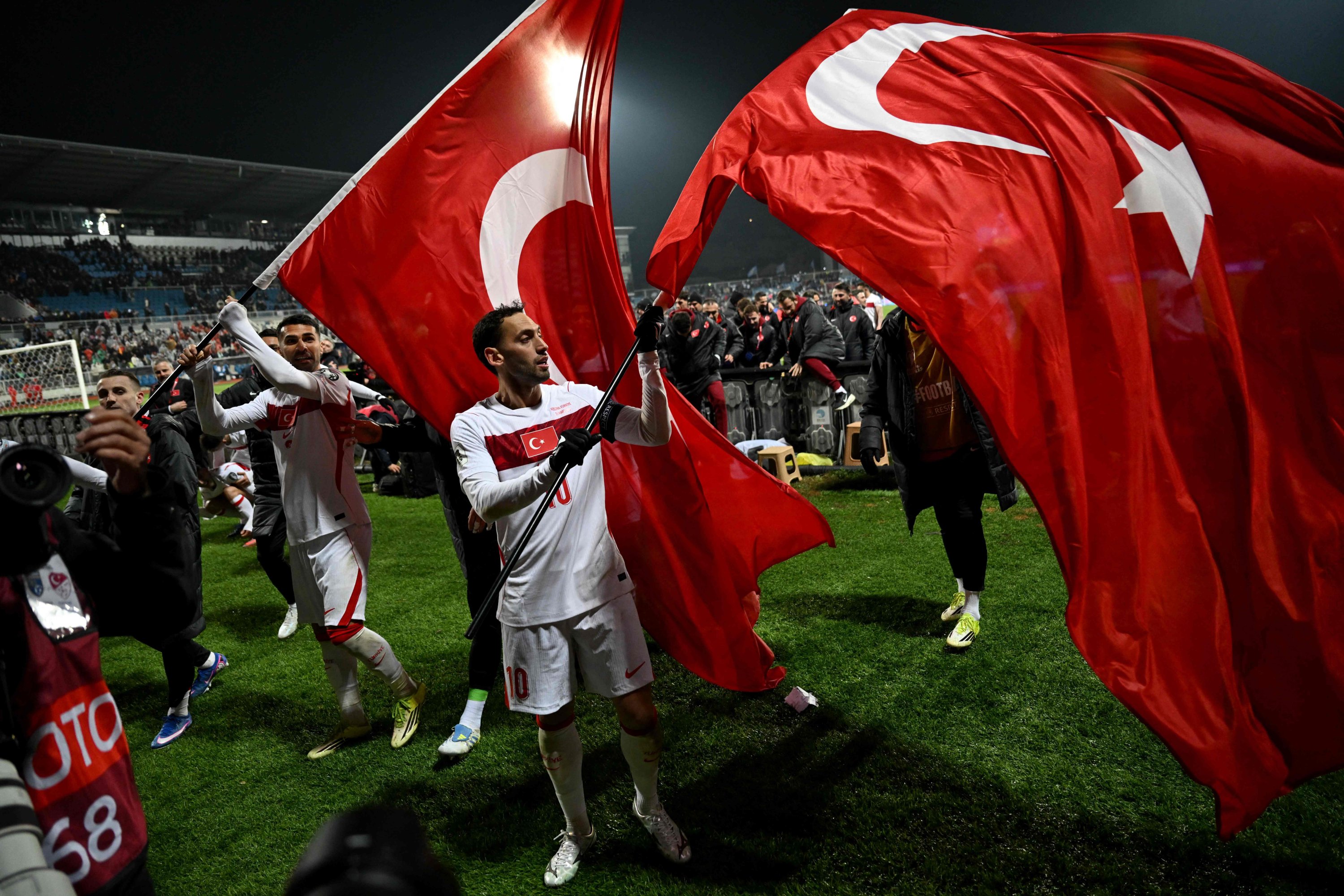
They are supported by a disciplined defensive structure and opportunistic finishing that has proven decisive in tight matches.
For many within the team, the achievement carries generational meaning.
Players born after or too young to remember 2002 now step into a tournament they once watched only in highlights, a shift that Aktürkoğlu acknowledged as both emotional and motivating, with the squad aiming not only to participate but to inspire a new wave of supporters.
The challenge ahead is immediate and demanding.
Drawn into Group D alongside the United States, Australia and Paraguay, Türkiye face a stylistically diverse set of opponents, with analysts already labeling the group as one of the most competitive in the expanded 48-team tournament, where adaptability and squad depth will be critical.
International reaction highlighted the magnitude of the achievement.
Reuters framed it as a long-awaited return to football’s elite stage, while BBC highlighted the narrow margin that defined the playoff win.
The Guardian pointed to the difficulty of Türkiye’s group, and ESPN detailed the logistical and competitive challenges awaiting the team across North America.
Meanwhile, New York Post suggested Türkiye’s inclusion complicates the United States’ path, a view reinforced by US captain Christian Pulisic, who described the matchup as one to anticipate.
Further coverage from Marca, Al Jazeera and Bild emphasized both Türkiye’s breakthrough and Kosovo’s narrow miss, capturing the contrasting emotions of triumph and heartbreak that defined the night in Pristina.
Within the Turkish camp, ambition is already taking shape.
Skipper Çalhanoğlu has set progression beyond the group stage as the immediate goal.
Türkiye secured their place at the 2026 FIFA World Cup with a crucial away victory over Kosovo, thanks to a 53rd-minute goal from Kerem Aktürkoğlu.
Kosovo came close shortly before the half-hour mark but Türkiye goalkeeper Uğurcan Çakır pushed a long-range ball from FisnikAsllani against the crossbar.
Türkiye scored in the 53rd from Kerem Aktürkoğlu, who put the finishing touch on an attempt from Orkun Kökçü. The goal gave them confidence and they held on reach the World Cup for the first time since 2002 when they reached the semi-finals.
The other play-off finals in Europe on Tuesday were Bosnia-Herzegovina v Italy and the Czech Republic v Denmark.
Türkiye will go into Group D with co-hosts the United States, Paraguay and Australia.


-
 Daily Agenda17 hours ago
Sümeyye Erdoğan Bayraktar: Women are now an important part of the development vision
-
 Daily Agenda19 hours ago
SON DAKİKA… AK Parti Sözcüsü Ömer Çelik: Bölge büyük kaosun içine çekiliyor
-
 Daily Agenda2 days ago
Let’s say ‘stop’ to food waste in the world together
-
 Economy5 hours ago
Turkish exports down in March amid Eid, calendar base, war impact
-
 Daily Agenda16 hours ago
Minister Gürlek’s call for cooperation to the Netherlands: “We have an extradition request for 217 FETO members and 8 PKK members.”
-
 Daily Agenda5 hours ago
İmamoğlu’s expert claims turned out to be unfounded
-
 Politics3 days ago
Ankara courthouse braces for busy week over FETÖ, CHP trials
-
 Politics2 days ago
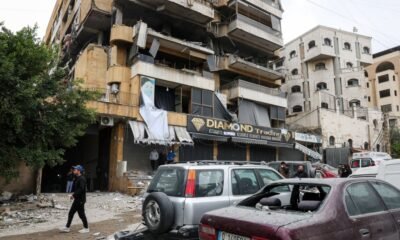
Center against disinfo denies Türkiye planned incursion to Lebanon