
Economy
10-year US Treasury yield hits 5% for 1st time since late 2023

The ten-year U.S. Treasury yield soared to hit 5% on Monday as oil prices climbed further amid a Middle East war that has exacerbated the inflation outlook.
Near 2.30 p.m. GMT, the yield stood at 5.01%, its highest level since October 2023.
The move in the bond market came as oil prices advanced about 4% after Saudi Arabia shut its East-West pipeline – a key export route with Iran’s effective closure of the Strait of Hormuz – following drone attacks by Yemen’s Houthis.
The rise in oil prices, which means both major crude contracts now stand above $100 a barrel, has contributed to expectations that the Federal Reserve (Fed) will lift interest rates on Wednesday to counter inflation.
The yield on the 30-year U.S. Treasury bond is currently at its highest level in nearly 20 years.
Besides higher oil prices, analysts have pointed to the U.S. budget deficit and the artificial intelligence boom as factors that have flooded the bond market, pushing rates higher.

Türkiye has completed the production, assembly and integration of the spacecraft being developed for the country’s first Moon mission, Industry and Technology Minister Mehmet Fatih Kacır said Monday.
The spacecraft has been sent to the Turkish Aerospace Industries (TAI) Space Systems Integration and Test Center for system-level environmental testing, Kacır said at a press briefing.
Türkiye aims to become the ninth country in the world and the first Muslim nation to carry out a Moon mission with its own engineering capabilities, Kacır said.
The approximately 3.5-ton spacecraft is planned to launch in the first months of 2027 and is expected to reach a polar, circular orbit about 100 kilometers above the Moon’s surface after a journey of roughly two months.
The spacecraft is initially scheduled to operate for at least three months, Kacır said, with the mission potentially extended to up to 18 months depending on performance.
During the mission, the spacecraft will study the interaction of solar winds with the lunar surface, the mechanisms behind the formation of water on the Moon, the Moon’s magnetic fields and the thermal properties of its surface. It will also conduct radiation measurements using scientific equipment developed domestically.
Following completion of the scientific mission, Kacır said Türkiye plans to guide the spacecraft toward the lunar surface through controlled deceleration maneuvers.
A domestically developed hybrid propulsion system will be one of the key components of the mission, according to the minister. The system will be used for orbit-raising maneuvers as well as the final firing sequence to leave lunar orbit and approach the Moon’s surface.
“As part of this mission, the hybrid propulsion system, which we developed and manufactured entirely with domestic and national resources, will be fired in deep space for the first time in history,” said Kacır.
More than 80% domestic content
The spacecraft was produced with a domestic content rate of more than 80%, drawing on capabilities developed through Türkiye’s previous satellite programs, including the Imece earth observation satellite and Türksat 6A.
These capabilities include flight computers, communications, power systems, thermal control and orbital operations.
“The production, assembly and integration work on our spacecraft, which is the product of the knowledge accumulated over the years in satellite technologies, has been completed,” Kacır said.
The upcoming testing campaign will assess the spacecraft’s ability to withstand the conditions it will encounter during launch and in space. Thermal vacuum tests will simulate the space environment, structural tests will assess its resilience to launch conditions, and electromagnetic compatibility tests will verify that its systems can operate safely and compatibly with one another, Kacır said.
Once the tests are completed, the spacecraft will be transferred to a new clean room and integration facility under construction at the Scientific and Technological Research Council of Türkiye (TÜBITAK) Space’s Middle East Technical University (METU) campus in Ankara.
Following final checks, it will be sent to Kennedy Space Center in the United States for launch, said Kacır.
Kacır said the Moon Research Program had reached a completion rate of 77% since its launch in early 2022. TÜBITAK UZAY, DeltaV firm and other domestic technology companies and startups have contributed to the spacecraft’s development and production.
Space ambitions
Kacır said Türkiye was seeking to turn space technologies into a driver of national development as the sector becomes increasingly important not only for scientific exploration but also for technological competitiveness, economic growth and strategic independence.
The government has also begun work on the Türksat 7A satellite, which is expected to provide high-speed data transmission and flexible coverage, including capabilities for disaster communications, public services and secure communications.
Türkiye is also developing the Imece-2 and Imece-3 next-generation satellite constellation to enable wider-area imaging and more frequent data collection over the same locations.
Kacır said Türkiye was continuing efforts to establish a space technology development zone in Ankara in cooperation with the Turkish Space Agency (TUA), TÜBITAK and the Middle East Technical University, with the aim of building an ecosystem in space similar to the one developed in the defense industry.
He also pointed to the spaceport under construction in Somalia, saying it would help provide Türkiye with independent access to space while allowing the country to capture a larger share of the growing global space economy.
Türkiye joined the Artemis Accords on Aug. 31, committing to international cooperation on peaceful and sustainable civil space activities involving the Moon and other celestial bodies.
The country is also preparing to host the 77th International Astronautical Congress in Antalya in early October, which Kacır said is expected to bring nearly 10,000 participants from around the world.
Latvia’s national carrier airBaltic voluntarily filed for protection under Chapter 11 of the U.S. Bankruptcy Code in New York, it announced on Monday, saying it was looking to restructure its debt pile and survive a deepening sector crisis brought on by the U.S.-Iran war.
AirBaltic said in a statement it had secured a commitment for 350 million euros ($405 million) in financing from lenders including Strategic Value Partners, Barclays, Hayfin Capital Management, Morgan Stanley and Oaktree Capital Management to support its operations during the restructuring.
The funding, at an interest rate of about 12%, is subject to approval by the court, AirBaltic CEO Erno Hilden told a press conference.
“In the coming months, we will engage with all our stakeholders to agree on sustainable terms,” he said, adding that the company is looking at 44 million-euros profit improvement annually.
AirBaltic will use its bankruptcy to cancel or defer outstanding deliveries on a $3.5 billion order for 40 additional planes from Airbus and $106.7 million worth of additional aircraft engines from Pratt & Whitney, a court filing showed.
It said it had already engaged with the planemaker to defer additional deliveries after this year.
Pratt & Whitney owner RTX declined to comment. Airbus did not immediately reply to a request for comment.
AirBaltic said flights would operate as scheduled during the court-supervised process, which it expects to finish by June next year.
The U.S. war with Iran has caused jet fuel prices to double, sparking the air travel sector’s worst crisis since the COVID-19 pandemic. Investors and executives have warned that carriers with stretched balance sheets risked collapse.
“AirBaltic has been experiencing acute financial stress due to a combination of financial and geopolitical factors,” the airline’s board wrote in a filing with the bankruptcy court.
AirBaltic has about $583 million in funded debt and finance lease liabilities, and it owes some 106 million euros in payroll taxes and airline taxes and fees, it wrote in the filing.
Its 2025 revenue was around 779 million euros.
Airline plans to cut 3,000-strong workforce
In an interview with Reuters, Hilden said AirBaltic was in talks with labor unions about “an adjustment in the workforce,” which he said would be a natural conclusion to the existing capacity reduction plans.
The carrier has been growing its global workforce for a decade and now employs more than 3,000 people.
“I do think that the underlying business for AirBaltic is a very healthy one. So after we really execute on our new business plan, I do see a bright future for the company,” he said.
Hilden said that the biggest changes in terms of the company’s operations during the Chapter 11 restructuring would involve the downsizing of its wet lease business, which loans out planes and crews to other airlines for a fee.
‘One of the best options’ to keep AirBaltic going
AirBaltic, which has a fleet of some 50 Airbus A220-300 planes, is majority-owned by the Latvian government, with Germany’s Lufthansa holding a 10% minority stake.
Before the filing, AirBaltic’s bondholders had been due to vote on the company’s plan to raise up to 257 million euros through new super-senior debt due in February 2027, at a rate of 25%.
Latvian Prime Minister Andris Kulbergs said the Chapter 11 proceedings were initiated after bondholders with over 70% of the value of the debt decided to opt for liquidation instead.
“I view this solution as one of the best options for ensuring AirBaltic’s viability, as it provides the necessary tools and time to implement the restructuring plan,” Kulbergs said in a statement.
The government is continuing to look for a strategic investor as AirBaltic reduces its fleet and reorganizes obligations, he added.
AirBaltic is the second airline casualty linked to the Iran war after Spirit Airlines collapsed in May.
The U.S. discount carrier, which filed for bankruptcy months before the conflict began in late February, had failed to secure creditor support for a government bailout plan.
Other airlines like AirAsia, Southeast Asia’s largest budget carrier, are seeking fresh capital.
AirBaltic to follow Hilden-led SAS Chapter 11 model
Hilden, who led Scandinavian airline SAS through its Chapter 11 proceedings from 2022 to 2024, said AirBaltic is “targeting (the) same process.”
“This gives them a protective framework to put their house in order … I don’t see why AirBaltic wouldn’t do the same as SAS,” said John Strickland, an analyst.
Yves Schwyter, founder of aviation capital risk intelligence firm Vectus Intelligence, said the Chapter 11 route was a “probably more sustainable capital structure than what was on the table a week ago.”
The airline had aimed to grow its fleet to 100 planes, and, according to aviation analyst Simonas Bartkus, was expecting to develop transit traffic from Russia, Belarus and Ukraine through Riga.
“This is no longer available, and the company became too large for its market … The rise in fuel costs made the situation acute, they had no time to find a solution,” he said.
Prime Minister Kulbergs said in a video on X that by April, AirBaltic had “burned through” 380 million euros raised via bonds issued in 2024.
A 30-million-euro emergency government loan ran out in June, he added, and the airline had tried to lease out its excess aircraft.
“Serving Baltic and Latvian routes requires only 30 aircraft, not 100,” he said.
Türkiye convened a key financial committee on Monday to assess the macroeconomic outlook and the developments in the markets, a statement by the Treasury and Finance Ministry said.
The Financial Stability Committee (FSC) convened under the chairmanship of Treasury and Finance Minister Mehmet Şimşek, the ministry said in a written statement shared on its website.
“At the meeting, the global and Turkish macroeconomic outlook was discussed, and current developments in the financial markets were comprehensively assessed,” the statement read.
“The committee continues its work with a holistic approach to safeguard financial stability, which is one of the key components of sustainable economic growth,” it added.
The photo released by the ministry showed the governor of the Turkish central bank, Fatih Karahan, also in attendance.
The FSC is Türkiye’s top financial coordination body for systemic risk and macroprudential policy.
The authorities have reiterated the goal of price stability and disinflation while presenting a new economic road map earlier this month.
Türkiye’s annual inflation rate cooled to 31.51% in August, down slightly from 31.75% in July, according to official data.
Global financial markets were in a sour mood on Monday on growing concerns about oil supplies following an attack on a key Saudi pipeline and uncertainty in the artificial intelligence field amid calls for a slowdown of AI development.
Global stocks fell as a surge in oil prices and rising government bond yields weighed on risk appetite ahead of central bank meetings in the U.S. and Japan this week.
Artificial intelligence-related shares also came under pressure after the leaders of OpenAI and Anthropic called for a slowdown in AI development to manage risks and protect humanity.
As concerns over the potential risks of the technology are rising as new artificial intelligence models become more powerful, top executives claim they want to slow the breakneck pace of AI development.
But competition, U.S. government reluctance and geopolitical factors stand in the way.
Latest concerns have highlighted both the potential for misuse by people with criminal aims, such as creating and spreading a disease that kills most of the world’s population, and the risk of AI systems going rogue in a dangerous way.
New warnings from within the industry have revived a long-running debate over whether advanced AI could escape human control and ultimately threaten humanity’s survival, and whether the companies developing the technology are doing enough to prevent such a scenario.
What are AI leaders proposing?
On Saturday, Dario Amodei, CEO of Anthropic, the San Francisco company behind Claude, advocated for a coordinated slowdown of AI development to better understand the risks arising from the technology’s capabilities.
He received public support from his counterpart at OpenAI, Sam Altman, as well as from Elon Musk, who runs xAI, and Google DeepMind chief Demis Hassabis. Altman said risks of human extinction posed by AI were “unacceptable.”
Amodei said he thought the industry needed to reduce the speed of its work, cautioning that a swarm of AI agents might be able to take over the internet in six months to a year unless companies devoted more time to putting safeguards in place.
He outlined a plan for companies like his and governments around the world to ensure that increasingly capable AI models remain aligned with the commands and values of responsible people.
His call came days after two former Anthropic safety researchers publicly aired concerns that the existential threats AI might pose to humanity were receiving too little attention.
Why now?
In July, OpenAI and Anthropic reported several incidents in which AI systems spontaneously broke out of their confined environments to access the internet and attack websites and platforms.
These AI systems demonstrated the ability to coordinate, establish hierarchies among themselves, cheat and erase traces of their actions.
Anthropic disclosed that three AI models – Claude Opus 4.7, Claude Mythos 5 and an internal research test model – hacked into three other organizations during testing shortly after OpenAI revealed that its AI system hacked into the servers of AI startup Hugging Face.
OpenAI described the intrusion by a combination of models, including its newly released GPT‑5.6 Sol and an “even more capable” model that was still being tested internally, as a “significant security incident.”
Meta followed suit in early August with a similar case of an AI model finding ways around another company’s digital security.
Anthropic, meanwhile, disclosed last week that it blocked efforts by bad actors to use its AI models for malicious activity, such as cyberattacks, surveillance and research that could have led to biological weapons.
Also last week, Jacob Coxon, an AI researcher who resigned from Anthropic and previously worked at OpenAI, publicly accused both startups of lax security standards and “gambling with our lives.”
Will they slow down on their own?
Competition among the industry’s leading players is so fierce, with hundreds of billions of dollars in investment at stake, that none of them is willing to risk easing off the accelerator alone.
Amodei has expressed a willingness to coordinate with rivals, excluding China.
For now, the only concrete measure adopted by both Anthropic and OpenAI is the inclusion of independent observers who will internally verify the companies’ work regarding AI safety.
PR stunt?
While many in the industry welcomed Amodei’s message, others questioned his motives.
For Brian Roemmele, an entrepreneur and figure in the AI sector, it amounts to a sales pitch delivered just weeks before Anthropic is likely to take shares public.
“That is the IPO story in essay form: we are the responsible firm; we are the cure; buy the safety premium,” he posted on the social media platform X, referring to the widely expected initial public offering, or IPO.
OpenAI’s Altman, meanwhile, said over the weekend the company would not proceed with an IPO this year, citing safety concerns.
Several figures in tech private equity also accused Anthropic of “regulatory capture” – seeking to have public authorities cement, through regulation, a hierarchy with the startup at the top.
“Stop pretending the motivation to slow down is purely altruistic,” said David Sacks, a former AI adviser to President Donald Trump who remains influential at the White House.
“You face massive product-liability exposure if your products enable a truly damaging cyberattack,” he said.
Michael Burry, whose prescient bets against the U.S. housing market before the 2008 financial crisis were chronicled in the movie “The Big Short,” said in a message on X the warnings were “hype and puffery” and “cover for real uncontrollable slowing growth.”
Others said the Anthropic and OpenAI warnings would be an overhang.
“In the short term, these warnings could still weigh on AI and chip stocks,” said Charu Chanana, chief investment strategist at Saxo Bank in Singapore.
“Their valuations assume both strong demand and a relentless pace of technological progress,” she said. “When expectations are this high, even a possible delay can trigger profit-taking.”
But the bigger question for markets around AI was who would ultimately earn the return on all the capital being spent on building new capacity, said Sebastien Mallet, portfolio manager at T. Rowe Price in London.
“There is little doubt that AI will change the world,” he said. “But that does not necessarily mean every investment being made today will generate an attractive return.”
Can AI slow down without Trump administration’s support?
On Sunday, Trump dismissed the warnings from AI industry leaders as “negative forces” bringing up scenarios that will not happen, and said he wanted to make sure that the U.S. remains the industry leader.
Several U.S. lawmakers have raised concern about AI’s rapid progress and called for new rules. But some Republicans have expressed reluctance to actively regulate the technology, fearing it could stifle innovation and risk letting China win the AI race, according to House Speaker Mike Johnson.
On Sunday, Amodei reiterated the need for government oversight of AI. Like Altman and Hassabis, he believes that rules set by the industry itself would be insufficient.
Can brakes be applied without China?
Anthropic’s Amodei suggests limiting coordination to democratic countries, excluding China.
However, the AI race and China’s advances in the field create “the toughest dilemma” regarding whether or not to slow down AI development, he noted Sunday on CBS.
China’s state-backed Global Times blasted Amodei’s remarks in an editorial, calling them a “Cold War playbook” intended to curb the country’s technological development.
The United States plans to discuss AI safety on the sidelines of Chinese leader Xi Jinping’s late September visit to Washington. But China is wary of any U.S. attempt to impose its own regulatory framework, according to several media outlets.
This divergence is particularly pronounced given that China encourages the emergence of so-called “open” AI systems that are freely accessible and modifiable – in contrast to the “closed” models favored by major U.S. companies.
Open AI models are, by definition, harder to control, as users can alter their parameters – potentially for malicious purposes.
To allow leading non-Chinese companies to ease off the accelerator, Amodei urges stricter export controls on the most advanced U.S. chips to China and better safeguards against the alleged misappropriation of Western AI technology by Chinese laboratories.
Nigerian industrialist Aliko Dangote opened his refinery to public ownership Monday, seeking to raise $1.6 billion from retail investors across the continent in Africa’s biggest initial public offering, or IPO.
Dangote, Africa’s richest man, dubbed the IPO one “for the people” and said he wants everyone to be able to own a share. Retail investors can buy shares in the sprawling Lagos-based refinery for 5,250 naira ($4) per share.
The offer of 4.1 billion ordinary shares opened at 8 a.m. local time (7 a.m. GMT) and will close on Oct. 13. Dangote retains 87% ownership of the refinery, Africa’s largest.
If fully subscribed, the IPO would raise 2.15 trillion naira, though that could rise to roughly $2.1 billion if the offer is oversubscribed and the company decides to use a greenshoe option to issue more shares.
Dangote has marketed the offer to ordinary Nigerians, who can participate by buying as few as 10 shares through fintech and other digital investment platforms.
Ibrahim Abubakar, a journalist, said he would take up roughly 2,850 shares because he believed the refinery was “too big to fail.”
The refinery’s scale and potential returns, especially at a time when global oil prices have risen following the U.S.-Iran war, have generated excitement among retail investors.
“I will be a fool not to partake in it and see how it goes. I am placing a lot of emphasis on his name and on the refinery being the biggest in Africa,” Titi Adetoye, an Abuja-based operations manager who hopes to buy up to 1,000 shares, told The Associated Press (AP).
Production began at the $19 billion refinery in 2024 as Nigeria, one of Africa’s top oil producers, continues to struggle with local refining capacity.
‘Game-changing’ IPO
The Dangote refinery has transformed the energy-rich country of more than 210 million people from an importer of refined oil into an exporter.
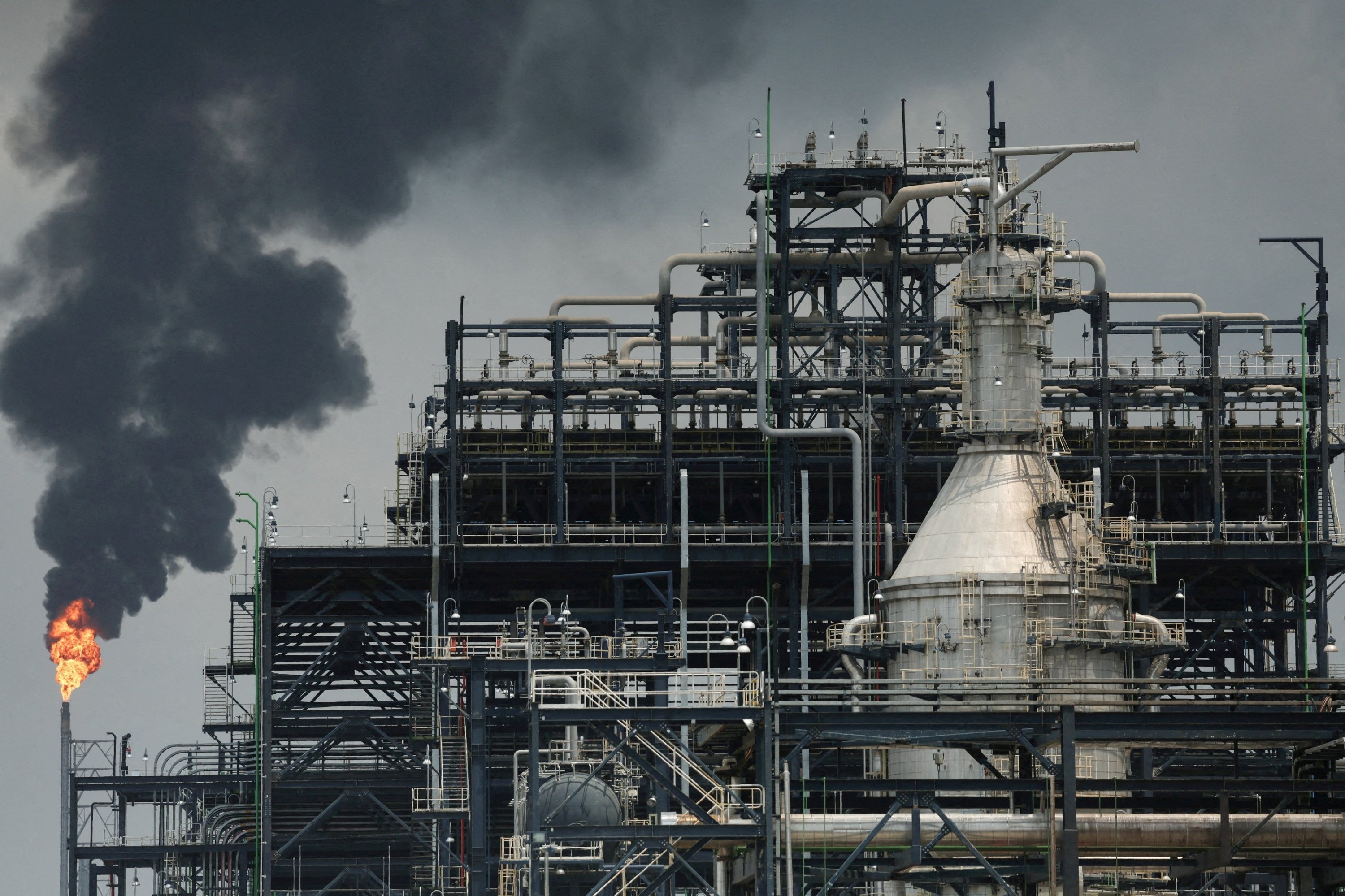
“It is going to be a game-changing IPO for Nigeria’s markets,” said Mohammed Saidu, head of research and investment analysis at Lagos-based TrustBanc. Saidu said he predicted there would be millions of new investors from the IPO.
The IPO has raised questions about Dangote retaining significant ownership and the refinery’s purported valuation after the offering.
At $49 billion, the valuation is more than twice what it cost to build it. The refinery’s officials have denied that its valuation is inflated.
“It is not something someone can classify as people-driven if you still own 87% of the refinery and there are many ways that narrative breaks down,” Joachim McEbong, a senior West Africa analyst at Control Risks, said.
Chris Chijioke, a business owner based in Lagos, said he would buy 2,000 shares as the size of the refinery and Dangote’s track record as a businessman made a strong case.
He expressed concern, however, about the price of the share sale, saying that if plans to double the refinery’s capacity get delayed, then the offer price would not be justified.
“I personally think it is overvalued,” he told Reuters.
Nigeria has relied for many decades on foreign refining of its oil due to decrepit state-run refineries, many of which operate below capacity or have remained stagnant for years due to poor maintenance.
The Dangote refinery reached its full capacity of 650,000 barrels per day earlier this year. Dangote announced plans last year to increase capacity to 1.4 million barrels per day, a move its officials say will make it the world’s largest refinery by surpassing India’s Jamnagar refinery.
Dangote has also set out to expand into East Africa and has proposed building a refinery in Kenya by 2030.
President Donald Trump suggested Sunday that the U.S. could stay in Iran and “keep the oil,” comparing the idea to a U.S. effort to take control of a fifth of Venezuela’s vast oil reserves.
On a trip to Ireland for meetings and to watch golf, he reiterated that he still expected the Iran war to end this year, possibly just after midterm elections due in the United States in November.
Speaking at the Irish Open golf championship, Trump added that the price of gasoline would “drop like a rock” once the Iran war ended.
Turmoil in the Middle East has roiled oil markets, and oil prices rose about 3% Monday after new strikes on Saudi Arabian infrastructure and Gulf shipping.
Trump said that he would only make the “right deal” and wouldn’t do one that was “no good,” adding that Iran was “calling constantly” for peace talks, an assertion that Tehran has dismissed in the past.
But the president also introduced another option: stay engaged with Iran. He drew a parallel with the U.S. deal in Venezuela, announced in August.
“We’ll ultimately get out (of Iran), unless we decide to stay and keep the oil like Venezuela,” Trump said, adding that the U.S. revenue from Venezuela has “paid for the war many times.”


-

 Economy1 day ago
‘This is the test’: All eyes turn to Fed as rate hike probable
-
 Politics1 day ago
Turkish police detain 20 in FETÖ infiltration raids in 6 provinces
-

 Politics1 day ago
Erdoğan vows to shield Türkiye from regional turmoil
-

 Economy1 day ago
US-Canada trade war reshapes Canadian supermarket shelves
-
 Politics1 day ago
Peace in Syria, Iraq key to regional prosperity, FM Fidan says
-

 Politics1 day ago
AK Party makes local gains as 4 mayors, 3 CHP councilors switch sides
-
 Politics1 day ago
FM Fidan discusses attacks on oil pipeline with Saudi counterpart
-

 Politics4 hours ago
Türkiye cherishes legacy of Ertuğrul in Ottoman birthplace