
Politics
Belgium hails Turkish defense industry as ‘role model’ for Europe

Belgian Defense Minister Theo Francken praised Türkiye’s defense industry as a “role model” ahead of a high-level economic mission to Ankara and Istanbul, highlighting growing cooperation between the NATO allies in defense, trade and technology.
Speaking before the May 10-14 visit, Francken said Türkiye had become a leading example in innovation, production capacity and defense research and development, particularly as European countries seek to strengthen their own military industries amid rising global tensions.
“The Turkish defense industry is truly at a very advanced level in terms of innovation and building a strong defense capacity,” Francken told Anadolu Agency (AA). “Therefore, they are a role model for me.”
The Belgian delegation, led by Queen Mathilde and regional government representatives, is expected to include more than 450 participants, among them dozens of defense companies, research institutions and universities seeking partnerships with Turkish counterparts.
Francken said around 40 agreements were already prepared for signing, with additional deals still under negotiation. He described the growing number of commercial and institutional partnerships as “a very positive and encouraging development.”
“A significant part of our defense sector is very interested in learning from the Turkish defense industry,” he said.
The remarks reflect increasing European interest in Türkiye’s rapidly expanding defense sector, which has gained international attention in recent years through advances in drone technology, naval systems, armored vehicles and domestic weapons production.
Francken said Belgium viewed Türkiye not only as an important NATO ally but also as a strategic economic partner positioned at the crossroads of Europe, Asia and the Middle East.
“Türkiye is a very great economic and geopolitical power,” he said. “We need to work together. This is in both our interest and Türkiye’s interest.”
Trade volume between the two countries has reached roughly $8 billion annually, according to Francken, who also oversees foreign trade. He emphasized the importance of expanding economic cooperation across multiple sectors, including defense, biotechnology, health sciences, agriculture and food processing.
He also praised Türkiye’s workforce and education system, describing the country as home to “hardworking people” and a large pool of highly qualified young graduates.
“This means there are many opportunities we can do together,” he said.
On security matters, Francken stressed the importance of preserving NATO unity at a time of strains within the alliance, warning against divisions between Europe and the United States.
“We are an alliance, and NATO is the strongest alliance in the last 80 years of human history,” he said. “If we divide, we lose; if we unite, we survive.”
Francken said he hoped tensions inside NATO would ease and voiced support for closer trans-Atlantic cooperation on defense production and industrial capacity.
“The summit is extremely important,” he said, referring to upcoming NATO discussions expected to focus heavily on defense manufacturing, joint production and burden-sharing among allies.
The Belgian minister also rejected calls in parts of Europe for developing an independent nuclear deterrent, cautioning against what he described as irresponsible rhetoric.
“Sometimes people and world leaders talk about acquiring nuclear capacity as if it were buying a sandwich,” he said. “I don’t think that’s a good approach.”
Instead, he argued that Europe should focus on strengthening conventional defense capabilities while maintaining close cooperation with Washington within NATO’s existing deterrence framework.
Francken also pushed back against the use of trade tariffs in relations with Türkiye, saying he favored deeper economic integration over protectionist policies.
“I don’t want customs tariffs with Türkiye,” he said. “I think we have a good partnership, a good agreement.”

Israeli Diaspora Affairs Minister Amichai Chikli said on Wednesday that Israel should prepare for the possibility of a future confrontation with Türkiye, arguing that direct military contact between the two countries was “not an impossible scenario.”
Speaking at a conference in west Jerusalem, Chikli said a direct encounter between the Israeli and Turkish militaries could occur at sea, adding that such a scenario could happen “even tomorrow morning.”
Türkiye in the past two decades has developed an independent defense industry capable of operating in open waters, thereby shifting geopolitical balances in its favor. The navy plays a critical role in ensuring the security of maritime trade routes in the Eastern Mediterranean, the Black Sea and the Aegean Sea, promoting regional stability.
In the past two decades, the country has reached a milestone by designing and producing its own warships. The TCG Heybeliada, the first indigenous corvette, was commissioned in 2011, followed by projects for indigenous frigates and destroyers.
The ADVENT combat management system, developed domestically, represents a significant achievement, enhancing the capabilities of the Turkish navy. In 2024, the country commissioned its first of six planned Reis-class submarines. The project for the Piri Reis submarine, the first of its class, was launched in 2019. It has a length of 68.35 meters (224.25 feet) and a capacity of 40 personnel.
Moreover, Israeli daily Israel Hayom reported that Israeli policymakers are increasingly focused on Türkiye’s growing regional role, arguing that Ankara has gained greater room to expand its influence as Iran’s regional position has weakened.
The newspaper said some Israeli analysts view Türkiye, backed by Qatar, as a leading force in a reshaping regional bloc and urged Israel to adapt its long-term security strategy accordingly.
According to the report, analysts called on Israel to reduce its dependence on the United States in defense procurement, strengthen domestic military capabilities and pursue new regional partnerships to address evolving geopolitical challenges.
The report also claimed Türkiye has expanded its influence across several conflict zones in the Middle East and is seeking to increase its strategic weight in regional trade and security, assertions that reflect the views of the analysts cited by the newspaper.
Relations between Türkiye and Israel have deteriorated sharply since the outbreak of the Gaza war, with Ankara strongly criticizing Israel’s military campaign and suspending bilateral trade. The two countries have also exchanged increasingly sharp rhetoric over regional security issues, including developments in Syria and the Eastern Mediterranean.
Wael Badawi, Egypt’s ambassador to Ankara, underlined the joint role of Türkiye and Egypt in promoting regional peace and stability. In an interview with Anadolu Agency (AA) on Thursday, Badawi said the two countries were strategic partners and key regional and international actors working to promote stability and peace.
Badawi, who took office last year, said Turkish-Egyptian cooperation extends beyond political issues such as Gaza and Iran to include the environment, culture and the economy.
He noted that Egypt and Türkiye had celebrated the centenary of diplomatic relations last year, while noting that ties between the two countries date back centuries and are reinforced by strong people-to-people relations. He said the breadth of cooperation requires close coordination across many fields and is reflected in frequent high-level visits.
Recalling President Recep Tayyip Erdoğan’s visit to Egypt on Feb. 4, where he met with Egyptian President Abdel-Fattah el-Sissi, Badawi said the leaders held the second meeting of the High-Level Strategic Cooperation Council and signed memoranda of understanding in a range of areas. “We are happy to have this strategic partnership between Egypt and Türkiye. It is a strategic partnership. It is a symbol of cooperation. It really testifies to the strength of the relationship between the two countries,” he said.
Badawi said Egyptian Armed Forces Commander-in-Chief and Minister of Defense and Military Production Lt. Gen. Ashraf Salim Zahir visited Ankara last week to strengthen cooperation in defense and the defense industry. “You have a very developed defense industry. In Egypt, too, we have a very advanced defense industry, and therefore we are trying to see how both countries can cooperate in this area,” he said. He added that the two countries also aim to deepen cooperation in areas including the environment, trade, education and science, with additional high-level visits planned to advance practical collaboration.
“Egypt and Türkiye are major regional and international players. They are both strong countries, and they work together for stability and peace in the region, promoting peace, comprehensive and sustainable development, and safeguarding respect for international law,” he said.
He said a platform bringing together Egypt, Türkiye, Saudi Arabia, and Pakistan seeks to explore ways to cooperate economically, socially, and politically for the benefit of the region’s people.
Badawi said Cairo and Ankara cooperate not only on Gaza but on the broader Palestinian issue. “We also witnessed the atrocities and what has happened since Oct. 7. It is really a tragedy,” he said.
He added that the two countries work together both bilaterally and through regional frameworks, while sharing common cultural, social, and family values.
Badawi said both countries remain committed to a two-state solution for Palestine. “We are both working for the two-state solution for Palestine. We both oppose any attempt to displace Palestinians from their country.
“This is their country. The hospitals need to be rehabilitated. The schools need to be rehabilitated. There has to be a reconstruction effort,” he said.
Referring to U.S. President Donald Trump’s Gaza peace initiative, Badawi said Egypt and Türkiye are working together to support its implementation.
“We are still in phase one of this plan. We want to move to phase two, but Israel still needs to honor its obligations in phase one so that we can move to phase two,” he said.
Türkiye, the United Arab Emirates, Indonesia, Qatar, Egypt, Pakistan, Saudi Arabia and Jordan on Thursday issued a joint statement condemning Israel’s violations at the Al-Aqsa Mosque compound, urging the international community to take a firm stance against measures that violate the site’s historical and legal status.
The foreign ministers of the Muslim nations warned that escalating provocations threaten regional stability and undermine prospects for a just and lasting peace.
In a joint statement, the ministers denounced repeated incursions into the Al-Aqsa Mosque compound led by far-right Israeli ministers and illegal settlers under the protection of Israeli security forces. They also condemned the raising of the Israeli flag inside the compound, the installation of two tents by Israeli police and other provocative actions at the site, saying they constitute clear violations of international law, relevant U.N. resolutions and the historical and legal status quo in occupied East Jerusalem.
The ministers further condemned incitement, calls for raids and acts of violence by Israeli extremist ministers and groups, warning that such actions fuel hatred and extremism while obstructing efforts to achieve a just and lasting peace based on a two-state solution.
The statement also criticized restrictions on access to Jerusalem’s Old City and its places of worship, saying discriminatory measures imposed on Muslim and Christian worshippers violate international humanitarian law and amount to unlawful attempts to alter the city’s historical and legal status.
The ministers reaffirmed that Israel has no sovereignty over occupied East Jerusalem or its Muslim and Christian holy sites and condemned systematic policies aimed at changing the city’s historical, legal and demographic character.
They reiterated their rejection of any attempt to alter the historical and legal status of Jerusalem’s holy sites, while underscoring the special role of the Hashemite Custodianship in safeguarding them.
The ministers also reaffirmed that the entire Al-Aqsa Mosque compound is an Islamic place of worship exclusively for Muslims and that the Jerusalem Awqaf and Al-Aqsa Affairs Department, operating under Jordan’s Ministry of Awqaf and Islamic Affairs, remains the sole legal authority responsible for administering the site and regulating access.
Calling on Israel to immediately lift restrictions on access to Jerusalem’s Old City, the ministers urged an end to measures preventing Muslim worshippers from reaching Al-Aqsa Mosque.
They also called on the international community to adopt a firm position and press Israel to end violations against Muslim and Christian holy sites in Jerusalem and respect the sanctity and historical status of those sites.
Türkiye and Syria signed an agreement Thursday paving the way for cultural centers to operate in each other’s countries, expanding cultural cooperation through language education and cultural exchange initiatives.
Nuh Yılmaz, Türkiye’s ambassador to Damascus, told Anadolu Agency (AA) that relations between Türkiye and Syria are developing rapidly in line with the political will expressed by the two countries’ presidents, adding that the necessary legal framework is also being established.
He called the agreement an important step toward placing bilateral ties on an institutional and legal footing.
Turkiye’s Yunus Emre cultural centers – named after a famed 14th-century poet – operated in the capital Damascus and Aleppo before the war but suspended their activities after the conflict began in 2011.
Yılmaz said Syria has a sizable Turkish-speaking population, including local ethnic Turkmen communities and Syrians who lived in Türkiye for many years.
“These centers will play an important role in preserving and developing existing language skills and bringing them to a more academic level,” he said, noting strong demand among Syrians seeking to learn or improve their Turkish.
The Yunus Emre Institute will also organize activities aimed at rediscovering the two countries’ shared cultural heritage, including projects in literature, photography, cinema, painting and history, Yılmaz said.
He added that the cultural programs would strengthen ties between the two peoples and highlight the historic and cultural relationship between Türkiye and Syria.
The agreement was signed by Yılmaz and Qutayba Kadish, head of the International Cooperation Department at the Syrian Foreign Ministry.
Embassy officials and Furkan Köroğlu, acting coordinator of the Yunus Emre Institute’s Damascus Cultural Center, also attended the ceremony.
President Recep Tayyip Erdoğan issued a written statement on Thursday on the 107th anniversary of the Erzurum Congress, a key episode in Türkiye’s fight for independence after World War I.
Erdoğan said the congress was one of the defining turning points that united the Turkish nation around a common ideal, with the determination to achieve liberation and set out its vision for the future.
“This profound awareness continues to inspire us today and gives us strength as we move toward the future. Without compromising our unity and solidarity, we continue to work with the same determination to make our country even stronger. Today, I once again commemorate with the utmost respect the members of the congress, who declared that ‘the homeland within the national borders is an indivisible whole,’ categorically rejected any mandate or foreign protection, and gave their full support to the national forces. On the anniversary of the Erzurum Congress, I respectfully and gratefully remember all the heroes of our War of Independence, especially Gazi Mustafa Kemal, and extend my heartfelt greetings to all my fellow citizens,” he said, referring to Atatürk, founder of the Republic of Türkiye.
The Erzurum Congress convened on July 23, 1919, at a time when imperial powers were attempting to partition Ottoman territories in the aftermath of World War I.
The congress was convened in the titular eastern province in response to the perceived Armenian threat to Erzurum, as well as provinces of Sivas, Van, Bitlis, Diyarbakır, and Elazığ, and amid reports of plans to establish an Armenian state in eastern Türkiye. It also sought to counter Greek claims to the northern provinces of Trabzon, Rize, Gümüşhane, Ordu and Giresun. Although regional in scope, the congress adopted decisions that concerned the entire nation.
The historic gathering marked an important stage in the National Struggle campaign that culminated in the War of Independence, with its declaration that “Within the national borders, the homeland is an indivisible whole and cannot be partitioned.”
In his closing speech of the Congress, Atatürk highlighted the congress’s historical significance, saying: “History will undoubtedly record this congress as a rare and great achievement.” He would later say that the congress laid the foundations of the Republic of Türkiye, which was declared on Oct. 29, 1923.
The Erzurum Congress, which continued for two weeks, adopted a series of decisions that shaped the course of the National Struggle. The resolutions included the declaration that the participating provinces were inseparable from one another and from the Ottoman nation, bound together as brothers, and that the historical, ethnic, and religious rights of the country’s predominantly Muslim population within the borders at the end of World War I must be respected.
Athens is reinforcing its defenses while hoping its allies in the United States will prevent neighboring Türkiye from strengthening its military, pursuing a key defense deal with Israel while opposing the sale of fighter jets to Türkiye.
Turkish-Greek relations have been on the right track for the past couple of years, but tensions remain palpable, especially in light of Athens’ escalating defense spending. This is tied to what Greek Prime Minister Kyriakos Mitsotakis described as an “open threat of war” from Türkiye during the NATO summit in Ankara earlier this month.
Weeks after his remarks, Greece’s Government Council for Foreign Affairs and Defense (KYSEA) convened on Thursday to give final approval for the purchase of a multilayered air defense system from Israel worth up to 3.5 billion euros ($4 billion), along with several types of drones, two sources told Reuters. KYSEA gave its initial approval earlier this year and is expected to finalize the procurement contracts, an official familiar with the deal told Reuters.
Greece wants to build a multilayered anti-ballistic, anti-aircraft and anti-drone system called the “Achilles Shield.” The system will be built around Israeli radars and missiles manufactured by Rafael and Israel Aerospace Industries (IAI). The Greek government has said it plans to spend about 28 billion euros by 2036 to modernize its armed forces, including purchasing up to 40 new F-35 fighter jets from the United States and frigates from France and Italy.
Greece spends nearly 3.5% of its gross domestic product on defense, a higher proportion than many of its NATO allies. Reflecting their close economic and diplomatic ties, Greece and Israel operate an air training center in Greece, conduct annual joint military exercises, and cooperate on anti-drone systems and cybersecurity. Last year, Greece approved the purchase of 36 Israeli-made rocket artillery systems for about 650 million euros. “KYSEA will also approve the purchase of drones from the U.S. and Israel,” the official said. A second official confirmed the details regarding the Israeli air defense system and the drone purchases. Greece currently relies on U.S.-made Patriot systems and Russian-made S-300 systems to protect its airspace.
Thousands of miles away, Athens is hoping one NATO ally will help it counter another. The International Coordinating Committee-Justice for Cyprus (PSEKA), a Greek American grassroots organization, is campaigning to block the sale of F-35 fighter jets to Türkiye.
U.S. President Donald Trump expressed clear support for the sale during his visit to Türkiye for the NATO summit earlier this month. Standing alongside President Recep Tayyip Erdoğan at the joint news conference in Ankara, Trump said the U.S. was prepared to lift sanctions imposed under the Countering America’s Adversaries Through Sanctions Act (CAATSA) and would consider Türkiye’s return to the F-35 fighter jet program. The sanctions were imposed after Türkiye purchased the Russian-made S-400 air defense system, prompting Washington to remove Ankara from the multinational F-35 program in 2019.
Earlier this week, PSEKA announced that it had sent letters to Congress warning of what it described as the “clear and present danger” posed by the sale of F-35s to Türkiye. The organization argued that such a sale would increase the vulnerability of its allies, Greece and the Greek Cypriot administration, to Türkiye’s threats.
Türkiye and Greece have pursued a rapprochement after decades of hostility, but longstanding disputes continue to complicate relations. Chief among them is the disagreement over maritime boundaries in the Aegean Sea. Greece’s attempts to expand its territorial waters led Türkiye to declare a casus belli, or cause for war, in the 1990s, and that declaration remains in force.
In an interview with Greece’s ERT earlier this month, Greek Foreign Minister George Gerapetritis said the casus belli had been a “huge burden” on bilateral relations and that it was “long overdue” for Türkiye to revoke the declaration it made in the 1990s.
The two countries, which came close to war over the Aegean during that decade, remain vigilant. While Türkiye has focused on developing its domestic defense industry, Greece has continued to rely on foreign partners to strengthen its military capabilities. Pursuing a doctrine centered on maintaining an effective and powerful navy, Türkiye has spent the past two decades building an indigenous defense industry capable of operating in blue-water environments, shifting regional geopolitical dynamics in its favor. Its navy plays a critical role in securing maritime trade routes in the Eastern Mediterranean, the Black Sea and the Aegean Sea while supporting regional stability.

Minister of Internal Affairs Mustafa Çiftçi: “Türkiye Century Education Model brings together knowledge and morality”

‘Dude’ statement from Minister Gürlek: Haluk Levent used his charity money in betting

Waste barriers to 29 rivers in the Mediterranean
Minister of Internal Affairs Mustafa Çiftçi: “Türkiye Century Education Model brings together knowledge and morality”
‘Dude’ statement from Minister Gürlek: Haluk Levent used his charity money in betting
Waste barriers to 29 rivers in the Mediterranean
-
 Daily Agenda3 days ago
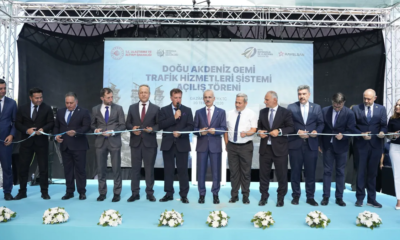
Important move for the Blue Homeland: Artificial intelligence-supported domestic digital maritime surveillance system from HAVELSAN to TRNC!
-
 Daily Agenda2 days ago
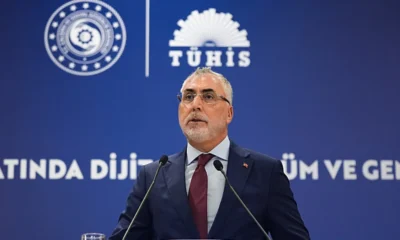
Minister Işıkhan: “We will support every work that centers on labor and social justice”
-
 Economy2 days ago
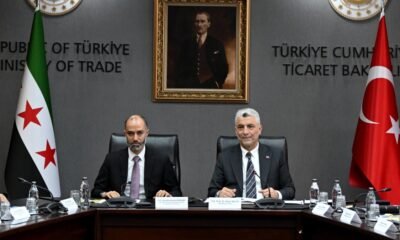
Türkiye, Syria working to open Nusaybin-Qamishli border crossing
-
 Economy2 days ago
THY signs simulator deals, joins sustainable aviation fuel fund
-
 Economy2 days ago
Türkiye issues Navtex for work on Mediterranean gas pipeline to TRNC
-
 Daily Agenda2 days ago
City Hospital opens in November – Breaking News
-
 Sports2 days ago
Trump tips Infantino for UN chiefdom after FIFA term: Reports
-

 Sports1 day ago
Türkiye’s Sultans of Net rally past Canada to reach VNL semifinals