
Politics
Türkiye’s CHP mulls a timetable for its next election

Kemal Kılıçdaroğlu aspires to cement his place in the Republican People’s Party (CHP), which was downgraded from its main opposition status. The former chair, who was reinstated to the post last May by a court verdict, will convene the central administrative board and party assembly on Wednesday, focusing on a road map for the future of the party. The CHP fell behind in the number of parliamentary seats after Kılıçdaroğlu’s predecessor, Özgür Özel, founded the New Party (YP) with lawmakers transferred from the CHP.
The Central Administrative Board meeting will discuss a timetable for the party’s next convention and set the dates for provincial and district congresses, ahead of the September launch of the process leading up to the next election. Kılıçdaroğlu is so far uncontested, as Özel, who repeatedly called on him to hold an extraordinary congress, gave up and went on to establish the YP.
In the meantime, Kılıçdaroğlu pursues redemption and reckoning. At the party assembly meeting, the CHP will discuss increasing the number of provincial and district board members and pardoning some members facing disciplinary proceedings or expulsion, according to a report by Anadolu Agency (AA). Kılıçdaroğlu has pledged to “cleanse” the party of corruption linked to mayors and other top figures and has launched an expulsion process for many loyalists of Özel who were entangled in corruption investigations.

As Israel’s expansionist policies threaten the stability of the wider region, Israeli Prime Minister Benjamin Netanyahu further stokes the fire. Netanyahu is currently running his election campaign on anti-Türkiye rhetoric after being forced under U.S. pressure to stop attacks on Iran and Lebanon.
The prime minister, whose name has been linked to corruption allegations and whose party has fallen in public opinion polls, has long sought to avoid prison. He became the first sitting Israeli prime minister to stand trial for corruption. The architect of the genocide in the Gaza Strip, who is responsible for the deaths of more than 73,000 Palestinians (most of them women and children), has been criticized even in Israel for “setting the region on fire to protect his seat.”
Netanyahu’s Likud party is currently the largest party in Israel’s 120-seat parliament with 32 seats. But opinion polls for elections scheduled for Oct. 27 show Likud falling from 32 seats to 23 and becoming the second-largest party. Polls also show Likud and Netanyahu’s far-right and ultra-Orthodox coalition partners falling far below the 61 seats needed to form a government. A poll published by Israel’s Channel 13 on Aug. 19 showed Netanyahu and his coalition partners winning a total of only 51 seats.
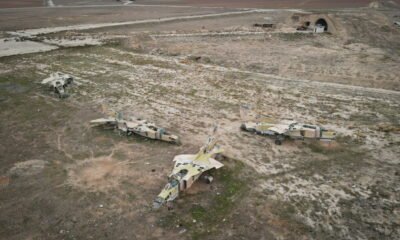
Amid these developments, Netanyahu and his team turned to anti-Türkiye rhetoric. The signals came weeks before Israel’s Aug. 18 attack on the inactive Abu al-Duhur military air base in Syria’s Idlib province.
Amichai Chikli, a Likud lawmaker and diaspora minister, claimed in a radio interview in June that Israel would “sooner or later enter a war with Syria.” “Türkiye and Syria are far more disturbing developments than Iran,” Chikli said. Chikli, who often draws attention with anti-Türkiye posts, also voiced unease over the Mecca Joint Defense Agreement signed by Türkiye, Saudi Arabia, and Pakistan. He said Saudi Arabia’s move to act with Türkiye was a “very bad development” for Israel.
Defense Minister Yisrael Katz, one of Netanyahu’s closest figures, has also emerged as a leading figure using anti-Türkiye rhetoric against Turkish President Recep Tayyip Erdoğan in the election campaign. Katz frequently targets Türkiye and Erdoğan on social media, and many of his posts are written in Turkish.
Eli Cohen, a Likud lawmaker and energy minister, also signaled last month that anti-Türkiye rhetoric would be used in the campaign. “If Türkiye establishes a base in Syria, we will establish one too,” Cohen told a local radio station.
Some opposition leaders and analyses published in Israel agree that Netanyahu and people close to him have turned the attack in Syria into an election campaign tactic by using anti-Türkiye rhetoric. Democrats party leader Yair Golan said Netanyahu made an “arrogant and dangerous” move with the attack. Golan said Israel “raised tensions with Türkiye and deepened the rift with the U.S.,” stressing that Netanyahu used military force for political calculations and that Tel Aviv paid the price in security terms.
Former Israeli Prime Minister Ehud Barak said Netanyahu was pursuing a policy of reaching voters through security tensions ahead of the Oct. 27 elections.
Israeli political commentator Esther Solomon said in an analysis published in Haaretz newspaper that Netanyahu had failed to get the poll results he wanted “despite all his efforts” before the elections. Solomon said Netanyahu was trying to gain more votes by using every front to “overwhelm, surprise, and wear down the opposition” to build momentum for his party before the elections.
Another political commentator, Jonathan Lis, said in Haaretz that political considerations also played a role in Netanyahu’s decision-making process alongside security and diplomatic parameters. “As Israel’s October elections approach, it is highly suspicious that Netanyahu would want an escalation of tensions with Türkiye and Syria, especially as the Trump administration encourages calm between the parties,” Lis said.
The election campaign built on anti-Türkiye rhetoric in Israel is not limited to statements by Netanyahu and figures close to him. Channel 14 television, known for its closeness to Netanyahu, targeted Türkiye’s Consulate General in occupied East Jerusalem, which represents Palestine. A Channel 14 report claimed “unauthorized renovation” was being carried out in the building housing Türkiye’s Consulate General in Jerusalem. The report said the Israeli-affiliated Jerusalem Municipality was not allowed to inspect the site and broadcast exterior footage of the consulate building.
In addition, i24 television aired a documentary claiming Türkiye was trying to take control of East Jerusalem by focusing on the activities of Turkish institutions and associations in the city. The documentary gave broad coverage to humanitarian aid provided by Turkish institutions and associations to Palestinians in the city and also included the activities of the Yunus Emre Cultural Center in East Jerusalem.
A new Likud billboard in Tel Aviv features Erdoğan alongside Iranian Supreme Leader Mojtaba Khamenei, Hezbollah Secretary-General Naim Qassem, and New York Mayor Zohran Mamdani under the message, “They want Netanyahu to lose. Don’t let them win.”
‘Cheap politics’
Netanyahu is seeking to portray Türkiye as a new threat as part of “cheap politics” aimed at gaining an electoral advantage, Türkiye’s Communications Directorate said Friday, warning that Israel’s increasingly aggressive rhetoric poses serious risks to regional and global stability.
The directorate strongly rejected recent remarks by the Israeli Prime Minister’s Office concerning Erdoğan, describing them as an “impertinent rant” devoid of historical facts and political seriousness, and another sign of the desperation of an administration seeking to evade accountability for war crimes and crimes against humanity.
It said the “cheap politics” pursued by Netanyahu and his associates, which it said was also designed to secure an advantage in elections, has no resonance in Israeli society, the region, the international community, or Türkiye.
The directorate said the remarks by an Israeli government facing genocide accusations before international justice mechanisms were a telling demonstration of how deeply Türkiye’s voice and Erdoğan’s refusal to remain silent in the face of injustice have unsettled the Netanyahu administration.
It also warned that Israel’s election campaign has increasingly fallen under the influence of irresponsible security-driven populism and an intensifying politics of threats. “The Netanyahu government’s effort to construct Türkiye as a new threat figure is also part of this cheap politics,” the directorate said.
It warned that pursuing a politics of threats and escalating tensions for the sake of domestic political competition carries serious risks not only for Israeli society but also for regional and global peace and stability.
Türkiye will continue, as it has in the past, to stand against oppressors and alongside the oppressed, and firmly defend peace, justice, and stability in the region regardless of the cost, the directorate said.
Vice President Cevdet Yılmaz will chair the first meeting of the “Board of Monitoring and Assessment” on Monday, established within the framework of the Law on Strengthening National Solidarity and Social Cohesion. The law and the board are the culmination of a monthslong process called terror-free Türkiye, which aims for the disarmament of the terrorist group PKK. The PKK succumbed to calls for dissolution in 2025 after years of violence, and its members are expected to surrender to authorities after the new law was introduced earlier this month. The law is applicable only after verification of the PKK’s full disarmament, which is currently monitored by authorities.
The board has the ministers of justice, foreign affairs, interior, and national defense among its members, along with the presidency’s secretary-general, the intelligence chief, and the secretary-general of the National Security Board (NSB).
Turkish media outlets reported that the first meeting will focus on the establishment of lower boards that will address different aspects of the initiative. The first one to be established will be tasked with coordinating the handover of weapons possessed by the PKK and on-site verification mechanisms to that extent. Most PKK members are holed up in northern Iraq, in a mountainous territory where the group apparently has a complex cave system used as a hideout. The lower board will discuss and determine where and when the weapons will be handed over to authorities. A separate lower board will be tasked with judicial proceedings for PKK members who turn themselves in, and this board will receive input from judicial members in charge of the initiative. According to media reports, this board will also be tasked with classifying the legal files of each PKK member and determining how they can benefit from the new law.
The law includes 12 articles and offers exemption from prosecution for PKK members for a limited time, but only if they are not involved in acts of terrorism and other grave offenses. The deferrals will remain at the discretion of judges, however.
A separate board is scheduled to be created for the social integration and rehabilitation of PKK members who volunteer to return to Türkiye. Experts from the Ministry of Family and Social Services and the Ministry of Health will support this board. Another working board will be responsible for registering PKK members applying for deferrals.
The board led by Yılmaz will regularly brief parliament on its work, while parliament will establish a Monitoring Committee responsible for the next stage of the initiative.
Steps to be taken are contingent upon the publication of an NSB decision confirming that the PKK has laid down its arms. The law includes a stay of prosecution and deferral of sentence execution for PKK members who apply within six months.
The law includes temporary provisions regarding crimes committed within the scope of or in favor of the activities of the PKK and its affiliates. Investigations, prosecutions, and the execution of finalized sentences may be deferred for five or 10 years, depending on the nature of the crime and the severity of the sentence, under the new law.
Intentional homicide committed within the scope of organizational activity, as well as offenses committed before June 1, 2005, that require life imprisonment or aggravated life imprisonment, will be excluded. Consequently, PKK leader Abdullah Öcalan will not be eligible for these provisions. Those who have committed the crime of “intentional homicide” will also remain outside the scope.
Terror-free Türkiye will be on the agenda of President Recep Tayyip Erdoğan when he visits eastern Türkiye this week on the occasion of the anniversary of a Seljuk battle that cemented Turkish rule in the country 955 years ago. Erdoğan and Devlet Bahçeli, head of the government’s ally, the Nationalist Movement Party (MHP), who is credited with launching the terror-free Türkiye initiative, have been a staple of events in the towns of Ahlat and Malazgirt (the latter being the site of the Battle of Manzikert between the Seljuk army and the Byzantine army). Erdoğan is also expected to chair a meeting of his Cabinet in Ahlat. Since 2024, the two men have devoted their keynote speeches there to the initiative. Erdoğan highlighted a “common homeland and common future” in his 2024 speech, and his 2025 message at the celebrations focused on the lasting coexistence of Turks, Kurds, and Arabs in the region. Erdoğan and Bahçeli promote the initiative as something that unifies Turks and Kurds. The PKK started out as a self-styled Kurdish movement and claimed to fight for Kurdish rights and a “Kurdistan” state in eastern Türkiye, where both Ahlat and Malazgirt are located.
A court in Istanbul is expected to deliver a verdict in a massive trial where a businessman is accused of collaborating with several opposition mayors in rampant tender corruption.
Aziz Ihsan Aktaş is at the heart of the trial. He was previously released under judicial control after collaborating with authorities and detailing how he paid off mayors and municipal bureaucrats to secure business with municipalities in Istanbul and elsewhere. The first hearing in the trial was held on Jan. 27, one year after Aktaş and several mayors from the Republican People’s Party (CHP) were arrested on corruption charges.
A total of 200 defendants, including seven mayors, are on trial in the case. The next hearing will be held in a massive courtroom-prison complex in Istanbul’s Silivri district on Monday.
The initial operation of the investigation launched by the Istanbul Chief Public Prosecutor’s Office was conducted on Jan. 13, 2025. As the process continued, numerous suspects were detained; while some were formally arrested, judicial control measures were applied to others.
In the prosecution’s 579-page indictment, completed on Oct. 20, 2025, Beşiktaş Municipality, Avcılar Municipality, Esenyurt Municipality, and two subsidiaries of the Istanbul Metropolitan Municipality (IBB) were named as “injured parties,” and 19 individuals were listed as “victims.” The indictment seeks multiple prison terms for Aktaş on charges of establishing a criminal organization, rigging public tenders, forging official documents, committing fraud to the detriment of public institutions, offering bribes, laundering crime-derived assets, and issuing fraudulent invoices.
Among the indicted officials are the mayors of Istanbul’s Avcılar, Esenyurt, and Beşiktaş districts, as well as the mayors of two districts in the southern province of Adana, Adana’s metropolitan mayor, and the mayor of the eastern province of Adıyaman.
Aktaş has also testified in a separate corruption case involving former Istanbul mayor Ekrem Imamoğlu. During a hearing last Monday, Aktaş described to the court an alleged system of pressure and extortion within the Istanbul Metropolitan Municipality (IBB). He claimed this scheme was designed in part to finance Imamoğlu’s political career as the sprawling trial involving 414 defendants continued.
Aktaş, who is being tried without pre-trial detention, presented his defense at the 68th hearing of the case before Istanbul’s 33rd High Criminal Court. Fifty-three of the 414 defendants are currently in custody.
The case centers on prosecutors’ allegations of a criminal organization led by Imamoğlu. The defendants face various charges of corruption involving the municipality and its affiliates.
Aktaş alleged that outstanding payments owed by municipal bodies were deliberately withheld to pressure businesses into making illicit payments. He claimed that companies refusing to comply faced threats of financial penalties, contract terminations, or obstruction with zoning and licensing procedures.
“One of the primary purposes of the system was to finance Ekrem Imamoğlu’s political career,” Aktaş told the court. He described a recurring pattern in which payments legitimately owed to contractors were delayed until business owners agreed to provide the money demanded by individuals tied to the network.
He testified that these payments were not deposited into municipal or official donation accounts, but were instead withdrawn in cash and delivered to intermediaries at locations including hotels and private offices. “The people, dates, and companies were different, but the method was always the same,” he said. Aktaş argued that the operation could not be explained as the isolated actions of lower-ranking municipal officials.
He further claimed that, in one instance, a demand for money was explicitly conveyed to him as an “instruction from Ekrem Imamoğlu,” while in another, he was warned that payments owed to his companies would be withheld if he did not comply.
Leaders of five opposition parties that have no seats in Parliament held a meeting at a restaurant in Ankara on Saturday, though they remained quiet on the possibility of a future alliance. The meeting took place on the same day that the underdog Future Party (GP), led by former Prime Minister Ahmet Davutoğlu, announced its formal dissolution.
Although democracy is a relatively new concept in the country, Türkiye hosts dozens of political parties. Yet, most fail to secure parliamentary seats in elections, as voters are not as fragmented as the parties themselves. The next election is likely to be a two-horse race between the ruling Justice and Development Party (AK Party) and the main opposition New Party (YP), but this did not deter the chairs of the Victory Party (ZP), National Path Party (MYP), Independent Party of Türkiye (BTP), Justice Party (AP) and Blessed Party (Kutlu Party) from coming together for consultations over the weekend. Remzi Çayır, chair of the MYP, told reporters that they may form an alliance in the future, while BTP chair Hüseyin Baş denied that the meeting focused on one. Ümit Özdağ of the ZP described the meeting as “a platform for fruitful consultations” and declined to comment on the possibility of an alliance. Özdağ’s ZP formed a separate opposition alliance in the 2023 general elections to challenge the ruling AK Party and a six-party opposition bloc, but his ATA Alliance collapsed when its candidate, Sinan Oğan, withdrew in favor of President Recep Tayyip Erdoğan in the runoff.
It is unclear whether the five parties will be able to surpass other underdogs, such as the Peoples’ Equality and Democracy Party (DEM Party) and the Good Party (IP), in the next vote. Meanwhile, Davutoğlu’s GP gave up on July 29 when the politician announced he was ceasing political activities, roughly seven years after the party’s foundation. The GP was luckier than the ZP and others, managing to sneak 10 lawmakers into Parliament by placing them on the candidates’ list of the main opposition Republican People’s Party (CHP). However, seven of them resigned over the past three years, while the remaining members joined the New Path bloc led by the Felicity Party (SP).
Turkish Cypriot Prime Minister Ünal Üstel criticized the Greek Cypriot administration later on Sunday for taking a natural gas pipeline agreement between Türkiye and the Turkish Republic of Northern Cyprus (TRNC) to the United Nations, saying it has no authority to determine how the Turkish Cypriot side cooperates with Ankara.
Üstel said the Greek Cypriot move was another indication of what he described as its intolerance toward the development and future of the Turkish Cypriot people.
The Greek Cypriot administration has for years signed unilateral agreements on energy and other issues affecting the island while disregarding the will of Turkish Cypriots, Üstel said, calling its objection to an agreement between Türkiye and the TRNC a “major contradiction.”
He noted that the Greek Cypriot side had concluded energy agreements, issued licenses and taken decisions in the Eastern Mediterranean that directly concern the rights of Turkish Cypriots without seeking their approval.
Üstel rejected the argument that the TRNC should seek Greek Cypriot consent for a natural gas project aimed at strengthening its energy security and future supplies.
“We cannot accept such an approach,” he said. “The Turkish Republic of Northern Cyprus has the will to make decisions concerning its own future, development and energy security. The Greek Cypriot administration cannot decide in which areas we will cooperate with our motherland Türkiye.”
Üstel also pointed to a letter submitted by the Greek Cypriot administration to the United Nations, which said the proposed pipeline would create a permanent and strategic link between Türkiye and Northern Cyprus.
“That is what actually bothers them,” Üstel said, arguing that the Greek Cypriot side was uncomfortable with stronger ties between Türkiye and the TRNC and increased Turkish Cypriot energy security.
He emphasized that the Turkish Cypriot side would continue working with Türkiye to protect its rights, strengthen the TRNC and pursue energy projects despite Greek Cypriot objections.
The Greek Cypriot administration has taken a planned bidirectional natural gas pipeline between Türkiye and the TRNC to the United Nations, asking that the project be declared “illegal” and halted, according to the Greek Cypriot media.
According to reports, Maria Michael, the Greek Cypriot administration’s permanent representative to the U.N., sent a letter to U.N. Secretary-General Antonio Guterres objecting to a memorandum signed on July 10, 2026, for the construction of a bidirectional subsea natural gas pipeline between Türkiye and the TRNC.
In the letter, Michael referred to the TRNC as an “unrecognized secessionist entity” and described the planned project between Türkiye and the TRNC as “illegal” and “invalid.”
The planned pipeline would stretch 101 kilometers (63 miles), including 97 kilometers (60 miles) offshore and 4 kilometers (2.5 miles) onshore, connecting Anamur on Türkiye’s Mediterranean coast with Teknecik in the TRNC. The project envisages two 22-inch pipelines designed to operate in both directions, allowing natural gas to flow from Türkiye to the TRNC while also enabling any future gas production from the island to be transported to Türkiye and potentially onward to Europe.
Türkiye will continue strengthening its maritime security and technological capabilities as geopolitical competition intensifies and instability grows worldwide, senior officials said Sunday at the closing ceremony of Teknofest Blue Homeland.
Vice President Cevdet Yılmaz said protecting Türkiye’s maritime interests, known as the “Blue Homeland,” has become increasingly strategic as critical technologies, energy resources and trade routes emerge as central elements of global competition.
“At a time when global balances are rapidly changing, and instability is increasing, the security of our Blue Homeland has become more strategic than ever,” Yılmaz said at the event held at the Gölcük Naval Shipyard Command in northwestern Türkiye.
He underlined that Türkiye will protect its sovereignty and its rights in the Blue Homeland without hesitation and without compromise.
The maritime-focused edition of Türkiye’s flagship technology and aerospace festival brought together domestically developed naval platforms, defense technologies and competitions aimed at encouraging young people to pursue maritime and underwater technologies.
Yılmaz noted 37 vessels and four aircraft were showcased during the event, demonstrating Türkiye’s expanding capabilities in naval technology.
He highlighted platforms including the TCG Anadolu amphibious assault ship, TCG Istanbul frigate, TCG Derya replenishment ship and Murat Reis submarine, as well as unmanned surface vessels such as Marlin, Sancar, Ulaq and Salvo.
“The main achievement here is the progress we have made in terms of platform diversity, technological depth, localization and joint operational capability,” Yılmaz said.
He said Türkiye was increasingly developing an integrated architecture in which manned and unmanned systems could operate securely on the same network, pointing to the ability of TCG Anadolu to operate with the domestically developed Bayraktar TB3 unmanned combat aerial vehicle.
The vice president also remarked that Türkiye plans to further develop such capabilities through artificial intelligence, autonomous systems, advanced sensors and secure communications.
Defense localization tops 80%
Yılmaz linked Türkiye’s advances in defense technology to a long-term strategy pursued under President Recep Tayyip Erdoğan, saying the country’s defense industry localization rate had climbed from around 20% to more than 80%.
He underlined Türkiye had become the world’s 11th-largest defense exporter and was aiming to enter the top 10.
“Every step we take in the defense industry contributes to our national security while also providing significant strength and support to our independent foreign policy and economic and social welfare,” he said.
Yılmaz also highlighted a remote robotic surgery demonstration aboard TCG Anadolu as an example of civilian applications emerging from Türkiye’s technological development.
During the procedure, a surgical team aboard the vessel received real-time assistance from a specialist on land through a 5G connection, which Yılmaz described as the first operation of its kind performed aboard a ship.
He stressed that maintaining Türkiye’s technological transformation would ultimately depend on its human capital, particularly young engineers, entrepreneurs and researchers.
“A trained, well-equipped, innovative, entrepreneurial and self-confident workforce is the foundation of all success,” he said, adding that Türkiye’s long-term development goals would be built on a generation equipped with those qualities.
The festival included six competitions, including contests focusing on unmanned underwater systems, unmanned maritime vehicles and underwater rockets.
Turkish ‘determined march’
Presidential Communications Director Burhanettin Duran said separately that Teknofest Blue Homeland, attended by hundreds of thousands of people, demonstrated the progress of Türkiye’s defense industry and its drive for greater technological independence.
“Our Blue Homeland is our pride, and the Teknofest youth are our future,” Duran said in a social media post.
He described young people who “dream, research, develop and produce” as the strongest guarantee of Türkiye’s goal of becoming a fully independent and powerful country.
“Under the leadership of our President Recep Tayyip Erdoğan, with the energy of our youth and the unwavering will of our nation, we will continue building the Century of Türkiye,” Duran noted. “Türkiye’s rise in the skies, on land and in the Blue Homeland will continue with determination.”
Duran also thanked the Defense Ministry, the Turkish Technology Team Foundation (T3 Foundation), Teknofest Chair Selçuk Bayraktar and other institutions involved in organizing the event.
Moreover, speaking at Sunday’s closing ceremony, Selçuk Bayraktar said Türkiye’s presence in the Blue Homeland represented more than technological progress, describing it as a commitment to defending the country’s rights and interests.
“A single drop of water in the Blue Homeland is as sacred a trust as an inch of our land,” Bayraktar stressed.
He said the world was passing through a period in which international law was increasingly disregarded, and institutions established to safeguard peace and justice were losing effectiveness.
“Our presence in the Blue Homeland is more than a technological achievement; it is a moral stance that refuses to bow to injustice and imposition,” he noted.
Bayraktar praised young participants in Teknofest, saying they had demonstrated through their work that they were not only the protectors of Türkiye’s maritime future but also its architects.
He further said the festival aimed to cultivate a generation willing to assume responsibility for Türkiye’s technological independence and future development.
“Today we are setting sail from Gölcük Shipyard, but the wind of full independence filling our sails in the Blue Homeland will never die down,” he said. “On the contrary, it will continue to grow wave by wave.”
Bayraktar also invited the public to attend the next Teknofest event, scheduled to take place in the southeastern province of Şanlıurfa from Sept. 30 to Oct. 4.


-

 Sports2 days ago
Hull roar back into Premier League with 2-0 rout of Man Utd
-
 Economy2 days ago
US imposes 50% tariffs on Canadian goods as trade talks collapse
-

 Sports2 days ago
Top 10 greatest sports rivalries in world, ranked
-
 Politics1 day ago
Erdoğan targeted for standing up to Netanyahu’s genocide: AK Party spox
-
 Refugees2 days ago
US envoy Barrack says Israel gave no warning ahead of Syria air strike
-

 Economy1 day ago
At 55, China-Türkiye ties expand beyond trade into strategic co-op
-
 Economy12 hours ago
Turkish central bank resumes repo auctions after nearly 6-month pause
-
 Politics1 day ago
8 nations reject Israel’s E1 settlement plan, urge sanctions