
Politics
CHP loses 4 council members to AK Party in İstanbul’s Üsküdar

Four municipal council members in Istanbul’s Üsküdar district resigned from the main opposition Republican People’s Party (CHP) and joined the ruling Justice and Development Party (AK Party) on Friday, a day before the council is due to elect a new acting mayor.
Ahmet Başbaydar, Ayhan Aydın, Hüseyin Kazan and Tahsin Usta formally joined the AK Party at a ceremony held at the party’s Üsküdar district headquarters, according to the AK Party’s Istanbul provincial organization.
The defections narrowed the balance in the Üsküdar Municipal Council to 23 CHP members and 21 members of the People’s Alliance ahead of Saturday’s vote.
Speaking on behalf of the four council members, Usta said they had decided to switch parties because they believed they could better serve Üsküdar under the AK Party.
“We resigned from the Republican People’s Party and joined the AK Party to provide greater service to the people of Üsküdar,” Usta said, acknowledging that the decision had been difficult.
Usta denied that the four had faced pressure, threats or entered into negotiations in exchange for changing parties.
“We were under no pressure, faced no threats and were not involved in any bargaining,” he emphasized. “We aim to better serve Üsküdar, and we believe we can achieve that under this roof.”
AK Party Istanbul provincial Chair Abdullah Özdemir welcomed the four members, saying their experience would contribute to the party’s work in the district.
“We are excited and happy for Üsküdar,” Özdemir said, adding that the party intended to work with the municipal council and local stakeholders to address residents’ needs.
The political shift comes ahead of a closely watched council meeting scheduled for 10 a.m. Saturday to elect a new acting mayor following a court dispute over the previous election.
Üsküdar Mayor Sinem Dedetaş was arrested on July 31 as part of an investigation involving allegations of establishing a criminal organization, bribery and extortion. She was subsequently suspended from office by the Interior Ministry.
On Aug. 5, the municipal council elected CHP council member Sibel Tan Çetinkaya as acting mayor.
The election was later challenged in court, and Istanbul’s 2nd Administrative Court suspended the implementation of the council decision.
Following the court decision, the Istanbul Governor’s Office announced that the municipal council would reconvene on Sept. 5 to elect a new acting mayor under Article 45 of Türkiye’s Municipal Law.
The four defections leave the CHP with a two-seat advantage over the People’s Alliance in the council, raising the stakes ahead of Saturday’s election.
The AK Party has attracted many mayors from the CHP since the 2024 municipal elections. The last high-profile CHP figure to join the AK Party was Burcu Köksal of Afyon province in western Türkiye. The AK Party has also rejected several applications from CHP mayors seeking to join its ranks for various reasons.

The approval of a landmark deal between Türkiye and Libya seven years after it was signed has shaken neighboring Greece, which has sought to expand its influence in the Mediterranean. The memorandum of understanding on maritime jurisdiction areas was approved by Libya’s House of Representatives earlier this month, opening a new chapter in Turkish-Libyan relations and strengthening Türkiye’s influence in the region.
Greece has long opposed the memorandum, fearing that Türkiye could gain greater influence in the Mediterranean. Athens views Türkiye as a historic rival, even as Ankara pursues rapprochement with Greece, and the deal could further complicate the maritime dispute between the two countries in the Aegean Sea.
The approval of the memorandum is being viewed as a political defeat for Greece and, as Greek newspaper Kathimerini put it, a “defeat that is difficult to recover from.” The newspaper said the office of Prime Minister Kyriakos Mitsotakis was particularly troubled by comments criticizing Greece’s response to the development. It recalled remarks by ruling New Democracy Party lawmaker Dimitris Kalogeropoulos, who said “we’re in deep trouble” last week in reference to Libya’s approval of the deal, and fellow lawmaker Dimitris Keridis, who described the development as a “political defeat.”
The newspaper argued that Keridis’ remarks, made by a lawmaker who is also a professor of international relations, caused greater concern at the prime minister’s office than Kalogeropoulos’ comments.
“Part of the reason for this concern was that Keridis not only has an academic perspective but also serves as New Democracy’s parliamentary spokesperson. The prime minister’s office would have preferred Keridis to be more careful in his remarks,” the report said.
The Greek opposition described the development as a failure of the government’s foreign policy.
Greece has also sought U.S. support to counter the memorandum.
Dissatisfied with the Donald Trump administration’s seemingly neutral stance, the Greek lobby stepped up pressure on Washington. In a letter to U.S. Secretary of State Marco Rubio, it called on the administration to take a stand against Ankara and Tripoli.
The Hellenic American Leadership Council outlined four demands in the letter, including a call for Washington to declare that the memorandum has no legal consequences for third countries such as Greece.
The group also sought U.S. support for Greece’s claims to maritime jurisdiction areas based on its islands. Citing the exploration activities of American companies, the letter called on Washington not to allow objections from Türkiye and Libya to obstruct those activities. It further urged the United States to adopt a common position with the European Union.
Athens is expected to continue its efforts in New York. Greek Foreign Minister Giorgos Gerapetritis is expected to raise the issue during his engagements with the United Nations Security Council.
Meanwhile, Türkiye is working to reunify Libya and promote stability in the North African country. Ankara’s efforts to end the division between the Tripoli-based Government of National Unity and the Benghazi-based Government of National Stability and bring the country’s institutions under a single authority have evolved into an intensive diplomatic push.
Libyan Defense Minister Lt. Gen. Abdussalam Zubi and Libyan National Army Deputy Commander-in-Chief Gen. Saddam Haftar met in Ankara last Friday. Discussions focused on unifying the Libyan army, establishing a joint military command in Sirte and implementing a military framework developed under a U.S. initiative.
According to the news website Libya Observer, a draft plan centered on military integration was discussed during the Ankara talks, which were also monitored by representatives from the United Arab Emirates (UAE), Egypt and Qatar. The draft envisages making Sirte the headquarters of a joint military command, abolishing the title of “Commander-in-Chief” held by Khalifa Haftar and establishing a new “Army General Command Council” co-chaired by Zubi and Saddam Haftar. It also proposes creating a “Southern Protection Force” under the Defense Ministry.
The arrangement, which would suspend the position of commander-in-chief until elections are held, aims to prevent decision-making authority from being concentrated in a single office.
According to reports by Araby al-Jadeed and Arabic Post, the main sticking points in the negotiations concerned which authority the institutions would report to and the nature of the agreement. Zubi called for the army to be placed under the Defense Ministry and for only a military agreement to be signed, while Haftar insisted that the structure report to the Presidential Council and that political and military agreements be signed simultaneously. The deadlock was overcome after Türkiye and the UAE assured Haftar that a political agreement would be concluded at a later stage, and the parties agreed to prioritize a military accord.
As part of efforts to ease tensions between Tripoli and Benghazi, Al-Salhin Abdelnabi, speaker of the House of Representatives in Benghazi, is also expected to make a three-day official visit to Tripoli on Oct. 27 to meet with officials from the Government of National Unity. Abdelnabi was elected speaker in early October, replacing Aguila Saleh, who had held the position for 12 years.
Turkish authorities arrested six suspects in an investigation coordinated with the National Intelligence Organization (MIT) that uncovered a Daesh financial network operating between Türkiye and Syria, prosecutors said Monday.
The investigation, led by the Istanbul Chief Public Prosecutor’s Office, revealed financial transactions totaling millions of Turkish liras, including funds allegedly intended to help Daesh members escape from the al-Hol detention camp in northeastern Syria.
The probe gained momentum after authorities recovered a USB flash drive in Türkiye’s southeastern Kilis province, near the Syrian border. The device contained internal Daesh correspondence, financial records and digital money transfer receipts.
Investigators also examined statements from a senior Daesh financial operative and reports from foreign intelligence agencies, identifying suspected links between the terrorist group and two international money transfer networks, Al Barakat and AFAK.
Suspicious transactions
Financial analyses conducted by Türkiye’s Financial Crimes Investigation Board (MASAK) revealed that the six suspects’ bank accounts received approximately TL 38.6 million (nearly $ 800,000), while outgoing transactions totaled TL 33.7 million.
One suspect, Mohmad Al Nhass, allegedly received TL 14.9 million and transferred TL 13.6 million. Investigators also identified financial connections between Al Nhass and 28 individuals with terrorism-related records.
Authorities also identified suspicious transfers involving Abdulkadir Ayd and Ward Daafis, including transactions labeled as charitable donations and the use of cryptocurrency exchanges.
Links to al-Hol escapes
Investigators found that accounts belonging to Ahmad Alkhlil, also known as Ahmet Halil, allegedly served as channels for funds collected to facilitate the escape of Daesh members held at the al-Hol camp in Syria while it was controlled by the YPG/PKK terrorist group.
Since 2017, the camp has been under the control of the U.S.-backed PKK/YPG affiliate in Syria. On Jan. 20, Syrian security forces regained control of the area surrounding al-Hol camp following the withdrawal of the terrorist group.
Financial records also showed discrepancies between Alkhlil’s declared business activities and banking transactions. His food company’s reported annual turnover was just TL 23,000 despite substantial movements through associated accounts.
Prosecutors also identified TL 38.6 million through conventional banking channels represented only a fraction of the network’s overall financial activity.
Investigators said the suspected network also used informal money transfer mechanisms and specially generated internet links designed to conceal senders’ identities and circumvent banking oversight.
All six suspects were arrested and jailed pending trial following judicial proceedings.
The investigation highlights Turkish authorities’ continuing efforts to disrupt suspected Daesh financing operations and cross-border financial networks linked to the terrorist group.
Barely two months after YPG, the Syrian wing of the terrorist group PKK, announced dissolution following integration into Syrian security forces, another part of the PKK apparently follows the example. Sinjar Resistance Units or YBS, an offshoot of the group active in the eponymous Iraqi region, will disarm and integrate into the Iraqi army under the supervision of Prime Minister Ali al-Zaidi, an Iraqi official said Monday.
Sabah al-Numan, military spokesman for the Iraqi prime minister, said procedures to reorganize military ties between the group and Iraqi security forces would be carried out on Monday, according to a statement carried by the Iraqi News Agency. He said members of the group would be integrated into Iraqi security institutions. The move would also transfer security responsibility for Sinjar Mountain to the relevant federal government authorities, al-Numan said. He added that the step was part of the Iraqi government’s policy to bring all weapons under state control. The implementation would mark the beginning of a new phase in security arrangements in the Sinjar district, he said. Al-Numan also noted that the Iraqi Constitution prohibits the formation of armed groups outside the country’s official armed forces.
The PKK announced its disarmament and dissolution last year following the launch of the terror-free Türkiye initiative in 2024. The initiative was proposed by the leader of the Nationalist Movement Party (MHP) Devlet Bahçeli, a government ally. Both Bahçeli and President Recep Tayyip Erdoğan repeatedly said that the initiative was part of the ambition of a “terror-free region,” that is, eliminating terror threats not just for Türkiye but also for regional countries, such as Syria.
YBS was originally founded in 2007 but rose to prominence as a force claiming to fight against Daesh, which launched an offensive to capture Sinjar in 2014.
Iraq is coordinating closely with Türkiye to remove the PKK terrorist group from its territory, a government spokesperson said last week, pledging that Iraqi soil would never be used to threaten neighboring countries. Iraqi government spokesperson Haider Abboudi told the country’s official INA news agency that Baghdad was maintaining high-level coordination with Ankara to resolve the PKK issue and ensure the terrorist group’s removal from Iraq. Abboudi stressed that Iraq would not allow its territory to serve as a base for threats against neighboring states.
On Oct. 12, Turkish security sources said the PKK had evacuated four accommodation areas in Metina, a region in northern Iraq, as a process aimed at the group’s full disarmament continued. The statements confirmed remarks by a senior PKK figure who claimed the group had left tunnels in Metina on Oct. 8. Sources said the Hebat, Yajk, Sabri and Sason shelter areas in Metina’s Baze region were evacuated on Oct. 8, while Turkish media outlets broadcast footage showing PKK members leaving the areas, which served as terrorist hideouts. The footage showed empty tunnels and members of the group walking away with their belongings. Earlier, Murat Karayılan, a senior PKK figure, said in an interview that the group had completed its withdrawal from Metina to demonstrate that it posed no threat to Türkiye. Karayılan also claimed that the PKK had ordered its clandestine units in major cities, including Istanbul, to withdraw. Security sources said the shelter areas had posed a security risk to Türkiye and described the PKK’s withdrawal as decisive progress in the process.
The sources described the move as an indication that the process was continuing, saying efforts under the initiative were aimed at strengthening regional stability and reinforcing Turkish-Kurdish fraternity.
Following the termination of the PKK’s activities in all areas, members of the group who return to Türkiye under prospective legal arrangements are expected to undergo a social integration process. Comprehensive programs in areas including education and the economy are also planned to facilitate their reintegration into society. The sources said the broader process aims to establish lasting domestic peace in Türkiye and enable all segments of society to live together in peace and security. They added that steps taken under the initiative were intended to strengthen regional stability and social cohesion.
Bahçeli, who has long taken a hard-line stance against the PKK and previously called for the execution of its jailed ringleader, Abdullah Öcalan, argued that the group’s dissolution would serve Turkish-Kurdish unity amid growing threats to Türkiye’s security and existence. Öcalan responded to Bahçeli’s call by instructing the PKK to lay down its arms. The group complied in 2025, beginning to destroy its weapons at a ceremony in northern Iraq in a symbolic move. Since then, Turkish intelligence has been monitoring progress toward full disarmament. Meanwhile, the Turkish Parliament passed legislation in August providing for the deferral of sentences and prosecution for PKK members who were not involved in deadly terrorist acts.
The situation in Yemen is high on the agenda in Turkish foreign policy. The conflict with Houthis that spilled over into Saudi Arabia prompted Türkiye to offer assistance to Riyadh as part of a new defense alliance. Amid these developments, Yemen’s Foreign Minister Afrah al-Zouba met Foreign Minister Hakan Fidan in Istanbul on Saturday, one day after a key meeting there between Fidan and top European and regional diplomats. In an interview with Anadolu Agency (AA) al-Zouba praised Türkiye’s growing role in the region and lauded their deep-rooted ties, which date back to the Ottoman era.
“Türkiye is a very important, strategic and central country in the region. We have historical, strong ties of brotherhood. We appreciate the roles Türkiye assumed in the region,” al-Zouba said. She stated that political and diplomatic activities led by Türkiye are appreciated and they believed that Ankara had an important role in maintaining security and stability in the region.
She said that her talks with Fidan focused on Yemen’s stand on current developments and escalation of Houthi attacks. The minister said Fidan expressed Türkiye’s support to Yemen, the Yemeni government and Türkiye’s sincere desire for security and stability in her country.
The Houthis have been at war since 2014 with Yemen’s internationally recognised government.
Following an uneasy four-year truce, fighting reignited in July, months into the U.S.-Iran conflict that has plunged the wider region into crisis.
The conflict in Yemen has killed hundreds of thousands of people in one of the world’s poorest countries, which was already suffering a vast humanitarian crisis.
Saudi Arabia has come under sustained attack from Houthis this month, including strikes on Riyadh’s international airport that killed 13 people, the kingdom’s deadliest attack in years.
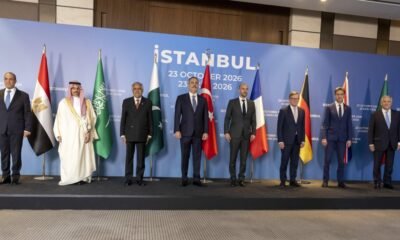
Türkiye, which recently joined a defense pact with Pakistan and Saudi Arabia, has expressed solidarity with the kingdom. On Friday, ministers from Britain, France, Germany and Italy met in Istanbul with counterparts from Türkiye, Saudi Arabia, Pakistan and Egypt to discuss security in Hormuz and the Bab el-Mandeb, as well as Houthi attacks on Saudi Arabia.
Al-Zouba said the military operation launched against the Houthis aims to “restore control over the country’s sovereign decision-making,” adding that “the Houthis are trying to turn our country, Yemen, into a platform that threatens the region and the world.”
Recalling that Yemeni Presidential Leadership Council Chair Rashad al-Alimi launched “Operation Yemen Dawn” on Oct. 5, 2026, al-Zouba explained the reasons for and objectives of the operation: “The aim of Operation Yemen Dawn is to liberate the country and the Yemeni people from the control of the terrorist Houthi militias. We aim to restore the state’s strength and reestablish its control over Yemen’s sovereign decision-making.”
She stressed that the new military operation launched in the country aims to prevent the Houthis from threatening Yemenis and their future. She said they also seek to prevent the Houthis from becoming a threat to maritime traffic in the Red Sea and the Bab al-Mandeb Strait. Pointing out that the Houthis are seeking to destroy both Yemen’s present and its future, Zouba said: “The Houthis are trying to turn Yemen into a platform that threatens the region and the world. Their threats to maritime traffic in the Red Sea and the Bab al-Mandeb Strait in recent years are a clear indication of this.”
Drawing attention to the threat posed by the Houthis, whom she described as terrorists, to regional and international security, al-Zouba said: “The Houthis are also violating Yemen’s sovereignty by cooperating with terrorist organizations in the Horn of Africa and other regions. They are also trying to turn Yemen into a base for attacks against its neighbors. Their terrorist attacks against Saudi Arabia are part of this.”
The Houthis are not a group that believes in diplomacy or negotiation processes leading to peace, al-Zouba said. “The reason the war has lasted so long is that the international community, like us, believed for a long time that the problem in Yemen could be resolved peacefully. We pursued the peace process repeatedly and moved from one round of negotiations to another. However, the Houthis used the peace process and negotiation rounds to acquire weapons and develop their capabilities. As a result, they became a real force threatening Yemen, the region and the world.”
No partners for peace
She said that they believe the international community and Yemen’s neighboring countries have now come to the conclusion that the Houthis are not, and cannot be, genuine partners for peace.
“The Houthis pose a serious threat to security and peace in Yemen and the region,” she said.
Certain conditions must be met to achieve peace in Yemen, the minister highlighted. “The foremost among these are disarmament, the restoration of state institutions and the transformation of the Houthis into a political component within Yemen’s political system. The Houthis must not have the right or the capacity to engage in terrorism in Yemen or the region,” she explained.
She said the Houthis have used every period of peace and peace talks to acquire weapons, develop their military capabilities and threaten the future of Yemenis, the region and the world.
Al-Zouba said that they therefore believe the necessary conditions must be established for genuine, just and lasting peace in the country. “Achieving peace requires the implementation of the agreed-upon fundamental references, including United Nations Security Council Resolution 2216, the outcomes of the Comprehensive National Dialogue Conference and the Gulf Cooperation Council (GCC) initiative,” she outlined.
She said the Houthis had spent the past 12 years developing their arms capabilities with Iran’s support since seizing the capital, Sanaa, and several strategic areas along the Red Sea coast.
“Thanks to the knowledge and expertise provided by Iranian specialists, the Houthis have acquired a certain capacity to manufacture or assemble some weapons components in Yemen,” she said.
Addressing the siege of Taiz province in southwestern Yemen, which has been partially besieged by the Houthis since 2015 and has faced intensified Houthi attacks since last month, she continued: “Taiz is a densely populated province located in the heart of Yemen. Approximately 4 million people live across the province. The Houthis have been trying to besiege Taiz for 12 years but have failed to achieve their goal. Taiz has become a city that resists the Houthis.”
She said the Houthis continue to shell the city and its neighborhoods, adding that their ongoing blockade prevents civilians in Taiz from accessing water, food, medicine and fuel.
There is strong resistance against the Houthis in Taiz, the minister said, and added: “This resistance has taught the Houthis a major lesson in determination and resilience in recent weeks. The resistance in Taiz has demonstrated that the people reject the pressure, oppression and practices of the Houthi militias.”
Central Asia is going through a significant period for development. The region shares a common history, cultural proximity and neighborhood traditions of centuries, co-existing with differences in national interests. Nowadays, it strengthens an approach based on open dialogue and joint solutions to common issues. Uzbek President Shavkat Mirziyoyev is one of the leaders of this new process through prioritizing good neighborly relations and regional cooperation in foreign policy.
This approach goes beyond diplomatic protocol as Uzbekistan aims to reinforce trust between states, to create better conditions for trade, investments, transportation links, security and overall, for daily life of millions. The trust, however, necessitates political will, mutual compromise and joint work.
In post-independence era, Central Asian countries conceived their own development models and foreign policies but sensitive issues related to the region lingered, from borders to use of water resources and transportation links, challenging the relations.
Since 2016, Uzbekistan has pursued a new approach, seeking more efficient direct contacts with neighbors, reconciliation and negotations to resolve outstanding issues. High-level visits to and from regional countries, the establishment of an intergovernmental committee and expansions of human and cultural interaction have added new dynamism to relations. Overall, it brought about a new understanding that interests of regional countries are not necessarily needed to conflict with each other.
Regional cooperation
This is probably most evident in consultation meetings of Central Asian heads of state and government. This new format does not replace existing international blocs those countries are part of or limit the sovereign rights of participating states and merely allows leaders to have direct talks on regional issues. Consistency of dialogue and drafting a joint agenda are valuable assets of this new format.
Uzbekistan’s approach found response among the four states and Kazakhstan, Kyrgyzstan, Tajikistan and Turkmenistan each offer their own peculiar contribution to build upon the relations. Overall, regional rapprochement emerged as a shared gain where political leadership was unified in equal partnership.
Trust economy
The budding trust is only tangible when its impact was felt by citizens, by businesses, through everything from border crossings to new routes, commercial collaboration projects and more connectivity in terms of ecnomy. This rings true especially for a region far from viable maritime routes. Joint efforts also matter in the field of energy, smart use of water resources and compliance in work to combat the fallout of climate change. Mechanisms all sides agreed upon, sharing the knowledge and safeguarding the interests of relevant parties also matter.
Brotherhood beyond politics
Mirziyoyev’s good-neighbor policy, an effort to bring pragmatic state interests together with a sense of shared identity, is another instrument to advance Central Asia’s new era. The region shares cultural traditions, family ties, linguistic affinities, commercial and educational exchanges. In this context, keeping borders open and encouraging cross-border travel help reviving connections otherwise thwarted by administrative barriers. Uzbekistan underlines that brotherhood requires respect for national identity and sovereignty.
Common challenges
Though ties are being cemented, challenges persist for the region, from water scarcity and environmental risks and disparities in economic development to security concerns and fallout of instability in Afghanistan. Not all Central Asian states share the same opinion on all issues and a full regional integration still appears far away. Nevertheless, steps are here for change, at least on how to resolve disagreements. Those include negotiations, finding solutions acceptable for all the relevant parties and taking region’s long-term interests into account. Undoubtedly, it would require consistent efforts of countries, from leaders to state institutions, from business world to civic society.
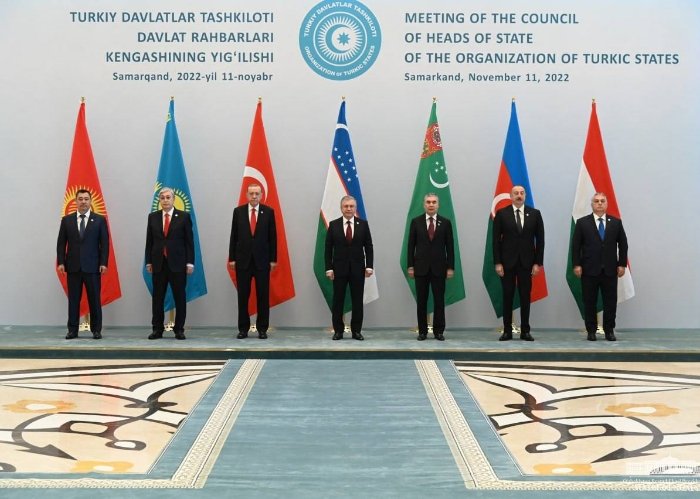
Nevertheless, the way disagreements are addressed has fundamentally changed: negotiations, efforts to find mutually acceptable solutions and the region’s long-term interests are increasingly taking precedence. Sustaining this trend will require consistent efforts not only from leaders but also from state institutions, the business community and civil society.
In this context, Mirziyoyev’s role in contempary Central Asia looms large, defined by his efforts to put trust and good neighborly relations at the heart of his country’s foreign policy. It seems to be paying off as witnessed in new momentum in the regional dialogue and new opportunities for shared development.
The climate of trust requires more than one leader and more than one country and mutual respect among countries, such as compliance with past agreements and taking others’ interests into consideration as well. This new era in Central Asia, thus, has the makings of a lasting historical achievement but it will probably be achieved through political will and only through providing benefit for all the peoples of the region.
A fraud probe is digging into the allegedly shady past of Mustafa Sarıgül, a former mayor and party leader who now serves as a lawmaker for the opposition New Party (YP). The account of a secret witness is expected to further corner the veteran politician who rose to political fame as mayor of Istanbul’s upscale Şişli district.
Allegations include that Sarıgül and his family collected billions of dollars from zoning windfall while he was the mayor of Şişli and invested it in Altınbaş Holding, a luxury hotel in Antalya’s Belek, shopping malls and properties abroad. Top names of the Altınbaş conglomerate were arrested last week in a separate investigation linked to funds turmoil that netted several businesspeople while Sofu Altınbaş, another top figure in the conglomerate, was detained in connection with probe into the Sarıgül family.
The investigation into the Sarıgül family was launched when two German businessmen claimed Sarıgül defrauded them after a deal they signed with him and his family for joint investment. Sarıgül’s two sons were detained in the investigation earlier this month while the lawmaker is so far immune from investigation due to his parliamentary immunity.
A secret witness testifying to prosecutors exposed more alleged wrongdoings of the family while authorities detained Altınbaş, Titanic Hotels Deputy Chair Temel Aygün and former municipal bureaucrats at Şişli municipality and several businesspeople. Altınbaş allegedly helped laundering 600 million euros in bribes. Sarıgül’s personal bodyguard, Ömer Demir, also sought to collaborate with prosecutors in exchange for a lenient sentence.
Mustafa Sarıgül is accused of using his public authority to promise a 1 billion euro ($1.12 billion) fund to German businessmen while those businessmen who claimed to have been defrauded were threatened after handing audio recordings in their possession regarding their deal with Sarıgül to journalist Murat Ağırel. Sixteen suspects, including Sarıgül’s sons, Emir Sarıgül and Ömer Sarıgül, his ex-wife Aylin Kotil and Murat Ağırel, had previously been arrested.
Most recently, Cihan Tunç, described as Emir Sarıgül’s right-hand man, former private secretary Çağlar Sezgin and Ümit İlker Avcı, who was linked to a currency exchange office, were remanded in custody and sent to prison. They had been referred to the courthouse as part of an operation investigating an alleged attempt to obtain a “manipulation report” from the National Criminal Bureau in exchange for $200,000 concerning a footage leaked to the press. Ömer Demir, Mustafa Sarıgül’s personal bodyguard, and Atakan Eren were placed under house arrest. Demir was allegedly the man having sex with Sarıgül in the video leaked to the press. At the time, Sarıgül has denied the authenticity of the video, producing a report from the National Criminal Bureau, a private expertise firm, which said the footage was fake. With the latest arrests, the total number of suspects in custody in the major money-laundering investigation rose to 19.
The most striking aspect of the operation was that the 12 people detained were directly linked to the bribery and money-laundering mechanism exposed in the prosecutor’s statement by the secret witness codenamed “A3M2LK48.”
In the statement, the secret witness alleged that during Mustafa Sarıgül’s tenure as mayor of Şişli, he used the Altınbaş family to launder billions of dollars in bribes allegedly obtained through zoning-related windfalls from major projects such as Kanyon, MetroCity and Maya Center, prominent commercial hubs of Istanbul. The witness claimed that money disseminated for laundering through a marriage in 2008 between Emir Sarıgül and a heiress of the Altınbaş family was transferred back to Sarıgül as 600 million euros during the divorce proceedings in 2019.


-
 Politics2 days ago
Türkiye rules out fight against Houthis under Saudi defense pact: Güler
-

 Economy2 days ago
Earnings reports, Fed decision to dominate busy week for markets
-
 Politics15 hours ago
France reportedly mulls postponing Med grid after Türkiye-Libya deal
-

 Sports2 days ago
Madrid’s Mourinho rejects Barcelona comparisons ahead of Clasico
-

 Politics3 days ago
Greece defies Turkish minority in disputed mufti appointments
-
 Politics10 hours ago
Yemen hails strong ties with Türkiye, its role in region
-
 Politics3 days ago
8-nation Istanbul talks urge diplomacy to quell Mideast conflicts
-

 Economy14 hours ago
Ready for French test?: 5 questions for European Central Bank