
Politics
Money laundering allegations engulf Turkish lawmaker, family

A fraud probe is digging into the allegedly shady past of Mustafa Sarıgül, a former mayor and party leader who now serves as a lawmaker for the opposition New Party (YP). The account of a secret witness is expected to further corner the veteran politician who rose to political fame as mayor of Istanbul’s upscale Şişli district.
Allegations include that Sarıgül and his family collected billions of dollars from zoning windfall while he was the mayor of Şişli and invested it in Altınbaş Holding, a luxury hotel in Antalya’s Belek, shopping malls and properties abroad. Top names of the Altınbaş conglomerate were arrested last week in a separate investigation linked to funds turmoil that netted several businesspeople while Sofu Altınbaş, another top figure in the conglomerate, was detained in connection with probe into the Sarıgül family.
The investigation into the Sarıgül family was launched when two German businessmen claimed Sarıgül defrauded them after a deal they signed with him and his family for joint investment. Sarıgül’s two sons were detained in the investigation earlier this month while the lawmaker is so far immune from investigation due to his parliamentary immunity.
A secret witness testifying to prosecutors exposed more alleged wrongdoings of the family while authorities detained Altınbaş, Titanic Hotels Deputy Chair Temel Aygün and former municipal bureaucrats at Şişli municipality and several businesspeople. Altınbaş allegedly helped laundering 600 million euros in bribes. Sarıgül’s personal bodyguard, Ömer Demir, also sought to collaborate with prosecutors in exchange for a lenient sentence.
Mustafa Sarıgül is accused of using his public authority to promise a 1 billion euro ($1.12 billion) fund to German businessmen while those businessmen who claimed to have been defrauded were threatened after handing audio recordings in their possession regarding their deal with Sarıgül to journalist Murat Ağırel. Sixteen suspects, including Sarıgül’s sons, Emir Sarıgül and Ömer Sarıgül, his ex-wife Aylin Kotil and Murat Ağırel, had previously been arrested.
Most recently, Cihan Tunç, described as Emir Sarıgül’s right-hand man, former private secretary Çağlar Sezgin and Ümit İlker Avcı, who was linked to a currency exchange office, were remanded in custody and sent to prison. They had been referred to the courthouse as part of an operation investigating an alleged attempt to obtain a “manipulation report” from the National Criminal Bureau in exchange for $200,000 concerning a footage leaked to the press. Ömer Demir, Mustafa Sarıgül’s personal bodyguard, and Atakan Eren were placed under house arrest. Demir was allegedly the man having sex with Sarıgül in the video leaked to the press. At the time, Sarıgül has denied the authenticity of the video, producing a report from the National Criminal Bureau, a private expertise firm, which said the footage was fake. With the latest arrests, the total number of suspects in custody in the major money-laundering investigation rose to 19.
The most striking aspect of the operation was that the 12 people detained were directly linked to the bribery and money-laundering mechanism exposed in the prosecutor’s statement by the secret witness codenamed “A3M2LK48.”
In the statement, the secret witness alleged that during Mustafa Sarıgül’s tenure as mayor of Şişli, he used the Altınbaş family to launder billions of dollars in bribes allegedly obtained through zoning-related windfalls from major projects such as Kanyon, MetroCity and Maya Center, prominent commercial hubs of Istanbul. The witness claimed that money disseminated for laundering through a marriage in 2008 between Emir Sarıgül and a heiress of the Altınbaş family was transferred back to Sarıgül as 600 million euros during the divorce proceedings in 2019.

Central Asia is going through a significant period for development. The region shares a common history, cultural proximity and neighborhood traditions of centuries, co-existing with differences in national interests. Nowadays, it strengthens an approach based on open dialogue and joint solutions to common issues. Uzbek President Shavkat Mirziyoyev is one of the leaders of this new process through prioritizing good neighborly relations and regional cooperation in foreign policy.
This approach goes beyond diplomatic protocol as Uzbekistan aims to reinforce trust between states, to create better conditions for trade, investments, transportation links, security and overall, for daily life of millions. The trust, however, necessitates political will, mutual compromise and joint work.
In post-independence era, Central Asian countries conceived their own development models and foreign policies but sensitive issues related to the region lingered, from borders to use of water resources and transportation links, challenging the relations.
Since 2016, Uzbekistan has pursued a new approach, seeking more efficient direct contacts with neighbors, reconciliation and negotations to resolve outstanding issues. High-level visits to and from regional countries, the establishment of an intergovernmental committee and expansions of human and cultural interaction have added new dynamism to relations. Overall, it brought about a new understanding that interests of regional countries are not necessarily needed to conflict with each other.
Regional cooperation
This is probably most evident in consultation meetings of Central Asian heads of state and government. This new format does not replace existing international blocs those countries are part of or limit the sovereign rights of participating states and merely allows leaders to have direct talks on regional issues. Consistency of dialogue and drafting a joint agenda are valuable assets of this new format.
Uzbekistan’s approach found response among the four states and Kazakhstan, Kyrgyzstan, Tajikistan and Turkmenistan each offer their own peculiar contribution to build upon the relations. Overall, regional rapprochement emerged as a shared gain where political leadership was unified in equal partnership.
Trust economy
The budding trust is only tangible when its impact was felt by citizens, by businesses, through everything from border crossings to new routes, commercial collaboration projects and more connectivity in terms of ecnomy. This rings true especially for a region far from viable maritime routes. Joint efforts also matter in the field of energy, smart use of water resources and compliance in work to combat the fallout of climate change. Mechanisms all sides agreed upon, sharing the knowledge and safeguarding the interests of relevant parties also matter.
Brotherhood beyond politics
Mirziyoyev’s good-neighbor policy, an effort to bring pragmatic state interests together with a sense of shared identity, is another instrument to advance Central Asia’s new era. The region shares cultural traditions, family ties, linguistic affinities, commercial and educational exchanges. In this context, keeping borders open and encouraging cross-border travel help reviving connections otherwise thwarted by administrative barriers. Uzbekistan underlines that brotherhood requires respect for national identity and sovereignty.
Common challenges
Though ties are being cemented, challenges persist for the region, from water scarcity and environmental risks and disparities in economic development to security concerns and fallout of instability in Afghanistan. Not all Central Asian states share the same opinion on all issues and a full regional integration still appears far away. Nevertheless, steps are here for change, at least on how to resolve disagreements. Those include negotiations, finding solutions acceptable for all the relevant parties and taking region’s long-term interests into account. Undoubtedly, it would require consistent efforts of countries, from leaders to state institutions, from business world to civic society.
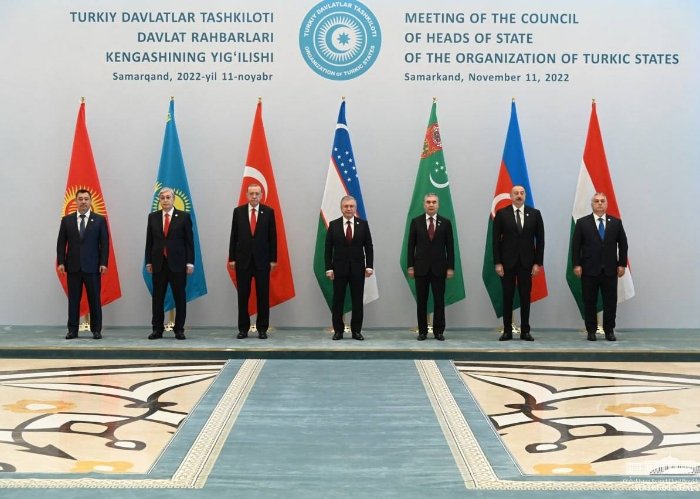
Nevertheless, the way disagreements are addressed has fundamentally changed: negotiations, efforts to find mutually acceptable solutions and the region’s long-term interests are increasingly taking precedence. Sustaining this trend will require consistent efforts not only from leaders but also from state institutions, the business community and civil society.
In this context, Mirziyoyev’s role in contempary Central Asia looms large, defined by his efforts to put trust and good neighborly relations at the heart of his country’s foreign policy. It seems to be paying off as witnessed in new momentum in the regional dialogue and new opportunities for shared development.
The climate of trust requires more than one leader and more than one country and mutual respect among countries, such as compliance with past agreements and taking others’ interests into consideration as well. This new era in Central Asia, thus, has the makings of a lasting historical achievement but it will probably be achieved through political will and only through providing benefit for all the peoples of the region.
The Great Sea Interconnector (GSI), a planned lifeline for energy transmission between Greece, the Greek Cypriot administration and Israel, faces the danger of postponement by France, its main contractor, Greek media reported. The move comes after Libya approved a maritime jurisdiction deal it signed with Türkiye seven years ago.
The Ta Nea newspaper reported that France was apparently unaware of the scale of the problem between Türkiye and Greece “nor the danger from Libya” before the Libyan House of Representatives greenlit the memorandum of understanding with Türkiye last week. The newspaper added that France suggested postponing the project “for evaluating the situation further,” but Greece opposed any change to the plans.
Athens was angered when Libya approved the deal, which deals a blow to Greek plans for Mediterranean domination. Türkiye and Greece compete for rights in the vast sea. Soon after the deal was approved, Türkiye announced a navigational telex (Navtex) in the Mediterranean (a notice containing navigational and maritime safety warnings), citing work on a natural gas pipeline project between Türkiye and the Turkish Republic of Northern Cyprus (TRNC) until late December. Like the France-led project, the gas pipeline will be a lifeline for the TRNC, which has been isolated from the international community, which refuses to recognize its sovereignty. The pipeline will connect Türkiye’s Mersin to the TRNC’s Girne (Kyrenia), covering a distance of about 101 kilometers, including a 4-kilometer pipeline across land.
The Türkiye-Libya deal also drew the ire of the European Union, which counts Greece and the Greek Cypriot administration among its members.
Were Ankara able to implement the agreement, Türkiye could gain access to large, undiscovered gas deposits, but the deal covers a vast area claimed by Greece.
Greece and Egypt have their own deal covering much of the same area, while Türkiye also has maritime disputes with the Greek Cypriots, as well as with Athens in the Aegean.
When Ankara previously pushed its claims in 2019-2020, including by sending a hydrocarbon survey vessel to drill off the island of Cyprus, it prompted the European Union to threaten sanctions and France to send a warship and jets.
Beset by instability since the 2011 overthrow of Muammar Gaddafi, Libya is divided between a U.N.-recognized government in Tripoli and a rival administration in the east backed by military commander Khalifa Haftar.
Seven years later, Türkiye has rebuilt ties with eastern Libya, gained a foothold on both sides of the country and is pushing for reunification.
The ratification of the maritime deal “is a major diplomatic success for Ankara, which has managed to formalize good relations with both Libyan sides,” Dorothee Schmid of the French Institute of International Relations told AFP.
By ratifying the deal, Saddam Haftar, the military leader’s son and heir apparent, sought “to prove to Ankara that he can be a reliable partner who delivers,” said Claudia Gazzini of the International Crisis Group.
The vote comes as Washington and the United Nations are also pushing for the reunification of the oil-rich country, with the Haftars eyeing key positions in a future unified Libya.
In recent years, economic rights in the Eastern Mediterranean have become a major geopolitical flashpoint.
That stems from a series of gas field discoveries that “put an end to the tacit consensus among Mediterranean states not to claim EEZs (exclusive economic zones) in their maritime waters,” wrote Thierry Duchesne of the French Foundation for Strategic Research and Issues.
Exploration from 2009 onward uncovered significant gas reserves off Israel and the island of Cyprus, while Egypt discovered the Zohr field in 2015.
Today, both sides of Cyprus, Egypt, Israel, Lebanon and Türkiye claim rights over the same waters. Ankara, however, appears to be pushing ahead with its claims.
In June 2025, state energy company Turkish Petroleum Corporation (TPAO) and Libya’s National Oil Corporation signed a memorandum of understanding to conduct marine geological and geophysical studies in Libyan waters.
Meanwhile, Libya’s first oil and gas licensing round in 17 years included an offshore block won by a consortium including TPAO, although it was in an area close to the Libyan coast and not in disputed waters.
Libya’s approval gives Türkiye “stronger political backing for offshore surveys and negotiations over exploration,” Riccardo Gasco, an analyst at Istanbul-based research institute Istanpol, wrote.
“The next test will come at sea, where survey vessels operate, and will determine whether drilling projects advance and planned energy links can proceed under pressure,” he added.
Parliament’s Foreign Affairs Committee will begin deliberations on Tuesday on the Mecca Defense Alliance. The bill on the ratification of the alliance will be presented to lawmakers, including opposition members, who have argued that the deal cannot be implemented and that Türkiye cannot dispatch troops to other countries before Parliament ratifies the agreement signed in Saudi Arabia last August.
The main opposition New Party (YP) has already announced that it would vote against the bill, but it is expected to pass with the votes of the ruling Justice and Development Party (AK Party) and its government ally, the Nationalist Movement Party (MHP). The Republican People’s Party (CHP) has signaled that it may endorse the bill, though it remains skeptical of the deal. Its leader, Kemal Kılıçdaroğlu, remarked last week that the party would oppose it if it found “even a single clause running against the interests of Türkiye.”
Türkiye has no plans to engage Yemen’s Houthi rebels in combat under its trilateral defense agreement with Saudi Arabia and Pakistan, Defense Minister Yaşar Güler said Friday, stressing that any Turkish military support for Riyadh would focus on strengthening deterrence and preventing further regional escalation.
“We absolutely do not envisage entering into any clashes with the Houthis,” Güler told Star TV, emphasizing that Türkiye’s priority was to prevent new tensions and contribute to regional security and stability.
He said potential Turkish military assistance to Saudi Arabia would follow a model similar to Ankara’s existing military cooperation with Qatar, focusing primarily on deterrence rather than direct involvement in hostilities.
“In this context, as in Qatar, the primary objective of our potential military support for Saudi Arabia would be to strengthen deterrence,” Güler said.
The agreement, which commits the three countries to regard an armed attack against one member as an attack against all, has raised questions about the extent of Türkiye’s potential military involvement amid continued Houthi attacks targeting Saudi Arabia.
Güler clarified that the scope of any Turkish assistance would be determined only after Parliament ratifies the agreement and the necessary legal procedures are completed.
He said Ankara would then evaluate Saudi Arabia’s requests within the framework of parliamentary authorization before deciding on the nature and extent of its support.
The minister reiterated that Türkiye’s approach was aimed at strengthening collective security while avoiding actions that could trigger further military confrontation in the region.
Friction between the Republican People’s Party (CHP) and the New Party (YP) seems unlikely to end any time soon. The YP, born out of a court battle between former CHP Chair Özgür Özel and those siding with new Chair Kemal Kılıçdaroğlu, is accused of taking cash from the party’s accounts before the formation of the New Party in July. YP lawmakers at the heart of the row have refused to return the money despite a formal notice from the CHP, and the latter is now considering taking the matter to court.
The CHP administration, led by Kılıçdaroğlu, who was reinstated to the post by a court ruling last May, about three years after he lost an intra-party vote to Özel, now the leader of the YP, sent a notice to YP lawmakers asking them to return the cash they withdrew from the coffers of CHP’s parliamentary group one day before the establishment of the YP. The amount in question exceeds TL 5 million ($100,000), and CHP officials claim that it was transferred as a “donation” to the YP. It is also reported that the signatures of 138 lawmakers were used without their knowledge for the transfer. The cash stems from a support fund for the CHP created through monthly contributions by lawmakers who had previously agreed to have their salaries reduced for this purpose. The YP has claimed that lawmakers had the right to reclaim the money.
Neither Özel nor the majority of the YP’s 91 lawmakers plan to return the cash despite the notices, and some have even returned the notices to the CHP. The CHP, in response, gave them a seven-day deadline, warning that it would launch legal proceedings to recover the money if they failed to pay.
The Özel and Kılıçdaroğlu camps in Türkiye’s oldest party, the CHP, previously faced off in two cases involving a controversial congress and the intra-party election. Özel’s associates in the CHP were accused of buying votes in his favor during the November 2023 intra-party election, which Kılıçdaroğlu lost. Several delegates have come forward claiming that payments were made to people to vote for Özel in exchange for gifts ranging from cellphones to cash. Indeed, this was the case that triggered the split between Özel supporters and those close to Kılıçdaroğlu following his 2023 defeat. In May, a court ordered Kılıçdaroğlu’s reinstatement on the grounds that the election had been bought and therefore should be annulled. Özel denied the allegations and appealed the decision. Yet, before another court battle could begin, he decided to establish the YP. An overwhelming majority of CHP lawmakers joined him in the YP, making it the main opposition party. A trial in the vote-buying case, which also involves former Istanbul Mayor Ekrem İmamoğlu, arrested in 2025 in connection with a separate corruption case, is meanwhile still underway.
After Özel was forced to leave CHP headquarters, the Kılıçdaroğlu administration moved to replace provincial chairs appointed by Özel but faced resistance. Brawls erupted between Özel supporters and CHP officials in several provinces. CHP officials have claimed that pro-Özel chairs and their associates ransacked party offices before their forced expulsion. Under the coordination of CHP Deputy Chair Tahsin Tarhan, criminal complaints were filed with the chief public prosecutors’ offices in all 81 provinces against individuals suspected of involvement in theft in connection with the alleged “looting” incidents. The fate of fixtures and equipment worth millions of liras belonging to CHP provincial and district offices remains unclear amid allegations that pro-Özel groups took them with them while vacating CHP offices.
Türkiye, Egypt, Saudi Arabia and Pakistan on Friday condemned Israel’s occupation of Palestinian territories as the main source of instability in the Middle East and beyond, demanding an urgent end to Israeli violence, illegal settlement expansion and the forced displacement of Palestinians while calling for the immediate implementation of a two-state solution.
In a joint statement issued following the R4 foreign ministers’ meeting in Istanbul, the four countries warned that Israeli policies had deepened a sense of injustice among people worldwide and undermined prospects for lasting regional peace.
The ministers reaffirmed their support for the Palestinian people’s right to self-determination and the establishment of an independent, sovereign, viable and territorially contiguous Palestinian state based on the June 4, 1967, borders, with East Jerusalem as its capital.
They stressed that implementing a two-state solution in accordance with relevant United Nations resolutions was essential to achieving comprehensive peace in the Middle East.
The joint statement also demanded an immediate end to Israeli violence and attempts to alter Jerusalem’s legal and historical status.
The ministers condemned past and ongoing illegal Israeli settlement activities in the occupied West Bank and East Jerusalem, along with attacks by illegal Israeli settlers against Palestinian communities.
They also called for unrestricted humanitarian assistance to the Gaza Strip and urgent reconstruction efforts to address the devastation and humanitarian suffering caused by the conflict.
R4 calls for diplomacy over Iran, reopening of Hormuz
Addressing the ongoing military confrontation between the U.S., Israel and Iran, the four countries emphasized that dialogue and diplomacy remained the only viable means of resolving the crisis.
The ministers urged all sides to refrain from targeting civilians and civilian infrastructure, including commercial vessels, while warning against further military escalation.
They expressed support for the Islamabad Memorandum of Understanding and welcomed diplomatic initiatives aimed at preventing the conflict from spreading, reaffirming their commitment to a lasting negotiated settlement.
The statement also highlighted the strategic importance of maritime security and freedom of navigation, particularly in the Strait of Hormuz, a critical passage for international energy shipments.
The ministers warned that disruptions to major shipping routes threatened global supply chains and the transportation of energy, fertilizers and food, with particularly severe consequences for vulnerable populations.
They rejected measures restricting lawful maritime traffic and demanded the swift restoration of safe, secure and unrestricted passage through the Strait of Hormuz.
The four countries emphasized that protecting international shipping routes required coordinated action by the international community.
Turning to Yemen, the R4 ministers strongly condemned escalating attacks by the Houthi militia, particularly strikes targeting Saudi Arabia and its civilian infrastructure.
They also denounced Houthi attacks on commercial shipping in the Red Sea and the Bab el-Mandeb Strait, warning that such actions had intensified humanitarian suffering and threatened regional maritime security.
The ministers expressed solidarity with the governments of Saudi Arabia and Yemen and called on the Houthis to immediately halt military operations, threats and attacks.
They urged the group to return to the political process in good faith, stressing the importance of diplomatic efforts to restore stability in Yemen and the wider region.
Türkiye pledges continued regional diplomatic engagement
The joint statement followed a series of diplomatic meetings hosted by Türkiye, bringing together regional and European powers to address interconnected conflicts and security challenges across the Middle East and Europe.
Foreign Minister Hakan Fidan said Türkiye had hosted representatives from eight countries in Istanbul for the R4 and expanded R4+E3 meetings, which also included Britain, Germany, France and Italy.
In a statement shared on social media, Fidan said the discussions addressed regional and global challenges, emphasizing the need for coordinated diplomatic efforts to prevent further instability.
He said participating countries agreed that disputes should be resolved through dialogue and diplomacy, guided by the principle of regional ownership.
Fidan also emphasized Türkiye’s determination to continue playing an active role in resolving regional crises, citing its strategic position connecting Europe and the Middle East.
“We hope this initiative, which we have spearheaded, will gain continuity and contribute to peace and stability in our region and beyond,” Fidan said.
“With our central position between the two regions, Türkiye will continue to assume responsibility for resolving regional issues,” he added.
The R4 ministers agreed to maintain close consultations and coordination on the issues discussed, underscoring their commitment to continued diplomatic engagement on regional security, humanitarian challenges and efforts to achieve lasting peace.
President Recep Tayyip Erdoğan on Saturday inaugurated five museums at Istanbul’s Topkapı Palace, opening 10,500 artifacts from the palace’s collection to the public following the restoration of the historic Darphane-i Amire complex.
Speaking at the opening ceremony, Erdoğan said the restoration had transformed seven buildings containing 46 halls across 17,000 square meters into five museums. The collection includes more than 2,000 examples of Islamic calligraphy that were previously kept in storage and will be displayed for the first time across 12 halls.
The newly opened museums will expand the range of historical and cultural artifacts accessible to visitors at Topkapı Palace, one of the most prominent landmarks of the Ottoman Empire.
Erdoğan said the complex also houses the first arms museum established during the Ottoman period, adding that the restored site had become a museum district that could serve as an example internationally.
“Every part of this treasure reflects a distinct body of knowledge, a refined intuition and an independent understanding of aesthetics, bringing science and wisdom together in a remarkable synthesis,” Erdoğan said, describing Türkiye’s historical and cultural heritage.
He stressed that preserving cultural assets required more than restoring buildings and displaying historical objects. Their significance, he said, lay in protecting the knowledge and traditions they represent and passing them on to future generations.
“Of course, these works are important and valuable. They are treasures of our cultural heritage. But what matters most is preserving this accumulated legacy with a strong sense of awareness, enriching it further and passing it on fully to the generations that follow us,” he said.
Erdoğan also described Topkapı Palace itself as a masterpiece, arguing that Türkiye possesses an exceptional cultural legacy shaped by centuries of history, architecture, art and literature.
Erdoğan criticizes past cultural policies
The president used the ceremony to criticize previous approaches to Westernization, accusing past administrations of neglecting Türkiye’s historical and cultural identity.
He cited the former use of Yıldız Palace as an entertainment venue and casino, the sale of rare manuscripts to foreign buyers as scrap paper, and the conversion of historic mosques into grain warehouses and, in some cases, stables.
Erdoğan said such practices reflected policies that sought to distance the Turkish people from their historical roots and national and spiritual values.
“We were subjected to a policy of stripping people of their identity, one that sought Westernization only in clothing, denied our history and culture, and alienated people from their national and spiritual values,” he said.
He argued that some people continued to reject the country’s historical inheritance and challenge its cultural identity.
“For 24 years, we have not given representatives of this mentality an opportunity. God willing, we will not give them one in the future either,” Erdoğan said, referring to the period under his political leadership.
He added that the newly opened museums provided a response to critics who had questioned the restoration project.
According to Erdoğan, work on the complex began seven years ago, amid allegations that the site was being prepared for use as a presidential office or residence. He said those claims had proved false and that the restoration had instead created a major cultural destination.
“We are working to protect Istanbul’s cultural heritage, keep it alive and pass it on to future generations,” he said.
More than 10,000 artifacts to go on display
The opening marks a significant expansion of the collection on public display at Topkapı Palace.
Erdoğan said the palace’s inventory had previously included 7,500 exhibited works, with the addition of the 10,500 artifacts at the new museums further strengthening its position among the world’s museums.
The newly accessible collection includes more than 2,000 calligraphy works that had remained in storage. Their display across 12 halls will allow visitors to see pieces that had not previously been presented to the public.
The restored Darphane-i Amire complex, whose name refers to the Ottoman imperial mint, has been reorganized to accommodate the five museums while preserving the historic buildings.
The project forms part of broader efforts to restore Ottoman-era landmarks and make their collections accessible to the public.
Edirne Palace restoration also underway
Erdoğan also highlighted ongoing restoration work at Edirne Palace, another major Ottoman imperial complex, promising to revive the historic site.
He said Ottoman sultans had used the palace alongside Topkapı Palace for approximately 300 years and that the government was working to restore the complex to its former prominence.
Erdoğan said the project was expected to be completed next year, describing Edirne Saray-ı Cedid-i Amire as a landmark that would become one of Türkiye’s most impressive historical monuments.
The restoration of Edirne Palace, he added, would contribute to the country’s efforts to preserve its architectural heritage and strengthen its cultural landscape.


-
 Economy3 days ago
Canada eyes Türkiye’s defense agency as model for domestic arms sector
-
 Politics2 days ago
Türkiye rules out fight against Houthis under Saudi defense pact: Güler
-

 Sports3 days ago
Turkish clubs enjoy encouraging European week with 2 wins, 2 draws
-
 Economy1 day ago
Earnings reports, Fed decision to dominate busy week for markets
-
 Politics3 days ago
Main opposition leader threatens attack on Türkiye’s A Haber
-

 Economy3 days ago
Türkiye’s Togg unveils amber-themed special edition of its fastback
-
 Politics3 days ago
Türkiye convenes 8 nations for first-ever R4+E3 meeting in Istanbul
-
 Sports2 days ago
Madrid’s Mourinho rejects Barcelona comparisons ahead of Clasico