
Politics
25 more detained in corruption probe into Ankara’s Etimesgut Municipality

Police detained 25 suspects, including two deputy mayors, in a corruption investigation into Ankara’s Etimesgut Municipality, prosecutors said Tuesday.
The Ankara West Chief Public Prosecutor’s Office said the investigation concerns alleged irregularities in municipal tenders, falsified documents and illicit benefits obtained through zoning and permit procedures.
The suspects, including five municipal officials, were detained in simultaneous operations across five provinces. Prosecutors identified the deputy mayors only by their initials, G.B. and F.G.
The allegations include establishing or managing a criminal organization, membership in such a group, embezzlement, bribery, extortion by public officials, bid rigging and manipulating the fulfillment of contractual obligations.
Prosecutors said investigators examined reports from the Court of Accounts, statements from suspects and complainants, applications to the presidential communications center, financial intelligence records and telecommunications data.
Ankara police’s financial crimes unit is continuing searches, seizures and procedures to bring the suspects before prosecutors, according to the prosecutor’s office.
On July 30, the investigation previously led to simultaneous raids across nine provinces, when police detained 55 suspects, including 42 municipal employees and 13 company representatives.
Etimesgut Mayor Erdal Beşikcioğlu and four deputy mayors, identified by their initials as M.K., T.Ö., I.B.B. and A.A., were among those detained.
Prosecutors requested that 44 suspects, including Beşikcioğlu, be jailed pending trial and that 10 others be released under judicial supervision. A court subsequently ordered 40 suspects, including the mayor, jailed pending trial.

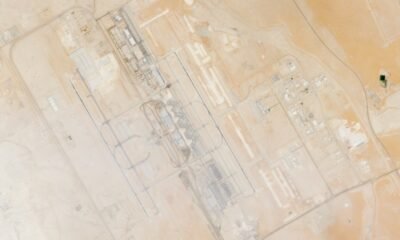
Türkiye strongly condemns the recent Houthi attack on Saudi Arabia that left 12 people killed, President Recep Tayyip Erdoğan said on Monday.
“We strongly condemn Houthi attacks targeting the main airport in the Saudi capital Riyadh, which killed 12 people,” Erdoğan said, adding that Ankara “stands with Saudi brothers” against these attacks.
Speaking after the Cabinet meeting in Ankara, Erdoğan also reiterated that Türkiye wants peace and stability across the region.
He expressed condolences for those killed in the attacks, including people performing the Umrah pilgrimage, and wished the injured a speedy recovery.
“We want peace and stability across our entire region,” Erdoğan said, adding that Türkiye would continue defending peace based on “regional ownership.”
The president also announced that work is underway to submit the Mecca Joint Defense Agreement – a pact signed in August between Türkiye, Saudi Arabia, and Pakistan – to Parliament in the coming days to complete domestic approval procedures.
Turkish police detained 18 suspects Tuesday in coordinated raids across seven provinces as part of an investigation into attacks allegedly carried out by the far-left terrorist group DHKP-C, including firebombings of police vehicles and shootings in Istanbul, prosecutors said.
The Istanbul Chief Public Prosecutor’s Office said the investigation focused on a series of attacks between 2016 and 2019, including Molotov cocktail attacks, gunfire targeting police facilities and the placement of a banner designed to resemble an explosive device.
Investigators identified 50 suspects have carried out or ordered the attacks after obtaining statements from two individuals cooperating with authorities under Türkiye’s effective remorse provisions.
According to prosecutors, the incidents included a March 31, 2016, firebomb attack on a police water cannon vehicle in Istanbul’s Sultangazi district, followed by Molotov cocktail attacks on police vehicles and gunfire targeting the Gazi Police Station on May 1, 2016.
Other incidents under investigation included the burning of a General Directorate of Highways facility in 2016 and the placement of a banner resembling an explosive device near the Bayrampaşa Riot Police Department on April 6, 2017.
The DHKP-C is an offshoot of an extremist Marxist-Leninist movement that emerged in the 1970s and has been responsible for a series of violent attacks over the decades, including the assassination of two politicians and several intelligence officials in 1980.
Authorities also linked the investigation to a 2019 shooting targeting an election campaign office of the ruling Justice and Development Party (AK Party) in Sultangazi.
Eleven of the 50 identified suspects were already in prison, while another 20 were believed to be abroad, prosecutors said.
Police subsequently launched simultaneous operations at 27 addresses, including 21 in Istanbul and others in Ankara, Hatay, Tunceli, Balıkesir, Manisa and Izmir, targeting 19 suspects.
Counterterrorism officers detained 18 suspects during the raids, while efforts to locate the remaining fugitive continued.
Türkiye’s Permanent Representative to the United Nations Ahmet Yıldız called on Israel to end its “reckless acts” in Syria and fully comply with the 1974 Disengagement Agreement.
“Lasting stability is essential for Syria to rebuild its economy, attract investment, and participate in regional energy and connectivity projects,” Yıldız told a session of the U.N. Security Council on Monday.
“Israel’s continued violations of Syrian sovereignty and territorial integrity undermine these prospects and show disregard for international law,” he said.
“The situation is particularly alarming in southern Syria, where continued military incursions and expansionist actions and words are getting out of control,” he added.
Yıldız said Israel’s recent resumption of activities along the so-called “Sufa 53 line” in Quneitra was a further attempt to undermine the 1974 agreement and impose a fait accompli on the ground. “These reckless acts must stop,” he said.
He urged Israel to comply with the 1974 agreement and relevant Security Council resolutions, particularly Resolution 497, and to withdraw from the occupied Syrian Golan Heights. “A stable, sovereign and unified Syria capable of securing its borders, defeating terrorist organizations and contributing to regional peace and economic cooperation serves the interests of all, including Israel,” he added.
“The dissolution of the so-called SDF has opened a new chapter in the integration process,” Yıldız said. “Remaining arrangements should be finalized and fully implemented without delay, in a manner that reinforces Syria’s sovereignty, unity and social cohesion,” he added.
Yıldız described the fight against terrorism as “a critical priority” and welcomed Damascus’ cooperation with the global coalition for the enduring defeat of Daesh. “Security and economic recovery must advance hand in hand,” he said.
On refugees, Yıldız said the number of Syrians under temporary protection in Türkiye once exceeded 4 million and now stands at around 2.2 million.
He said returns have been gradual because of economic conditions, security concerns and Israeli incursions. Since Bashar Assad’s fall on Dec. 8, 2024, Israel has expanded its military operations in Syria, moving troops into the Golan buffer zone and nearby positions. Syria demands the withdrawal of Israeli forces from the areas they occupied and maintains its commitment to the 1974 Disengagement Agreement. Israel claims its movements are driven by security considerations.
Addressing the same session, Syria’s U.N. representative Ibrahim Olabi said those claiming to seek security “should not be killing Syrian citizens within Syrian territory.”
“They should know very well that there is only one path towards security, which is international legitimacy and the resolutions of the (U.N. Security) Council,” the envoy said.
“Every time they open fire on Syria, they are, as the world has witnessed, at the same time opening fire on itself locally and internationally,” he added. Olabi also urged support for economic recovery, investment, job creation and reconstruction. He called for help rehabilitating schools, hospitals and water and electricity networks and for resources and expertise to clear mines and other remnants of war.
The Houthis’ ongoing attacks targeting Saudi Arabia are under the spotlight in Türkiye, which signed a key defense deal with Saudi Arabia and Pakistan last August. Devlet Bahçeli, leader of the government ally Nationalist Movement Party (MHP), reiterated that deal, which evolved into the Mecca Defense Alliance, and urged the government to throw all military support behind the defense of Saudi Arabia. “(Saudi Arabia) should be enabled to respond to acts violating international laws decisively and sensitively,” Bahçeli said at the parliamentary group meeting of his party in Ankara on Tuesday.
As civil war in Yemen flared up this summer, Houthis spread it to Saudi Arabia, prompting the central government in Yemen to launch an all-out operation against the group last week. Saudi Arabia’s oil and military installations were among the main targets of the Houthis. The attacks then spilled over into King Khalid Airport, leading to at least a dozen casualties. The civilian casualties drew international condemnation.
On Oct. 5, top ministers of Türkiye, Saudi Arabia and Pakistan gathered in Riyadh for the meeting of the Strategic Political and Defense Committee of the alliance and decided to deploy military forces and capabilities to Saudi Arabia. The move is the most concrete step since the agreement was signed in August by the top officials of Türkiye, Pakistan and Saudi Arabia, to showcase the impact of the alliance in the broader region.
Drawing attention to the fact that Houthi attacks targeting the holy lands were serving the goal of destabilizing the region, Bahçeli said: “We cannot turn a blind eye to, remain silent about or tolerate attacks targeting our first qibla, Al-Aqsa Mosque, our qibla, the Kaaba or the blessed sanctuary of the Prophet Muhammad.”
Stressing that attacks targeting the holy lands could not be ignored under any circumstances, Bahçeli said all available diplomatic means should be used and, if these proved insufficient, deterrent force should be employed. “Under the Mecca Alliance, our country must be enabled to provide Saudi Arabia with all possible military support for its defense and to respond sensitively and resolutely to approaches that also violate international law,” he said. Emphasizing that escalating Houthi attacks on Saudi Arabia had caused heavy civilian casualties, Bahçeli said attacks on civilians and civilian infrastructure clearly constituted serious crimes under international and humanitarian law.
Bahçeli said attacks launched from Yemen against Saudi Arabia must be condemned in the strongest terms, recalling previous assaults. “These heinous attacks undoubtedly target the peace and stability of the entire region. The renewed escalation of the conflict that has persisted in Yemen for years threatens the security of the Red Sea and the Bab el-Mandeb Strait, posing serious risks to international trade, energy supply security and regional economic stability. At this difficult time for the Middle East, no action that deepens hostilities among regional countries, opens new fronts of conflict or costs civilian lives can be excused. Regardless of the justification offered, attacks targeting civilians can never be considered legitimate,” he said.
On Sunday, the Turkish Foreign Ministry issued a stern statement condemning the Houthi attack on the airport and reiterated support for Saudi Arabia’s sovereignty and territorial integrity.
Bahçeli said Türkiye was committed to its obligations under the joint defense agreement.
“For years, our ancestors bore the honorable title of Hadimü’l-Haremeyn (Custodian of the Two Holy Mosques). (Ottoman general) Fahrettin Pasha’s legendary defense of Medina stands as a powerful testament to this sense of duty. It was on these lands that the heroic Turkish soldier, nurtured in the hearth of the Prophet, earned the title of Mehmetçik. Thank God, our faith, conviction and determination regarding our sacred lands have never waned, they remain alive in the hearts of our nation and are firmly embedded in the institutions and strength of our state,” he stated.
“We hope the Houthis will immediately halt their attacks, a lasting political solution will be established in Yemen, and regional disputes will be resolved through dialogue and diplomacy. Everyone in the region must act with restraint and remain guided by reason and sound judgment. No more Muslim blood should be shed, and our entire region must be able to live in an environment of peace and security,” Bahçeli added.
Calling for a united stance against those who turn sectarian differences into grounds for conflict, pit Muslim communities against one another, squander the region’s resources on wars and sow seeds of discord, Bahçeli said: “The Islamic world must stand united, and infighting among brothers must end immediately.”
Turkish security sources said Monday that the terrorist group PKK had evacuated four accommodation areas in Metina, a region in northern Iraq, as a process aimed at the group’s full disarmament continued. The statements confirmed remarks by a senior PKK figure who claimed the group had left tunnels in Metina on Oct. 8.
The development comes amid the “terror-free Türkiye” initiative, launched in 2024 to secure the dissolution of the terrorist group. Vice President Cevdet Yılmaz, who plays a key role in the initiative, said Monday that the process was advancing positively.
Sources said the Hebat, Yajk, Sabri and Sason shelter areas in Metina’s Baze region were evacuated on Oct. 8, while Turkish media outlets broadcast footage showing PKK members leaving the areas, which served as terrorist hideouts. The footage showed empty tunnels and members of the group walking away with their belongings.
Earlier, Murat Karayılan, a senior PKK figure, said in an interview that the group had completed its withdrawal from Metina to demonstrate that it posed no threat to Türkiye. Karayılan also claimed that the PKK had ordered its clandestine units in major cities, including Istanbul, to withdraw. Security sources said the shelter areas had posed a security risk to Türkiye and described the PKK’s withdrawal as decisive progress in the process.
The sources described the move as an indication that the process was continuing, saying efforts under the initiative were aimed at strengthening regional stability and reinforcing Turkish-Kurdish fraternity.
Following the termination of the PKK’s activities in all areas, members of the group who return to Türkiye under prospective legal arrangements are expected to undergo a social integration process. Comprehensive programs in areas including education and the economy are also planned to facilitate their reintegration into society.
The sources said the broader process aims to establish lasting domestic peace in Türkiye and enable all segments of society to live together in peace and security. They added that steps taken under the initiative were intended to strengthen regional stability and social cohesion.
The initiative was launched in 2024 by Devlet Bahçeli, leader of the government’s ally, the Nationalist Movement Party (MHP). Bahçeli, who has long taken a hard-line stance against the PKK and previously called for the execution of its jailed ringleader, Abdullah Öcalan, argued that the group’s dissolution would serve Turkish-Kurdish unity amid growing threats to Türkiye’s security and existence.
Öcalan responded to Bahçeli’s call by instructing the PKK to lay down its arms. The group complied in 2025, beginning to destroy its weapons at a ceremony in northern Iraq in a symbolic move. Since then, Turkish intelligence has been monitoring progress toward full disarmament.
Meanwhile, the Turkish Parliament passed legislation in August providing for the deferral of sentences and prosecution for PKK members who were not involved in deadly terrorist acts.
Speaking to Anadolu Agency (AA) on Monday, Yılmaz, who chairs a state board overseeing the initiative, said the process was “progressing positively” after becoming state policy.
“This has become a state policy, and with the work being carried out within this framework, the terror-free Türkiye process is moving forward on its course and in a positive direction,” he said.
Yılmaz said legislation aimed at strengthening national solidarity and social integration had been adopted by Parliament with 467 votes following lengthy deliberations in a commission, creating a model unique to Türkiye.
He said Türkiye had reached a “historic opportunity” to resolve an issue that had accumulated over decades and, according to government estimates, had cost the country at least $2.3 trillion.
Yılmaz also described the process as a major window of opportunity, stressing that resources devoted to counterterrorism could instead be directed toward the country’s development and higher democratic standards.
“We will redirect the energy we have spent on fighting terrorism toward development and improving our democratic standards and living standards. We see this as a major window of opportunity,” he said.
‘Century of brotherhood’
He said permanently ending terrorism would usher in a new era for Türkiye’s democracy and development, adding that the government’s “Century of Türkiye” vision would also be a “century of peace and brotherhood.”
The vice president linked the initiative to a broader regional vision, saying resources in countries such as Iraq and Syria should benefit their own populations. He said Türkiye aims to strengthen peace and security at home while helping establish an environment of stability and prosperity across the region.
Yılmaz said the legislation establishing the framework for the process envisaged two main stages.
The first involves the laying down of arms, verification of disarmament on the ground and confirmation by Türkiye’s National Security Council that weapons have been surrendered and the organization dissolved, he said.
The second stage provides for the temporary supervised release of individuals convicted of certain offenses, with applications to be submitted within a six-month period. He said four subcommittees had been established under the Monitoring and Evaluation Board, with the Judicial and Legal Affairs Coordination Subcommittee and the Social Cohesion and Integration Subcommittee preparing for their roles in the second stage.
On disarmament, Yılmaz said there had been positive developments on the ground but cautioned that such processes were difficult and required patience. He cited the evacuation of some caves in sensitive areas near Türkiye’s border and steps to remove structures that posed security threats.
Yılmaz also pointed to developments in Iraq, including the transfer of control over the Sinjar region to the Iraqi government and the completion of the mission of Türkiye’s Bashiqa camp.
“There is positive progress on the ground, but these are difficult processes. After all, these are processes shaped by many years. We need to follow the process patiently and move toward the goal step by step,” he said.
Yılmaz stressed that the decision to dissolve the organization and lay down its arms had been taken by the PKK itself, adding that Ankara expected the group to implement those decisions gradually.
“We expect them to take these steps gradually. We will verify and identify developments on the ground and submit them to the relevant bodies,” he said.
He added that Parliament was also expected to establish a structure to monitor the entire process, noting that the parliamentary speaker had begun consultations with political parties on the issue.
Yılmaz stressed that Türkiye was addressing the issue through its own institutions without seeking outside mediation.
“Türkiye is a country that resolves its own problems without taking them to another power, a third party or an international organization,” he said. “If it achieves complete success, I believe this will be a success story that sets an example for the world,” he added.
Yılmaz said the process required cooperation among Parliament, the government and civil society, arguing that it should transcend party politics. He also expressed hope that the broad parliamentary cooperation seen in the process could be replicated on other major national issues, including efforts to draft a new constitution.
The ruling Justice and Development Party (AK Party) is going through a challenging period, but a new survey shows it remains the country’s leading political party. A poll conducted by research company Asal among 2,020 people between Oct. 4 and Oct. 10 found that 31.6% of respondents would vote for the party if a general election were held today.
The main opposition New Party (YP) followed with 25.2%. The Peoples’ Equality and Democracy Party (DEM Party) ranked third with 8.8%, slightly ahead of the Nationalist Movement Party (MHP), the AK Party’s partner in the People’s Alliance. The Good Party (IP) followed the MHP with 7.1%, ahead of the Republican People’s Party (CHP), which received 5.1%.
The IP was founded by former MHP members, while Özgür Özel’s ouster as CHP chairman in May led to the establishment of the YP by Özel and fellow CHP lawmakers in July. The Victory Party (ZP), also founded by former MHP members, trailed the CHP in Asal’s poll with 3.4%.
President Recep Tayyip Erdoğan’s chief adviser Mehmet Uçum, who also serves as deputy chair of the Presidency’s Legal Policies Board, sought to clarify the debate over the date of the next elections last month. Uçum told journalists that the elections would most likely be held on April 16, 2028, the anniversary of a 2017 referendum on the transition to an executive presidential system. He also stressed that this would be the last election in which Erdoğan would be eligible to run.
Uçum said the elections could be held on that date if Parliament approved their renewal, a move that would require the support of 360 lawmakers. He described the possibility of an election in the last quarter of 2027 as “low,” amid opposition calls for an early vote.
Under Turkish law, the next general election would normally be held in May 2028. However, the Constitution allows Parliament to call an early election with the support of at least 360 of its 600 lawmakers, a move that would open the way for Erdoğan to seek another term. The People’s Alliance holds 326 seats in Parliament.
The government has repeatedly insisted that elections will be held on schedule. Erdoğan, who became prime minister in 2003, was elected president in 2014 after serving three terms as prime minister.


-

 Economy2 days ago
Can diesel prices fall after Trump-Russia deal?
-
 Politics2 days ago
Türkiye presses Greece to hand over FETÖ members, crime bosses
-
 Politics2 days ago
Türkiye-France defense cooperation spark concern in Greek media
-
 Economy2 days ago
Tehran’s once-bustling bazaar struggles as war dampens demand
-
 Economy2 days ago
Top oil execs drop from major event schedule after Riyadh attacks
-

 Sports2 days ago
Bezzecchi wins Indonesian GP to hand Martin championship lead
-
 Economy1 day ago
Türkiye says 17 funds settled, eyes Atlas deal this week
-
 Sports2 days ago
Deadly Houthi strike on Riyadh airport draws int’l condemnation