
Sports
Bezzecchi wins Indonesian GP to hand Martin championship lead

Marco Bezzecchi won the Indonesian Grand Prix on Sunday after overtaking an injured Raul Fernandez, while Jorge Martin finished third to recapture the championship lead from Marc Marquez.
Fernandez, racing with fractured fingers from a Saturday crash, appeared untroubled in the opening half of the race as he and Bezzecchi pulled away from the chasing pack.
However, Fernandez began to fade, and Bezzecchi overtook him with nine laps remaining to take the lead and secure victory. Martin’s third-place finish completed a podium lockout for Italian manufacturer Aprilia.
Bezzecchi’s win, the 300th victory for an Italian in MotoGP, also kept his faint championship hopes alive.
“I’m very happy to be back on the top step of the podium,” said the 27-year-old, who led the standings early in the season but has struggled recently.
“It was a nice battle with Raul. I think my team and I deserve a result like this, especially because they never stop working. They’ve been through tough times with me.”
Fernandez detailed his injury after the race.
“Yesterday, when I crashed and I saw my hand, I knew before going to the clinic that I had my finger broken – the one I normally use to brake,” the Spaniard said.
“This morning, when I woke up, I realized I had not one, but two fingers broken. No one knew. I tried to say nothing, just keep the pain to myself and keep my focus on the race.”
“This morning, I tried to find a solution on the brakes, because I was not able to use the finger I normally use. I started everything from zero. It was a very difficult job for me,” he said.
Martin back on top
A close duel unfolded behind the top three, with Marquez battling KTM’s Pedro Acosta.
Marquez had a strong start and moved into third place on the opening lap, but his Ducati struggled to keep pace with the Aprilias around him, and Martin easily overtook him on the third lap.
Acosta then quickly overtook Marquez, but for the second straight day, Marquez benefited from his opponent’s tire pressure issues, regaining fourth.
Once Acosta was clear of a penalty, he again battled Marquez, but as they dueled, Trackhouse’s Ai Ogura capitalized and passed both riders to secure Aprilia’s first-ever 1-2-3-4 finish.
Martin, who leads the 2024 championship, moved to 355 points to top the standings. Marquez, Saturday’s sprint winner, had 353 points after finishing sixth, his first complete race at the Mandalika circuit.
“The last few laps, I was struggling with the tires, physical condition, but I was able to finish on the podium, so really happy,” Martin said.
“We are still in the fight. We are still in the lead. It will be a tough championship, but I will give my all.”

Barcelona’s rising English star Anthony Gordon scored his first goal for the Catalns Saturday, helping the Spanish champions extend their perfect start in La Liga with a 3-0 victory over Getafe.
Real Madrid finished with 10 men against Villarreal after Vinicius Junior was sent off for hair pulling in a 1-0 victory. Yan Diomande’s goal kept Jose Mourinho’s side third and on Barcelona’s trail.
Los Blancos are six points behind Barca, who also lead second-place Atletico Madrid by five points after Diego Simeone’s team snatched a late 2-1 win at Alaves.
Winger Gordon opened the scoring for Barca in the second minute and Gabriel Jesus added another after half an hour for the league leaders, who have won every match they have played this season.
France defender Jules Kounde tucked home the third from Lamine Yamal’s cross to cap Barca’s solid win against Jose Bordalas’ side at Camp Nou.
Barca were without their top scorer Raphinha, who sustained a hamstring problem during the international break with Brazil.
Flick replaced him with former Arsenal striker and Brazil compatriot Jesus. His side came roaring out of the blocks.
“Being at Barca is a dream … playing with these players is very easy too, everyone plays very well,” Jesus said after his first start and third goal for the club. “That makes it easier for me as a striker, to have chances and I’m ready to score the goals. But I hope Rafa can recover quickly because the team miss him.”
Gordon, who has impressed since joining this summer, grabbed his first Barca goal with a low deflected effort after bundling his way past three players.
He was Barca’s brightest spark in the first half, continuing his fine goalscoring form for England in the recent Nations League matches.
“He’s doing very well,” Flick said of Gordon. “He scored with England. He has a lot of confidence. He gives us a lot.”
Getafe defender Zaid Romero gave the ball away in his own box for Barca’s second, passing it straight to Jesus, who stroked into the bottom corner.
The otherwise quiet Yamal supplied Kounde for the third as Barca secured their ninth win in nine games across all competitions.
Diomande, Real Madrid’s record 140-million euro ($157 million) signing, scored his first goal for the club to help them beat Villarreal. Vinicius’s dismissal, however, marked the game.
The Brazil international, on as a substitute, scored, but officials disallowed his goal and he was sent off after a VAR review showed he pulled the hair of Villarreal’s Nathan Saliba in the buildup.
“Sorry to my team and the fans,” Vinicius posted on Instagram.
Mourinho’s Madrid battled through the final stages with 10 men but held on to their slender lead, which 19-year-old winger Diomande earned.
Despite Madrid’s victory, Vinicius’ red card left a bitter taste for Los Blancos. The winger risks a potential ban that could keep him out of the Clasico on Oct. 25.
“I don’t know what’s going on with the referees, with this red card, I don’t understand, but the most important thing is the victory,” Madrid midfielder Aurelien Tchouameni said.
Mourinho declined to attend his post-match press conference in protest at the refereeing, a club source said.
The Madrid coach had complained bitterly about refereeing decisions that did not go his team’s way in the derby defeat against Atletico before the recent international break.
Striker Kylian Mbappe was fit to start the match for Madrid and hit the post in a largely dull first half.
Home fans were not happy with the team at halftime, but after 63 minutes they celebrated Diomande’s first goal, a sharp low finish into the far corner after Federico Valverde set him up.
The drama with Vinicius followed, but thanks in part to goalkeeper Thibaut Courtois, Madrid clinched three important points.
Earlier, Cristian Romero’s header in the 87th minute earned Atletico Madrid a narrow win at 10-man Alaves.
Alejandro Grimaldo put Atletico in front before Lucas Boye equalized from the penalty spot for Alaves before halftime.
Officials sent off Angel Perez for the hosts in the second half. Romero’s header from Alex Baena’s cross then secured the victory.
“It’s always important that the goal comes from wherever it comes, as long as it comes,” Simeone said.
Two-time Olympic champion Eliud Kipchoge won his first marathon in three years Sunday when the Kenyan great cruised to victory at Melbourne, set a course record.
The most-decorated marathoner in history crossed the finish line in 2 hours 9 minute 10 seconds, two seconds inside the race record set by Fellow Kenyan Timothy Kiplagat Ronoh in 2022.
It was his first victory over the distance since Berlin in 2023 and part of his “World Tour” to raise funds for causes he believes in.
The 41-year-old former world record-holder announced in 2025 he planned complete marathons on all seven continents, including Antarctica, over two years.
Melbourne was the third stop after South Africa and Brazil.
Kipchoge could have finished even faster, but slowed to wave to fans inside the Melbourne Cricket Ground, where he ran the last half-lap.
“On the course, it was really wonderful, I enjoyed seeing people standing, cheering, and shouting my name,” Kipchoge said, looking fresh at the finish.
“I’ve never seen a crowd like this. Melbourne is really, really a sporting city,” he told media after the race.
“I believe that my body is still peaking, still able to compete with the next generation,” the 41-year-old added.
“The oldest athlete is still competing, but I am happy to run with the Gen Zs.”
Australians Thomas Do Canto and Reece Edwards rounded out the podium.
New Zealander Camille French won the women’s race, ahead of Australian Sinead Diver and Ireland’s Nichola Sheridan.
The international community joined in unison Sunday to condemn the deadly Houthi attack on Saudi capital Riyadh.
U.N. and EU leaders voiced shock at the attack and warned against an escalation in the deadly conflict.
Secretary-General Antonio Guterres said he was “deeply shocked” by Saturday’s attack on Riyadh’s airport, which killed 12 people and wounded over 300, according to aviation authorities.
“Attacks on civilians and civilian infrastructure are a violation of international law. These attacks must cease immediately,” Guterres said in a statement.
U.S. President Donald Trump said Saturday that Washington may join Saudi strikes against the Houthis in Yemen following the attack.
Asked by reporters whether he had decided to take part in the strikes, Trump said: “We may. We’re going to look at it. We just found out about the recent attack. We will make a decision. We move very quickly.”
EU chief Ursula von der Leyen called the attack a “dangerous escalation” and said the Iran-backed group must halt strikes on civilian targets.
“These attacks by Iran’s proxies are pushing the region into a spiral of violence. They are destabilizing crucial global transport and energy nodes with shockwave sent through the world,” von der Leyen said.
“These murderous attacks at civilians must stop at once,” she said, adding the EU stands in “solidarity with Saudi Arabia.”
German Foreign Minister Johann Wadephul said he “firmly condemns” the attack, which he described as “a terrorist act against Saudi Arabia and civil aviation.”
“Our thoughts are with the victims and I send my sincere condolences to their loved ones,” he wrote on X.
Meanwhile, U.K. Defense Minister Wes Streeting said the attacks were “contemptible” and a “dangerous escalation”
France also condemned the “heinous attack” and stressed “total solidarity” with Saudi Arabia.
France, which is already lending troops and military equipment to Saudi Arabia, “will continue to remain by its side in its defense of its territory and its infrastructure,” a Foreign Ministry statement said, calling on the Houthis to cease their attacks.
Meanwhile, Pakistan’s Prime Minister Shehbaz Sharif strongly condemned the deadly attack on Saudi capital’s international airport.
“Attacks targeting civilians and vital infrastructure are utterly unacceptable and pose a serious threat to regional peace and stability,” Sharif posted on X, describing the attack as “heinous” and reaffirming Pakistan’s “steadfast commitment to Saudi Arabia’s sovereignty, territorial integrity.”
Pakistan is close ally of Saudi Arabia and are part of the Mecca mutual defense pact alongside Türkiye.
Another Saudi ally, Syria also condemned “in the strongest terms” Saturday’s deadly attack on King Khalid International Airport.
It stressed that the security of Saudi Arabia is an “integral part of the security of Syria and the entire region.”
In a statement released on X, the Syrian Foreign Ministry described the attack as “a violation of the Kingdom’s sovereignty and a direct threat to its security and stability, as well as to the safety of civilians, civilian facilities, and air navigation.”
Malaysian Prime Minister Anwar Ibrahim “unequivocally denounced” the attack, saying “there can be no justification for attacks against civilians and civilian infrastructure.”
Anwar said on X that putting innocent lives at risk “can only deepen the suffering already wrought by this conflict and carry it into places that should remain beyond its reach.”
He also said Malaysia stands in solidarity with Saudi Arabia and its people “at this perilous hour,” and that Kuala Lumpur remains “steadfast in our hope that diplomacy and reason will prevail before the conflict widens still further.”
Bangladesh also “strongly and unequivocally” condemned the attack in an official statement. Two Bangladeshi nationals have been killed in the strike.
“Attacks endangering civilian lives and targeting civilian infrastructure are unacceptable and must cease immediately,” the Bangladesh Foreign Ministry said.
The Muslim-majority South Asian nation also called for an “immediate cessation of hostilities, the protection of civilians and civilian infrastructure, and a peaceful resolution of the ongoing crisis through dialogue and diplomacy, in the interest of regional peace, security and stability.”
Meanwhile, Saudi Arabia on Sunday kept its main international airport closed and moved Riyadh schools online as Yemen’s Houthi rebels threatened new airstrikes across the kingdom.
Saturday’s strike on King Khalid International Airport in Riyadh marked a major escalation in the war between Yemen’s Iran’s-backed Houthis and the kingdom and further complicated sputtering efforts to halt the U.S.-Iran war.
Arsenal fought back to beat Leeds 2-1 on Saturday, drawing level with Manchester City at the top of the Premier League table with a strong response after the three-week international break.
Mikel Arteta’s side struggled to break down a well-organized Leeds defense in the first half but found their rhythm after the interval to secure a fifth win in six league games this season.
James Justin put Leeds ahead early in the second half at Emirates Stadium, briefly silencing the home crowd in the October sunshine. Arsenal responded quickly, with Riccardo Calafiori restoring parity seven minutes later before substitute Bruno Guimaraes completed the comeback with a well-worked team goal.
The focus returned to the pitch Saturday after the bombshell announcement that City had been found guilty of more than 100 breaches of Premier League financial rules.
But Arsenal, who had a perfect record before their 3-0 defeat to Brighton last month, struggled to break down Daniel Farke’s physical side in the first half.
Noni Madueke, overlooked by Thomas Tuchel for England’s most recent squad, was handed a rare start on the left wing in place of the injured Christos Tzolis.
But neither he nor Bukayo Saka on the opposite flank had much success against a defense that had conceded just three league goals all season.
Leeds created a couple of half-chances late in the first half.
First, Jayden Bogle and Anton Stach got in each other’s way as Stach struck the ball against his teammate. Bogle was then denied from close range by Arsenal goalkeeper David Raya, who rushed out to smother his shot.
Raya subsequently got down smartly to keep out a shot from Leeds defender Gabriel Gudmundsson from a tight angle.
Arsenal managed just one shot on target in the first half, but the game opened up after the break, with chances at both ends.
Impressive Leeds midfielder Ao Tanaka forced Raya to tip the ball over the crossbar before Justin put his side ahead in the 55th minute, finishing from just inside the box after a Gudmundsson cross following a well-worked move down the left.
Arsenal defender Gabriel Magalhaes got his head to the ball but failed to keep it out of the net.
The Gunners were back on level terms just seven minutes later when the unmarked Calafiori finished past England international goalkeeper James Trafford after being set up by Ben White.
Leeds’ problems deepened when Guimaraes finished powerfully after a neat move down Arsenal’s left, with Saka, Martin Odegaard and Declan Rice all involved.
The win takes Arsenal to 15 points, level with City, who remain top on goal difference.
City, managed by Enzo Maresca and with a game in hand, are braced for a hostile reception at Liverpool on Sunday following the announcement of the verdict last week.
Video Assistant Referee (VAR) has transformed football by allowing officials to review key incidents that could change the outcome of a match.
Introduced to reduce major refereeing errors, the technology has improved decision-making in crucial situations, but it continues to fuel debate over delays, subjective interpretations and the limits of video review.
VAR operates under a strict protocol established by the International Football Association Board (IFAB), which sets the Laws of the Game.
Its guiding principle is “minimum interference, maximum benefit,” meaning video officials should intervene only when there is a clear and obvious error or a serious missed incident in a specific category.
The technology does not replace the referee or provide a means to review every disputed decision. The referee on the pitch remains in control and makes the final call.
The basic principles of VAR
VAR is designed to correct significant mistakes without disrupting the game unnecessarily. Under the protocol, the referee must make an initial decision on the field, even if that means allowing play to continue. Officials cannot postpone a decision while waiting for video assistance.
The original ruling stands unless the review identifies a clear and obvious error or a serious missed incident within the permitted categories. The VAR team can recommend a review, but only the referee can formally initiate one.
Accuracy takes priority over speed, so there is no fixed time limit for a review. However, officials are expected to complete checks as efficiently as possible to minimize interruptions.
Players and team officials must also respect the process. Surrounding or attempting to influence the referee, entering the video operation room or entering the referee review area without authorization can result in disciplinary action. Excessively making the TV-review gesture can earn a yellow card, while entering the video operation room can lead to a red card.
If play continues after an incident that is later reviewed, most disciplinary decisions made in the intervening period remain in place, subject to limited exceptions involving situations such as stopping a promising attack or denying an obvious goal-scoring opportunity.
VAR is not automatically available to every competition. Tournaments and leagues must meet FIFA’s implementation requirements and obtain written approval before using the system.
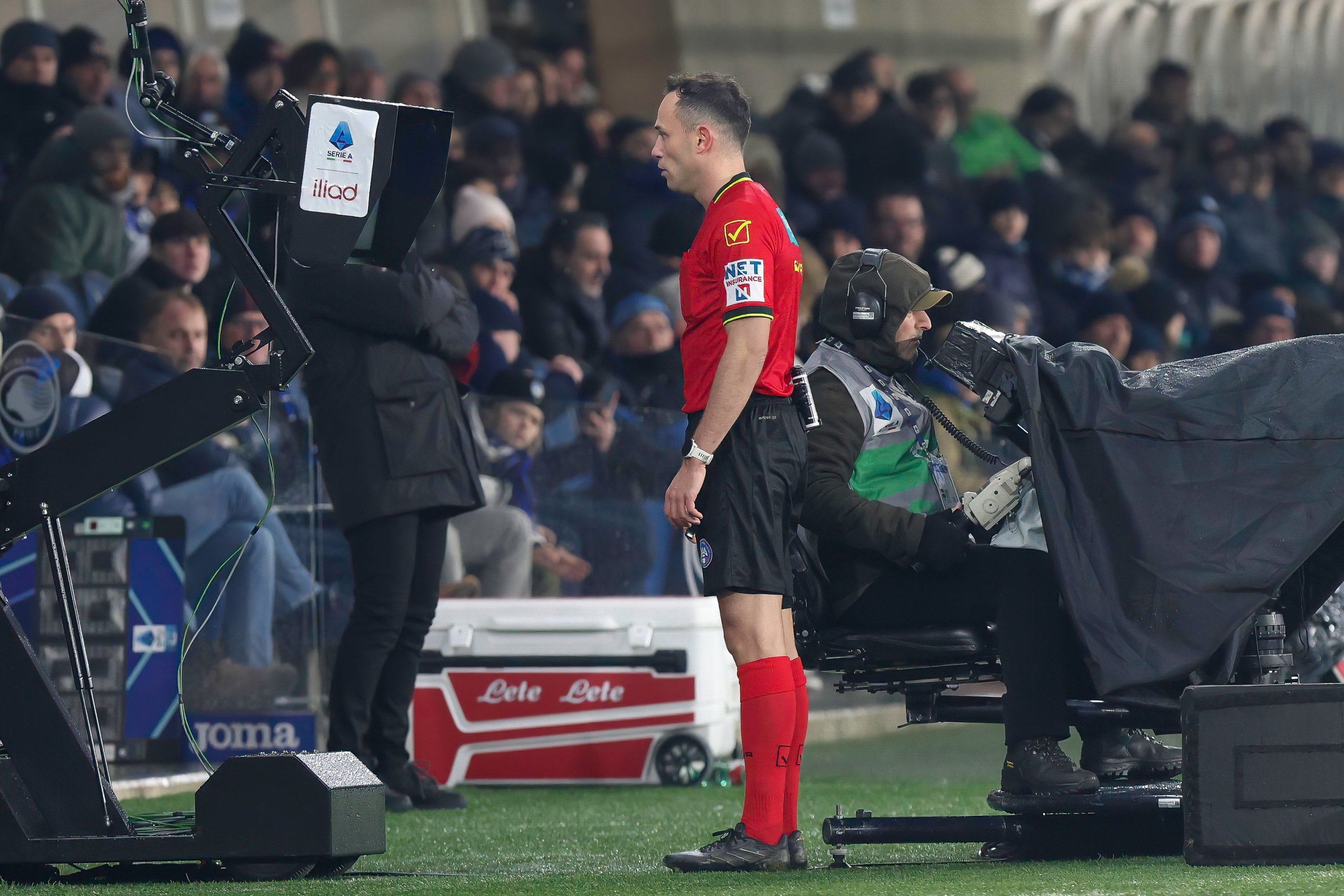
Which decisions can VAR review?
Under the IFAB protocol for competitions beginning on or after July 1, 2026, VAR covers a limited number of match-changing situations. The main categories are goals, penalty decisions, direct red cards and cases of mistaken identity. Certain competitions can also use additional review options.
1. Goals and no-goal decisions
VAR can review whether a goal should stand or be disallowed. Officials examine potential attacking offences in the buildup, including offside, handball and fouls.
They can also check whether the ball went out of play before the goal, whether it crossed the goal line completely and whether a goalkeeper, penalty taker or another player committed a reviewable offence during a penalty kick.
The purpose is to ensure that a goal is awarded or disallowed according to the Laws of the Game, including when an infringement occurred several seconds before the ball entered the net.
2. Penalty or no-penalty decisions
VAR can intervene when a penalty has been incorrectly awarded or when a clear penalty offence has been missed.
Reviews can establish whether an infringement occurred inside or outside the penalty area, whether the ball was already out of play and whether an attacking offence took place in the buildup to the incident.
Officials can also review a penalty decision when the initial call was based on an incorrect interpretation of what happened.
3. Direct red-card incidents
VAR can review potential direct red cards involving serious foul play, violent conduct, biting, spitting, and offensive, insulting or abusive actions. It can also examine incidents in which a player may have denied an obvious goal-scoring opportunity.
A significant protocol change for the 2026-27 season allows reviews of clearly incorrect second yellow cards that result in a red card. Previously, ordinary second-yellow decisions were outside VAR’s scope.
However, VAR cannot introduce a second yellow card that the referee failed to award in the first place. Its authority in this area remains limited to the specified reviewable situations.
4. Mistaken identity
If the referee cautions or sends off the wrong player from the offending team, VAR can help correct the player’s identity.
The review does not automatically reopen the underlying offence. Officials can reconsider that incident only if it independently falls within another permitted review category.
5. Incorrectly awarded corner kicks
Some competitions have expanded VAR’s scope to include clearly incorrect corner-kick decisions. This option is permitted only when the correction can be made immediately without delaying the restart.
The 2026 FIFA World Cup adopted the option, while the Premier League did not include it in its 2026-27 protocol.
Additional trial provisions used at the 2026 World Cup also allow certain attacking offences committed before the ball is in play at a corner or attacking free kick to be reviewed when they directly affect a subsequent goal, penalty or disciplinary sanction.
These expanded options are not universal. Their availability depends on the competition’s approved protocol.
What VAR cannot review
VAR does not provide a general appeal system for every refereeing decision. Ordinary fouls outside the penalty area are not reviewable unless they meet the threshold for a direct red card.
Throw-ins, goal kicks and most other routine restart decisions are also outside its scope once play has restarted.
Officials cannot use VAR to award an ordinary second yellow card that was missed, nor can they revisit every disputed challenge simply because replay footage is available.
These restrictions are central to the system’s design, although they are also a major source of frustration for players, coaches and supporters.
How a VAR review works
The review process follows a defined sequence, beginning with the referee’s decision on the pitch and ending with a final ruling.
Step 1: The referee makes the initial decision
The referee and assistant referees officiate the match as they normally would, making decisions based on what they see in real time.
The referee must make an initial call, including allowing play to continue when appropriate. VAR does not take over the decision-making process.
Step 2: The VAR team conducts an automatic check
A team of video officials monitors the match from a video operation room, which may be based inside the stadium or at a centralized facility.
The team typically includes a VAR, one or more assistant VARs and replay operators. They examine every potential or actual goal, penalty incident, direct red-card situation and case of mistaken identity.
Using multiple camera angles and different replay speeds, they look for clear and obvious errors or serious missed incidents.
Most checks are completed without interrupting play. If the video officials find no reason to intervene, the original decision stands. The VAR may tell the referee that a check is complete, but no formal review is necessary.
Step 3: The VAR recommends a review
If the footage suggests that a significant error may have occurred, the VAR communicates the findings to the referee through a headset.
To prevent unnecessary background conversations from distracting the referee, the VAR communicates with the on-field official through a controlled system.
The recommendation does not itself change the decision. The referee must decide whether to initiate a formal review.
Step 4: The referee reviews the incident
If play is still underway, the referee normally waits for an appropriate stoppage before beginning the review. The official then makes the familiar TV signal by outlining a rectangle with both hands.
There are two main types of review.
VAR-only review: This is generally used for factual decisions that can be established from the footage, such as an offside position, the location of an offence inside or outside the penalty area, whether the ball went out of play or the point of contact in a challenge. The referee can accept the information supplied by the VAR without visiting the pitchside monitor.
On-field review: This is generally used when an incident requires a subjective judgment. Examples include whether a challenge was excessively forceful, whether contact constituted a foul or handball offence, and whether an offside player interfered with an opponent.
The referee visits the referee review area, watches the selected footage and makes the final decision.
Slow-motion footage is useful for establishing factual details, including positions and points of contact. Normal-speed replays are preferred when judging the intensity of a challenge or whether an action should be considered an offence.
Step 5: The referee announces the final decision
After completing the review, the referee signals again and communicates the outcome.
Many competitions require officials to announce decisions over the stadium public-address system, although straightforward factual offside decisions may be exempt from the announcement requirement.
The referee then applies or adjusts any disciplinary sanctions and restarts play according to the Laws of the Game.
Even when the VAR recommends a review and supplies the relevant footage, the final decision remains with the referee on the pitch.
The technology behind VAR
VAR relies on a network of broadcast and dedicated cameras that provide different views of incidents. Major tournaments can use more than 20 camera angles, including super-slow-motion and ultra-slow-motion footage.
Replay operators select the relevant angles and provide them to the VAR team, allowing officials to examine incidents from multiple perspectives.
Two other technologies play important roles in modern refereeing: semi-automated offside technology and goal-line technology.
Semi-automated offside technology
Semi-automated offside technology (SAOT) helps officials assess tight offside decisions more quickly and consistently.
The system uses dedicated tracking cameras to follow players’ movements and identify relevant points on their bodies. Depending on the implementation, systems may use approximately 12 to 30 cameras, tracking numerous body points several times per second.
Some systems also use a sensor inside the match ball to help identify the precise moment it was kicked.
The technology automatically proposes the relevant kick point and generates calibrated offside lines. The VAR team then verifies the information before confirming the decision to the referee.
SAOT has reduced the time needed for many close offside checks, although the technology does not eliminate the need for human oversight, particularly when officials must determine whether a player interfered with an opponent.
Goal-line technology
Goal-line technology operates separately from VAR. It determines whether the entire ball has crossed the goal line and sends an immediate signal to the referee.
The system helps resolve one of football’s most decisive questions without requiring a lengthy video review.
Although both technologies support referees, they serve different purposes. Goal-line technology provides a direct answer about whether the ball crossed the line, while VAR reviews a broader range of incidents under the IFAB protocol.
How VAR developed
VAR emerged from work by the Royal Netherlands Football Association under its Refereeing 2.0 project. Informal testing began in the early 2010s, with the first live trial using the modern system taking place in July 2016 during a match between PSV and FC Eindhoven.
Australia’s A-League became the first top-flight league to adopt VAR fully in 2017, followed by Major League Soccer.
In March 2018, IFAB formally approved VAR for optional use in competitions. An independent analysis of nearly 1,000 matches had indicated that decision accuracy for reviewable incidents increased from about 93% to 98.8%, with relatively little time lost to reviews.
The system made its World Cup debut at the 2018 tournament in Russia, marking a major turning point in the use of video technology in football.
Several major European leagues subsequently introduced VAR. The Bundesliga and Serie A were among the early adopters, while the Premier League implemented the system for the 2019-20 season.
Since then, the technology has continued to evolve. Changes to offside technology, referee announcements, review procedures and the range of permitted interventions have sought to improve accuracy and reduce unnecessary delays.
Why VAR remains controversial

Despite improving the accuracy of decisions in the situations it covers, VAR remains one of football’s most contentious developments. Its critics argue that the technology has introduced new problems even as it has helped correct major refereeing mistakes.
Subjective decisions remain subjective
Video footage can establish where a player was standing or whether contact occurred, but it cannot always settle questions of interpretation.
Whether a challenge constitutes a foul, whether a handball offence has occurred or whether an offside player interfered with an opponent may still depend on the referee’s judgment.
The requirement for a clear and obvious error adds another layer of interpretation. Officials must decide not only what happened but also whether the original ruling was sufficiently wrong to justify intervention.
Interruptions disrupt the flow of the game
Reviews can interrupt celebrations, delay restarts and leave players and supporters waiting for a decision.
Although SAOT and procedural changes have shortened many checks, lengthy reviews remain possible, particularly when incidents involve several players or require subjective judgments.
For supporters, the uncertainty can diminish the spontaneity that makes football compelling.
Communication does not always satisfy fans
Referee announcements, published audio in some competitions and explanations through official match centers have improved transparency.
However, supporters and clubs may still struggle to understand why a decision was reached, particularly when stadium announcements provide only a brief explanation.
The images shown during a review may also differ from the footage available to broadcasters or supporters, leaving some questions unresolved in the moment.
Human error has not disappeared
VAR depends on human interpretation, and officials can still miss important details, misread an incident or reach the wrong conclusion.
A review may fail to account for a player’s impact on an opponent, for example, even when the relevant footage is available.
High-profile mistakes attract intense scrutiny because the technology is expected to prevent major errors. When it does not, confidence in the system can suffer.
Some mistakes remain outside VAR’s scope
The protocol deliberately excludes many incidents, including ordinary fouls, missed second yellow cards and certain restart decisions.
As a result, an error can influence a match without being eligible for review. This creates a distinction between mistakes the technology can correct and those it must leave untouched.
Expanding the system’s scope could address some of these problems, but it could also lead to more interruptions and a broader role for video officials.
How competitions are refining VAR
Football authorities continue to adjust the system in response to criticism. Changes have focused on making reviews quicker, improving explanations and determining which additional incidents justify intervention.
The Premier League, for example, has emphasized a high threshold for overturning the referee’s original decision, efforts to reduce delays and improvements to the experience for supporters inside stadiums.
Other developments include mandatory referee announcements, more efficient offside checks and selective expansion of reviewable incidents.
The introduction of reviews for clearly incorrect second yellow cards that result in dismissals is one example of the protocol evolving. Optional corner-kick corrections and limited reviews of certain attacking offences before set-piece restarts represent further attempts to address significant errors without turning VAR into a tool for reviewing every decision.
However, not every competition adopts every available option. The scope of VAR can therefore differ between leagues and tournaments, even when they operate under the same overarching framework.
What VAR looks like on matchday
During a top-level match, the VAR team monitors the action continuously from a video operation room equipped with multiple screens and replay systems.
Most checks happen in the background and are completed within seconds, allowing play to continue. When officials identify a potential clear and obvious error, the referee receives a recommendation and may initiate a formal review at the next appropriate stoppage.
The process becomes visible when the referee makes the TV signal, consults the pitchside monitor if necessary and communicates the final decision.
For players, coaches and supporters, the wait can be tense, especially when a goal or penalty is under review. For officials, the challenge is to balance accuracy with the need to preserve the rhythm of the match.
Ultimately, the referee on the pitch retains authority over the decision and the conduct of the game.
The future of VAR
VAR has permanently changed how football’s biggest decisions are made and scrutinized. It has helped reduce major errors involving goals, penalties and dismissals, while creating fresh debates over consistency, transparency and the role of technology in a sport defined by its pace and emotion.
Its continued development will depend on whether football authorities can improve the speed and clarity of reviews without undermining the referee’s authority or interrupting matches unnecessarily.
The underlying principles remain unchanged: VAR has a limited scope, intervention requires a clear and obvious error or a serious missed incident, and the referee retains the final say.
Cristiano Ronaldo has been provisionally suspended by the Portuguese Football Federation after disciplinary proceedings were opened against the 41-year-old forward for leaving the national team camp during the October international break.
The federation announced Saturday that the case had been classified as urgent, with Ronaldo suspended pending a final decision on the punishment. No ruling has been issued on the length of any potential ban.
The Al-Nassr forward acknowledged his actions were wrong in a lengthy statement published earlier this week, apologizing to his teammates and Portuguese supporters while insisting he remained committed to representing his country.
Ronaldo also said he would accept the federation’s decision and return to international duty after serving any suspension.
“I will be available, as I have always been until today, to compete and win for our national team,” he said.
The disciplinary case stems from Ronaldo’s departure from Portugal’s training camp in Copenhagen on Sept. 30, following tensions with coach Jorge Jesus over his playing time during the Nations League campaign.
Ronaldo was left on the bench throughout Portugal’s 2-1 victory over Norway on Sept. 27 despite warming up during the match.
Three days later, Jesus indicated that the forward would not start against Denmark, prompting Ronaldo to leave the camp before the team completed preparations for the Oct. 1 fixture.
The forward subsequently accused Jesus of breaking his word after suggesting he would receive playing time against Norway. Ronaldo said he had prepared to enter the game after being informed he would play for approximately 30 minutes but was never introduced.
Jesus defended his selection decisions, describing them as tactical rather than related to Ronaldo’s fitness. He had previously coached the forward at Al-Nassr in Saudi Arabia.
Ronaldo also criticized the coach’s public explanation of the decision, saying it differed from what they had discussed privately. He said the breakdown in trust contributed to his decision to leave the squad.
In his statement Tuesday, Ronaldo accepted full responsibility for his departure and apologized for failing to acknowledge Portugal’s traveling supporters after the Norway match. He said his status as national team captain made his actions particularly serious and urged the federation to apply its disciplinary rules without giving him special treatment.
The Portuguese federation has not announced when the investigation will conclude or whether the provisional suspension will be followed by a longer ban.
Portugal continued its Nations League campaign without Ronaldo, beating Denmark 4-2 on Oct. 1 before defeating Norway 2-1 four days later. The results completed a perfect start to the group stage, with the defending champions winning all four of their matches and securing qualification for the quarterfinals with two games remaining.
Ronaldo featured in only one of Portugal’s four games during the international window. He had started the campaign with a 1-0 victory over Wales on Sept. 24 before being left unused against Norway.
The five-time Ballon d’Or winner remains Portugal’s all-time leading scorer and appearance-maker, with 146 goals in 234 international matches. He also holds the men’s international records for both goals and appearances.
Despite the uncertainty surrounding his international future, Ronaldo returned to club action Friday and scored in Al-Nassr’s 3-0 victory over Diriyah in the Saudi Pro League. The goal took his career tally to 980 official goals, leaving him 20 short of the 1,000-goal milestone he has publicly pursued.
Ronaldo had previously suggested that the 2026-27 season could be his last before retirement, although he has made clear that he does not intend to end his Portugal career through a ceremonial farewell.


-

 Politics2 days ago
Türkiye rules out ops against Houthis, vows to help Saudi defense
-

 Politics2 days ago
Turkish intelligence chief discusses SDF integration with Syrian FM
-

 Economy2 days ago
Türkiye’s Kalyon PV to build solar panel factory in US
-

 Economy2 days ago
Türkiye identifies 214 people, firms made about $3.8B from troubled funds
-

 Economy3 days ago
Drone hits data center of Russia’s ‘Google’ in 1st for Ukraine war
-

 Politics2 days ago
Türkiye, France deepen military ties under new road map
-

 Economy2 days ago
Türkiye extends high-speed rail network to EU border
-

 Politics2 days ago
Türkiye’s Akıncı drones extend gendarmerie’s reach across country