
Sports
VAR explained: Complete guide to football’s most controversial technology

Video Assistant Referee (VAR) has transformed football by allowing officials to review key incidents that could change the outcome of a match.
Introduced to reduce major refereeing errors, the technology has improved decision-making in crucial situations, but it continues to fuel debate over delays, subjective interpretations and the limits of video review.
VAR operates under a strict protocol established by the International Football Association Board (IFAB), which sets the Laws of the Game.
Its guiding principle is “minimum interference, maximum benefit,” meaning video officials should intervene only when there is a clear and obvious error or a serious missed incident in a specific category.
The technology does not replace the referee or provide a means to review every disputed decision. The referee on the pitch remains in control and makes the final call.
The basic principles of VAR
VAR is designed to correct significant mistakes without disrupting the game unnecessarily. Under the protocol, the referee must make an initial decision on the field, even if that means allowing play to continue. Officials cannot postpone a decision while waiting for video assistance.
The original ruling stands unless the review identifies a clear and obvious error or a serious missed incident within the permitted categories. The VAR team can recommend a review, but only the referee can formally initiate one.
Accuracy takes priority over speed, so there is no fixed time limit for a review. However, officials are expected to complete checks as efficiently as possible to minimize interruptions.
Players and team officials must also respect the process. Surrounding or attempting to influence the referee, entering the video operation room or entering the referee review area without authorization can result in disciplinary action. Excessively making the TV-review gesture can earn a yellow card, while entering the video operation room can lead to a red card.
If play continues after an incident that is later reviewed, most disciplinary decisions made in the intervening period remain in place, subject to limited exceptions involving situations such as stopping a promising attack or denying an obvious goal-scoring opportunity.
VAR is not automatically available to every competition. Tournaments and leagues must meet FIFA’s implementation requirements and obtain written approval before using the system.
Which decisions can VAR review?
Under the IFAB protocol for competitions beginning on or after July 1, 2026, VAR covers a limited number of match-changing situations. The main categories are goals, penalty decisions, direct red cards and cases of mistaken identity. Certain competitions can also use additional review options.
1. Goals and no-goal decisions
VAR can review whether a goal should stand or be disallowed. Officials examine potential attacking offences in the buildup, including offside, handball and fouls.
They can also check whether the ball went out of play before the goal, whether it crossed the goal line completely and whether a goalkeeper, penalty taker or another player committed a reviewable offence during a penalty kick.
The purpose is to ensure that a goal is awarded or disallowed according to the Laws of the Game, including when an infringement occurred several seconds before the ball entered the net.
2. Penalty or no-penalty decisions
VAR can intervene when a penalty has been incorrectly awarded or when a clear penalty offence has been missed.
Reviews can establish whether an infringement occurred inside or outside the penalty area, whether the ball was already out of play and whether an attacking offence took place in the buildup to the incident.
Officials can also review a penalty decision when the initial call was based on an incorrect interpretation of what happened.
3. Direct red-card incidents
VAR can review potential direct red cards involving serious foul play, violent conduct, biting, spitting, and offensive, insulting or abusive actions. It can also examine incidents in which a player may have denied an obvious goal-scoring opportunity.
A significant protocol change for the 2026-27 season allows reviews of clearly incorrect second yellow cards that result in a red card. Previously, ordinary second-yellow decisions were outside VAR’s scope.
However, VAR cannot introduce a second yellow card that the referee failed to award in the first place. Its authority in this area remains limited to the specified reviewable situations.
4. Mistaken identity
If the referee cautions or sends off the wrong player from the offending team, VAR can help correct the player’s identity.
The review does not automatically reopen the underlying offence. Officials can reconsider that incident only if it independently falls within another permitted review category.
5. Incorrectly awarded corner kicks
Some competitions have expanded VAR’s scope to include clearly incorrect corner-kick decisions. This option is permitted only when the correction can be made immediately without delaying the restart.
The 2026 FIFA World Cup adopted the option, while the Premier League did not include it in its 2026-27 protocol.
Additional trial provisions used at the 2026 World Cup also allow certain attacking offences committed before the ball is in play at a corner or attacking free kick to be reviewed when they directly affect a subsequent goal, penalty or disciplinary sanction.
These expanded options are not universal. Their availability depends on the competition’s approved protocol.
What VAR cannot review
VAR does not provide a general appeal system for every refereeing decision. Ordinary fouls outside the penalty area are not reviewable unless they meet the threshold for a direct red card.
Throw-ins, goal kicks and most other routine restart decisions are also outside its scope once play has restarted.
Officials cannot use VAR to award an ordinary second yellow card that was missed, nor can they revisit every disputed challenge simply because replay footage is available.
These restrictions are central to the system’s design, although they are also a major source of frustration for players, coaches and supporters.
How a VAR review works
The review process follows a defined sequence, beginning with the referee’s decision on the pitch and ending with a final ruling.
Step 1: The referee makes the initial decision
The referee and assistant referees officiate the match as they normally would, making decisions based on what they see in real time.
The referee must make an initial call, including allowing play to continue when appropriate. VAR does not take over the decision-making process.
Step 2: The VAR team conducts an automatic check
A team of video officials monitors the match from a video operation room, which may be based inside the stadium or at a centralized facility.
The team typically includes a VAR, one or more assistant VARs and replay operators. They examine every potential or actual goal, penalty incident, direct red-card situation and case of mistaken identity.
Using multiple camera angles and different replay speeds, they look for clear and obvious errors or serious missed incidents.
Most checks are completed without interrupting play. If the video officials find no reason to intervene, the original decision stands. The VAR may tell the referee that a check is complete, but no formal review is necessary.
Step 3: The VAR recommends a review
If the footage suggests that a significant error may have occurred, the VAR communicates the findings to the referee through a headset.
To prevent unnecessary background conversations from distracting the referee, the VAR communicates with the on-field official through a controlled system.
The recommendation does not itself change the decision. The referee must decide whether to initiate a formal review.
Step 4: The referee reviews the incident
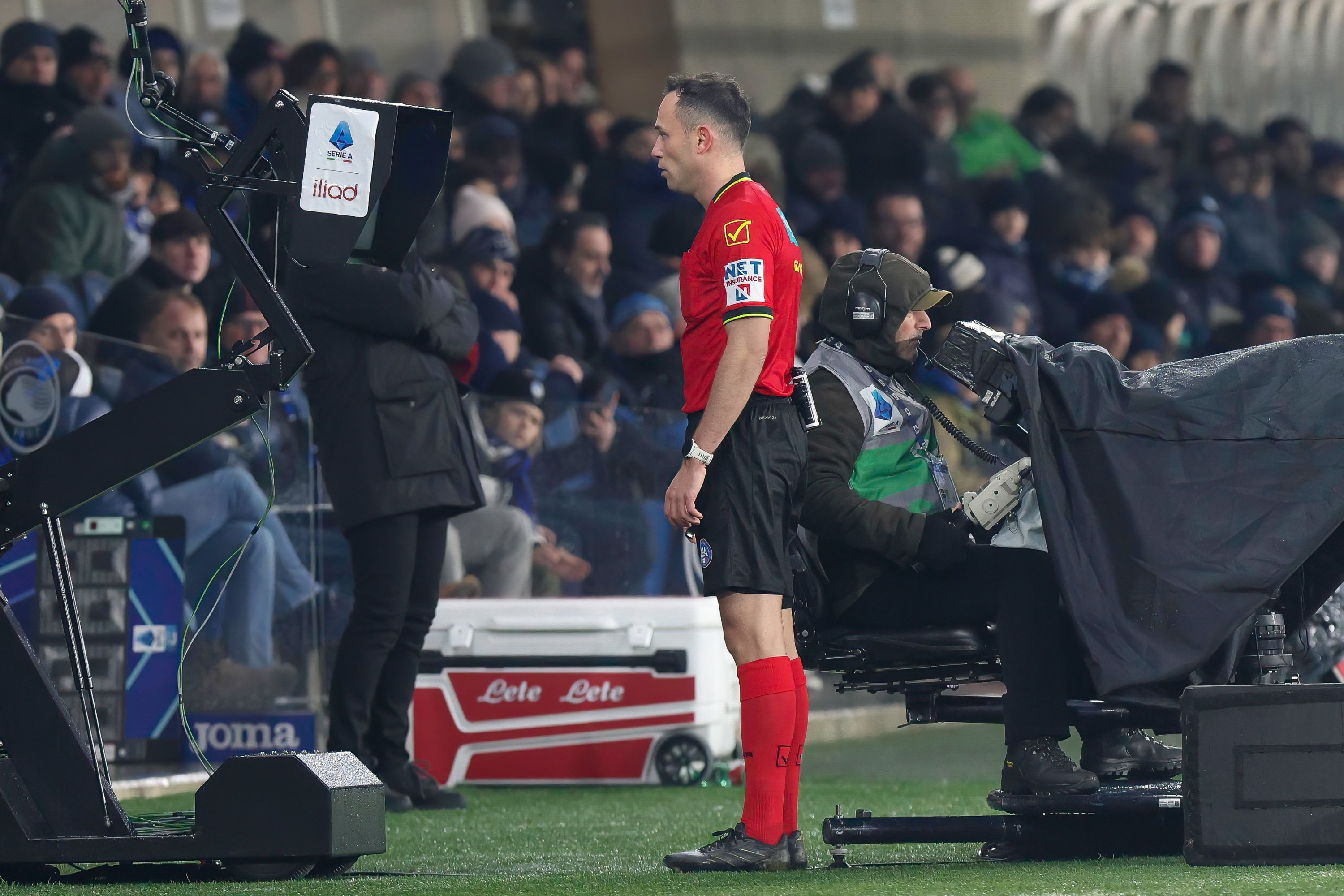
If play is still underway, the referee normally waits for an appropriate stoppage before beginning the review. The official then makes the familiar TV signal by outlining a rectangle with both hands.
There are two main types of review.
VAR-only review: This is generally used for factual decisions that can be established from the footage, such as an offside position, the location of an offence inside or outside the penalty area, whether the ball went out of play or the point of contact in a challenge. The referee can accept the information supplied by the VAR without visiting the pitchside monitor.
On-field review: This is generally used when an incident requires a subjective judgment. Examples include whether a challenge was excessively forceful, whether contact constituted a foul or handball offence, and whether an offside player interfered with an opponent.
The referee visits the referee review area, watches the selected footage and makes the final decision.
Slow-motion footage is useful for establishing factual details, including positions and points of contact. Normal-speed replays are preferred when judging the intensity of a challenge or whether an action should be considered an offence.
Step 5: The referee announces the final decision
After completing the review, the referee signals again and communicates the outcome.
Many competitions require officials to announce decisions over the stadium public-address system, although straightforward factual offside decisions may be exempt from the announcement requirement.
The referee then applies or adjusts any disciplinary sanctions and restarts play according to the Laws of the Game.
Even when the VAR recommends a review and supplies the relevant footage, the final decision remains with the referee on the pitch.
The technology behind VAR
VAR relies on a network of broadcast and dedicated cameras that provide different views of incidents. Major tournaments can use more than 20 camera angles, including super-slow-motion and ultra-slow-motion footage.
Replay operators select the relevant angles and provide them to the VAR team, allowing officials to examine incidents from multiple perspectives.
Two other technologies play important roles in modern refereeing: semi-automated offside technology and goal-line technology.
Semi-automated offside technology
Semi-automated offside technology (SAOT) helps officials assess tight offside decisions more quickly and consistently.
The system uses dedicated tracking cameras to follow players’ movements and identify relevant points on their bodies. Depending on the implementation, systems may use approximately 12 to 30 cameras, tracking numerous body points several times per second.
Some systems also use a sensor inside the match ball to help identify the precise moment it was kicked.
The technology automatically proposes the relevant kick point and generates calibrated offside lines. The VAR team then verifies the information before confirming the decision to the referee.
SAOT has reduced the time needed for many close offside checks, although the technology does not eliminate the need for human oversight, particularly when officials must determine whether a player interfered with an opponent.
Goal-line technology
Goal-line technology operates separately from VAR. It determines whether the entire ball has crossed the goal line and sends an immediate signal to the referee.
The system helps resolve one of football’s most decisive questions without requiring a lengthy video review.
Although both technologies support referees, they serve different purposes. Goal-line technology provides a direct answer about whether the ball crossed the line, while VAR reviews a broader range of incidents under the IFAB protocol.
How VAR developed
VAR emerged from work by the Royal Netherlands Football Association under its Refereeing 2.0 project. Informal testing began in the early 2010s, with the first live trial using the modern system taking place in July 2016 during a match between PSV and FC Eindhoven.
Australia’s A-League became the first top-flight league to adopt VAR fully in 2017, followed by Major League Soccer.
In March 2018, IFAB formally approved VAR for optional use in competitions. An independent analysis of nearly 1,000 matches had indicated that decision accuracy for reviewable incidents increased from about 93% to 98.8%, with relatively little time lost to reviews.
The system made its World Cup debut at the 2018 tournament in Russia, marking a major turning point in the use of video technology in football.
Several major European leagues subsequently introduced VAR. The Bundesliga and Serie A were among the early adopters, while the Premier League implemented the system for the 2019-20 season.
Since then, the technology has continued to evolve. Changes to offside technology, referee announcements, review procedures and the range of permitted interventions have sought to improve accuracy and reduce unnecessary delays.
Why VAR remains controversial

Despite improving the accuracy of decisions in the situations it covers, VAR remains one of football’s most contentious developments. Its critics argue that the technology has introduced new problems even as it has helped correct major refereeing mistakes.
Subjective decisions remain subjective
Video footage can establish where a player was standing or whether contact occurred, but it cannot always settle questions of interpretation.
Whether a challenge constitutes a foul, whether a handball offence has occurred or whether an offside player interfered with an opponent may still depend on the referee’s judgment.
The requirement for a clear and obvious error adds another layer of interpretation. Officials must decide not only what happened but also whether the original ruling was sufficiently wrong to justify intervention.
Interruptions disrupt the flow of the game
Reviews can interrupt celebrations, delay restarts and leave players and supporters waiting for a decision.
Although SAOT and procedural changes have shortened many checks, lengthy reviews remain possible, particularly when incidents involve several players or require subjective judgments.
For supporters, the uncertainty can diminish the spontaneity that makes football compelling.
Communication does not always satisfy fans
Referee announcements, published audio in some competitions and explanations through official match centers have improved transparency.
However, supporters and clubs may still struggle to understand why a decision was reached, particularly when stadium announcements provide only a brief explanation.
The images shown during a review may also differ from the footage available to broadcasters or supporters, leaving some questions unresolved in the moment.
Human error has not disappeared
VAR depends on human interpretation, and officials can still miss important details, misread an incident or reach the wrong conclusion.
A review may fail to account for a player’s impact on an opponent, for example, even when the relevant footage is available.
High-profile mistakes attract intense scrutiny because the technology is expected to prevent major errors. When it does not, confidence in the system can suffer.
Some mistakes remain outside VAR’s scope
The protocol deliberately excludes many incidents, including ordinary fouls, missed second yellow cards and certain restart decisions.
As a result, an error can influence a match without being eligible for review. This creates a distinction between mistakes the technology can correct and those it must leave untouched.
Expanding the system’s scope could address some of these problems, but it could also lead to more interruptions and a broader role for video officials.
How competitions are refining VAR
Football authorities continue to adjust the system in response to criticism. Changes have focused on making reviews quicker, improving explanations and determining which additional incidents justify intervention.
The Premier League, for example, has emphasized a high threshold for overturning the referee’s original decision, efforts to reduce delays and improvements to the experience for supporters inside stadiums.
Other developments include mandatory referee announcements, more efficient offside checks and selective expansion of reviewable incidents.
The introduction of reviews for clearly incorrect second yellow cards that result in dismissals is one example of the protocol evolving. Optional corner-kick corrections and limited reviews of certain attacking offences before set-piece restarts represent further attempts to address significant errors without turning VAR into a tool for reviewing every decision.
However, not every competition adopts every available option. The scope of VAR can therefore differ between leagues and tournaments, even when they operate under the same overarching framework.
What VAR looks like on matchday
During a top-level match, the VAR team monitors the action continuously from a video operation room equipped with multiple screens and replay systems.
Most checks happen in the background and are completed within seconds, allowing play to continue. When officials identify a potential clear and obvious error, the referee receives a recommendation and may initiate a formal review at the next appropriate stoppage.
The process becomes visible when the referee makes the TV signal, consults the pitchside monitor if necessary and communicates the final decision.
For players, coaches and supporters, the wait can be tense, especially when a goal or penalty is under review. For officials, the challenge is to balance accuracy with the need to preserve the rhythm of the match.
Ultimately, the referee on the pitch retains authority over the decision and the conduct of the game.
The future of VAR
VAR has permanently changed how football’s biggest decisions are made and scrutinized. It has helped reduce major errors involving goals, penalties and dismissals, while creating fresh debates over consistency, transparency and the role of technology in a sport defined by its pace and emotion.
Its continued development will depend on whether football authorities can improve the speed and clarity of reviews without undermining the referee’s authority or interrupting matches unnecessarily.
The underlying principles remain unchanged: VAR has a limited scope, intervention requires a clear and obvious error or a serious missed incident, and the referee retains the final say.
Turkish football powerhouse Galatasaray secured their third consecutive UEFA Champions League victory Tuesday, beating English side Aston Villa 1-0 at home on matchday five of the league phase.
The first half at RAMS Park in Istanbul ended goalless, with neither side managing a shot on target.
Galatasaray made changes in the second half, introducing Turkish striker Deniz Gul in the 62nd minute and Gabriel Sara in the 74th as the hosts searched for a breakthrough.
The substitutions paid off in the 77th minute when Sara delivered a corner from the right, which Wilfried Singo headed across goal.
The ball deflected off Aston Villa’s Nicolas Jackson before Gul reacted quickest to head home from close range, giving Galatasaray the lead.
The visitors were unable to find an equalizer in the remaining minutes as Galatasaray secured all three points.
The victory moved Galatasaray to nine points from five matches, level with Aston Villa, who remained on nine.
Galatasaray will next visit AEK Athens on Dec. 8, while Aston Villa will host Paris Saint-Germain the same day in the sixth round of the Champions League.

Turkish football powerhouse Galatasaray pushed back against Israel on Tuesday after club President Dursun Özbek revealed that the Netanyahu government had filed a complaint with UEFA over pro-Palestinian banners displayed by the club’s supporters, vowing to continue standing in solidarity with the Palestinian people.
Galatasaray President Dursun Özbek revealed the complaint Tuesday, rejecting attempts to portray solidarity with Palestinians as a political act and insisting that the club would not bow to political pressure.
“We have learned that the Netanyahu government has lodged a complaint against our club with UEFA over banners displayed by our supporters in solidarity with the Palestinian people,” Özbek said.
“As the Turkish nation, we will continue to stand with the oppressed, as we have throughout history, and will not remain silent in the face of the suffering of the Palestinian people.”
Özbek emphasized that growing international solidarity with Palestinians reflected a shared humanitarian conscience rather than a political agenda.
He urged European football’s governing body to disregard the politically motivated complaint and approach the matter with humanitarian sensitivity.
“The way to keep politics out of football is not to punish humanitarian and conscientious expressions of solidarity, but to prevent football from becoming an instrument of political pressure,” he said.
Meanwhile, Turkish broadcaster HT Spor reported that UEFA could impose sanctions on Galatasaray if its supporters continue displaying banners in support of Palestinians during matches.
Five-time Grand Slam champion Jannik Sinner is expected to miss the 2027 Australian Open after undergoing surgery on a persistent right-knee injury in Finland on Tuesday, with an estimated three-month recovery period threatening to sideline the Italian until the European clay-court season.
The 25-year-old world No. 2 underwent the procedure to address a long-standing problem involving his iliotibial band, a thick strip of tissue running along the outside of the thigh to the knee. The injury had continued to trouble him despite months of conservative treatment, physiotherapy and efforts to manage his training workload.
The operation was performed in Finland by Professor Lasse Lempainen, a specialist in sports-related tendon and muscle injuries. South Tyrolean doctor Herbert Schönhuber confirmed to Italian broadcaster Rai Südtirol that the surgery was successful, describing it as the least invasive option for resolving the persistent irritation.
Italian media reported that the procedure involved lengthening the iliotibial band. Sinner is expected to spend approximately three months recovering, although the precise timetable will depend on his rehabilitation and response to treatment. A return to full competition could take longer.
The Australian Open main draw begins on Jan. 17, leaving the Italian with little prospect of recovering sufficiently to defend his position among the tournament’s leading contenders. His absence would be a significant setback ahead of the season’s first Grand Slam, particularly after he had expressed confidence earlier this month that he could return in time for the Melbourne tournament.
However, Sinner had stressed that he would not jeopardize his long-term fitness by rushing his recovery.
Sinner’s knee problems have kept him away from competition since his Wimbledon triumph on July 12, when he defeated Alexander Zverev to secure his second title at the All England Club. He had initially hoped to return later in the season but eventually abandoned plans to compete again in 2026 as the injury failed to respond to treatment.
The Italian had consulted several specialists while exploring alternatives to surgery, including treatment at a specialist clinic in Milan. However, continued irritation around the outer side of his right knee prompted him and his medical team to reconsider their approach.
His absence has also disrupted his physical preparation. Sinner recently revealed that he had lost a significant amount of weight after undergoing a tonsillectomy and was working to rebuild muscle and regain his strength while recovering from the knee problem.
The injury also complicated preparations for his new coaching arrangement following his separation from Australian coach Darren Cahill, who had played a significant role in his rise to the top of men’s tennis. Swedish coach Magnus Norman has since joined his coaching team.
Sinner enjoyed another successful campaign in 2026 despite his shortened schedule, winning six titles and compiling a 44-3 match record before the knee injury brought his season to an early end.
His expected absence from Melbourne will open the door for other contenders to challenge for the title, particularly seven-time Grand Slam champion Carlos Alcaraz. The Spaniard claimed his first ATP Finals crown on Sunday and enters the 2027 Australian Open as the defending champion after winning the Melbourne title earlier this year.
For Sinner, however, the immediate priority is recovering fully rather than meeting a specific return date. If rehabilitation progresses as expected, the Italian could target a comeback during the European clay-court swing, potentially at the Monte Carlo Masters in April.
Barcelona will look to extend their winning streak to five games in all competitions when they visit Azerbaijani side Sabah in the Champions League on Wednesday, with the hosts facing one of the biggest tests in their brief European history.
The meeting will be the first between the clubs, and the gulf in European experience makes Barcelona overwhelming favorites. Sabah, however, will hope their recent domestic form can provide the confidence needed to produce a memorable upset against the Spanish champions.
The Azerbaijani side have collected three points from their first four Champions League league-stage matches, leaving them 31st in the standings, one point behind PSV Eindhoven in the final playoff position.
Valdas Dambrauskas’ team began their campaign with a 4-0 defeat to Manchester United but responded with a 2-0 victory over Slavia Prague to claim their first points. Subsequent defeats to Borussia Dortmund and Viking FC have left them with little room for error as they attempt to keep their European ambitions alive.
Sabah will nevertheless arrive in confident mood after dismantling Sumqayit 5-1 in their latest domestic outing. The victory kept them third in Azerbaijan’s top flight, with 24 points from 11 matches.
Including qualifying rounds, the Owls have recorded seven wins and five defeats in this season’s Champions League, keeping five clean sheets along the way. Their participation in the competition marks a historic milestone, as the club had never previously appeared in the European Cup.
The challenge does not get any easier after Wednesday, with Sabah still scheduled to face Villarreal, Napoli and Arsenal in the league phase.
Barcelona, meanwhile, are targeting another victory as they look to strengthen their position among the leading contenders for the knockout rounds. Hansi Flick’s side sit fifth in the standings with nine points from four matches, having won three games and lost once.
The Catalans opened their European campaign with victories over Feyenoord and Galatasaray before suffering a 4-2 defeat to Paris Saint-Germain. They recovered with a convincing 3-0 win over Aston Villa in their most recent Champions League outing.
Their domestic form has also been encouraging. Barcelona defeated Villarreal 3-2 on Sunday, a result that restored them to the top of La Liga, three points clear of bitter rivals Real Madrid.
Flick’s immediate priority will be maintaining that momentum while building a team capable of going further in Europe than last season. Barcelona were eliminated by Atletico Madrid in the round of 16 last season, and questions remain about whether their defensive organization can withstand the demands of a sustained Champions League challenge.
Despite their attacking strength, the Catalans have shown vulnerability away from home in Europe. They have conceded in each of their last 12 away group-stage or league-stage matches, although their attacking numbers remain impressive, with at least two goals in 17 of their last 19 games at that stage of the competition.
That combination of defensive uncertainty and attacking firepower could make Wednesday’s encounter an uncomfortable assignment for the hosts, even if Barcelona are expected to control much of the contest.
Sabah will have to cope without central defender Aden McCarthy, who is suspended after receiving a red card in the defeat to Viking FC.
The hosts are also monitoring the fitness of Veljko Simic, who is struggling with an injury. The attacker has scored eight goals in 18 appearances this season, making his availability an important consideration for Dambrauskas.
Joy-Lance Mickels is another player Barcelona will need to watch closely. The forward has been in particularly productive form, scoring 12 goals in 22 appearances, and is expected to lead the home side’s attacking efforts.
Barcelona also have several selection concerns, most notably the absence of Lamine Yamal. The Spain international is nursing a minor ankle problem, and the club are unwilling to risk aggravating the injury.
Roony Bardghji, who is recovering from a knee problem, Xavi Espart (ankle), Rodri (hamstring) and Andreas Christensen (muscle injury) are also unavailable.
There is more encouraging news regarding Pau Cubarsi. The defender missed Sunday’s victory over Villarreal after picking up an issue while on international duty with Spain but was included on the bench and is expected to return to the starting lineup.
With Yamal unavailable, Anthony Gordon and Karim Adeyemi are expected to join Raphinha in Barcelona’s attacking setup, giving Flick alternative options as he looks to maintain the team’s recent scoring form.
Fenerbahçe will look to build on their impressive victory over Liverpool when they face Shakhtar Donetsk in the UEFA Champions League on Wednesday, with both sides seeking valuable points in the race for the knockout playoffs.
The fifth-round league-phase match will take place at Stamford Bridge in London, with kickoff scheduled for 11:00 p.m. Türkiye time. The encounter will also mark the clubs’ first meeting in 11 years and bring together Turkish coaches Emre Belözoğlu and Arda Turan in the Champions League for the first time.
Fenerbahçe sit 19th in the 36-team standings with five points from four matches, while Shakhtar are 21st with four points.
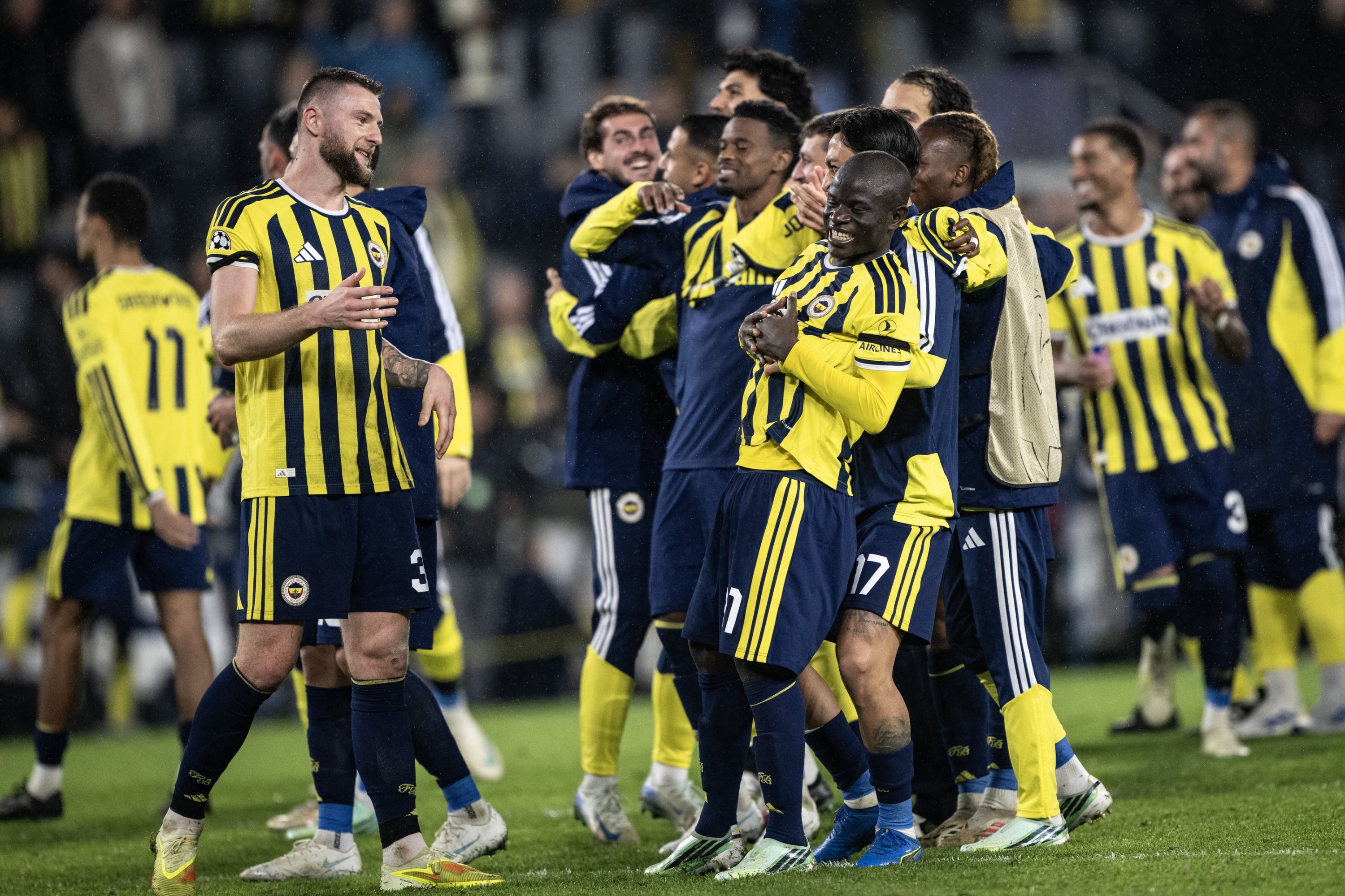
The Yellow Canaries arrive in England encouraged by their 3-2 victory over Liverpool, a result that ended an 18-year wait for a win in the Champions League’s main competition.
Fenerbahçe had previously drawn 1-1 with Roma and 2-2 with Slavia Prague before suffering a 6-0 defeat against Aston Villa.
Their comeback against Liverpool, in which they recovered from falling behind twice, has given them renewed confidence as they pursue a playoff place.
( Şebnem Coşkun – Anadolu Ajansı )
Fenerbahçe have also recorded a 5-0 away victory over Çorum and a 2-2 draw with Kocaelispor in their recent domestic fixtures.
However, their European away form remains a concern, with the Istanbul side winless in their last 12 Champions League away matches, drawing three and losing nine.
Shakhtar seek European revival
Shakhtar have endured an inconsistent Champions League campaign, beginning with a 1-1 draw against PSV Eindhoven before beating AEK Athens 3-1 at Stamford Bridge.
However, consecutive 1-0 defeats against Inter Milan and Sporting Lisbon have left Turan’s side searching for a response. They have also drawn their last two domestic matches, including a 0-0 encounter with Dynamo Kyiv and a 1-1 result against Livyi Bereh.
The Ukrainian champions have scored just four goals in four European matches, highlighting their difficulties in maintaining an attacking threat.
Their domestic campaign has been considerably stronger. Shakhtar lead the Ukrainian Premier League with 30 points from 13 matches, having won nine, drawn three and lost one. They have scored 23 goals and conceded six.
Because of the ongoing war in Ukraine, Shakhtar cannot host European matches at their traditional home ground and have been using Stamford Bridge as their temporary venue.
Fenerbahçe face familiar opposition
Wednesday’s match will be Fenerbahçe’s 13th against Ukrainian opposition. They have won three, drawn five and lost four of their previous 12 encounters.
Dynamo Kyiv have been their most frequent opponents, accounting for eight matches, in which Fenerbahçe recorded two victories, three draws and three defeats. They have also faced Shakhtar twice in competitive fixtures and Zorya Luhansk twice, winning once and drawing once against the latter.
Their previous competitive meetings with Shakhtar came in the 2015-16 Champions League qualifiers. After a goalless draw in Istanbul, Fenerbahçe lost the return leg 3-0 and were eliminated.
The clubs also met in a friendly in April 2022, when Fenerbahçe won 1-0 through an Enner Valencia goal in a match organized under the Football for Peace initiative to support civilians and children affected by the war.
Shakhtar, meanwhile, have an impressive record against Turkish clubs. They have won nine and drawn one of their 10 previous European encounters against Fenerbahçe, Beşiktaş, Konyaspor, Istanbul Başakşehir and Sivasspor, scoring 21 goals and conceding just three.
Turkish coaches make Champions League history
The meeting will also bring former teammates and close friends Belözoğlu and Turan face to face.
Turan is in his second season at Shakhtar after guiding the Ukrainian club to the league title and the Conference League semifinals in his debut campaign.
The two coaches previously faced each other during their playing careers in the Fenerbahçe-Galatasaray rivalry and later shared the pitch at Atlético Madrid in 2012. Both also represented Türkiye extensively at international level.
Their first managerial meeting came on May 25, 2025, when Turan’s Eyüpspor faced Belözoğlu’s Antalyaspor. Wednesday’s encounter will be their first in the Champions League and the first meeting between two Turkish coaches in the competition.
Greenwood leads Fenerbahçe attack
Mason Greenwood will be a key figure for Fenerbahçe after an impressive run of form. The English forward has scored four goals in his last three matches, finding the net in each of his previous two Champions League appearances.
He has registered seven goals in the Süper Lig and 11 across all competitions, making him the club’s leading scorer.
Fenerbahçe are also expected to rely on N’Golo Kanté and Matteo Guendouzi to provide control in midfield.
Both sides have injury concerns. Fenerbahçe will be without Nathan Aké and Marco Asensio, while Shakhtar are expected to miss Pedrinho and Eguinaldo. Kaua Elias and Marlon Santos remain doubts for the Ukrainian side.
Fenerbahçe return to Stamford Bridge
Wednesday’s fixture will mark Fenerbahçe’s first appearance at Stamford Bridge since April 8, 2008, when they lost 2-0 to Chelsea in the Champions League quarterfinal second leg and exited the competition.
The match will also be Fenerbahçe’s 311th in European competitions. They have recorded 123 victories, 69 draws and 118 defeats, scoring 423 goals and conceding 437.
In the Champions League proper, the Turkish side have played 44 matches, winning 12, drawing eight and losing 24, with 48 goals scored and 81 conceded.
Dusan Vlahovic scored twice and Leandro Trossard delivered a decisive late strike as Beşiktaş weathered a furious second-half comeback to defeat Konyaspor 4-2 Sunday in Week 12 of the Turkish Süper Lig.
In a wide-open, six-goal thriller at Konya Büyükşehir Stadium, the Black Eagles squandered a two-goal halftime cushion before roaring back in the closing stages to claim all three points on the road.
Beşiktaş seized control early, breaking the deadlock in the 10th minute. Following a pass from Wilfred Ndidi that sparked a scramble inside the penalty area, Vlahovic reacted quickest to the loose ball and fired a crisp finish into the back of the net.
Konyaspor nearly answered eight minutes later when Jean-Luc Dompe curled a dangerous free kick that narrowly cleared the crossbar.
The hosts threatened again in the 27th minute as Jackson Muleka connected with a pinpoint Dompe cross, only for Beşiktaş goalkeeper Alexander Nübel to gather his header comfortably.
Just as Konyaspor began building momentum, Beşiktaş doubled their advantage in the 34th minute. Ndidi turned creator once more, lofting a clever chipped pass over the backline into the box, where Vlahovic cushioned the ball with a smooth first touch before slotting home his second of the night to make it 2-0.
Refusing to fold before the break, Konyaspor carved out a lifeline in the 42nd minute. Gathering a pass from Deniz Türüç, Dompe unleashed a precision strike from outside the penalty area past Nübel to cut the deficit in half heading into halftime.
Konyaspor Rally
Energized by their late first-half breakthrough, Konyaspor emerged from the locker room on the front foot and leveled the score in the 62nd minute. Deniz Türüç whipped an inviting cross from the right flank and striker Enis Destan rose above his marker to power a header past Nübel for a 2-2 tie.
With the home crowd in full voice and momentum swinging toward the Anatolian side, Beşiktaş turned to their attacking depth to regain control. In the 79th minute, Ernest Poku laid the ball off cleanly to Trossard and the Belgian winger unleashed a thunderous drive from outside the penalty box that flew into the net to restore a 3-2 lead.
Konyaspor pushed numbers forward in search of a second equalizer, testing Nübel from long range through Mostafa Mohamed in the 85th minute, but the German shot-stopper stood firm.
Beşiktaş put the result beyond doubt in the third minute of stoppage time. Amir Murillo slipped a pass in from the right wing to Vaclav Cerny, who controlled the ball inside the penalty area and drilled a low finish into the bottom corner to seal the 4-2 triumph.
With the win, the Black Eagles remain third in the league table with 25 points from 12 outings, while Konyaspor remain dangerously close to the drop zone with just eight points.
Elsewhere, an early strike by Ozan Tufan saved Trabzonspor from losing points to the league’s bottom dwellers Eyüpspor.
Thanks to the 1-0 victory, the second-placed Black Sea Storm now continue their pursuit of the title with 28 points – just three off league leaders Galatasaray.
In Sunday’s other games, Izmir-based Göztepe secured a narrow 0-1 road win over Erzurumspor while Kasımpaşa claimed all three points at home with a 2-1 win over Kasımpaşa.


-

 Economy2 days ago
Türkiye, Russia to weigh new trade, energy cooperation deals
-

 Economy2 days ago
US expands Iran sanctions, targets ‘shadow-banking’ networks
-

 Economy2 days ago
Türkiye’s central bank says could opt for tax measures to support lira
-

 Politics2 days ago
20 detained in corruption probe into Turkish municipality
-

 Economy2 days ago
Home sales to foreigners in Türkiye hit 2026 high
-

 Sports2 days ago
Vlahovic, Trossard lift Beşiktaş past Konyaspor in 6-goal thriller
-

 Sports3 days ago
Greenwood saves Fener blushes as Galatasaray tighten grip on top
-

 Economy2 days ago
Alice Huang had contact with Chinese spy agency during Nvidia CEO affair: Report