
Economy
Home sales to foreigners in Türkiye hit 2026 high

Home sales to foreigners in Türkiye in October reached the highest monthly figure so far this year, according to the Turkish Statistical Institute (TurkStat).
The number of residential properties purchased by foreigners rose 0.9% last month from a year earlier to 2,259 units, the data showed. Foreigners accounted for 1.7 % of all home sales.
The October figure is the highest since November 2024 if December is excluded. December typically sees a rush of title deed transfers on housing projects.
Russian citizens bought the most homes in October, at 477. They were followed by Iranians with 193, Iraqis with 159, Ukrainians with 152 and Germans with 123.
Chinese citizens bought 112, Palestinians 85, Azerbaijanis 72, Afghans 56 and Kazakhs 51.
Bayram Tekçe, president of the Real Estate Service Exporters Association, known as GIGDER, said the increases the industry wants have not yet occurred.
“To be a good sign, we need increases of around 20%,” he said. “The liveliness we want isn’t there yet. For that, monthly sales need to be at least around 4,000.”
Tekçe said foreigners are generally turning to affordable and second-hand homes. Most homes are sold in Istanbul and Antalya, he said, and within Antalya, a Mediterranean resort province in southern Türkiye, the town of Alanya stands out.
Hakan Bucak, an international real estate expert, said interest in the Turkish property market has risen somewhat recently.
“Since the war in the Gulf, there has been an effort at recovery and movement in the market,” he said. He said interest among foreign investors in buying property in Türkiye has resumed, and more foreigners are visiting than in the past.
Bucak said that after Dubai faced security problems, roughly $120 billion of real estate investment-related currency inflows that had been heading to the emirate began spreading to other countries, and Türkiye has started to get a share.
He said improving the investment climate, more favorable economic and political conditions, and easier visa and residence procedures would boost foreign investors’ interest.
Last week, Türkiye said it would offer residence permits of three to five years to foreigners who invest at least $150,000 or $200,000 in the country. The investment must be kept in the relevant account, fund, or system for at least half the length of the permit.
For citizenship through investment, the existing requirements include at least $400,000 in real estate, or at least $500,000 in deposits, government debt securities, designated investment funds, or private pension investments.
Real estate must be held for three years, and the financial investments must be kept for at least three years. Other routes include at least $500,000 in fixed capital investment or creating 50 jobs.

Inflation has become the current that runs through almost all corners of the U.S. economy and there will be more on that front this week.
A key report on inflation will headline a holiday-shortened week, along with a look at the latest gauge of consumer confidence. High prices on everything from groceries to gasoline are changing consumer behavior and there is pressure on policymakers to act.
The data on prices arrives ahead of the next meeting of rate-setters at the Federal Reserve (Fed), the unofficial start of the holiday shopping season, as well as Thanksgiving, which may be uncomfortably expensive this year given rising prices for food.
Here’s a look at some of the key reports coming in the week ahead.
Business group The Conference Board on Tuesday will release its consumer confidence survey for November. Economists expect it to show that confidence remains low as inflation puts more pressure on budgets. Overall, consumer confidence is down sharply from two years ago.
The wide-ranging and unpredictable U.S. trade war with much of the world prompted price increases and made planning ahead difficult for both consumers and businesses. The U.S. war with Iran that started in 2026 fueled inflation throughout the year by curtailing the flow of oil through the Strait of Hormuz and raising energy prices. Higher prices for oil and gasoline boosted shipping costs for a wide range of goods.
The high cost of energy, goods and services has been notably referenced in write-in responses to the monthly consumer confidence surveys.
An inflation update is expected to provide more details on what most Americans know – things have become expensive. The U.S. will release the October personal consumption expenditures report, or PCE, on Wednesday. The data carries a lot of weight because it is the preferred measure of inflation used by the Federal Reserve, which is attempting to bring inflation down to its target rate of 2%.
Inflation has been rising at a sharp rate since the U.S. and Israel attacked Iran early this year, fueling a surge in energy prices. Higher gasoline prices have eaten up a bigger portion of household budgets. Higher costs for shipping and warehousing goods because of soaring diesel prices are leaching into the broader economy.
The Fed’s main tool in fighting inflation is raising interest rates and that makes something else more expensive – borrowing money. The central bank is expected to raise its benchmark interest rate at its next meeting to cool down the economy. It’s a tough balancing act because the Fed’s other mandate is maximum employment. Higher rates can make employers less likely to hire.
The U.S. Department of Commerce on Wednesday will release an update on the nation’s economic growth during the third quarter. The first read showed gross domestic product grew at 3.4% during the third quarter. GDP is a measure of the nation’s output of goods and services.
The economy has proven resilient despite inflation. Economic growth accelerated from the 2.2% increase in the second quarter. Much of that growth has been driven by an AI investment boom, but that is a sector that has been rattled in recent weeks. The tech-heavy Nasdaq tumbled more than 8% last week, with particularly sharp declines to end the week.
The latest weekly update on unemployment claims, which are a proxy for layoffs, will be released Wednesday in a scheduling shift ahead of the Thanksgiving holiday. Economists watch this weekly report closely because it can provide signals about where the job market is headed.
Claims have remained at historically low levels amid a broader jobs market that has remained a strong point in an economy pressured by rising inflation. Layoffs remain modest by historic standards.
The consolidated exports from Türkiye’s machinery sector, including those from free zones, reached a record of $23.7 billion (TL 1.2 trillion) in the January-October period, according to a report on Saturday citing data from the Machinery Exporters’ Association (MAIB).
Export volume dropped by 6.2% during the period, while the average export price per kilogram rose to $8.70. Despite the decline in volume, the increase in unit prices helped exports reach a record level in the first 10 months of the year, the report by Anadolu Agency (AA) indicated.
Germany was the leading destination for Türkiye’s machinery exports in the January-October period, with shipments rising 7.1% to $2.9 billion. The U.S. followed, with exports up 27% to $2 billion.
Internal combustion engines and components were the sector’s top export category, generating approximately $2.1 billion. The engines were followed by construction and mining machinery at $1.9 billion and pumps and compressors at nearly $1.4 billion.
Machinery Exporters’ Association Chair Sevda Kayhan Yılmaz, in her assessment, noted the European Union’s plan to expand the scope of its Carbon Border Adjustment Mechanism (CBAM) would place significant cost pressure on Türkiye’s machinery industry.
Yılmaz pointed out the European Parliament planned to increase the number of products covered by the regulation to 457. Türkiye, which exports approximately 8 billion euros ($8.77 billion) worth of products in the new categories to the EU annually, would be the second-most affected country after China, she added.
Also referring to the road map provided by the Green Deal Action Plan, which has been updated under the coordination of the Trade Ministry and the key expectations of the Turkish machinery industry regarding a “just transition” process, Yılmaz said they see it positively.
“We view the update to the Green Deal Action Plan, which was implemented to integrate our economy into green supply chains and to advance the Customs Union, as a critical step for our sector,” she said.
“The fact that the sectoral impacts of a national Emissions Trading System (ETS) will be analyzed under this new plan, and that international collaborations on carbon pricing will be developed, is significant for anticipating the cost pressures our exporters may face,” she added.
Furthermore, the opportunity to convey the industry’s perspectives, including regarding concrete technical bottlenecks on the ground, such as emission calculation methodologies and verification processes within the CBAM, to the EU further strengthens the exporters’ position, according to Yılmaz.
The European Union and Indonesia officially signed a comprehensive trade and investment protection agreement on Saturday in Brussels after 10 years of negotiations, the European Commission said in a statement.
The deal will likely come into effect in early 2027 as the European Parliament still needs to sign off and both the EU and Indonesia need to complete internal procedures.
The deal is part of the bloc’s efforts to diversify its trade and offset the impact of U.S. President Donald Trump’s tariffs.
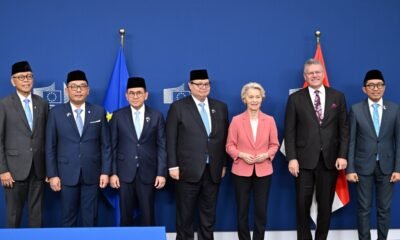
EU chief Ursula von der Leyen and Indonesian Minister of Economic Affairs Airlangga Hartarto attended a signing ceremony for a pact that Brussels said is projected to increase European Union exports to Southeast Asia’s largest economy by almost 40% within 15 years.
“This is one of the most ambitious deals the European Union has concluded in Asia,” said von der Leyen, the European Commission’s president.
EU trade chief Maros Sefcovic and Indonesia’s minister for trade Budi Santoso were also in attendance.
“Together, we represent a market of 730 million people,” von der Leyen added, thanking Indonesian President Prabowo Subianto, who she said will visit Brussels on Dec. 11.
Negotiations for the deal were concluded last year, almost a decade after they were launched, as part of a wider EU push to diversify trade as it faces challenges from the United States and China.
The Indonesia-European Union Comprehensive Economic Partnership Agreement (CEPA) and the ancillary Investment Protection Agreement (IPA) will open investment in strategic sectors such as electric vehicles, electronics, and pharmaceuticals, Brussels said.
The pact removes tariffs on more than 98% of European exports to the world’s fourth most populous country, including food, agricultural and industrial products and will help save over 600 million euros ($658 million) a year in customs duties, according to the EU.
Around 90% of Indonesian exports to the EU will be tariff-free, Airlangga said, noting that it is expected to benefit the country’s top shipments to the bloc, including palm oil, footwear and textiles.
“The benefits for our exporters are concrete and measurable,” he said, hailing a “new chapter” in economic relations with the EU.
Palm oil and deforestation had posed stumbling blocks to the negotiations, and the pact includes mechanisms for cooperation on regulatory and sustainability issues as well as a dedicated protocol on palm oil to allay some of the related concerns.
Brussels said the deal will boost economic growth, with the EU’s gross domestic product (GDP) projected to be 16 billion euros higher and Indonesia’s 27 billion euros higher by 2042 than they would be without the agreement.
The European Parliament has to greenlight the pact and Indonesian authorities complete the ratification process before it can provisionally come into effect.
Security risks in the Strait of Hormuz have prompted Iraq to seek alternative oil export routes, accelerating efforts to revive pipelines to Syria’s Mediterranean coast and Türkiye’s Ceyhan port.
Iraq faces significant economic risks from prolonged shipping disruptions in the Persian Gulf, as the country relies heavily on oil revenues to fund its public budget, pay wages and maintain foreign exchange reserves.
Iraqi Oil Minister Basim Mohammed Khudair said crude shipments had resumed through the Kirkuk-Ceyhan pipeline to Türkiye, with a target of gradually increasing flows to 500,000 barrels per day.
Baghdad also aims to expand its total oil export capacity from 3 million barrels per day in September to 5 million barrels per day through new pipelines.
Qatari energy firm UCC Holding is transporting 120,000 to 150,000 barrels of Iraqi crude per day to Syria under an agreement with Iraq’s State Oil Marketing Organization (SOMO).
Around 1.6 million barrels have been shipped since operations began Oct. 26.
UCC Holding plans to expand its tanker fleet from 6,000 to 10,000 vehicles, although trucking capacity and logistical constraints are expected to limit near-term growth along the overland route.
Iraq and Syria signed an agreement in Washington on July 17 to reconstruct the pipeline linking Haditha in western Iraq to Baniyas on Syria’s Mediterranean coast.
The project is expected to involve U.S. energy giant Chevron and have an initial capacity of 2 million barrels per day.
Iraqi Prime Minister Ali al-Zaidi and Syrian President Ahmed al-Sharaa discussed crude exports through the Baniyas pipeline during a meeting in Damascus on Oct. 28.
Beyond oil pipelines, Iraq is also advancing its Development Road project, a planned network of highways and railways connecting Basra’s Al-Faw Port to Türkiye.
The project aims to link the Persian Gulf with Europe and position Iraq as a regional freight transit hub.
Ali Naji, president of the Eco-Iraq Observatory, said shifting to alternative export corridors would strengthen Iraq’s export security and stabilize national revenues.
Naji said the proposed New Damascus Route would transport crude from Basra to the Haditha hub in western Iraq before branching toward Türkiye’s Ceyhan, Syria’s Baniyas and Jordan’s Aqaba ports.
He added that integrating pipelines with road, rail and trade corridors would capitalize on Iraq’s strategic location, deepen economic integration, strengthen resilience against geopolitical shocks and position the country as a regional energy and trade hub.
Iraqi energy expert Ahmed Sabah said diversifying export routes represented a strategic shift and a matter of national sovereignty, helping Iraq reduce its dependence on oil shipments through the Persian Gulf.
However, he warned that the plan would raise export costs due to pipeline construction, operating expenses and transit fees.
Sabah added that the alternative routes could increase Iraq’s distance from key South and East Asian markets, where many emerging economies are concentrated, while also requiring Baghdad to commit to minimum export volumes.
Türkiye’s banking regulator on Friday said it’s narrowing a mortgage restriction so that the 75% cut in the maximum loan-to-value ratio applies only to people who own at least two homes.
The Banking Regulation and Supervision Agency (BDDK), meanwhile, also set new credit card minimum payment rates that rise with a card’s limit.
The agency’s board made both decisions at its meeting on Thursday, its statement said.
Under a decision dated Aug. 24, 2023, the maximum loan amount relative to a home’s value was cut by 75% for borrowers who, along with their spouse or children under 18, owned at least one home.
The agency said the cut previously reduced the maximum ratio for such a borrower to 22.5% from 90%.
Under the new decision, the same 75% reduction applies when the borrower, a spouse, or children under 18 own at least two homes. It covers loans used to buy a home and loans secured by a home, other than vehicle loans.
As a result, borrowers who own a single home, in their own name or their spouse’s or children’s, are no longer subject to the 75% restriction as long as they have no second home.
The agency, meanwhile, readjusted minimum payment amounts for credit cards.
The payments will depend on the card’s limit:
TL 100,000 (about $1,977) or less: 20% of the period’s debt Above TL 100,000 and up to TL 200,000: 30% Above TL 200,000: 40%
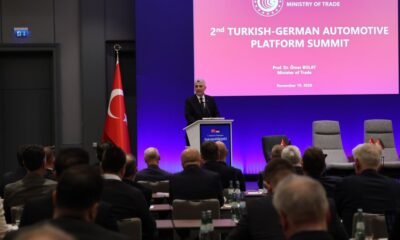
Türkiye’s exclusion from “Made in Europe” rules would harm rather than protect the European automotive industry, Trade Minister Ömer Bolat said Thursday, as Turkish companies battle for access to future EU incentives.
The European Union is developing a package of industrial measures designed to boost competitiveness and shield local industry from low-cost imports, including Chinese-made cars that are gaining in popularity as the region shifts to EVs.
Türkiye, the EU’s third-largest vehicle export market and an important production location for automakers such as Ford, risks being left out. France and Germany are pursuing a “Made in Europe” definition that includes the 27 EU member states and extends special status to Britain.
“A scenario that leaves Türkiye outside the “Made in EU” framework would mean fewer new investments in Türkiye, a shrinking market for European suppliers and vehicle makers, and the gradual erosion of the integrated value chains developed over the past three decades,” Bolat said at an industry event in Berlin.
“Europeans have invested $25 billion in Türkiye’s automotive industry. They account for about 75% of investment, production, exports and imports,” he said.
Bolat said the European Commission’s March 4 draft included customs union partners within the scope of the “Made in EU” proposal.
However, discussions are continuing over possible restrictions on imported vehicles concerning electric car sales, public procurement, fleet incentives and loan programs for lower-emission vehicles, he added.
Bolat urged the EU to recognize Türkiye’s “unique position” as a trade partner, including its long-standing customs union with the bloc.
Zeki Şafak Ozan, a board member for Türkiye’s OIB automotive exporters’ association, said the goal was to conclude EU talks by the end of the year, but this seemed unrealistic, pointing instead to early next year.
“We knock on almost every door that we can,” Yakup Birinci, head of Turkish auto supplier association TAYSAD, told Reuters.
Bolat said the automotive sector was the EU’s top priority as the bloc seeks to raise the industry’s share of its economy back to 20%.
He also cited the EU’s carbon border adjustment mechanism and plans to halve steel import quotas among measures raising concerns for Turkish industry.
Bolat urged the bloc to fully honor its customs union with Türkiye, which took effect in 1996, as well as a separate free trade agreement covering iron and steel.
Turkish officials have held nearly 100 meetings and visits in Brussels and EU member states over the past year, Bolat said.
He added that he had traveled to Brussels five times this year, including three visits in the past four months, and met with Ford of Europe representatives as part of efforts to secure support from European manufacturers with investments in Türkiye.
On Tuesday, Jim Baumbick, president of Ford in Europe, said if the EU excludes Türkiye, Britain and Morocco from the “Made in Europe” model for car manufacturing, it will damage its own auto industry instead of strengthening it against Chinese competition.
Bolat said he would present Türkiye’s position at the automotive summit and discuss the issue with German Economy and Energy Minister Katherina Reiche.
Germany is Türkiye’s largest export market and third-largest source of imports after China and Russia, Bolat said.
Bilateral trade reached $52 billion last year, with Turkish exports to Germany totaling $22 billion and imports from Germany amounting to $30 billion.
More than 8,000 German companies operate in Türkiye, with investments totaling approximately $26 billion across sectors including manufacturing, energy and finance.
Turkish companies have invested more than $3 billion in Germany, which an increasing number use as a base to access other European markets, he added.


-

 Economy3 days ago
Türkiye tightens mortgage rules for 2nd-home owners
-

 Sports2 days ago
Galatasaray break home unbeaten record with 2-1 Samsunspor win
-
 Economy1 day ago
EU, Indonesia sign landmark trade deal after 10 years of talks
-
 Politics3 days ago
9 mayors join AK Party as Erdoğan vows stronger public engagement
-

 Politics3 days ago
Türkiye rules out automatic troop deployment under Qatar defense pact
-

 Politics3 days ago
Ankara backs stable, unified Syria, YPG integration: FM Fidan
-

 Sports3 days ago
Verstappen surges into F1’s runner-up spot ahead of Las Vegas GP
-
 Economy3 days ago
‘Made in Europe’ plan sans Türkiye would harm EU auto industry: Ankara