
Economy
Alice Huang had contact with Chinese spy agency during Nvidia CEO affair: Report

Alice Huang, the Chinese woman at the heart of Nvidia’s recent scandal, kept in contact with an official from China’s top spy agency for more than a year during her affair with former CEO Jensen Huang, a report said Sunday.
Alice Huang was in touch with an officer from China’s Ministry of State Security from the spring of 2025 until the fall of this year, the New York Times said, citing people with knowledge of intelligence reports that describe the encounters.
A spokesperson for Jensen Huang declined to comment. Spokespeople for Nvidia and the Chinese embassy in Washington did not immediately respond to requests for comment.
Alice Huang previously led Singapore-based Megaspeed International, an important Nvidia customer that once accounted for billions in Nvidia chip sales.
U.S. authorities have been investigating Megaspeed since 2024 over concerns it smuggled Nvidia’s advanced AI chips to China.
Sunday’s report comes as U.S. officials have cast doubt on initial suggestions that Alice Huang was a spy, as the newspaper reported last month.
That Oct. 29 article touched off a scandal that led to Jensen Huang’s resignation two weeks later and a steep drop in Nvidia’s stock price.
Trump administration officials have repeatedly said they have not concluded that Alice Huang spied for China.
U.S. Attorney General Todd Blanche said this month the Justice Department had not yet reached a conclusion on whether she was a Chinese spy.
U.S. Director of National Intelligence Jay Clayton repeated that on Sunday.
“Attorney General Blanche has been very clear that this is a matter under investigation, both Ms Huang and her company, for various matters,” Clayton told CNN’s “State of the Union” program. “And I’m going to let that investigation play out.”
The scandal has also prompted a deeper look at Washington’s approach to export controls on China, with lawmakers from both parties questioning whether the Trump administration has been too lax on enforcement and regulation of the prized semiconductors.
The affair between the two itself is of less interest, Senator John Kennedy, a Louisiana Republican, told NBC’s “Meet the Press.”
“I hope he had a good time,” Kennedy said on Sunday. “It was the most expensive sex since Helen of Troy.”

Ford Europe President Jim Baumbick criticized the exclusion of vehicles made in Türkiye under the EU’s proposed “Made in Europe” rules, saying the move would penalize Ford for investments it made under the rules in place at the time.
Made in Europe is part of the EU’s planned Industrial Accelerator Act and is aimed primarily at forcing Chinese automakers to produce cars within the bloc using local suppliers in order to qualify for key subsidies and bid for government procurement contracts.
But so far, the plan excludes countries including Türkiye that are integral parts of Europe’s automotive supply chain.
Türkiye is the EU’s third-largest vehicle export market and an important production location for automakers such as Ford.
In an interview published Monday by German business daily Handelsblatt, Baumbick said the proposal would make Ford Transit, which is Europe’s top-selling 1-ton van, assembled in Türkiye ineligible for vehicle purchase incentives and public contracts.
Under the planned rules, those benefits would be reserved for vehicles produced entirely in the EU, the newspaper reported.
Chinese automakers are real rivals
Baumbick said excluding vehicles made in Türkiye would weaken automakers operating in Europe. He urged EU policymakers to focus on helping those manufacturers compete with their main rivals in China.
He said half of the parts used in the Transit are produced in Europe and that the vans were developed and tested in Germany, the U.K. and Belgium in line with EU rules at the time.
Ford invested heavily in production in Türkiye, a major EU trading partner, under those rules, Baumbick said. He called on the bloc to protect existing investments.
Moving production would raise costs
Asked whether Ford could move Transit production to its plant in Cologne, Germany, Baumbick said the investment in Türkiye was only three years old and the company had yet to recoup it.
Moving assembly now would cut the vehicle’s product cycle short and could reduce manufacturing capacity, he said. Relocating production would add costs without improving the van or making Ford more competitive, he added.
Baumbick said automakers make investment decisions over horizons of 10, 20 or 30 years. He urged policymakers to use incentives to guide future investment and give companies enough certainty to plan production over those periods.
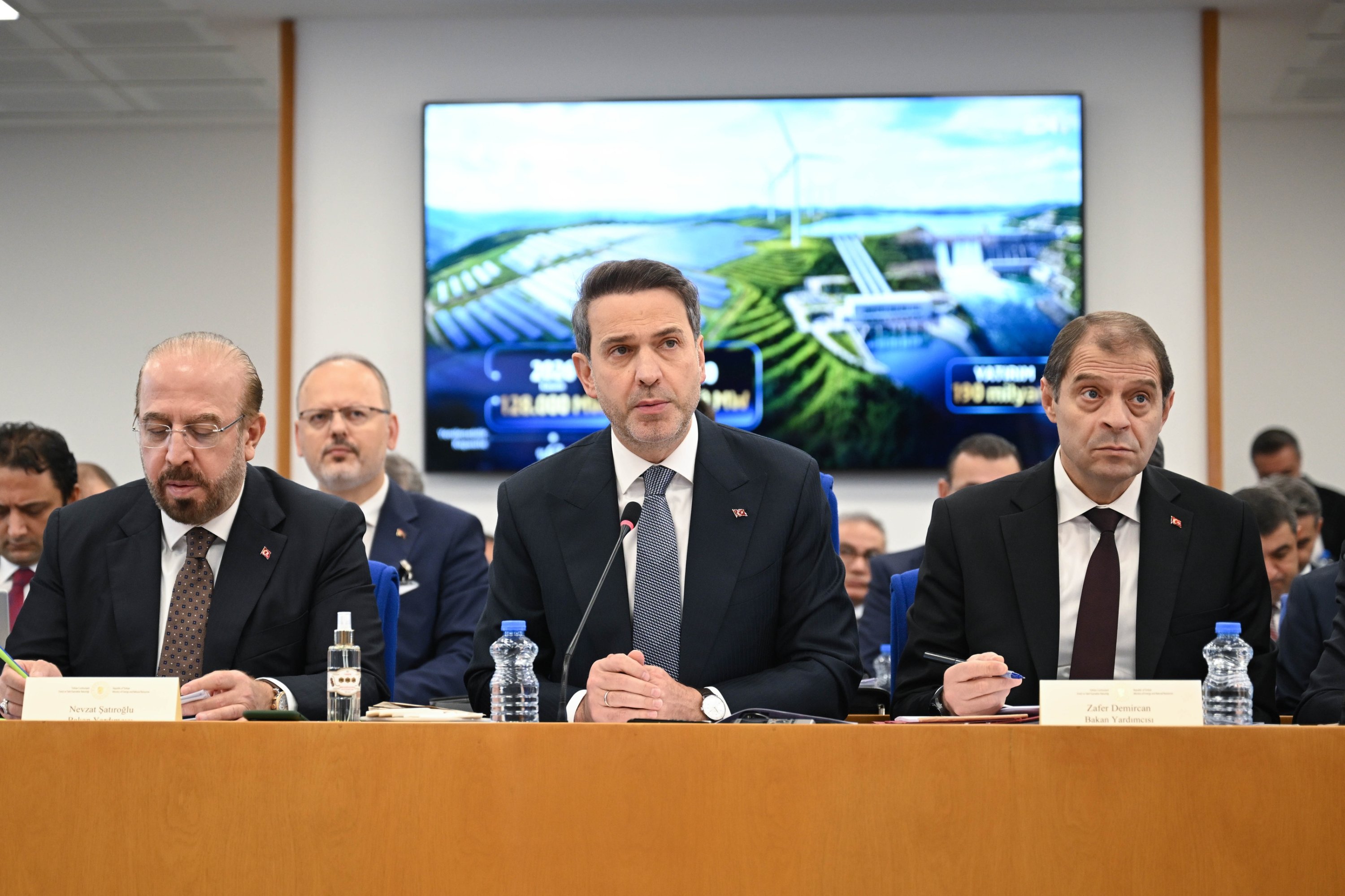
Türkiye plans to raise its installed electricity capacity from 128 gigawatts to 281 gigawatts by 2040, Energy and Natural Resources Minister Alparslan Bayraktar said Monday.
Bayraktar said the plan is part of a “National Energy 2040” program, unveiled earlier this month and which targets $500 billion in public and private investment over the next 14 years.
He was speaking before the Parliament’s Planning and Budget Committee. He said the government shapes energy policy around future demand and underscored that the national program puts electrification at the center of Türkiye’s new energy architecture.
Bayraktar said the government will shift demand from fossil fuels to electricity and raise the electrification rate to 36%. By sector, he said, electricity’s share will rise from 1% to 24% in transportation, from 30% to 33% in industry, from 21% to 30% in residential and from 45% to 65% in services and agriculture.
He said electricity demand is expected to rise 86% to 680 billion kilowatt-hours. Meeting it would mean bringing online 1.6 times the capacity added over the past 24 years in just the next 14, he said. The investment needed is about $190 billion, and 95% of the additional capacity would come from zero- or low-emission sources.
Solar, wind and domestic manufacturing
Bayraktar said the plan is to quadruple solar and wind capacity from about 45 gigawatts to 175 gigawatts, with $100 billion of investment. Renewables’ share of total installed capacity would rise from 63% to 77%.
Under the auction model for renewable energy zones, known as YEKA, the government has allocated 6,085 megawatts since 2024 and received $752 million in contribution fees, he said. It will hold auctions of at least 2,000 megawatts every year. An offshore wind auction is planned for the first half of 2027, and the goal is 6 gigawatts of offshore wind by 2040.
He said the government will also encourage on-site generation, including automatic grid connection for rooftop and other plants of up to 1 megawatt. Domestic content has reached 91% for solar panels and 65% for wind turbines, he said.
Grids, storage and electric vehicles
Bayraktar said the plan includes $36 billion for transmission. High-voltage lines would grow from 77,000 kilometers (about 47,800 miles) to 112,000 kilometers, and transformer capacity from 241,000 to 316,000 megavolt-amperes. He said 10,000 kilometers of high-voltage direct current lines, a first for Türkiye, would be added.
Investment in electricity distribution has cut losses from 21% to 8%, he said, worth about $3 billion a year to the economy. Spending on distribution investment and maintenance was TL 783 billion in 2021-2025 at today’s prices. It has been raised by more than 50% to almost TL 1.26 trillion for 2026-2030, he said. The government will invest $80 billion in the distribution network by 2040, including smart meters.
He said $28 billion will go to flexibility, through battery storage, pumped-storage hydropower, interconnection lines with neighbors and demand management. The government expects 20 million electric vehicles on the road in 2040 and aims for at least 1.5 million charging points.
Türkiye aims to quadruple its power interconnection capacity with neighbors to 15 gigawatts, he said. That includes a “Green Energy Corridor” project with Georgia, Azerbaijan and Bulgaria, which Bayraktar called “the TANAP of electricity,” a reference to the Trans-Anatolian Natural Gas Pipeline. He said a 2,000-megawatt solar project with Saudi Arabia will be built at the lowest electricity purchase price in Türkiye to date.
Nuclear
Bayraktar said Türkiye cannot meet global climate goals or rapidly rising electricity demand without nuclear power.
He said construction of all four reactors at the Akkuyu plant, Türkiye’s first nuclear power station, is continuing at the same time.
Once commissioning tests are completed, he said, the first unit will go online. He said domestic manufacturers and service providers have contributed $12 billion to the project, putting local content at 55%.
The government wants nuclear plants in Sinop, a Black Sea province in northern Türkiye, and in Thrace, the European part of the country, to reach 10 gigawatts of nuclear capacity by 2040. It wants at least 5 gigawatts of small modular reactors by 2050, he said.
Energy efficiency
Energy intensity has fallen 33% since 2002, and 52 % in industry, Bayraktar said, saving about $25 billion. He said the government invested $4.3 billion in 2025 under its second national efficiency plan, saving 1.5 million tons of oil equivalent and avoiding 4.7 million tons of carbon dioxide equivalent.
The 2040 plan targets a further 40% cut in energy intensity over 2025-2040, and $240 billion in total savings from efficiency, technology and fuel switching.
Oil, gas, exploration
Natural gas consumption was 59 billion cubic meters last year and crude oil needs about 1 million barrels a day.
Bayraktar said they are expected to reach 77 billion cubic meters and 1.2 million barrels a day by 2040 without the plan. The program aims to cut them to 57 billion cubic meters and 718,000 barrels a day.
He said production at the Sakarya Gas Field in the Black Sea will double with the arrival of Osman Gazi, Türkiye’s first floating production platform. The target is to supply 8 million households from the field in 2027 and 17 million in 2028.
Bayraktar said Türkiye also aims to produce 1.5 billion cubic meters of renewable gas a year from organic waste once legislation is passed. It plans to raise liquefied natural gas regasification capacity from 161 million to over 200 million cubic meters a day, and underground gas storage from 6.8 billion to 17.6 billion cubic meters.
He said Ceyhan, a Mediterranean port, would become an oil hub with 50 million barrels of storage plus refining and petrochemical investment.
Bayraktar said natural gas lines now stretch about 245,000 kilometers, and all districts should be connected by the end of 2028. Oil output at Gabar, a field in southeastern Türkiye, has topped 84,000 barrels a day, he said, and new exploration found 135 million barrels of reserves at the Gaziler and Çardaklı fields. He said this will lift daily domestic output above 160,000 barrels in 2027 and cut the current account deficit by $5.6 billion a year.
The state oil company Turkish Petroleum Corporation (TPAO) aims to reach 1.7 million barrels a day of oil and gas by 2040, he said. Bayraktar also recalled that Türkiye now has the world’s fourth-largest energy fleet by number of ships. The Çağrı Bey is drilling in Somali waters, and the Oruç Reis has begun seismic surveys off Pakistan.
Bayraktar said Türkiye has a stake in an oil field at Kirkuk, Iraq, a 33% share in exploration in Bulgaria’s Black Sea waters and rights to two fields in Hungary. He said it has signed exploration agreements with Libya, Syria and Oman, and aims to build a gas pipeline to the Turkish Republic of Northern Cyprus (TRNC). An August agreement extended the Iraq-Türkiye crude pipeline by one year, he said.
Mining
Bayraktar said only one in 100 exploration licenses yields an economically viable reserve. He said the government proposes raising the investment budget of the General Directorate of Mineral Research and Exploration, a state agency known as MTA, by about 140% to TL 13 billion, a record.
He said the mining sector has grown from $2 billion in 2002 to $14 billion in 2025. Mining exports were $6.2 billion in 2025 and reached $6.1 billion in the first 10 months of 2026. He said they will top $7 billion this year.
He said Türkiye is developing technology to separate and refine rare earth elements at Beylikova, in Eskişehir province in western Türkiye, and aims to produce 10,000 tons of rare earth oxide a year by 2030, which would make it the world’s fifth-largest producer.
Boron exports passed $1.2 billion in 2025, and the target for 2026 is a record $1.6 billion. He said state miner Eti Maden will soon reach 600 tons a year of lithium carbonate capacity from boron waste.
Türkiye’s gold output rose from 1.4 tons in 2001 to about 42 tons now, he said, and the goal is 100 tons a year to close a $13 billion foreign trade deficit in gold. He said first gold production in Niger will begin in December, and the government is expanding mining cooperation with Uzbekistan, Pakistan, Syria, Kazakhstan, Azerbaijan, Kyrgyzstan and Sudan.
Subsidies
Bayraktar said the sliding-scale fuel tax system has provided about TL 400 billion in support since it was launched in March to cushion consumers from soaring oil prices during the Iran war.
The mechanism allowed reductions in the special consumption tax (ÖTV) to offset increases in global oil prices and limit their impact on domestic fuel prices and inflation.
The government also provided TL 655 billion in electricity and natural gas support to citizens last year and expects it to top TL 1 trillion in 2026, said the minister. The state now covers about 55% of the electricity and 64% of the natural gas that households use, he added.
Bayraktar said the National Energy 2040 program aims to raise domestic energy production to 92%, renewable installed capacity to 77% and electrification to 36%. It targets electricity use of 7,500 kilowatt-hours per person per year and a 40% cut in emissions. He said the investments will create 108,000 permanent direct jobs in the energy sector alone.
French President Emmanuel Macron is weighing a “golden rule” on budget spending to rein in public finances just months before elections to replace him, according to an interview published Monday.
The move would require changing the French constitution, and Macron could consult with both houses of parliament as soon as January if he decides to pursue the measure, he told Le Figaro newspaper.
France’s deficit – the annual shortfall of revenue to spending – will be 5.4% of GDP this year, the government has said, above the EU limit of 3%.
International investors are also increasingly concerned about French public debt that stands at around 120% of GDP, one of the highest levels in the eurozone and well above the EU cap of 60%.
“If there is still volatility between now and January, considering a golden rule like the one from 2011 could be an idea worth exploring,” Macron told Le Figaro.
The 2011 initiative would have set benchmarks over several years for a gradual return to balanced budgets, and was approved by both the Senate and the National Assembly.
But Nicolas Sarkozy, the right-wing president at the time, did not call a joint session of both houses of parliament to ratify the law in the constitution, which requires a majority of three-fifths for approval.
Macron’s government is struggling to pass next year’s budget as the country faces fierce protests demanding higher spending on education and other public services.
Macron is also closely monitoring the evolution of the interest rates at which France borrows, which have surged in recent weeks on growing doubts that the country will reduce its debt load, Le Figaro added.
The budget rule – which would likely receive backing from the center, right and far right – would allow Macron to pass a flagship reform as he leaves office.
But the far-right’s presidential candidate Marine Le Pen, who is leading in opinion polls for next year’s vote, has indicated she might want a slightly different version of the measure, which could drag out its adoption.
Separately, Finance Minister Roland Lescure also confirmed that Macron was considering a constitutional reform that would impose stricter controls on public spending.
Lescure also said the French government’s 2027 economic growth forecast of 1% for 2027 is at risk of being downgraded, but the goal of limiting the public deficit to 5% of GDP must be maintained.
“We are currently updating our figures but it (the forecast) is at risk and the risk is that of a downgrade,” Lescure told Franceinfo television, adding the new data will be disclosed in January.
“The objective of 5% public deficit (for 2027) must be kept regardless of uncertainties over economic growth. It is non-negotiable.”
Home sales to foreigners in Türkiye in October reached the highest monthly figure so far this year, according to the Turkish Statistical Institute (TurkStat).
The number of residential properties purchased by foreigners rose 0.9% last month from a year earlier to 2,259 units, the data showed. Foreigners accounted for 1.7 % of all home sales.
The October figure is the highest since November 2024 if December is excluded. December typically sees a rush of title deed transfers on housing projects.
Russian citizens bought the most homes in October, at 477. They were followed by Iranians with 193, Iraqis with 159, Ukrainians with 152 and Germans with 123.
Chinese citizens bought 112, Palestinians 85, Azerbaijanis 72, Afghans 56 and Kazakhs 51.
Bayram Tekçe, president of the Real Estate Service Exporters Association, known as GIGDER, said the increases the industry wants have not yet occurred.
“To be a good sign, we need increases of around 20%,” he said. “The liveliness we want isn’t there yet. For that, monthly sales need to be at least around 4,000.”
Tekçe said foreigners are generally turning to affordable and second-hand homes. Most homes are sold in Istanbul and Antalya, he said, and within Antalya, a Mediterranean resort province in southern Türkiye, the town of Alanya stands out.
Hakan Bucak, an international real estate expert, said interest in the Turkish property market has risen somewhat recently.
“Since the war in the Gulf, there has been an effort at recovery and movement in the market,” he said. He said interest among foreign investors in buying property in Türkiye has resumed, and more foreigners are visiting than in the past.
Bucak said that after Dubai faced security problems, roughly $120 billion of real estate investment-related currency inflows that had been heading to the emirate began spreading to other countries, and Türkiye has started to get a share.
He said improving the investment climate, more favorable economic and political conditions, and easier visa and residence procedures would boost foreign investors’ interest.
Last week, Türkiye said it would offer residence permits of three to five years to foreigners who invest at least $150,000 or $200,000 in the country. The investment must be kept in the relevant account, fund, or system for at least half the length of the permit.
For citizenship through investment, the existing requirements include at least $400,000 in real estate, or at least $500,000 in deposits, government debt securities, designated investment funds, or private pension investments.
Real estate must be held for three years, and the financial investments must be kept for at least three years. Other routes include at least $500,000 in fixed capital investment or creating 50 jobs.
Inflation has become the current that runs through almost all corners of the U.S. economy and there will be more on that front this week.
A key report on inflation will headline a holiday-shortened week, along with a look at the latest gauge of consumer confidence. High prices on everything from groceries to gasoline are changing consumer behavior and there is pressure on policymakers to act.
The data on prices arrives ahead of the next meeting of rate-setters at the Federal Reserve (Fed), the unofficial start of the holiday shopping season, as well as Thanksgiving, which may be uncomfortably expensive this year given rising prices for food.
Here’s a look at some of the key reports coming in the week ahead.
Business group The Conference Board on Tuesday will release its consumer confidence survey for November. Economists expect it to show that confidence remains low as inflation puts more pressure on budgets. Overall, consumer confidence is down sharply from two years ago.
The wide-ranging and unpredictable U.S. trade war with much of the world prompted price increases and made planning ahead difficult for both consumers and businesses. The U.S. war with Iran that started in 2026 fueled inflation throughout the year by curtailing the flow of oil through the Strait of Hormuz and raising energy prices. Higher prices for oil and gasoline boosted shipping costs for a wide range of goods.
The high cost of energy, goods and services has been notably referenced in write-in responses to the monthly consumer confidence surveys.
An inflation update is expected to provide more details on what most Americans know – things have become expensive. The U.S. will release the October personal consumption expenditures report, or PCE, on Wednesday. The data carries a lot of weight because it is the preferred measure of inflation used by the Federal Reserve, which is attempting to bring inflation down to its target rate of 2%.
Inflation has been rising at a sharp rate since the U.S. and Israel attacked Iran early this year, fueling a surge in energy prices. Higher gasoline prices have eaten up a bigger portion of household budgets. Higher costs for shipping and warehousing goods because of soaring diesel prices are leaching into the broader economy.
The Fed’s main tool in fighting inflation is raising interest rates and that makes something else more expensive – borrowing money. The central bank is expected to raise its benchmark interest rate at its next meeting to cool down the economy. It’s a tough balancing act because the Fed’s other mandate is maximum employment. Higher rates can make employers less likely to hire.
The U.S. Department of Commerce on Wednesday will release an update on the nation’s economic growth during the third quarter. The first read showed gross domestic product grew at 3.4% during the third quarter. GDP is a measure of the nation’s output of goods and services.
The economy has proven resilient despite inflation. Economic growth accelerated from the 2.2% increase in the second quarter. Much of that growth has been driven by an AI investment boom, but that is a sector that has been rattled in recent weeks. The tech-heavy Nasdaq tumbled more than 8% last week, with particularly sharp declines to end the week.
The latest weekly update on unemployment claims, which are a proxy for layoffs, will be released Wednesday in a scheduling shift ahead of the Thanksgiving holiday. Economists watch this weekly report closely because it can provide signals about where the job market is headed.
Claims have remained at historically low levels amid a broader jobs market that has remained a strong point in an economy pressured by rising inflation. Layoffs remain modest by historic standards.
The consolidated exports from Türkiye’s machinery sector, including those from free zones, reached a record of $23.7 billion (TL 1.2 trillion) in the January-October period, according to a report on Saturday citing data from the Machinery Exporters’ Association (MAIB).
Export volume dropped by 6.2% during the period, while the average export price per kilogram rose to $8.70. Despite the decline in volume, the increase in unit prices helped exports reach a record level in the first 10 months of the year, the report by Anadolu Agency (AA) indicated.
Germany was the leading destination for Türkiye’s machinery exports in the January-October period, with shipments rising 7.1% to $2.9 billion. The U.S. followed, with exports up 27% to $2 billion.
Internal combustion engines and components were the sector’s top export category, generating approximately $2.1 billion. The engines were followed by construction and mining machinery at $1.9 billion and pumps and compressors at nearly $1.4 billion.
Machinery Exporters’ Association Chair Sevda Kayhan Yılmaz, in her assessment, noted the European Union’s plan to expand the scope of its Carbon Border Adjustment Mechanism (CBAM) would place significant cost pressure on Türkiye’s machinery industry.
Yılmaz pointed out the European Parliament planned to increase the number of products covered by the regulation to 457. Türkiye, which exports approximately 8 billion euros ($8.77 billion) worth of products in the new categories to the EU annually, would be the second-most affected country after China, she added.
Also referring to the road map provided by the Green Deal Action Plan, which has been updated under the coordination of the Trade Ministry and the key expectations of the Turkish machinery industry regarding a “just transition” process, Yılmaz said they see it positively.
“We view the update to the Green Deal Action Plan, which was implemented to integrate our economy into green supply chains and to advance the Customs Union, as a critical step for our sector,” she said.
“The fact that the sectoral impacts of a national Emissions Trading System (ETS) will be analyzed under this new plan, and that international collaborations on carbon pricing will be developed, is significant for anticipating the cost pressures our exporters may face,” she added.
Furthermore, the opportunity to convey the industry’s perspectives, including regarding concrete technical bottlenecks on the ground, such as emission calculation methodologies and verification processes within the CBAM, to the EU further strengthens the exporters’ position, according to Yılmaz.


-

 Economy1 day ago
EU, Indonesia sign landmark trade deal after 10 years of talks
-

 Sports2 days ago
Galatasaray break home unbeaten record with 2-1 Samsunspor win
-

 Sports2 days ago
Verstappen claims maiden Las Vegas GP pole after Antonelli penalty
-

 Politics3 days ago
Ankara backs stable, unified Syria, YPG integration: FM Fidan
-
 Economy3 days ago
Iraq after alternative oil routes via Syria, Türkiye amid Hormuz risks
-

 Sports2 days ago
Kane faces months out with ankle injury as Bayern draw with Cologne
-

 Politics1 day ago
Türkiye welcomes landmark ICJ ruling on Myanmar’s Rohingya genocide
-

 Economy1 day ago
Turkish machinery exports hit record $23.7B in first 10 months