
Economy
France’s Macron mulls ‘golden rule’ to curb spending

French President Emmanuel Macron is weighing a “golden rule” on budget spending to rein in public finances just months before elections to replace him, according to an interview published Monday.
The move would require changing the French constitution, and Macron could consult with both houses of parliament as soon as January if he decides to pursue the measure, he told Le Figaro newspaper.
France’s deficit – the annual shortfall of revenue to spending – will be 5.4% of GDP this year, the government has said, above the EU limit of 3%.
International investors are also increasingly concerned about French public debt that stands at around 120% of GDP, one of the highest levels in the eurozone and well above the EU cap of 60%.
“If there is still volatility between now and January, considering a golden rule like the one from 2011 could be an idea worth exploring,” Macron told Le Figaro.
The 2011 initiative would have set benchmarks over several years for a gradual return to balanced budgets, and was approved by both the Senate and the National Assembly.
But Nicolas Sarkozy, the right-wing president at the time, did not call a joint session of both houses of parliament to ratify the law in the constitution, which requires a majority of three-fifths for approval.
Macron’s government is struggling to pass next year’s budget as the country faces fierce protests demanding higher spending on education and other public services.
Macron is also closely monitoring the evolution of the interest rates at which France borrows, which have surged in recent weeks on growing doubts that the country will reduce its debt load, Le Figaro added.
The budget rule – which would likely receive backing from the center, right and far right – would allow Macron to pass a flagship reform as he leaves office.
But the far-right’s presidential candidate Marine Le Pen, who is leading in opinion polls for next year’s vote, has indicated she might want a slightly different version of the measure, which could drag out its adoption.
Separately, Finance Minister Roland Lescure also confirmed that Macron was considering a constitutional reform that would impose stricter controls on public spending.
Lescure also said the French government’s 2027 economic growth forecast of 1% for 2027 is at risk of being downgraded, but the goal of limiting the public deficit to 5% of GDP must be maintained.
“We are currently updating our figures but it (the forecast) is at risk and the risk is that of a downgrade,” Lescure told Franceinfo television, adding the new data will be disclosed in January.
“The objective of 5% public deficit (for 2027) must be kept regardless of uncertainties over economic growth. It is non-negotiable.”

Iraq’s prime minister moved on Tuesday to bring border crossings and oilfields in areas controlled by the Kurdistan Regional Government (KRG) under federal authority, in an effort to curb oil smuggling.
Ali al-Zaidi’s move could potentially deepen tensions between Baghdad and the semi-autonomous entity controlling Iraq’s north after he sought to rein in an influential pro-Iranian militia.
The decision comes as al-Zaidi cracks down on Tehran’s most powerful militia ally in Iraq, Kataib Hezbollah, and senior officials accused of running a years-long smuggling ring that generated hundreds of millions of dollars from stolen oil.
The heavily armed Kataib, one of dozens of pro-Iranian armed groups with political sway accused of operating with impunity in Iraq, rejected the findings of an official high-level investigation into the smuggling network.
The prime minister of the KRG, Masrour Barzani, rejected the Baghdad government’s decisions to centralize control over oil and border crossings, saying they “are in no way acceptable.”
Zaidi’s order, which was announced by his office on Tuesday, covers oilfields in the Diyala, Kirkuk, Salahuddin and Nineveh provinces and follows a probe into smuggling at the state-run North Oil Company, which manages the northern oil and gas fields.
Khormala, the main oilfield under KRG security control, appeared to be covered by the order, three people familiar with the matter said. Given past tensions with Baghdad, one of them said KRG authorities would likely resist any move by the federal oil ministry to take over management of the field.
“The Kurdistan region may use the absence of an oil and gas law as a pretext for refusing to hand over the oil wells. This would lead to a political and constitutional debate over how to implement the decisions,” said Baghdad-based political analyst Hamza Mustafa.
“In taking these decisions, he has moved away from political deal-making and favoritism. He is unconcerned about securing the support of those political forces for another term. That is why he is taking on all the corruption networks.”
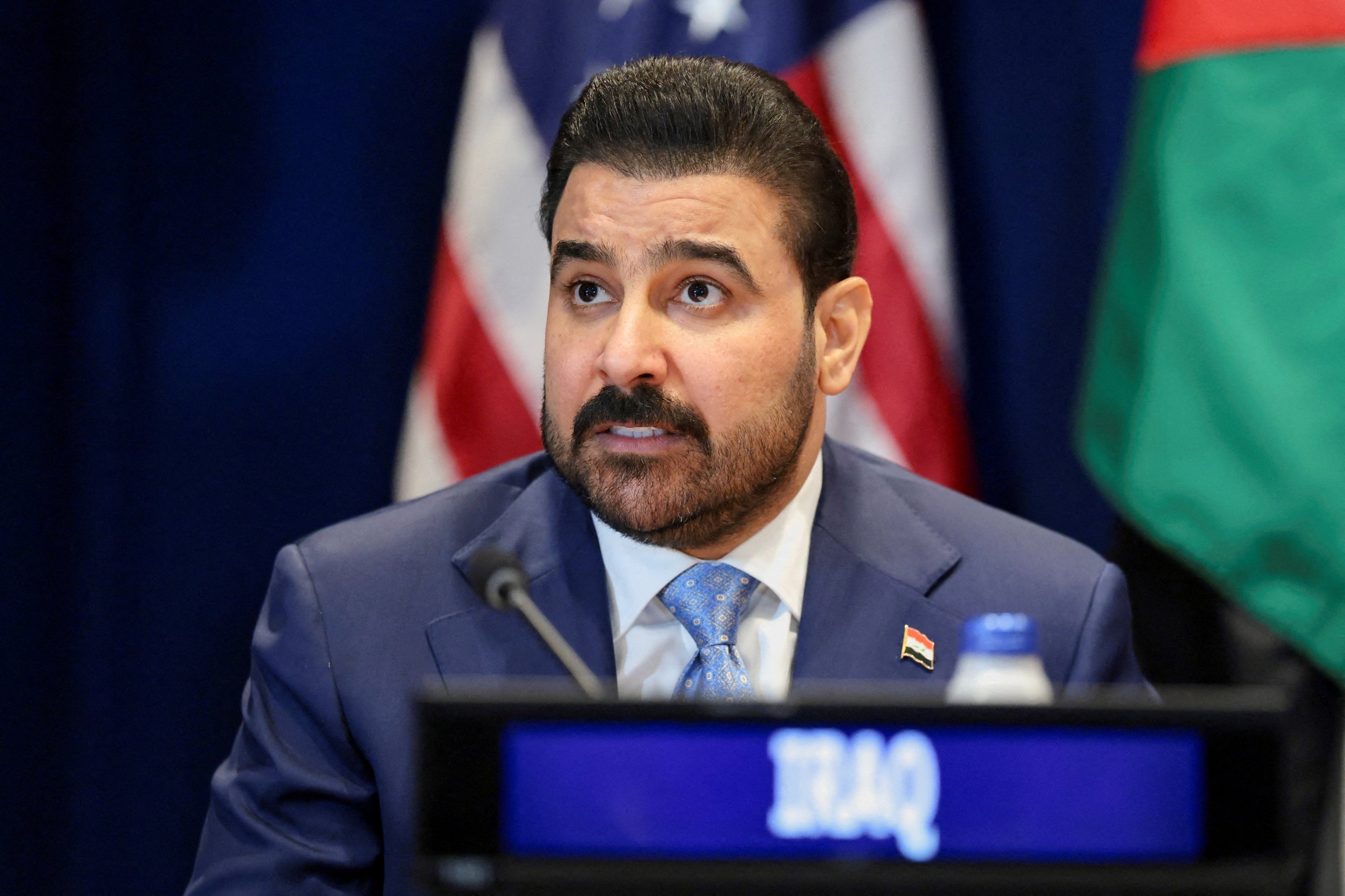
A statement from his office said the prime minister’s directive was based on the principle that “national sovereignty is indivisible and protecting Iraq’s wealth is a battle for survival in which the state puts an end to all forms of smuggling.”
PM cracks down on smuggling, Iran allies
In a further move directly challenging KRG authorities’ decades-long bid to run their own affairs, al-Zaidi ordered the border authority to take over all crossings in the Kurdistan region, which borders Türkiye, Iran and Syria.
He also directed the Kurdistan Regional Government to approve exports of crude oil and petroleum products only through the federal oil ministry.
Al-Zaidi, meanwhile, removed the head of the border crossings authority and suspended North Oil Company’s director general and his deputies pending further investigation.
Relations between the national government and KRG authorities have been fraught for years.
Iraq’s Kurds held a 2017 referendum on independence, which elicited fierce opposition from Baghdad and regional powers. The vote prompted military and economic retaliation from Baghdad, which retook the strategic oil-producing city of Kirkuk and other areas.
A previous dispute over KRG authorities’ sales of oil without Baghdad’s approval halted pipeline shipments to Türkiye for more than two years before the sides agreed in September 2025 to restart them.
Al-Zaidi – a multimillionaire businessperson and political novice – is trying to attract large-scale investment in Iraq. Analysts, however, say that first requires establishing the political and economic stability that has been lacking since a 2003 U.S.-led invasion toppled Saddam Hussein.
The European Union has imposed temporary limits on imports of hybrid vehicles from China, Japan, Türkiye, Britain and other countries to protect EU automakers, although for most countries they are high enough to cover existing shipments.
The measures, announced in the EU official journal on Tuesday, follow an agreement Brussels struck with Beijing last month to limit the number of hybrid cars from China to 350,000 vehicles, around half the number set to arrive in the European Union this year.
The volume limits, which will apply from Dec. 1, are “safeguard” measures that have to apply to all major exporters of hybrid cars to the European Union. Other countries to which the import caps apply are South Korea, Mexico, Morocco, Serbia and the United States.
The measures are provisional and apply for a maximum of 200 days while the investigation continues. If the Commission concludes by proposing definitive measures, which apply for longer, these would need broad backing by EU members.
The Commission based its investigation on imports over the last six months of 2025 and the first six months of 2026, with a clear focus on Chinese exports.
Brussels has long accused China of unfair trade practices, including price dumping, currency manipulation and state subsidies. Officials and companies say the measures undermine EU companies and lead to job losses.
“The surge in imports of hybrid passenger vehicles into the EU has been driven by growing global production overcapacity,” the Commission said.
“It is also prompted by increased use of trade-restrictive measures in other major markets.”
Hybrid vehicles are among the most popular models for European consumers, and Chinese makers have profited from their lower-priced models to gain huge market shares.
The import caps are most restrictive for China, when the new annualized limits are compared to the investigation period.
China’s Commerce Ministry said it hoped the European Union would abide by the consensus the two sides had reached, and that it reserved all rights to firmly safeguard the legitimate interests of Chinese industries.
Imports from Mexico, Morocco and Serbia were also higher than the limits in the period. However, for Mexico the gap was fewer than 600 cars and, for Morocco and Serbia, imports declined markedly in the second quarter of this year.
All other countries’ hybrid exports to the EU were below the volume limits, which are based on 2025 levels plus about 15%.
The commission said imports from China came not just at the expense of EU production, but were also eating into the market shares of other exporters such as Japan and South Korea.
The Turkish government plans to raise pensions above the rate of inflation and aims to finalize the measure before the end of the year, according to Vice President Cevdet Yılmaz.
Speaking after a Cabinet meeting Monday, Yılmaz said the proposal is still being drafted and that age and years of social security contributions would be key factors.
Options on the agenda for the new year include a flat-rate increase combined with an inflation adjustment, a welfare share or a phased adjustment.
“What matters is giving our retirees an improvement above inflation. The work isn’t finished yet. The number of premium days and age are important factors here,” Yılmaz told reporters, referring to the number of days a worker has paid social security contributions.
The Treasury and Finance Ministry, the Labor and Social Security Ministry, the Strategy and Budget Office and the Social Security Institution are drafting the measure, Yılmaz said.
He added that while several models are under consideration, all share the core principle of delivering a fair, equitable raise above inflation, with details to be released once the bill is submitted to Parliament.
Annual inflation edged up to 29.8% in October from 29.7% in September, according to official data, while monthly consumer price growth accelerated to 2.58% from 1.84%. Earlier this month, Türkiye’s central bank set its year-end inflation target for 2026 at 29.5% and raised its end-2027 forecast to 21% from 15%.
Private broadcaster CNBC-e reported that the Cabinet weighed whether to set the welfare share as a percentage or a fixed sum, with potential raises ranging from 10% to 20% under consideration. Another option would grant larger increases to older retirees and those with more contribution days.
Türkiye’s minimum pension currently stands at TL 23,552 ($465.21).
Based on that figure, a 10% increase would raise the lowest pension to TL 25,907, while a 15% raise would bring it to TL 27,085 and a 20% increase to TL 28,262. Early estimates suggest a 10% hike could cost the budget about TL 2 trillion.
The U.S. Commerce Department on Monday placed Megaspeed and Alibaba’s Singapore subsidiary, which has links to the cloud firm at the center of the Nvidia scandal, on its trade blacklist, following criticism from lawmakers and administration officials.
Megaspeed, an Nvidia partner which has been under investigation by U.S. authorities since 2024 over whether it diverted AI chips to China, will now need approval from the U.S. Commerce Department to obtain U.S. exports, which is likely to be denied.
“The Department of Commerce still needs to explain to Congress why this took so long,” Senator Pete Ricketts, a Nebraska Republican, said in a posting on X.
Megaspeed gained the spotlight about two weeks ago after news broke that Nvidia CEO Jensen Huang had an affair with former Megaspeed executive Alice Huang, whom U.S. authorities suspect of being a Chinese spy. China has said the spy accusations are “groundless.”
The Commerce Department also added Apex Enterprise Solutions, Alibaba’s Singapore subsidiary, to the list.
Megaspeed leveraged its relationship with Alibaba to secure designation as an official Nvidia cloud partner, the Financial Times reported.
Apex lent money to Megaspeed through its Malaysian subsidiary called Speedmatrix in 2024, and as part of the deal, the Malaysian company pledged its entire business as collateral for the loan, according to the report.
Speedmatrix had assets of about 8.8 billion ringgit ($2.14 billion) at the end of 2024, and Apex holds an undisclosed amount of legal security interest in Speedmatrix, according to their corporate filings.
“Adding Apex Enterprise Solutions to the Entity List is erroneous because Apex has never diverted advanced computing chips subject to U.S. export restrictions,” Alibaba said in a statement. “We will seek all legal avenues to protect our rights and reputation.”
Apex could not be reached for comment.
The blacklisting follows growing pressure on the Commerce Department over its handling of Megaspeed. On Nov. 13, Treasury Secretary Scott Bessent publicly complained that the Commerce Department had not yet placed the company on its Entity List.
“The real story here should be: Did Nvidia know their client and was there a robust effort at Nvidia to make sure that there was no leakage and that they were selling to what were obviously pass-through shell companies?” Bessent told CNBC’s “Squawk Box.”
Nvidia has said it recently formed an export control committee to oversee trade compliance and national security risks.
Megaspeed did not immediately return a request for comment. A week ago, the company issued a statement saying it conducts legitimate and lawful business, including complying with U.S. export controls.
It also said Alice Huang officially left Megaspeed in August 2025. Reuters has been unable to determine Alice Huang’s whereabouts to seek comment.
The U.S. Justice and Commerce departments issued a joint statement last week saying they would “bring the full extent of the law against Megaspeed for any criminal conduct that may have occurred.”
Democrats in the House of Representatives last week opened a probe into whether Nvidia exerted influence over the Commerce Department’s handling of the Megaspeed investigation.
Sen. Maria Cantwell, a Democrat from Washington, on Monday called for a broader investigation of how the department dropped the ball on export controls.
The Megaspeed blacklisting “does not absolve Commerce from answering to Congress,” Cantwell said.
Besides Megaspeed International Pte in Singapore, the Commerce Department on Monday added six other companies from Singapore, Malaysia and Thailand to the Entity List. All were linked to Megaspeed, a Commerce official said.
The blacklisting coincided with Jensen Huang’s reinstatement as CEO of Nvidia after his resignation two weeks ago. Commerce had not added any entities to the list since October 2025.
Singapore Prime Minister Lawrence Wong said on Tuesday his country would continue its investigation into Megaspeed. U.S. and Singapore law enforcement conducted an on-site visit in 2025 and interviewed Alice Huang.
As Reuters exclusively reported in June, the U.S. has held off on adding China’s AI startup DeepSeek, memory chipmaker CXMT and more than 100 other companies flagged as national security risks to the trade blacklist, as the Trump administration tried to avoid escalating tensions with Beijing.
French pharmaceutical group Sanofi announced on Tuesday that it has agreed to acquire the U.S. biopharma company Insmed, a specialist in respiratory treatments, for $41 billion in cash.
Insmed shareholders will receive $175 a share, and Sanofi expects the merger to begin boosting its own earnings per share by the end of 2028.
The move comes as Sanofi is racing to bulk up its development pipeline ahead of generic competition for its blockbuster Dupixent, used to treat illnesses including eczema and asthma.
Insmed’s two main drugs are Brinsupri, to treat bronchiectasis, and Arikayce, a specialized treatment for the lung disease Mycobacterium avium complex (MAC).
Brinsupri generated $1.1 billion in revenue between its August 2025 launch and Sept. 30, the companies said in a statement, while Arikayce’s sales reached $434 million in 2025, a year-over-year increase of 19%.
“This acquisition is a major strategic step to significantly accelerate our mid- and long-term growth trajectory and further strengthen our mid- and early-stage pipeline,” Sanofi chief executive Belen Garijo said in a statement.
Insmed’s chief, Will Lewis, said in the statement that Sanofi’s investment would “advance our commercial portfolio and phase 3 pipeline with a combined multibillion-dollar peak sales potential.”
Sanofi said it would finance the acquisition with both cash on hand and debt, without further details.
Türkiye’s central bank could use its policy rate along with other macroprudential and liquidity tools to support demand for the Turkish lira if needed, its governor said Monday, adding that other steps, such as tax measures, could also be taken.
“If we see a weakening in demand for the Turkish lira, we’ll assess the impact on the inflation outlook – the policy rate is our primary tool and we can also deploy macroprudential and liquidity tools,” Central Bank of the Republic of Türkiye (CBRT) Governor Fatih Karahan said.
“In coordination, other steps that would support the Turkish lira, such as withholding tax regulations, could also be taken,” Karahan told the interview with Anadolu Agency (AA).
Domestic demand for the lira has remained stable despite recent shocks, which Karahan said reflects confidence in the central bank’s policies.
“All our steps aim to support price stability and strengthen financial stability,” he said.
Risks to inflation more balanced
Annual inflation accelerated to 29.8% in October from 29.7% in September, according to official data. Monthly price growth was 2.58%, quickening from 1.84% the previous month.
Karahan said monthly inflation can be volatile, so the bank looks at measures of the underlying trend. That trend rose to the 30% range during the U.S./Israel-Iran war, he said, and now points to about 24% on an annualized basis as of October.
That is 6 percentage points below current annual inflation, and shows that disinflation will become more visible if supply-side effects improve, said the governor.
Karahan said the three-month average for core goods inflation fell to about 12% annualized, and services inflation fell to 31% in October from 39% last year on the same measure. He said leading indicators suggest the improvement continues in November. But annual inflation could rise in November because of base effects in food prices, he said.
Risks to inflation are more balanced than before, Karahan said, with upside war-related risks easing somewhat but still alive, and weaker demand offsetting them.
He said the tight monetary policy limited the damage to expectations after the war. Household expectations rose early in the year and then fell below pre-war levels, he said, but the improvement the bank had forecast at the start of the year has not yet come, so it must remain cautious.
Current account, global markets
Karahan said high energy prices raise the import bill and weak external demand limits exports. The 12-month current account deficit rose from about $30 billion at the end of 2025 to $41 billion in August and fell to $39 billion in September, he said.
Strong tourism revenue and slower domestic demand kept the rise smaller than expected at the start of the war, he said, and the bank expects this year’s deficit to be below its long-term average relative to national income.
He said global investors’ risk appetite has fallen because of geopolitical tensions, high energy inflation, interest rate increases by central banks in advanced economies and uncertainty over artificial intelligence investments. Türkiye felt these effects through capital flows, he said.
According to Karahan, the volatility does not stem from a deterioration in Türkiye’s fundamentals. Foreign investors sometimes pull out of emerging markets to offset losses elsewhere, he said, and recent weeks of global market losses led to such a move.
CBRT may use hold to boost FX position
Karahan said gross reserves fell from $210 billion before the Iran war to $159 billion on Nov. 13. About 60% of the decline could be attributed to gold prices, according to the governor.
The CBRT has used gold swaps and lira-foreign currency swaps to diversify its tools, and takes a “proactive, flexible and controlled” approach to reserve and liquidity management, the governor said.
“If necessary, we can proactively use any gold-linked instruments to strengthen our foreign-exchange position,” Karahan noted.
Gold accounts for more than 60% of its reserves. After the war began, the bank carried out gold swaps and closed them when they matured, Karahan said. The bank has also resumed lira-foreign exchange swaps with other banks, he said, adding that recent liquidity developments could cause lenders to make greater use of the facility.


-

 Sports3 days ago
Galatasaray break home unbeaten record with 2-1 Samsunspor win
-
 Economy2 days ago
EU, Indonesia sign landmark trade deal after 10 years of talks
-
 Sports3 days ago
Verstappen claims maiden Las Vegas GP pole after Antonelli penalty
-
 Economy20 hours ago
Türkiye, Russia to weigh new trade, energy cooperation deals
-

 Economy1 day ago
Home sales to foreigners in Türkiye hit 2026 high
-
 Economy16 hours ago
US expands Iran sanctions, targets ‘shadow-banking’ networks
-

 Sports1 day ago
Vlahovic, Trossard lift Beşiktaş past Konyaspor in 6-goal thriller
-

 Politics23 hours ago
20 detained in corruption probe into Turkish municipality