
Economy
Trump to assess Russia sanctions waiver within 60 days

U.S. Secretary of State Marco Rubio announced on Saturday that President Donald Trump would take more time to make a decision after waiving sanctions and tariffs related to Russian exports, and the president also said he has yet to share his final decision.
Rubio said on Saturday that the president will use up to 60 days to assess the economic impact of Russia-related sanctions and tariffs that he waived a day earlier.
“A lot of you don’t know what my decision is yet, but we’ll figure it out, and you’ll figure it out,” Trump told reporters at his Mar-a-Lago club in Palm Beach, Florida.
The waiver comes just weeks before November’s midterm elections, with Trump under pressure over high energy prices as war with Iran disrupts global oil supplies.
Trump signed an executive order on Friday waiving key sanctions and tariffs under the law known as the Graham Act, which he signed last month at the urging of lawmakers who want to pressure Moscow over its war in Ukraine.
The measures, including tariffs on Russian goods and penalties on countries buying Russian oil and gas, were due to take effect next week. Friday’s order did not specify how long the waiver would last, but Rubio said Trump opted for a 60-day review.
“I think the president wants to take the 60-day period of time to sort of analyze what imposing both sanctions and tariffs will mean to the global economy and even to the U.S. economy,” Rubio told reporters before boarding a plane for a trip to Uzbekistan.
Complicating matters is the Graham Act’s call not only for sanctions on Russia but also for tariffs on goods from countries that import Russian energy supplies. Rubio pointed to India, an important U.S. partner that has diversified its energy supplies but remains heavily dependent on Russian oil.
Friday’s executive order drew criticism from Ukrainian President Volodymyr Zelenskyy, who warned it would embolden Russian President Vladimir Putin and prolong the war.
Senator Darline Graham, a South Carolina Republican whose late brother Lindsey Graham championed the legislation that bears his name, said she disagreed with Trump’s decision and planned to discuss it with him when he campaigns for her next week.
“Personally, I would choose to keep the pressure on Russia,” she told reporters on Saturday. “Because I don’t trust Putin and I don’t trust Russia.”
Diesel supplies
Rubio also defended a separate U.S. agreement with Russia to increase diesel supplies to global markets, aimed at easing fuel prices that have climbed amid the war with Iran and disruptions to energy supplies.
Under the agreement, Trump said Russia initially would supply more than 300,000 metric tons of diesel to the U.S., followed by shipments in November and beyond.
“That diesel is going to be sold one way or the other,” Rubio said. “The only difference is how much of it the United States was going to get.”
Rubio said the diesel deal and sanctions waiver reflected the challenge of managing conflicts in the Middle East and Ukraine that have disrupted global energy supplies.
“These conflicts around the world are starting to crash into each other,” he said.

Artificial intelligence is widely seen as one of the key drivers of global growth in recent years, but it also poses economic risks should investment in the technology decline, experts and policymakers said at the IMF-World Bank annual meetings in Bangkok.
Propelled by spending on data centers and microchips, AI has helped cushion the economic shock of rising global energy prices caused by war in the Middle East, the International Monetary Fund (IMF) said in a report on Tuesday.
The fund’s chief economist, Silvana Tenreyro, noted that global trade rose 8.3% between 2023 and 2025, a figure she said would be closer to 4.6% without AI-related products.
‘Everywhere’ in economy
“It is everywhere in the global economy,” Bank of Canada Governor Tiff Macklem said of AI on Friday.
“You see it in GDP. You see it in the stock market. You see it in the bond market … So it is here, and it’s just the beginning.”
But some top officials gathered in Bangkok cautioned against relying too heavily on AI investment.
Federal Reserve (Fed) Chair Kevin Warsh called AI the “most consequential change” to the global economy in his lifetime, and said it had “a huge benefit.” Still, he warned the road ahead would be “bumpy.”
“The path from where we are to there is likely to be a very bumpy one, bumpy in our understanding of the technology, bumpy because we really don’t know what the market structure is going to be of these new technologies,” he said.
IMF chief Kristalina Georgieva similarly noted the AI boom’s boost to global growth, but she also said that any slowdown in the industry “would be felt across the world.”
“If there is loss of confidence and money runs away from AI, that can lead to financial stability risks,” Georgieva said.
An IMF report released this week projected that a decline in AI investment could reduce global GDP by 0.4% by 2028.
“Weaker or less durable AI investments and profitability could be a shock that triggers a market correction,” the report said.
War and regulation
While AI investment and trade have softened the global economic impact of the Middle East war, economists at Moody’s Analytics have warned that if the conflict drags on, it could “puncture” the boom.
They said higher energy prices and tighter financial conditions could push up operating costs and interest rates, adding to doubts over “the long-term profitability and viability of AI business models.”
“A drawn-out conflict would put serious strain on the economics behind AI investment,” the group said.
The uncertainty around regulation has also clouded the technology’s outlook.
Leaders like U.S. President Donald Trump have urged more limited government regulation, even as some in the industry have called for legislation to mitigate risks.
Georgieva, the IMF chief, appeared on Friday to link such regulation to future investment.
“If there are no safeguards, then the risks may exceed the opportunities,” she said in Bangkok.
Rising gas prices have pushed inflation up, vacuuming up more of Americans’ dollars, yet consumers are still proving resilient in spending and powering the economy, at least for now.
A slew of economic data last week showed that inflation accelerated last month as more expensive oil and gas began to lift prices in other parts of the economy, including shipping and warehousing, before the increases reach most Americans.
Wholesale food prices also jumped, which could make groceries more expensive in the months ahead.
At the same time, consumers also ramped up their spending, according to data released on Thursday. Although much of the increase reflected higher prices, consumer resilience is powering solid U.S. economic growth.
Workers are enjoying an unusual degree of job security despite scattered layoffs, which likely encourages spending despite surveys showing that many Americans have a gloomy economic outlook.
It all adds up to an economy in which people are spending money but don’t feel good about it.
“Consumers may have gritted their teeth and looked through higher gas prices,” said Jim Baird, chief investment officer at Plante Moran Financial Advisors. “They’re not happy, but they’re still spending.”
A report Thursday on wholesale prices helps explain the gloom: The government’s producer price index (PPI), which measures costs before they reach the consumers, jumped 6.3% in September from a year earlier, the biggest increase in nearly four years.
On a monthly basis, prices soared 1.3% from August to September, powered by a 20% rise in gas prices.
Higher diesel prices have made shipping more expensive because long-haul trucks and freight trains rely on the fuel. Higher transportation costs may have helped push up food costs, which rose 1.2% from August to September, the biggest monthly gain since February.
The wholesale price report followed the latest consumer price figures, released Wednesday, which showed inflation rising to 3.7% in September, far above the 2% target set by the Federal Reserve (Fed).
“The jolt to transportation prices affects every good in the economy, since inputs to manufacturing move to factories and goods at all stages of production move from producer to wholesaler to retailer by truck, train or rail,” wrote Carl Weinberg, chief economist at High Frequency Economics.
“This is how increases in energy prices ‘bleed through’ to prices of core goods.”
Farmers also rely on diesel to power most of their equipment, which could further push up food prices. Diesel prices averaged $6.32 a gallon nationwide Thursday, according to AAA, up from just $3.66 a year ago.
Despite those cost pressures, retail sales rose a solid 0.8% from August, more than economists had forecast. The increase was driven by a 6.4% jump in spending at gas stations, but consumers also spent elsewhere, including a healthy 1.1% rise at restaurants and bars.
Excluding gas, retail sales rose just 0.2% last month, with much of that also reflecting higher prices.
Economists say that as long as unemployment stays low and Americans continue working, spending will likely stay resilient. Hiring has been sluggish, but layoffs are also unusually low.
Another report Thursday showed that the number of people seeking unemployment benefits stayed below 200,000 last week, a historically low figure. Applications for unemployment aid are a proxy for layoffs.
“If the unemployment rate remains low, meaning consumers have a job, they will continue to spend, even if more cautiously and leaning increasingly on savings and credit,” Kathy Bostjancic, chief economist at Nationwide, said in an email.
Many economists worry, however, that as inflation stays high, it will steadily erode Americans’ spending power and start to weigh on the economy. Weekly paychecks, adjusted for inflation, actually declined in September compared with a year ago for the first time since May.
And September hiring slowed to a disappointing 29,000 jobs from a revised 133,000 in August, according to the Labor Department early this month. The unemployment rate ticked higher to 4.2% from the previous month, which is still low. Yet economists had expected September payrolls to come in around 90,000.
Stubbornly elevated inflation also means the Federal Reserve will likely raise its key interest rate in the coming months in an effort to slow spending and bring down inflation. When the Fed raises its rate, that can raise borrowing costs for mortgages, car loans, and credit cards over time.
According to minutes released from the most recent meeting, most Fed officials expect that another interest rate increase will likely be needed this year to combat inflation.
The Fed increased its key interest rate by a quarter-point to about 3.9% in September, its first increase in three years.
The increase defied U.S. President Donald Trump’s repeated calls for the Fed to cut rates and prompted the president to criticize the Fed’s rate-setting committee, although he still expressed support for Chair Kevin Warsh, whom he appointed earlier this year.
Tesla has unveiled its new Roadster sports car, which can thrust itself up in the air. But drivers shouldn’t expect to take it for a spin anytime soon.
Elon Musk’s car company debuted the latest bells and whistles of its second-generation Roadster, developed in collaboration with the CEO’s rocket company, SpaceX.
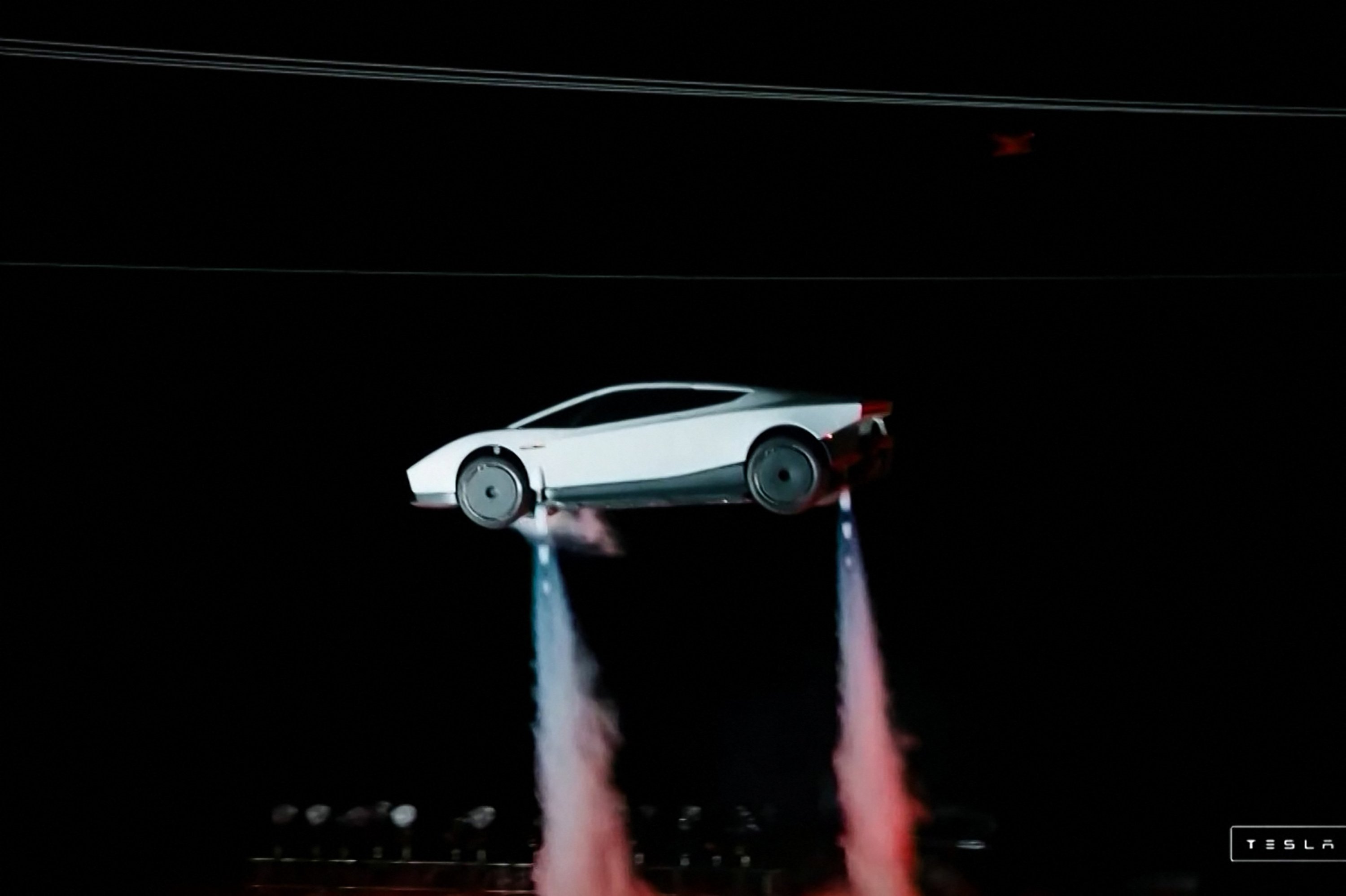
Chief among them, as shown off at a Thursday event, are a set of cold gas thrusters and a “multi-mode” suction system that can fling the car in the air for short spurts and spin the vehicle mid-flight.
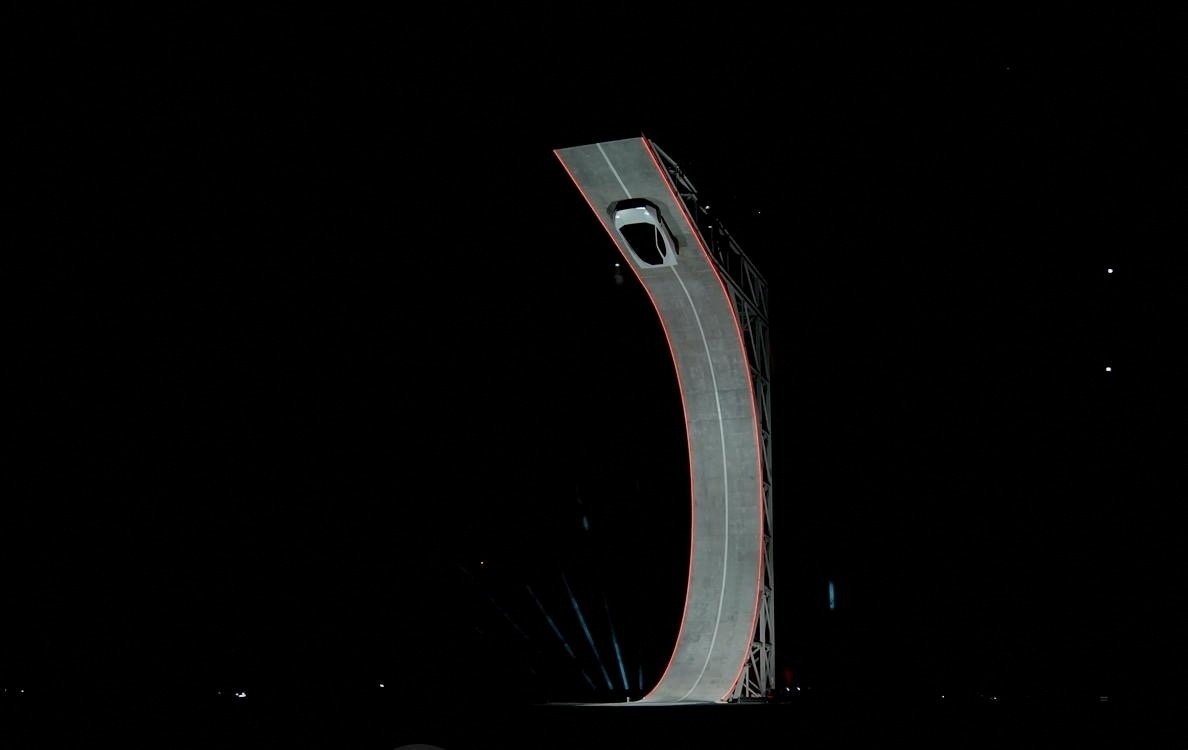
The white two-seater vehicle drove upside down on a ramp using a suction system, turned in the air and landed using built-in thrusters. Later in the event, it used the thrusters to jump over a truck and other vehicles, twisting in the air during the maneuver.
Some watchers saw the collaboration as Musk drumming up interest in a merger of the two big companies he controls, an idea he has explored by discussing their overlap.
“Turns out the future does have flying cars,” Musk wrote on his social media platform X shortly after.

Thursday’s launch arrived after years of delays and anticipation around the new Roadster – and Tesla shares climbed 5% in premarket trading on Friday.
Still, Musk said production for consumers won’t begin until 2028.
And of course, these kinds of cars aren’t flinging themselves in the air on highways and streets just yet. There are ample regulatory hurdles for flying vehicles overall.
The fine print of the Roadster’s “rocket” feature on Tesla’s website notes: “Not approved for public road use.”
Tesla also didn’t immediately set a price tag on its latest electric vehicle, although the company nearly a decade ago quoted a base price of $200,000.
Tesla’s reservation page for the Roadster showed a “Performance” version of the vehicle requiring a $50,000 deposit and a “Thrust” version with “acceleration thrusters” requiring a $250,000 deposit. A “Rocket” variant, which Tesla says is “invite only,” is described as a single-seat model with a “full flight system.”
‘Most insane’ product demo ever
The reveal gives Tesla a showpiece car after years of missed Roadster deadlines, but it comes as the company shifts its focus to self-driving technology and robotics, and days before third-quarter results that analysts say matter more to investors.
“It was an engineering flex with no commercial value beyond embarrassing traditional car makers,” Gene Munster, managing partner at Tesla investor Deepwater Asset Management, said on X.
“The Roadster event is the latest example of why Elon can’t wait to bring (Tesla) and (SpaceX) together,” Munster said.
Musk has played down the car’s importance to Tesla’s finances, describing it in 2023 as a “small potato situation” that would not “move the needle in a major way financially.”
But the car still carries symbolic weight.
“Tesla does not currently have a halo car, or high-performance luxury vehicle designed to showcase an automaker’s best engineering and technology. The Roadster will be Tesla’s new halo car,” Morningstar analyst Seth Goldstein said in a note last month.
Viewers and witnesses gushed over the spectacle of the launch.
“That was the most insane product demo I’ve ever seen,” Tesla fan and investor Sawyer Merritt posted on X. “I just saw this in person, and I’m still asking how this wasn’t AI.”
‘Halfway to speed of sound’
The event at a SpaceX test site in McGregor, Texas, had all the elements of a classic Musk product reveal: dramatic music, smoke, mechanical hissing sounds and a launch countdown.
“This is the culmination of incredible work by Tesla and SpaceX engineers working closely together to make something that you haven’t seen in any movie,” Musk, wearing a silver Western-style belt buckle emblazoned with the Tesla logo, told a cheering crowd of enthusiasts and investors.
The Roadster can accelerate from zero to 97 kph (60 mph) in less than one second and can hit a top speed of over 370 kph, Tesla vehicle engineering chief Lars Moravy said.
“Definitely much faster than that,” an excited Musk said. “I think you’ve got to crack halfway to the speed of sound.”
The Roadster can also travel over 480 km (300 miles) on a single charge. That is less than half of what Musk promised in 2017, when Tesla first revealed a prototype of the second-generation Roadster and said that deliveries would begin in 2020.
The original Roadster, released in 2008 and on sale until 2012, was Tesla’s first-ever electric vehicle and used a Lotus Elise chassis. It helped change the world’s view of what an EV could be. The company has since been known for its Model Y and Model X SUVs and Model S and Model 3 sedans.
The reveal of the second-generation Roadster comes amid a sharp shift in Tesla’s focus to artificial intelligence-led self-driving tech and robotics, from manufacturing cars for human drivers.
This year, Tesla stopped selling Model S and X vehicles to make space for production of its Optimus humanoid robots. It also launched Cybercab – a two-seater robotaxi that comes without manual controls such as a steering wheel, pedals and mirrors.
Tesla is set to report third-quarter results on Oct. 21.
Sales of Tesla’s aging lineup of EVs have declined over the past two years, although high gas prices helped boost deliveries in the third quarter.
“The margin and cash flow numbers will carry far more weight with investors than anything they saw at the reveal,” said Josh Gilbert, lead analyst for Asia-Pacific at trading platform eToro.
The first reactor at Türkiye’s Akkuyu nuclear power plant is expected to achieve its first self-sustaining nuclear chain reaction before the end of this year, Alexei Likhachev, head of Russia’s state nuclear corporation Rosatom, said Friday.
Rosatom is building Türkiye’s first nuclear power station in the Mediterranean province of Mersin worth $20 billion. Its four reactors will have a combined installed capacity of 4,800 megawatts (MW). Once all units are operational, it is expected to supply about 10% of Türkiye’s electricity demand.
Ankara plans to construct two additional plants, one in Sinop on the Black Sea coast and one in the Thrace region.
Türkiye has said it’s still in talks with Canada, China, Russia and South Korea on the projects.
LNG cooperation with Novatek
Separately on Friday, Energy and Natural Resources Minister Alparslan Bayraktar said he discussed cooperation possibilities in the liquefied natural gas (LNG) field with the chair of Russia’s largest LNG producer, Novatek, during a meeting in Moscow.
Bayraktar said on the social media platform X that Ankara would continue taking steps to increase Türkiye’s energy diversity and consolidate its supply security.
Türkiye is one of Europe’s largest gas markets, having consumed 59 billion cubic meters last year. The country relies on imports for a majority of its gas needs and has, in the last two years, inked long-term supply deals with major LNG producers, but has no such agreement with Novatek.
Türkiye is expected to account for about 20% of demand for new passenger aircraft in Europe and the Commonwealth of Independent States (CIS) over the next 20 years, requiring 1,800 new aircraft as passenger traffic grows, a senior Airbus executive said Thursday.
Antonio Da Costa, Airbus vice president for market analysis and forecast, said the number of flights taken annually per person in Türkiye was expected to triple to 3.1 by 2045, surpassing the regional average of 2.4.
“We expect to see the need for Türkiye as a whole, 1,800 new aircraft to renew the fleet and especially grow at the rate that’s expected,” Da Costa said, adding that passenger traffic in the country was expected to grow by around 4.5% annually over the next 20 years, compared with 2.9% for the wider region.
“Our expectation is that the fleet of aircraft in Türkiye overall, throughout all the airlines, will more than double over the next 20 years,” Da Costa said.
According to Airbus’ latest Global Market Forecast, Europe and the CIS region will need 8,190 new passenger aircraft by 2045, including 3,600 for growth and 4,590 for fleet renewal.
Da Costa said Istanbul’s position as an international connecting hub continued to strengthen, driven by strong tourism demand and transit traffic.
Asked about the impact of the conflict in the Middle East on aviation demand, Da Costa said Türkiye had benefited from traffic diversions away from parts of the Gulf region, attracting more tourists and connecting passengers.
“We do see an opportunity… there’s more incoming tourists and more connecting passengers coming through Türkiye due to the conflict in the Gulf,” he said.
While expecting regional tensions to ease over time, Da Costa said he believed the additional traffic flowing through Türkiye would support the country’s longer-term growth.
Engine maker CFM International said Friday it had signed a memorandum of understanding (MoU) with Turkish Airlines covering the purchase of more than 300 LEAP-1B engines, including spares.
The engines will power the 100 firm and 50 optional Boeing 737 Max aircraft the national flag carrier announced in September, seeking to bolster its short- and medium-haul operations.
Alongside new engines, a long-term services agreement will cover Turkish Airlines’ entire LEAP-1B fleet, including engines already ordered and delivered, spares, engines on leased aircraft and those tied to potential options.
In total, the agreement spans more than 600 LEAP-1B engines operated by the airline and its subsidiary AJet.
New MRO facility in Türkiye
The MoU also includes a material services agreement to support an engine maintenance, repair and overhaul (MRO) facility in Türkiye.
The facility is meant to strengthen the engine maintenance capabilities of Turkish Technic, the airline’s maintenance arm, and allow it to offer comprehensive maintenance services.
Turkish Airlines currently operates 96 Boeing 737 Next Generation aircraft powered by CFM56-7B engines, and 79 Boeing 737 Max aircraft powered by LEAP-1B engines. Both figures include the AJet fleet.
“This new step with CFM will support our growing fleet, network, and operational efficiency,” said Murat Şeker, chair of the board of Turkish Airlines.
“We are also pleased to strengthen our partnership with CFM through a comprehensive set of services, providing the expertise, reliability, and long-term support needed to develop our LEAP MRO capabilities alongside a long-standing partner,” Şeker noted.
Turkish Technic CEO Mikail Akbulut said the agreement will enable the company to provide comprehensive maintenance operations for the LEAP engine.
“As Turkish Technic, we will continue to invest in engine maintenance services as well as our aircraft and component maintenance capabilities in line with our strategy,” Akbulut said.
‘New milestone’ in partnership
Olivier Andries, CEO of Safran, one of CFM’s two parent companies, described the MoU as a “new milestone” in a relationship with Turkish Airlines spanning nearly four decades.
“It reflects our shared ambition to support the airline’s continued growth and fleet expansion,” he noted. “The MoU demonstrates our broader commitment to an open MRO ecosystem, which provides airlines with flexibility and competitive services to improve operational performance and manage costs effectively.”
Lawrence Culp, Jr., chair and CEO of GE Aerospace, CFM’s other parent company, said GE was proud to partner with an airline that flies to more countries than any other.
“Putting its trust in CFM to provide highly reliable and efficient engines to support the growth of its Istanbul network and engine MRO capabilities is a responsibility we take seriously,” he said.
CFM noted that in the 10 years since the LEAP engine entered service, it has delivered more than 10,000 engines, which have accumulated over 100 million flight hours.


-

 Politics3 days ago
Turkish opposition CHP moves to sue former leader Özel over forgery
-
 Politics2 days ago
Top Erdoğan adviser signals groundwork for new constitution
-

 Economy3 days ago
Anthropic asked to delay IPO over AI security concerns
-

 Politics2 days ago
Türkiye awaits Saudi needs, Parliament approval for military assistance
-

 Economy2 days ago
Türkiye to account for 20% of Europe-CIS aircraft demand: Airbus
-

 Economy2 days ago
Türkiye unveils 2027 budget proposal with big rises in housing spending
-

 Politics2 days ago
FM Fidan holds talks with Azerbaijani, Sri Lankan counterparts
-

 Economy2 days ago
Turkish Airlines signs deal with CFM to buy over 300 LEAP-1B engines