
Politics
Top Erdoğan adviser signals groundwork for new constitution

Mehmet Uçum, chief presidential adviser and deputy chair of the Turkish Presidency’s Legal Policies Board, told journalists on Thursday that Oct. 1 was the “starting date of the process for drafting the new constitution.”
He was referring to the day when President Recep Tayyip Erdoğan made a speech for the inauguration of the new legislative year at the Turkish Parliament.
Erdoğan has called political parties to set aside differences for what he called a “grand Türkiye consensus” and devoted a large part of his speech to the need for a new constitution.
Uçum joined a meeting of the Legal Policies Board with Justice Minister Akın Gürlek on Wednesday in Ankara and told journalists that the meeting’s agenda was the new constitution. He noted that the work was underway on the perspective, basis and principles.
He noted that the need for a new constitution cannot be assessed solely in terms of politicians’ expectations, stressing that the demands and needs of the public must be taken as the basis.
Recalling that calls for a change have been on Türkiye’s agenda for many years, Uçum said the need for a new and civilian constitution had been debated since 1987. Political parties had also pledged to introduce a new constitution in previous elections, he said, adding that the country was now entering a period in which specific issues would be discussed.
Uçum said the remaining period could be used to develop the intellectual groundwork, adding that drafting one after the 2028 elections, during the 29th parliamentary term, could become a realistic goal. Emphasizing that drafting a new one and amending the existing one are two different processes, Uçum said the procedures currently in place for constitutional amendments could not be directly applied to the drafting of an entirely new constitution.
Under the current system, constitutional amendments require the approval of at least 360 lawmakers, while a referendum is optional when an amendment receives 400 or more votes, Uçum recalled. However, he said, a new constitution would require public approval.
“Regardless of numerical legitimacy, even if 550 to 600 lawmakers approve it, a new constitution cannot enter into force without a referendum. It must receive final approval from the public,” Uçum said.
Since the founding of the Republic of Türkiye, constitutional design has served as the backbone of the country’s legal system. The current Constitution, adopted in 1982, has been repeatedly amended over the decades, most notably in 2017, when a national referendum paved the way for the country’s transition from a parliamentary model to an executive presidential system.
Despite numerous amendments over the decades, replacing the 1982 Constitution with a new, civilian-drafted charter remains a prominent issue in Türkiye’s political debate.
Erdoğan and Parliament Speaker Numan Kurtulmuş have repeatedly advocated for a new civilian constitution, arguing that the existing charter retains the legacy of the military rule under which it was drafted despite extensive subsequent amendments.
Kurtulmuş said in August 2026 that Türkiye’s political climate and level of dialogue had matured sufficiently for work toward a new civilian constitution, describing such a charter as a longstanding objective.
Stressing that the process of a draft should begin with the will of the people and conclude with that same will, Uçum said a constitution adopted through broad social consensus could also secure strong support in a public referendum.
Responding to journalists’ questions about whether the drafting process had begun on an article-by-article basis, Uçum said numerous constitutional drafts had been prepared in Türkiye over the years.
Uçum said the Legal Policies Board had no direct mandate to draft a constitutional text, but could contribute ideas to the constitutional discussions. Rather than presenting a draft proposal at the outset, he said a more appropriate approach would be to first discuss the fundamental principles of the new constitution and establish common intellectual ground. Pointing to differing political views on the system of government, Uçum highlighted disagreements between parties advocating the continuation and further development of the executive presidency system in which the president is elected by the public and has authority to issue decrees unilaterally in a number of fields, and those calling for a return to the parliamentary system.
Noting that a semi-presidential model had also been raised as an option, Uçum said, “If you want to draft the new constitution through a grand Türkiye consensus, you first need to reach an agreement on the model of government.” Uçum also said consensus was needed on the vision for the country’s future that the new constitution would embody.

Armenian Prime Minister Nikol Pashinyan said yesterday he aims to sign and ratify a peace treaty with Azerbaijan before 2031, as the two South Caucasus neighbors seek to normalize relations following decades of conflict over the Karabakh region.
Speaking at a televised Cabinet meeting, Pashinyan described the signing of a peace agreement with Baku as one of his government’s top priorities and said he had established a specific timeline for completing the process.
“Signing a peace treaty with Azerbaijan is one of the most important issues for the government and for me personally,” Pashinyan said.
“I have set myself a task, a specific timetable to resolve the issue before 2031,” he added, expressing confidence that the goal was achievable.
“I see such a possibility. Otherwise I would not raise this issue.”
Armenia and Azerbaijan have fought two wars over Karabakh, an internationally recognized part of Azerbaijan that was previously home to Armenian separatists.
Azerbaijan regained full control of the region following a military offensive in September 2023.
The two countries took a significant step toward reconciliation in August 2025 when Pashinyan and Azerbaijani President Ilham Aliyev initialed a peace agreement during a White House summit hosted by U.S. President Donald Trump.
However, the agreement has yet to be formally signed or ratified, with disagreements over Armenia’s Constitution remaining a major obstacle.
Baku has demanded constitutional amendments, arguing that references to Armenia’s declaration of independence, which calls for unification with Karabakh, amount to territorial claims against Azerbaijan.
Any constitutional changes would require approval through a nationwide referendum in Armenia.
Yerevan has rejected Azerbaijan’s interpretation, maintaining that the agreed peace treaty already addresses concerns over territorial claims and provides sufficient guarantees for both countries.
The draft agreement commits Armenia and Azerbaijan to recognizing each other’s sovereignty and territorial integrity, renouncing territorial claims and establishing formal diplomatic relations.
Foreign ministers from 19 countries, including Türkiye, Saudi Arabia and Qatar, condemned on Friday Colombia’s decision to relocate its embassy in Israel from Tel Aviv to Jerusalem, calling the move a violation of international law and a setback to efforts toward a two-state solution.
In a joint statement, the foreign ministers strongly rejected the opening of Colombia’s Embassy in Jerusalem, saying the decision contradicts relevant United Nations Security Council resolutions and undermines international efforts to establish a just and lasting peace between Israelis and Palestinians.
The statement was issued by the foreign ministers of Türkiye, Algeria, Djibouti, Indonesia, Palestine, Qatar, Kuwait, Lebanon, Libya, Malaysia, Egypt, Pakistan, Somalia, Sudan, Syria, Saudi Arabia, Oman, Jordan and Yemen.
Colombia relocated its embassy from Tel Aviv to Jerusalem after 46 years, with Israeli Foreign Minister Gideon Saar and his Colombian counterpart, Omar Bula Escobar, attending the inauguration ceremony.
Israel occupied East Jerusalem during the 1967 Middle East war and unilaterally declared the entire city its capital in 1980, a move that has not gained broad international recognition.
The ministers reaffirmed that any measures or decisions aimed at altering the legal or historical status of occupied Jerusalem, or recognizing the city as Israel’s capital, are null and void and carry no legal effect.
They cited U.N. Security Council Resolutions 476 and 478, adopted in 1980, which reject attempts to change Jerusalem’s status and call on countries to withdraw diplomatic missions from the city.
The ministers urged Colombia to reconsider and reverse its decision, comply with its obligations under international law and refrain from actions that could undermine the legitimate rights of the Palestinian people.
They also reiterated their support for the establishment of an independent, sovereign Palestinian state with East Jerusalem as its capital.
Most countries continue to maintain their diplomatic missions in Tel Aviv, reflecting the international position that Jerusalem’s final status should be determined through negotiations.
The U.S., Guatemala, Honduras, Kosovo, Paraguay, Papua New Guinea and Fiji are among those maintaining embassies in Jerusalem.
Colombia shifts Israel policy
Colombian President Abelardo de la Espriella restored diplomatic relations with Israel after his predecessor, Gustavo Petro, severed ties in May 2024 over Israel’s military offensive in Gaza.
Since taking office in August, Espriella has reinstated a free trade agreement with Israel and reopened Colombia’s Embassy, relocating it from Tel Aviv to Jerusalem. Colombian Foreign Minister Omar Bula Escobar attended the inauguration ceremony alongside Israeli Foreign Minister Gideon Saar.
Saar welcomed the diplomatic shift, saying the new Colombian administration had reversed much of the damage to bilateral relations under Petro in just two months.
Petro had been a vocal critic of Israeli Prime Minister Benjamin Netanyahu, withdrawing Colombia’s ambassador and closing its embassy in Tel Aviv.
Since October 2023, more than 74,000 Palestinians have been killed and over 175,000 injured in Gaza in the Israeli genocide since October 2023, while around 90% of the enclave’s infrastructure has been damaged or destroyed.
Israeli army raids and attacks by occupiers against Palestinians and their property have intensified in the occupied West Bank, including East Jerusalem, since the start of Israel’s genocide against the Gaza Strip in October 2023.
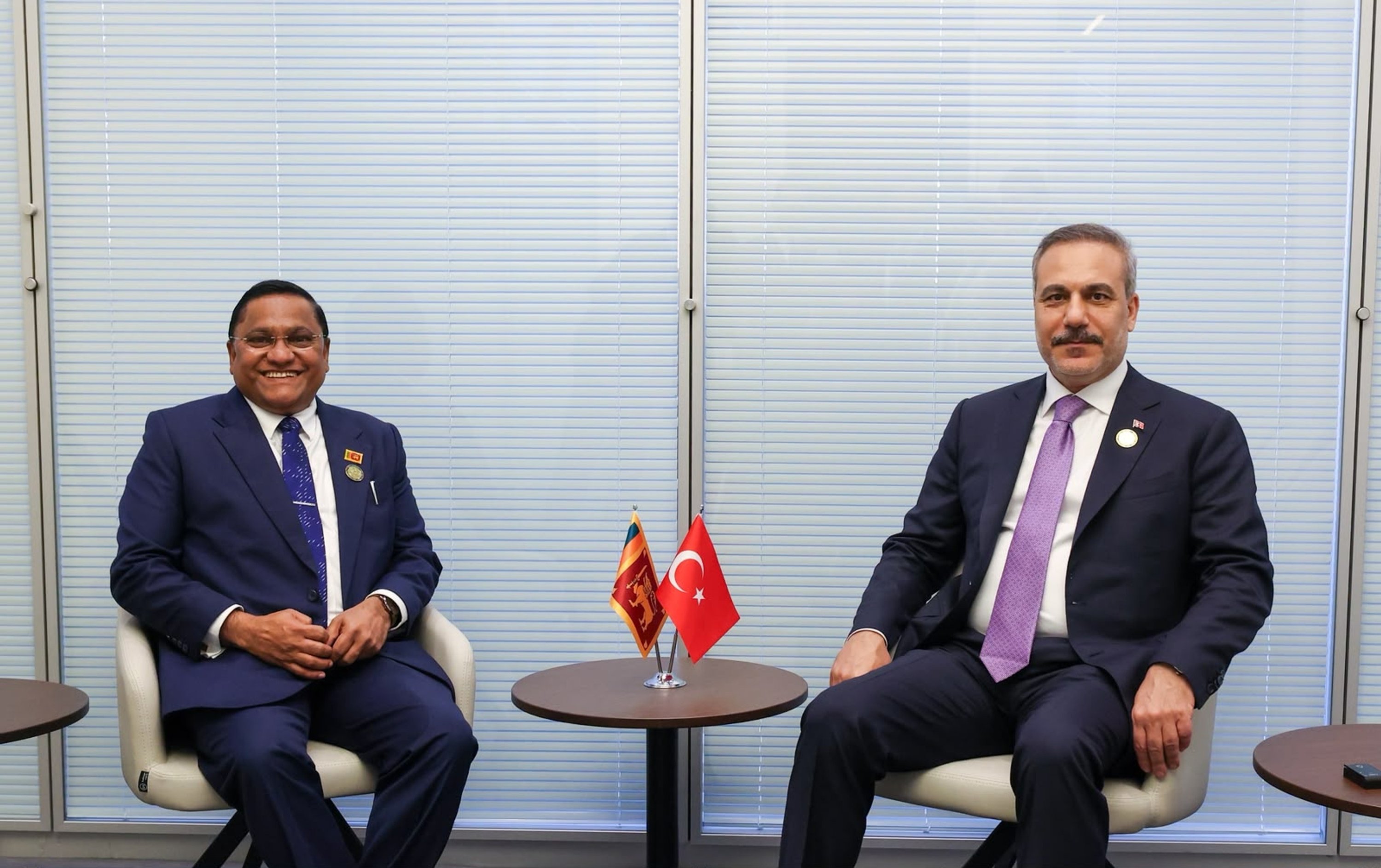
Foreign Minister Hakan Fidan held separate talks with his Azerbaijani and Sri Lankan counterparts on the sidelines of the seventh summit of the Conference on Interaction and Confidence Building Measures in Asia (CICA) in Azerbaijan’s capital, Baku.
Fidan met with Azerbaijani Foreign Minister Jeyhun Bayramov as part of the summit, Turkish diplomatic sources said.
The Turkish foreign minister also held a separate meeting with Sri Lankan Foreign Minister Vijitha Herath during the gathering.
Meanwhile, speaking to reporters after the summit, Fidan stressed that the strategic nature of Türkiye-Azerbaijan relations transcends any differences between the two countries, warning against attempts to undermine their longstanding ties through misinformation.
Fidan said the principle of “one nation, two states” remained central to bilateral relations, emphasizing that the bond between President Recep Tayyip Erdoğan and Azerbaijani President Ilham Aliyev had been tested during wars and crises.
“Regardless of the circumstances, the strategic nature of Türkiye-Azerbaijan relations stands above all other issues,” Fidan said, adding that occasional differences in perspectives were natural and should be resolved through dialogue rather than social media campaigns.
He also warned that misinformation and artificially inflated disputes could damage public perceptions of bilateral ties, stressing that Ankara and Baku remained committed to preserving their strategic partnership.
Turning to the Russia-Ukraine war, Fidan said Türkiye continued diplomatic efforts to prevent the conflict from further threatening security and commercial shipping in the Black Sea.
He said Ankara had presented proposals to both Moscow and Kyiv aimed at safeguarding maritime navigation and had discussed the issue with Russian Foreign Minister Sergey Lavrov.
Fidan warned that disruptions to Black Sea shipping were affecting global food and energy markets, particularly wheat supplies to African countries, while restrictions in the Strait of Hormuz and Bab el-Mandeb were adding pressure to international trade.
“Maritime safety in the Black Sea is critically important,” he said, stressing that Türkiye would continue working toward a solution to protect trade routes and ease the economic impact on developing countries.
Cambodian Prime Minister Hun Manet will pay an official visit to Türkiye on Oct. 15-16 at the invitation of President Recep Tayyip Erdoğan, Türkiye’s Directorate of Communications announced Thursday.
Burhanettin Duran, head of the Directorate of Communications, said in a statement shared on the Turkish social media platform NSosyal that the visit would focus on strengthening bilateral relations and exploring new opportunities for cooperation.
Erdoğan and Manet are scheduled to hold talks in Istanbul on Friday, Oct. 16, during which the two leaders will review Türkiye-Cambodia relations in all areas and discuss potential steps to deepen cooperation.
The discussions are also expected to cover regional and global developments, with the two sides exchanging views on issues of mutual interest, Duran said.
The visit comes as Ankara seeks to strengthen diplomatic engagement and expand cooperation with countries across Southeast Asia.
Türkiye is expected to expand cooperation with the Association of Southeast Asian Nations (ASEAN) in trade, economic relations, the defense industry and energy after recently becoming a “dialogue partner” of the regional bloc.
Türkiye’s main opposition Republican People’s Party (CHP) is reportedly preparing to file a criminal complaint against New Party (YP) Chairperson Özgür Özel over allegations of document forgery and breach of trust involving parliamentary membership fees, according to reports of media outlets.
The allegations center on documents submitted to a bank during Özel’s tenure as CHP parliamentary group leader, requesting the reimbursement of membership fees deducted from lawmakers’ salaries.
According to reports citing CHP sources, signatures originally collected from lawmakers for Constitutional Court applications were allegedly used without their consent to authorize the financial transactions.
Özel had sent a letter to the bank before leaving the CHP to establish the New Party (YP), requesting that membership fees be transferred to lawmakers’ individual accounts, the reports said.
The dispute reportedly involves a letter dated April 23, 2026, bearing 138 lawmakers’ signatures, although the accompanying bank account list contained details for only 100 lawmakers.
CHP officials reportedly argue that party membership fees cannot legally be redistributed as personal income, describing the reimbursement request as an unauthorized transaction involving party funds.
Party sources further alleged that signatures collected for unrelated legal proceedings were improperly attached to the bank documents, potentially constituting document forgery and breach of trust.
The reported complaint would mark a further escalation in tensions between the CHP and Özel’s YP following their political split.
Recently, the CHP has also alleged that vehicles, equipment, and other assets worth more than TL 250 million (approximately $5.1 million) were reported to have been removed or gone missing from its provincial and district offices during the formation of the YP.
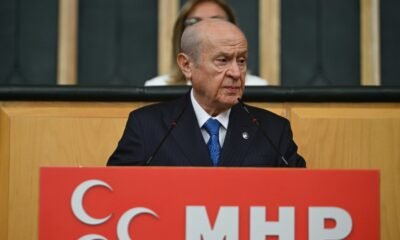
Nationalist Movement Party (MHP) leader Devlet Bahçeli hosted Republican People’s Party (CHP) Chair Kemal Kılıçdaroğlu at his office in Parliament for about 15 minutes on Tuesday.
The brief encounter, however, was highly symbolic, as a similarly short and cordial conversation between Bahçeli and lawmakers from the Peoples’ Equality and Democracy Party (DEM Party) two years ago informally set in motion the terror-free Türkiye initiative.
It remains unclear whether Bahçeli is seeking a similar rapprochement, but Kılıçdaroğlu described the meeting afterward as one between “two old friends,” while his party said in a statement that he thanked Bahçeli for the terror-free Türkiye initiative. The two men were indeed classmates at university, but their political views could hardly be further apart. Bahçeli is a nationalist and an ally of the government, while Kılıçdaroğlu advocates a center-left, social democratic approach.
Such meetings are extremely rare in Türkiye’s deeply polarized political climate. The last similar encounter to generate widespread media interest was a meeting between then-CHP leader Özgür Özel and Erdoğan two years ago. Erdoğan himself signaled openness to more such meetings while addressing a ceremony marking the opening of the new legislative year in Parliament earlier this month. He described his vision as a “grand Türkiye consensus.”
“Consensus on a terror-free Türkiye has upset the country’s foes. (The terror-free Türkiye initiative) is already having a deterrent effect on Türkiye’s foes and is empowering the country,” Erdoğan said.
The president also urged political parties to strengthen the “home front” amid regional tensions and work toward a “grand Türkiye consensus.”
“The era of opposition solely based on opposing what the government does is over. It is a grave mistake to reduce politics to antagonizing rivals and waging a war of attrition instead of making it a race to provide the best public services. Regional and global developments require us to pursue a new style of politics,” Erdoğan told Parliament, drawing sustained applause from lawmakers from his ruling Justice and Development Party (AK Party).
The main opposition New Party (YP) left Parliament’s General Assembly hall as Erdoğan took the floor.
“We have two options now: We will either continue with the old way of politics, focusing on polarization, or build a new politics based on finding common ground and reaching consensus amid competition,” he said.
“If we are to make Türkiye great and strong again, if we are to seize historic opportunities, we have to adapt to this paradigm shift together and without losing more time,” he added.
Erdoğan said the government did not expect all political parties to fully align or share the same views.
“Different views are certainly a source of strength for Türkiye and Turkish democracy. But all political parties should prioritize Türkiye. Every party should draw strength from its own dynamics and grassroots to pursue ‘Türkiye-oriented politics,’” he said.
“Reconciliation and tolerance should replace conflict and polarization. We have to find common ground on matters essential to every member of our nation. This is what we call the ‘grand Türkiye consensus,’” Erdoğan added.
Kılıçdaroğlu, who led the CHP until late 2023, returned to the party’s helm after his successor, Özgür Özel, was ousted following a court ruling related to allegations that votes were bought by his associates in an intra-party election that had ended Kılıçdaroğlu’s leadership three years earlier.
Credited with opening the party to a broader cross-section of society, Kılıçdaroğlu signaled another shift during his new tenure, vowing to “clean up” corruption associated with the Özel era.
Kılıçdaroğlu had previously taken a more hard-line stance toward the government and the MHP, but his recent statements on a range of issues have increasingly aligned with positions held by his political opponents. His acknowledgment that he had returned to the post in compliance with the court ruling further alienated him from Özel’s supporters, who went on to establish the New Party (YP) this summer, positioning it as the main opposition force.
Although Kılıçdaroğlu’s CHP remains as critical of the government and other parties as the YP, it is more closely aligned with the government on foreign policy and security issues.


-

 Economy3 days ago
IMF cuts Türkiye’s growth forecast to 2.7% in 2026, sees rebound
-
 Politics3 days ago
18 held in Türkiye over DHKP-C terror firebombings, shootings
-
 Economy3 days ago
Türkiye aims to finish liquidating half of troubled funds this week
-

 Sports2 days ago
Galatasaray’s Champions League woes deepen after 4-1 loss to Barca
-
 Politics2 days ago
FM Fidan, Iran FM discuss regional tensions, efforts to end conflicts
-

 Sports2 days ago
Beşiktaş battle struggling Hoffenheim in Europa League matchup
-
 Politics3 days ago
Turkish government ally suggest full military support to Saudis
-

 Economy3 days ago
Russia touts $320B in European energy sales, EU downplays claim