
Politics
Turkish, Saudi FMs discuss regional security in phone call

Foreign Minister Hakan Fidan held a phone call with his Saudi counterpart, Prince Faisal bin Farhan, to discuss regional security issues, Turkish Foreign Ministry sources said Monday.
The two ministers discussed regional security developments, particularly attacks targeting Saudi Arabia’s sovereignty and territorial integrity, according to the sources.
The call came amid heightened tensions in the Middle East over the war involving Iran and renewed fighting in Yemen, where Houthi rebels have targeted Saudi energy infrastructure and aviation facilities, including airports.
Saudi Arabia has led a military coalition against the Iran-backed Houthis in Yemen since 2015, after the group seized the capital, Sanaa, and other parts of the country in 2014.
The Houthis have declared a maritime blockade on Saudi Arabia and captured territory around the Bab el-Mandeb strait, a Red Sea choke point and vital export route for Saudi oil.
The Red Sea is a key shipping route, connecting Asia with Europe via Egypt’s Suez Canal.

Addressing a gathering of mukhtars (village and neighborhood headmen) on the occasion of Mukhtars’ Day on Monday, President Recep Tayyip Erdoğan said Türkiye was surrounded by a “ring of fire.” “We work day and night to spare Türkiye from the turmoil in the region,” he said, referring to Houthi attacks on Saudi Arabia that killed more than a dozen people at an airport in Riyadh earlier this month. He also warned against “Zionist Israel doing everything to stir up strife in Syria.”
The president lamented that Israel continued its attacks on Palestine despite cease-fire deals.
“We managed to keep our country away from the conflicts around it. We have not fallen for incitement or provocation. We managed tough processes sensibly and patiently. But as long as we bravely stand with the oppressed, regardless of their faith, just as our ancestors did, they are going to work against us,” he said, in reference to Israel. “We will remain alert to those trying to dash the hopes of our nation, undermine our morale and sow the seeds of discord in our nation,” he added.
“We are in the middle of a great struggle,” he said, also warning against “those seeking to tear our region to shreds.”
Erdoğan’s statements follow Israeli Prime Minister Benjamin Netanyahu’s press conference over the weekend, during which he signaled a direct confrontation with Türkiye in the future. Netanyahu often portrays Türkiye as a threat as part of his campaign ahead of upcoming elections. The Israeli prime minister and his ministers have threatened Türkiye and sought to discredit the Erdoğan administration through anti-Turkish rhetoric, while Erdoğan has raised the issue of Israel’s genocide of Palestinians on every possible platform. Most recently, he highlighted Israel’s crimes at the United Nations General Assembly in New York last September.
“A storm of crises, growing increasingly severe, is sweeping through our region. The Russia-Ukraine war, just to our north, will enter its fifth year in a few months. Israel’s attacks on Palestine continue unabated despite the agreements signed. Before tensions in our neighbor Iran have fully subsided, a new conflict has now been ignited in Yemen. The Houthi attacks targeting our friend and brother, Saudi Arabia, have further escalated tensions in our region. In the attack they carried out on the airport in Riyadh, many of our Muslim brothers and sisters, including pilgrims traveling for Umrah, lost their lives. Hundreds more were injured,” Erdoğan highlighted. Türkiye has pledged military assistance to Saudi Arabia in the face of Houthi attacks and is part of the Mecca Defense Alliance, which stems from a joint defense agreement Erdoğan signed with Saudi and Pakistani officials in August.
“Unfortunately, the situation in Lebanon is far from encouraging either. We are receiving good news from Syria, but Zionist Israel is doing everything it can to sow discord there as well,” Erdoğan also said. Israel struck Abu Duhur Air Base in Syria last August, claiming that Türkiye would move its troops there, following the fall of the Baathist regime in Syria.
“Remember, great nations face great tests. Throughout history, the Turkish nation has faced truly great trials, just as it has achieved great victories and waged great struggles,” Erdoğan said.
“Sometimes they will target us through their agents operating within our country under the guise of righteousness, such as FETÖ, sometimes through their lobbies abroad, sometimes through their economic hitmen; sometimes through their proxies in the international media and sometimes through their instruments on social media,” Erdoğan also said. The Gülenist Terror Group (FETÖ) targeted Erdoğan in 2016, with a coup attempt by its military infiltrators. Erdoğan escaped the assassination attempt by the group during the coup bid, which was thwarted, at the cost of more than 250 people who died while resisting putschists.
“They will try to distract us and divert us from our path. They will seek to clip our claws and make us abandon our ambitions. God willing, we will not give them that opportunity. We will not bow to those who seek to build a system of prosperity for themselves by exploiting the world and turning our region into a sea of blood. We will remain extremely vigilant against dark and dirty schemes and all such plots. We will stay alert to those who seek to pit Muslims against one another. We will always remain on guard against those who try to shatter our nation’s hopes, undermine its morale and erect walls of discord among us,” Erdoğan also said.
Turkish security forces detained 39 suspects in separate counterterrorism operations targeting the Gülenist Terror Group (FETÖ) and the Daesh terrorist group in Ankara, Izmir and other provinces, prosecutors and security sources said Tuesday.
The operations targeted suspected members of FETÖ’s clandestine networks within law enforcement, individuals accused of spreading propaganda on social media and a financial network allegedly linked to Daesh activities in Syria.
In the western province of Izmir, police detained 16 suspects in coordinated raids conducted under the supervision of the Izmir Chief Public Prosecutor’s Office.
Six suspects, including three dismissed police officers and an actively employed teacher, were detained over involvement in FETÖ’s covert network within the police. Another 10 suspects were apprehended in a separate operation targeting the group’s social media propaganda network.
In the capital Ankara, prosecutors ordered the detention of 10 suspects accused of using ByLock, an encrypted messaging application associated with FETÖ.
Nine suspects, including individuals from a group that reportedly comprises a serving specialist teacher and a psychologist, were detained during simultaneous raids on Tuesday. Authorities continued searching for the remaining suspect.
Daesh financing ring exposed
In a separate investigation, Ankara prosecutors identified 16 suspects allegedly involved in financing Daesh activities in Syria, leading to the detention of 14 people in coordinated raids across multiple provinces.
The investigation followed intelligence provided by the German Embassy in Ankara concerning fundraising networks operating in German-speaking countries.
According to prosecutors, donations were allegedly collected through Telegram channels to secure the release of Daesh members held in camps controlled by the PKK/YPG in northern Syria or provide them with financial assistance.
Financial intelligence from Türkiye’s Financial Crimes Investigation Board (MASAK), alongside telecommunications records, helped identify the suspects, including two Syrian nationals and one Uzbek national.
Foreign Minister Hakan Fidan, Interior Minister Mustafa Çiftçi and Justice Minister Akın Gürlek were scheduled to depart for Belgium on Monday for a three-day visit. The delegation will hold talks with their Belgian counterparts, while Fidan will also meet with EU High Representative for Foreign Affairs and Security Policy Kaja Kallas and NATO Secretary-General Mark Rutte.
The ministers will attend the fourth meeting of the Turkish-Belgian foreign, justice and interior ministers on Tuesday. The meeting will also be attended by Belgian Deputy Prime Minister and Foreign Minister Maxime Prévot, Interior Minister Bernard Quintin, Justice Minister Annelies Verlinden and Minister of Asylum, Migration, Integration and Urban Policy Anneleen Van Bossuyt.
The third meeting of the ministers was held in Ankara 10 years ago. The upcoming meeting will focus on bilateral cooperation in counterterrorism, the defense industry, consular and visa services, migration, judicial cooperation and law enforcement, Foreign Ministry sources said Monday. The ministers will also exchange views on regional and international issues.
Separately, Fidan will address an event at the European Policy Centre think tank and meet with representatives of the business community.
Foreign Ministry sources said increased mutual contacts between Türkiye and Belgium in recent years had helped develop and deepen bilateral cooperation in various fields. Most recently, Queen Mathilde visited Türkiye from May 10 to 14, 2026, on an economy-focused trip, accompanied by a delegation that included Belgium’s deputy prime minister and foreign minister, its minister of defense and foreign trade, and the prime ministers of the regional governments.
Trade volume between Türkiye and Belgium stood at $9.2 billion in 2025, with the two countries aiming to increase it to $15 billion. Earlier this month, Belgium hosted the EU-Türkiye Business Summit. Approximately 300,000 Turkish citizens living in Belgium serve as an important bridge between the two countries, the sources said.
The year 2026 has so far been fruitful for Turkish-Belgian relations, with nine defense-related agreements signed during high-level talks in Ankara.
Turkish police detained 22 suspects in coordinated raids across 12 provinces as part of an investigation into the Kuriş criminal organization accused of fraud, money laundering and tax violations, prosecutors said Monday.
The Ankara Chief Public Prosecutor’s Office said the operation targeted a suspected criminal network allegedly led by Alihan Kuriş, the leader of the Süleymancılar movement.
The investigation, conducted in coordination with the Ankara Police Department’s Financial Crimes Division, involves allegations of establishing and leading a criminal organization, membership in a criminal organization, laundering proceeds of crime, defrauding public institutions and violating tax laws.
Police carried out simultaneous raids on 28 residences and 16 workplaces across 12 provinces, including Ankara, targeting 38 suspects wanted for questioning.
Of those, 22 were taken into custody, while authorities determined that 14 suspects were abroad.
Efforts are underway to locate and apprehend the remaining two suspects, prosecutors said.
The “Süleymancılar” originated as a religious movement named after the 20th-century Islamic scholar Süleyman Hilmi Tunahan, Kuriş’s great-grandfather. Authorities say the investigation is not directed against the religious movement and instead focuses on alleged financial wrongdoing by Kuriş and other figures in the group, which prosecutors have named the “Alihan Kuriş criminal syndicate.”
As part of operations targeting the same offenses, police also detained Hüseyin Uysal in the northern province of Amasya.
Authorities searched “Amasya Fazilet Pırlanta ve Kuyumculuk,” a jewelry store co-owned by Uysal, and seized five $1 bills from a steel safe beneath a jewelry display counter.
The banknotes belonged to the F series, which has previously drawn scrutiny in investigations into the FETÖ.
Uysal reportedly claimed he did not remember the banknotes and said he had received them from customers. However, he did not specify when the transactions allegedly took place.
A report by Türkiye’s Financial Crimes Investigation Board (MASAK) previously identified more than TL 100 billion ($2 billion) in financial movements allegedly taken abroad through the network.
The investigation remains ongoing.
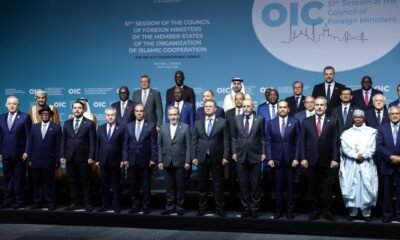
Türkiye was represented by Foreign Minister Hakan Fidan as the 52nd Session of Organization of Islamic Cooperation (OIC) Council of Foreign Ministers gathered in Baghdad over the weekend.
Fidan said in a social media post on Saturday that they emphasized solidarity and joint action on challenges facing the Islamic world, particularly Palestine, at the meeting.
Türkiye handed over the OIC chairmanship to Iraq at the meeting, which was held under the theme “Dialogue and Solidarity: Two Essential Pillars for Promoting Peace and Sustainable Development.” Türkiye has held the rotating chairpersonship since June 2025.
At the meeting, OIC Secretary-General Ismail Ould Cheikh Ahmed strongly condemned recent attacks on Saudi Arabia, saying they constitute a “blatant violation” of the kingdom’s sovereignty and threaten the safety of Islamic holy sites and regional stability.
The Yemeni Houthi group has recently targeted energy and aviation sites in Saudi Arabia. Yemen has been engulfed in conflict since the Houthis seized Sanaa and several provinces in 2014, prompting a Saudi-led coalition to intervene the following year in support of the internationally recognized government. The latest fighting began in July and a 2022 truce broke down.
The OIC chief said safeguarding the sovereignty and territorial integrity of member states is a shared responsibility and called for prioritizing dialogue and political solutions to consolidate peace and stability.
He also pledged to strengthen the OIC’s role in preventing and resolving conflicts by promoting preventive diplomacy and activating the organization’s mediation mechanisms.
The minister said he held meetings with Iraqi President Nizar Amedi, Prime Minister Ali al-Zaidi and Parliament Speaker Heibet Halbusi. He also met with Iraq’s Supreme Judicial Council President Faiq Zaidan, Foreign Minister Fuad Hussein, Popular Mobilization Forces Commission Chair Falih al-Fayyad and National Security Adviser Qasim al-Abboudi.
His meetings also included Iraqi Turkmen Front President and Kirkuk Governor Muhammed Seman Agha.
Fidan said the discussions covered bilateral relations in all their dimensions, including steps to deepen cooperation between Türkiye and Iraq in trade, energy and security. He also thanked Iraqi officials for their hospitality. Fidan said he also met with Egyptian Foreign Minister Badr Abdelatty and Iranian Foreign Minister Abbas Araghchi to assess progress in efforts to resolve ongoing regional conflicts.
“As Türkiye, we will resolutely continue our efforts to strengthen solidarity in the Islamic world, defend the rights of the oppressed, and make constructive contributions to peace and prosperity in our region,” he said.
Ties with Iraq
Fidan also spoke to reporters about his talks with Iraqi officials. He praised Iraqi Prime Minister Ali al-Zaidi’s “strong vision” for strengthening bilateral relations following talks in Baghdad on Saturday.
“Mr. al-Zaidi has a very strong vision for advancing relations with Türkiye. We are also seeing the positive and constructive impact of this vision in Iraq’s policies,” Fidan said.
Fidan said al-Zaidi has demonstrated a strong commitment to improving bilateral relations and taking practical steps to address Iraq’s challenges.
He said discussions with Iraqi officials covered energy, connectivity, the Development Road Project, security and defense cooperation, counterterrorism and the situation in Sinjar. Fidan reaffirmed Türkiye’s support for the Iraqi government’s constructive policies and said both sides shared a vision of taking bilateral relations to an unprecedented level.
He added that Ankara would contribute to overcoming difficulties stemming from recent history that had particularly affected Iraqi society.
“Hopefully, other problems in the region will also be resolved through dialogue and peaceful means in the near future, creating a more favorable environment for Iraq and helping the region evolve toward a more peaceful atmosphere,” he said.
Fidan also met with Iraqi President Nizar Amedi, conveyed President Recep Tayyip Erdoğan’s greetings and congratulated Amedi on assuming office.
“This was our first face-to-face meeting since he assumed his new position. He was a statesman we already knew,” Fidan said.
Fidan said he discussed Iraq’s political situation and regional developments with Iraqi Foreign Minister Fuad Hussein. He also met with Popular Mobilization Forces Commission Chairperson Falih al-Fayyad, with whom he said he had maintained ties since his years at Türkiye’s National Intelligence Organization. Their discussions covered the Popular Mobilization Forces, regional developments, steps taken toward disarming certain armed groups in Iraq and bilateral security cooperation, Fidan said. He also conveyed Erdoğan’s greetings to Iraqi Parliament Speaker Haibat al-Halbusi and discussed parliamentary matters. Fidan said talks with Iraqi National Security Adviser Qasim al-Abboudi focused on security cooperation and its regional implications.
After decades of Soviet rule, Azerbaijan regained its independence on Oct. 18, 1991. Today, it is marked as a day of restoration of independence, in reference to short-lived independence in 1918, before the Soviet occupation.
The Turkish Foreign Ministry and officials extended congratulations to “brotherly” Azerbaijan on the anniversary. President Recep Tayyip Erdoğan said in a social media post on Sunday that he sent his heartfelt congratulations to “friend and brother” Azerbaijan on its day of restoration of independence. “I extend my greetings to president, my qardaş (brother) Ilham Aliyev and my brothers and sisters in Azerbaijan who are united with us in joy and grief,” Erdoğan stated.
Türkiye was the first country to recognize Azerbaijan’s independence. The late President Heydar Aliyev’s words, “One nation, two states,” used to describe Türkiye and Azerbaijan, became a fundamental principle guiding relations between the two countries.
Building their relations on a strategic alliance, Türkiye and Azerbaijan have undertaken projects such as the Baku-Tbilisi-Ceyhan oil pipeline, the Trans-Anatolian Natural Gas Pipeline (TANAP) and the Baku-Tbilisi-Kars railway.
During the Second Karabakh War, Türkiye and the Turkish people provided political and moral support to Azerbaijan. President Recep Tayyip Erdoğan’s statement that “Azerbaijan is not alone” prevented third powers from intervening in Azerbaijan’s military operation.
Erdoğan and Aliyev elevated relations between the two countries to a higher level by signing the Shusha Declaration on June 15, 2021.
Azerbaijan declared its independence on May 28, 1918, through the National Council, headed by Mahammad Amin Rasulzadeh. After a brief two-year period of independence, the country was occupied by the Soviet Union. It reemerged as an independent state on the world stage on Oct. 18, 1991.
The massacre carried out by the Soviet Union’s army in Baku and other Azerbaijani cities on Jan. 20, 1990, in which women and children were killed indiscriminately, completely shattered the Azerbaijani people’s trust in Soviet rule and accelerated the process leading to the country’s independence.
On Aug. 30, 1991, the Supreme Council of Azerbaijan, which functioned as the country’s parliament at the time, adopted a declaration calling for independence. In September 1991, sessions were held to discuss Azerbaijan’s withdrawal from the Soviet Union and the declaration of independence. On Oct. 18, 1991, the Supreme Council adopted, by a majority vote, the Constitutional Act on the State Independence of the Republic of Azerbaijan. The document described the Soviets as occupiers and declared Azerbaijan the successor to the republic established in 1918.
The Supreme Council’s decision was put to a referendum on Dec. 29, 1991. Nearly the entire population voted in favor of independence.
Over the past 35 years, Azerbaijan has developed its economy and strengthened its military. By elevating relations with Türkiye to the level of strategic cooperation and implementing energy and transportation projects, the country has emerged as a regional actor.
In the early years of its independence, Azerbaijan faced territorial claims and attacks by Armenia. Taking advantage of political infighting in Azerbaijan, Armenia occupied Karabakh and surrounding districts between 1991 and 1993. As a result of the occupation, approximately 1 million Azerbaijanis were forced to leave their homes.
Azerbaijan negotiated with Armenia for years through the Organization for Security and Co-operation in Europe (OSCE) Minsk Group, co-chaired by Russia, the United States and France, in an effort to resolve the conflict peacefully. After the negotiations failed to produce results and the Armenian Army intensified its attacks on civilian settlements, Azerbaijan moved to exercise its rights under international law.
After Armenian forces opened fire on Azerbaijani civilian settlements, Azerbaijan launched a counteroffensive on Sept. 27, 2020. The operation, which soon became known as the “Patriotic War,” enabled the Azerbaijani army to liberate its territories and end the Azerbaijani people’s 30-year-long longing to return home.
The Second Karabakh War, which Azerbaijanis call the “Patriotic War,” lasted 44 days and ended on Nov. 10, 2020, when Armenia signed a statement acknowledging its defeat.
In 44 days, the Azerbaijani army liberated five cities, four towns and 286 villages from occupation. Under the terms of the signed statement, the Armenian Army was required to withdraw from the districts of Kalbajar, Lachin and Aghdam.
In September 2023, the Azerbaijani army launched an anti-terrorism operation in the Karabakh region, ending the presence of illegal armed groups on Azerbaijani territory. Azerbaijan thus fully restored its territorial integrity and established its sovereignty across the entire country.
Following these developments, peace talks gained renewed momentum. At a summit in Washington, the parties initialed the text of a peace agreement, marking a significant step toward lasting peace.
The foundations of Azerbaijan’s economic development were laid when the late Heydar Aliyev, the country’s former president and National Leader, signed the “Contract of the Century” with 11 companies from seven countries. The agreement provided for the development of the Azeri-Chirag-Gunashli (ACG) oil field, the country’s largest, and the export of its oil to global markets.
Azerbaijan cooperated with Türkiye and Georgia to transport its oil, leading to the construction of the Baku-Tbilisi-Ceyhan (BTC) pipeline.
While Azerbaijan’s oil production had fallen to almost negligible levels in the early 1990s, the country now sells oil and petroleum products to more than 30 countries.
Under President Ilham Aliyev, Azerbaijan also made major advances in the natural gas sector. The Southern Gas Corridor was built to transport natural gas extracted from the Shah Deniz 2 field to Türkiye and Europe. The corridor consists of the South Caucasus Pipeline, the Trans-Anatolian Natural Gas Pipeline (TANAP) and the Trans Adriatic Pipeline (TAP). Azerbaijan now exports natural gas to 16 countries.
Since gaining independence, Azerbaijan has established good relations with nearly all neighboring and nearby countries, with the exception of Armenia, and has played an active role in international organizations such as the Organization of Turkic States (OTS), the Commonwealth of Independent States, the Organisation of Islamic Cooperation (OIC), the Non-Aligned Movement, the Economic Cooperation Organization and the OSCE.


-
 Politics2 days ago
Turkish Embassy rejects reports of FM Fidan’s ‘secret talks’ in Baku
-

 Economy2 days ago
US consumers withstand rising prices, but for how long?
-
 Politics3 days ago
Turkish military flexes combat capabilities in Northern Cyprus drill
-

 Economy2 days ago
Türkiye foresees spending over $20B on transportation next year
-
 Politics3 days ago
Sudan values Türkiye’s support as Ankara pledges continued backing
-
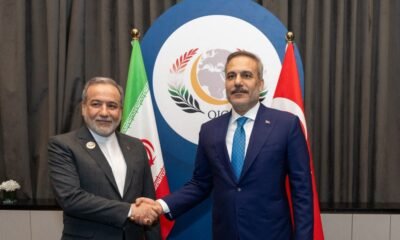
 Politics3 days ago
FM Fidan holds talks with OIC counterparts in Iraq
-
 Politics2 days ago
Turkish FM heads to Baghdad for OIC talks on Gaza, regional tensions
-

 Sports23 hours ago
Fenerbahçe seek Champions League reset against Slavia Prague