
Politics
Erdoğan urges developed nations to step up climate action at COP31

President Recep Tayyip Erdoğan on Thursday called on developed countries to take greater responsibility for cutting emissions and financing climate action, warning at the COP31 summit that failure to address the worsening climate crisis would leave future generations facing devastating consequences.
Speaking at the COP31 Business Forum held as part of the 31st Conference of the Parties to the U.N. Framework Convention on Climate Change (COP31), Erdoğan stressed that countries historically responsible for the largest share of carbon emissions must lead global efforts to combat climate change while protecting the development rights of emerging economies.
“Developed countries that have exhausted the global carbon budget must assume greater responsibility for emissions reductions and financing,” Erdoğan said.
He emphasized that developing nations should not be forced to sacrifice economic progress in the fight against climate change, urging stronger international support for communities most vulnerable to its effects.
“The development rights of developing countries must be protected, and communities bearing the heaviest burden of the climate crisis must receive strong support,” he said.
Erdoğan warned that the alarming scale of the climate crisis demanded decisive and coordinated action worldwide, stressing that unilateral approaches would only deepen existing challenges.
“If countries act solely in their own interests, they will open the door to far greater difficulties and much more devastating disasters,” he said.
The president also called on the private sector to play a more active role in addressing climate challenges, arguing that government action alone would not be sufficient.
“Such a universal struggle cannot succeed through the efforts of governments alone. The business community must also step up and shoulder its responsibility,” Erdoğan said.
Türkiye reaffirms 2053 net-zero target
Highlighting Türkiye’s commitment to sustainable development, Erdoğan reiterated the country’s goal of achieving net-zero greenhouse gas emissions by 2053.
“As Türkiye, we have declared our 2053 target as net-zero emissions. We are resolutely continuing our green development journey,” he said.
Erdoğan said the country was restructuring major sectors of its economy, including energy, industry, transportation, agriculture and buildings, as part of its transition toward a more sustainable economic model.
He also warned against prioritizing short-term economic gains over environmental protection, pointing to the long-lasting consequences of past decisions.
“The mistakes made 50 or 100 years ago are now confronting us one by one. If we repeat those mistakes today and sacrifice ecology for the sake of the economy, our children will pay the price,” Erdoğan said.
Expressing confidence in Türkiye’s ability to meet its environmental and economic objectives, the president said the country had demonstrated its capacity to translate ambitions into concrete achievements.
“Türkiye is a country skilled at turning dreams into goals and goals into reality,” he said.
Erdoğan also highlighted Türkiye’s regional position, saying the country had once again firmly demonstrated its role as an anchor of stability and security in recent months.

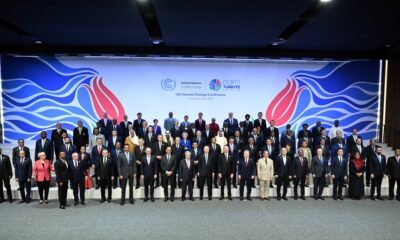
The COP31 summit in Antalya brought together leaders from more than 100 countries for the biggest international event ever hosted by the Mediterranean Turkish city, with President Recep Tayyip Erdoğan taking center stage as a popular host, exchanging warm greetings and posing for selfies while one guest, Greek Cypriot leader Nikos Christodoulides, missed the chance for a handshake.
As Greek Cypriot leader Nikos Christodoulides approached the spot where Erdoğan stood alongside U.N. Secretary-General António Guterres to welcome guests, he paused for a few seconds, giving Erdoğan enough time to leave his position, apparently to Christodoulides’ surprise. Türkiye does not recognize the Greek Cypriot administration.
The moment may have offered some relief to the Turkish leader, who patiently greeted and conversed with each leader despite the lengthy list of guests from more than 100 countries.
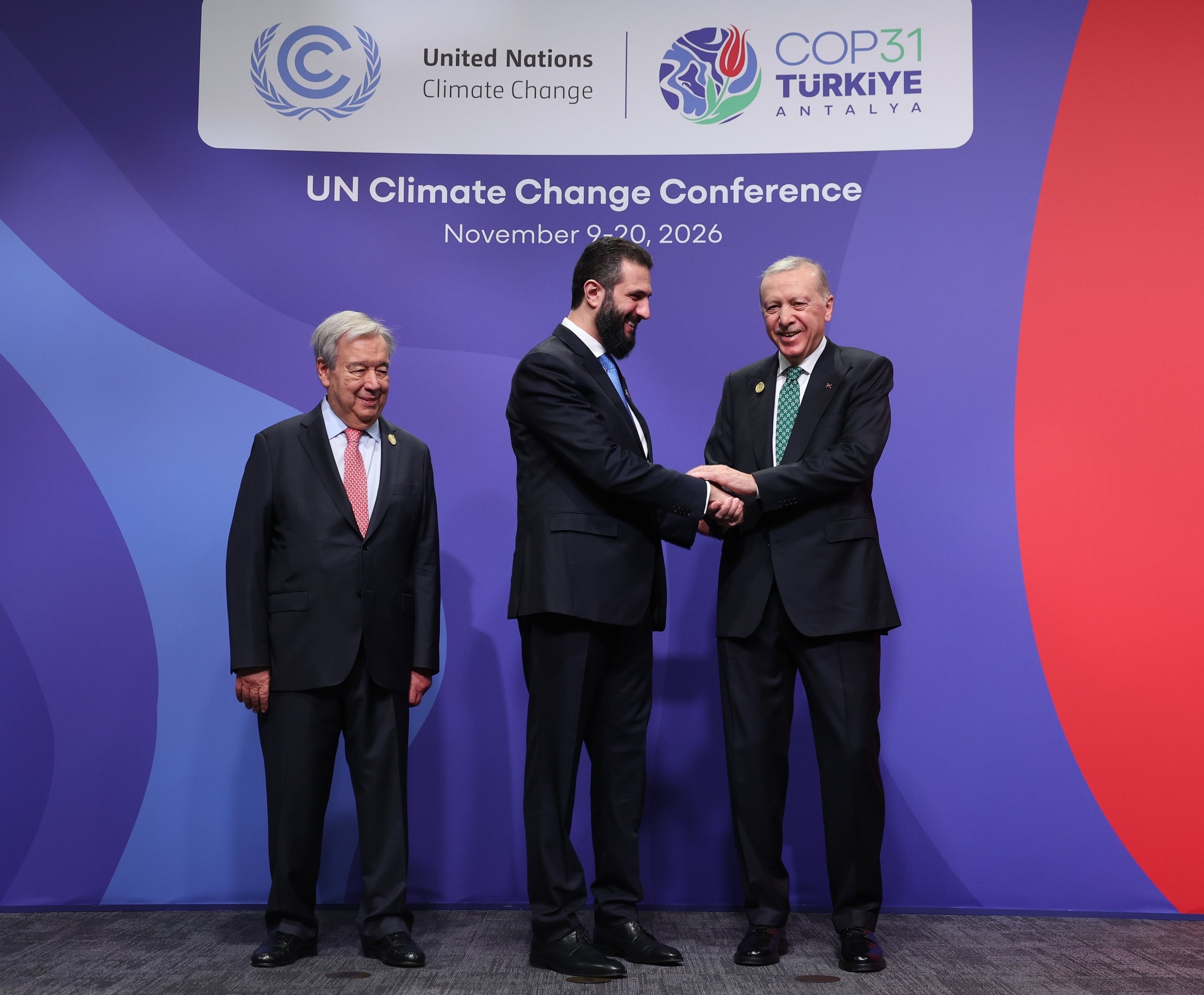
An Ottoman military band, known as the mehter, welcomed guests outside the greeting area where Erdoğan and Guterres stood, performing traditional marches once used to motivate Ottoman troops as admirers rushed to photograph the band.
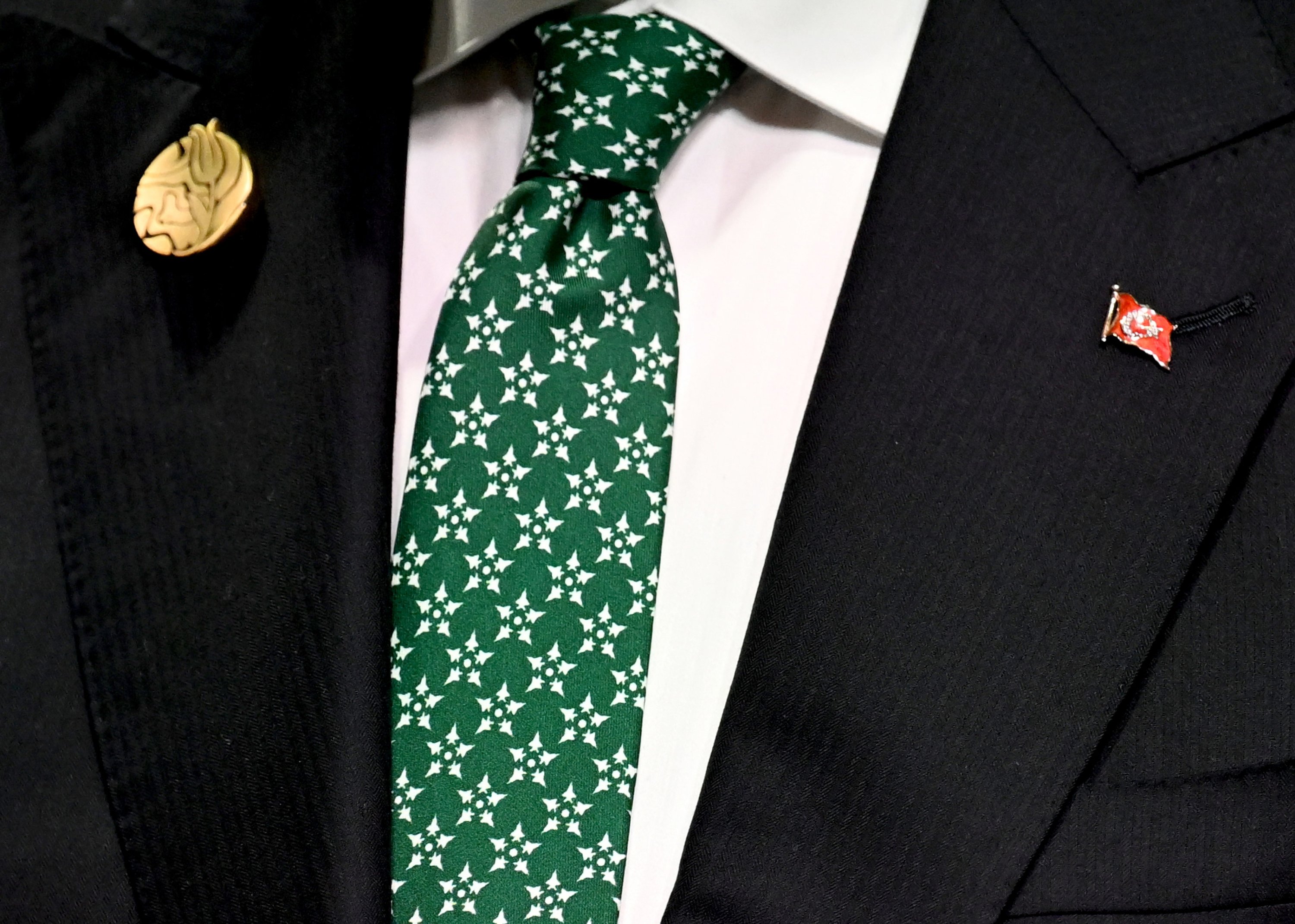
In keeping with the summit’s theme, Erdoğan wore a green tie decorated with stars and motifs resembling Türkiye’s domestically developed KAAN fighter jet, similar to ties he has worn at previous events.
The welcoming ceremony was probably one of Erdoğan’s longest in a while, following a Republic Day reception in Ankara last month, when he shook hands with dozens of guests, from ministers to ambassadors. Still, the president took time for brief conversations with several guests.
Among them was European Commission President Ursula von der Leyen, with whom Erdoğan spoke in Turkish and English. “Good morning, maşallah (blessed be you), how are you?” Erdoğan asked a smiling von der Leyen.
Erdoğan also stopped to speak with Pakistani Prime Minister Shehbaz Sharif, Uzbek President Shavkat Mirziyoyev and Syrian President Ahmed al-Sharaa.
He also obliged a selfie request from Palau President Surangel Whipps Jr., who quickly pulled a cellphone from his pocket before posing between Erdoğan and Guterres.
After the greeting ceremony, Erdoğan and his guests gathered to plant olive trees in a designated area of the summit venue, an event that coincided with Türkiye’s National Forestation Day, observed annually on Nov. 11.
A Navtex, a legal advisory message to mariners, issued by Türkiye on Tuesday, defused brewing tensions for now between Türkiye and Greece over maritime rights. The notice by Türkiye cleared the way for the French survey vessel Abeille Marengo to work in the Mediterranean. A report by the Hürriyet newspaper said on Wednesday that Türkiye has been in touch with French authorities over the route of a cable line partially crossing Türkiye’s continental shelf. The vessel works in the Mediterranean as part of the Great Sea Interconnector (GSI) project, which aims to link Greece to the Greek Cypriot part of Cyprus. The undersea project is a sensitive issue as Türkiye is concerned that it would violate maritime jurisdiction of Turkish Republic of Northern Cyprus (TRNC).
With the new Navtex, the French vessel will be free to carry out work in coordinates designated by Türkiye until March 19, 2027. It left the Greek island of Crete, where it had been anchored since Oct. 27 following the Navtex, and headed to the eastern Mediterranean.
In September, Greek media outlets reported that Athens and Paris had considered a “light redesign” of the GSI that would keep the cable outside an area covered by Türkiye’s Fethiye-Kaş marine park, declared south of the Greek island of Meis in August. The newspaper said the proposed adjustment was intended to reduce the risk of a new dispute rather than signal Greek recognition of Turkish jurisdiction in the area.
On Aug. 16, two presidential decrees published in the Official Gazette have reaffirmed Türkiye’s maritime rights in the Aegean Sea. One decree designated an area between the Fethiye district of Muğla and the Kaş district of Antalya in the south of the Aegean as a national marine park, while another applied the same designation to an area in the North Aegean Sea, near the coasts of Tekirdağ and Çanakkale.
The project, intended to connect the island of Cyprus with Europe’s electricity grid and eventually extend to Israel, has faced geopolitical and financial challenges. French infrastructure investor Meridiam acquired a 66% stake in GSI in August, increasing Paris’ involvement in the project.
Athens and its partners decided to alter the route of the planned undersea cable following objections from Ankara, according to reports.
The reported decision to adjust the route came after a warning issued by Türkiye’s Defense Ministry on Sept. 24.
In the statement, the ministry said any cable- or pipeline-laying activities within Türkiye’s continental shelf must be coordinated with Ankara, also underlining that Türkiye would continue to protect its rights and interests stemming from its maritime jurisdiction and continental shelf in the Eastern Mediterranean.
“No unauthorized activity that disregards our country’s rights will be permitted,” the ministry said.
Ankara and Athens seek to improve relations after years of hostilities, but maritime jurisdictions remain a thorny issue. The countries, which came close to an all-out war in the 1990s over the Aegean Sea, remain vigilant, with Türkiye concentrating on developing its domestic defense industry. Greece, on the other hand, relies on foreign partners to bolster its defenses.
Türkiye on Wednesday condemned Israel for launching a defamatory attack against President Recep Tayyip Erdoğan after he denounced Israel’s systematic oppression of Palestinians at the COP31 Leaders Summit in Antalya, criticizing Israeli officials for trying to cover up their violations and evade accountability.
In a written statement, the Foreign Ministry condemned the Israeli Foreign Ministry’s remarks targeting Erdoğan, describing them as another futile attempt to obscure the truth.
“The Israeli Foreign Ministry’s despicable and outrageous slanders against our president represent yet another example of Israeli officials’ futile efforts to conceal the truth,” the ministry said.
The ministry emphasized that Erdoğan’s opening address at the COP31 Leaders Summit had once again brought Israel’s systematic oppression to the forefront of the international agenda, giving voice to concerns shared by humanity’s collective conscience.
Reaffirming Türkiye’s unwavering support for Palestinians, the ministry pledged to continue standing with those subjected to Israel’s aggressive policies.
“As Türkiye, we will continue to stand with all those oppressed by Israel’s aggressive policies, particularly the Palestinians,” it said.
The opposition Republican People’s Party (CHP) will file a criminal complaint against media boss Cafer Mahiroğlu after the owner of broadcaster Halk TV claimed the party’s leader, Kemal Kılıçdaroğlu, asked him to pay $50 million to finance the party.
Authorities recently appointed trustees to Halk TV after charges of money laundering were filed against Mahiroğlu, who lives abroad. Before the foundation of the New Party (YP) in July, Halk TV was strictly pro-CHP, which was then chaired by YP’s leader Özgür Özel. Kılıçdaroğlu’s reinstatement as CHP chair last May by a court verdict led to a shift in Halk TV’s coverage of the party and, in line with YP supporters’ mindset, its coverage was blatantly anti-Kılıçdaroğlu. Kılıçdaroğlu has in turn accused the broadcaster of disseminating fake news against him and the party. Mahiroğlu took to social media to deny both allegations of money laundering and Kılıçdaroğlu’s statements and recently claimed that Kılıçdaroğlu sought $50 million from him before accusing him of playing a role in appointing trustees to the broadcaster.
In a written statement, Kılıçdaroğlu’s media adviser Atakan Sönmez said they would launch legal proceedings against the baseless allegations targeting Kılıçdaroğlu, “by a fugitive who is investigated for bribery, tender-rigging and money laundering.” Sönmez said they invited “this person who cannot comprehend that the CHP chairman would not bow down in the face of threats, blackmail and slander to take his allegations to court.” “He says he trusted in the state and the country, so it will be a good opportunity for him to reunite with his country,” Sönmez said.
Eight more suspects were issued detention warrants on Tuesday in the investigation, and seven of them were detained while another suspect remains at large.
In a statement, the Istanbul Chief Public Prosecutor’s Office announced that seven people had been detained in simultaneous operations in Istanbul, Ankara, Izmir and Eskişehir. The suspects face charges of money laundering and rigging public tenders.
Among the detained suspects were former Izmir Metropolitan Municipality Secretary General Ramazan Tezcan, Izmir Municipality Machinery Supply Department head Haluk Harun Tuzsuzoğlu, Mehmet Meral, an inspector working in the same department, Ibrahim Tuncol, an employee of Tuzsuzoğlu, Filiz Bulut, an employee at a company called Bustech, Murat Topuz, a project manager at the same company and Ibrahim Seyfittinoğlu, a partner at Maker and Zafer Inşaat. Emre Kaya, owner of ESBAKIM, a company based in the central Turkish province of Eskişehir, remains at large.
The statement said the investigation is examining allegations that Halk TV, owned by Mahiroğlu, as well as Özdemir Üç Tekstil, other companies belonging to him and his personal accounts, were funded through a company called Bustech. The company is allegedly owned by Mahiroğlu and was established as a front. The statement also recalled allegations, based on the testimony of a secret witness and statements by suspects seeking to benefit from the effective remorse provisions, that tenders were awarded by Izmir Metropolitan Municipality after Mahiroğlu acquired Halk TV to ensure the broadcaster would not face financial difficulties, and that officials were paid bribes in cash during the payment process for those contracts.
A total of 13 people were detained in the first wave of the investigation into Mahiroğlu, while five were held in custody.
An arrest warrant was issued for Mahiroğlu in June, after which the Savings Deposit Insurance Fund (TMSF) appointed trustees to take over Halk TV and his other companies.
In an earlier statement, the prosecutor’s office said the investigation into Mahiroğlu was based on testimony by businessperson Aziz Ihsan Aktaş, who also became a state witness in a corruption case focused on former Istanbul mayor Ekrem Imamoğlu, a prominent figure of the CHP who later aligned with Özel.
Aktaş, who was arrested on charges of “establishing and leading a criminal organization,” was released under judicial control on June 4 after benefiting from the effective remorse provisions.
A brief but important statement was jointly issued by Turkish and Iraqi officials on Sunday evening, catching the attention of a few. Yet, it marks a milestone in efforts to end the presence of the PKK as a terrorist group, especially in parts of Iraq other than the north, close to the Turkish border.
The Turkish Presidency’s Communications Directorate said leaders of the two countries agreed on a memorandum on Sept. 23 and, in line with it, the two countries affirmed a joint will to reestablish state order in Sinjar and end the PKK’s presence there. Beyond that, Türkiye confirmed taking steps for the gradual handover of the Bashika-Zilkan military complex to Iraqi authorities and formally establishing a Joint Security Coordination Committee, which was announced earlier to advance the elimination of the PKK presence through joint verification of the process. The military base was set up in 2015 to help Iraq fight against Daesh and later maintained its presence when the terrorist group PKK sought to replace Daesh following the liberation of Sinjar.
Hüseyin Fazla, founder and director of Strategic Research Centre (STRASAM) and a retired air force brigadier general, told Daily Sabah that the latest move and statement were a strategic advance, especially in terms of Türkiye’s “terror-free region” vision. Türkiye in 2024 launched the terror-free Türkiye initiative, calling on the PKK to dissolve itself. The initiative covers all wings of PKK, whose wings have spread to Iran and Syria over the past decades while its senior cadres are hiding out in Iraq’s mountainous north.
Fazla says the committee was an operational bridge that “combines Türkiye’s determination to fight terrorism with Iraq’s sovereign rights, translating theoretical agreements into concrete results on the ground.”
“The committee’s active functioning will not only eliminate one of the most significant security risks on the path toward the goal of a terror-free Türkiye but also elevate Türkiye-Iraq relations to the level of a strategic and lasting security partnership,” Fazla stated.
The presence of the PKK has stood out in otherwise normal relations between Türkiye and southern neighbor Iraq for years. Despite the well-documented presence of the terrorist group in the north, Iraq shied away from openly designating it as a terrorist group, unlike, for instance, European countries and the United States. This has seen a significant shift in the past decade, and in 2024, Baghdad finally moved to formally recognize the PKK as a security risk, designating it as a “banned organization.”
“For many years, Sinjar served as a critical corridor for the PKK’s logistical and manpower transfers between its headquarters in Qandil (the mountain in the north, which is home to PKK hideouts and vast underground networks the group uses to shelter from raids) and its Syrian offshoot, the YPG. The Iraqi central government’s establishment of full authority in the area plays a key role in directly cutting off the group’s geographical mobility and supply routes. The Joint Security Coordination Committee established as part of this process demonstrates that this authority will not remain merely on paper, but will be made permanent through practical implementation on the ground, with administrative and military mechanisms upheld and strengthened,” Fazla said.
“Intelligence sharing and operational coordination between Ankara and Baghdad are of vital importance in this process. In the past, coordination gaps and diplomatic difficulties have occasionally emerged between Türkiye’s cross-border operations in Iraq and the Iraqi central government. Such problems can now be minimized through institutional structures of this kind. By institutionalizing real-time intelligence sharing, joint monitoring of developments on the ground and operational oversight mechanisms, the committee ensures that the two countries act in concert in their fight against terrorism,” he added.
At the peak of PKK terrorism in the 1990s and 2010s, Türkiye carried out cross-border operations in Iraq, primarily the northern areas controlled by Iraq’s Kurdistan Regional Government (KRG). Operations have been successful to a degree, although Turkish forces suffered casualties in the rough terrain where ground operations have been a major challenge. Iraq occasionally issued messages of protest against what it saw as a violation of its sovereignty but has not actively sought to stop operations, which further confined the PKK to Qandil.
Win-win for Türkiye, Iraq
“Regional ownership will serve as a catalyst for achieving the goal of a terror-free region. The sustainability and permanence of the terror-free Türkiye strategy depends on completely eliminating the terrorist group’s room for maneuver across the border, thereby creating a terror-free region,” Fazla said. “Türkiye’s gradual handover of the Bashika-Zilkan military compound to Iraq, alongside the Joint Security Coordination Committee becoming operational, demonstrates that the fight is no longer a unilateral ‘necessity’ but is evolving into a shared commitment by two neighboring countries to the fundamental dynamics and requirements of regional security. This development contributes to the construction of Türkiye’s security architecture against terrorism while also strengthening Iraq’s territorial integrity and sovereignty from Baghdad’s perspective,” Fazla stated.
“The PKK’s regional strategy is based on exploiting power vacuums in Iraq and Syria to maintain its presence. Full coordination between Türkiye and Iraq at both the security bureaucracy and political leadership levels sends a clear message to the group that it will have no safe haven left in the region. The committee will also play an important role, through its capacity and positioning, in undermining the group’s propaganda mechanisms and psychological advantage on the ground, as the withdrawal and monitoring process in Sinjar is to be jointly verified through this body,” he also said.
Last month, Iraq announced that Sinjar Resistance Units, or YBS, an offshoot of the group, will disarm and integrate into the Iraqi army. YBS was originally founded in 2007 but rose to prominence as a force claiming to fight against Daesh, which launched an offensive to capture Sinjar in 2014. On Oct. 12, Turkish security sources said the PKK had evacuated four accommodation areas in Metina, a region in northern Iraq, as a process aimed at the group’s full disarmament continued. Earlier this month, media outlets reported that PKK members also “withdrew” from the outskirts of Karaçok mountain in northern Iraq.
Fazla, meanwhile, said the process with Iraq still has “the potential to encounter various risks and obstacles due to the complex geopolitical and local dynamics on the ground.”
“At this point, attention must be paid to constantly shifting local authorities and power vacuums on the ground. Geographically and demographically, Sinjar is not only an area of PKK activity but also a crossroads for Hashd al-Shaabi elements, local militia groups and the disputed territories between Baghdad and Irbil (the seat of the KRG), known as the Article 140 areas,” Fazla said, referring to the boundary dispute between the central government and the KRG and the Constitution’s relevant article that aims to settle the dispute and jurisdiction issues.
“Although the central government in Baghdad maintains that it has “established official authority” in Sinjar, failure to fully integrate local armed actors into the process, or potential attempts by the de facto chain of command on the ground to sabotage it, could create obstacles to progress. Meanwhile, the success of this process depends not only on military operations to clear the area but also on its economic integration, including through projects such as the Development Road Project,” Fazla also said. The Development Road forms part of Türkiye’s wider push to become a transit hub between Asia and Europe. It complements the Middle Corridor, the route across Central Asia and the Caucasus, and Ankara has described both as central to Türkiye’s strategy.
“The PKK is known to have established tactical alliances with certain local armed groups in Iraq and external actors, including Shiite militia networks close to Iran. The PKK and affiliated groups may resort to asymmetric sabotage, provocations or propaganda activities to prevent these strategic routes from becoming operational,” Fazla warned.
He also pointed to a rift between two parties in KRG, which, for decades, dominated Iraqi Kurdish politics. He said the rift “makes cooperation along the Ankara-Baghdad axis critical.”
“The growing divide between the Barzani and Talabani camps, particularly the PUK’s (Patriotic Union of Kurdistan) announcement under Bafel Talabani that it was withdrawing from the government and the possibility of a parallel administration being raised, has highlighted the risk that progress in the process could be derailed by conflicts of interest among local actors. In this context, Baghdad needs to consolidate its control over KRG and prevent tensions within the KRG from undermining the process,” he said.
“I believe Tehran should also be included in this process, alongside coordination along the Ankara-Baghdad axis and the ongoing regional diplomatic efforts. Given the presence of Shiite militia groups in Iraq and Iran’s indirect influence in the region, diplomatic channels should remain open to prevent Tehran from perceiving the security mechanism established with Baghdad as a ‘threat.’ The regional balance must be taken into account by clearly declaring that the committee’s objective is limited to ‘eliminating the PKK’s presence and ensuring border security,’” Fazla also said.
President Recep Tayyip Erdoğan held a series of bilateral meetings with leaders from Turkmenistan, Bangladesh, Ethiopia and Brazil on the sidelines of the COP31 climate summit in Antalya, focusing on expanding economic cooperation, strengthening diplomatic ties and addressing regional and global challenges.
The meetings, held as world leaders gathered for the U.N. climate conference running from Nov. 9-20, highlighted Türkiye’s efforts to deepen international partnerships while advancing cooperation on climate action.
During talks with Turkmenistan’s national leader and People’s Council Chairman Gurbanguly Berdimuhamedov, Erdoğan emphasized the importance of expanding cooperation in energy, trade, defense and investment, according to Türkiye’s Communications Directorate.
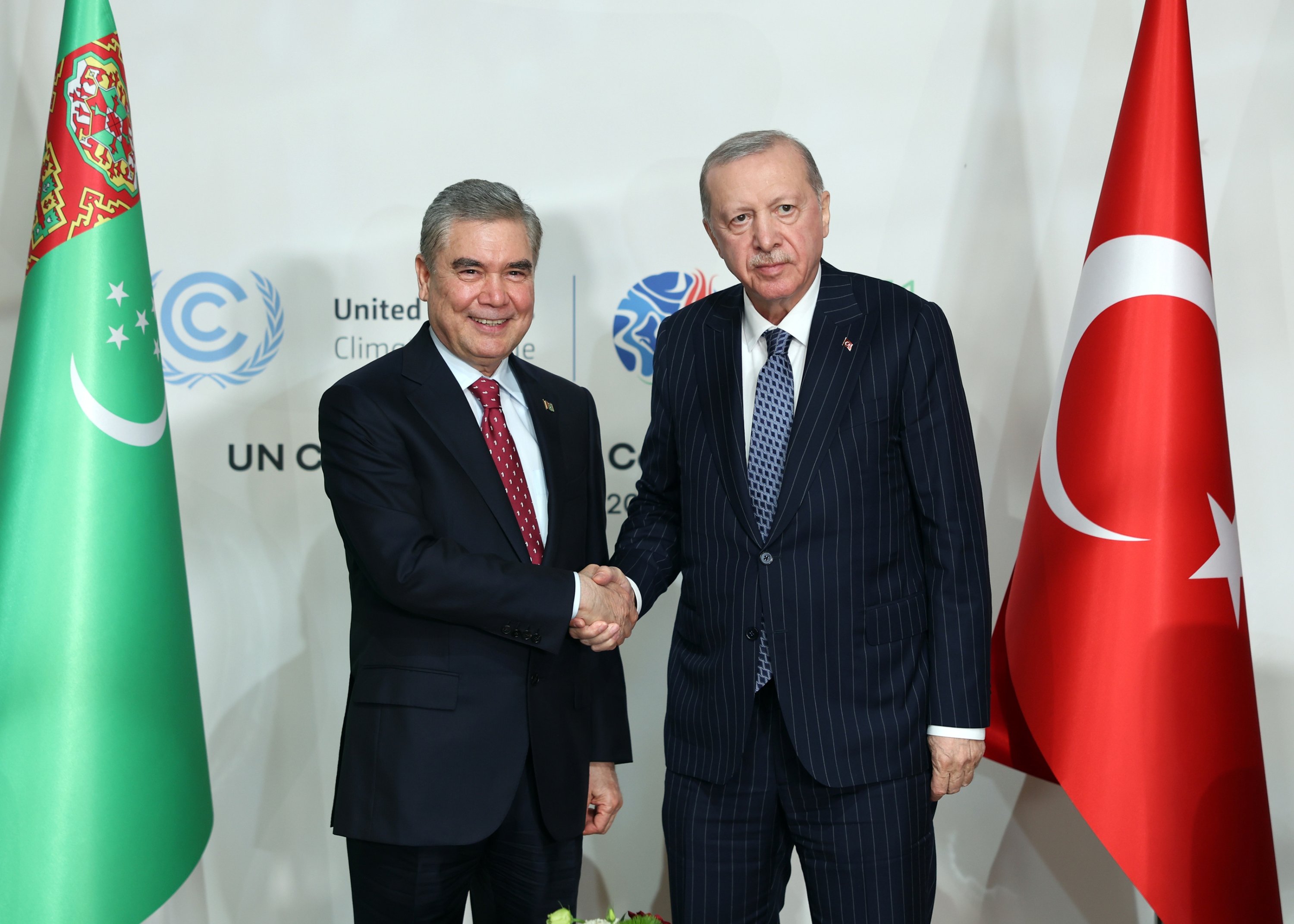
Erdoğan also welcomed the growing influence of the Organization of Turkic States (OTS), saying its strategic significance had been reaffirmed at the Ankara summit. He expressed hope that Turkmenistan would join the organization as a full member.
In a separate meeting with Bangladeshi Prime Minister Tarique Rahman, Erdoğan called for stronger bilateral cooperation, particularly in trade and the defense industry.
He reaffirmed Türkiye’s commitment to keeping the humanitarian situation in Cox’s Bazar on the international agenda, while highlighting Bangladesh’s vulnerability to climate change.
Erdoğan said COP31 would address the country’s needs in flood management and climate-resilient infrastructure, expressing hope that the Climate Implementation Bridge initiative would help deliver practical solutions.
During his meeting with Ethiopian Prime Minister Abiy Ahmed, Erdoğan pledged continued efforts to expand trade and investment ties and reiterated Türkiye’s support for peace and stability in the region.
He also congratulated Ethiopia on its selection to host COP32, the next U.N. climate conference after Türkiye.
Erdoğan, Lula discuss trade, climate cooperation
Erdoğan also met Brazilian President Luiz Inacio Lula da Silva, discussing bilateral relations and regional and global developments.
The Turkish president noted that Türkiye and Brazil would mark the 100th anniversary of diplomatic relations next year, emphasizing plans to strengthen cooperation in trade, defense and other strategic sectors.
Erdoğan praised Brazil’s work during its COP30 presidency and said Türkiye aimed to build on that progress by making COP31 a conference focused on implementing previously agreed climate commitments.
He also stressed the importance of continued cooperation between Ankara and Brasilia on international peace efforts.
Erdoğan congratulated Lula on his election victory, with the meeting marking the Brazilian leader’s first official engagement following his reelection.
Meanwhile, Azerbaijani President Ilham Aliyev arrived in Türkiye on Tuesday at Erdoğan’s invitation to attend the COP31 Leaders Summit, scheduled for Nov. 11-12.
The Antalya gathering brings together heads of state, policymakers and civil society representatives to advance global climate negotiations and strengthen international cooperation.


-
 Politics3 days ago
Sea of Friendship: Türkiye, Egypt bond over Med drills
-
 Politics3 days ago
Türkiye’s New Party launches one-man intra-party race
-
 Sports2 days ago
Messi extends FIFPRO World XI record to 18 as Kane misses out
-

 Economy1 day ago
Fed officials consider faster hikes as higher prices seep into broader economy
-

 Lifestyle2 days ago
No mystery, just Italian glamor as Orient Express returns to Istanbul
-
 Sports2 days ago
Turkish sports honor Atatürk’s ideals on 88th death anniversary
-
 Sports2 days ago
TVF takes sustainability drive to COP31 with solar energy project
-
 Politics1 day ago
Erdoğan warns against existential crisis, urges action at COP31