
Politics
Terror-free Türkiye architect lays out 50 articles for ‘dawn’

Nationalist Movement Party (MHP) leader Devlet Bahçeli, a veteran politician who first championed a new initiative to end the presence of the terrorist group PKK, renewed his commitment to the cause now widely endorsed by Parliament.
The leader of the government ally issued a framework made up of 50 points through a newspaper close to the party on Sunday. In remarks published by Türkgün, Bahçeli said that “the dawn breaks for the day of resolving our social problems for good, for finding lasting solutions to them.”
Terror-free Türkiye aims to end the campaign of terrorism of the PKK, which began in the 1980s, and began with Bahçeli’s call to the terrorist group to dissolve itself. The PKK responded to the call by announcing its dissolution last year, and since then, Turkish authorities have monitored the disarmament process of the group, whose senior cadres are based in northern Iraq. The PKK exploited disillusioned Kurds of Türkiye for its self-styled cause of creating a “Kurdistan” within Turkish borders, and Bahçeli says that its dissolution will reinforce Turkish-Kurdish unity. Parliament recently approved a law for deferral of sentencing and prosecution for PKK members not involved in acts of terrorism, and Ankara is expected to take new steps in the future for integration of those PKK members.
In his 50-point statement, Bahçeli said the issue is not only a matter of security but a matter for Türkiye’s future, to end the damage terrorism inflicted on the nation, on economy.
“The underlying reasoning of terror-free Türkiye is preserving the Turkish nation’s unity, cementing the Republic of Türkiye’s sovereignty and leaving a safer, more prosperous country to future generations,” Bahçeli told Türkgün.
The PKK and its jailed ringleader Abdullah Öcalan often emphasize that disarmament is the beginning of a democratic “struggle” for rights. Bahçeli said that violence should not be a tool for politics, and political demands can only be conveyed through democratic politics, laws and constitutional order. “Terror-free Türkiye is not a concept of submission, concession (to the PKK) or bargaining with it. It is about eliminating terrorism and achieving the goal of ensuring that the politics are executed through a legitimate democratic basis,” Bahçeli said.
“The elimination of terrorism also has the potential to transform the political agenda in Türkiye. As security concerns become less pressing, the aim is to create a political environment in which economic, social, cultural and democratic issues can be debated more extensively. The social dimension of a terror-free Türkiye is to foster a social climate that prioritizes reconciliation over conflict, integration over division, democratic politics over violence, and trust over fear,” Bahçeli also said.

Foreign Minister Hakan Fidan will be in Brussels on Monday to attend the 2nd Ministerial Meeting on Interregional Security and Connectivity, held within the framework of the EU’s Foreign Affairs Council.
The meeting is expected to bring together Fidan, EU foreign policy chief Kaja Kallas, European Commissioner for Enlargement Marta Kos, foreign ministers from EU member states, and representatives from Azerbaijan, Armenia, Moldova, Ukraine, Kazakhstan, Kyrgyzstan, Uzbekistan, Tajikistan, and Turkmenistan, according to diplomatic sources. Political issues related to regional connectivity are also expected to be addressed.
Fidan is expected to express Türkiye’s readiness to contribute to regional connectivity projects and expand cooperation in the field, drawing on the advantages of its geostrategic location, according to Turkish Foreign Ministry sources.
He is also due to underscore the need to reassess Türkiye-EU relations on a realistic, results-oriented basis that can deliver tangible progress amid increasingly interconnected global challenges. He will highlight regional connectivity as a potential area for constructive cooperation between Türkiye and the EU, while underlining the importance of resuming high-level dialogue meetings on transport and energy.
The Turkish foreign minister is also expected to address the opportunities presented by major connectivity initiatives, including the Middle Corridor, Development Road, the Three Seas Initiative and Global Gateway, in facilitating global trade and economic integration.
He is also likely to reaffirm Türkiye’s position that different connectivity routes should be viewed as complementary rather than competing projects, contributing to global prosperity.
Black Sea security
During the meeting’s second session, “Advancing Security Commitments for the Black Sea Region,” participants are expected to discuss the strategic importance of the Black Sea, the regional security situation, grain trade, maritime transport, hybrid threats and the protection of critical infrastructure.
The session will also focus on measures aimed at strengthening regional stability.
Fidan is due to share Türkiye’s assessment of the ongoing war in Ukraine and its implications for Black Sea security, emphasizing the importance of regional ownership in maintaining stability.
He is also expected to underline the critical role of the Montreux Convention for the Turkish Straits in preserving security and stability in the region.
Fidan is set to urge that Türkiye-EU cooperation not be reduced to a conditionality-based approach, arguing that ties must instead be developed on the basis of mutual interests and equal partnership.
Fidan is also expected to stress that the success of new initiatives concerning the Black Sea will depend on close consultation and coordination with Türkiye throughout their development and implementation.
He is set to caution against establishing overlapping structures, stressing that any new security arrangements for the Black Sea should complement existing bilateral and multilateral mechanisms developed on the basis of regional ownership.
He is also expected to hold bilateral meetings on the sidelines of the gathering. The Turkish foreign minister previously attended the first ministerial meeting on Security, Stability, Resilience in the Black Sea and Interregional Connectivity, held in Luxembourg in October 2025, under the EU Foreign Affairs Council framework, with the participation of countries from the Caucasus and Central Asia.
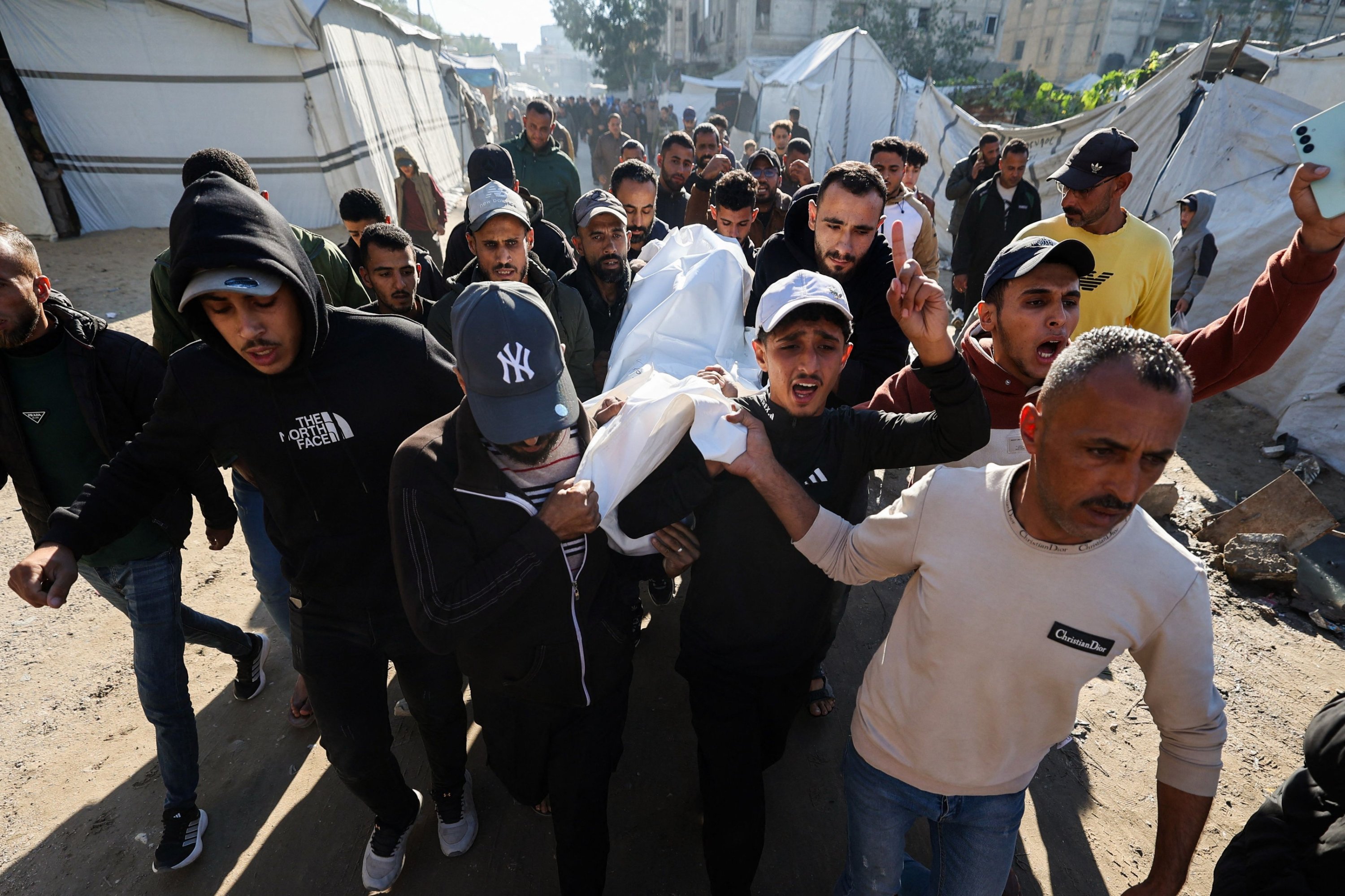
Foreign ministers from 18 countries, including Türkiye, Saudi Arabia, Egypt and Pakistan, strongly condemned an Israeli airstrike on the Nasser Medical Complex in Khan Younis, Gaza, saying it violated international humanitarian law and endangered patients and medical workers.
In a joint statement issued Nov. 14, the ministers said the attack, which caused casualties among patients and health care personnel, violated the special protections afforded to medical facilities and their workers under international humanitarian law.
The statement was endorsed by Türkiye, Algeria, Djibouti, Egypt, Indonesia, Jordan, Kuwait, Lebanon, Libya, Mauritania, Oman, Pakistan, Palestine, Qatar, Saudi Arabia, Somalia, Sudan and the United Arab Emirates.
The ministers also denounced continued Israeli attacks on Palestinian civilians, including airstrikes targeting tents and other locations sheltering displaced people.
They warned that such attacks undermine the cease-fire and international efforts to restore security and stability in Gaza, while contradicting U.S. President Donald Trump’s Comprehensive Plan.
They expressed particular concern over Israel’s continued restrictions on humanitarian assistance, including shelter materials such as tents, caravans and mobile homes, as well as essential medical supplies.
With winter approaching, the ministers warned that deteriorating living conditions, inadequate shelter and the breakdown of water, sanitation and health care services were placing civilian lives at increasing risk, particularly those of children and infants.
They cautioned that without sufficient shelter and humanitarian assistance, children could once again die from exposure to freezing temperatures.
The ministers urged Israel to respond to appeals from the international community and the Board of Peace by immediately and fully implementing its obligations under the Sharm El-Sheikh Agreement, Trump’s Comprehensive Plan and United Nations Security Council Resolution 2803, adopted in 2025.
They called on Israel to uphold the cease-fire, protect civilians and medical facilities, and guarantee the safe, sustained and unrestricted delivery of sufficient humanitarian assistance to Gaza.
The assistance, they said, must include emergency shelter, early recovery supplies and equipment needed to restore essential infrastructure.
They also demanded that U.N. agencies and humanitarian organizations be allowed to carry out their work without obstruction.
The ministers stressed that commitments under the first phase of the agreements were supposed to take effect immediately upon their signing and must not be delayed or subjected to additional political or security conditions that could obstruct humanitarian access.
They further insisted that urgent humanitarian assistance must not be made conditional on progress in subsequent phases of the plan.
Calling for stronger international pressure, the ministers urged the United States and the Board of Peace to intensify their respective efforts to secure Israel’s full implementation of the commitments and the removal of all restrictions on humanitarian aid entering Gaza.
They warned that fulfilling these obligations was essential to maintaining the credibility of the agreements and strengthening the cease-fire.
The statement concluded with the ministers reaffirming their commitment to working with regional and international partners to consolidate the cease-fire, advance all phases of the plan and expand humanitarian assistance to ease the suffering of Palestinians.
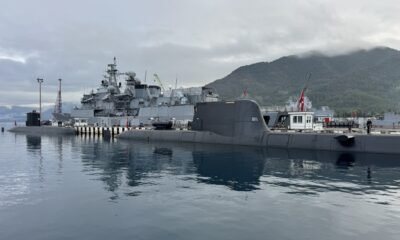
The 2026 edition of Blue Whale, one of the biggest exercises involving submarines in the Mediterranean, had its media and distinguished observers’ day on Friday in southwestern Türkiye. The invitation-only military drill hosts more than 4,500 personnel from 12 countries and involves eight submarines, 11 warships, five helicopters and an assortment of aerial and underwater military vehicles, including drones. The exercise also stands out with the participation of Türkiye’s neighbor, Greece, which is represented by one warship. The two countries contest maritime borders in the Aegean Sea and are often at odds over rights in the Eastern Mediterranean, where Türkiye calls for recognition of the Turkish Cypriot side in divided Cyprus and Greece only recognizes the Greek Cypriot side.
The exercise, which began on Nov. 9, will conclude on Nov. 20. On Friday, Turkish Naval Forces Command hosted a briefing aboard the TCG Salihreis frigate for journalists and observers at the Aksaz naval base on the coast of Marmaris.
Rear Adm. Ahmet Işçi, commander of the submarine fleet based in Gölcük in northwestern Türkiye, briefed journalists and observers on the exercise’s purpose and stages.
Işçi said the exercise aims not only to enhance the Turkish naval forces’ operational capabilities but also to strengthen cooperation and interoperability among friendly and allied countries.
“Our submarine fleet has become one of the key elements of our navy’s deterrent power,” he said, noting that the Turkish Submarine Fleet ranks among NATO’s leading fleets with 13 active submarines.
He said the main objective of the biannual international exercise is to improve knowledge, skills and readiness in anti-submarine warfare, adding that it also seeks to enhance joint operational capabilities in an environment that reflects real operational conditions.
Işçi said eight submarines, 11 warships, five helicopters, three maritime patrol aircraft, two unmanned aerial vehicles (UAVs) and one unmanned underwater vehicle would take part in the exercise under the Naval Forces Command. Three vessels from the Coast Guard Command will also participate.
Along with one Greek warship, two Spanish warships are participating as part of NATO’s Standing Maritime Group 2 (SNMG2), while a U.S. Navy warship is joining them independently.
A maritime patrol aircraft from the Pakistan Navy and 13 foreign observers from seven countries are also attending.
Cooperation activities will be conducted during the exercise under the scenarios of “Submarine and Underwater Attack Operations” and “Submarine and Maritime Air Operations,” Işçi said.
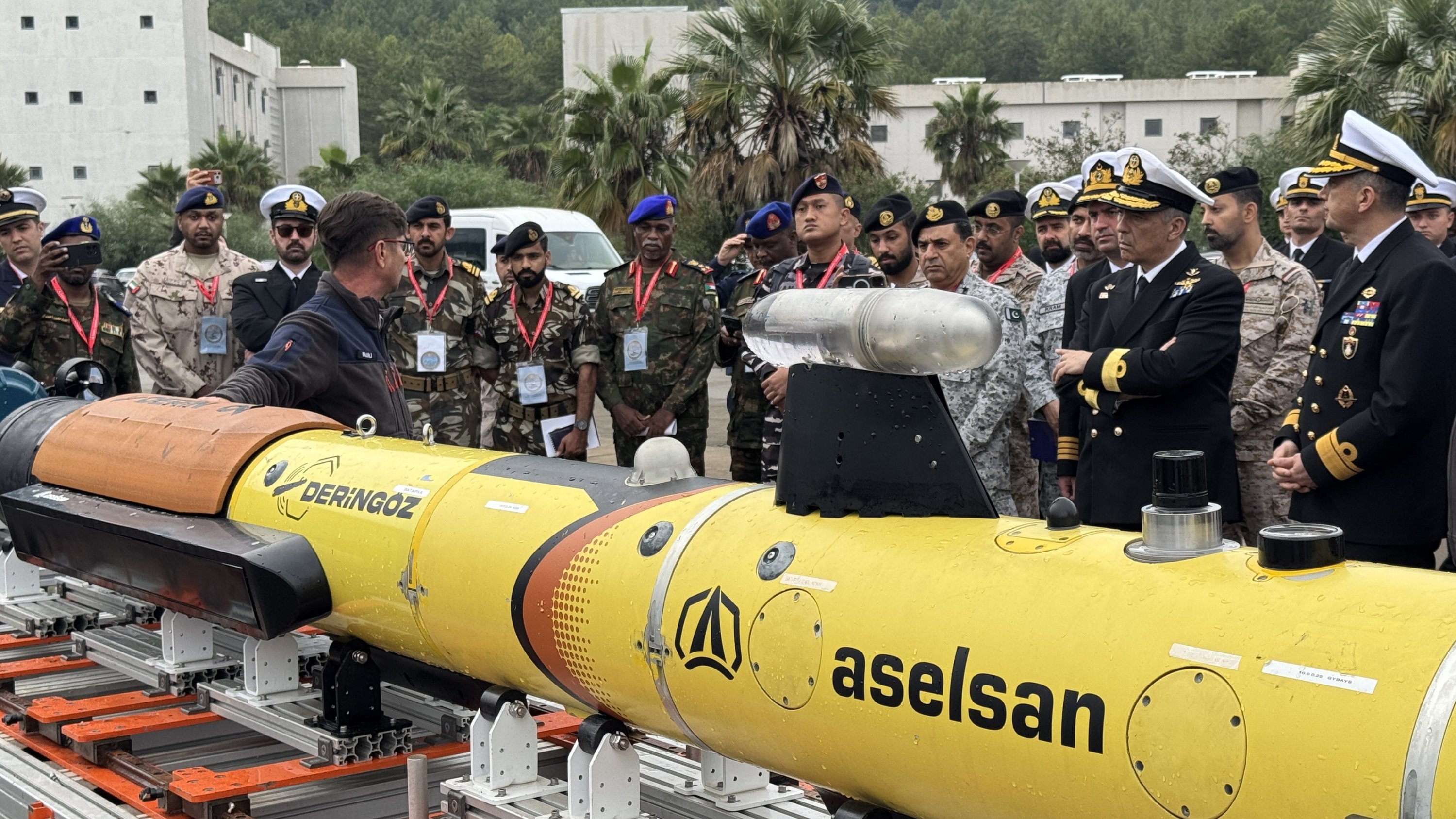
The exercise was also an occasion for the promotion of locally made vehicles in the service of the Turkish navy, including “Deringöz” and “Kılıç” by the top defense firm ASELSAN. Deringöz is an autonomous underwater vehicle used for reconnaissance and surveillance, with an operating depth of 600 meters (1,968.5 feet) and an operating time of up to 24 hours with an expandable battery. Kılıç is a kamikaze autonomous underwater vehicle designed to detect, track and neutralize maritime targets such as subsea and surface platforms.
The COP31 summit naturally concentrated on climate change, its impact, and how to tackle it, but the event in the southern Turkish province of Antalya was also at the heart of a busy diplomatic schedule for President Recep Tayyip Erdoğan.
Erdoğan held one-on-one talks with leaders from across the globe, touching upon a wide array of issues and showcasing Türkiye’s diplomatic skills to maintain ties with countries in every continent. His first meeting was with outgoing U.N. Secretary-General Antonio Guterres on Nov. 10. During the meeting, Erdoğan said that Türkiye was continuing its efforts, together with regional countries, to de-escalate rising tensions over the conflict between Iran and the United States and ensure that problems were resolved through dialogue and diplomacy. Noting that Türkiye was also working to end the Russia-Ukraine war, Erdoğan said they were ready to support a new dialogue process. The latest developments in Gaza, Cyprus and Libya were also discussed during the meeting.
Following his meeting with Guterres, Erdoğan met with Brazilian President Luiz Inacio Lula da Silva. It was Lula da Silva’s first official face-to-face meeting with an international leader since his reelection last month. During the meeting, which addressed Türkiye-Brazil relations as well as regional and global developments, Erdoğan said Türkiye aimed to build on Brazil’s progress in climate negotiations during its COP30 presidency.
Türkiye-Ethiopia relations and regional issues were discussed during Erdoğan’s meeting with Ethiopian Prime Minister Abiy Ahmed. Erdoğan said the two countries would continue taking steps to advance cooperation in various fields, particularly trade and investment, adding that Türkiye would maintain its support for peace and stability in Ethiopia’s region. Erdoğan also congratulated the Ethiopian prime minister on Ethiopia’s selection to host COP32.
Bilateral relations and regional issues were discussed during Erdoğan’s meeting with Bangladeshi Prime Minister Tarique Rahman. Erdoğan said it would be beneficial for Türkiye and Bangladesh to continue taking steps to expand cooperation in various fields, particularly trade and the defense industry. Erdoğan said Türkiye would continue its efforts to keep the humanitarian situation in Cox’s Bazar, where Rohingya refugees took shelter, on the international community’s agenda.
Erdoğan also received Saudi Energy Minister Prince Abdulaziz bin Salman Al Saud. Following the meeting, Energy and Natural Resources Minister Alparslan Bayraktar and his Saudi counterpart signed a Memorandum of Understanding on Cooperation in Electricity Projects between the two countries in the presence of Erdoğan.
During his meeting with Gurbanguly Berdimuhamedov, Turkmenistan’s National Leader and Chairman of the People’s Council, Erdoğan stressed the need to intensify cooperation between the two countries in energy, trade, the defense industry and investment. Erdoğan said the Organization of Turkic States (OTS) was growing stronger and that the Ankara Summit held last month had once again demonstrated the organization’s increasingly recognized strategic importance. He also expressed hope that Turkmenistan would join the organization’s family council as a member.
On Nov. 11, the first day of the COP31 Leaders’ Summit, Erdoğan received Australian Prime Minister Anthony Albanese at the Antalya EXPO site. During the meeting, which addressed Türkiye-Australia relations as well as regional and global issues, Erdoğan said the potential for bilateral trade between Türkiye and Australia was greater than its current level, stressing the importance of exploring cooperation opportunities in various fields.
Erdoğan also received the Presidency of Bosnia-Herzegovina Chairperson Denis Becirovic and Presidency Council member Zeljko Komsic. He stressed that Türkiye attached importance to its friendship with all three constituent peoples of Bosnia-Herzegovina and would continue to support the country’s territorial integrity, sovereignty and constitutional order.
During his meeting with Armenian Prime Minister Nikol Pashinyan, Erdoğan said the normalization process between Türkiye and Armenia was continuing through constructive steps, with several symbolic but important measures already taken. Erdoğan said Türkiye was closely monitoring and supporting the peace process between Armenia and Azerbaijan.
Erdoğan also received Chinese Vice President Han Zheng. The meeting addressed Türkiye-China relations as well as regional and global issues. During the meeting, Erdoğan stressed the importance of accelerating cooperation between Türkiye and China, saying the two countries could develop ties in various fields, particularly investment, energy, trade and tourism, and that they were determined to take the necessary steps to achieve this. Erdoğan said the Middle Corridor could be aligned with China’s Belt and Road Initiative, adding that, when considered alongside the Development Road Project, the resulting potential for cooperation presented a significant opportunity for the countries involved.
US-Iran war
On Nov. 12, the second and final day of the COP31 Leaders’ Summit, Erdoğan first met with Iranian President Masoud Pezeshkian. The two leaders discussed Türkiye-Iran relations as well as regional and global issues.
Expressing his hope that the conflict between Iran and the U.S. would end as soon as possible and that lasting peace would be established, Erdoğan said the ground for reconciliation needed to be strengthened and diplomacy given a chance to usher in a period of stability. Erdoğan stressed the importance of establishing a negotiating table without further delay.
Erdoğan also met with Democratic Republic of the Congo (DRC) President Felix Antoine Tshisekedi. Türkiye-DRC relations and regional issues were discussed during the meeting.
Erdoğan said the partnership between Türkiye and the DRC was expanding in all fields, adding that the two countries would continue taking steps in various areas, particularly trade, transportation and the defense industry. Emphasizing that Türkiye supported the DRC’s territorial integrity, Erdoğan said he hoped lasting stability would be established in the country.
During his meeting with Sudan’s Sovereignty Council Chairperson Abdel Fattah al-Burhan, Erdoğan said the two countries would continue their efforts to strengthen bilateral relations. He stressed the importance of further steps to expand cooperation in various fields, particularly the defense industry, investment and agriculture. The Turkish president said Türkiye’s support for Sudan’s unity, territorial integrity and independence remained unchanged. He added that Ankara was closely monitoring developments on the ground and supported the proposed “Sudan Peace Initiative.”
During his meeting with Libyan Prime Minister Abdul Hamid Dbeibah, Erdoğan discussed bilateral relations and regional issues. He said Türkiye and Libya would continue taking steps to expand cooperation and deepen ties in various fields, particularly energy. He stressed that no initiative that was not embraced by the Libyan people could gain traction on the ground.
During his meeting with Georgian President Mikheil Kavelashvili, Erdoğan said it was important to make the most effective use of Türkiye-Georgia-Azerbaijan cooperation mechanisms.
Noting that Georgia was one of Türkiye’s important trading partners, Erdoğan said efforts were underway to achieve bilateral trade volume targets. He added that the two countries were working to strengthen relations in various fields, particularly energy, transportation and the defense industry.
During his meeting with Pakistani Prime Minister Shehbaz Sharif, Erdoğan said the two countries would continue taking steps to significantly advance Türkiye-Pakistan relations. He added that efforts would continue to accelerate initiatives aimed at expanding cooperation in various fields, particularly transportation and the defense industry.
Emphasizing that the Mecca Defense Alliance had further strengthened solidarity between Türkiye and Pakistan, Erdoğan said the two countries would continue contributing to efforts to end the conflict in Iran. He also said Türkiye was ready to do everything possible through peaceful means to help address the challenges facing Pakistan in its region.
During his meeting with Somali President Hassan Sheikh Mohamud, Erdoğan stressed that Türkiye and Somalia were determined to expand cooperation in various fields, with defense and energy among their priorities, and would continue taking steps to give fresh momentum to bilateral relations. Erdoğan said Somalia’s peace and stability were of great importance to Türkiye, adding that Ankara hoped the national dialogue process would succeed, national unity would be established and social peace would be achieved.
During Erdoğan’s meeting with Congolese President Denis Sassou Nguesso, Türkiye-Congo relations and regional issues were discussed.
Erdoğan said Türkiye and the Republic of the Congo had made good progress in cooperation, particularly in trade and investment, adding that the two countries were working to take steps to unlock their full potential and would continue efforts to strengthen bilateral ties.
Terror-free region
Türkiye-Iraq relations and regional issues were discussed during Erdoğan’s meeting with Iraqi President Nizar Amedi. Noting that progress had been made on the Development Road Project, which will strengthen Iraq’s connectivity with the rest of the world, Erdoğan said the project would create an entirely new route for East-West trade. He added that the two countries would continue taking steps to strengthen cooperation in various fields, particularly energy.
Erdoğan said he expected Iraq to maintain and increase its support for the goal of a “terror-free region,” stressing that achieving this objective would benefit both countries.
During his meeting with Tanzanian President Samia Suluhu Hassan, Erdoğan said bilateral trade between Türkiye and Tanzania had increased as a result of steps taken by the two countries. He added that they would continue working to expand cooperation in various fields based on a win-win approach.
“What happened to us?” This was reportedly what a crying Mustafa Sarıgül told a suspect released in connection with a corruption probe involving his family. The lawmaker, who was recently expelled from the main opposition New Party (YP), has more legal troubles in the offing as his son Ömer Sarıgül is reportedly set to testify against him. Authorities also detained 15 more suspects on Friday in connection with the probe.
The Sarıgül family and their associates are accused of laundering money linked to criminal activities, but the veteran politician currently enjoys immunity due to his status as a lawmaker. Prosecutors in Istanbul launched the investigation recently after two German citizens alerted police, claiming Sarıgül defrauded them after pledging joint investments. Mustafa Sarıgül himself is a suspect in the case, which involved his sons Ömer and Emir as well as businesspeople who did business with them, but a separate probe is expected for him as prosecutors in Istanbul referred his case to Ankara counterparts, citing jurisdiction.
Media outlets reported on Friday that Ömer Sarıgül will follow in the footsteps of his older brother Emir and invoke a remorse law which grants lenient sentencing and sometimes a full but conditional release for suspects collaborating with authorities. Younger Sarıgül, who was arrested on Oct. 19, is expected to make an additional statement to prosecutors within a few days. Emir Sarıgül was ordered not to leave his residence after he was released under judicial control in light of his confessions implicating his father. Parts of Emir Sarıgül’s statements published by the media outlets last week exposed alleged bribery by the politician to the chair of YP, while both men were members and chairs of the opposition Republican People’s Party (CHP), in order to secure a candidacy for a parliamentary seat. A bodyguard of Mustafa Sarıgül has also testified in the case against Sarıgül, claiming he groomed him for sex and that a video leaked online showing him having intercourse with Sarıgül was genuine and that Sarıgül paid to obtain a report to claim the video was fake.
Müge Bayır, a suspect who was released with judicial control after collaborating with authorities in the probe, said in an additional statement to investigators that Mustafa Sarıgül telephoned him after her release. “He repeatedly called me and my sister. I did not return calls at first but had to answer them as I was afraid of what he might do to me,” Bayır said in her second statement, according to media reports on Friday. Bayır said they spoke briefly and Sarıgül was crying during the call, telling her, “Why did this happen? What happened to us?” She claimed Sarıgül then sent her cash through middlemen, though she did not specify whether it was hush money.
An Istanbul court adjourned the trial of the city’s former mayor, Ekrem Imamoğlu, to Jan. 4, instructing the case to be referred to prosecutors for preparation of their closing arguments in the case where Imamoğlu faces thousands of years in prison on charges of corruption.
At a hearing which continued into the early hours of Friday, the court ruled for the release of eight defendants in the case, including businesspeople, a lawyer for Imamoğlu and director and staff of the municipality’s subsidiaries.
Imamoğlu is accused by prosecutors of running a criminal organization thriving on bribes and tender rigging. The mayor, who was arrested in March 2025, denies the charges and claims the trial, which is underway in the Silivri courthouse-prison complex where he is also in custody, is politically motivated. He has been in custody along with 46 other defendants in the sprawling corruption case. A total of 436 defendants are being tried, and most of them were released with judiciary control in earlier hearings.
The indictment identifies Imamoğlu as the alleged “leader of a criminal organization” and accuses him of offenses including forming an organization to commit crimes, bribery, money laundering, fraud against public institutions, unlawfully recording and obtaining personal data, concealing evidence, obstructing communications, damaging public property, publicly disseminating misleading information, extortion, bid-rigging, deliberate environmental pollution and violations of tax, forestry and mining laws.
Prosecutors are seeking a prison sentence of between 828 years, two months and 2,352 years for the ex-mayor over 142 alleged acts.


-

 Sports3 days ago
Güler’s Messi-like stunner grabs spotlight in Türkiye’s loss to Belgium
-
 Economy3 days ago
Nvidia scandal could cost US trade chief his job
-
 Economy3 days ago
Türkiye posts $2.72B current account surplus as deficit narrows
-
 Politics3 days ago
Türkiye hits back at Israel after Tel Aviv reacts to ecocide remarks
-
 Politics22 hours ago
Türkiye, Greece, others join forces for major East Med drill
-

 Sports3 days ago
Pochettino takes charge of Man Utd in major coaching shake-up
-
 Economy3 days ago
Türkiye says calls to abandon fossil fuels must be backed by financing
-

 Politics2 days ago
Erdoğan pushes climate pledges into action as COP31 talks advance