
Economy
Canada may turn to Chinese automakers if Trump talks fail: Carney

Canada could turn to Chinese automakers if trade negotiations with U.S. President Donald Trump fail to preserve an integrated North American auto industry, Prime Minister Mark Carney said Monday.
Carney’s comments in Cambodia came ahead of a planned meeting with Chinese President Xi Jinping this week in Shenzhen, China, where Chinese auto manufacturing is expected to be discussed. The two leaders reached an agreement in January allowing tens of thousands of Chinese electric vehicles into Canada at reduced tariffs.
“We have the best auto workers in the world, and we want them fully deployed, full opportunity, in an integrated North American market,” Carney told reporters in Cambodia. “That market has become less integrated because of U.S. trade actions.”
Carney said Saturday in Manila, Philippines, that any trade agreement with Washington must leave Canada with a viable auto industry. He said Monday that negotiations with the United States remain his priority, but their outcome could determine whether Canada pursues alternatives involving European, Chinese or Japanese automakers.
Asked whether potential Chinese investment was leverage in the U.S. negotiations, Carney replied: “It’s not leverage. But action, reaction.”
“If they’re not fully utilized in a North American context, that provides other opportunities,” Carney said of Canada’s auto workers and manufacturing assets. “Canada is going to move forward either way.”
The Detroit Three – Ford, General Motors and Stellantis – operate factories across Canada, the United States and Mexico, with parts sometimes crossing borders multiple times before a vehicle is completed. Trump has repeatedly pushed automakers to move production to the United States from Canada.
Carney said any Chinese investment would have to involve substantial manufacturing in Canada rather than simply assembling imported parts. He said it would require proper labor standards, manufacturing facilities and domestic supply chains that expand over time, including Canadian critical minerals used in electric vehicles.
“It’s not just about kit cars,” he said. “There has to be a manufacturing aspect involved.”
Under the January agreement, Canada reduced its 100% tariff on Chinese electric vehicles to 6.1%, initially allowing up to 49,000 vehicles annually, with the cap increasing over time. In exchange, China agreed to lower tariffs on Canadian agricultural products, including canola.
Carney said at the time that he expected the agreement to attract Chinese investment in Canada’s auto industry and create jobs.
The deal drew criticism from Ontario Premier Doug Ford, whose province is the center of Canada’s auto industry. Ford warned that allowing Chinese electric vehicles into Canada could threaten Canadian jobs and jeopardize access to the U.S. market.
Trump’s tariffs have disrupted Canada’s auto industry, which relies heavily on cross-border production. Canada recently threatened to sue Stellantis after the automaker shifted planned Jeep Compass production from Brampton, Ontario, to Illinois and agreed to sell its idled Canadian assembly plant.
Carney said Saturday that he had spoken at length with Trump and senior U.S. officials and that the two countries were making progress toward a possible trade agreement, although differences remained.

Italian lender UniCredit received approval from the EU on Monday to take over Germany’s Commerzbank, as Europe seeks to reinforce the bloc’s banking sector.
With the acquisition of Commerzbank, UniCredit plans to cement its status as a European heavyweight, a goal shared by the European Union.
The EU believes better integration of the bloc’s banking sector will help it keep up with U.S. lenders and boost its competitiveness.
“Europe needs stronger banks that can compete, grow and support our businesses and families,” EU competition chief Teresa Ribera said in a statement.
“Cross-border mergers can help make this happen, allowing banks to operate more efficiently and better withstand economic shocks,” she said.
The European Commission, the EU’s powerful competition regulator, approved the acquisition after determining the deal would not raise competition concerns.
“Our approval of UniCredit’s acquisition of Commerzbank shows that it is possible to support a stronger European banking sector while safeguarding competition and choice,” Ribera said.
The EU this year announced plans to overhaul the rulebook on company mergers as Brussels seeks to forge what it calls “European champions.”
The European Central Bank (ECB) had already approved UniCredit’s hostile takeover.
The bank has pursued Commerzbank for the past two years, raising alarm in Germany, where the bank is a key financing source for small and midsize industrial companies.
Despite fierce resistance from Berlin and the German lender, UniCredit had built up a stake of nearly 50% in Commerzbank.
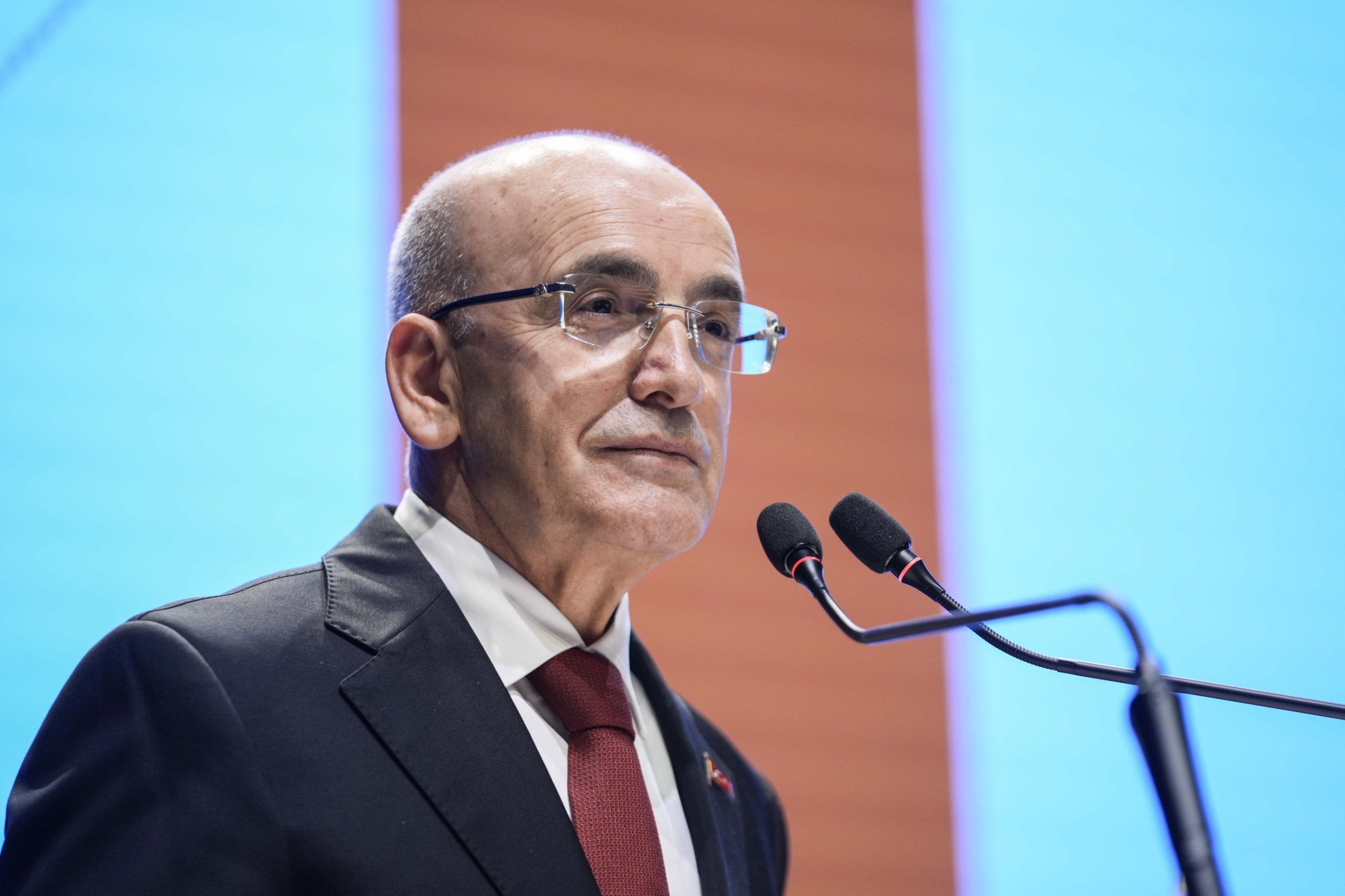
Treasury and Finance Minister Mehmet Şimşek said on Sunday he would meet index compiler MSCI’s senior management and global investors next month to discuss reforms and address concerns about Türkiye’s capital markets and investment environment.
Şimşek said he expected concrete reforms and the government’s structural policy efforts on the financial markets to have taken shape by then.
The minister called MSCI’s last statement reasonable and constructive. The index compiler in mid-October froze certain changes to its Türkiye equity indexes, saying it needed more time to assess market reforms and warning of a potential downgrade if sufficient progress was not made by mid-2027.
Şimşek will meet with MSCI’s senior management and discuss steps already taken and future steps by authorities, he told an interview with broadcaster Kanal 7.
He said the liquidation of funds caught up in the September scandal was proceeding as planned and faster than previously anticipated.
As part of the process, a total of TL 161 billion ($3.2 billion) has been paid to investors with savings in funds that are ordered to be liquidated, he noted.
Corporate bonds linked to funds in liquidation total TL 55.2 billion, of a 1 trillion market, he added.
Şimşek said new legislation will raise penalties, particularly for manipulation through coordinated trades.
The Capital Markets Board’s retrospective review of manipulated stocks and transactions will be largely completed by the end of this month, Şimşek said.
The minister also said the government does not plan to continue the sliding-scale fuel tax system next year, assuming that the Iran war will end.
Jensen Huang is considering a comeback as Nvidia’s chief executive and has discussed with confidants the possibility of returning, a report said Sunday, citing people familiar with the matter.
One Huang ally told the Financial Times they were putting together a “war room” of Silicon Valley executives to lobby for the former Nvidia chief’s return and would try to garner support from the White House.
“Everyone that matters in tech outside the frontier labs loves Jensen,” the person said, adding that the efforts had Huang’s support.
The report comes days after the FT reported that Nvidia’s board had approached British chipmaker Arm Holdings CEO Rene Haas in its search for a potential successor to Jensen Huang.
Huang stepped down on Thursday, ending a 33-year run at the helm of the AI giant he co-founded after revelations of extramarital affairs, including one involving a suspected Chinese spy. That raised questions over exports of the company’s advanced AI chips to China.
The scandal has plunged the chipmaker into crisis and sent shockwaves across an AI industry he helped bankroll.
Meanwhile, Tech tycoon Elon Musk and an Uber co-founder were, as of Sunday, among more than 158,000 signatories of an open letter calling for Huang’s reinstatement as Nvidia chief.
The letter demands that the company’s board members “bring Jensen back while an independent investigation establishes the facts.”
Alongside the SpaceX chief, the tech heavyweight signatories include Tim Sweeney, founder and CEO of video game publisher Epic Games, and Garry Tan, president of Y Combinator, San Francisco’s most renowned business incubator.
Another signatory, Uber co-founder Travis Kalanick, wrote that Huang had “erred, yes – to err is to be human – but I do not believe anything he has done rises to the bar of separating him from his company.”
More than 7,500 signatories identify themselves as Nvidia employees, equivalent to 18% of the company’s workforce.
The support illustrates the unique standing of the leather-jacketed executive, who is seen as a godfather of AI within the industry.
Under his leadership, Nvidia became a pivotal Silicon Valley investor, financing data centers and startups, earning it the nickname “the central bank of AI.”
But the company has also faced criticism that it has fueled a speculative investment bubble.
Huang championed open AI models, including Chinese ones, and fought any constraints on the AI race, clashing on these issues with Claude creator Anthropic and its chief, Dario Amodei.
On Friday, two major shareholders, investors Brad Gerstner and Gavin Baker, urged Nvidia’s board to keep “all options” open.
In Washington, however, U.S. Treasury Secretary Scott Bessent argued Sunday that Nvidia should look “outside” the company for its next chief.
“They need a dramatic shake-up,” Bessent said on Fox News, demanding that the company explain whether it had knowingly turned a blind eye to the smuggling of its chips to China.
Türkiye has made close to TL 161 billion (about $3.2 billion) in payments to investors affected by the recent fund crisis, without using any resources from the central government budget, Vice President Cevdet Yılmaz said on Saturday.
The vice president, speaking to the public broadcaster TRT Haber, said that payments have been made to almost 445,000 individual investors via ordinary and extraordinary payment procedures.
Detailing the scope of the investigation launched following the crisis in the middle of September, Yılmaz said that authorities were pursuing judicial and administrative proceedings to recover excessive profits from individuals involved in wrongdoing and use the proceeds to compensate affected investors.
“To date, payments have been made to a total of 444,987 individual investors through all ordinary and extraordinary payment procedures combined. There are only 10,771 investors who have not received any payments so far,” he said.
A comprehensive probe into alleged stock manipulation was launched in September after some asset management companies struggled to pay back investors. Authorities have ordered the liquidation of some 131 funds, separated into ordinary and extraordinary parts.
They have also encouraged voluntary returns of the gains and passed a law allowing interim payments of up to TL 1 million to individual investors.
Recently, Justice Minister Akın Gürlek said that the probe into the case reached over 460 suspects. Since the start of the probe, the authorities have also reshuffled the leadership at the stock market regulator, while last week, the head of the banking watchdog also said he had tendered his resignation to the president.
Yılmaz, on Saturday, reiterated that the investigation sought to distinguish investors from market manipulators, pledging to “identify those who have committed offences and ensure that they are punished.”
Providing details on interim payments, he said they have been made to 444,987 individual investors, of which, some 371,021 have recovered their entire net investment or portfolio value.
“We are talking about interim payments here, not final payments. Therefore, to date, we have paid approximately TL 161 billion across 119 funds, comprising TL 144.7 billion in cash and TL 16.2 billion in-kind payments,” he said.
Yılmax also said that there were 97 funds subject to ordinary liquidation.
“We said 131; 97 of them were in this normal liquidation process. In 94 of these 97, all payments were completed. Only 3 funds are left,” he said.
“Therefore, we can say that the normal liquidation process is more or less over,” he added.
“Not a single lira from the budget was used,” he also said.
Developing countries cannot realistically abandon fossil fuels without greater access to affordable financing and technology to support their transition to cleaner energy, Türkiye’s energy chief said Thursday as the country hosted U.N. climate talks.
“Access to technology, access to affordable finance are the key things. Without that, to tell the people you don’t need to consume coal, you don’t need to consume other fossil fuels, it doesn’t make any sense,” said Energy and Natural Resources Minister Alparslan Bayraktar told Agence France-Presse (AFP).
“We need to produce this electricity. We would like to make it with renewables. We would like to make it with nuclear,” he said on the sidelines of the COP31 meeting in the Mediterranean resort of Antalya.
“But of course, to develop nuclear power plant(s), it’s a huge amount of finance required. And when you talk to international financial institutions, they are still hesitant about nuclear.”
Türkiye has been expanding its clean energy capacity as it seeks to curb its heavy reliance on energy imports. It has also stepped up hydrocarbon explorations in the Black Sea and in the country’s south.
Bayraktar earlier announced he had met with crude-rich Venezuela’s oil minister on pursuing joint projects, while Türkiye has also signed other agreements on the issue with several countries, Somalia notable among them.
On Monday, President Recep Tayyip Erdoğan celebrated the fact that Türkiye had made a new oil discovery on its territory.
Bayraktar said such moves were not at odds with Türkiye’s goals of going carbon neutral by 2053 and slashing oil consumption by half a million barrels a day by 2040.
In the meantime, “we need 700,000 barrels of oil. We still need 57 BCM (billion cubic meters) of gas,” he said.
“And I don’t want to rely on just imported resources. I want to produce my own oil and gas … So that’s why we are investing in Venezuela. That’s why we are investing in Africa, Libya, Iraq.
“We need to respect the right of development” of all countries, he said.
The energy minister also lamented the absence of several European countries from the summit – and singled out France for criticism.
“Unfortunately, where is President (Emmanuel) Macron? He is one of the leading figures in the global effort to fight climate change,” Bayraktar said.
Türkiye’s current account recorded a surplus of $2.72 billion in September, official data showed Friday, primarily driven by a lower trade gap despite a deterioration in the energy trade balance as the U.S.-Iran war has pushed energy prices up.
Treasury and Finance Minister Mehmet Şimşek said the 12-month rolling current account deficit has narrowed to $39.2 billion, from $41.3 billion in the previous month, and that he expects the gap to stand at 2.2% of national income this year.
The surplus compares to a mere $600 million in the same month last year and is just under the median forecast of $2.75 billion in a Bloomberg survey of economists. In August, the current account posted a surplus of $4.05 billion.
Excluding gold and energy, the current account showed a surplus of $7.34 billion in September, the Central Bank of the Republic of Türkiye (CBRT) said.
The data shows that the large surplus is attributable to a moderation in domestic demand and lower net gold imports, which helped offset the widening net energy trade deficit driven by higher energy prices, analysts at the Dutch financial giant ING said.
The foreign trade deficit, as defined in the balance of payments, was $3.64 billion. That compared to a gap of $5.4 billion in the previous month and was supported by an increase in core trade surplus and gold trade turning positive, they wrote.
Higher services income, more than offsetting deterioration in the primary and secondary income balances, also contributed to the current account’s rising surplus, the analysts said.
Net inflows from services came to just over $9 billion in September, according to the central bank. Travel brought in a net $6.57 billion and transportation a net $3.1 billion.
On a 12-month basis, the foreign trade deficit stood at $76.8 billion. The services balance showed a surplus of $66.1 billion, while the primary income balance was $26.3 billion in deficit and the secondary income balance was $2.1 billion in deficit.
Net direct investment inflows were $859 million in September. Foreign residents’ direct investment in Türkiye rose by nearly $1.52 billion, while Turkish residents’ direct investment abroad rose by $649 million.
Portfolio investment saw a net outflow of $7.73 billion. Foreign investors were net sellers of $5.86 billion in the stock and investment fund markets and of $495 million in domestic government bonds.
Banks made net repayments of $820 million on foreign loans in September, while other sectors drew a net $1.86 billion. Official reserves fell by just over $10 billion.
Crypto assets counted for first time
The central bank included crypto asset transactions in its balance of payments statistics for the first time, using data from the Central Registry Agency, Türkiye’s securities depository.
In September, residents made net sales of crypto assets with no counterpart liability of $21 million and bought $49 million of stablecoins.
Şimşek said exports of goods and services over the past 12 months topped $410 billion, helped by goods exports and tourism revenue.
He said the current account deficit was 1.9% of national income in 2025, and that the government expects a limited rise this year to 2.2%.
That is below the forecast in the government’s Medium-Term Program (MTP) and in line with its estimate for the third quarter, he said.
The September surplus narrowed the 12-month rolling deficit to approximately 2.4% of GDP.
Şimşek recalled that the rise in energy prices after the war between Russia and Ukraine had sharply widened Türkiye’s current account deficit. He said the gap as a share of national income has stayed roughly flat during the most recent period, which has seen one of the biggest energy supply shocks in recent history due to the Iran war.
He called that a sign of the economy’s growing resilience and a concrete result of policies that put macrofinancial stability first.
Şimşek said the government will continue policies to improve the quality of exports and their competitiveness. These include more diverse products and markets, support for high-value, technology-intensive production, faster adjustment to the green and digital transitions and more varied services exports.
Preliminary customs data from the Trade Ministry points to a higher surplus in the October current account and a further improvement in the 12-month rolling deficit, ING analysts said.
“In the months ahead, the trajectory of the current account balance is expected to be influenced by a mix of external risks alongside domestic demand conditions,” they wrote. “Here, any signs of a potential U.S.-Iran agreement being reached would support easing pressure on energy prices.”


-

 Sports3 days ago
Güler’s Messi-like stunner grabs spotlight in Türkiye’s loss to Belgium
-
 Economy3 days ago
Nvidia scandal could cost US trade chief his job
-
 Economy3 days ago
Türkiye posts $2.72B current account surplus as deficit narrows
-

 Politics3 days ago
Türkiye hits back at Israel after Tel Aviv reacts to ecocide remarks
-

 Politics21 hours ago
Türkiye, Greece, others join forces for major East Med drill
-

 Sports2 days ago
Hacıosmanoğlu strolls through Bordeaux ahead of Türkiye-France tie
-

 Politics2 days ago
Erdoğan, Bolivia’s Paz seek to boost trade, investment beyond $1B
-

 Sports3 days ago
Pochettino takes charge of Man Utd in major coaching shake-up