
Economy
Chip tensions loom over Trump-Xi summit amid AI safety push

The prospect of tighter U.S. restrictions on China’s access to advanced AI chips is likely to dominate talks when President Donald Trump and Chinese President Xi Jinping meet in Shenzhen this week, analysts say, although the two leaders could make progress on cooperation over AI safety.
The meeting on Thursday comes days after Nvidia co-founder Jensen Huang, who starred at the U.S.-China summit in Busan a year ago promoting chip sales, resigned following reports of an affair with a suspected Chinese spy.
The scandal has spurred a push by U.S. lawmakers to tighten China’s access to advanced AI chips, a move analysts said Beijing would be bracing for.
“President Xi may not name or mention Jensen Huang, but I’m pretty sure export controls will be high on the agenda when he meets Trump,” said George Chen, chair of digital practice at The Asia Group, a consultancy.
The Chinese government’s key concern, he said, was not just technology controls but whether the U.S. would seek to contain China’s broader technological and economic rise.
“If we are moving from strategic stability to strategic containment, that’s a big shift and that’s what Beijing is watching,” Chen said.
Potential co-op on AI risks
Despite their rivalry, Washington and Beijing have been exploring the prospect of cooperation on the risks posed by increasingly powerful AI systems.
Three people briefed on preparations for the talks said the two sides had planned further AI discussions around the Shenzhen summit to cover safeguards against the misuse of the technology.
A proposed emergency mechanism to notify each other of serious AI incidents, discussed by U.S. Treasury Secretary Scott Bessent and Chinese Vice Premier He Lifeng in September, has yet to become operational, according to several people familiar with the discussions.
They did not say what exactly is delaying the setup of the safety mechanism.
The mechanism is intended to help prevent AI-related incidents or misunderstandings from escalating into national security crises. Communication has so far relied largely on direct contacts between senior officials, the people said.
Bessent said in New York last week that both sides would discuss communication protocols for AI safety incidents at the Asia-Pacific Economic Cooperation (APEC) AI talks and expected to exchange best practices for testing advanced models.
“Right now, I don’t think it’s in the interest of either side to let the potential export control squeeze sour the leaders’ summit,” said Bo Zhengyuan, Shanghai-based partner at research consultancy Plenum.
China aims for practical steps on AI
The U.S. and China will not announce any further progress on the Board of Trade initiative, agreed at the Trump-Xi summit in Washington in September, to lower reciprocal tariffs on $30 billion worth of goods, a senior U.S. administration official said.
China has identified AI and the digital economy as priorities for the APEC forum in Shenzhen, with Foreign Ministry spokesperson Mao Ning saying Beijing hoped leaders would reach practical agreements in both areas.
Trump is not bringing a formal business delegation, according to the administration official. Elon Musk is the main chief executive traveling with Trump, while other corporate leaders were attending at China’s invitation, the official said.
A person familiar with corporate preparations said Musk, Mastercard CEO Michael Miebach and FedEx CEO Raj Subramaniam were expected to attend the summit dinner.
Chinese organizers said more than 2,000 political and business leaders were expected at the APEC CEO Summit on Nov. 17-18, including representatives from 115 Fortune Global 500 companies.

Türkiye’s wind and solar energy potential, together with its substantial hydropower capacity, offers significant advantages in advancing electrification goals, according to an analyst at a leading energy think tank.
Renewable energy investments, grid infrastructure and energy storage technologies would play a key role in supporting Türkiye’s electrification process, Bahadir Sercan Gümüş, an analyst at London-based Ember, told Anadolu Agency (AA).
Speaking on the sidelines of the COP31 climate summit in southern Antalya, Gümüş explained that electrification involves replacing energy currently supplied by fossil fuels with electricity.
This includes switching from natural gas heating systems to heat pumps in buildings, replacing internal combustion engine vehicles with electric cars in transport and adopting electric technologies in industry.
Türkiye has urged countries to put a goal to increase the share of electricity in global energy use at the center of the U.N. climate conference’s final agreement.
Negotiators at the two-week conference were pushing governments to sign a pledge to electrify 35% of the global economy by 2035, up from around a fifth today.
Gümüş said electrification was among COP31’s main priorities and noted that Türkiye strongly supports the target and expects other countries to make similar commitments.
Electricity currently accounts for 22% of Türkiye’s final energy consumption, compared with 23% globally, while China leads with a share of 32%, he said.
Gümüş emphasized that Türkiye has significant renewable energy resources, noting that the country’s recently announced National Energy 2040 plan aims to increase installed wind and solar power capacity nearly fourfold.
Hydropower, storage technologies strengthen Türkiye’s position
Gümüş said electrification requires coordinated planning across three main areas: electricity generation, grid infrastructure and consumption.
He stressed that transmission and distribution networks play a crucial role in delivering renewable electricity to end users.
Türkiye’s recently announced 2040 energy plan envisages significant investments in electricity infrastructure, which would help accelerate electrification, he added.
Gümüş said battery storage systems were becoming increasingly important in improving power system flexibility, while Türkiye’s substantial hydropower capacity provided an additional advantage.
“Another factor strengthening Türkiye’s position is its hydropower capacity. The country has substantial reservoir-based hydropower capacity. These facilities can effectively function as massive batteries, increasing the flexibility of Türkiye’s electricity grid,” he said.
Gümüş noted that Türkiye’s electricity consumption increased nearly sevenfold between 1990 and 2024, making it one of the European countries with the strongest growth in electricity demand.
He said electricity’s share in Türkiye’s final energy consumption had risen from around 10% in 1990, emphasizing the need to expand the use of electric technologies in buildings, industry and transport.
He added that electricity generation, consumption, transmission and distribution infrastructure must be developed simultaneously to ensure a successful transition.
Broad support expected for global electrification goal
Gümüş said Türkiye expects more countries to commit to the COP31 goal of increasing electricity’s share in global final energy consumption.
He noted that countries face different challenges in electrification, with expanding electricity access and securing financing among the main priorities in South Asia and sub-Saharan Africa.
In developed economies, efforts are focused on reducing dependence on fossil fuels and accelerating the adoption of electric technologies, he added.
Gümüş expressed optimism about the international response to the electrification target, saying governments and leaders appeared broadly supportive of the initiative.
“Electrification is one of the main priorities of COP31. The overall impression at this stage is that countries and leaders are broadly supporting electrification goals. Therefore, I believe these targets will be achieved,” he said.
“I also believe countries will sign up to these commitments,” he added.
Canada could turn to Chinese automakers if trade negotiations with U.S. President Donald Trump fail to preserve an integrated North American auto industry, Prime Minister Mark Carney said Monday.
Carney’s comments in Cambodia came ahead of a planned meeting with Chinese President Xi Jinping this week in Shenzhen, China, where Chinese auto manufacturing is expected to be discussed. The two leaders reached an agreement in January allowing tens of thousands of Chinese electric vehicles into Canada at reduced tariffs.
“We have the best auto workers in the world, and we want them fully deployed, full opportunity, in an integrated North American market,” Carney told reporters in Cambodia. “That market has become less integrated because of U.S. trade actions.”
Carney said Saturday in Manila, Philippines, that any trade agreement with Washington must leave Canada with a viable auto industry. He said Monday that negotiations with the United States remain his priority, but their outcome could determine whether Canada pursues alternatives involving European, Chinese or Japanese automakers.
Asked whether potential Chinese investment was leverage in the U.S. negotiations, Carney replied: “It’s not leverage. But action, reaction.”
“If they’re not fully utilized in a North American context, that provides other opportunities,” Carney said of Canada’s auto workers and manufacturing assets. “Canada is going to move forward either way.”
The Detroit Three – Ford, General Motors and Stellantis – operate factories across Canada, the United States and Mexico, with parts sometimes crossing borders multiple times before a vehicle is completed. Trump has repeatedly pushed automakers to move production to the United States from Canada.
Carney said any Chinese investment would have to involve substantial manufacturing in Canada rather than simply assembling imported parts. He said it would require proper labor standards, manufacturing facilities and domestic supply chains that expand over time, including Canadian critical minerals used in electric vehicles.
“It’s not just about kit cars,” he said. “There has to be a manufacturing aspect involved.”
Under the January agreement, Canada reduced its 100% tariff on Chinese electric vehicles to 6.1%, initially allowing up to 49,000 vehicles annually, with the cap increasing over time. In exchange, China agreed to lower tariffs on Canadian agricultural products, including canola.
Carney said at the time that he expected the agreement to attract Chinese investment in Canada’s auto industry and create jobs.
The deal drew criticism from Ontario Premier Doug Ford, whose province is the center of Canada’s auto industry. Ford warned that allowing Chinese electric vehicles into Canada could threaten Canadian jobs and jeopardize access to the U.S. market.
Trump’s tariffs have disrupted Canada’s auto industry, which relies heavily on cross-border production. Canada recently threatened to sue Stellantis after the automaker shifted planned Jeep Compass production from Brampton, Ontario, to Illinois and agreed to sell its idled Canadian assembly plant.
Carney said Saturday that he had spoken at length with Trump and senior U.S. officials and that the two countries were making progress toward a possible trade agreement, although differences remained.
Italian lender UniCredit received approval from the EU on Monday to take over Germany’s Commerzbank, as Europe seeks to reinforce the bloc’s banking sector.
With the acquisition of Commerzbank, UniCredit plans to cement its status as a European heavyweight, a goal shared by the European Union.
The EU believes better integration of the bloc’s banking sector will help it keep up with U.S. lenders and boost its competitiveness.
“Europe needs stronger banks that can compete, grow and support our businesses and families,” EU competition chief Teresa Ribera said in a statement.
“Cross-border mergers can help make this happen, allowing banks to operate more efficiently and better withstand economic shocks,” she said.
The European Commission, the EU’s powerful competition regulator, approved the acquisition after determining the deal would not raise competition concerns.
“Our approval of UniCredit’s acquisition of Commerzbank shows that it is possible to support a stronger European banking sector while safeguarding competition and choice,” Ribera said.
The EU this year announced plans to overhaul the rulebook on company mergers as Brussels seeks to forge what it calls “European champions.”
The European Central Bank (ECB) had already approved UniCredit’s hostile takeover.
The bank has pursued Commerzbank for the past two years, raising alarm in Germany, where the bank is a key financing source for small and midsize industrial companies.
Despite fierce resistance from Berlin and the German lender, UniCredit had built up a stake of nearly 50% in Commerzbank.
Treasury and Finance Minister Mehmet Şimşek said on Sunday he would meet index compiler MSCI’s senior management and global investors next month to discuss reforms and address concerns about Türkiye’s capital markets and investment environment.
Şimşek said he expected concrete reforms and the government’s structural policy efforts on the financial markets to have taken shape by then.
The minister called MSCI’s last statement reasonable and constructive. The index compiler in mid-October froze certain changes to its Türkiye equity indexes, saying it needed more time to assess market reforms and warning of a potential downgrade if sufficient progress was not made by mid-2027.
Şimşek will meet with MSCI’s senior management and discuss steps already taken and future steps by authorities, he told an interview with broadcaster Kanal 7.
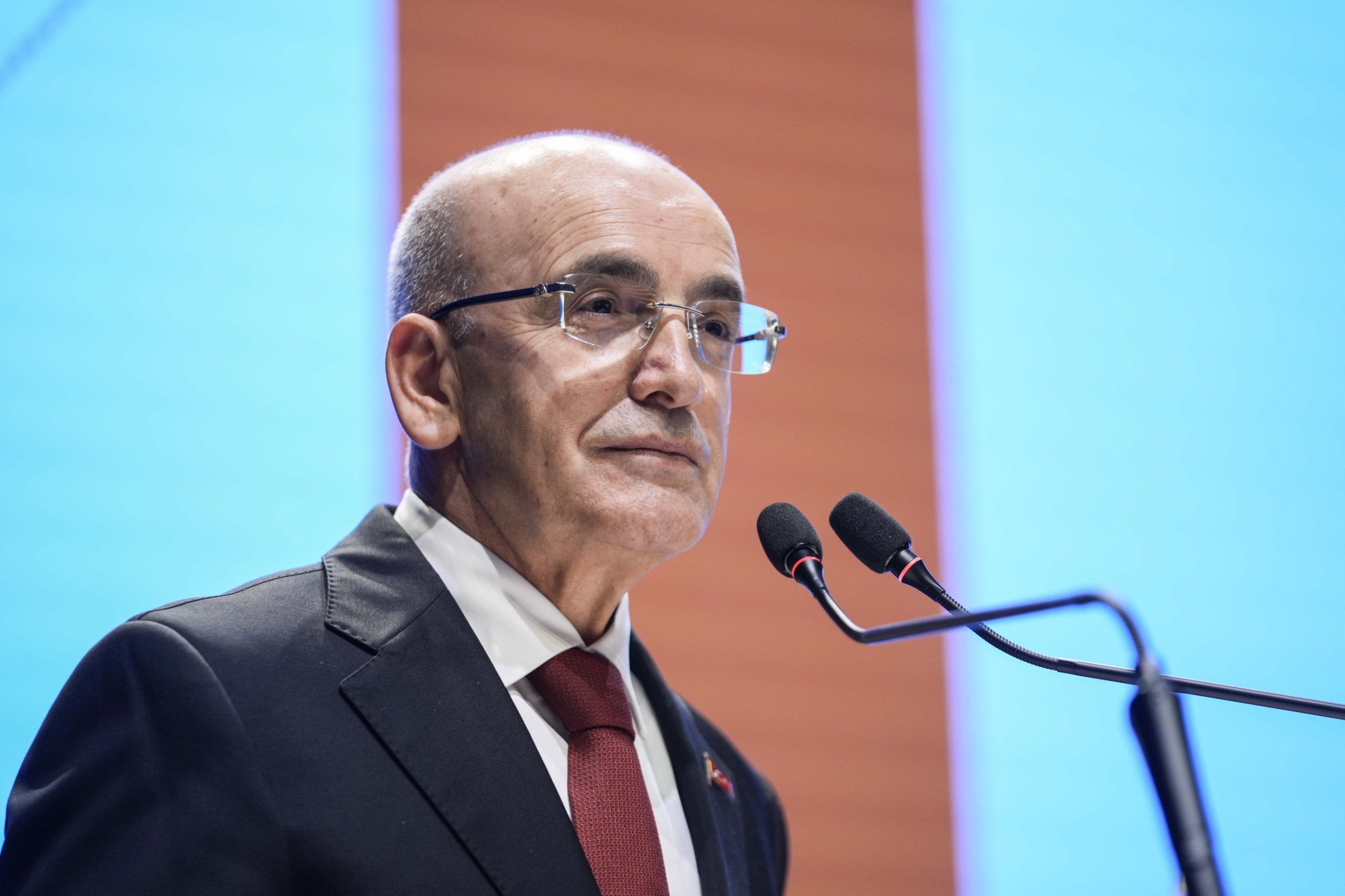
He said the liquidation of funds caught up in the September scandal was proceeding as planned and faster than previously anticipated.
As part of the process, a total of TL 161 billion ($3.2 billion) has been paid to investors with savings in funds that are ordered to be liquidated, he noted.
Corporate bonds linked to funds in liquidation total TL 55.2 billion, of a 1 trillion market, he added.
Şimşek said new legislation will raise penalties, particularly for manipulation through coordinated trades.
The Capital Markets Board’s retrospective review of manipulated stocks and transactions will be largely completed by the end of this month, Şimşek said.
The minister also said the government does not plan to continue the sliding-scale fuel tax system next year, assuming that the Iran war will end.
Jensen Huang is considering a comeback as Nvidia’s chief executive and has discussed with confidants the possibility of returning, a report said Sunday, citing people familiar with the matter.
One Huang ally told the Financial Times they were putting together a “war room” of Silicon Valley executives to lobby for the former Nvidia chief’s return and would try to garner support from the White House.
“Everyone that matters in tech outside the frontier labs loves Jensen,” the person said, adding that the efforts had Huang’s support.
The report comes days after the FT reported that Nvidia’s board had approached British chipmaker Arm Holdings CEO Rene Haas in its search for a potential successor to Jensen Huang.
Huang stepped down on Thursday, ending a 33-year run at the helm of the AI giant he co-founded after revelations of extramarital affairs, including one involving a suspected Chinese spy. That raised questions over exports of the company’s advanced AI chips to China.
The scandal has plunged the chipmaker into crisis and sent shockwaves across an AI industry he helped bankroll.
Meanwhile, Tech tycoon Elon Musk and an Uber co-founder were, as of Sunday, among more than 158,000 signatories of an open letter calling for Huang’s reinstatement as Nvidia chief.
The letter demands that the company’s board members “bring Jensen back while an independent investigation establishes the facts.”
Alongside the SpaceX chief, the tech heavyweight signatories include Tim Sweeney, founder and CEO of video game publisher Epic Games, and Garry Tan, president of Y Combinator, San Francisco’s most renowned business incubator.
Another signatory, Uber co-founder Travis Kalanick, wrote that Huang had “erred, yes – to err is to be human – but I do not believe anything he has done rises to the bar of separating him from his company.”
More than 7,500 signatories identify themselves as Nvidia employees, equivalent to 18% of the company’s workforce.
The support illustrates the unique standing of the leather-jacketed executive, who is seen as a godfather of AI within the industry.
Under his leadership, Nvidia became a pivotal Silicon Valley investor, financing data centers and startups, earning it the nickname “the central bank of AI.”
But the company has also faced criticism that it has fueled a speculative investment bubble.
Huang championed open AI models, including Chinese ones, and fought any constraints on the AI race, clashing on these issues with Claude creator Anthropic and its chief, Dario Amodei.
On Friday, two major shareholders, investors Brad Gerstner and Gavin Baker, urged Nvidia’s board to keep “all options” open.
In Washington, however, U.S. Treasury Secretary Scott Bessent argued Sunday that Nvidia should look “outside” the company for its next chief.
“They need a dramatic shake-up,” Bessent said on Fox News, demanding that the company explain whether it had knowingly turned a blind eye to the smuggling of its chips to China.
Türkiye has made close to TL 161 billion (about $3.2 billion) in payments to investors affected by the recent fund crisis, without using any resources from the central government budget, Vice President Cevdet Yılmaz said on Saturday.
The vice president, speaking to the public broadcaster TRT Haber, said that payments have been made to almost 445,000 individual investors via ordinary and extraordinary payment procedures.
Detailing the scope of the investigation launched following the crisis in the middle of September, Yılmaz said that authorities were pursuing judicial and administrative proceedings to recover excessive profits from individuals involved in wrongdoing and use the proceeds to compensate affected investors.
“To date, payments have been made to a total of 444,987 individual investors through all ordinary and extraordinary payment procedures combined. There are only 10,771 investors who have not received any payments so far,” he said.
A comprehensive probe into alleged stock manipulation was launched in September after some asset management companies struggled to pay back investors. Authorities have ordered the liquidation of some 131 funds, separated into ordinary and extraordinary parts.
They have also encouraged voluntary returns of the gains and passed a law allowing interim payments of up to TL 1 million to individual investors.
Recently, Justice Minister Akın Gürlek said that the probe into the case reached over 460 suspects. Since the start of the probe, the authorities have also reshuffled the leadership at the stock market regulator, while last week, the head of the banking watchdog also said he had tendered his resignation to the president.
Yılmaz, on Saturday, reiterated that the investigation sought to distinguish investors from market manipulators, pledging to “identify those who have committed offences and ensure that they are punished.”
Providing details on interim payments, he said they have been made to 444,987 individual investors, of which, some 371,021 have recovered their entire net investment or portfolio value.
“We are talking about interim payments here, not final payments. Therefore, to date, we have paid approximately TL 161 billion across 119 funds, comprising TL 144.7 billion in cash and TL 16.2 billion in-kind payments,” he said.
Yılmax also said that there were 97 funds subject to ordinary liquidation.
“We said 131; 97 of them were in this normal liquidation process. In 94 of these 97, all payments were completed. Only 3 funds are left,” he said.
“Therefore, we can say that the normal liquidation process is more or less over,” he added.
“Not a single lira from the budget was used,” he also said.


-
 Economy3 days ago
Türkiye posts $2.72B current account surplus as deficit narrows
-

 Politics23 hours ago
Türkiye, Greece, others join forces for major East Med drill
-

 Sports2 days ago
Hacıosmanoğlu strolls through Bordeaux ahead of Türkiye-France tie
-

 Sports3 days ago
Pochettino takes charge of Man Utd in major coaching shake-up
-
 Economy3 days ago
Türkiye says calls to abandon fossil fuels must be backed by financing
-

 Politics2 days ago
Erdoğan pushes climate pledges into action as COP31 talks advance
-

 Politics2 days ago
Erdoğan, Bolivia’s Paz seek to boost trade, investment beyond $1B
-
 Politics1 day ago
Corruption probe circles Turkish lawmaker with more detentions