
Politics
Turkish opposition points to parliament for resolving Kurdish issue following Öcalan’s call

Duvar English,
Turkish opposition parties have given mixed responses to the call of Abdullah Öcalan, the leader of the outlawed Kurdistan Workers’ Party (PKK).
Öcalan on Feb. 27 called on the PKK to disarm and dissolve itself, saying they must seek democratic consensus as “separate nation-state, federation, administrative autonomy or culturalist solutions fails to answer the historical sociology of the society” currently.
Moreover, Öcalan argued that “the collapse of socialism… the dissolution of the denial of Kurdish identity in the country, and improvements in freedom of expression” weakened “the PKK´s foundational meaningfulness.”
Main opposition Republican People’s Party (CHP) leader Özgür Özel pointed to the parliament as the medium of continuation of the process.
In a social media statement, Özel said they found Öcalan’s call “important,” hoping “that terrorism will end forever.”
Özel said they maintained their position that “the Kurdish issue should be addressed and resolved transparently in the Grand National Assembly of Turkey, inclusive of all segments of society.”
However, domestic peace is required for the solutions of all problems in Turkey, Özel argued.
“Domestic peace is achieved not in an authoritarian system, but in a democratic order, by complying with the principles of the rule of law, justice and equality,” he said.
“It is as essential for democratization not only to make the necessary legal arrangements, but also to abandon unlawful approaches in the implementation of existing laws and to put an end to constitutional violations,” he added.
Cumhuriyet Halk Partisi olarak, ülkemizin tüm sorunlarının demokratik yollardan çözümü konusunda tarihsel tutarlılığımızı sürdürüyoruz. Aynı şekilde, terörün ve şiddetin her türlüsüne her zaman karşı olduk, bundan sonra da karşı olmaya devam edeceğiz.
Kürt meselesinin, Türkiye…
— Özgür Özel (@eczozgurozel) February 27, 2025
Istanbul Mayor Ekrem İmamoğlu every move that would end “terrorism” was important and found Öcalan’s call “valuable.”
“However, the responsibility lies not only on one side, but also on the shoulders of those who govern this country. The real issue is to govern Turkey on truly democratic principles, in accordance with human rights and the law. This is precisely what the idea of a republic defines. It encompasses and embraces all its citizens unconditionally. Together, we must learn from the pain of the past and build our common future in peace,” he said.
Terörü bitirecek, şehitlerimizin ailelerinin ve gazilerimizin helalliğini alacak her girişim ülkemiz adına değerlidir ve önemlidir. Bu vesileyle çağrıyı değerli buluyoruz. Ancak, sorumluluk sadece tek bir tarafın değil, bu ülkeyi yönetenlerin de omuzlarındadır. Türkiye’nin… https://t.co/BFcM6IvKyX
— Ekrem İmamoğlu (@ekrem_imamoglu) February 28, 2025
Similarly, the opposition Islamist Future Party (GP) leader Ahmet Davutoğlu pointed to the parliament to resolve the Kurdish issue and found the move “positive.”
“In order to realize this call, lessons should be learned from past experiences… This process should be carried out with the pluralistic contribution of all political parties and social segments on the ground of the Turkish Grand National Assembly, the ultimate manifestation of the national will,” he said.
Uluslararası sistemin sarsıldığı, bölgemizin bir ateş çemberinin içinde bulunduğu şartlarda ülkemizin kendi iç bünyesini tahkim etmesi ve terörden tümüyle arındırılması yönünde yapılan her çağrı ve atılan her adım olumludur.
Bu çağrının hayata geçirilmesi için geçmiş…
— Ahmet Davutoğlu (@Ahmet_Davutoglu) February 27, 2025
Opposition DEVA Party leader Ali Babacan welcomed the move and deemed it “historic.”
“We are ready to contribute constructively to the steps to be taken to raise democratic standards in Turkey and to move faster towards the goal of a rule of law based on human rights,” he said.
Bugün akşam saatlerinde DEM Parti İmralı heyeti tarafından yapılan açıklamayı memnuniyetle karşılıyorum.
Terör örgütü PKK’nın silah bırakarak, varlığını feshetmesi tarihi bir gelişme olacaktır.
Şimdi bu çağrının gereğinin yapılmasını, herhangi bir tereddüte yol açmayacak…
— Ali Babacan (@alibabacan) February 27, 2025
On the other hand, the nationalist opposition İYİ (Good) Party hung a banner in the party headquarters which read, “We will not forget, we will not let them forget! We remember our martyrs with respect, mercy, and gratitude,” next to the crescent and star of the Turkish flag.
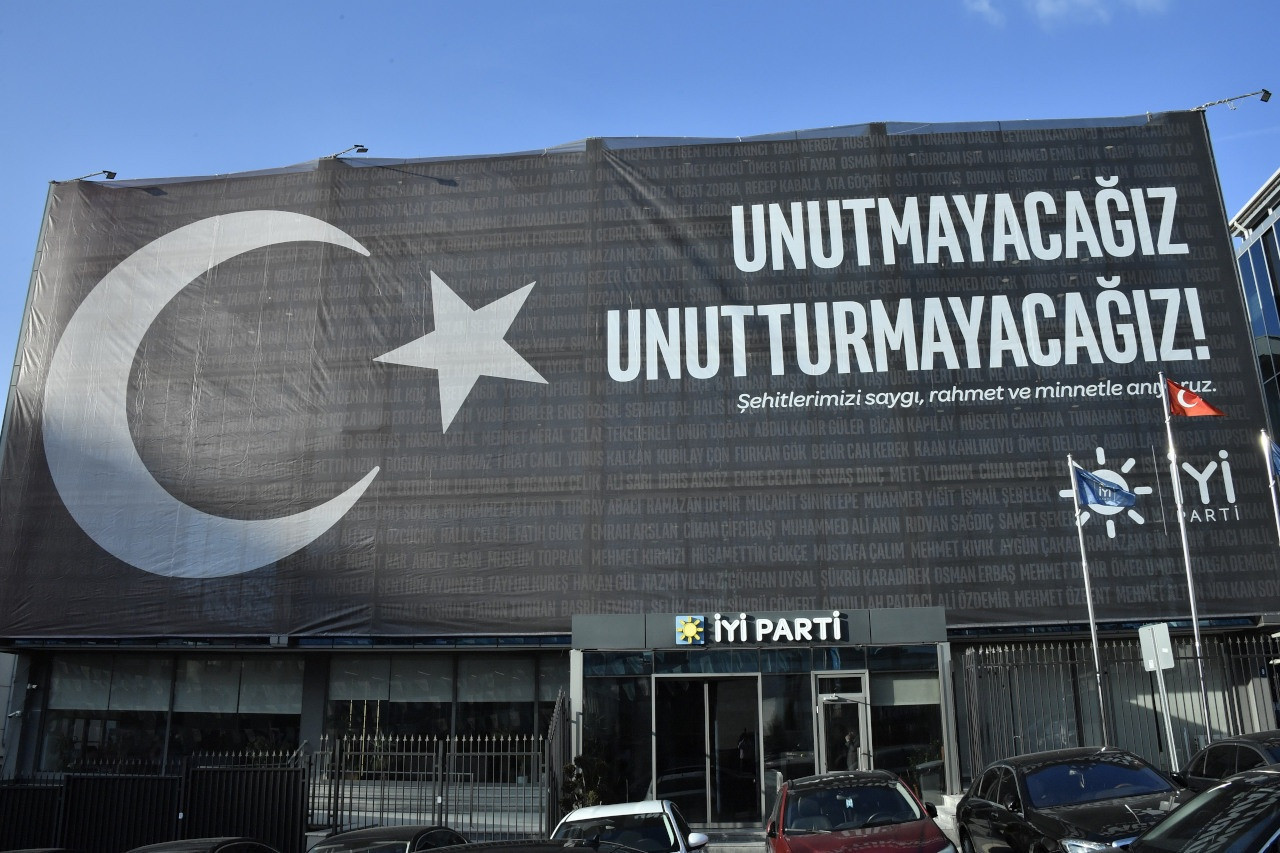
İYİ Party leader Müsavat Dervişoğlu said this process was a “bargaining” for Erdoğan’s “lifetime” presidency.
In a press conference, he said, “While terrorists are acceptable, being Turkish will mean being a terrorist. Journalists, party leaders, young lieutenants, the business world are all the first victims of this path. If we cannot put a stop to this, İmralı terrorists will be free and the citizens of the Republic of Turkey will be imprisoned.”
President Recep Tayyip Erdoğan’s messages on global peace and justice were displayed on giant screens in New York’s Times Square as Türkiye stepped up its international outreach during the U.N. General Assembly week and preparations for the COP31 climate summit.
The displays, coordinated by Türkiye’s Directorate of Communications, featured messages highlighting Ankara’s calls for reform of global governance, alongside promotional material showcasing Türkiye’s climate agenda, cultural heritage and Istanbul.
Among the messages shown on screens and mobile LED trucks were Erdoğan’s long-standing phrase, “The world is bigger than five,” referring to the five permanent members of the U.N. Security Council, and his call for global governance to represent “all humanity, all religions, all races and all cultures.”
“No one can feel safe in a world where children are dying under bombs,” another message read.
The campaign also highlighted Türkiye’s preparations to host the 31st Conference of the Parties to the U.N. Framework Convention on Climate Change, or COP31, in the Mediterranean resort city of Antalya from Nov. 9-20.
COP31 President and Environment, Urbanization and Climate Change Minister Murat Kurum, who is holding a series of meetings in New York, said Türkiye wants the summit to focus on translating existing climate commitments into measurable results.
“We are preparing for Antalya with the vision of an ‘implementation COP,’” Kurum said, arguing that the priority should shift from announcing additional pledges toward overcoming obstacles to financing, capacity and technology deployment.
Kurum noted the COP31 Action Agenda is structured around 10 priority themes, six global targets, 11 initiatives and 13 supporting outcomes. Consultations on the agenda are expected to continue at the Pre-COP meeting in Fiji. Türkiye says its presidency will emphasize dialogue, consensus and implementation as it seeks to accelerate international climate action.
The New York campaign also promoted Türkiye and Istanbul as cultural and tourism destinations. Messages displayed in Times Square included, “Where civilizations meet, and history breathes: Istanbul,” and “New York never sleeps, Istanbul never stops inspiring.”
Türkiye has expanded its COP31 visibility across New York during the U.N. General Assembly, including promotional displays at the Turkish House (Türkevi) opposite U.N. headquarters and COP31-themed vehicles circulating through Manhattan.
Erdoğan is also scheduled to attend a high-level climate meeting organized by U.N. Secretary-General Antonio Guterres on Wednesday to discuss Türkiye’s preparations for the Antalya summit.

Israel’s defense establishment has recommended expanding the country’s submarine fleet to eight vessels as it closely monitors Türkiye’s growing naval capabilities, Israeli media reported Tuesday.
According to Israel’s Army Radio, defense officials submitted a professional assessment to the political leadership recommending an increase from five operational submarines to eight in the coming years, citing the expansion of the Turkish navy.
Türkiye currently operates 14 submarines, with its fleet expected to grow further in the coming years, according to the report. Israel currently operates five, while its sixth, the German-built INS Drakon, is on its way to the country after leaving the TKMS shipyard in Kiel earlier this month.
Under Israel’s latest submarine procurement agreement with Germany, it has an option to acquire a seventh vessel at the previously agreed price. Defense officials reportedly favor exercising the option before costs increase and later moving to procure an eighth submarine.
The recommendation has not yet undergone a full review at the level of the Israeli military’s General Staff, the report said.
Senior defense officials also said a decision on additional purchases is unlikely before Israel’s upcoming elections and would probably be left to the next government.
Meanwhile, Türkiye most recently showcased 37 naval assets and platforms from different classes, including vessels currently serving in the Turkish Navy during the Teknofest Blue Homeland.
Among the most prominent platforms on display were Türkiye’s largest military ship, the TCG Anadolu; the TCG Istanbul; TCG Barbaros; TCG Salihreis; TCG Turgutreis; TCG Kemalreis; TCG Oruçreis; TCG Burgazada; and the TCG Derya.
Other naval assets included minehunters, patrol vessels, amphibious ships and support platforms, offering visitors a broad view of the Turkish Navy’s operational structure.
One of the most closely watched exhibits was the first test block of Türkiye’s National Submarine, known as MILDEN, which represents a major step in the country’s effort to develop an indigenous submarine.
The submarine is planned to be more than 80 meters long, with a displacement of about 2,700 tons and an endurance of more than 50 days.
MILDEN is expected to undertake missions including anti-surface and anti-submarine warfare, reconnaissance and surveillance, mine-laying, special operations and support for task groups.
U.S. Ambassador to Türkiye Tom Barrack highlighted Ankara’s strategic importance to Washington and played down lingering tensions over the S-400 issue, saying bilateral ties remain strong as Congress continues to weigh the sanctions process.
Barrack told broadcaster CNN Türk that Türkiye remains a crucial partner for U.S. President Donald Trump and stressed the importance of maintaining close communication between the two NATO allies.
“The congressional process regarding CAATSA is ongoing,” Barrack said, noting that the defense and weapons landscape has changed considerably in recent years.
He acknowledged that operating Russian defense systems alongside U.S. systems remains incompatible and said Congress needs to determine how to address the dispute surrounding Türkiye’s S-400 air defense system.
Barrack, however, described the issue as manageable and said it should not overshadow broader ties between Ankara and Washington.
“There is no interference in our relationship,” he said, while also pointing to the strength of Türkiye’s domestic defense industry.
Barrack also highlighted the relationship between President Recep Tayyip Erdoğan and Trump, saying the two leaders have strong chemistry.
President Recep Tayyip Erdoğan held separate talks with the leaders of Vietnam, Libya and Kuwait in New York on Monday, expanding Türkiye’s diplomatic outreach as world leaders gathered for the 81st session of the U.N. General Assembly.
Erdoğan received Vietnamese President To Lam, Libyan Presidential Council Chairperson Mohammed al-Menfi and Kuwaiti Crown Prince Sheikh Sabah Al-Khalid Al-Sabah at the Turkish House, or Türkevi, across from U.N. headquarters.
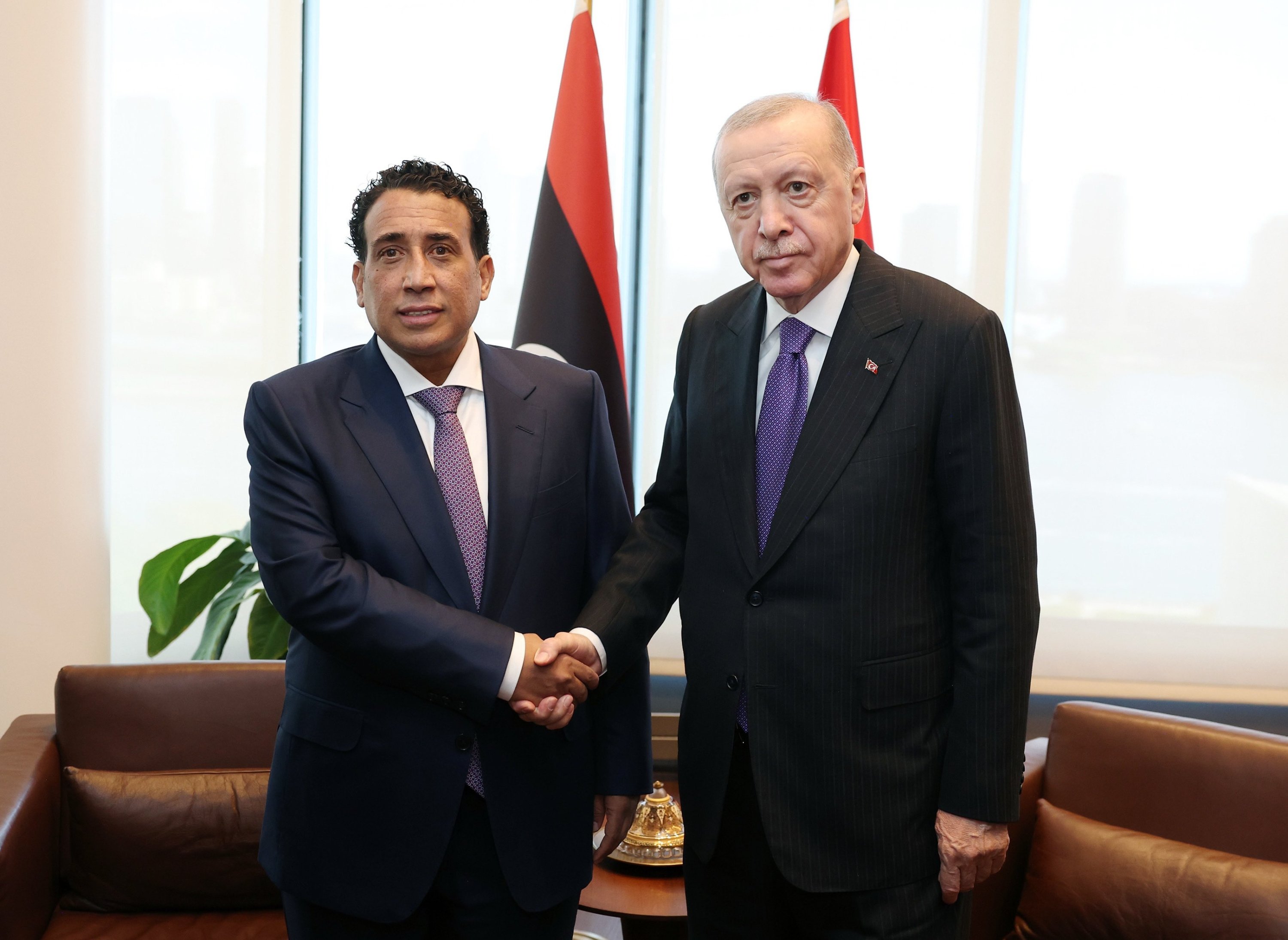
In his meeting with Lam, Erdoğan discussed bilateral relations as well as regional and global developments, according to Türkiye’s Directorate of Communications.
Erdoğan welcomed Vietnam’s positive response to Ankara’s proposal to elevate bilateral ties to a “strategic partnership” and said Türkiye was working to expand cooperation in several fields, particularly investment, trade and the defense industry.
He also stressed the importance of continued coordination between Türkiye and Vietnam at international forums and called for greater cooperation on global issues.
Erdoğan congratulated Lam on his election as president and invited him to attend the leaders’ summit of the COP31 U.N. climate conference, which Türkiye is scheduled to host in Antalya in November.
Türkiye and Vietnam established diplomatic relations in 1978 and have steadily expanded political and economic cooperation, with Ankara seeking deeper engagement with the Southeast Asian country in trade, investment, defense, transportation and other sectors.
Erdoğan later received Menfi for closed-door talks at the Turkish House. Foreign Minister Hakan Fidan, Energy and Natural Resources Minister Alparslan Bayraktar and Trade Minister Ömer Bolat also attended the meeting.
Türkiye maintains close political, economic and security ties with Libya and has repeatedly emphasized its support for the North African country’s sovereignty, territorial integrity and political unity.
Ankara and Tripoli signed security cooperation and maritime boundary agreements in 2019, which have become key elements of bilateral relations. Türkiye has also expanded engagement with different parts of Libya while supporting efforts toward political reconciliation and lasting stability.
Erdoğan separately hosted Kuwaiti Crown Prince Sheikh Sabah Al-Khalid Al-Sabah for closed-door talks at the Turkish House.
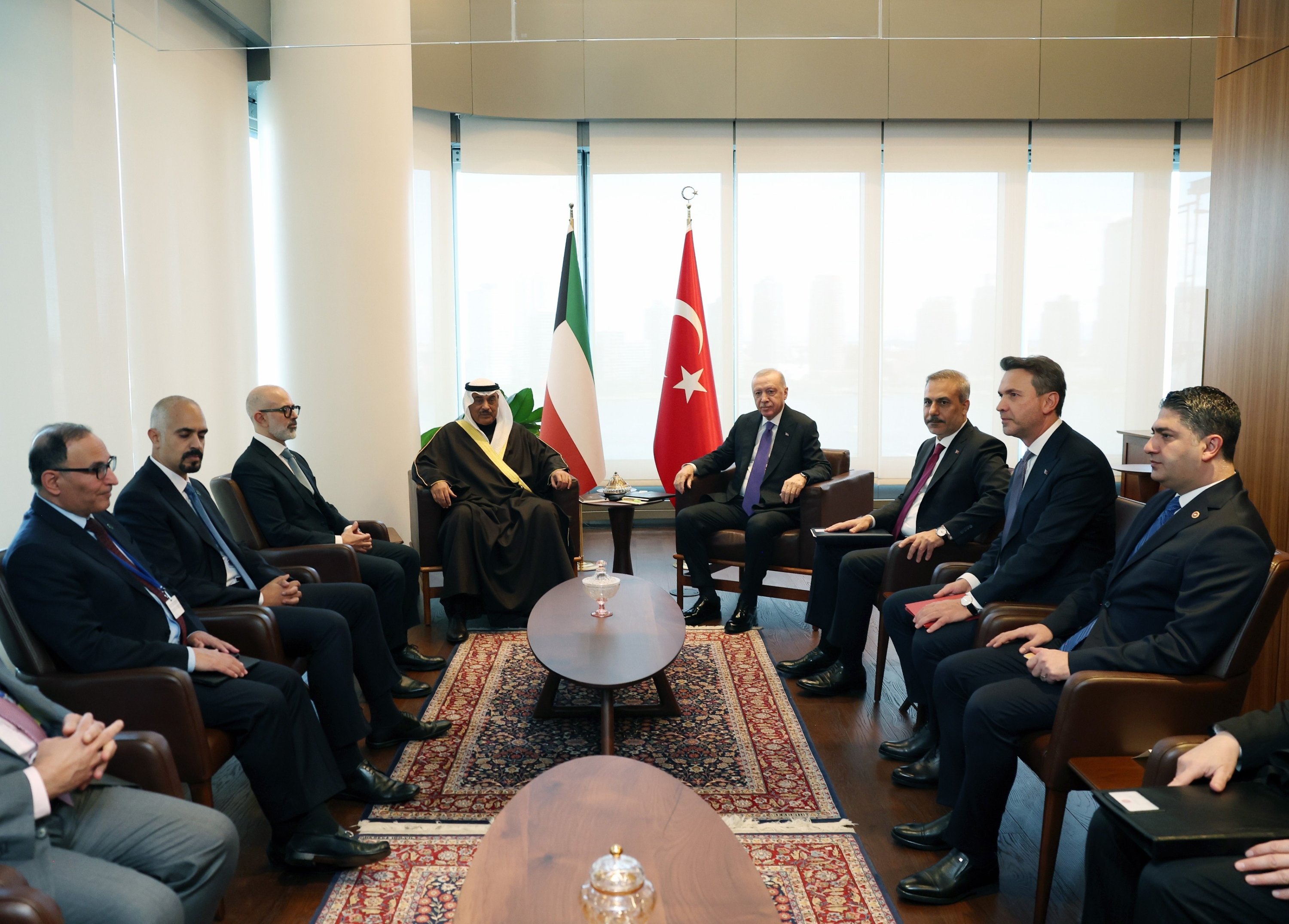
Türkiye and Kuwait maintain multifaceted relations rooted in longstanding historical and cultural ties. Bilateral cooperation has gained momentum in recent years through high-level visits and agreements spanning trade, investment, defense and other sectors.
The series of meetings came as Erdoğan continued a packed diplomatic schedule in New York on the sidelines of the U.N. gathering.
In a message on the International Day of Peace, the head of the Turkish Presidency’s Communications Directorate underlined that Türkiye will continue to stand with those facing injustice and oppression around the world and use every diplomatic means available to work toward a fairer world.
Burhanettin Duran said the occasion serves as a reminder, above all, of the situation in Gaza. “At a time when the most fundamental human values are being severely tested in Gaza, humanity’s shared responsibility in the face of the suffering endured by children, women and innocent civilians is to stand on the side of justice, conscience and peace,” Duran said. He stressed that hearing the voices of the oppressed, placing human life above all other considerations, and defending justice for everyone are indispensable to building a more livable world.
“Under the leadership of our President Recep Tayyip Erdoğan, Türkiye will continue to stand with those subjected to injustice and oppression wherever they may be in the world, make full use of the opportunities offered by diplomacy, and work for a fairer world,” he said.
“Our hope is for a world where the guns fall silent, law and conscience prevail, and no child is forced to grow up in the shadow of war, oppression or genocide,” Duran added.
Foreign Minister Hakan Fidan called on Washington to exert greater influence on Israel to curb policies undermining regional and global stability, while highlighting renewed momentum in Türkiye-U.S. ties as the two countries approach a century of diplomatic relations.
Speaking at the “Türkiye-U.S. Relations Toward the 100th Anniversary” panel organized by the Presidency’s Directorate of Communications in New York, Fidan said the century-old partnership had endured disputes, crises and major shifts in the international system.
“Our relationship has been tested over time and demonstrated its lasting value,” Fidan said, noting that two geographically distant countries had become allies and partners whose cooperation extends far beyond their borders.
Fidan said Türkiye-U.S. relations have gained strong, renewed momentum, pointing to the close relationship between President Recep Tayyip Erdoğan and U.S. President Donald Trump as a key factor.
He said Ankara and Washington should turn that momentum into concrete gains, institutionalize cooperation and resolve outstanding issues as bilateral diplomatic relations enter their second century.
Turning to regional security, Fidan said Ankara and Washington share an interest in sovereign and stable states capable of providing security and prosperity across the Middle East.
He said strengthening national institutions in Syria and Iraq was essential to preventing terrorist organizations from gaining room to operate.
“A Syria free from terrorism and with its territorial integrity preserved would represent significant progress for regional security and prosperity,” Fidan said.
He also emphasized what Ankara calls “regional ownership,” arguing that countries in the region should assume greater responsibility for their own security and stability.
Fidan warned that interconnected conflicts could undermine Türkiye-U.S. efforts, citing the war involving Iran, the conflict in Yemen and Israeli policies across the region.
“These threats reinforce one another and obstruct diplomacy,” Fidan said. “We particularly expect the United States to use its influence over Israel more effectively to bring an end to policies that undermine regional and global peace and stability.”
Fidan said Gaza remains a central test of the international community’s ability to establish security, cooperation and prosperity in the region. He reiterated Türkiye’s support for Trump’s efforts to end the Gaza crisis and said commitments contained in the peace plan should be fully implemented.
Beyond the Middle East, Fidan said Türkiye and the U.S. could deepen cooperation in the Caucasus, the Black Sea, Ukraine and the Balkans.
Ankara supports the peace process between Azerbaijan and Armenia and seeks to reduce escalation risks in the Black Sea while maintaining safe navigation, he said. Türkiye also continues to support diplomacy toward a lasting settlement in Ukraine and maintains communication channels with both Kyiv and Moscow.
Fidan said closer coordination and preventive diplomacy could also help contain tensions in Bosnia-Herzegovina and between Serbia and Kosovo.
As Türkiye and the U.S. approach the second century of diplomatic ties, Fidan said their partnership could also contribute to resolving protracted conflicts in Libya, Sudan and elsewhere in Africa.
“Our goal in the second century of our diplomatic relations with the United States is to use the Turkish-American partnership for the greater benefit of global peace and stability,” he said.


-

 Economy22 hours ago
AMD joins $1 trillion club as last chipmaker to cash in on AI rally
-
 Sports3 days ago
Mbappe swaps Nike for On as Swiss brand plots entry into football
-
 Economy24 hours ago
Türkiye extends funds liquidation process, freezes execs’ assets
-
 Politics2 days ago
Türkiye closely monitoring field as terror-free initiative advances
-
 Economy2 days ago
Türkiye revokes license of Iranian Bank Mellat
-
 Economy21 hours ago
US says all Iranian airlines to be ‘shut down’ Wednesday
-
 Sports3 days ago
Infantino invited to CAF strategy conference as FIFA election looms
-
 Politics1 day ago
Erdoğan leaves for UN General Assembly with Gaza in mind