
Economy
IMF says global economy doing better than expected yet risks remain

The world economy is doing better than expected despite facing multiple shocks, the IMF chief said Wednesday, projecting only a modest slowdown in growth this year and the next.
IMF Managing Director Kristalina Georgieva said recent economic data showed a softening in the U.S. economy, but it had dodged a recession feared by many experts just six months ago.
The U.S. economy and many others had held up, given better policies, a more adaptable private sector, less severe import tariffs than feared, at least for now, and supportive financial conditions, she told an event hosted by the Milken Institute in Washington.
“We see global growth slowing only slightly this year and next. All signs point to a world economy that has generally withstood acute strains from multiple shocks,” Georgieva said in a preview of the IMF’s upcoming World Economic Outlook.
In July, the IMF raised its global growth forecast by 0.2 percentage point to 3.0% for 2025 and by 0.1 percentage point to 3.1% for 2026. It will release a fresh outlook next Tuesday during the annual meetings of the IMF and World Bank in Washington.
The gathering takes place at a time when U.S. President Donald Trump has upended global trade with steep tariffs and cracked down on immigration, and artificial intelligence is rapidly transforming technology and the outlook for labor.
The world economy is doing “better than feared, but worse than needed,” Georgieva said, noting that the IMF was forecasting global growth of roughly 3% over the medium-term, well below the 3.7% forecast before the COVID-19 pandemic.
Georgieva cited deep undercurrents of marginalization, discontent and hardship around the world, and said the global economy faced an array of risks. Uncertainty is at exceptionally high levels and continuing to climb, while demand for gold, a traditional safe-haven asset for investors, is surging, Georgieva said, adding that holdings of monetary gold now exceeded 20% of the world’s official reserves.
Gold hit a record high on Tuesday as a U.S. government shutdown persisted and expectations for a Fed rate cut this month boosted demand.
The U.S. tariff shock has been less severe than initially announced in April, with the U.S. trade-weighted tariff rate now around 17.5%, down from 23% in April, and countries largely skipping retaliatory tariffs.
But U.S. tariff rates keep changing, and U.S. inflation could rise if companies started to pass through more of the cost of tariffs, or if a flood of goods previously headed for the U.S. triggered a second round of tariff hikes elsewhere.
Financial market valuations are also heading toward levels last seen during the internet-related bullishness 25 years ago, she said. An abrupt shift in sentiment – such as what happened during the dot.com crash of March 2000 – could drag down world growth, making life especially tough for developing countries.
“Buckle up,” Georgieva said, adding, “Uncertainty is the new normal and it is here to stay.”
Warning on debt levels
The IMF chief urged countries to durably lift growth by boosting private-sector productivity, consolidating fiscal spending, reducing debt and addressing excessive current account imbalances, which would allow them to rebuild their buffers to prepare for the next crisis.
“As we have seen, these imbalances can trigger a protectionist backlash and – being mirrored by net capital flows – can fuel financial stability risks,” Georgieva said. “We at the IMF are working hard to refine our external sector assessments and will keep pushing key players for policy correctives.”
Global public debt is expected to exceed 100% of GDP by 2029, Georgieva said.
Competition is key, along with free-market-friendly property rights, rule of law, strong financial sector oversights and accountable institutions.
In Asia, countries need to deepen trade and carry out reforms to strengthen the service sector, Georgieva said. A push to lower non-tariff barriers and boost regional integration could lift gross domestic product by 1.8% in the long run.
In Sub-Saharan Africa, business-friendly reforms could boost the real GDP per capita of the median African country by more than 10%. Europe should forge ahead with building a single market, which could help it catch up with the dynamism of the U.S. private sector, she said.
The U.S. should take “sustained action” to lower its federal debt, with the debt-to-GDP ratio on track to exceed its all-time high after World War Two, Georgieva said. It should also work to boost household saving, such as through favorable treatment of retirement savings.
China also has work to do, including boosting fiscal spending on social safety nets and property sector clean-up, while cutting spending on industrial policy initiatives, she said.

Türkiye logged a current account surplus of $4.05 billion (TL 199.94 billion) in August, official data shared by the country’s central bank showed Tuesday.
Excluding gold and energy, the current account indicated a net surplus of $8.2 billion during the month, the Central Bank of the Republic of Türkiye (CBRT) said in its balance of payments data.
The surplus narrowed from $4.62 billion a year earlier as the goods deficit widened, while the services surplus increased.
The reading marked the second consecutive month in which the current account posted a surplus. Prior to that, the balance last posted a surplus in October 2025, when it stood at $477 million.
The country’s goods deficit reached nearly $3.75 billion in August, up from $2.8 billion a year earlier, the bank stated.
Meanwhile, the services surplus increased to $9.71 billion from $9.34 billion over the same period.
Travel revenues reached $7.28 billion, and transportation revenues reached $3.26 billion.
The primary income deficit edged down to $1.89 billion from $1.9 billion, while the secondary income deficit fell to $18 million from $21 million.
Direct investment saw a net inflow of $141 million in August, as nonresidents recorded a net inflow of $719 million.
Portfolio investment recorded a net outflow of $1 billion in August.
The country’s official reserves increased by $7.14 billion during the same period.
In the first eight months of 2026, Türkiye’s current account deficit widened to $31.5 billion from $19.67 billion in the corresponding period a year earlier.
The 12-month rolling deficit stood at $42.1 billion as of August, according to central bank data.
The International Monetary Fund (IMF) revised slightly upward its outlook for the world economy growth for this year, while also warning of growing risks from rising debt, including borrowing related to artificial intelligence.
The IMF says it expects the global economy to grow at a 3.1% pace this year.
That’s up from its July forecast for 3.0% growth and well below the 3.5% expansion in 2025. Growth in 2027 should rebound to 3.4%, it said in its latest Economic Outlook.
The report, released as world economic and financial leaders gather in Bangkok for the fall meetings of the IMF and World Bank, predicts that growth in the U.S. will remain steady at 2.3% in 2026 and 2027.
Collectively, advanced economies will grow 2.1% this year, up from 2.0% in 2025. But growth is forecast to slow to 1.9% next year, it said.
The forecasts are based on a nearly 41% increase in oil prices this year, at an average of $96 a barrel. Global inflation is foreseen at 4.7% in 2026 and falling to 4.1% next year.
They also are based on the assumption that shipments of oil and gas through the Strait of Hormuz will resume by March, and that the boom in AI demand will moderate.
The boom in artificial intelligence is offsetting damage from sharply higher prices for oil and gas, IMF economists say, but it also carries risks.
Its benefits are not shared equally: the U.S. and China account for more than three-quarters of net demand for imports of computer chips and other AI-related equipment, the report said.
“The outlook is highly uneven,” Silvana Tenreyro, the IMF’s director of research, told reporters in Bangkok.
Growth is increasingly concentrated, with 32 countries accounting for 95% of global growth, the report said. That compares with 54 countries as of April.
“The global economy is not simply slowing or accelerating; rather, growth is being reallocated across countries according to their exposure to the war-induced supply shock and AI-related demand strength,” it says.
Athanasios Vamvakidis, deputy director at the IMF’s Monetary and Capital Markets Department, said an AI-related correction in stock markets is just one of the risks. Rising bond yields are another evolving problem, along with cyberthreats that could disrupt financial systems, he said.
AI’s effects on employment are another key focus of the meetings in Bangkok, which IMF Managing Director Kristalina Georgieva described during an event Monday as “a slow moving tsunami, but a tsunami nonetheless.”
“The impact over time on jobs globally we estimate to be around 40% – jobs either augmented or downgraded or eliminated. And we are already seeing some of this impact,” she said.
Last week, the IMF chief urged countries both rich and poor to do a better job of improving their national finances, urging policymakers to do more to tame mounting levels of debt.
That’s especially true at a time of high borrowing costs, Tenreyro said.
Countries that are somewhat insulated from the energy shocks of the Iran war and that are benefiting from rapid adoption of AI are managing to keep growth on track.
Middle East contraction
But developing economies and emerging markets more vulnerable to higher costs for oil and gas will see growth slow to 3.7% this year from 4.5% in 2025, the report says. It forecasts they will regain momentum next year, expanding at a 4.4% annual pace.
The situation is much worse in the Middle East and Central Asia, where those regions’ economies are expected to contract this year before recovering to a 6.3% rate of growth in 2027.
The 21 European countries that share the euro currency are expected to grow by 1.1% this year and 1.2% in 2027.
China, the world’s No. 2 economy, is expected to expand 4.5% this year, down from 5% in 2025, in line with the government’s official target.
India is once again forecast to be the world’s fastest-growing major economy, advancing at a 7% clip, down from a sizzling 7.7% last year.
The IMF is a 191-nation lending organization that works to promote economic growth and financial stability and to reduce global poverty. At the meetings in Bangkok, finance ministers and central bank governors will assess the state of the world economy and discuss strategies to support financial stability and sustained growth.
China’s deal to curb hybrid vehicle exports to the European Union is set to deal a fresh blow to electric vehicle makers that ramped up shipments exempt from the bloc’s tariffs on Chinese-made EVs as sales growth slows at home.
Beijing’s exports of hybrids to the EU’s 27 member states tripled to $7.5 billion in the first half of this year from $2.5 billion a year earlier, according to Chinese customs data. The figure was nearly nine times the $845 million exported in all of 2021.
Since the EU imposed additional tariffs on Chinese-made EVs in 2024, automakers have increasingly turned to plug-in hybrids, which are exempt from the extra duties. Weak charging infrastructure in parts of Europe has also supported demand for plug-in hybrids, which are marketed for their long range and strong fuel economy.
SAIC, BYD and Chery accounted for more than 90% of Chinese hybrid sales volume in the EU, while hybrids represented more than half of their European sales, according to Jefferies.
“It’s making life a bit more difficult for the Chinese, but…that’s not going to stop them as it happened to the electric cars,” said Felipe Munoz of Car Industry Analysis.
“Europe is going to a point where they will need to decide whether they’re doing what the U.S. is doing or just let the whole industry be bought by the Chinese.”
Deal preferable to trade war
Chinese brands captured a record 15% share of Europe’s EV market in the second quarter, up from 9.5% in the first quarter of 2024, while Chinese plug-in hybrids accounted for more than a quarter of the segment, rising sharply from just 1.7% at the beginning of 2024, according to Schmidt Automotive Research.
While European Trade Commissioner Maros Sefcovic said on Friday the agreement would cut the imports of “several million cars over four years,” Brussels and Beijing have yet to disclose how the arrangement will be implemented.
China’s Commerce Ministry said on Monday that the arrangement would allow continued export growth and guarantee China a quota no smaller than that granted to any other source of imports.
Renault CEO Francois Provost said on Monday the surge in Chinese hybrid imports was unsustainable for Europe, but added the agreement was preferable to a trade war and underscored the need to manage trade relations “sensibly.”
Investors largely viewed the agreement as a de-escalation of trade tensions and a sign that tariffs on Chinese hybrids may be off the table for now. Shares in BYD fell 1.8%, while Chery and SAIC rose 1.4% and 0.5%, respectively.
“Overall, we believe it is a risk-relief rally story…as the implementation rules, volume caps, price floors, carve-outs are still pending technical negotiation,” Citi analysts said.
‘Tariff risk off, quota risk on’
The rapid growth of Chinese hybrid sales has increasingly challenged European manufacturers, including Volkswagen, long the region’s leading plug-in hybrid seller, said Li Yanwei, an analyst at the China Automobile Dealers Association.
BYD, China’s largest hybrid vehicle exporter to Europe, sold more plug-in hybrids than fully electric models in the first eight months of the year, with its Seal U SUV its best-selling model, according to data compiled by Li.
Together with Chery, SAIC and Geely, the company has narrowed the gap with Volkswagen, which still commanded a 31.8% share of the EU plug-in hybrid market.
“Let’s see if China honors the agreement or finds workarounds, or temporary tariff exemptions,” said Michael Dunne, a consultant who closely follows the Chinese automotive industry.
Analysts said the deal could ultimately accelerate Chinese automakers’ push to build vehicles in Europe, even if some manufacturers attempt to frontload exports before any quota system takes effect.
“I would expect this to strengthen the incentive for Chinese automakers to manufacture in Europe,” said Bill Russo, founder of Shanghai-based consultancy Automobility.
“If access through imports becomes more constrained, investing closer to the customer becomes more attractive. But localization requires capital…smaller players may reconsider their European ambitions.”
Jefferies analysts said the deal signaled “tariff risk off, quota risk on,” potentially pushing Chinese automakers toward higher-priced models, increasing pressure on German premium brands and accelerating plans to build more vehicles in Europe.
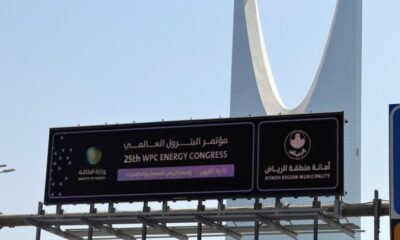
Several top energy executives have been dropped from the schedule of a major summit in Riyadh, as Saudi authorities pressed ahead with the event Monday despite deadly attacks on the capital claimed by Yemen’s Iran-aligned Houthis.
The chief executives of ExxonMobil, TotalEnergies, Shell, Chevron and BP had all been expected at the event, which began on Sunday, but were no longer on the agenda that conference organizers released early Monday.
“To everyone who traveled to Riyadh, thank you,” said Saudi Energy Minister Prince Abdulaziz bin Salman, who opened Monday’s session of the gathering for energy policy and industry.
“You know this country is safe and that we hold your protection at whole heart…Our gathering here does not mean the risk is gone.”
Prince Abdulaziz said the events of recent weeks were serious and that the kingdom’s response must be “equally serious.”
The WPC Energy Congress was originally scheduled for April of this year, but was postponed after the U.S. and Israeli war on Iran began in late February. Saudi Arabia was named host in October 2022, the first time the event, first held in Britain in 1933, has been held in the kingdom.
Chief executives of major energy companies are a regular fixture at WPC Energy events and had been scheduled to speak on stage this week about global oil and gas markets, energy security and the energy transition.
A BP spokesperson said the company had “made every effort to participate” in the conference. “Unfortunately, due to travel disruption we are unable to be there in person. We greatly value our long-standing partnerships across the region.”
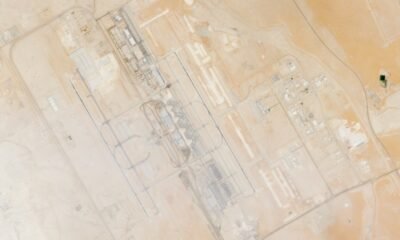
The WPC Energy Congress is taking place this week at a conference center some 10 kilometers (6 miles) from Riyadh’s international airport, which has been attacked four times in the last week.
One person was killed and nearly a dozen hurt in a new attack on the airport on Sunday evening, Saudi authorities reported, a day after a strike claimed by Houthis killed 13 people and wounded more than 300, the deadliest attack in the kingdom in more than a decade.
Major French supermarket chains Intermarche and Cooperative U were hit by a cyberattack that caused their refrigerators to defrost, the companies said Monday.
Some 150-200 Intermarche shops were targeted, along with almost 100 Cooperative U outlets, in the attack, the two retailers told Agence France-Presse (AFP).
Paris prosecutors confirmed the attack, which reportedly also hit other major chains, and also indicated it had prompted outbreaks of fire.
BFM TV said France’s largest supermarket chain E. Leclerc was also affected, with hackers “managing to remotely trigger the forced defrosting of the refrigeration systems in numerous stores.” E. Leclerc did not immediately confirm the information.
Those branches that were affected will have to “throw away all of the products” that are fresh and frozen, Intermarche told AFP.
Specialist French retail sector news website jebosseengrandedistribution.fr said other retail giants Carrefour Market and Monoprix were affected, but the companies have yet to confirm this.
‘Unprecedented’
The chief executive of Cooperative U, Dominique Schelcher, described the attack as “unprecedented” and confirmed the cyberattack had affected refrigeration systems since Sunday night.
“Targeting equipment essential to the preservation of fresh products and to the food supply of the French people is extremely serious and is unprecedented. It is unacceptable,” he wrote on the social media platform X.
He added that the company’s teams are “fully mobilized” to restore the situation as quickly as possible.
“An investigation will be necessary to shed full light on this attack,” he added.
The office of the Paris prosecutor confirmed to AFP that an investigation has been opened into “the large-scale cyberattack affecting the refrigerators of several major food retail chains across France.”
The probe will help “identify the victims and establish the link with the damage they reported in terms of foodstuff losses and the outbreak of fires,” the prosecutor’s office said.
Intermarche condemned the food waste and financial losses resulting from the attack, without providing figures, and warned there could be issues with insurance policies which do not “cover this type” of in-store incident.
BFM TV said temperatures were “altered remotely, resulting in the destruction of stocks of fresh and frozen products.”
The incident comes against the background of growing concern over the potential havoc that can be caused in Europe in all sectors by cyberattacks by malicious actors.
President Emmanuel Macron, a strong supporter of Ukraine in its fight against the Russian invasion, last month ordered measures to protect France’s critical infrastructure from Russian “hybrid attacks.”
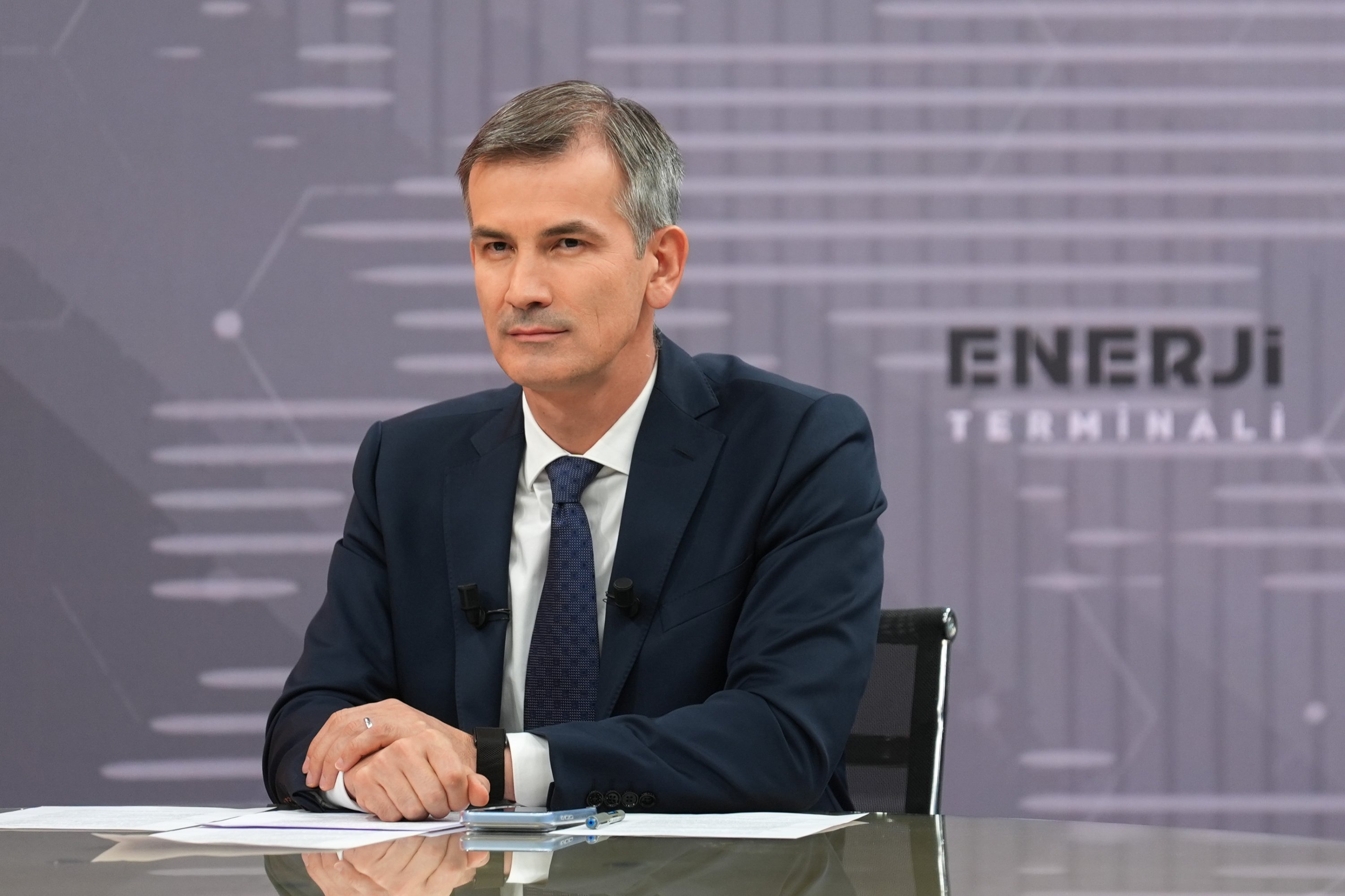
Türkiye could cut its annual natural gas import bill by about $4 billion with its wind power capacity of more than 16 gigawatts (GW), based on current energy prices, according to a senior industry executive.
Ibrahim Erden, president of the Turkish Wind Energy Association (TWEA), said every 1,000 megawatts (MW) of installed wind power capacity could reduce natural gas import costs by around $250 million annually.
Türkiye has generated more than 40% of its electricity from renewable sources in recent years, with the share exceeding 60% during the January-August period
The importance of wind energy has increasingly been viewed through the lens of energy security following the Russia-Ukraine war and conflicts in the Middle East.
Wind power offers a strategic advantage because it does not depend on imported fuels, critical transit routes such as the Strait of Hormuz, or international embargoes, Erden told Anadolu Agency (AA).
Strong manufacturing base
Türkiye has expanded its wind energy sector in recent years, supported by its strong wind potential and geographical advantages, he said.
Global wind power installations increased by 165,000 MW last year, including 2,000 MW in Türkiye, which accounted for around 1.2% of global installations, exceeding its approximately 1% share of the global economy, Erden added.
The country’s total installed electricity capacity stood at 126 GW, while onshore wind power capacity reached 15.9 GW as of the end of October, Erden said.
Erden also highlighted the growth of Türkiye’s domestic wind energy manufacturing base, supported by local component incentives introduced around 2009-2010.
The industry has developed a manufacturing cluster stretching from Izmir through Balikesir, Bursa and Yalova to Istanbul, building on Türkiye’s industrial expertise, including in automotive manufacturing, he said.
Türkiye earns around $2 billion-$2.5 billion annually from exports of wind turbines, components and raw materials, making it an important supplier to global wind energy manufacturers, Erden said.
Rising domestic natural gas production and expanding renewable energy capacity are expected to reduce Türkiye’s energy import bill over the long term, he added.
New investments planned
There are currently five wind tower manufacturers and two blade manufacturers in Türkiye, with the number of blade factories expected to rise to three as new investments come online, Erden said.
He added that 75% of manufacturers plan new investments or capacity expansions over the next three years.
These investments are expected to increase demand for skilled technicians and white-collar professionals, Erden said.
He also highlighted the role of Renewable Energy Resource Area (YEKA) projects in supporting domestic manufacturing, noting that locally produced components account for 65% of the turbines used in such projects.
The government aims to offer investors at least 2,500 MW of new wind and solar capacity annually through YEKA projects, he said, adding that predictable long-term targets and regular capacity allocations help strengthen investor confidence.
Türkiye’s position in global market
Türkiye ranked second in Europe for new onshore wind installations last year, sixth in installed wind capacity and fifth in wind industry manufacturing, Erden said.
Offshore wind projects are also expected to support further sector growth, he added.
Meanwhile, more than 70% of the global wind energy supply chain is concentrated in China, making the energy sector an increasingly important part of the economic competition between China, the United States and Europe, Erden said.
Türkiye is emerging as an alternative supplier, particularly for European markets, amid this competition, he added.
8 GW needed annually
Türkiye targets wind and solar installed capacity to reach 120 GW by 2035. The association aims for wind power to account for 48 GW of that total, he said.
Türkiye needs to install around 8,000 MW of new wind and solar capacity each year to reach its goal, Erden said.
Wind capacity alone would nearly triple electricity generation from wind, potentially increasing the annual value of avoided natural gas imports to around $10 billion-$12 billion under current price and generation assumptions, he added.
“This would mean an additional $6 billion-$8 billion in annual savings on top of the approximately $4 billion currently achievable,” Erden said.
He stressed that expanding grid infrastructure, speeding up permitting procedures and improving access to affordable financing would be essential to achieving the target.
Türkiye needs $24 billion in financing for grid investments alone under its National Energy Plan, while total financing signed or committed through work with international financial institutions stands at around $7.5 billion-$8 billion, Erden said.
Türkiye’s electricity demand is expected to rise significantly in the coming years as electric vehicles become more widespread, data centers expand, artificial intelligence applications grow and industrial electrification accelerates, he said.
This transformation makes expanding renewable energy capacity even more important, Erden added.


-
 Economy2 days ago
Can diesel prices fall after Trump-Russia deal?
-
 Politics3 days ago
Turkish Defense Ministry marks 7 years since Operation Peace Spring
-
 Politics2 days ago
Türkiye-France defense cooperation spark concern in Greek media
-
 Politics2 days ago
Türkiye presses Greece to hand over FETÖ members, crime bosses
-
 Economy1 day ago
Top oil execs drop from major event schedule after Riyadh attacks
-

 Economy2 days ago
Tehran’s once-bustling bazaar struggles as war dampens demand
-

 Sports2 days ago
Bezzecchi wins Indonesian GP to hand Martin championship lead
-
 Sports2 days ago
Deadly Houthi strike on Riyadh airport draws int’l condemnation