
Politics
Athens, Paris consider cable route change near Türkiye: Greek reports

Greece and France have discussed a possible adjustment to the route of a planned undersea electricity cable linking Greece, the Greek Cypriot administration and Israel, as Athens seeks to manage tensions with Türkiye in the Eastern Mediterranean, according to Greek media reports.
Kathimerini reported that Athens and Paris had considered a “light redesign” of the Great Sea Interconnector (GSI) that would keep the cable outside an area covered by Türkiye’s Fethiye-Kaş marine park, declared south of the Greek island of Meis in August. The newspaper said the proposed adjustment was intended to reduce the risk of a new dispute rather than signal Greek recognition of Turkish jurisdiction in the area.
On Aug. 16, two presidential decrees published in the Official Gazette have reaffirmed Türkiye’s maritime rights in the Aegean Sea.
One decree designated an area between the Fethiye district of Muğla and the Kaş district of Antalya in the south of the Aegean as a national marine park, while another applied the same designation to an area in the North Aegean Sea, near the coasts of Tekirdağ and Çanakkale.
The project, intended to connect the island of Cyprus with Europe’s electricity grid and eventually extend to Israel, has faced geopolitical and financial challenges. French infrastructure investor Meridiam acquired a 66% stake in GSI in August, increasing Paris’ involvement in the project.
Athens and its partners decided to alter the route of the planned undersea cable following objections from Ankara, according to reports.
The reported decision to adjust the route came after a warning issued by Türkiye’s Defense Ministry on Sept. 24.
In the statement, the ministry said any cable- or pipeline-laying activities within Türkiye’s continental shelf must be coordinated with Ankara, also underlining that Türkiye would continue to protect its rights and interests stemming from its maritime jurisdiction and continental shelf in the Eastern Mediterranean.
“No unauthorized activity that disregards our country’s rights will be permitted,” the ministry said.
Kathimerini also reported that Athens was considering extending its territorial waters to 12 nautical miles south and west of Crete before new seabed surveys begin.
Greek Prime Minister Kyriakos Mitsotakis and French President Emmanuel Macron met in Paris on Sept. 9, with talks focusing on energy infrastructure, regional developments and bilateral cooperation.
According to Greek media, Mitsotakis and Macron discussed steps toward implementing the GSI. The meeting came after French investment group Meridiam reached an agreement to become the majority shareholder in the company responsible for developing the GSI project.
The Paris talks took place at a critical stage for the project, particularly as stakeholders consider the resumption of seabed surveys needed for the planned cable.
Separately, Greek newspaper Ta Nea recently published a hypothetical four-stage military scenario involving a “preemptive strike” in the event intelligence indicated an imminent Turkish attack.
The scenario was based on assessments by military analysts and remarks by Greek Chief of the National Defense General Staff Gen. Dimitrios Houpis about Greece’s capacity to conduct strikes at strategic depth.
Ankara and Athens seek to improve relations after years of hostilities, but maritime jurisdictions remain a thorny issue. The countries, which came close to an all-out war in the 1990s over the Aegean Sea, remain vigilant, with Türkiye concentrating on developing its domestic defense industry. Greece, on the other hand, relies on foreign partners to bolster its defenses.

Two former mayors from the ruling Justice and Development Party (AK Party) and government ally Nationalist Movement Party (MHP) were among 15 suspects remanded into custody on Tuesday on charges of corruption.
Authorities in Kırıkkale, a province neighboring the capital Ankara, have earlier detained 35 suspects in connection with corruption allegations at province’s Yahşihan district. Former Mayors Ahmet Sungur and Osman Türkyılmaz were among them.
Sungur and Türkyılmaz were detained along with their deputies, municipal assembly members and businesspeople on Sept. 24. They are accused of running a criminal organization, bribery, rigging public tenders and fraud.
A crackdown on municipalities where mayors are suspected of corruption began a few years ago in Istanbul and soon spread across the country. Most of those arrested or detained for corruption are from the opposition Republican People’s Party (CHP). Probably most notable among them is Ekrem Imamoğlu, mayor of Türkiye’s most populated city, Istanbul. Imamoğlu was arrested last year.
Türkiye’s highest legal body, the Constitutional Court, gave the main opposition New Party (Yeni Parti), abbreviated as YP, 30 days to present a defense in a lawsuit over its name. The Innovation Party (Yenilik Partisi), also abbreviated as YP, requested that New Party change its name, filing a complaint with the General Prosecution Office of the Supreme Court of Appeal, citing concerns that the name of the party founded last July may cause confusion among voters. The office asked New Party to change its name, stating that a request by another political group seeking to establish a “New Party” in 2024 was rejected upon the objection of Innovation Party. The General Prosecution Office is the top authority for registering political parties. When New Party failed to comply with the order, the office took the case to the Constitutional Court.
After New Party presents its defense to the Constitutional Court, the court will reassess whether the name violates laws governing the names of political parties. If a violation is found, the New Party will be mandated to change its name.
The Innovation Party was founded by former Ambassador Öztürk Yılmaz in 2020. Yılmaz served as a lawmaker with the Republican People’s Party (CHP) between 2015 and 2018, before Özgür Özel became CHP chair. Özel was forced out of office last May when a court ruled that his tenure should be nullified over allegations of vote-buying in a 2023 intra-party election. Özel initially planned to fight the verdict through an appeal process but later declared the founding of the New Party with the participation of dozens of lawmakers from CHP, now making it the main opposition party in Parliament.
Parliament will return on Thursday from its summer recess. The 51-day break will end with a ceremony at the Turkish Grand National Assembly, where President Recep Tayyip Erdoğan is scheduled to speak. A busy agenda awaits lawmakers from across the political spectrum as bills postponed until the new legislative year will be up for discussion and approval.
Before the next summer recess, which will begin in July 2027, lawmakers will tackle new “judiciary packages,” omnibus bills that serve as additions to the patchwork of the Constitution that the government seeks to replace with a new one. The new constitution will also likely be on the agenda, as the ruling Justice and Development Party (AK Party) aspires to replace the current one, which dates back to the era of the military junta that seized power in 1980.
The 13th Judiciary Package will be among the priorities of Parliament, and it involves several items, including regulations and laws concerning social media, divorce and alimony.
Under a proposed package being prepared by the Justice Ministry and the AK Party parliamentary group, a new regulation will be drafted in line with the Constitutional Court’s reasoning for annulling provisions on indefinite alimony. The proposal is expected to introduce a minimum threshold for alimony payments and establish different categories based on the length of marriages.
The package will also include several regulations concerning divorce proceedings. Lengthy divorce cases are believed to increase tensions between couples and trigger violence and femicides, according to findings in reports presented to Parliament in the past. To prevent this, a judge will be able to grant a divorce without waiting for other disputes to be resolved if they conclude that “the marital union has effectively and emotionally ended and it is not possible for the spouses to establish a shared life again.” Court proceedings concerning issues such as alimony, child custody and the division of property will continue separately.
Another key regulation in the package will concern social media accounts. Authorities are planning to introduce a verification system that would require social media platforms to be used under users’ real identities. The measure is also expected to help prevent crimes such as illegal betting, drug trafficking and prostitution. Technical work is continuing on an identity verification system that is being considered for implementation through the e-Government portal. Technical details on how the system will operate both domestically and abroad are expected to be clarified in the coming period.
Parliament will also debate the establishment of a committee to monitor the terror-free Türkiye initiative. Before the recess, lawmakers approved a law on the process, which aims for the full dissolution of the terrorist group PKK. The 12-article legislation received broad parliamentary backing, with 468 lawmakers voting in favor, 88 against and six abstaining. The legislation lays out legal procedures for members of the PKK who lay down their arms and surrender to Turkish authorities as the organization moves toward dissolution and disarmament. It includes provisions allowing the deferral of prosecution or prison sentences in certain circumstances, while establishing different legal procedures depending on an individual’s position within the organization and involvement in criminal activity.
The law does not constitute a general amnesty and does not eliminate existing convictions, change the legal classification of crimes or broadly remove criminal liability, according to the justification accompanying the legislation.
Also on the agenda is a draft bill concerning the Turkish Red Crescent (Kızılay). The nine-article bill will redefine the responsibilities of the Red Crescent. Another bill on the table concerns Booking.com, which has been subject to an access ban for the past nine years. The bill is expected to pave the way for the reopening of the accommodation website.
Suspended in 2017 following court rulings over tax evasion and unfair competition, Booking.com, one of the leading providers in the sector, had been restricted to handling foreign travel for Turkish users. The proposed law would clear the way for the travel giant to fully restart domestic and international booking services across Türkiye.
Accordingly, foreign digital accommodation platforms will be required to obtain a permit to operate in Türkiye, according to a report by Sabah newspaper.
Vice President Cevdet Yılmaz chaired the second meeting of National Solidarity and Social Integration Board established exclusively for terror-free Türkiye initiative. A written statement was issued after Monday’s meeting that aims coordination of the initiative at the highest level for full dissolution of the terrorist group PKK.
The statement said that officials decided upon several matters regarding the process. “The establishment, duties and areas of authority of the subcommittees formed within the Board and tasked with ensuring that the process is carried out effectively, swiftly and in a coordinated manner, as well as inter-institutional coordination issues, were discussed and decided upon,” the statement said.
Among participants of the meeting were Justice Minister Akın Gürlek, Interior Minister Mustafa Çiftçi, National Defense Minister Yaşar Güler, secretary-general of the Turkish Presidency Hakkı Susmaz, National Intelligence Organization (MIT) chair Ibrahim Kalın and secretary-general of the National Security Board Okay Memiş.
The terror-Free Türkiye initiative unofficially began in 2024 upon a call by veteran politician Devlet Bahçeli, leader of government ally Nationalist Movement Party (MHP). Bahçeli has suggested that PKK’s jailed ringleader Abdullah Öcalan order its group to lay down arms, “at Parliament.” Öcalan consented, though he remained in jail, and within months, and after a historic call by Öcalan, the PKK agreed on disarmament. In return, the Turkish Parliament passed a law in August for deferral of sentencing and prosecution for terrorist group’s members not involved in acts of violence. Through security forces and MIT, Türkiye currently monitors the course of disarmament that began in a symbolic way last year after several PKK members burned down their weapons at a ceremony in northern Iraq, where senior cadres of the PKK are based.
“At the Board meeting, the historic responsibility assumed by the Board as part of the ongoing process, as well as its importance in ensuring peace among our people and strengthening social cohesion, was once again emphasized. The current situation was reviewed while ongoing activities related to the implementation of the law and activities planned for the coming period were discussed from multiple perspectives, followed by a general assessment of the situation,” the statement on Monday said.
Speaking at an event in Istanbul on Sunday, Yılmaz stated that terrorism had been a major obstacle to Türkiye’s economic and social development for many years.
Noting that it was not merely a security issue but also had economic and social consequences, Yılmaz said: “We have the Presidency of Strategy and Budget under the Presidency, and together with them, we tried to calculate the economic losses we have suffered due to this issue of terrorism for more than 40 years. Do you know what the figure was? At least $2.3 trillion. This country has suffered a loss of $2.3 trillion. We believe Türkiye would be in a very different position today if we had been able to spend these resources on development, education, health care, production and investment.” Yılmaz said terrorism had negatively affected not only public resources but also human resources and private-sector investments, explaining that security problems had caused people and capital to move to different regions. Yılmaz said the economic potential of these regions could be better utilized once terrorism came to an end, adding that new opportunities would emerge in many areas, from tourism and agriculture to trade and investment, as peace and security became permanent.
Regarding the work of the board he chaired, Yılmaz said subcommittees had been established to work on different areas, adding that the first stage of the process was the laying down of arms and dissolution of organizational structures, while the second stage would involve determining that these developments had taken place concretely on the ground and carrying out the related legal process. “The first stage is to determine on the ground that this process of dissolution and disarmament has taken place, to report on it and to have it confirmed by a decision of the National Security Council. The second stage will not begin until this is completed. This process of verification and confirmation is currently ongoing. We are meticulously and coordinately carrying out our work on this process with all relevant institutions on the ground, and we will continue to do so. We believe we will successfully complete this process. In the second stage, there will be certain legal procedures, and those procedures will come into effect. A board will also be established in our Parliament to monitor this process. Our board will periodically provide information to the parliamentary board. We will also keep our Parliament informed about the work being carried out.”
Former Ambassador Mehmet Güllüoğlu has been appointed to two senior positions, the U.N. Office for the Coordination of Humanitarian Affairs (OCHA) announced on Monday.
Tom Fletcher, U.N. under-secretary-general for humanitarian affairs and emergency relief coordinator, appointed Güllüoğlu as director of OCHA’s Humanitarian Sector Division and head of OCHA Geneva, according to the agency.
Güllüoğlu “brings more than two decades of experience in humanitarian action, disaster management and public health,” OCHA said in a statement.
Güllüoğlu, 44, previously served as the head of Türkiye’s Disaster and Emergency Management Authority (AFAD) and the director general of the Turkish Red Crescent. Most recently, he served as Türkiye’s humanitarian aid coordinator for Palestine to ensure the effective delivery and coordination of the country’s humanitarian assistance to Gaza. He also served as Türkiye’s ambassador to Tanzania from 2021 to 2025.
A graduate of Marmara University’s Faculty of Medicine, he trained in family medicine, humanitarian aid and EU projects. He has worked as a volunteer doctor with NGOs in crisis zones including Palestine, Syria, Somalia, Kenya and Jordan. OCHA coordinates the global humanitarian response to emergencies and works to ensure that effective humanitarian assistance reaches people affected by crises.
Sabah al-Numan, spokesperson for the Iraqi Armed Forces, acknowledged that Iraqi authorities were engaged in talks with Türkiye on the withdrawal of Turkish troops and the handover of Turkish military bases in the country to Iraqi forces.
Speaking to Ihlas News Agency (IHA) on Monday, al-Numan said the plan for withdrawal and handover was expected to be fully implemented after the terrorist group PKK handed over its weapons. The PKK, which has killed thousands of people in terror attacks across Türkiye since the 1980s, has camps in northern Iraq, in rugged territory where the group has dug extensive tunnel networks as hideouts. As part of the terror-free Türkiye initiative, the PKK agreed to lay down its arms and dissolve itself last year. Türkiye is currently monitoring the process in Iraq in coordination with local authorities.
Over the past decades, Türkiye has carried out several cross-border military operations in northern Iraq to eliminate PKK terrorists and set up outposts. It also has a base in Bashiqa, the furthest from the Turkish border. The Bashiqa base was established in 2015, particularly to support the fight against Daesh in Sinjar, where PKK members sought to take control after the expulsion of Daesh.
Türkiye and Iraq agreed last Wednesday to deepen security cooperation, restore full Iraqi state authority in Sinjar and begin the gradual handover of the Bashiqa-Zilkan military base to Baghdad under an agreed timetable. President Recep Tayyip Erdoğan and Iraqi Prime Minister Ali al-Zaidi announced the steps in a joint statement following talks in New York on the sidelines of the 81st United Nations General Assembly. The two leaders reviewed the strategic relationship between Türkiye and Iraq and agreed to strengthen bilateral cooperation across a range of areas, with security taking a central role in the discussions. Under the agreement, the two countries will work toward fully restoring Iraqi state authority in Sinjar and ending the presence of banned foreign armed groups in the area.
As progress is made in implementing the security measures, Turkish forces will gradually hand over the Bashiqa-Zilkan base to Iraq’s federal government in accordance with a mutually agreed mechanism and timetable, the statement said. U.S. Ambassador to Türkiye and special envoy for Syria and Iraq Tom Barrack welcomed the latest agreement, saying it served both “Iraqi sovereignty and Turkish security.” The two countries also agreed to strengthen trade ties, swiftly implement existing agreements and accelerate strategic projects.
Al-Numan said they currently had a timetable set for Sept. 30 for the withdrawal of U.S.-led coalition forces fighting Daesh and that they were also engaged in talks with armed groups for their disarmament. “We hope to close this case soon,” he said.
He said they had a common understanding with Türkiye on the withdrawal and handover of the bases and that Baghdad was also engaged in discussions with Iraq’s Kurdistan Regional Government (KRG) in the north on ending the presence of the PKK and its affiliates in the country. Al-Numan underlined that Türkiye and Iraq had historic relations and deep-rooted bonds. “I believe security and stability in Iraq and agreements on security will also have an impact on economic ties between the two countries,” he said.
The spokesperson said Türkiye and Iraq still had memoranda on security that were set to be implemented, but they continued cooperation and information and intelligence sharing. He pointed out that Türkiye favored stability in Iraq and praised Ankara’s support for his country in the field of counterterrorism.


-
 Politics3 days ago
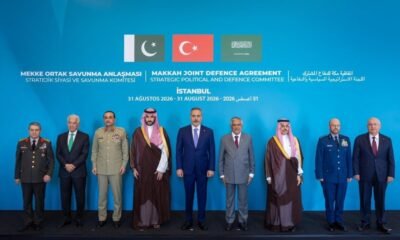
Mecca defense pact brings military chiefs together in Saudi Arabia
-
 Politics3 days ago
Türkiye pursues dialogue, diplomacy at UN General Assembly
-
 Economy3 days ago
Türkiye bolsters ‘agro diplomacy’ to minimize impact of geopolitical risks
-

 Sports3 days ago
Türkiye host Italy in UEFA Nations League as both seek 1st points
-
 Politics3 days ago
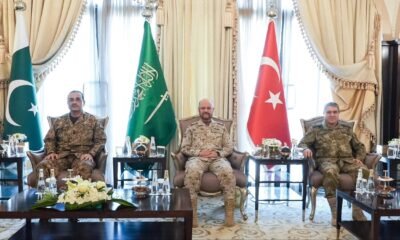
Türkiye, Pakistan, Saudi military chiefs meet in Riyadh
-
 Politics2 days ago
Türkiye, UAE set for new talks amid Iran war, Israeli expansion
-

 Economy2 days ago
Trump Inc. faces congressional grilling if Democrats win midterms
-
 Economy3 days ago
German state leader Wüst to visit Türkiye, mark labor deal anniversary