
Economy
UK economy Q2 growth revised slightly upward

The U.K. economy expanded slightly more than previuosly reported in the second quarter of the year, revised data showed on Wednesday.
The data showed positive signs from household finances and business investment that could encourage Treasury chief John Healey as he prepares October’s budget.
Economic output expanded by 0.5% in the April-to-June period, the Office for National Statistics (ONS) said.
The reading was slightly stronger than a preliminary estimate for 0.4% growth in gross domestic product (GDP). Economists polled by Reuters had expected the 0.4% rise to be confirmed.
Britain’s economy was the fastest growing among the G-7 large advanced economies in the first half of 2026, the ONS data showed.
Real household disposable income per head rose by 1.0% in quarterly terms during the three months to June, the biggest jump since the end of 2024 and following a 0.8% drop in the first quarter.
The ONS also revised up second-quarter business investment growth to an annual rate of 5.2% from an initial estimate of 0.8%.
Separate balance-of-payments data showed Britain ran a smaller current account deficit than economists had expected in the second quarter, at 19.9 billion pounds ($26.4 billion) versus a consensus of 24.7 billion pounds.
Excluding precious metals trade, the deficit closed to 1.4% of economic output, the smallest such reading in five years, and helped by strong growth in services exports.

Türkiye’s exclusion from “Made in Europe” rules would harm rather than protect the European automotive industry, Trade Minister Ömer Bolat said Thursday, as Turkish companies battle for access to future EU incentives.
The European Union is developing a package of industrial measures designed to boost competitiveness and shield local industry from low-cost imports, including Chinese-made cars that are gaining in popularity as the region shifts to EVs.
Türkiye, the EU’s third-largest vehicle export market and an important production location for automakers such as Ford, risks being left out. France and Germany are pursuing a “Made in Europe” definition that includes the 27 EU member states and extends special status to Britain.
“A scenario that leaves Türkiye outside the “Made in EU” framework would mean fewer new investments in Türkiye, a shrinking market for European suppliers and vehicle makers, and the gradual erosion of the integrated value chains developed over the past three decades,” Bolat said at an industry event in Berlin.
“Europeans have invested $25 billion in Türkiye’s automotive industry. They account for about 75% of investment, production, exports and imports,” he said.
Bolat said the European Commission’s March 4 draft included customs union partners within the scope of the “Made in EU” proposal.
However, discussions are continuing over possible restrictions on imported vehicles concerning electric car sales, public procurement, fleet incentives and loan programs for lower-emission vehicles, he added.
Bolat urged the EU to recognize Türkiye’s “unique position” as a trade partner, including its long-standing customs union with the bloc.
Zeki Şafak Ozan, a board member for Türkiye’s OIB automotive exporters’ association, said the goal was to conclude EU talks by the end of the year, but this seemed unrealistic, pointing instead to early next year.
“We knock on almost every door that we can,” Yakup Birinci, head of Turkish auto supplier association TAYSAD, told Reuters.
Bolat said the automotive sector was the EU’s top priority as the bloc seeks to raise the industry’s share of its economy back to 20%.
He also cited the EU’s carbon border adjustment mechanism and plans to halve steel import quotas among measures raising concerns for Turkish industry.
Bolat urged the bloc to fully honor its customs union with Türkiye, which took effect in 1996, as well as a separate free trade agreement covering iron and steel.
Turkish officials have held nearly 100 meetings and visits in Brussels and EU member states over the past year, Bolat said.
He added that he had traveled to Brussels five times this year, including three visits in the past four months, and met with Ford of Europe representatives as part of efforts to secure support from European manufacturers with investments in Türkiye.
On Tuesday, Jim Baumbick, president of Ford in Europe, said if the EU excludes Türkiye, Britain and Morocco from the “Made in Europe” model for car manufacturing, it will damage its own auto industry instead of strengthening it against Chinese competition.
Bolat said he would present Türkiye’s position at the automotive summit and discuss the issue with German Economy and Energy Minister Katherina Reiche.
Germany is Türkiye’s largest export market and third-largest source of imports after China and Russia, Bolat said.
Bilateral trade reached $52 billion last year, with Turkish exports to Germany totaling $22 billion and imports from Germany amounting to $30 billion.
More than 8,000 German companies operate in Türkiye, with investments totaling approximately $26 billion across sectors including manufacturing, energy and finance.
Turkish companies have invested more than $3 billion in Germany, which an increasing number use as a base to access other European markets, he added.
Türkiye is set to emerge from COP31 with billions of dollars in investment deals, including in green energy.
The country said it has agreed to deals and plans worth more than $26 billion in total since it began hosting the climate conference on Nov. 9 in the Mediterranean city of Antalya, Reuters reported on Friday.
They include a preliminary $15 billion renewable energy deal with China, $5.1 billion in financing agreements with development banks, and accords with Saudi Arabia and Canada.
Past hosts of climate conferences have also benefited from the influx of foreign governments and companies that typically accompanies U.N. talks.
In 2023, the United Arab Emirates (UAE) pursued both fossil fuel and renewable energy deals on the sidelines of the Dubai COP.
Türkiye did not comment on the deals.
Deals can help Türkiye’s own climate goals
Observers said the agreements, many of them related to clean energy, could help Türkiye with its own climate goals, including expanding electrification to help reduce fossil fuel emissions.
“I have long advocated for COP-hosting countries to use their COP as an investment attraction platform. It’s your best opportunity,” said Li Shuo, a veteran observer of China at U.N. climate talks who heads the China Climate Hub at the Asia Society Policy Institute.
Öykü Şenlen, senior researcher at think tank E3G, said the deals aligned with “Türkiye’s energy transition pathway.”
“It should lead the way for Türkiye to broker a strong deal out of COP31,” she said.
But a broader international climate deal appeared elusive as of Friday as the talks entered what was meant to be their final day.
The delegates from more than 190 countries remained divided on central issues, such as climate finance to help the poorest and most vulnerable deal with the impact of a warmer world.
Negotiators have also stripped out any reference to phasing down fossil fuel use from the latest draft agreement.
Although the talks were scheduled to end on Friday, U.N. conferences have a history of continuing past the deadline.
Business on sidelines
Apart from the negotiators, the COP31 event has attracted tens of thousands of other people and is matched by a trade fair where large businesses and startups can pay to exhibit.
The Bursa-based startup Harves Technology had a stand to market narrow modular water tanks shaped to fit along walls or fences. The founder came up with the idea because their own home had no space for a round rainwater tank.
By Thursday , the company had meetings with potential investors from India and France, and interest from distributors for Somalia, Brazil, Spain and Greece, said Beyza Altın, head of international sales.
Several of Türkiye’s businesses that secured exhibit stands at the two-week conference also signed deals they said would have been tough to land otherwise.
Water technology company Liaqua, whose machines extract drinking water from humid air, used the event to draw interest from government officials, investors and lenders in countries including Ghana, India, Mexico and Brazil, it said.
“Even if we worked for 10 years, we could not achieve what we achieved here in nine days, because the whole world is here,” said Tuncer Küçükaydoğmuş, founding partner at Liaqua.
Türkiye’s Oruç Reis seismic research vessel will begin exploration for hydrocarbon resources in offshore fields in Pakistan, Energy and Natural Resources Minister Alparslan Bayraktar said Friday, adding that drilling was expected to start in 2027.
Last year, Türkiye state oil company Turkish Petroleum Corporation (TPAO) signed hydrocarbon exploration and production agreements with Pakistani companies including Mari Energies, Fatima, OGDCL, PPL, Prime and GHDL for three offshore and two onshore fields in Pakistan.
Bayraktar, who attended a ceremony to welcome the Oruç Reis at Karachi Port alongside Pakistani Foreign Minister Ishaq Dar and Petroleum Minister Ali Pervaiz Malik, said on the social media platform X that the vessel would carry out two- and three-dimensional seismic survey operations in the Indus and Makran basins to “uncover the potential there.”
The vessel will spend about two months collecting data across 670 square kilometers (about 259 square miles), Bayraktar said.
“Based on the data we collect, we aim to begin drilling activity next year in the identified areas,” he noted.
‘Turning point’ in energy cooperation
The step marks a “strong turning point” in energy cooperation between the two countries, Bayraktar said, noting that it comes at a time of turbulence in global oil and gas markets.
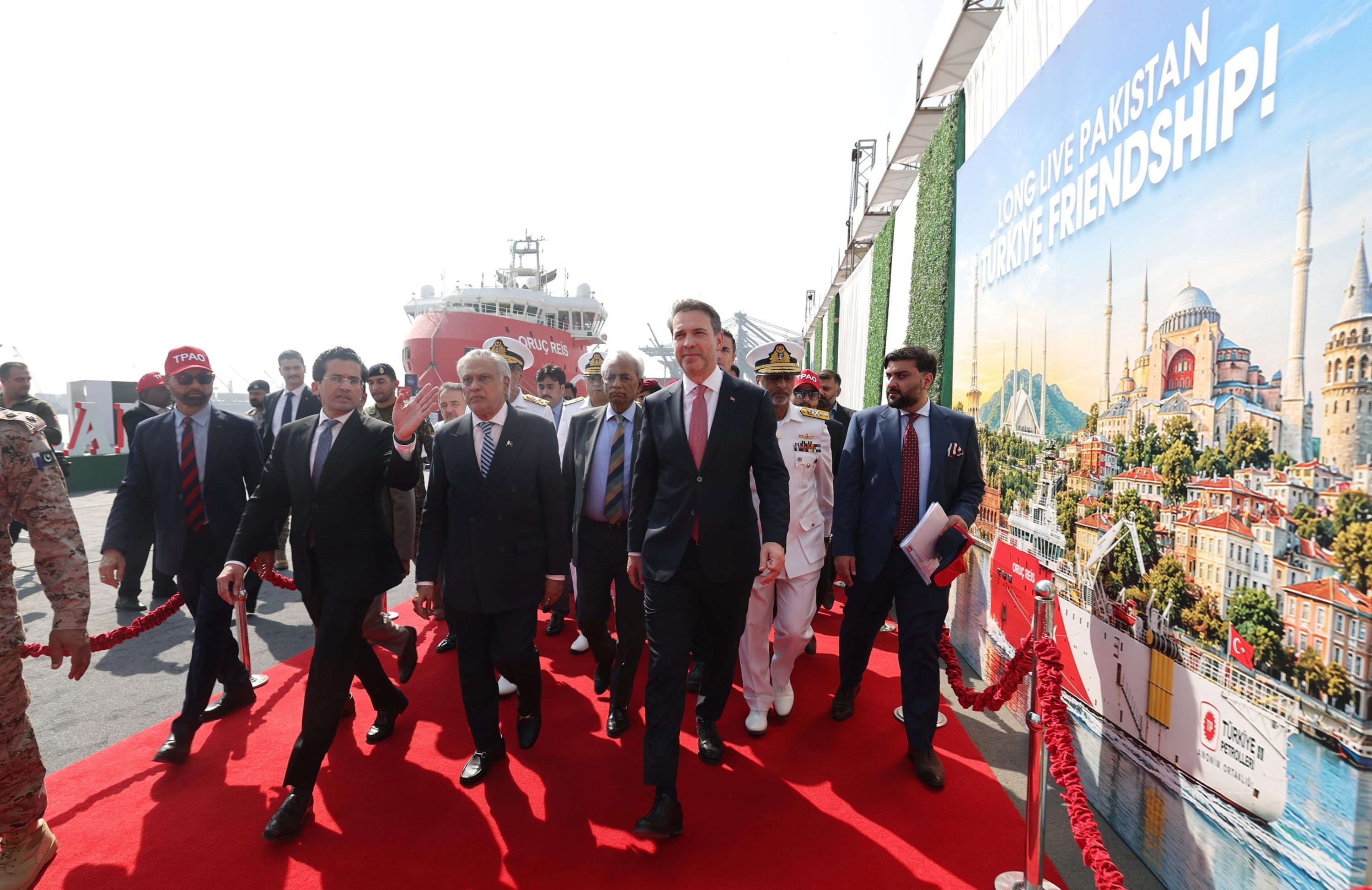
“We are two nations with a history built on shared values and deep brotherhood,” he stressed. He said the partnership is not just on paper. Licensing has been completed for five blocks, three offshore and two onshore, and field activity has begun, he said.
Last month, Bayraktar said the planned operations off Pakistan had been delayed by about six months due to the war in Iran.
Bayraktar said the world’s oil and gas markets are going through one of the biggest shocks in their history, which makes such cooperation more strategic. He said Türkiye wants to repeat its exploration and production success at home in Pakistan.
He recalled that in 2020, in the middle of the COVID-19 pandemic, Türkiye used the same vessels to discover the largest natural gas reserve in the Black Sea. He said it was also the largest offshore gas discovery in the world that year.
Those fields now produce about 10 million cubic meters of gas a day and meet the needs of about 4 million households, he said. Output is to reach about 40 million cubic meters a day by 2028, supplying 16 million households.
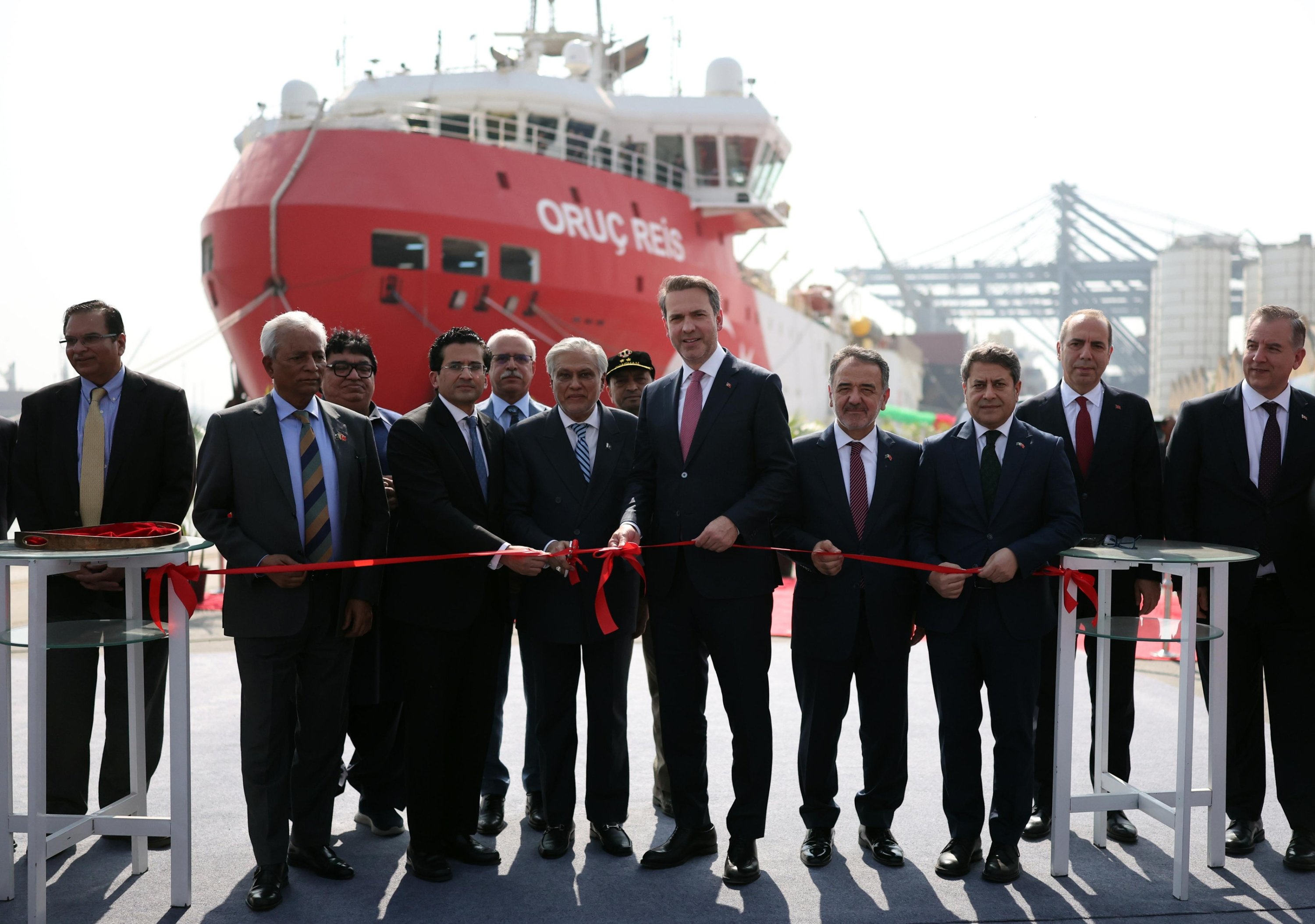
“We are putting the experience and engineering capability we gained in these activities at the service of our Pakistani brothers,” he said.
Mining agreements
The Energy and Natural Resources Ministry, meanwhile, also said two joint venture agreements were signed between MTAIC and Pakistani mining companies.
MTAIC is a venture of two Turkish state mining bodies, the General Directorate of Mineral Research and Exploration, known as MTA, and Eti Maden. Its Pakistani partners are Mari Energies Minerals and the Pakistan Mineral Development Corporation.
Under the agreements, MTAIC will start exploration at three sites in Pakistan: two for copper and gold and one for antimony.
MTA, MTAIC and the Geological Survey of Pakistan also signed a three-way memorandum of understanding to increase technical knowledge sharing in geology and mineral exploration and to develop joint projects.
Long overlooked by its NATO allies, Türkiye’s defense industry has now found its place at the military alliance’s top table, propelled by an ambitious, top-down government strategy.
Turkish arms manufacturers saw their turnover increase 15-fold between 2002 and 2023, specialist defense website TurDef says, while exports rose from around $800 million in 2010 to $7.1 billion in 2024.
“Ten years ago, when we spoke about the Turkish defense industry, people would laugh. Not anymore,” says TurDef founder Özgür Ekşi.
“Türkiye designs, develops and produces a large part of its own defense equipment,” says retired French brigadier general Patrice Moyeuvre, head of defense and security at Advantis consultancy.
“Its efforts have paid off and this can be seen, in particular in its export success,” he told Agence France-Presse (AFP).
For much of the past two decades, Ankara has expressed frustration over its Western allies’ failure to provide adequate defense systems against missile threats despite Türkiye being a NATO member.
Years of investment have helped it evolve from a country heavily reliant on foreign defense systems to one where domestically developed platforms meet almost all of its needs.
The transformation since the early 2000s has driven the development of a broad range of homegrown air, land and naval platforms, reducing foreign dependency from around 80% to below 20% today.
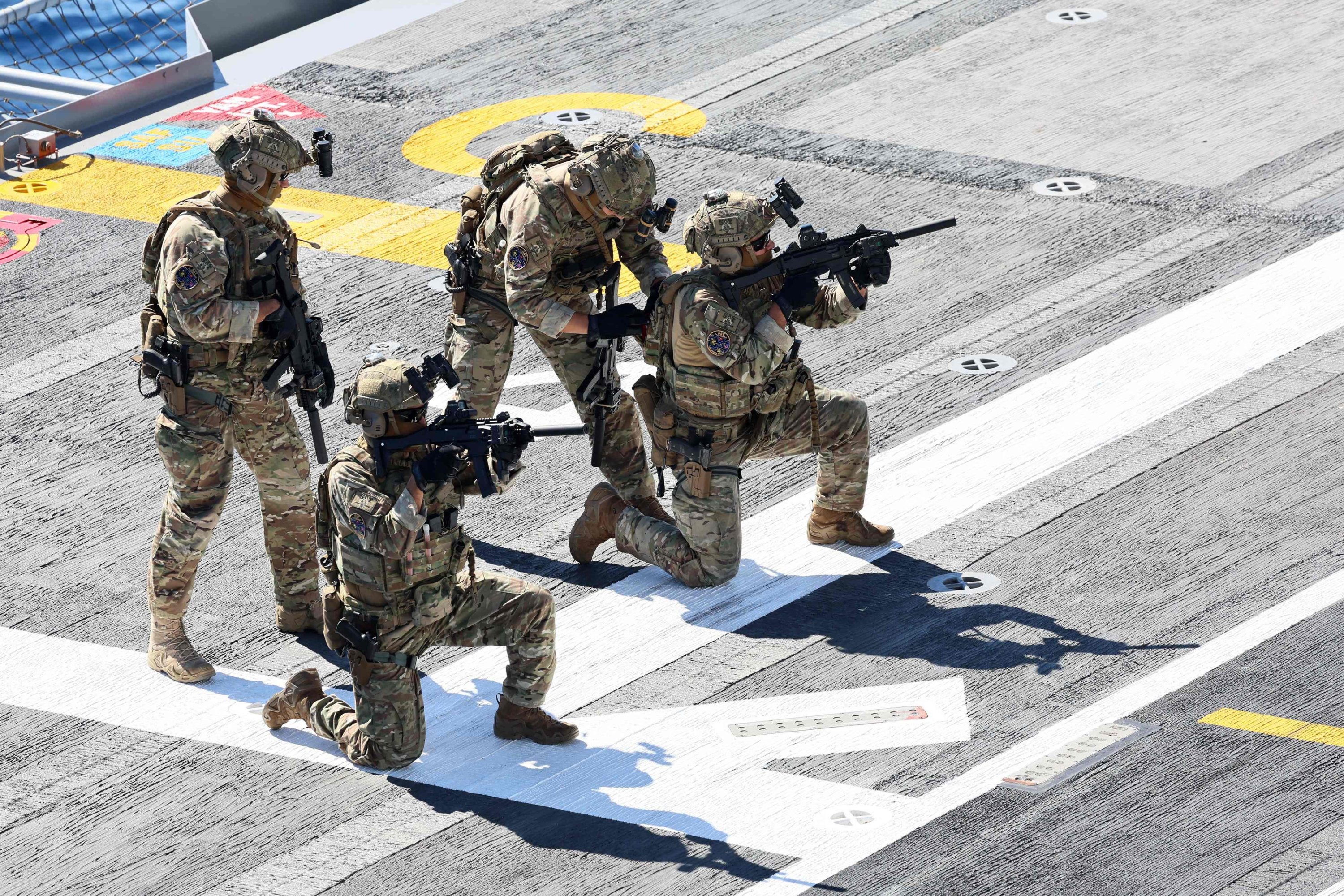
Türkiye has established firms that have gone on to become giants: drone powerhouse Baykar, defense electronics giant Aselsan; defense software and systems expert Havelsan; aerospace manufacturer TAI; missile and rocket manufacturer Roketsan and others.
‘Versatility’
In 2004, Ankara stopped buying off-the-shelf systems from abroad and brought weapons development in-house, placing the entire sector under its Presidency of Defense Industries (SSB) that reports directly to the president.
“Given Türkiye’s geostrategic location … the imperative for a coherent and forward-looking national strategy is clear,” says Uğur Tarçın, a professor at Istanbul’s Marmara University.
Over the past decade, Ankara has “exported 230 different types of defense products to 185 countries” – an achievement which “reflects both the versatility and competitiveness” of its capabilities, he said.
Drones produced by Baykar and TAI are now ubiquitous across modern-day battlefields.
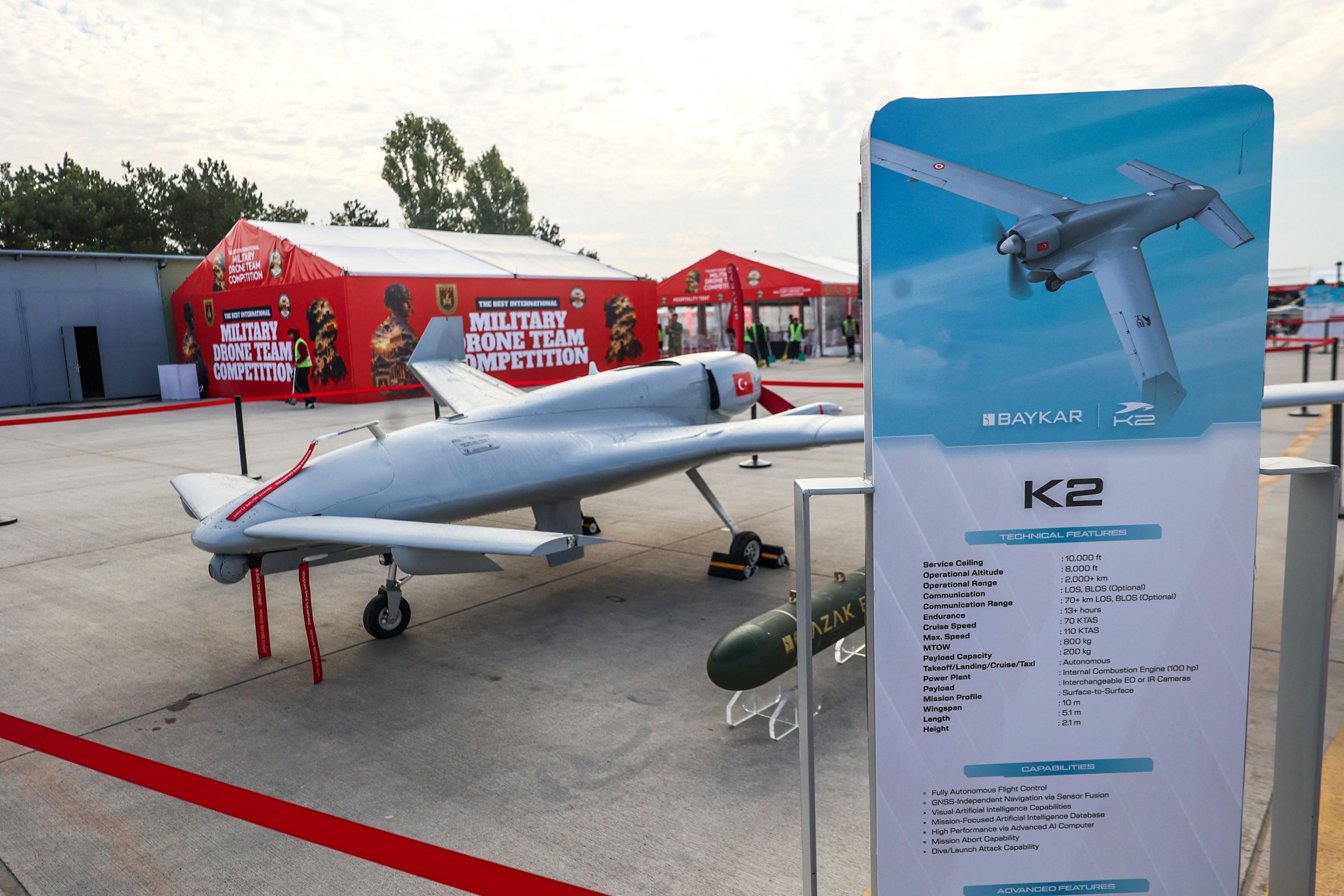
“We’ve made huge leaps in terms of in-house developed products,” said a Turkish industrialist who agreed to speak on condition of anonymity.
“We needed to develop different mechanisms for the war against PKK, in particular in surveillance,” he said, referring to the terrorist group.
“We could not get help from abroad and could not get it from fighter jets. So, we started to develop drones.”
‘Now supplier of choice’
For the past three years, Türkiye has seen orders pouring in, becoming the world’s 11th largest arms exporter, says Tarçın.
“Particularly notable has been its investment in and testing of advanced systems, including surface-to-air and air-to-surface missiles, drones, and the command networks that enable them to operate,” analyst Tom Barton with London-based intelligence firm Janes told AFP.
“Türkiye is now seen as a supplier of choice, competing with European and U.S. companies, especially for Middle Eastern and Asian customers.”
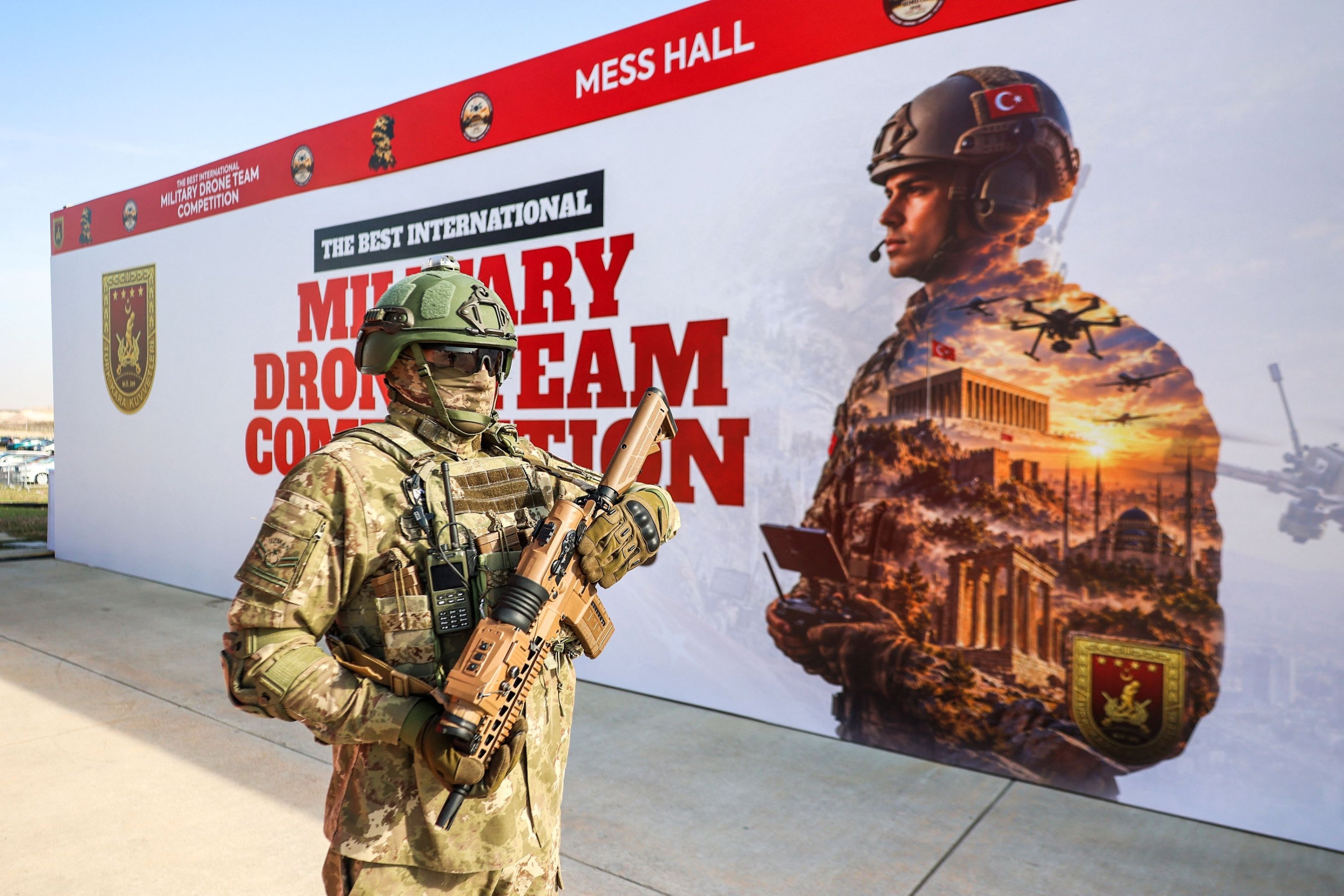
Aselsan just marked its 51st birthday by destroying a swarm of drones with its new high-power electromagnetic Ejderha system – “the world’s first system to successfully neutralize 51 drones with a single push of a button, without firing a missile or using any ammunition,” its CEO Ahmet Akyol said.
Türkiye’s new position is reflected in its hosting of a NATO summit this past July, and of NATO Edge this week, focusing on the alliance’s critical technology and digital weaponry.
For President Recep Tayyip Erdoğan, Türkiye’s independence is the cornerstone of his foreign policy, whether speaking with Washington, Kyiv, Moscow or Tehran.
Consumer confidence in Türkiye rebounded in November, rising 2.4% from the previous month as household expectations improved, official data showed Friday.
The consumer confidence index increased to 86.8 from 84.8 in October, according to figures released by the Turkish Statistical Institute (TurkStat).
The recovery followed a 7.7% decline in October to the lowest level in nine months.
The index also exceeded the 85.0 recorded in November 2025.
Households’ expectations for their financial situation over the next 12 months improved, with the corresponding sub-index rising 3.4% month-on-month.
The sub-index measuring expectations for the general economic situation over the same period increased 2.9%.
Meanwhile, assessments of households’ current financial situation edged up 0.04% from October.
Expectations for spending on durable goods over the next 12 months also improved, with the relevant indicator rising 2.5%.
The consumer confidence index is calculated through a monthly survey conducted jointly by TurkStat and the Central Bank of the Republic of Türkiye (CBRT).
The index measures consumers’ assessments of current economic conditions and their expectations for the near future.
It ranges from zero to 200, with readings below 100 indicating a pessimistic outlook.
Schengen diplomatic missions in Türkiye have established a dedicated working group to address persistent bottlenecks related to visa procedures for Turkish citizens, as Ankara called on the European Union to review the current practices, reports said Thursday.
The working group was formed following a meeting of the Local Schengen Cooperation (LSC) group in Ankara on Wednesday, public broadcaster TRT Haber and private outlet NTV said.
The meeting was attended by Turkish Foreign Ministry officials, representatives of Schengen countries, the EU Delegation to Türkiye and European Commission officials, the reports said.
The meeting, which regularly reviews Schengen visa procedures and related data, was held for the first time with the participation of both Turkish Foreign Ministry and European Commission representatives.
For years, Türkiye has criticized the EU’s visa system over appointment shortages, lengthy processing times and extensive documentation requirements.
During Wednesday’s talks, the Turkish delegation pointed to the high level of integration between Türkiye and the EU across multiple sectors and pressed for practical fixes, the reports said.
Its demands included making visa appointments more accessible, shortening application processing times, reducing the number of required documents and facilitating applications by travelers who have previously received Schengen visas.
Ankara also called for wider implementation of the EU’s visa cascade system, which allows eligible applicants to obtain multiple-entry visas with progressively longer validity periods.
Turkish truck drivers, trade access
Türkiye stressed the need to ensure uninterrupted access to the Schengen area for Turkish truck drivers to prevent disruptions to trade with the EU. It also called for solutions to restrictions on the length of their stays in the bloc.
Foreign Ministry officials said difficulties in securing appointments had contributed to the emergence of fraudulent consultancy firms offering to arrange visa applications and appointments, according to the reports.
They said joint operations had been conducted against such networks in cooperation with the justice, trade and interior ministries, with judicial proceedings initiated against numerous individuals.
The Turkish side also reported a significant decline over the past two years in visa difficulties faced by students admitted to universities in EU countries.
Officials said the Foreign Ministry had received only a limited number of individual complaints on the issue in 2026, adding that contacts with relevant authorities were continuing to resolve the remaining cases.


-
 Politics2 days ago
Turkish VP to meet Uzbek leaders during 2-day visit to Tashkent
-
 Politics1 day ago
Türkiye’s Parliament to set rules for terror-free commission
-
 Politics1 day ago
Türkiye uncovers FETÖ aid network, traces $531,000 in crypto transfers
-
 Economy2 days ago
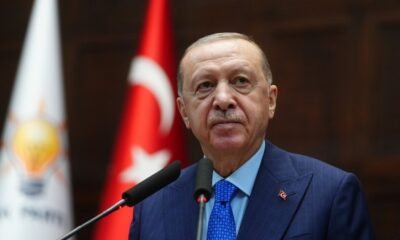
Most investors in troubled funds received interim payments: Erdoğan
-
 Politics3 days ago
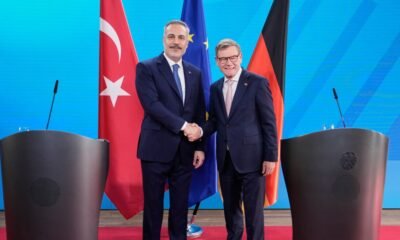
Türkiye’s top diplomat to join EU security, connectivity talks in Brussels
-
 Politics22 hours ago
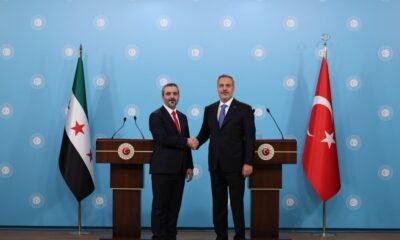
Syria integration must reinforce territorial unity, Turkish FM stresses
-
 Economy2 days ago
All eyes on Anthropic’s market debut in key test for AI boom
-
 Economy3 days ago
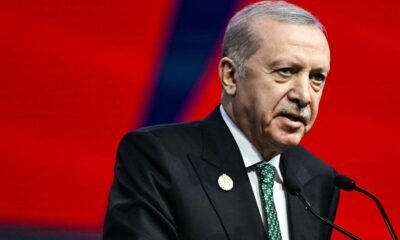
Erdoğan wants troubled fund liquidations completed by year-end